Yes, a vitamin deficiency causes hair loss—it literally starves your hair follicles of the fuel they need to grow. When your body runs low on key nutrients, it has to make some tough choices. It reroutes those precious resources to keep your vital organs humming, which leaves your hair follicles to fend for themselves. The result? Thinning, shedding, and a whole lot of frustration.
Is Your Diet the Real Reason Your Hair Is Thinning
We've all been there—seeing a bit too much hair in the shower drain and wondering what’s really going on. It’s easy to jump to conclusions about genetics, but the answer is often sitting right there on your dinner plate.
Think of each hair follicle as a tiny, high-performance factory. These little factories are supposed to work around the clock, producing strong, healthy hair. But just like any factory, they need a steady supply of raw materials to keep production humming. When those essential vitamins and minerals are in short supply, the assembly line starts to sputter and stall.
The Nutrient Priority Problem
Your body is an absolute master of triage. When faced with a nutritional shortage, it’s going to send what little it has to the most critical systems first—your heart, your brain, your lungs. Hair growth, as important as it feels to us, is considered non-essential for basic survival.
This means your hair is one of the very first things to suffer when your diet is lacking. It's often an early warning sign that something is out of balance internally.
A nutrient-deficient state can force more hairs into the resting (telogen) phase of the hair cycle prematurely, a condition known as telogen effluvium, which results in noticeable shedding.
Getting a handle on the basics of good nutrition is your first move toward stopping diet-related hair loss. To build a solid foundation, exploring essential nutrition information can be incredibly helpful.
This diversion of nutrients can cause a few distinct problems for your hair:
- Slower Growth: The follicles just don't have the energy to maintain the normal growth phase.
- Weaker Strands: Hair that does manage to grow is often brittle, dry, and way more likely to break.
- Increased Shedding: Without the right fuel, follicles can weaken and let go of hairs long before their time.
Taking control of your diet is one of the most powerful moves you can make. You can learn exactly how to build the right hair loss diet to give your follicles the support they desperately need. In the rest of this guide, we'll dive into which vitamins matter most and how to get your levels back on track.
Why Vitamin D Is Your Hairline's Best Friend
Most of us know Vitamin D is good for our bones, but its role in hair health is a game-changer that often gets overlooked. Think of it as the spark plug for your hair follicles. Without it, the engine just won't turn over.
Your scalp has millions of hair follicles, and many of them are in a resting, or dormant, state at any given time. Vitamin D is one of the key signals that tells these sleeping follicles to wake up and get back to work growing a new hair.
When you're low on Vitamin D, more of those follicles stay dormant. This creates a serious imbalance—you're still shedding hair at a normal rate, but not enough new hairs are growing in to replace them. The end result is a noticeable thinning all over your scalp.
The Indoor Epidemic
Let's be real, most of us spend our days cooped up indoors. Whether it's an office job or living in a place with long, gloomy winters, we're simply not getting enough sun exposure to produce the Vitamin D we need. This has created a widespread, yet often ignored, cause of thinning hair.
The link isn't just a hunch. A lack of Vitamin D is directly connected to both general shedding and more severe autoimmune conditions that target hair.
A revealing study on alopecia areata patients (an autoimmune condition causing patchy hair loss) found that a staggering 96.7% had insufficient Vitamin D levels. This rate was dramatically higher than in the healthy control group and correlated with more severe hair loss. You can dive deeper into the research on Ubie Health.
This really drives home how a simple vitamin deficiency causes hair loss by disrupting the fundamental biology of your scalp. Getting your levels checked is one of the easiest and most important first steps you can possibly take.
Activating Dormant Follicles
So, how does Vitamin D actually get the job done? It essentially acts as a foreman for your scalp, directing the hair growth cycle and helping to form new follicles. It makes sure everything runs on schedule.
- It wakes up stem cells: Vitamin D helps activate the stem cells in each follicle, which is the critical first step in starting a new growth cycle.
- It fuels the growth phase: Your hair’s active growth period is called the anagen phase. Vitamin D helps push follicles into this phase and keep them there longer.
- It calms inflammation: A chronically inflamed scalp is hostile territory for hair growth. Vitamin D has anti-inflammatory properties that help maintain a healthy environment for your follicles to thrive.
Correcting a Vitamin D shortfall gives your hair the solid foundation it needs to grow. It’s a crucial piece of the puzzle, and if you want to learn more, our guide on key vitamins for hair growth is a great next step.
The Building Blocks Your Hair Can't Live Without
Vitamins usually steal the spotlight, but a couple of key minerals are the unsung heroes working behind the scenes to build strong, resilient hair. Think of iron and zinc as the actual steel and concrete for your hair follicles. Without them, the entire production line grinds to a halt, leading directly to weaker strands and more shedding.
Iron: The Oxygen Delivery Service
Iron’s main job is to help create hemoglobin, a protein in your red blood cells. The easiest way to think of hemoglobin is as a fleet of microscopic delivery trucks, and their cargo is pure oxygen. These trucks travel all over your body, dropping off oxygen to every single cell—including those in your hair follicles.
When your iron levels drop, you simply have fewer trucks on the road. This means your follicles get starved of the oxygen they need to fuel growth and energy. Production slows, the hair that does grow is weaker, and shedding can increase dramatically. It's a classic case of how a simple mineral deficiency can directly trigger hair loss.
This is similar to how other nutrients work. For instance, Vitamin D needs an external catalyst—the sun—to kickstart its role in activating follicles for healthy growth.
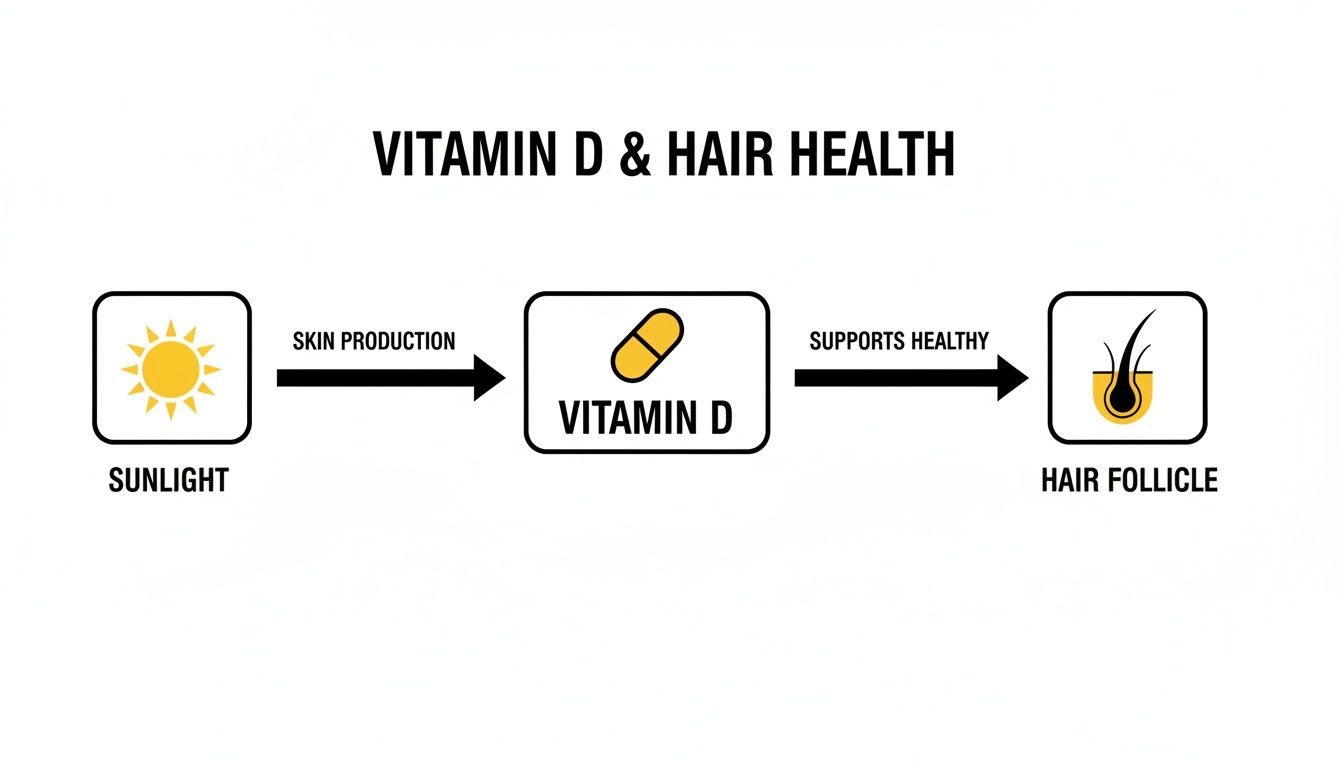
Just as the sun is the trigger for Vitamin D production, minerals like iron and zinc are the essential building blocks that your follicles absolutely must have to construct a healthy hair shaft.
Zinc: The Master Repairman
If iron is the delivery driver, then zinc is the on-site foreman and master repairman. This mineral is absolutely vital for hair tissue growth and repair. It also plays a huge role in keeping the oil glands around your follicles working correctly, which is what keeps your scalp moisturized and your hair protected.
When zinc runs low, the structural integrity of the hair follicle itself can weaken. This leads to breakage and noticeable shedding. You can dive deeper into this connection in our guide on zinc deficiency hair loss. A lack of zinc often shows up as a dry, flaky scalp, too, which only complicates things further.
Pro Tip: Look for other subtle signs beyond your hair. Persistent fatigue, brain fog, and brittle nails can often point to low iron. On the other hand, a weakened immune system or wounds that take forever to heal might signal you're low on zinc.
To make sure you're giving your body everything it needs, think about incorporating immune-boosting foods and supplements into your routine. This helps cover all your nutritional bases.
Key Minerals for Hair Health at a Glance
Here’s a quick comparison of Iron and Zinc's roles, deficiency symptoms, and top food sources to help you easily identify and address potential gaps in your diet.
| Mineral | Role in Hair Health | Common Deficiency Signs | Top Food Sources for Men |
|---|---|---|---|
| Iron | Carries oxygen to hair follicles via hemoglobin, fueling cell growth and function. | Diffuse thinning, excessive shedding, brittle texture, fatigue, pale skin. | Lean red meat, spinach, lentils, chicken, fortified cereals. |
| Zinc | Essential for hair tissue growth and repair; regulates oil glands around follicles. | Increased shedding, brittle hair, dry and flaky scalp, slow wound healing. | Oysters, beef, pumpkin seeds, chickpeas, cashews. |
By paying attention to these two powerhouse minerals, you can ensure your hair has the fundamental support system it needs to thrive.
How B Vitamins Fuel Your Hair Growth Engine
When it comes to hair health, the B-vitamin family gets a lot of buzz, but it’s easy to get lost in the noise. Let’s cut through the confusion and focus on the two that really move the needle for your hair: Biotin and Vitamin B12.
Think of these vitamins less like miracle growth formulas and more like the essential crew running your body's hair-building factory. Each one has a specific, crucial job. If one of them clocks out, the entire production line grinds to a halt.
Biotin: The Keratin Production Specialist
Biotin, also known as Vitamin B7, is probably the most famous "hair vitamin" on the market. Its claim to fame is its role in producing keratin—the tough, fibrous protein that is the literal building block of your hair, skin, and nails.
When someone is genuinely deficient in biotin (which, it’s worth noting, is quite rare), their body's ability to manufacture this critical material is compromised. The result? Brittle, weak strands and noticeable thinning.
But here’s where a popular myth leads people astray. If your biotin levels are already fine, popping more of it won't suddenly give you a thicker, fuller head of hair. It’s like a construction crew having a full supply of cement; ordering another truckload won't make the building any stronger. Supplementing only helps if you're fixing a real deficit.
A vitamin deficiency causes hair loss when it disrupts a fundamental biological process. With biotin, that process is keratin synthesis. No keratin, no hair.
If you are looking into supplements, it's smart to know the right amounts. You can find more specific details on the correct biotin dosage for hair to ensure you're not overdoing it.
Vitamin B12: The Follicle Fuel Transporter
While biotin is busy making the hair strands themselves, Vitamin B12 is in charge of logistics. Its job is to make sure the whole factory gets the power and supplies it needs to operate.
This vital nutrient is a key player in creating red blood cells. Think of these cells as the microscopic delivery trucks of your circulatory system, responsible for transporting oxygen and nutrients to every part of your body—including your scalp and hair follicles.
When B12 levels drop, your body can’t produce enough of these red blood cells, a condition that can lead to a type of anemia. Down at the follicular level, this creates a state of near-starvation. Your hair follicles are some of the most energy-hungry cells you have, and when their fuel supply is cut off, they can't function properly. Growth slows, and shedding often increases.
This is a particularly important point for men on plant-based diets, as B12 is almost exclusively found in animal-based foods. Good sources include:
- Meat: Beef and liver are especially rich in B12.
- Fish: Salmon and tuna are great options.
- Dairy: Milk and cheese provide a solid amount.
- Eggs: An easy and effective way to get your B12.
For anyone avoiding these food groups, fortified foods or a dedicated B12 supplement are essential for keeping your follicles fueled and functioning at their best.
Nutrient Loss vs. Male Pattern Baldness: How to Spot the Difference
It’s the million-dollar question every guy asks when he sees more hair in the drain: Is this something I can fix with a better diet, or is this just my genetic destiny playing out? Knowing the difference between hair loss from a nutritional shortfall and classic male pattern baldness is everything, because you can't treat them the same way.
The biggest clue is usually how you're losing the hair.
When a vitamin deficiency causes hair loss, it typically shows up as diffuse thinning all over your head. You might just feel like your hair is less dense everywhere, or notice your part line looking wider than it used to. There’s no specific "spot" that's getting worse.
Male pattern baldness, on the other hand, follows a very predictable playbook. It almost always starts with a receding hairline that carves out an "M" shape, or you'll spot a distinct thinning patch right on the crown. This is your genetics and hormones at work—not a lack of vitamins.
Different Causes, Different Patterns
Here’s a simple way to think about it: imagine your scalp is a lawn.
A nutrient deficiency is like trying to grow grass in terrible soil. Every single blade of grass struggles, and the whole lawn looks thin and weak. That’s diffuse thinning.
Male pattern baldness is different. It’s like having specific patches of that lawn genetically programmed to die off, no matter how much you water or fertilize them. The grass at the temples and the crown is just destined to wither, while the sides and back remain strong.
The key takeaway is this: nutritional hair loss is a system-wide problem affecting the entire scalp, while genetic hair loss is a localized pattern dictated by your genes.
Getting this distinction right is the first step. But it gets a little more complicated, because sometimes both are happening at once.
When Both Problems Occur at Once
Unfortunately, these two issues aren't mutually exclusive. It's entirely possible to have genetic male pattern baldness that’s being accelerated by a bad diet. Think of it as pouring gasoline on a fire. The nutritional deficiency weakens the very hair follicles that are already vulnerable to your genetics, making the thinning happen faster.
This is why a holistic view is so critical.
By figuring out the type of shedding you have, you can get closer to the root cause. Distinguishing between the widespread thinning seen in a systemic issue like telogen effluvium vs male pattern baldness is crucial for finding a solution that actually works. Fixing any nutritional gaps gives your hair the best possible fighting chance, no matter what your DNA has in store.
Your Action Plan for Reclaiming Thicker Hair
Understanding the link between what you eat and the hair on your head is a huge first step. But knowledge is one thing; putting it into practice is another. A real action plan isn't about guesswork or grabbing a random bottle of biotin off the shelf. It’s about making targeted, informed decisions.
Consider this your no-nonsense roadmap to taking back control. It starts with figuring out the real problem, then strategically fixing it with the right tools—from what’s on your dinner plate to advanced clinical options.
Step 1: Start with a Professional Diagnosis
Before you even think about buying a single supplement, your very first move should be booking an appointment with your doctor or a dermatologist. Trying to self-diagnose hair loss is a recipe for frustration and wasted money. Sure, a vitamin deficiency causes hair loss, but only a blood test can pinpoint which one.
A healthcare professional can order a proper blood panel to check for the most common culprits behind thinning hair, including:
- Iron (Ferritin): This doesn't just check iron, but your body’s actual iron stores.
- Vitamin D: Absolutely critical for waking up dormant follicles to start new growth.
- Vitamin B12: Essential for producing the red blood cells that nourish your scalp.
- Zinc: A key player in hair tissue growth and repair.
This data-driven approach takes all the ambiguity out of the equation. You'll know exactly what’s missing, allowing you to build a plan that actually works instead of just taking a shot in the dark with a generic multivitamin.
Step 2: Correct Deficiencies with Diet and Supplements
With your bloodwork in hand, you can finally get to work on correcting any imbalances. Your doctor will almost certainly recommend a two-pronged attack: smart dietary changes combined with targeted supplementation.
The main focus should always be on building a nutrient-dense diet first. Things like lean meats, leafy greens, nuts, and seeds provide the foundational support your body needs to thrive. From there, you can use supplements as a strategic tool to bridge any major gaps your blood tests revealed. Just be sure to follow your doctor’s dosage recommendations to the letter.
Think of it this way: your diet is the long-term foundation for healthy hair, while supplements are the short-term fix to get your levels back into the optimal range quickly.
Step 3: Create Fertile Ground for Advanced Treatments
Fixing a nutritional deficiency is a lot like tilling and fertilizing soil before planting new seeds. Once your body is properly nourished from the inside, advanced treatments like Platelet-Rich Plasma (PRP) can work dramatically better.
PRP uses powerful growth factors from your own blood to stimulate weak or dormant hair follicles. But for that to work, those follicles need the raw materials—iron, zinc, and key vitamins—to actually respond and build strong, healthy hair shafts. A well-fed follicle is a responsive follicle. Getting your nutrition right makes your investment in treatments like PRP far more likely to deliver the results you're after.
Common Questions About Vitamin Deficiency and Hair Loss
Even when you know what to do, questions always pop up. It's totally normal. Let's walk through some of the most common things people ask when connecting their diet to their hair health, so you can move forward with confidence.
How Long Until I See Hair Regrowth?
This is where you have to play the long game. Once you start correcting a deficiency, you're typically looking at 3 to 6 months before you see any meaningful regrowth.
That timeline isn’t just a random guess; it's based on the biology of your hair's growth cycle. Your body has to first rebuild its own nutrient stores—that's its top priority. Only after it's back in balance can it send resources to non-essential tasks, like growing hair. Then, the follicles that went dormant have to wake up and start a new growth (anagen) phase, and that process just takes time.
Is a Daily Multivitamin Enough to Stop My Hair Loss?
Honestly, it's unlikely. A daily multivitamin is a great nutritional safety net, but it's a very general tool for what is often a very specific problem.
If you have a serious deficiency in something like iron or vitamin D, the small dose in a standard multi probably won't be potent enough to move the needle.
True correction requires a targeted strategy. Bloodwork tells you exactly what's missing, allowing you to take the right supplement at the right dose to get your levels back where they need to be.
Will Improving My Diet Stop Male Pattern Baldness?
No, diet alone can't stop or reverse genetic male pattern baldness. That type of hair loss is driven by your hormones (specifically DHT) and your genes. But—and this is a big but—nutrition plays a huge supporting role.
Think of it this way: a vitamin deficiency causes hair loss on its own. If you have that on top of a genetic predisposition to thinning, it's like pouring fuel on a fire. The deficiency can weaken already vulnerable follicles and speed up the thinning process.
By getting your nutrition right, you’re creating the best possible internal environment for your hair, which can dramatically improve how well proven treatments like minoxidil, finasteride, or PRP work.
At PRP For HairLoss, we believe that a complete understanding of hair loss is the first step toward finding the right solution. For more expert guides and details on advanced treatments, explore our site. You can learn more at https://prpforhairloss.com.
 PRP For Hairloss
Leave a comment