If you've ever looked into what makes hair grow, you've probably waded through some seriously confusing advice. Let's cut through the noise. The simple truth is that your hair is made of a protein called keratin. To build more of it, you need to give your body the right raw materials—specifically, high-quality proteins like marine proteins, whey, and collagen. These are the essential building blocks for constructing stronger, healthier hair from the inside out.
Your Quick Guide to Hair Growth Proteins
When you're dealing with thinning hair, it doesn't take long to figure out that topical treatments are only part of the story. The real work of building strong, resilient hair starts with what you eat, and protein is the undeniable MVP.
Think of your hair follicles as tiny, highly productive factories. Like any factory, they need a steady supply of raw materials to keep the assembly line running smoothly. If that supply of protein dwindles, production slows down, and the quality of the final product—your hair—suffers. It becomes weak, brittle, and prone to breaking.
This is straight-up biology. Hair is over 90% protein, so when you're not getting enough in your diet, your hair is one of the first things to feel the impact. Your body is smart; it will prioritize sending its limited protein reserves to critical functions like organ support. Non-essential tissues, like hair and nails, get put on the back burner. This is a common, and often overlooked, reason for increased shedding and sluggish growth.
Understanding the Key Players
To get a handle on this, it's helpful to know which proteins give you the most bang for your buck. While any balanced diet is a great start, a few specific types offer targeted benefits for your hair.
- Marine Proteins: Typically sourced from fish, these proteins are loaded with specific amino acids that your body can absorb and put to use very efficiently. This high bioavailability makes them fantastic fuel for producing keratin.
- Whey Protein: You've probably seen this in the fitness aisle. As a complete protein, whey delivers all the essential amino acids your body needs for growth and repair, which absolutely includes your hair follicles.
- Collagen: Think of collagen as the scaffolding that supports your skin, including your scalp. A healthy scalp is non-negotiable for strong follicles, and collagen provides the structural integrity needed to anchor hair firmly in place.
To make this even easier, we've put together a quick-reference table. It gives you a clear snapshot of how each protein works and the best places to find it.
Your hair is a direct reflection of your internal health. Providing it with the right protein sources isn't a quick fix—it's a foundational strategy for long-term strength and vitality.
Top Proteins for Hair Growth at a Glance
Here’s a quick summary of the heavy hitters in the world of hair-healthy proteins. Use this table as a starting point to figure out which sources are the best fit for your diet and lifestyle.
| Protein Type | Primary Benefit for Hair | Best Food Sources |
|---|---|---|
| Marine Protein | Provides highly absorbable amino acids essential for keratin synthesis, helping to reduce shedding. | Salmon, mackerel, cod, and high-quality marine protein supplements. |
| Whey Protein | Offers a complete amino acid profile to support overall tissue repair and robust follicle function. | Whey protein powders, Greek yogurt, and cottage cheese. |
| Collagen | Strengthens the scalp's dermal layer, improving follicle health and anchoring the hair root. | Bone broth, chicken skin, fish, and collagen peptide supplements. |
Ultimately, incorporating these proteins into your diet is a powerful step toward building a better foundation for hair growth. It’s about supplying your body with exactly what it needs to do its job well.
Understanding Your Hair's Core Building Blocks
If you want to get to the root of hair growth, you have to think like a builder. Imagine trying to construct a house, but your supply truck only delivers half the bricks you ordered. The project grinds to a halt, and whatever you manage to build will be flimsy and unstable. That’s a pretty good picture of what happens to your hair follicles when they’re starved of protein.
Your hair isn’t some mysterious, complex fiber—it’s made almost entirely of a tough protein called keratin. In fact, about 95% of every single strand is keratin, which gives your hair its structure, strength, and resilience. But your body can't just whip up keratin from scratch; it needs a very specific set of raw materials to get the job done.
These raw materials are amino acids, the individual "bricks" that link together to form complete proteins. A steady supply of these building blocks is non-negotiable for producing healthy hair. Without them, the entire assembly line slows down, leading to weaker strands and, eventually, more shedding.
The Blueprint for Strong Hair
When it comes to building hair, not all amino acids are created equal. The specific type of keratin your body produces for hair relies heavily on a few key players.
- Cysteine: This sulfur-rich amino acid is a true superstar for hair strength. It forms powerful bonds that act like internal scaffolding, holding the keratin structure together and making each strand far more resilient to damage.
- Methionine: Your body can't make this one on its own, so you have to get it from your diet. It's an essential amino acid that serves as a precursor to cysteine, playing a critical role in building strong, durable hair from the follicle up.
- Glycine: This amino acid is a key component of collagen, another vital protein that helps anchor hair follicles in the scalp and supports overall skin health.
A shortage of these specific amino acids is like trying to make concrete without enough cement. The final product just won't hold up. To really get the full picture, digging into a good guide to amino acids supplement performance shows just how fundamental they are to the entire process.
To see how different protein sources contribute, take a look at this map. It shows how popular options like whey, marine protein, and collagen each play a role in hair health.
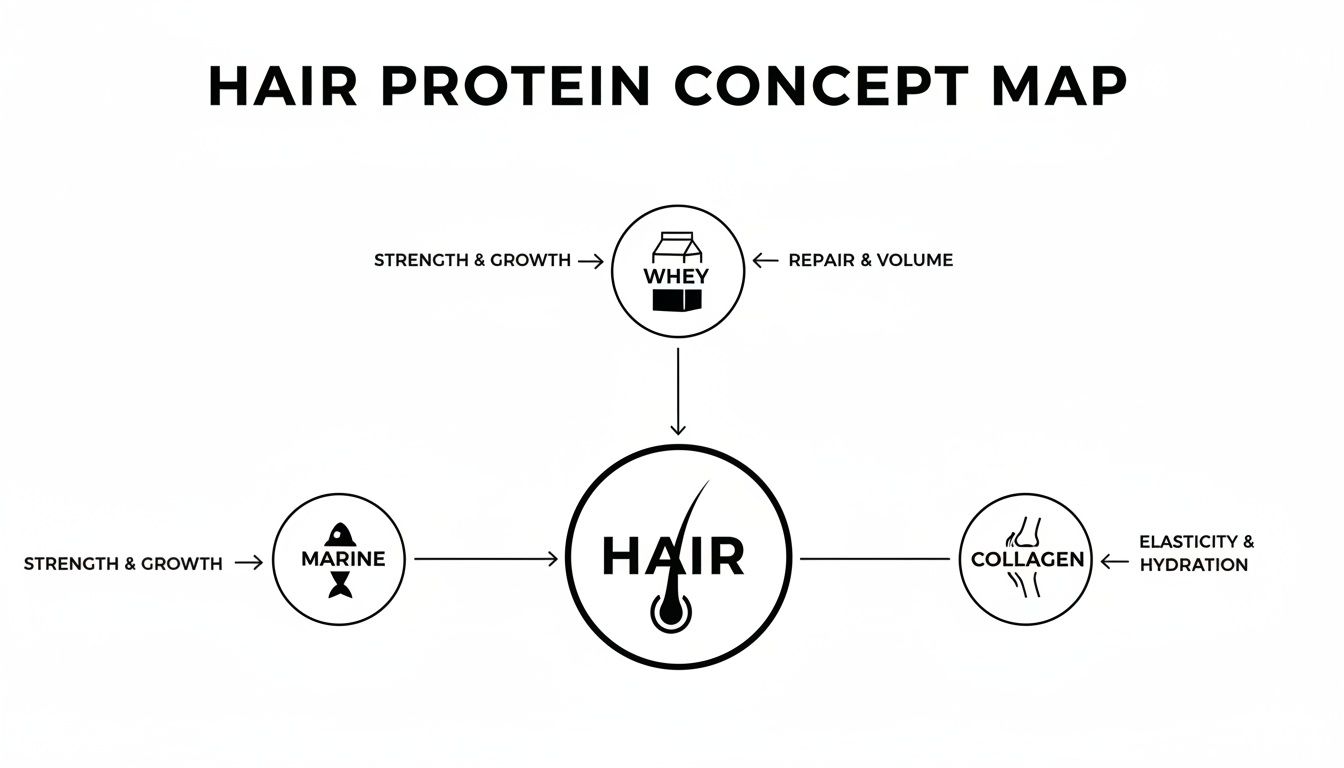
As you can see, they all support hair, but each brings something different to the table—from stimulating new growth and repairing damage to improving the scalp environment itself.
When the Supply Chain Breaks Down
So, what happens when your intake of these crucial amino acids drops off? Your body, being incredibly smart and efficient, shifts into preservation mode. It immediately reroutes its limited protein supply to the most essential jobs, like maintaining vital organs and repairing critical tissues.
Unfortunately, hair growth is considered a "non-essential" luxury. It gets pushed to the back of the line.
This biological triage is exactly why nutritional deficiencies often show up first in your hair. A sudden increase in shedding can be an early warning sign that your body's protein reserves are running low.
This can trigger a condition known as telogen effluvium, where a large number of hair follicles are prematurely shoved into the "resting" phase of the growth cycle. Research shows that a protein deficit can cause daily hair loss to jump from a normal 50-100 strands to well over 100-200.
Ultimately, understanding the direct line between what you eat and your body's ability to produce keratin is the first step toward building a stronger, healthier head of hair. For a deeper dive, check out our guide on the specific amino acids for hair growth that make the biggest impact.
Choosing the Right Hair Growth Supplement
Walking down the supplement aisle can feel like a guessing game. Every bottle promises thicker, fuller hair, but how do you separate genuine science from clever marketing? To find the best protein for your hair, you have to look past the hype and focus on what actually works.
Let's cut through the noise and take an honest look at the most popular protein supplements out there. We'll dig into the evidence behind each one so you can make a smart, informed choice for your hair goals.
Marine Protein: The Clinical Standout
When it comes to hard, scientific evidence, marine protein supplements are in a league of their own. Sourced from fish and other aquatic life, these supplements contain a unique blend of amino acids that are highly bioavailable—meaning your body can absorb and use them incredibly efficiently.
But what really makes marine protein stand out is the research. A landmark 2015 double-blind, placebo-controlled study found that women taking a marine protein supplement saw a significant increase in terminal hairs and a significant drop in shedding after only 90 days. Participants also reported feeling better about their hair, all with no negative side effects. This study was a game-changer.
The bottom line is simple: Marine protein doesn’t just make promises; it has the clinical data to back them up. This makes it a top-tier choice for anyone serious about reducing shedding and kickstarting new growth.
Clearing Up the Whey Protein Myth
Whey protein is a giant in the fitness world, celebrated for its muscle-building power. But somewhere along the way, a myth started circulating that it causes hair loss. It’s time to set the record straight. For the overwhelming majority of men, whey protein does not cause hair loss.
The worry usually comes from the idea that some whey isolates might bump up testosterone, which could then convert to DHT—the hormone behind male pattern baldness. The problem? The scientific evidence for this is incredibly thin and mostly anecdotal. The real, scientifically proven threat to your hair is a protein deficiency.
Whey is a complete protein, giving your body all the essential amino acids it needs to repair tissue and keep follicles working properly. If you're already using it to support your fitness goals, there’s no compelling scientific reason to stop. For a more detailed breakdown, check out our guide on the best hair growth supplements for men.
Collagen and Keratin: The Scalp and Strand Team
People often lump collagen and keratin together, but they play two very different—and equally important—roles in hair health. Think of them as a specialized construction crew: one lays the foundation, and the other builds the actual structure.
Collagen for the Foundation:
Collagen is the protein that gives your skin its structure, and that includes the dermis of your scalp. A strong, healthy scalp is the bedrock of healthy hair.
- It’s the scaffolding: Collagen keeps the skin around your hair follicles strong and elastic, anchoring them firmly in place.
- It supports nutrient delivery: A healthy, collagen-rich scalp ensures blood vessels can easily bring vital nutrients to the hair root.
By reinforcing the scalp environment, collagen creates the ideal conditions for hair follicles to thrive. It’s an indirect but absolutely crucial part of the process.
Keratin for the Structure:
Keratin is what your hair is literally made of—it’s the brick and mortar. Taking a keratin supplement is like having a direct delivery of building materials right to the construction site.
- It provides the building blocks: These supplements offer hydrolyzed keratin, broken down into peptides your body can readily use to build new hair strands.
- It reinforces existing hair: Some studies suggest keratin can patch up weak spots in the hair cuticle, making strands smoother, stronger, and less likely to break.
Together, they’re a powerful duo. Collagen preps the ground, and keratin builds the house.
Comparing Hair Growth Protein Supplements
With so many options, a side-by-side comparison can help clarify which supplement might be the best fit for you. Each one has a different mechanism and level of scientific backing.
| Supplement Type | How It Helps Hair | Evidence Level | Best For |
|---|---|---|---|
| Marine Protein | Provides a unique, bioavailable amino acid profile shown to reduce shedding and increase hair count. | High (backed by double-blind, placebo-controlled studies). | Men looking for a clinically proven, all-in-one solution to reduce hair fall and stimulate growth. |
| Whey Protein | Supplies a complete range of amino acids essential for overall follicle health and tissue repair. | Indirect (supports general protein needs, not a targeted hair treatment). | Men who are already using it for fitness and want to ensure they meet their daily protein requirements. |
| Collagen | Strengthens the scalp's dermal layer, improving follicle anchoring and nutrient delivery. | Moderate (growing evidence for skin health, with logical benefits for the scalp). | Men who want to improve their overall scalp health as a foundation for stronger hair. |
| Keratin | Provides the direct structural protein that hair is made of, helping to build new strands and fortify existing ones. | Moderate (some studies show improvements in hair strength and smoothness). | Men with brittle, breaking hair who want to directly reinforce the hair strands themselves. |
Ultimately, choosing the right supplement comes down to understanding the distinct role each protein plays. While marine protein has the strongest direct evidence for hair growth, collagen and keratin offer targeted support for the scalp and hair shaft, respectively.
Building a Diet for Stronger Hair
Supplements can give you a boost, but they're not the main event. The real foundation for strong, resilient hair is built meal by meal, day after day. Forget about complicated diets or drastic overhauls; this is about making smart, simple additions to what you already eat.
Think of it this way: your diet is the fuel you send to your hair follicles. Give them a consistent supply of high-quality protein, and you're giving them exactly what they need to perform at their best. Let’s walk through some practical ways to make every meal an opportunity to build better hair from the inside out.
Prioritize Protein-Packed Foods
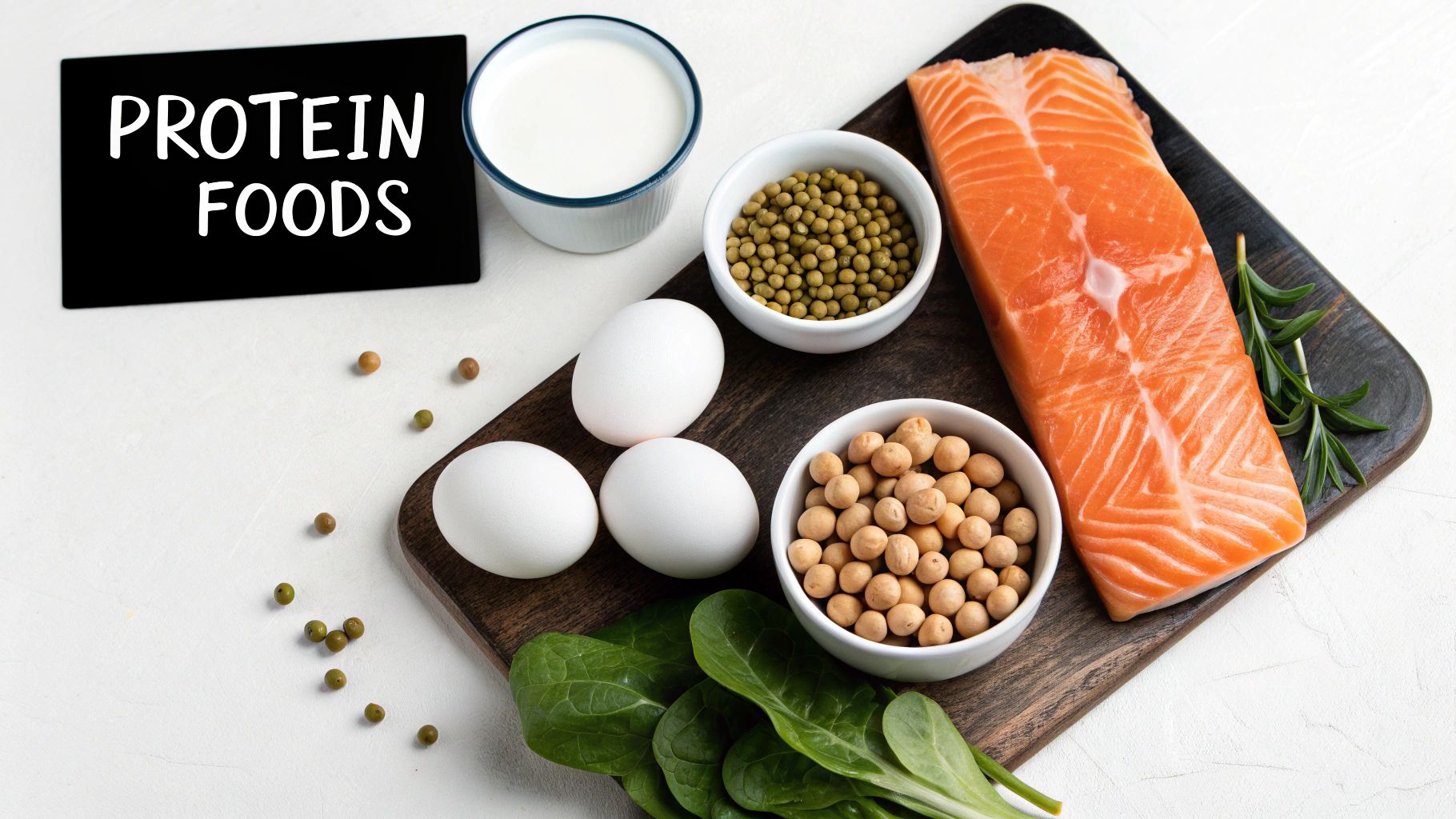
It’s not just about eating more protein; it’s about eating the right kind. You want to zero in on foods loaded with the specific amino acids your body needs to manufacture keratin. Luckily, these are everyday foods that are easy to work into your routine.
- Lean Meats: Chicken and turkey are your go-to sources for complete protein. They deliver all the essential amino acids your body needs for tissue repair and keeping hair follicles robust.
- Fatty Fish: Think salmon, mackerel, and herring. These are packed with not only protein but also omega-3 fatty acids, which are fantastic for reducing inflammation and promoting a healthy scalp.
- Eggs: People call them nature's multivitamin for a reason. An egg is a powerhouse of high-quality protein and biotin, a B-vitamin absolutely essential for producing keratin.
- Greek Yogurt: This is more than just a protein-dense snack. It’s also full of probiotics, which help with nutrient absorption—making sure your body gets the full benefit of everything you’re eating.
Making these foods staples in your diet creates a steady supply line of building blocks flowing directly to your hair. This is your first and most powerful step.
Smart Swaps for Effortless Protein
Upping your protein intake doesn’t mean you have to start grilling steaks for breakfast. It’s far easier—and more sustainable—to make small, intelligent swaps to the meals you already love. Just look for simple opportunities to sneak in more protein without a lot of fuss.
A few easy ideas:
- Boost Your Breakfast: Instead of cereal, try Greek yogurt with a handful of nuts. Making a smoothie? Add a scoop of protein powder.
- Upgrade Your Salads: A basic green salad becomes a hair-growth powerhouse when you add grilled chicken, chickpeas, or lentils.
- Rethink Your Snacks: Ditch the chips and grab a hard-boiled egg, a small cup of cottage cheese, or a handful of almonds instead.
The cumulative effect of these small changes can be significant. By consistently making protein-rich choices throughout the day, you ensure your hair follicles never have to face a "supply shortage."
Don't Forget Plant-Based Power
You absolutely don't need to eat meat to build a hair-healthy diet. Plant-based proteins are incredibly effective, but the key is variety. Because most plant sources aren't "complete" proteins by themselves, mixing and matching them is crucial to get the full spectrum of amino acids your hair needs. If you're focusing on plant-based eating, finding some easy high protein plant-based meals is a game-changer.
Here are some excellent plant-based options:
- Lentils and Beans: These are fantastic sources of protein, iron, and zinc—all vital for healthy hair.
- Quinoa: A true superstar. Quinoa is one of the very few plant foods that qualifies as a complete protein, making it an incredible asset for hair health.
- Tofu and Edamame: Soy-based products are rich in protein and incredibly versatile for adding to stir-fries and salads.
At the end of the day, a balanced diet rich in varied protein sources is one of the most powerful tools in your arsenal. For a more detailed list of what to add to your grocery list, our guide on the best foods for hair growth is a great next step.
How Protein Boosts Professional Hair Treatments
When you're investing in professional hair loss treatments like Platelet-Rich Plasma (PRP) therapy, you absolutely want to get the best bang for your buck. Think of your diet as the ultimate support system—a way to amplify your results from the inside out. A high-protein diet works hand-in-hand with these clinical procedures, making sure your investment truly pays off.
Treatments like PRP are designed to jolt dormant hair follicles back to life. They essentially send a powerful "get back to work" signal to the cells responsible for hair growth. That stimulation is the crucial first step, but for that signal to become actual, visible hair, your follicles need the right raw materials.
Fueling the Follicle Factory
Here's a simple way to look at it. Imagine you’ve hired a world-class architect (your PRP therapy) to design and manage the construction of a new building (your hair). The architect is brilliant—they’ve got the blueprints and the plan. But they can’t build a thing without a crew and a steady supply of steel, concrete, and lumber.
Your protein intake is the construction crew and all the raw materials. Without a consistent stream of amino acids arriving on-site, the architect’s plans just sit on the table, and the project stalls.
This is exactly why dialing in your nutrition is so important. When PRP therapy signals your follicles to start building again, a protein-rich diet ensures they have everything they need to construct strong, healthy hair strands. If you're deficient, you're essentially undercutting the treatment before it even has a chance to work, leading to disappointing results.
Maximizing Your Treatment Investment
To really get the most out of your treatment, you need to prime your body for growth. This means being deliberate about your protein intake before, during, and after your sessions. This constant fuel source helps you tap into the full potential of these amazing therapies.
- Before Treatment: Start ramping up your intake of high-quality protein a few weeks ahead of your first appointment. This builds up your body's amino acid reserves, getting your follicles ready for the incoming growth signals.
- During Treatment: Keep that protein intake consistent. Hair regeneration is a demanding process, and a steady supply of building blocks helps follicles stay in their active growth phase for longer.
- After Treatment: Don't stop. Maintaining a hair-healthy diet is key to supporting the new growth and preserving your results. Strong hair needs ongoing nutritional backup.
By pairing a nutrient-first diet with professional treatments, you’re creating the perfect environment for hair to thrive. If you want to dive deeper into how these procedures work, learning about the PRP hair treatment benefits can give you a much clearer picture. At the end of the day, combining advanced science with smart, foundational nutrition is what gives you the best shot at achieving the thicker, fuller hair you're after.
Knowing When It's Time to See a Doctor
Boosting your protein intake is a fantastic, proactive step for healthier hair, but it's important to be realistic. Diet is a powerful tool, but it's not a cure-all for every type of hair loss.
Think of it this way: nutrition is a huge piece of the puzzle, but sometimes your hair is trying to tell you about a deeper issue. It's crucial to know when to listen and bring in a professional.
Spotting the Red Flags
Losing a few strands in the shower is normal. But how do you know when it's something more? Your body will give you clues that it's time to book an appointment with a doctor or dermatologist.
Keep an eye out for these specific warning signs:
- Sudden, Heavy Shedding: If you're suddenly losing handfuls of hair or see a shocking amount on your pillow or in the drain, that's not normal. It’s a signal that needs professional evaluation.
- Distinct Bald Patches: Hair loss that shows up in round, smooth patches (a tell-tale sign of alopecia areata) is an autoimmune issue, not a dietary one.
- Scalp Discomfort: Is your hair loss paired with an itchy, burning, or painful scalp? This could point to a skin condition like psoriasis, seborrheic dermatitis, or even a fungal infection that requires specific medical treatment.
Think of your hair as a barometer for your overall health. When it changes suddenly or dramatically, it’s often reflecting an internal issue that goes beyond simple nutrition. A doctor can help you read those signals correctly.
When Diet Isn't the Full Picture
A balanced diet lays the groundwork for healthy hair, but some medical conditions will cause hair loss no matter how much protein you're eating. These situations require a proper diagnosis and a treatment plan that goes way beyond what's on your plate.
A doctor might run some tests and find that your hair loss is actually a symptom of something else entirely.
Common Underlying Causes:
- Thyroid Problems: An overactive (hyperthyroidism) or underactive (hypothyroidism) thyroid can throw your hair growth cycle completely out of whack, causing thinning all over your scalp.
- Nutrient Deficiencies: It’s not just about protein. A severe lack of key nutrients like iron or zinc can trigger significant hair shedding, something a simple blood test can easily identify.
- Hormonal Imbalances: Conditions like PCOS can be a major driver of hair loss, and other hormonal fluctuations can play a big role, too.
Don't guess. Getting professional advice means you're addressing the real source of the problem. A dermatologist can run the right tests, give you an accurate diagnosis, and build a treatment plan that gets to the root cause of your hair loss.
Common Questions About Protein and Hair Health
When you're trying to figure out the connection between what you eat and the hair on your head, a lot of questions pop up. It's easy to get lost in the noise. Let's cut through the confusion and tackle some of the most common questions we hear about protein and hair.
Can Too Much Protein Cause Hair Loss?
This is one of those myths that just won't die. For almost everyone, the real problem is a protein deficiency, not an excess. When you're not getting enough protein, your body goes into survival mode and starts rationing it, shutting down non-essential processes like hair growth. That's what leads to shedding. You can read more about the mechanics in our guide to protein deficiency and hair loss.
The whole "too much protein" concern is usually linked to online chatter about whey supplements and DHT levels, but the scientific evidence just isn't there to back it up. Honestly, your focus should be on getting enough quality protein every single day, not worrying about getting too much.
How Long Until I See Results?
When it comes to your hair, patience is the name of the game. Hair grows slowly and in cycles. After consistently upping your protein intake, you should expect to wait about 3 to 6 months before you see any real, noticeable changes in hair thickness or a slowdown in shedding.
The first sign that things are moving in the right direction is often subtle. You might just notice less hair in the shower drain or on your brush. That's a great indicator that your follicles are getting stronger, even before new growth becomes obvious.
Are Plant-Based Proteins Effective?
Absolutely, but you have to be smart about it. Plant-based proteins can definitely support healthy hair growth. The main thing to understand is the difference in their amino acid profiles.
- Animal proteins—think meat, fish, eggs, and dairy—are "complete." They naturally contain all nine essential amino acids your body needs but can't produce on its own.
- Plant proteins are often "incomplete," meaning they might be low in one or more of those essential amino acids.
That doesn't mean they're inferior; it just means you need variety. To build strong keratin for your hair, you have to get that full set of amino acids. By mixing and matching different plant sources like quinoa, lentils, beans, nuts, and seeds throughout the day, you'll easily cover all your bases and give your hair the fuel it needs to thrive.
At PRP For HairLoss, we know that understanding the why behind hair health is the first step toward getting real results. Our blog is here to give men clear, science-backed information to confidently navigate their hair loss journey.

 PRP For Hairloss
Leave a comment