Let's get one thing straight: it's absolutely possible to take control of a receding hairline. But we need to be clear about what "reversing" really means. It’s less about hopping in a time machine and more about a smart, two-pronged attack: stopping any more hair loss dead in its tracks and waking up dormant follicles to get them growing again. The secret to success? Using clinically proven treatments, like minoxidil and finasteride, and jumping on them as early as possible.
What to Do When You First Notice a Receding Hairline

It’s a moment most guys dread—that look in the mirror where you realize your hairline isn't quite where it used to be. The first reaction is often a mix of denial and panic, but the best thing you can do is take a deep breath and get an honest look at what's going on. This isn't about ignoring it; it's about gathering facts so you can actually do something effective.
First off, you need to figure out if you're dealing with a maturing hairline or the start of male pattern baldness. A mature hairline is a natural part of getting older for most men. Your teenage, straight-across hairline moves back a little, maybe half an inch to an inch, and then settles into its new, permanent spot. It’s a subtle shift that eventually stops.
Male pattern baldness (androgenetic alopecia) is a different beast altogether. It’s progressive, which means it won't stop on its own. You'll typically see a much more noticeable recession at the temples, creating that classic "M" or "V" shape that just keeps getting deeper over time.
Understanding the Norwood Scale
To get a better handle on what you're seeing, it helps to check out the Norwood Scale. Think of it as a roadmap for male pattern baldness. It breaks down the stages of hair loss, from Stage 1 (no real loss) all the way to Stage 7 (the most advanced stage, with just a band of hair left on the sides and back).
You don't have to become a hair loss expert overnight. Just glancing at the scale can help you put what’s happening into perspective. Realizing you're at a Norwood 2 or 3 gives you a solid reference point for when you eventually talk to a professional. This simple step moves you from just worrying to actually assessing the situation. Finding the right person to guide you is key, and you can start by looking up hair loss specialists near you.
The Science Behind a Receding Hairline
So, what’s actually causing this? For the vast majority of guys, it boils down to a one-two punch of genetics and hormones. The main culprit is a hormone called dihydrotestosterone (DHT).
DHT comes from testosterone, and if you have the unlucky genetic lottery ticket, your hair follicles are extra sensitive to it. When DHT latches onto receptors in your follicles, it kicks off a process called follicular miniaturization. Basically, the follicles shrink. Over time, they produce thinner, shorter, weaker hairs until they eventually just throw in the towel and stop producing hair altogether. This is what creates that classic receding hairline and thinning crown.
The most important thing to get is this: A receding hairline is a biological process, not a personal failing. Understanding the science of genetics and DHT takes the mystery out of hair loss and lets you focus on treatments that actually tackle the root cause.
This knowledge is your power. It allows you to hunt for solutions that either block DHT or stimulate the follicles directly, giving you a real fighting chance. Taking a moment to understand these basics is the absolute first step toward building a plan that will actually work.
Your Guide to At-Home Hair Loss Treatments
When you're ready to stop just watching your hairline and start fighting back, your most powerful and accessible options are often right at the pharmacy or just an online consultation away. Let’s cut through the marketing fluff and get straight to the two FDA-approved heavy hitters that form the foundation of any solid at-home strategy: minoxidil and finasteride.
These aren't just cosmetic quick fixes. They're clinically proven treatments that work on a biological level to halt hair loss and, for many guys, even encourage new growth. Understanding how each one works is key to using them right and setting realistic expectations.
Minoxidil: The Growth Stimulator
You’ve almost certainly heard of this one, probably by its famous brand name, Rogaine. Minoxidil is a topical treatment, meaning you apply it directly to your scalp right where you need it. While the exact way it works is still a bit of a medical mystery, it's widely understood to be a vasodilator.
Think of it as opening up the tiny blood vessels that feed your hair follicles. This surge in blood flow brings a fresh supply of oxygen and nutrients. For follicles that have been weakened and shrunken by DHT, this is like a lifeline. It can jolt them out of their resting phase and back into an active growth phase, eventually producing thicker, healthier hair.
But here’s the thing: for it to work, you have to be consistent.
- Application: It's usually sold as a liquid or a foam. The routine is simple—apply it once or twice a day to the dry areas of your scalp where you're seeing thinning. The hairline and crown are the most common targets.
- Patience is Key: You will not see a change overnight. It genuinely takes 4-6 months of dedicated, daily use before you'll notice the first signs of things stabilizing or new growth appearing. The single biggest reason people think it doesn't work is because they quit too soon.
A heads-up: don't freak out if you see some extra shedding when you first start. This is actually a good sign. It means the minoxidil is pushing out the old, weak hairs to make room for new, stronger ones to come in.
Finasteride: The DHT Blocker
While minoxidil is working to stimulate follicles from the outside, finasteride gets to the root of the problem from within. This is a daily pill you take, available by prescription under brand names like Propecia. It works throughout your system to lower the levels of DHT in your body.
Specifically, finasteride is a 5-alpha reductase inhibitor. It blocks the very enzyme that converts testosterone into the follicle-killing hormone DHT. By drastically cutting the amount of DHT attacking your hair, you essentially slam the brakes on the miniaturization process. This is what makes it so incredibly effective at stopping a receding hairline from getting worse.
The clinical data on these treatments is pretty solid. Finasteride, for instance, has an impressive track record—around 66% of men who use it see hair regrowth after two years, compared to just 7% of those on a placebo. Minoxidil is no slouch either; studies show the 5% solution helps over 60% of men.
A Frank Look at Potential Side Effects
It’s impossible to talk about finasteride without addressing the conversation around side effects. A small fraction of men—typically less than 2%—report sexual side effects like a lower libido or erectile dysfunction. For the overwhelming majority of guys, this is a non-issue. And for those who do experience them, the side effects almost always go away after stopping the medication.
The most important thing is to have an open, honest chat with your doctor. They can help you weigh the proven benefits against the potential risks based on your personal health. This lets you make a decision based on facts, not fear.
And while these medications are powerful, pairing them with the right hair care routine can give you an extra edge. You might find our guide on the best hair loss shampoo reviews helpful for that.
Ultimately, these at-home treatments offer a proven and highly effective first line of defense. The table below breaks down their key differences to help you see how they stack up.
Comparing At-Home Hair Loss Treatments
Here's a quick side-by-side comparison of Minoxidil and Finasteride to help you understand their differences, how you use them, and what kind of results to expect.
| Feature | Minoxidil (Rogaine) | Finasteride (Propecia) |
|---|---|---|
| How It Works | Stimulates blood flow to follicles | Blocks the production of DHT |
| Application | Topical (liquid or foam) | Oral (daily pill) |
| Availability | Over-the-counter | Prescription only |
| Main Goal | Regrowth and thickening | Halting hair loss progression |
| Typical Timeline | 4-6 months for initial results | 3-6 months for initial results |
This comparison highlights that these two treatments tackle hair loss from different angles. Minoxidil works on the surface to encourage growth, while finasteride works internally to stop the cause. Many of the most effective hair restoration plans actually involve using both together.
PRP Therapy: Using Your Body's Own Power to Regrow Hair
If you're looking for a way to fight a receding hairline that doesn't involve daily pills or foams, Platelet-Rich Plasma (PRP) therapy is definitely worth a look. The cool thing about PRP is that it’s not some synthetic chemical—it’s a treatment that taps into your body’s own natural healing powers. The idea is pretty simple: we concentrate the growth factors already in your blood and deliver them right where they're needed most—your struggling hair follicles.
It all starts with a standard blood draw, just like one you'd get at a doctor's office. That blood is then spun in a centrifuge, separating it into layers. We're after the platelet-rich plasma, a golden liquid that's absolutely packed with the proteins and growth factors your body uses to repair and regenerate itself.
This concentrated "liquid gold" is then carefully injected into the areas of your scalp where you're seeing thinning, like at the temples and along the hairline. Think of it as a direct, high-potency nutritional boost for your follicles, waking them up and encouraging them to get back to the business of growing hair.
What to Expect From a PRP Treatment Plan
PRP isn't a one-and-done miracle cure; it's a process that needs some patience and commitment to see the best results. A solid treatment plan usually starts with a series of sessions to get things going, followed by less frequent maintenance appointments down the road.
- The Kickstart Phase: Most clinics, ours included, recommend starting with three sessions, spaced about four to six weeks apart. This initial bunch of treatments is key for saturating the scalp with growth factors and really stimulating those sleepy hair follicles.
- The Maintenance Phase: After you've completed the initial round, the goal is to keep that momentum going. This typically means coming back for a follow-up treatment every six to twelve months to maintain your results and encourage more improvement.
The good news is that there’s virtually no downtime. You might notice a little redness, tenderness, or minor swelling where the injections were, but that almost always disappears within 24 to 48 hours. Most people are back to their normal routines the very next day.
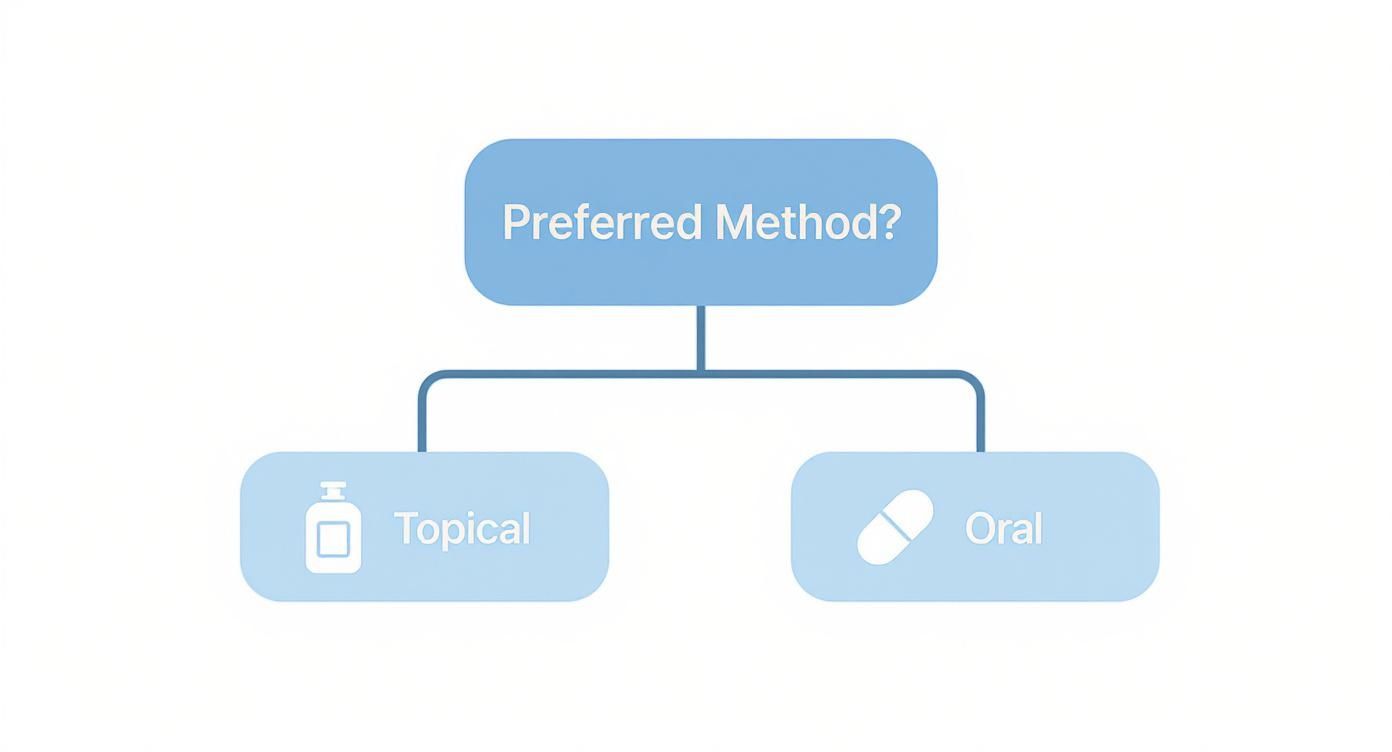
This visual shows how you might start your journey, often choosing between topicals and oral medications before considering a more hands-on procedure like PRP.
Who Is the Best Candidate for PRP?
In my experience, PRP delivers the most impressive results for people in the earlier stages of androgenetic alopecia (male pattern baldness). It's fantastic at reviving hair follicles that are weakened or shrinking but haven't totally given up the ghost. If you've just started to see your temples thin or your crown losing density, you’re likely in the sweet spot for PRP.
The clinical evidence for PRP is pretty solid. Studies have shown it can lead to a significant increase in hair density, with one notable study showing a jump from an average of 71 to 93 follicular units per square centimeter. In fact, well over 70% of clinical trials show positive results in hair density and growth, with patients reporting high satisfaction and minimal side effects.
The key thing to understand about PRP is that it doesn't create brand-new follicles. Instead, it revitalizes and strengthens the ones you already have. This makes it an incredibly effective tool for thickening existing hair and putting the brakes on further loss.
Because PRP is non-surgical and uses your own biology, many men find it's a great middle-ground treatment. To get a more detailed look at the science, you can explore the specifics of how platelet-rich plasma therapy for hair loss works.
It's also worth noting that some patients boost their results by pairing PRP with other procedures. For example, advanced microneedling treatments can improve scalp health and help the skin absorb various hair growth serums more effectively, making it an excellent complementary therapy.
Is a Hair Transplant the Right Choice for You?
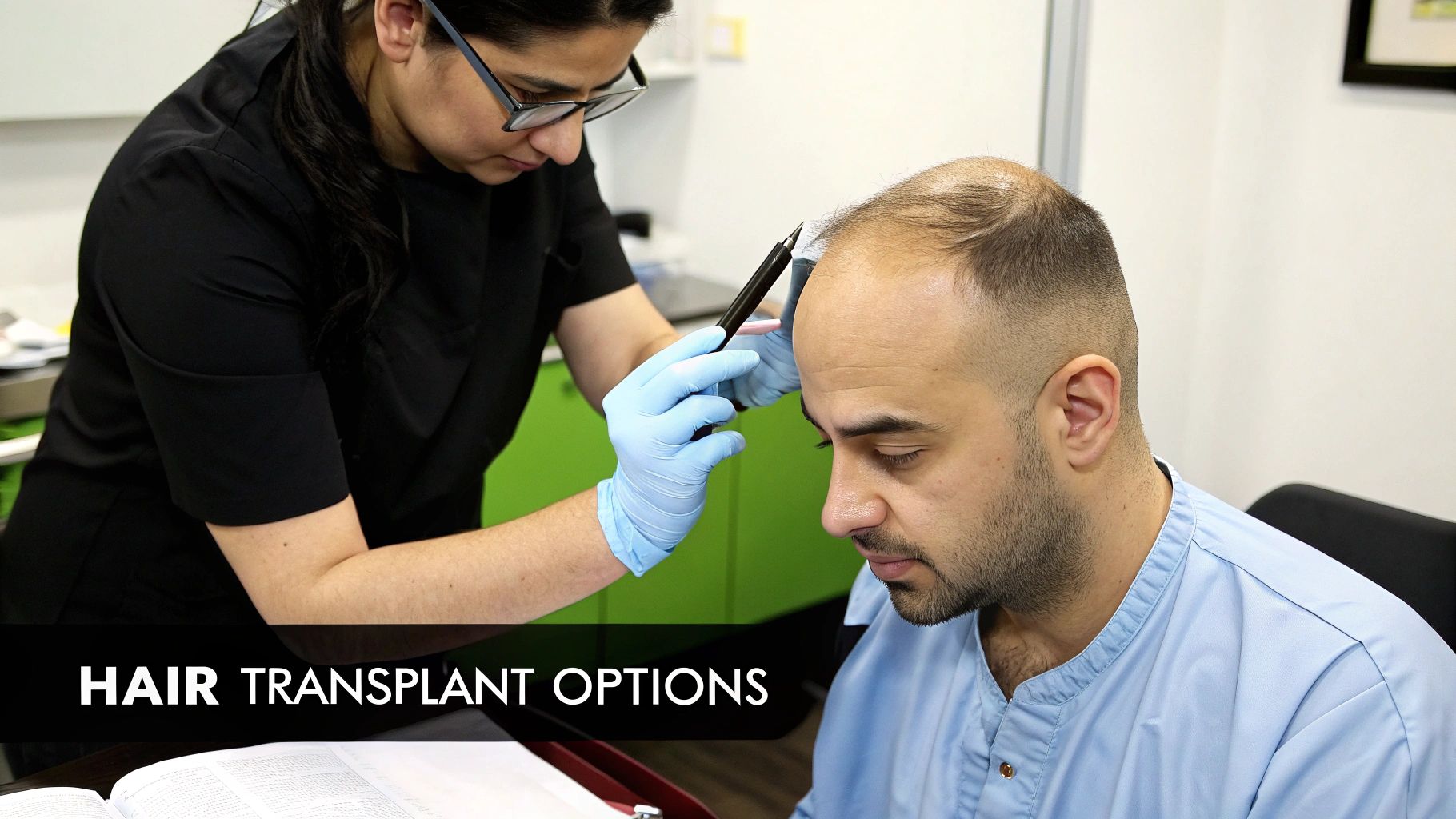
If you're looking for a permanent fix for a receding hairline, a hair transplant has probably crossed your mind. Unlike treatments that just manage hair loss, this is a surgical procedure. It physically moves DHT-resistant hair follicles from the back and sides of your head and relocates them to the thinning areas up front.
It's a big step, both financially and personally. But for the right person, the results can be genuinely life-changing. Before you get sold on the before-and-after photos, you need to understand the two main techniques: FUE and FUT.
FUE (Follicular Unit Extraction)
Follicular Unit Extraction, or FUE, is the more modern and by far the more common method used today. The surgeon extracts individual follicular units—tiny clusters of one to four hairs—directly from the donor area using a specialized punch tool.
This meticulous, one-by-one approach has some major perks:
- Minimal Scarring: FUE leaves tiny, dot-like scars scattered across the donor area. Once your hair grows out even a little bit, they become practically invisible. This makes it a great choice if you like to wear your hair short.
- Quicker Recovery: With no long incision to heal, recovery is generally faster and much more comfortable than the alternative.
FUE is now the industry standard, making up about 65% of procedures worldwide. Its success rates are impressive, sitting between 85% and 95%, which means the vast majority of transplanted follicles survive and thrive. It's particularly popular among men aged 25 to 50, who account for 87.3% of all patients.
FUT (Follicular Unit Transplantation)
The other primary method is Follicular Unit Transplantation, often called the "strip" method. With FUT, a surgeon removes a thin strip of scalp from the donor area. Technicians then carefully dissect this strip under microscopes to isolate individual follicular units before implanting them into your new hairline.
The main trade-off here is the scar. FUT leaves a single, linear scar across the back of the head. It's usually easy to hide with hair that’s at least half an inch long, but it's a permanent reminder of the procedure. On the flip side, FUT can sometimes yield a higher number of grafts in one session, making it a potential option for those with more advanced hair loss.
Finding the Right Surgeon and Setting Expectations
A successful hair transplant is as much an art as it is a science. Your final result depends almost entirely on the skill and artistic eye of your surgeon. They aren't just moving hair; they are designing a natural, age-appropriate hairline that needs to look good for the rest of your life.
A great surgeon understands the subtle angles, densities, and irregularities of a real hairline. They create something that doesn't scream "hair transplant"—it just looks like your own hair. This is the single most important factor in your decision.
Just as important is managing your own expectations. This is a process, not an instant fix.
- The Financial Investment: Transplants are not cheap. The cost can vary wildly based on the surgeon's reputation, the clinic's location, and how many grafts you need. Be prepared for a significant financial commitment.
- The Timeline: This is where patience really comes into play. Right after the surgery, the transplanted hairs will fall out. This is totally normal and expected. New, permanent growth will start to appear around the 3-4 month mark. You won’t see the final, mature result for a full 12 to 18 months.
It's a long game, but the payoff is a permanent, natural-looking hairline. Many guys wonder how this surgical route compares to non-surgical treatments like PRP. For a detailed breakdown, check out our guide comparing a hair transplant vs PRP therapy to see which path might better align with your goals.
Building a Sustainable Hair Health Routine
Let's be clear: there's no single magic bullet for a receding hairline. The real path to success is building a smart, long-term routine that fights hair loss from every possible angle and, just as importantly, actually fits into your life.
A sustainable plan goes way beyond a single treatment. It's about weaving together proven medical therapies with supportive daily habits to create the best possible environment for your hair to not just survive, but thrive. The most effective strategies almost always involve combining treatments so they work together as a team. Think of it like this—one player stops further loss while another actively encourages new growth.
Creating Your Treatment Stack
In the world of hair restoration, we call this a "treatment stack." It's simply the combination of therapies you use to hit the problem from multiple sides.
A classic, and highly effective, stack combines a DHT blocker with a growth stimulant. For example, you might take oral finasteride to lower the DHT levels that are genetically programmed to attack your follicles. At the same time, you'd apply topical minoxidil to the scalp to boost blood flow, essentially force-feeding the follicles with the oxygen and nutrients they need.
Other powerful combos I often see work well include:
- Post-Transplant Maintenance: Getting a hair transplant is a huge step, but the work isn't over. Using finasteride or minoxidil afterward is critical to protect the native, non-transplanted hair from thinning down the line.
- PRP and Minoxidil: This one-two punch can really amplify results. Minoxidil keeps the scalp's blood vessels open and receptive, which may help it respond even better to the powerful growth factors delivered during PRP therapy.
The whole point of stacking is to create a comprehensive safety net for your hair. You're not just plugging one hole in a leaky bucket; you're reinforcing the entire structure to prevent future problems.
Fueling Your Follicles From the Inside Out
What you eat directly impacts your hair's health. While the perfect diet won't reverse male pattern baldness on its own, a poor one will absolutely make it worse. Think of your hair follicles as tiny, high-demand factories that need a constant supply of raw materials to operate.
Start by consciously building hair-healthy foods into your meals. Some of the most important nutrients are:
- Iron: Absolutely essential for carrying oxygen to your cells, including the ones that build hair. You'll find it in spinach, lentils, and red meat.
- Zinc: Plays a huge role in hair tissue growth and repair. Oysters, beef, and pumpkin seeds are loaded with it.
- Biotin: A well-known B-vitamin for hair health. Eggs, almonds, and sweet potatoes are great sources.
- Protein: Hair is literally made of protein, so getting enough is non-negotiable. Stick to lean meats, fish, and beans.
Beyond specific foods, good overall health is foundational. You might also want to look into supplements that support general wellness. For guys hitting their middle years, this a guide to the best supplements for men over 40 is a pretty helpful resource.
Managing Stress and Your Daily Habits
Never underestimate the role of lifestyle, especially stress. Chronic stress floods your body with cortisol, which can throw your hair's growth cycle out of whack and trigger major shedding. This condition even has a name: telogen effluvium.
Finding ways to manage that stress can make a tangible difference. This doesn't have to be complicated—it could be daily meditation, hitting the gym, or just carving out time for a hobby you love. The goal is to lower the physiological stress that's taking a toll on your hair.
Finally, take an honest look at how you treat your hair. Harsh chemical treatments, frying it with heat, and pulling it back into tight hairstyles can cause physical damage and breakage. Switch to gentle, sulfate-free shampoos, be careful when you towel dry, and just generally treat your hair with care. This complete approach—blending medicine, nutrition, and smart habits—is what gives you the best shot at long-term success.
Common Questions on Reversing Hair Loss
When you're trying to figure out how to stop and reverse a receding hairline, a lot of questions pop up. Let's tackle some of the most common ones I hear from guys trying to navigate their options.
Can a Receding Hairline From Stress Be Reversed?
Yes, most of the time, it can. When you experience hair loss directly from a major stress event, it's typically a condition called telogen effluvium. The good news is that it’s usually temporary. Once you get a handle on the stressor, your hair growth cycle tends to correct itself, and you should see regrowth over the next few months.
But there's a catch. Severe stress can also hit the gas pedal on male pattern baldness if you're already genetically predisposed to it. This is why managing stress—whether through exercise, better sleep, or mindfulness—should be a non-negotiable part of any serious plan to protect your hair.
How Long Does It Really Take to See Results?
This is the big one, and the honest answer is: you need to be patient. Seeing real change takes time and, more importantly, consistency. Nothing happens overnight.
Here’s a realistic breakdown of what to expect from the go-to treatments:
- Minoxidil (Rogaine): You'll need to stick with it for 4-6 months before you see the first signs of less shedding or some new, fine hairs. The more significant results usually show up closer to the one-year mark.
- Finasteride (Propecia): Because it works internally to lower DHT, you can start seeing changes within 3-6 months. These improvements often continue to build for up to two years.
- PRP Therapy: Most guys need 2-3 initial sessions before they begin to notice a real difference in hair thickness and a slowdown in shedding.
- Hair Transplants: The first new hairs start to pop through around 3-4 months after the procedure. But don't judge the results then—the final, mature density won't be fully apparent for a full 12 to 18 months.
Are Hair Loss Treatment Results Permanent?
This is a crucial point, and the answer really depends on the path you take.
A hair transplant is considered a permanent solution. The reason is simple: the surgeon moves hair follicles from the back and sides of your head (areas genetically resistant to balding) to the thinning areas. These transplanted hairs will keep growing for life.
What a transplant doesn't do is stop the native hair around the transplanted ones from thinning. This is exactly why surgeons often recommend you stay on medical treatments like finasteride to protect the rest of your hair.
On the other hand, the results you get from minoxidil, finasteride, and PRP are not permanent. To keep the hair you've gained or maintained, you have to keep up with the treatments. If you stop, you can expect to lose that progress over the following months.
Understanding this long-term commitment is fundamental. For a more detailed look at what different approaches can achieve, our article on whether hair loss is reversible offers a deeper dive.
At PRP For HairLoss, our mission is to give you clear, evidence-based information so you can make an informed decision. To learn more about your options, feel free to explore our resources at https://prpforhairloss.com.

 PRP For Hairloss
Leave a comment