If you're starting to see more hair in your brush than on your head, the first instinct is often a mix of denial and panic. But the key right now isn't to rush into expensive, unproven treatments. It's to take a deep breath, get a clear-eyed view of what’s going on, and create a smart, manageable action plan.
Your First 30 Days: A Practical Plan for Thinning Hair
Seeing those first signs of thinning hair can be a real gut punch. A lot of guys immediately jump to the worst-case scenario. My advice? Don't. Your best move is to get objective and take back control with a calm, honest assessment. Let’s cut through the noise and build a realistic starting point.
This initial phase is all about observation. Where is the thinning? Is it at the crown? Is your hairline starting to recede? Or is it more of a general, all-over shedding? The answers to these questions are your first clues. It's also worth remembering that you're in good company—hair loss is incredibly common.
Get Your Bearings: What's Really Going On?
Genetics are almost always the main culprit, especially with male pattern baldness. In fact, androgenetic alopecia—the clinical term—is behind about 95% of hair loss cases in men. For most, it doesn't happen overnight. It's a slow burn. Data shows that over 74% of men notice their hair thinning for more than five years before they even think about looking for a solution.
But it's not just genetics. Your lifestyle can absolutely pour fuel on the fire. Chronic stress, a diet lacking key nutrients, or consistently poor sleep can all throw your hair's growth cycle out of whack and speed up shedding. Before you can figure out how to stop hair thinning, you have to know what you’re really up against. If you're struggling to figure out what to look for, this guide on how to tell if my hair is thinning is a great place to start.
Key Takeaway: The goal in the beginning isn't to find an overnight miracle cure. It's to slow the thinning, protect the hair you still have, and create the best possible conditions for new, healthy growth. Small, consistent wins are what keep you in the game.
Think of it as a simple, three-part approach: Assess where you are, create a smart plan, and then take action. It’s a logical flow that prevents you from making rash decisions based on emotion.
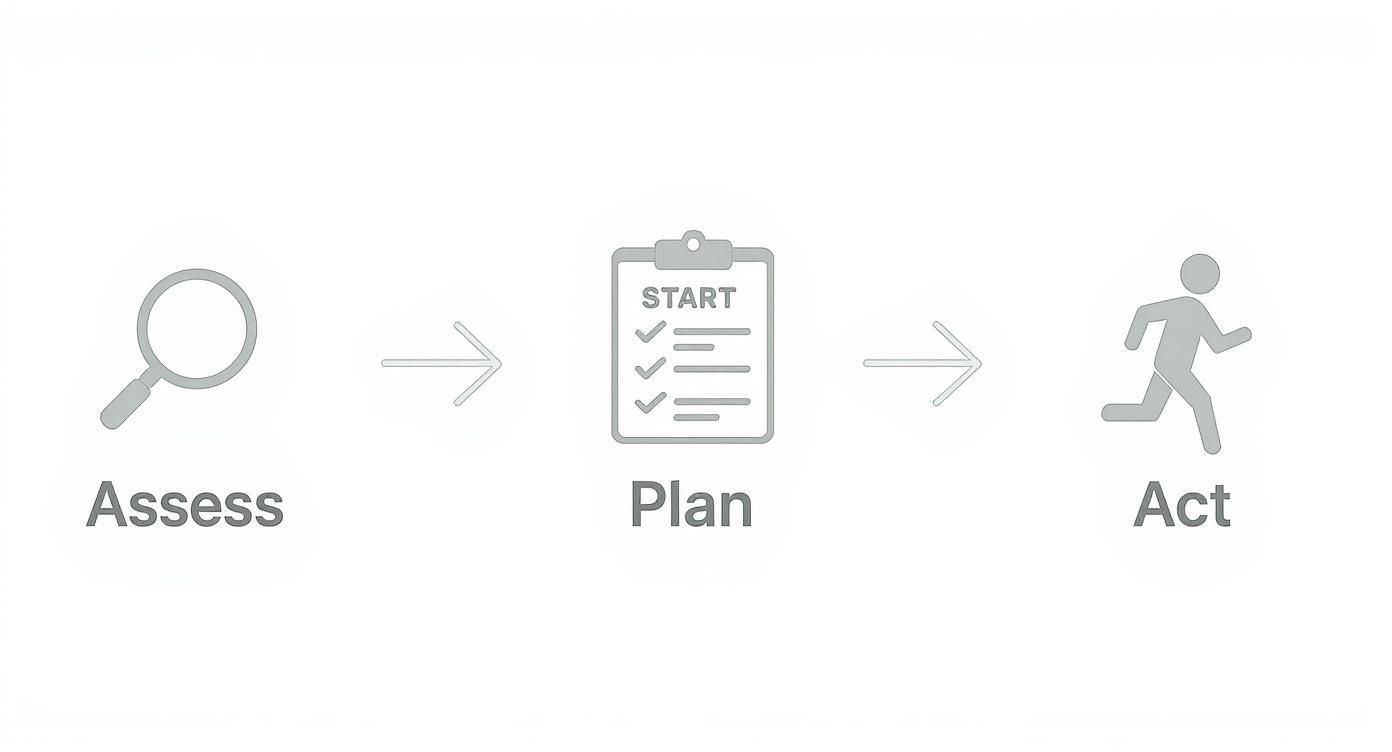
This simple framework keeps you focused. By assessing first, you ensure your plan is based on reality, not fear. That’s how you build a strategy that you can actually stick with for the long haul.
To get you started, here is a quick table outlining the most effective first moves.
Your Initial Action Plan for Hair Thinning
| Action Area | Key Focus | First Step |
|---|---|---|
| Hair & Scalp Care | Reduce scalp inflammation and follicle stress. | Switch to a gentle, sulfate-free shampoo. Wash with lukewarm water and avoid harsh scrubbing. |
| Nutrition | Fuel hair growth from the inside out. | Add more protein, iron, and zinc to your diet. Think lean meats, spinach, and nuts. |
| Lifestyle Habits | Minimize external factors that accelerate loss. | Prioritize 7-8 hours of sleep per night and find a practical way to manage stress (e.g., a 10-minute walk). |
This table isn't about overhauling your entire life. It’s about making small, targeted changes that create a better foundation for your hair's health while you explore more advanced options.
Building Your Foundation with Diet and Hair Care
Before you even think about prescriptions or advanced treatments, we need to talk about the fundamentals. I've seen countless guys jump straight to the heavy hitters, completely ignoring the basics that could make a huge difference on their own.
Think of it like this: your hair is a plant. If the soil is nutrient-poor and you're constantly yanking on the stem, it doesn't matter how much fancy fertilizer you pour on it. It’s going to struggle. Your daily diet and hair care routine are the soil and environment for your hair. Let’s get them right first.
Fueling Your Follicles From the Inside Out
Your hair follicles are tiny protein-making factories, and they need a steady supply of raw materials and energy to do their job. When your diet is off, your body is smart—it diverts nutrients away from non-essential tasks like hair growth to support vital organs. Hair production is one of the first things to get shut down.
That’s why a solid diet isn't just a suggestion; it’s non-negotiable for fighting hair thinning. We're not talking about some fad diet. It’s about consistently giving your body the fuel it needs. A great starting point is embracing clean eating principles, which naturally prioritizes the whole foods your hair loves.
It's a simple truth I've seen play out time and time again: you can't build strong hair on a weak diet. The nutrients you consume are the literal building blocks of every strand on your head.
Here are the key players your hair is counting on:
- Iron: Absolutely crucial for producing hemoglobin, which carries oxygen to your cells—including the ones that stimulate hair growth. Low iron is a classic, well-documented cause of shedding. Load up on lean red meat, spinach, and lentils.
- Zinc: This mineral is a powerhouse for hair tissue growth and repair. It also helps keep the oil glands around the follicles working correctly. Oysters, beef, and pumpkin seeds are packed with it.
- Biotin (Vitamin B7): While a true deficiency is rare, biotin is a key ingredient in the recipe for keratin, the protein that makes up your hair. You'll find it in eggs, nuts, and sweet potatoes.
- Protein: Your hair is almost entirely made of protein. Skimp on it, and your body can't build strong strands. It's that simple. Lean chicken, fish, Greek yogurt, and beans should be staples.
Making these changes can have a surprisingly big impact. For more ideas on what to add to your grocery list, check out this guide on the best foods for hair growth.
Rethinking Your Daily Hair Care Routine
Once your nutrition is on point, let's look at what you’re doing to your hair from the outside. A lot of hair thinning is either caused or made worse by a harsh daily routine. The goal here is to be gentle and supportive, not aggressive.
Many common habits—things you probably don't even think about—put real physical stress on your hair follicles. This leads to breakage, which makes your existing hair look even thinner. It's time to start working with your hair, not against it.
Gentle Swaps for a Healthier Scalp
Your scalp is the bedrock for healthy hair. If it's irritated, clogged, or inflamed, it’s not a good place for hair to grow. Here are a few simple changes that can make an immediate difference.
1. Upgrade Your Shampoo
Most drugstore shampoos are loaded with sulfates (look for sodium lauryl sulfate on the label). These are harsh detergents that strip away all the natural oils that protect your scalp, leading to dryness and irritation—the enemies of hair growth.
- Actionable Tip: Make the switch to a sulfate-free shampoo. And stop washing your hair every single day. For most guys, every other day is perfect unless you have extremely oily hair.
2. Master the Towel Dry
That aggressive, back-and-forth rubbing you do with a towel? It’s a recipe for disaster. Your hair is at its most fragile when it's wet, and that friction is snapping strands and roughing up the cuticle, making everything look frizzy and thin.
- Actionable Tip: Instead of rubbing, gently pat and squeeze the water out. Even better, grab an old, soft t-shirt. It’s much less abrasive and works just as well.
3. Incorporate a Scalp Massage
This isn't some spa luxury; it’s a practical tool. A simple massage increases blood flow to the follicles, which helps deliver all those nutrients you're eating. It’s also a fantastic way to de-stress, and we all know stress is a major contributor to shedding.
- Actionable Tip: For 3-5 minutes a day, use the pads of your fingers (not your nails!) to apply gentle pressure and make small circles all over your scalp. It's easy to do in the shower with your shampoo or right before bed.
Time to Bring in the Big Guns: Medical Hair Loss Treatments
When a solid diet and smarter hair care routine just aren't cutting it, it’s time to look at the clinically proven heavy hitters. This is where science steps in, offering powerful, evidence-backed tools to help you stop thinning and, in many cases, reclaim lost ground.
Diving into medical treatments can feel overwhelming. But understanding how the main players work is the best way to feel confident and ready for a productive chat with your doctor. The two biggest FDA-approved names you'll hear are Minoxidil and Finasteride.
These aren't vague promises in a fancy bottle; they are well-researched medications that have helped millions of men. They attack the problem from different angles, and knowing which does what is the key to building the right strategy for your hair.
Minoxidil: The Follicle Awakener
Think of Minoxidil as a jumpstart for your hair follicles. It's a topical treatment, meaning you apply it directly to your scalp, usually as a foam or liquid. While its exact mechanism is still a bit of a scientific mystery, we know it works as a vasodilator, widening blood vessels to ramp up blood flow.
This increased circulation delivers a rush of oxygen and nutrients, essentially waking up follicles from their resting phase and pushing them into the growth phase. The result? Existing hairs often become thicker, and you might see new, albeit sometimes finer, hairs sprouting.
One heads-up about Minoxidil: the "dread shed." It’s common to see an initial increase in shedding when you first start. Don't panic—this is actually a good sign. It means the treatment is clearing out the old, weak hairs to make room for new, stronger ones to grow in.
Finasteride: The DHT Blocker
While Minoxidil works on the surface, Finasteride gets to work from the inside out. This is an oral pill that directly targets the hormonal root cause of male pattern baldness. It's part of a class of drugs known as 5-alpha reductase inhibitors.
Here's the rundown: your body converts testosterone into a more potent hormone called dihydrotestosterone (DHT). For guys genetically prone to hair loss, DHT is public enemy number one. It latches onto hair follicles and gradually shrinks them until they can no longer produce hair.
Finasteride blocks the enzyme that creates DHT. By slashing DHT levels in your scalp by as much as 60-70%, it effectively slams the brakes on that shrinking process. This not only helps stop further thinning but can also lead to significant regrowth over time. For a deeper dive into what to expect month by month, our guide on the Finasteride results timeline offers a fantastic breakdown.
Expert Insight: Finasteride is often considered the gold standard for treating the underlying cause of male pattern baldness because it directly interferes with the hormonal process responsible for the hair loss itself.
Comparing Top Medical Hair Loss Treatments
Understanding the key differences between the top medical options is crucial for making an informed decision with your doctor. Here's a quick, head-to-head comparison to help you see how these treatments stack up against each other.
| Treatment | How It Works | Application | Typical Results Timeline |
|---|---|---|---|
| Minoxidil (Rogaine) | Boosts blood flow to follicles, extending the growth phase. | Topical foam or liquid applied to the scalp 1-2 times daily. | Noticeable changes in 4-6 months. |
| Finasteride (Propecia) | Orally taken pill that lowers scalp DHT levels. | A single pill taken once daily. | Initial results in 3-6 months, with peak results at 1-2 years. |
| PRP Therapy | Injections of your own concentrated platelets into the scalp to stimulate growth factors. | In-office procedure done every 4-6 weeks initially. | Improvements often seen after 3-4 sessions (around 3-6 months). |
It's also essential to be aware of potential side effects. While most men use these treatments without any issues, a small percentage may experience side effects with Finasteride, which should be discussed thoroughly with a doctor. Minoxidil's side effects are typically minor and localized to the scalp, like itching or irritation.
Exploring PRP Therapy: A Promising Alternative
Beyond the big two, Platelet-Rich Plasma (PRP) therapy has gained some serious traction. It’s a different approach because it harnesses your body's own healing powers.
The process involves drawing a small amount of your blood, spinning it in a centrifuge to concentrate the platelets, and then injecting this "liquid gold" back into the thinning areas of your scalp. These platelets are packed with growth factors that can kickstart dormant follicles and promote cell repair.
While it does require in-office visits and can be more expensive, many men see it as a powerful, non-pharmaceutical option to add to their arsenal. The key with any medical treatment is consistency and patience. Results don't happen overnight, but with the right approach, they are absolutely achievable.
The Real Deal on Supplements and Natural Remedies
Walk into any health store, and you're hit with an overwhelming wall of supplements. Bottles with bold promises of thicker, fuller hair line every shelf, making it nearly impossible to tell what actually works from what's just clever marketing. Let's cut through that noise.
The supplement industry is a giant for a reason. With the global market for hair loss treatments projected to hit a staggering USD 88.18 billion by 2030, it’s clear this is a problem people are desperate to solve. That massive number shows just how much we're all willing to invest in our hair. You can learn more about these hair loss statistics to see the full picture.
But here’s the most important thing to remember: supplements aren't magic. They work best when they're filling a specific gap. If you’re genuinely deficient in a certain nutrient, the right supplement can be a game-changer. If your diet is already on point, they'll offer support, not a miracle cure.
Evidence-Backed Supplements Worth a Look
Not all supplements are created equal. When it comes to male pattern baldness, a few have more science behind them than the rest. Think of these as your supporting cast, there to help the main actors—like finasteride and minoxidil—do their jobs better.
Here are a few ingredients that have shown some real promise:
- Saw Palmetto: Often called "nature's Finasteride," this herbal extract is thought to work in a similar way by helping to block the enzyme that creates DHT. It’s definitely not as powerful as the prescription stuff, but some studies suggest it can help slow things down.
- Biotin: This is probably the most famous "hair vitamin" out there. Biotin is crucial for producing keratin, the very protein your hair is made of. The catch? True biotin deficiency is pretty rare, so supplementing only really moves the needle if you're one of the few who are actually low.
- Collagen: As a fundamental protein in your body, collagen supplies the amino acid building blocks for new hair. Taking a collagen supplement can help strengthen the hair you already have and improve the health of your scalp's dermal layer.
My Takeaway: Don't fall for the idea that one pill will regrow a full head of hair. It won't. The smart way to use supplements is to create the best possible internal environment for your follicles, giving your primary treatments a stronger foundation to work from.
Exploring Potent Natural Remedies
Beyond the pill bottle, some topical natural remedies have earned a solid reputation for supporting hair health. And these aren't just old wives' tales; modern research is starting to back up what people have known for generations.
Rosemary oil is a perfect example. A fascinating study put it head-to-head with 2% Minoxidil. The result? After six months, it produced similar regrowth but with less scalp itching. Researchers believe it works by boosting circulation to the scalp and providing some anti-inflammatory benefits.
Other powerful ingredients from nature include things like organic amla powder, also known as Indian Gooseberry, which has a long history in traditional medicine for strengthening hair from the root. If you want to explore this path further, we’ve put together a full guide on various natural hair growth remedies.
In the end, it’s all about making smart, informed choices. Supplements and natural remedies can be a great part of your overall plan, but they work best when complementing treatments that are clinically proven. Just keep your expectations realistic and stick to the stuff that has some real evidence behind it.
Creating Your Long-Term Hair Maintenance Plan

Slowing down hair thinning isn’t a quick fix; it’s a marathon. Once you’ve found a routine that works, the goal shifts. You're no longer in a frantic battle against hair loss—you're now focused on steady, consistent maintenance to keep what you’ve got.
The absolute key here is consistency. Whether you’re applying Minoxidil every night or just making sure your diet is always packed with hair-friendly nutrients, your results hinge on sticking with it. The best way to approach this is to think of it as part of your daily grooming, just like brushing your teeth.
This mental shift is powerful. It moves you out of a state of anxiety and into a position of proactive control. The whole point is to build a plan that feels effortless, not like a chore you dread every day.
Tracking Progress and Making Adjustments
Keeping an eye on your progress is the best way to stay motivated and know when to tweak your approach. Sure, you look in the mirror every day, but a more objective method gives you the real story over time.
The easiest way? Take pictures. Once a month, stand in the same spot with the same lighting and snap a few photos from the same angles—front, top, and crown. Looking back over six months or a year, you’ll see the subtle changes that are impossible to notice day-to-day.
You also have to learn to listen to your body. Is your scalp getting irritated? It might be time to switch shampoos or ease up on a topical treatment. Hair feeling brittle? You probably need more healthy fats or protein in your diet. A good plan isn't set in stone; it's adaptable. For a deeper dive into this, you can learn more about how to increase hair density through consistent, targeted care.
Managing the External Factors
Life has a way of throwing curveballs, and outside factors can mess with even the best hair care routine. Stress is the big one. It's a notorious trigger for shedding because high levels of the stress hormone, cortisol, can shove hair follicles into their resting phase way too early. This leads to a type of shedding called telogen effluvium.
Key Insight: Chronic stress messes with your hair's natural growth cycle. Getting a handle on it isn't just good for your well-being; it's a non-negotiable part of any serious hair maintenance plan.
Find a practical, repeatable way to manage your stress. It doesn’t have to be complicated.
- Daily Walks: Just 15-20 minutes outside can do wonders for lowering cortisol.
- Mindfulness or Meditation: Use an app to guide you through a quick 5-minute session.
- Prioritizing Sleep: Aim for a solid 7-8 hours a night. This is when your body does its most important repair work.
These aren't just generic wellness tips. They are concrete actions that directly protect your hair from the inside out.
Knowing When to Check in With a Professional
Even with a solid plan in place, it’s smart to touch base with a dermatologist from time to time. Schedule a check-in if you feel like your treatment isn't working anymore, if you notice a sudden increase in shedding, or if you develop new scalp problems like persistent itching or inflammation.
A specialist can help you troubleshoot the issue, maybe by adding a new treatment to your regimen or looking for an underlying health issue that might have popped up. The demand for real solutions is driving massive growth in the hair loss treatment market, which was valued at USD 1.51 billion in 2024 and is projected to hit USD 2.75 billion by 2030.
This growth is good news for you—it means more and better options are always on the horizon. A professional can help you navigate what's new and effective. Ultimately, long-term success is a combination of consistency, smart adjustments, and knowing when to call in an expert.
A Few Common Questions About Hair Thinning
Even with a solid game plan, you're going to have questions. That's natural. When it’s something as personal as your hair, you need straight answers. Let's dig into some of the most common things guys ask when they start tackling hair thinning.
Is It Possible to Completely Reverse Hair Thinning?
This is the million-dollar question, and the honest answer is, it depends. The real key is understanding what's causing the thinning in the first place and how early you jump on it.
For male pattern baldness—the genetic kind most of us are dealing with—treatments like Minoxidil and Finasteride can be game-changers. They're great at slowing things down and even helping regrow hair by waking up follicles that have gone dormant but aren't completely dead. But here's the reality check: if a follicle has been shut down for years, the chances of bringing it back are slim.
The outlook is much better if your hair loss is tied to something else. If it's triggered by major stress, a vitamin deficiency, or a recent illness, your chances for a full recovery are high once you fix the root problem. Your body is pretty good at bouncing back, and once that stressor is removed, your hair's growth cycle usually gets back to normal.
How Long Does It Realistically Take to See Results?
Look, patience is tough, but it's non-negotiable here. You're not going to see a full head of hair in a week, and setting the right expectations is crucial so you don't get frustrated and quit.
Here’s a realistic breakdown for the big-name treatments:
- Minoxidil (Topical): You need to stick with it for at least four to six months before you can really judge if it's working. And a heads-up: you might see some initial shedding in the first few weeks. Don't freak out. That's actually a good sign the treatment is pushing out the old, weaker hairs to make room for new, healthier ones.
- Finasteride (Oral): The timeline is pretty similar here. You'll likely start noticing subtle changes around the three to six-month mark. The most impressive results, however, usually take a full year or even two of consistent daily use to really show.
The single best piece of advice I can offer is this: commit to any treatment for a solid six months before you decide if it's working. Bailing too early is the #1 mistake I see guys make.
When Is It Time to See a Doctor?
Starting with over-the-counter options and better hair care habits is a smart first move. But there are definitely moments when calling in a professional is the right call. A dermatologist can give you a proper diagnosis and open the door to more powerful treatments.
You should book an appointment right away if you notice any of these red flags:
- Sudden, Fast Hair Loss: If you're shedding hair at an alarming rate, it could point to an underlying health issue that needs attention.
- Patchy Bald Spots: If you're seeing distinct, coin-sized bald patches (a classic sign of alopecia areata), you need a professional diagnosis.
- An Unhealthy Scalp: Don't ignore things like constant itching, soreness, redness, or flaking. These can signal scalp inflammation or a skin condition that's making your hair loss worse.
- You're Stuck: If you've been consistent with OTC treatments for six months with zero improvement, it's time for an expert opinion. A doctor can figure out if you're a good fit for prescriptions or other medical procedures like PRP.
Seeing a specialist isn't admitting defeat. It’s about getting serious and building the smartest, most effective strategy for your hair.
Dealing with hair loss can feel overwhelming, but with the right knowledge and a consistent plan, you have the power to protect and keep the hair you have. At PRP For HairLoss, our goal is to give you clear, evidence-based information to help you along the way. To learn more, check out our other resources at https://prpforhairloss.com.

 PRP For Hairloss
Leave a comment