When you're trying to decide between Rogaine foam and liquid, it often boils down to a simple trade-off. The foam is generally the go-to for anyone with sensitive skin, while the liquid might be a better fit if you're on a tighter budget. Honestly, your choice really depends on what you value more: a fast, comfortable application or a lower price tag.
Choosing Between Rogaine Foam and Liquid
Picking the right hair loss treatment can feel a bit much. When you're staring at the options on the shelf, the choice between Rogaine's foam and liquid can seem like a huge deal, but the differences are actually pretty simple. They mostly just affect your daily routine, not the end result.
Both the foam and the liquid are built around the same core ingredient: 5% minoxidil. That's the workhorse that actually gets your hair to regrow. This means that from a clinical standpoint, one isn't stronger than the other; studies show they produce pretty much identical results. The real daylight between them is in the application experience and what else is in the bottle.
Key Differences at a Glance
So, what really separates these two? It all comes down to how it feels to apply, how long it takes to dry, and whether it might irritate your scalp.
The liquid version contains an ingredient called propylene glycol. While it helps with absorption, it’s also the main reason some people get itching, redness, and irritation. The foam was developed specifically without it, which is why it's a much gentler option for most people.
Here's a quick breakdown to help you compare the two side-by-side.
Quick Comparison: Foam vs. Liquid
| Factor | Rogaine Foam | Rogaine Liquid |
|---|---|---|
| Application | Lightweight and melts into the scalp with less mess. | Uses a precise dropper but can be a bit runny. |
| Drying Time | Dries quickly, leaving minimal residue or greasiness. | Takes longer to dry and can leave hair feeling greasy. |
| Scalp Irritation | Less likely to cause irritation as it's propylene glycol-free. | More common culprit for itching due to propylene glycol. |
| Cost | Generally the more expensive option per month. | Typically more budget-friendly and cost-effective. |
Ultimately, the best choice is the one that fits your lifestyle, skin type, and wallet. Both are proven to work, so you can't really make a "wrong" choice when it comes to effectiveness.
And while these topical options are the most common, it's worth knowing there are other ways to use this treatment. For a complete picture, you might want to look into the differences between oral vs topical minoxidil to see all the available solutions before you commit.
How Minoxidil Works for Hair Regrowth
Before we really dive into the foam versus liquid debate, it’s worth understanding what you’re actually putting on your head and why it works. The hero ingredient in both versions of Rogaine is Minoxidil, a drug that found its calling completely by accident.
Believe it or not, Minoxidil started out in the 1950s as an oral medication for high blood pressure. But during clinical trials, researchers kept noticing a weird side effect: patients were growing hair everywhere. This happy accident totally changed its future, and it eventually became the first FDA-approved topical treatment for male pattern baldness.
At its core, Minoxidil is what’s known as a vasodilator. In simple terms, it widens the blood vessels. Think of your scalp's network of tiny blood vessels as a little irrigation system for your hair follicles. Minoxidil cranks up the water pressure.
This boost in blood flow delivers a rush of oxygen, blood, and vital nutrients right where you need them—to the hair follicles. It basically wakes up shrunken, tired follicles, coaxing them out of retirement and back into the business of growing hair.
Extending the Hair Growth Phase
Where Minoxidil really shines is in its ability to mess with the natural hair growth cycle. It works to shorten the resting (telogen) phase, when follicles are dormant, and prolong the active growth (anagen) phase.
This two-pronged attack means you’re not just encouraging new hairs to start growing; you’re also giving your existing hairs a longer window to grow thicker and stronger before they'd normally fall out. Its role in tackling hair loss, a common sign of aging, makes it a key player in any comprehensive guide to prevent aging and maintain your appearance.
Here’s the main takeaway for our comparison: both the foam and liquid versions of Rogaine use the exact same 5% Minoxidil concentration. Since the active ingredient is identical, their power to regrow hair is, for all practical purposes, the same.
The real choice between foam and liquid has almost nothing to do with which one works "better" and everything to do with the day-to-day user experience—a difference driven entirely by their inactive ingredients.
A Practical Comparison of Each Formulation
When you line up the foam and liquid versions of Rogaine, you’ll see they have the exact same active ingredient. But the real story—the one that will actually affect your day-to-day life—is found in the inactive ingredients. This is where the practical differences in the Rogaine foam vs. liquid debate truly come to life.
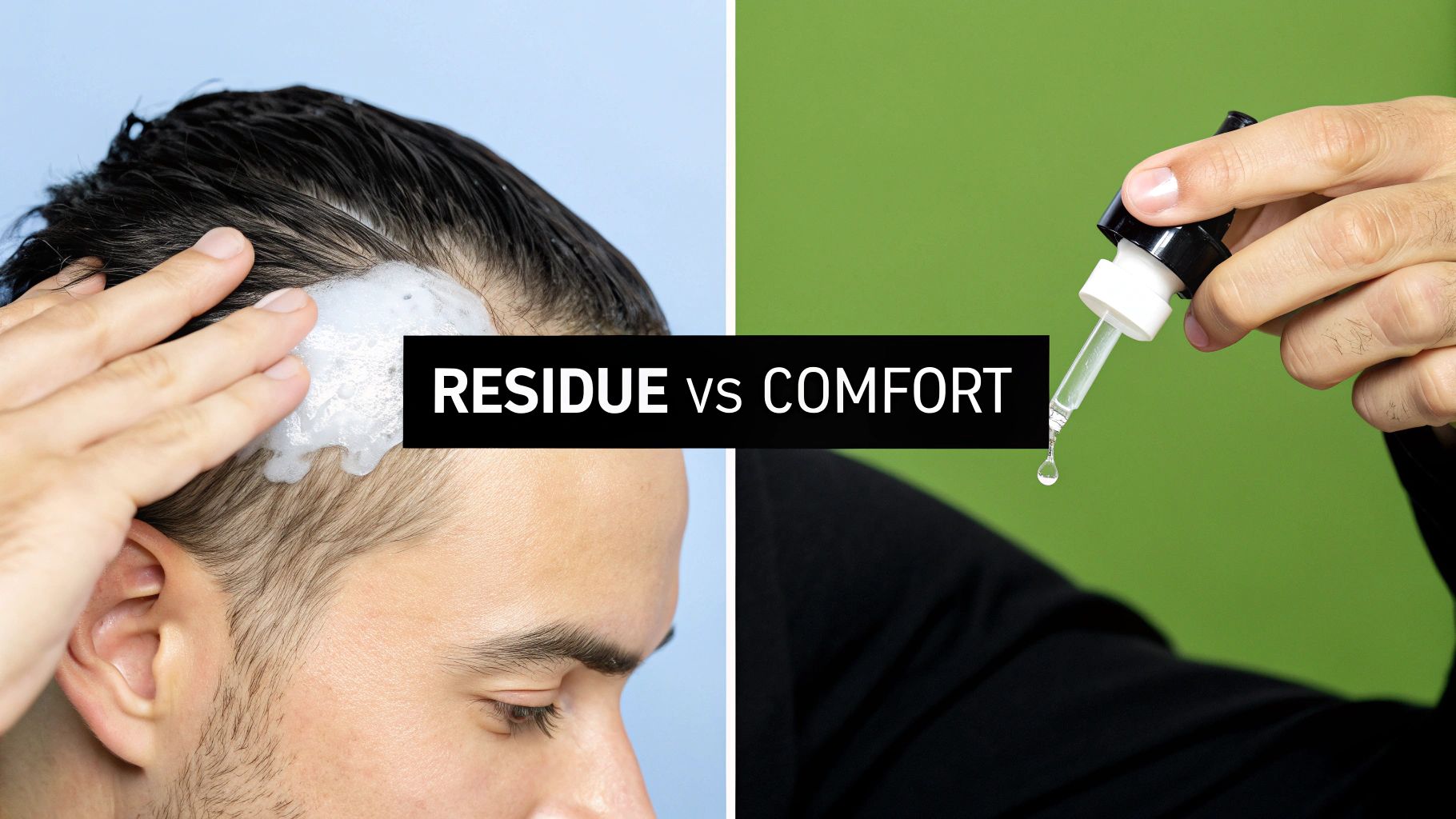
The choice you make here will directly impact how the product feels, how it fits into your grooming routine, and whether you experience any uncomfortable side effects. It’s less about which one works better clinically and more about which one you’ll actually stick with.
The Deciding Factor: Propylene Glycol
The single biggest difference between the two is an ingredient called propylene glycol. This alcohol-based solvent is in the liquid version to help minoxidil get into the scalp, but it’s also the number one reason for irritation for a lot of guys.
The foam formulation was created specifically to be propylene glycol-free, which makes it a much gentler option. If you have sensitive skin, eczema, or even just a tendency toward dandruff, the liquid version could easily cause a reaction.
The most common complaints from liquid users—itchiness, redness, and flaking—are almost always traced back to a sensitivity to propylene glycol. Choosing the foam is often the simplest way to sidestep these issues altogether.
For many, this alone is the deciding factor. A hair loss treatment is only effective if you can use it consistently, and a perpetually itchy scalp is one of the main reasons people give up on minoxidil.
The Daily User Experience
Beyond skin sensitivity, the two formulas offer completely different experiences day-to-day. How the product feels and looks in your hair can be just as important as what's in it, especially if you care about your hairstyle.
Application and Styling with Liquid:
The liquid comes with a dropper, which does allow for very precise targeting of the scalp. Some men with longer or thicker hair really appreciate this. However, it's known for taking forever to dry and leaving behind a greasy, sticky film. This residue can weigh your hair down, making it look oily and unwashed, which can really complicate styling.
Application and Styling with Foam:
The foam, on the other hand, is incredibly lightweight and airy. It melts right into the scalp on contact and absorbs in a fraction of the time—we're talking just a few minutes. Because it’s so fast-drying and leaves virtually no residue, it doesn't interfere with your other styling products or leave your hair feeling heavy. This makes it a far more convenient choice for your morning routine before you head out the door.
A Head-to-Head Comparison
Let's break down the practical differences in a clear, side-by-side format. This should help you visualize which one really fits your lifestyle.
| Feature | Rogaine Foam | Rogaine Liquid |
|---|---|---|
| Primary Advantage | Comfort and fast absorption. | Lower cost and precise application. |
| Feel on Scalp | Lightweight, non-greasy, and clean. | Can feel oily, sticky, and heavy. |
| Drying Time | Dries in minutes. | Can take 20-30 minutes or longer to fully absorb. |
| Effect on Hair Style | Minimal to no impact. | Often leaves hair looking greasy or wet. |
| Potential for Irritation | Very low, as it's propylene glycol-free. | Higher due to the presence of propylene glycol. |
Ultimately, while both deliver the same active ingredient, the foam provides a much more comfortable and seamless experience. Its modern formulation directly addresses the biggest complaints people had with the original liquid. While the liquid is a proven and budget-friendly option, its potential for irritation and cosmetic drawbacks are significant trade-offs.
Of course, options continue to evolve, and you can even learn more about the minoxidil spray for male hair loss treatments that are now available.
Integrating Rogaine Into Your Daily Routine
Let's be blunt: consistency is everything when it comes to hair loss treatments. When you're weighing Rogaine foam vs. liquid, you're not just comparing formulas. You're deciding which one you can realistically commit to using twice a day, every single day, without fail. If it feels like a chore, you'll stop.
The best trick is to make it an automatic habit, just like brushing your teeth. I tell my patients to anchor it to their existing morning and evening routines. Put the bottle right next to your toothbrush or on your nightstand—wherever you can't miss it. This simple visual cue makes a world of difference.
Step-By-Step Application Tips
Proper application is non-negotiable. Minoxidil has to reach the follicles in your scalp to do its job. Just smearing it over your hair is a complete waste of time and money; it needs direct skin contact.
Applying the Foam:
- Always start with a dry scalp and hair. This is key for absorption.
- Part your hair in the areas where it’s thinning to get a clear shot at the scalp.
- Dispense about half a capful of foam onto cool fingers. If your hands are warm, the foam will melt into a liquid instantly.
- Gently massage the foam directly onto the scalp, not just into your hair. I recommend working in small sections to ensure even coverage.
Applying the Liquid:
- Again, make sure your scalp is completely dry.
- Use the included dropper to measure exactly 1 mL of solution. Don't eyeball it.
- Part your hair to create a direct path to the scalp.
- Apply the drops evenly across the target zones. Let the solution spread out naturally without over-massaging.
The single biggest mistake I see guys make is applying Rogaine to their hair instead of their scalp. It doesn't matter if you choose foam or liquid—take the extra 60 seconds to part your hair properly and get the product right on the skin. This one detail can be the difference between seeing results and seeing nothing.
Real-World Scenarios and Recommendations
There’s no single "best" option here. The right choice depends entirely on your lifestyle, your hair, and how sensitive your skin is.
- For the Man with Sensitive Skin: If you're prone to itching, dryness, or dandruff, the foam is your best bet. It was specifically formulated without propylene glycol to be gentler on the scalp, making that twice-daily routine far more tolerable for the long haul.
- For the Man with a Buzz Cut: When your hair is very short, the liquid's dropper offers incredible precision. You can target specific spots like the crown or temples with pinpoint accuracy, which means less product gets wasted on your hair.
- For the Man with Longer Hair: For guys with longer or thicker hair, the foam is almost always easier to manage. It's less likely to drip down your forehead, absorbs quickly, and won't leave behind the greasy residue that can weigh down your hairstyle.
In the end, picking the formulation that fits you best makes sticking to the routine feel effortless. And that consistency is what really drives results. Once you start, it helps to know the timeline, which is why understanding how soon Rogaine starts to work can help you set realistic expectations.
A Look at the Cost and Long-Term Value
Let's be honest, starting a hair loss treatment like Rogaine is a long-term relationship, and that includes your wallet. When you're weighing Rogaine foam vs. liquid, the financial side of things is a very real factor that often dictates which one you'll actually stick with for the long haul.
At first glance, the price difference is pretty clear. The liquid version, whether you grab the official Rogaine brand or a generic minoxidil, is almost always the cheaper option. That lower upfront cost makes it a really appealing place to start for a lot of guys.
But the foam, while it does cost a bit more, brings a different kind of value to the table. Because it's quick-drying and less likely to irritate your scalp, you're just more likely to use it every single day. The true cost of any treatment isn't just the sticker price—it’s whether you can use it consistently without quitting because of annoying side effects or a greasy mess.
Branded vs. Generic Minoxidil
One of the biggest levers you can pull to manage the long-term cost is choosing between the big brand name and its generic cousins. Generic minoxidil is available for both the foam and the liquid, and the savings can be huge. The active ingredient, 5% minoxidil, is exactly the same, so you can expect the same clinical results.
- Rogaine Brand: You're paying a premium for the name, the packaging, and all the advertising behind it.
- Generic Minoxidil: You get the same active ingredient for a much lower price, which makes sticking with the treatment for years much more manageable.
A lot of guys save a ton by buying generic versions in bulk, usually getting a three- or six-month supply at a time. This move can slash your monthly cost and make either the foam or the liquid fit much more comfortably into your budget.
What the Market Says and How It Affects You
The world of hair loss treatments is always evolving. In 2024, the global minoxidil market was valued at a massive USD 1.61 billion, and it's only expected to keep growing. Traditionally, the liquid formula has dominated the scene, holding a whopping 74.4% of the market share in 2024.
But here's the interesting part: the foam is catching up fast, largely because people just find it easier and more pleasant to use. If you want to dive deeper into these trends, you can read the full research on minoxidil market growth.
In the end, what's the "best" value? It really comes down to what you care about most. If the absolute lowest price is your main goal, generic liquid is the hands-down winner. But if you're willing to pay a little more for comfort and convenience—the very things that will keep you on track—then the foam is probably a smarter investment in your own success.
Remember, this financial decision is just one piece of the puzzle. It's always a good idea to understand all your options, including other effective non-surgical hair loss treatments, to build a complete and sustainable plan that works for you.
Making the Right Choice for Your Hair
When you’re weighing Rogaine foam vs. liquid, there’s no single right answer for everyone. The best choice is the one that fits you—your lifestyle, your skin's tolerance, and even your budget. It really boils down to picking the product you'll actually stick with day after day.
Think about it logically. If you have a sensitive scalp that gets easily irritated, forcing yourself to use the liquid formula is just setting yourself up to quit. In the same way, if the higher price of the foam is going to strain your finances, the more budget-friendly liquid is the smarter, more sustainable option.
When to Choose Rogaine Foam
The foam is, without a doubt, the frontrunner for anyone who puts a premium on comfort and convenience. I typically recommend the foam to men who:
- Have sensitive skin or a history of scalp issues like dandruff, since it's free of the common irritant propylene glycol.
- Need a quick-drying formula that won’t mess up their morning routine or interfere with styling products.
- Can't stand the thought of greasy residue and want a product that feels clean and lightweight after application.
When to Choose Rogaine Liquid
On the flip side, the original liquid formula is still a solid, effective choice, especially if cost and application control are at the top of your list. The liquid is often a better fit if:
- You're working with a stricter budget and need the most cost-effective version of minoxidil.
- You have a resilient scalp that doesn't react to much of anything.
- You have very short or buzzed hair, where the dropper’s precision helps you target specific spots without wasting product.
If you're still on the fence, this flowchart breaks down the decision based on what matters most to you.
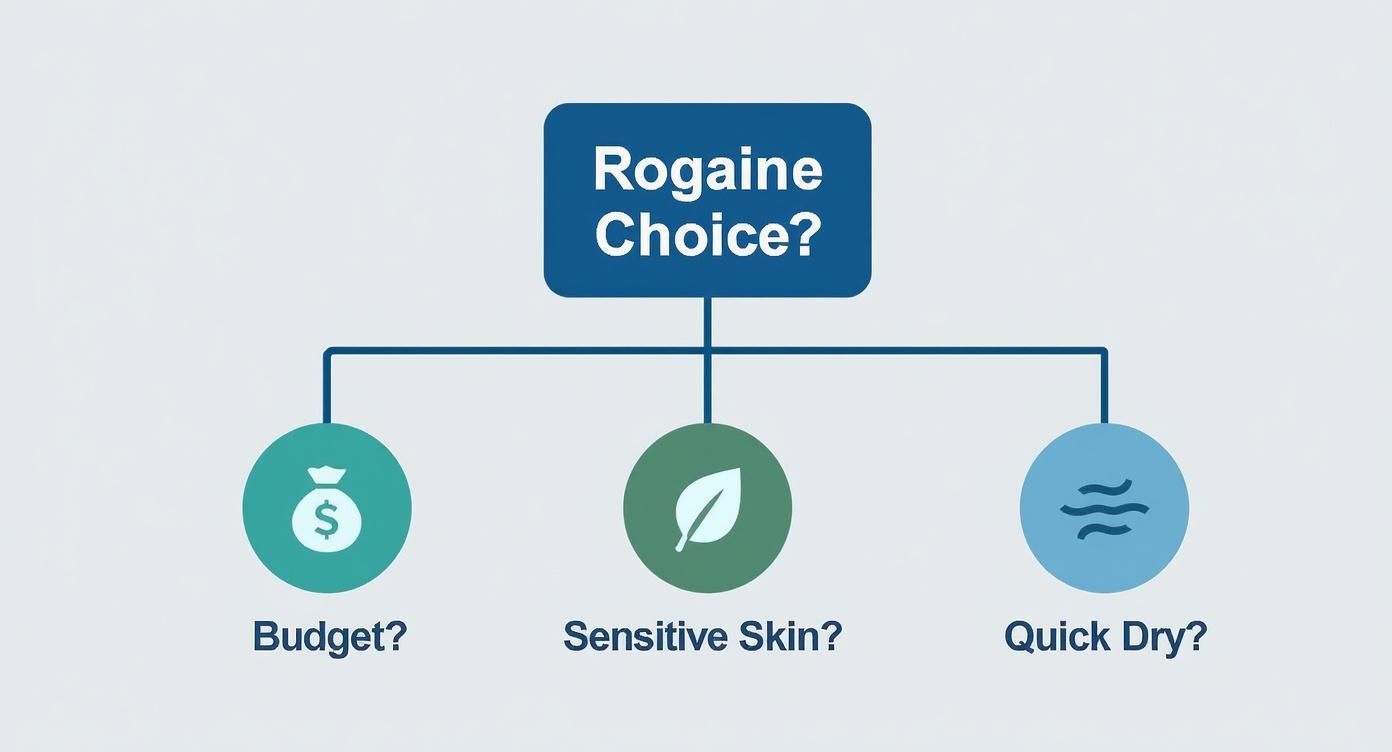
As you can see, factors like skin sensitivity, your budget, and how you style your hair are the clearest paths to making a decision you can feel good about. At the end of the day, the most effective treatment is the one you consistently apply twice a day, every day. Consistency is king.
Answering Your Top Rogaine Questions
As you get ready to start treatment, it’s completely normal to have a few questions. Deciding between Rogaine foam and liquid can feel like a big step, so let’s tackle some of the most common things people wonder about.
Is Rogaine Foam as Effective as the Liquid?
Yes, absolutely. Both the foam and the liquid versions contain the exact same active ingredient—5% minoxidil—at the same strength.
Clinical studies have shown that they deliver nearly identical results in terms of hair regrowth. The choice isn't about which one works better, but which one fits your lifestyle and scalp sensitivity, making it easier for you to stick with it every day.
Can I Switch From Liquid to Foam?
Of course. Making the switch is seamless and won’t set back your progress.
If you've been using the liquid and find it messy or irritating, you can move over to the foam without any weird transition period. Just use the foam for your next application. Since the 5% minoxidil concentration is the same, your hair follicles won’t notice a thing.
How Long Until I See Results?
This is a marathon, not a sprint. Whether you choose the foam or the liquid, you likely won't see any significant changes for at least three to six months.
It's also very common to notice some extra shedding in the first few weeks. Don't panic! This is actually a good sign that the minoxidil is working, pushing out the old, weaker hairs to make room for new, healthier ones to grow in.
Minoxidil is a long-term treatment, not a cure. To keep the hair you've regrown, you have to keep using it twice a day. If you stop, you can expect the new hair to fall out within a few months, and your hair loss will pick up where it left off.
Choosing the right product is just the first step. The real key to seeing results is consistency.
Ready to explore a comprehensive approach to combating hair loss? At PRP For HairLoss, we provide in-depth information on various treatments to help you make the best decision for your hair. Learn more at https://prpforhairloss.com.

 PRP For Hairloss
Leave a comment