Realizing your hair is thinning can be a gut punch, but the best way to fight back is with a solid plan. The most effective approach for how to thicken thinning hair isn't about some miracle cure; it's a three-pronged attack you can launch today. It starts with mastering your daily routine, then fueling your body for growth, and finally, exploring treatments that are actually proven to work.
Let’s get started.
Your Action Plan for Thicker Looking Hair
If you're noticing more scalp than you used to, you're in good company. This is an incredibly common experience for men, but that doesn't make it any less frustrating. The key is to stop worrying and start taking deliberate, informed action.
This guide is designed to cut through the snake oil and confusing advice. We're giving you a straightforward roadmap—no overnight fixes, just actionable steps that make a real difference in your hair's health and appearance. The whole plan is built on three core pillars that support each other.
H3: Building a Solid Foundation
The first pillar is all about your daily habits. This is the groundwork, and getting it right makes everything else more effective. You'd be surprised how much of an impact a few simple changes can have on how thick your hair looks and feels.
This includes:
- Your Hair Care Routine: It's time to get intentional about the shampoo you use and learn how to dry your hair without causing more breakage.
- Smart Styling Choices: Certain products and haircuts can instantly create the illusion of more volume. We'll show you which ones.
Next up is your internal health. You can't build a strong house on a weak foundation, and the same goes for your hair. Healthy hair grows from the inside out, so what you eat and how you manage stress are non-negotiable. If you're dealing with a specific trouble spot, looking into targeted strategies for thinning crown hair loss can be a powerful part of your overall plan.
H3: Exploring Proven Treatments
The final pillar is where we bring in the heavy hitters: treatments backed by real science. This is how you can actively stimulate new growth and directly combat the biological mechanisms causing your hair to thin.
"Feeling like you're losing control over your hair is a common sentiment. The most powerful response is to educate yourself on the available, proven options and create a multi-faceted plan that addresses the issue from every angle."
This part of the strategy isn't about guesswork. It’s about understanding the legitimate tools at your disposal, from stuff you can buy at the drugstore to prescription medications and clinical procedures.
To give you a better overview, here's a quick summary of the approach we're about to dive into.
Quick-Start Guide to Thicker Hair
| Strategy Pillar | Key Actions | Effort Level | Typical Timeline |
|---|---|---|---|
| Foundation & Styling | Use thickening shampoos, avoid harsh chemicals, adopt a volume-boosting haircut. | Low | Immediate (styling) to 1-2 months (health) |
| Nutrition & Lifestyle | Increase protein & biotin intake, manage stress, improve sleep quality. | Medium | 3-6 months |
| Medical Treatments | Consistently apply minoxidil, consult a doctor for finasteride or PRP. | Medium to High | 4-6+ months |
This table provides a high-level look, but remember that consistency is what drives real results.
Let's put this into perspective: you're not alone in this. By age 35, roughly 66% of men deal with significant hair thinning. In the U.S. alone, over 56 million people are affected by hair loss.
This guide will walk you through each of these pillars in detail, giving you the honest information you need to build a routine that works for you.
Mastering Daily Hair Care and Styling
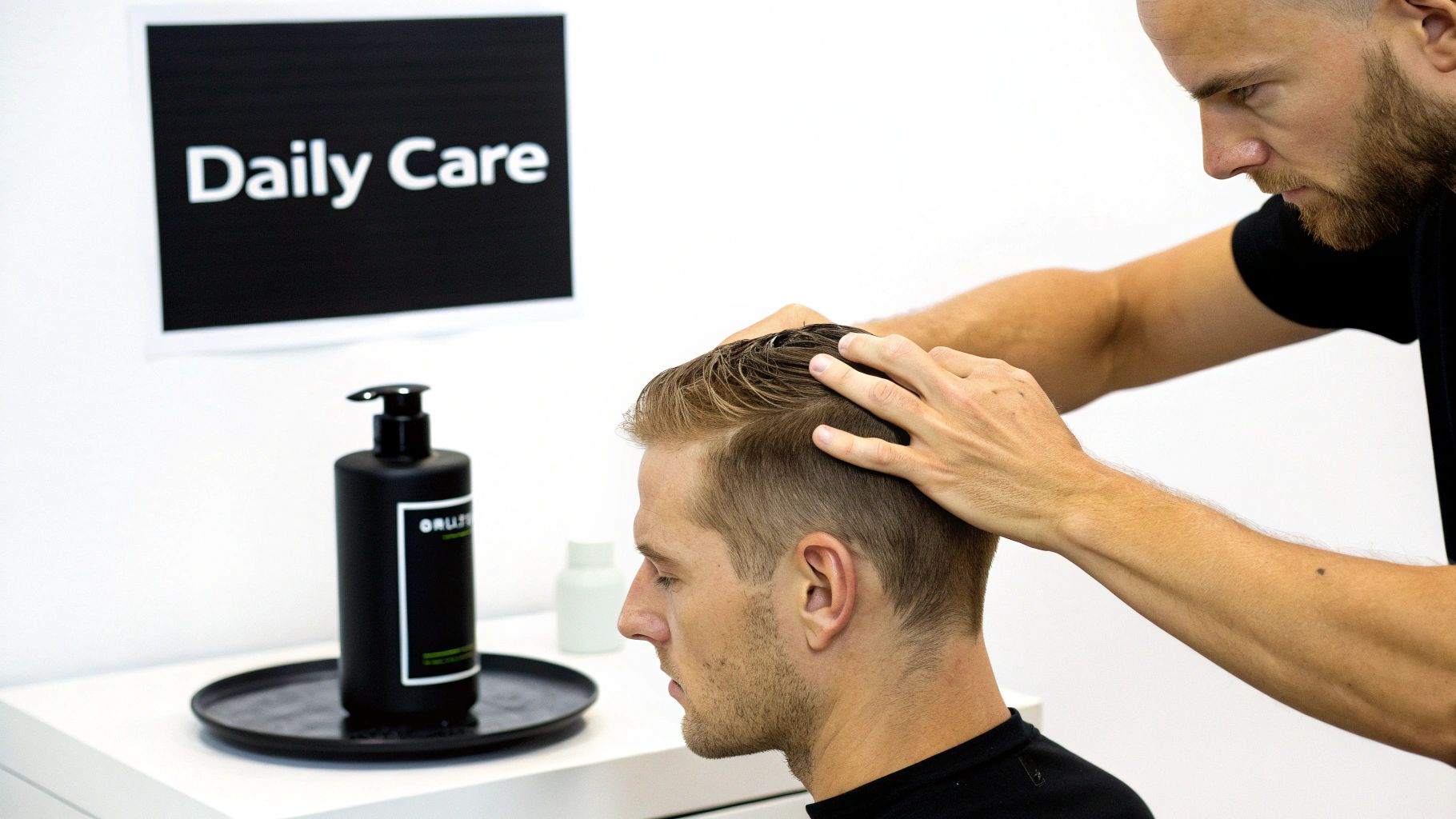
The fight against thinning hair is often won or lost in your daily routine. Forget drastic, overnight fixes for a moment—real, lasting change often begins with the small, consistent habits you build in your own bathroom. Getting your daily hair care and styling dialed in is the foundation that makes every other treatment more effective.
Think of your scalp as the soil and your hair as the plant. If the soil is unhealthy, the plant simply won't thrive. The products you choose, how you wash, and even how you dry your hair can either build a healthy environment for growth or actively work against you.
Choosing the Right Shampoo Is Non-Negotiable
The shampoo aisle can be overwhelming, I get it. But your mission is pretty straightforward: find a shampoo that supports your scalp, and ditch the ones that strip it. Many popular, big-name shampoos are packed with harsh detergents like sulfates—keep an eye out for sodium lauryl sulfate or sodium laureth sulfate on the ingredient list. Over time, these can irritate your scalp and weaken follicles that are already struggling.
Instead, start scanning labels for ingredients known to give your scalp and hair a fighting chance.
- Biotin: This is a core B-vitamin that’s essential for hair health, helping to fortify the hair shaft from within.
- Ketoconazole: You’ll often find this in anti-dandruff shampoos. It has the added benefit of disrupting DHT, the hormone closely linked to male pattern baldness.
- Saw Palmetto: This is another natural ingredient that’s believed to have DHT-blocking properties, helping to create a better environment for hair to grow.
It's also crucial to know which products to avoid entirely. There's a whole world of super-damaging shampoos that contribute to hair loss that you should steer clear of. Simply switching to a better formula can be a game-changer for cutting down on scalp inflammation and minimizing extra shedding.
How You Wash and Dry Matters More Than You Think
Got the right product? Great. Now, let's talk technique. Aggressively scrubbing your scalp isn't doing you any favors; it just causes inflammation and breakage. Instead, use the pads of your fingertips (never your nails) and gently massage the shampoo into your scalp for about 60 seconds.
This gentle massage does way more than just get your hair clean. It boosts blood flow to the follicles, bringing a fresh supply of oxygen and nutrients right where they're needed most. It’s a simple, free tweak to your routine that really pays off.
And when it comes to drying, that aggressive towel rub has got to go. It’s your hair’s worst enemy. Wet hair is incredibly fragile, and rubbing it vigorously with a coarse towel creates friction that snaps strands and leads to frizz.
Pro Tip: Gently pat your hair dry with a soft towel. Even better? Use an old, clean cotton t-shirt. It absorbs the excess water without roughing up the hair's cuticle, preserving the strands you're working so hard to protect.
Smart Styling Creates Instant Volume
Styling is your secret weapon for immediate results. The right products and techniques can create the illusion of density and thickness while you wait for those longer-term treatments to kick in.
First thing's first: ditch the shiny, wet-look gels and heavy pomades. These products tend to clump hair together, which can make your scalp more visible and highlight thinning spots. Your new best friend is a matte-finish product—think clays, pastes, or texturizing powders. They absorb light instead of reflecting it, which cuts down on scalp shine and gives your hair a much fuller, textured look.
Here’s a simple styling routine that works:
- Start with slightly damp, towel-patted hair.
- Work a small amount of a volumizing mousse or a pre-styling spray into the roots.
- Use a blow-dryer on a low or medium heat setting. To get some extra lift, try drying your hair in the opposite direction of how it normally lies.
- Once it's dry, take a pea-sized amount of matte styling clay, warm it up by rubbing your palms together, and then work it through your hair to build texture and shape.
The final piece of the puzzle is a great haircut. Ask your barber or stylist for a textured crop, a classic crew cut with a bit more length on top, or a layered style. These cuts are designed to create dimension and make the hair you have look significantly thicker. For a deeper dive, our guide on how to style thinning hair is an excellent resource for finding a look that really works for you and boosts your confidence.
Fueling Your Hair Growth from the Inside
The stuff you put on your hair is only half the battle. If you're serious about getting thicker, healthier hair, you have to start looking at what you're putting in your body. What you eat, how you handle stress, and even how well you sleep directly impacts the health of every single hair follicle.
Think of it like this: you can use the best fertilizer on the market, but if the soil itself is dead, nothing's going to grow. Your body is the soil. The food you eat provides the raw materials your follicles need to build strong, resilient hair. This isn't about some crazy, restrictive diet—it's about making smart, consistent choices that create the best possible internal environment for hair growth.
The Nutrients Your Hair Is Crying Out For
Your hair is mostly made of a protein called keratin. So, it’s a no-brainer that getting enough protein is absolutely non-negotiable. But it’s not just about protein. A whole crew of vitamins and minerals works in tandem to keep your hair growth cycle humming along. If you're running low on any of these key players, hair growth can slow to a crawl, or worse, shedding can ramp up.
Here are the heavy hitters your follicles are counting on:
- Iron: This is a big one. Iron helps produce hemoglobin, which is responsible for carrying oxygen to your body's cells for growth and repair. That includes the cells that fire up hair growth. Low iron is a very common and well-known reason for increased hair shedding.
- Zinc: Zinc is crucial for hair tissue growth and repair. It also plays a key role in making sure the oil glands around your follicles are working properly. If you're deficient, you can experience pretty significant hair loss.
- Biotin (Vitamin B7): Often hyped as the "hair growth vitamin," biotin is essential for producing keratin. While a true deficiency is pretty rare, making sure you have enough is a smart move for strengthening your strands.
- Vitamins C, D, and E: Think of these as the support team. Vitamin C is a powerhouse antioxidant that helps create collagen, and Vitamin E protects against oxidative stress. Vitamin D actually helps create new follicles—the tiny pores where new hairs can grow.
Trying to figure out supplements can feel overwhelming. For a much deeper dive into what actually works, you might want to check out this guide on the best hair vitamins for men.
Building a Hair-Healthy Plate
Supplements can absolutely help fill the gaps, but a food-first approach is always the best strategy. The good news is that working nutrient-dense foods into your routine is easier than you think. You don't need to become a master chef to start feeding your hair follicles what they need.
Try working some of these into your weekly rotation:
| Food Group | Examples | Why It Helps |
|---|---|---|
| Lean Proteins | Eggs, chicken breast, Greek yogurt | Provides the literal building blocks (keratin) for strong hair. |
| Healthy Fats | Salmon, avocados, nuts | Delivers Omega-3s that fight inflammation and nourish follicles. |
| Leafy Greens | Spinach, kale | Loaded with iron, Vitamin C, and other must-haves for scalp health. |
| Complex Carbs | Sweet potatoes, oats | Gives your body the sustained energy needed for cell production in your follicles. |
This could be as simple as starting your day with scrambled eggs and a side of avocado instead of a sugary cereal. Or maybe you swap that afternoon bag of chips for a handful of almonds. Small, sustainable changes really do add up.
Why Stress Is Your Hair's Worst Enemy
Look, you can eat all the salmon and spinach in the world, but if you're chronically stressed out, you're just spinning your wheels. Constant stress floods your system with a hormone called cortisol, which can throw a major wrench in your natural hair growth cycle.
High cortisol levels can actually shove a large number of your hair follicles into the "resting" (telogen) phase all at once. A few months down the line, you'll suddenly notice a lot more hair in the drain—a condition called telogen effluvium.
This is exactly why getting a handle on stress isn't just "woo-woo" advice; it's a critical part of any real plan to thicken your hair. Finding a healthy outlet is key. For some guys, it’s lifting weights or going for a run. For others, it’s 10 minutes of meditation or just taking a walk outside. The goal is to give your body a break from that constant "fight or flight" state so your systems—including your hair follicles—can get back to normal.
Navigating Hair Loss Treatments That Work
https://www.youtube.com/embed/bjNfQTfQXI0
When you've tweaked your diet and lifestyle but still aren't seeing the thicker hair you want, it might be time to look at treatments backed by solid science. Stepping into this world can feel like a big move, but it's where countless men find real, measurable success in the fight against thinning hair.
The market for these solutions is massive for a reason. Valued at USD 52.37 billion in 2022, the global hair loss treatment industry is projected to hit USD 88.18 billion by 2030. That's a whole lot of investment driven by a shared goal: finding effective ways to thicken thinning hair.
This isn't about chasing miracle cures. It's about understanding two of the most effective, clinically proven options out there: Minoxidil and Finasteride. These are the heavy hitters a dermatologist will likely bring up, and for good reason—they get results.
Minoxidil: The Growth Stimulator
You probably know it by its most famous brand name, Rogaine. Minoxidil is an over-the-counter topical treatment, available as a liquid or foam, and it’s often the first medical step men take. It's a vasodilator, which is just a technical way of saying it helps widen blood vessels.
When you apply it to your scalp, it’s thought to boost blood flow to the hair follicles. This improved circulation delivers more oxygen and nutrients, which can help wake up dormant follicles and keep your hair in its growth phase (the anagen phase) for longer.
Think of it as giving your struggling follicles a much-needed jolt of energy. It doesn't block the hormonal cause of hair loss, but it creates a much better environment for hair to grow.
Getting The Most Out Of Minoxidil
Consistency is everything here. If you're not applying it correctly and consistently, you’re just wasting time and money.
- Apply to a Dry Scalp: Always make sure your hair and scalp are completely dry before you put it on. This helps the product absorb properly instead of getting diluted.
- Use the Right Amount: Stick to the recommended dose, which is usually 1 milliliter applied twice a day. Piling on more won't speed things up and just increases the risk of side effects.
- Be Patient: You won't see changes overnight. In fact, you might even notice a bit of shedding in the first few weeks. Don't panic—that's just your follicles pushing out old hairs to make way for new, stronger ones. You need to stick with it for at least four to six months to see real growth.
A critical point to remember: Minoxidil is a lifetime commitment. If you stop using it, any hair you've regrown will likely fall out within a few months, and you'll be right back where you started.
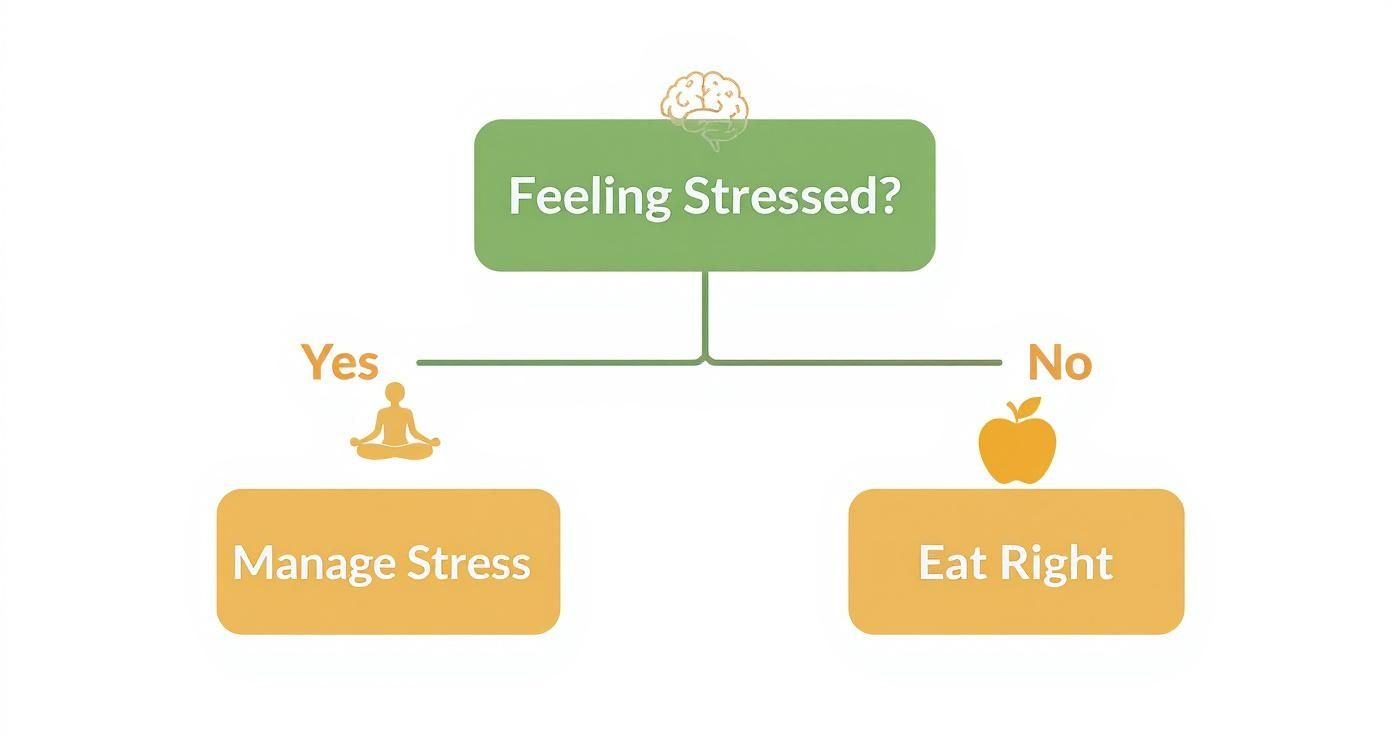
As this flowchart shows, managing external factors like stress is just as crucial as diet for creating an optimal environment for your hair to thrive.
Finasteride: The DHT Blocker
While Minoxidil works on stimulating growth, Finasteride (often sold as Propecia) gets to the root hormonal cause of male pattern baldness. It's a prescription pill that works by blocking an enzyme called 5-alpha-reductase.
This enzyme is what converts testosterone into a much more potent androgen called dihydrotestosterone (DHT). For men with a genetic predisposition to hair loss, DHT is public enemy number one. It attaches to your hair follicles, causing them to shrink over time until they eventually stop producing hair altogether.
By dramatically lowering DHT levels in your scalp, Finasteride helps put the brakes on this shrinking process. For many guys, it not only stops further hair loss but can actually lead to regrowth in thinned-out areas.
Understanding The Commitment And Considerations
Because Finasteride is a prescription drug that affects your hormones, talking it over with your doctor is a must. They’ll help you weigh the benefits against potential side effects, which are uncommon but can be a concern for some.
Just like Minoxidil, you have to use it long-term to keep the results. You'll typically start to see a difference after three to six months of daily use, with the most significant improvements often appearing after a year or more.
Comparing Popular Hair Thinning Treatments
When you're deciding on a treatment path, it's helpful to see the main options side-by-side. Each has its own mechanism, pros, and cons.
| Treatment | How It Works | Best For | Potential Side Effects | Availability |
|---|---|---|---|---|
| Minoxidil (Rogaine) | A topical vasodilator that increases blood flow to hair follicles, stimulating and prolonging the growth phase. | Men in the early to moderate stages of hair thinning, particularly at the crown. | Scalp irritation, dryness, unwanted facial hair growth (rare). | Over-the-counter (OTC) |
| Finasteride (Propecia) | An oral medication that inhibits the 5-alpha-reductase enzyme, reducing scalp levels of DHT. | Men with male pattern baldness looking to stop progression and potentially regrow hair. | Sexual side effects (uncommon), dizziness, weakness. | Prescription only |
| Ketoconazole Shampoo | An anti-fungal shampoo (e.g., Nizoral) with mild anti-androgenic effects that can help reduce scalp inflammation. | Supporting primary treatments; good for those with dandruff or scalp irritation. | Dryness, itching, changes in hair texture. | OTC (1%) and Prescription (2%) |
| LLLT (Low-Level Laser Therapy) | Devices (combs, caps) that use red light to stimulate cell activity and blood flow in the follicles. | Men with diffuse thinning or who prefer a non-chemical approach. | Minimal; occasional scalp tenderness. | OTC (FDA-cleared devices) |
This table gives you a snapshot, but it's not a substitute for professional medical advice. A combination approach is also very common. Many men find that using topical Minoxidil to stimulate follicles while taking oral Finasteride to block DHT creates a powerful, two-pronged attack on hair loss.
For a deeper dive into these options and others, check out our guide on the top 8 best hair loss treatments for men. Ultimately, deciding on a medical treatment is a personal choice, but having the right information allows you to have a confident and informed discussion with a healthcare professional.
Exploring Advanced Hair Restoration Procedures
So, you've tried the at-home routines and lifestyle tweaks, but you're still not seeing the kind of results you want. This is when it's time to consider stepping up to more powerful, science-backed procedures. We're moving beyond just maintaining what you have and into the realm of active restoration.
Let's be clear: this isn't about the old-school, obvious "hair plugs" from decades past. Today’s advanced treatments are sophisticated, far less invasive, and deliver incredibly natural-looking results. They do require a bigger commitment of both time and money, but for many guys, this is the turning point in their fight against hair loss.
Platelet-Rich Plasma (PRP) Therapy
One of the most promising non-surgical options getting a lot of attention is Platelet-Rich Plasma, or PRP therapy. The whole idea is to harness your body's own healing and growth capabilities to wake up your hair follicles.
It starts with a simple blood draw, no different than a routine physical. Your blood is then spun in a centrifuge, a machine that separates it into different layers. We're after the platelet-rich plasma—a golden-colored liquid loaded with powerful growth factors.
This concentrated "liquid gold" is then meticulously injected into the areas of your scalp where the thinning is happening. Those growth factors get to work, signaling dormant follicles to get back in the game and start producing thicker, healthier hair.
Low-Level Laser Therapy (LLLT)
If needles aren't for you, Low-Level Laser Therapy (LLLT) is a completely non-invasive alternative worth looking into. This technology uses specific wavelengths of red light to energize the cells in your hair follicles. Think of it as a jump-start for your scalp.
The science here points to a few key benefits:
- Better Blood Flow: The light energy appears to boost circulation, which means more oxygen and vital nutrients can reach the hair roots.
- Calmer Scalp: It may help reduce the kind of low-grade inflammation that can choke out follicles and create a healthier environment for hair growth.
- Extended Growth Phase: LLLT can help keep hairs in their anagen (growth) phase longer, allowing them to grow thicker and stronger before they'd naturally shed.
One of the best things about LLLT is convenience. Most treatments are done with at-home devices like laser caps, helmets, or combs. You just wear the device for a set period a few times a week, making it a pretty simple habit to adopt.
This growing interest in advanced solutions is no surprise. The global hair thinning market was valued at USD 1.51 billion in 2024 and is projected to hit USD 2.75 billion by 2030. That's a massive jump, and it shows just how many people are actively seeking effective treatments.
Hair Transplants: The Gold Standard
When you’re looking for a permanent, long-term solution, nothing else really compares to a hair transplant. Yes, it's a surgical procedure, but modern techniques have become so refined that the results are often completely undetectable.
The principle is straightforward: a surgeon moves healthy, DHT-resistant hair follicles from a donor area (typically the back and sides of your head) to the thinning or balding spots on the top and front.
There are two primary methods used by top surgeons today:
- Follicular Unit Transplantation (FUT): Often called the "strip method," this involves removing a small strip of tissue from the donor area. Technicians then carefully dissect the individual follicular units from that strip under a microscope before they are implanted.
- Follicular Unit Extraction (FUE): This is a more meticulous approach where the surgeon extracts individual follicular units one-by-one directly from the scalp with a tiny punch tool. FUE avoids the linear scar of FUT, making it a popular choice for guys who like to wear their hair short.
The recovery process takes some patience. You’ll have some scabbing and redness at first, and the new hairs will actually fall out before they begin their permanent growth cycle a few months later. Final results can take a full year or more to mature, but the payoff is a fuller head of your own natural, growing hair. Understanding the pros and cons of a hair transplant vs PRP is a critical step in deciding which path is the right fit for your specific situation.
Answering Your Hair Thickening Questions
When you start taking steps to thicken your hair, a lot of questions pop up. It's totally normal. You're changing your routine, trying new things, and you want to know what to expect. How long will this take? Can I mix and match treatments? When do I throw in the towel and see a pro?
Let's get those questions answered. Knowing what's ahead helps you set realistic goals and, more importantly, stick with the plan.
How Long Does It Really Take to See Results?
This is probably the first thing everyone wants to know. The honest answer? It takes time. Your hair grows in cycles, so you won't see a dramatic difference overnight. The timeline really hinges on what you’re doing.
- Diet & Lifestyle: If you’re cleaning up your diet and being gentler with your hair, you could start to notice less shedding and a healthier feel in about 2-3 months.
- Topical Treatments: With something like Minoxidil, you’ve got to be patient. You're looking at a minimum of 3-6 months of consistent use before you'll see any meaningful new growth.
- Prescription Meds: Finasteride operates on a similar schedule. Initial results can appear in 3-6 months, but the real, noticeable changes often take closer to a year to become apparent.
Consistency is everything. If you stop a treatment, you'll likely lose whatever ground you've gained.
Can I Combine Different Treatments?
Yes, and you probably should. Think of it as a team effort. Attacking hair loss from multiple angles is often the most effective way to get results.
A classic, powerhouse combo is using topical Minoxidil to kickstart growth directly at the follicle, while also taking oral Finasteride to block the DHT that’s causing the thinning to begin with. When you layer these medical treatments on top of a solid foundation—like a great diet and smart styling—you've built a truly comprehensive strategy.
Just one important note: always talk to your doctor before you start mixing and matching treatments. They can help you build a plan that's both safe and effective for your specific situation.
When Should I See a Doctor?
At-home strategies are a great first line of defense, but there are clear signs it's time to bring in a professional. A dermatologist can give you a concrete diagnosis and open the door to stronger, more targeted solutions.
It's time to book an appointment if you're dealing with sudden, patchy, or unusually fast hair loss. These can be signs of an underlying medical issue. It’s also smart to see a specialist if you’ve used an over-the-counter product like Minoxidil for over six months without seeing any improvement at all.
A doctor can pinpoint the exact cause of your hair loss and talk you through prescription options or medical procedures that are right for you. It's a critical step for anyone wondering if thinning hair can grow back with a more advanced approach.
At PRP For HairLoss, we believe that informed decisions are the best kind. Our blog is dedicated to giving you the in-depth knowledge you need to navigate your hair restoration journey, from understanding the basics to exploring advanced treatments like PRP. Learn more at https://prpforhairloss.com.

 PRP For Hairloss
Leave a comment