Let’s get one thing straight: there's no single magic vitamin that will stop something like male-pattern baldness in its tracks. However, if you're dealing with thinning hair, taking a hard look at your nutrition is one of the smartest moves you can make. Nutrients like Biotin, Vitamin D, and Iron are absolutely fundamental for healthy hair growth.
The Real Link Between Vitamins and Hair Loss
It's easy to blame genetics the moment you see more hair circling the shower drain. And while your family tree is a huge factor in male-pattern baldness, your diet plays a critical supporting role—one you actually have control over.
Think of each hair follicle as a tiny, highly active factory. Just like any factory, it needs a steady supply of raw materials and energy to keep production humming. Those materials are the vitamins, minerals, and proteins you get from your food.
When your body's reserves of these key nutrients get low, it's forced to start rationing. It will always prioritize keeping your heart, brain, and other vital organs running over everything else. Unfortunately, hair growth is considered a non-essential luxury, making it one of the first things to get put on the back burner.
This infographic breaks down just how essential nutrients are for fueling the hair follicle's growth cycle.
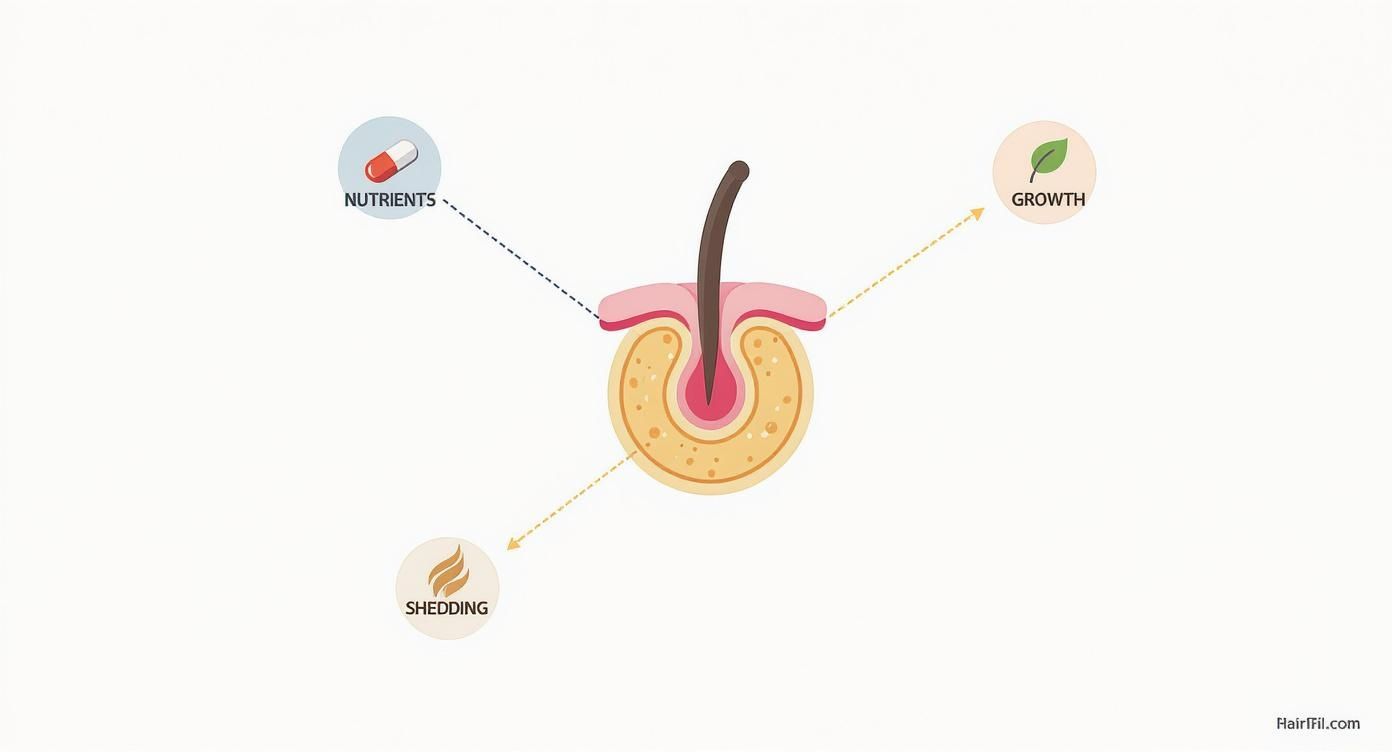
As you can see, a follicle's ability to produce a strong, healthy strand of hair is directly tied to the nutritional fuel it gets.
Nutritional Gaps vs. Genetic Hair Loss
It's crucial to know what kind of hair loss you're up against. Shedding caused by a nutritional gap, a condition called telogen effluvium, usually shows up as thinning all over your head. The good news? It’s often reversible once you fix the underlying deficiency. You can dig deeper into this by exploring if a vitamin deficiency can cause hair loss in our detailed guide.
Genetic hair loss, on the other hand, follows a more predictable pattern—think a receding hairline or thinning at the crown. While a perfect diet won't stop this process, great nutrition creates the best possible environment for the hair you have left. It helps it grow stronger, thicker, and healthier.
The key takeaway is this: A well-nourished scalp is a healthier scalp. Correcting deficiencies won't reverse genetic balding, but it can slow down shedding and maximize the health of your existing hair.
To help you get started, here's a quick overview of the most impactful nutrients for your hair.
Key Nutrients for Hair Health at a Glance
| Nutrient | Role in Hair Health | Top Food Sources |
|---|---|---|
| Biotin (B7) | Helps produce keratin, the protein that makes up hair. | Eggs, nuts (almonds, walnuts), seeds, sweet potatoes, salmon. |
| Iron | Carries oxygen to hair roots, which is essential for growth. | Red meat, spinach, lentils, fortified cereals, oysters. |
| Vitamin D | Helps create new follicles, the tiny pores where new hair can grow. | Fatty fish (salmon, mackerel), fortified milk, sunlight. |
| Zinc | Plays a key role in hair tissue growth and repair. | Oysters, beef, pumpkin seeds, lentils, spinach. |
| Vitamin C | An antioxidant that helps produce collagen and aids iron absorption. | Citrus fruits, bell peppers, strawberries, broccoli. |
| Vitamin E | A potent antioxidant that can help prevent oxidative stress on the scalp. | Sunflower seeds, almonds, spinach, avocados. |
This table is just a starting point. Getting these nutrients from whole foods is always the best way to go, as they come packaged with other beneficial compounds that work together.
In this guide, we'll break down exactly what vitamins prevent hair loss by supporting the intricate biology of the hair follicle. We’ll look at the science, talk about the best food sources, and give you a clear roadmap for using nutrition as a powerful ally in your fight against thinning hair.
How Vitamin D Awakens Your Hair Follicles
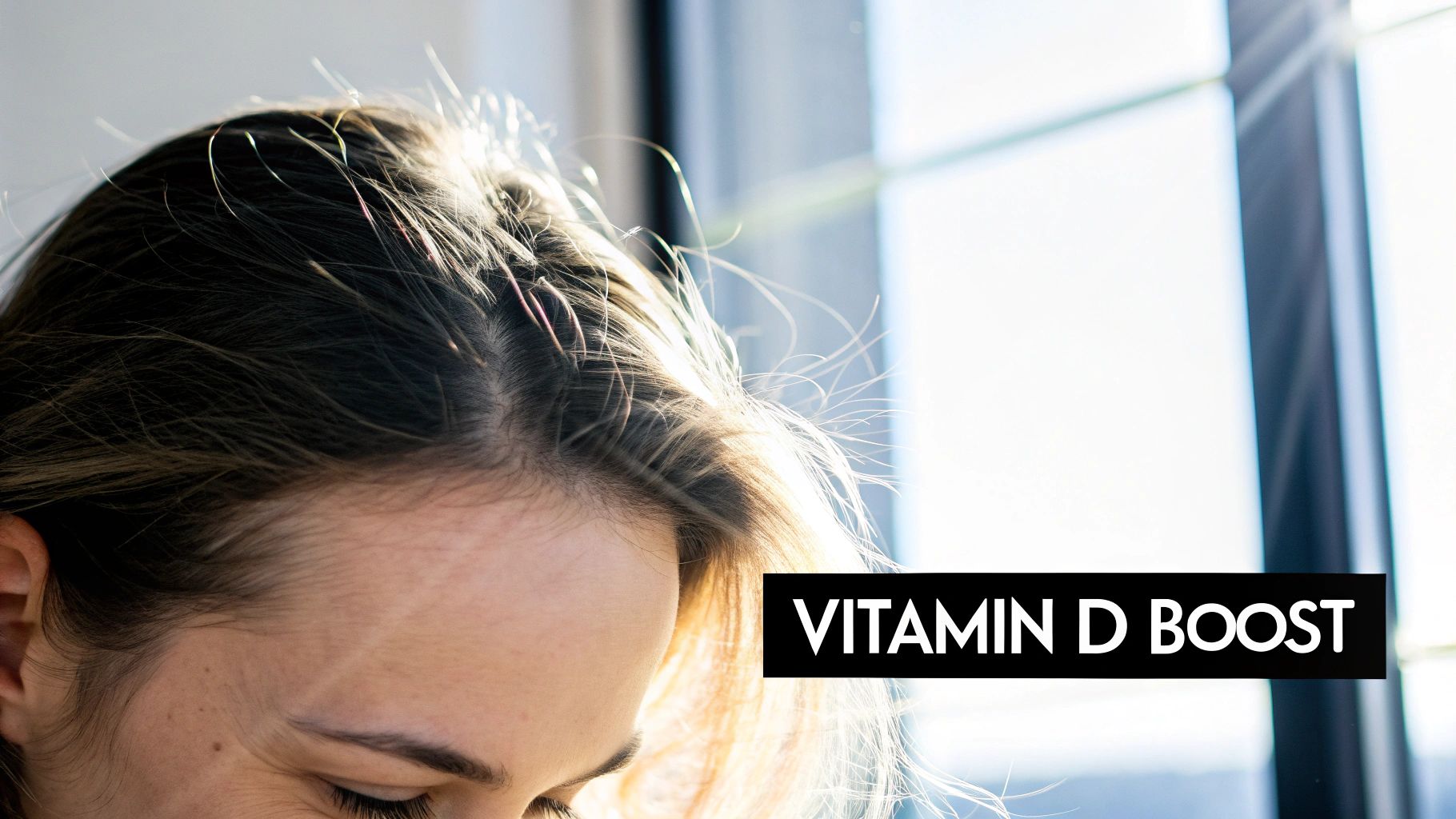
We all know Vitamin D as the "sunshine vitamin," but its job in our bodies goes way beyond building strong bones. It plays a surprisingly direct part in your hair's life cycle, acting almost like a key in the ignition for hair growth.
Imagine your scalp is covered in tiny seeds—your hair follicles. Vitamin D is one of the crucial signals that tells these seeds it's time to sprout. It helps wake up dormant follicles, pushing them out of their resting phase and into the active growth stage. When you're low on Vitamin D, that signal gets pretty weak.
The result? More of your follicles just stay asleep instead of producing new hair. Over time, this can lead to noticeable shedding and the appearance of thinning hair.
The Link Between Low Vitamin D and Hair Shedding
This isn't just a theory; solid research backs this connection up. Scientists have found strong links between Vitamin D deficiency and hair loss conditions like alopecia areata (an autoimmune disorder that causes patchy hair loss) and telogen effluvium (the sudden shedding that can happen after a stressful event). A lack of this vitamin simply throws the normal hair cycle out of whack.
The numbers are pretty startling. Studies show a clear correlation between low Vitamin D levels and how severe the hair loss is. One report, for instance, found that a staggering 96.7% of men with alopecia areata were vitamin D deficient, compared to 73% of men without the condition. You can dig deeper into these findings and what vitamins prevent hair loss on Ro's men's health guide.
It really puts into perspective just how important this nutrient is for keeping your hair's growth engine humming. Without enough of it, your follicles just aren't getting the memo to get to work.
Why Are So Many People Deficient?
For a nutrient our bodies can actually make themselves, Vitamin D deficiency is incredibly common. There are a few big reasons for this:
- Limited Sun Exposure: Our bodies make Vitamin D when sunlight hits our skin. But with modern indoor jobs, diligent sunscreen use (which is still crucial!), and living in northern climates, most of us just don't get enough sun.
- Dietary Gaps: Let's be honest, not many foods are naturally packed with Vitamin D. Fatty fish like salmon and mackerel are some of the best sources, and some foods like milk and cereal are fortified, but getting what you need from diet alone is a real challenge.
- Skin Pigmentation: Melanin, the pigment that gives skin its color, can actually reduce how efficiently the skin produces Vitamin D. This means people with darker skin tones often need more sun exposure to make the same amount as someone with lighter skin.
Before you run out and grab the highest-dose supplement you can find, hold on. Getting your levels tested is a critical first step. Too much Vitamin D can be toxic, so a simple blood test from your doctor is the only way to know for sure if you're deficient and what dose is right for you.
Knowing your personal Vitamin D status is a foundational piece of the puzzle. By getting your levels into the optimal range, you’re giving your hair follicles one of the most essential signals they need to stay active and productive.
The Truth About Biotin and B Vitamins
Walk down any supplement aisle, and you’ll find bottles of biotin screaming from the shelves, promising thick, healthy hair. It’s been marketed so relentlessly that you’d think it was the single magic bullet for hair loss. But does it actually live up to all that hype?
Well, it’s complicated.
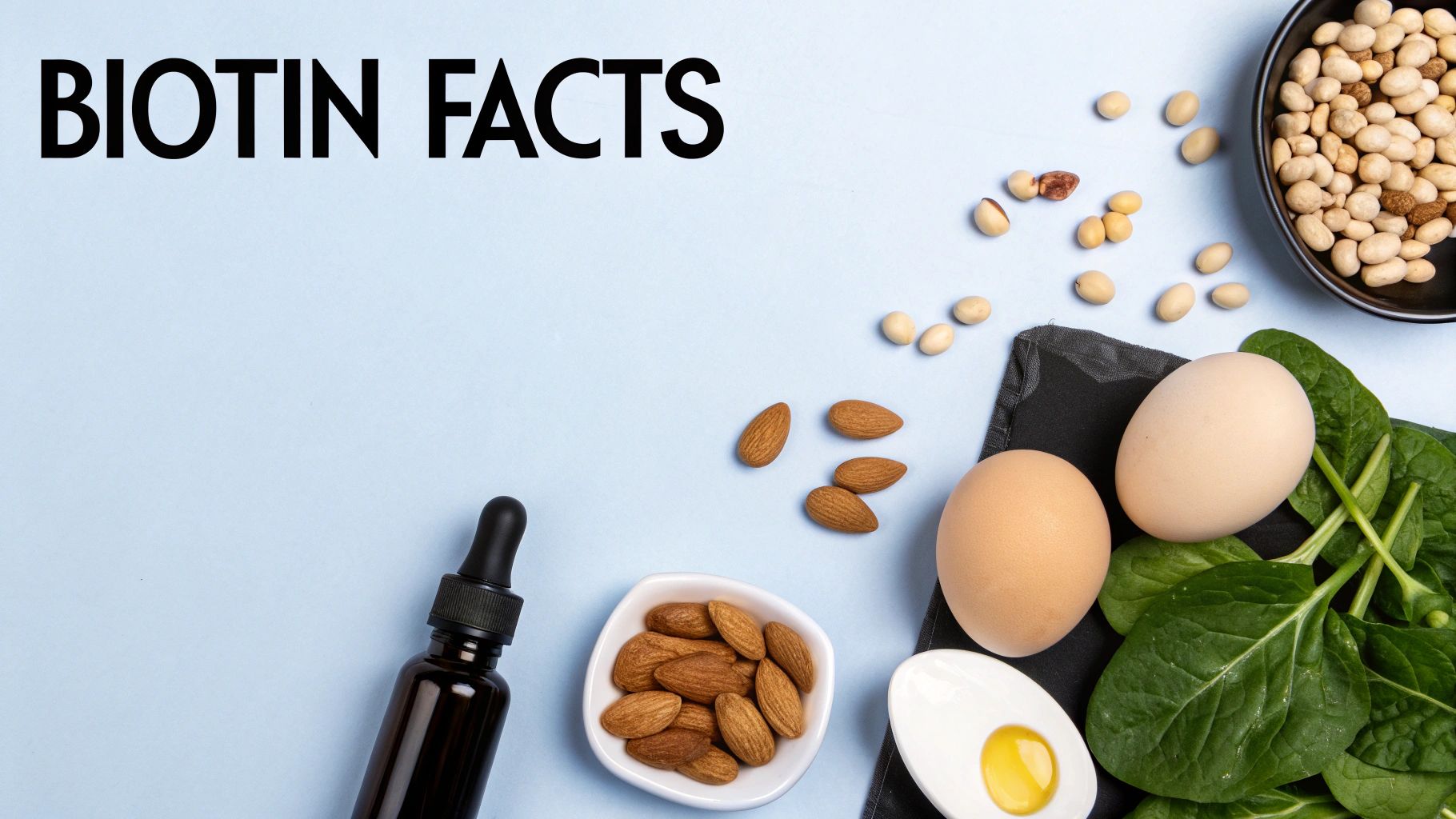
For the very small percentage of people with a genuine biotin (vitamin B7) deficiency, supplementing can be a complete game-changer. It directly tackles the root of their hair thinning and can lead to incredible improvements. But for most men, a true biotin deficiency is incredibly rare, and the evidence that extra biotin helps is surprisingly weak.
That’s why it’s far more useful to zoom out from just biotin and look at the entire B-vitamin family. Think of them as a team of specialists working together behind the scenes. Two of the most important players on this team are B12 and folate (B9).
The Unsung Heroes: B12 and Folate
If you think of your hair follicles as tiny, high-powered factories, then B12 and folate are essential for building the factory's supply chain: your red blood cells. These cells act like microscopic delivery trucks, constantly shipping oxygen and vital nutrients to your scalp. A shortfall in either B12 or folate gums up the whole system.
When that crucial delivery service slows down, your follicles are essentially starved of oxygen and can't function at their best. This can trigger a type of shedding known as telogen effluvium, making your hair look noticeably thinner. In fact, some studies show that people experiencing this kind of hair loss often have significantly lower levels of serum vitamin B12 and folate compared to those with healthy hair. You can read the full research on B vitamins and hair growth to see the data for yourself.
Think of it this way: Piling on more biotin without addressing a B12 or folate issue is like hiring more staff for a factory that has no power. You have to restore the fundamental energy supply first for anything else to work.
Who Is Most at Risk?
Certain dietary choices and lifestyles put you at a higher risk for B-vitamin deficiencies, especially for B12.
- Vegans and Vegetarians: Vitamin B12 is found almost exclusively in animal products like meat, fish, eggs, and dairy. If you follow a plant-based diet, you absolutely must get your B12 from fortified foods or a reliable supplement.
- Older Adults: As we get older, our body’s ability to absorb B12 from food naturally declines, making deficiencies more common.
- Digestive Conditions: Health issues like Crohn's disease or celiac disease can directly interfere with nutrient absorption in the gut.
So, while biotin gets all the glory, a balanced approach is always more effective. Focus first on getting a wide spectrum of B vitamins from your diet through foods like lean meats, fish, eggs, and leafy greens. If you are considering supplements, knowing the right biotin dosage for hair is a good start, but don't forget about its equally important teammates.
Building Stronger Hair with Iron and Zinc
While vitamins often get all the attention, two essential minerals—iron and zinc—are the unsung heroes that build the very foundation of strong, healthy hair. Think of them as the critical construction workers and on-site maintenance crew for your scalp.
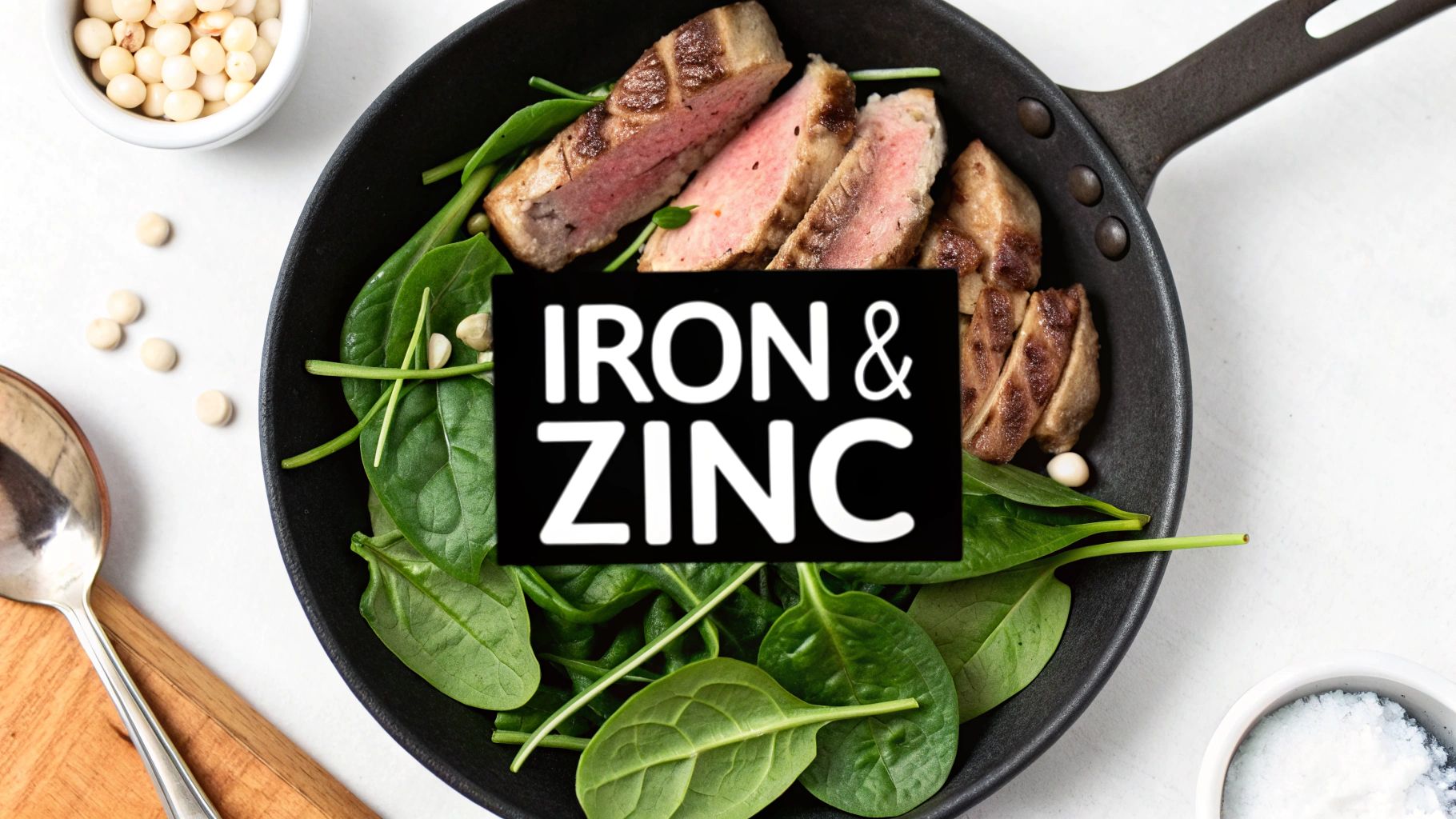
Let's start with iron. Iron is the mineral that powers your body's oxygen delivery service. It’s a crucial part of hemoglobin, the protein in red blood cells that ferries oxygen everywhere it needs to go—including the roots of your hair.
When iron levels are low, that oxygen delivery system slows to a crawl. Your hair follicles, starved of the energy they need to grow, can be pushed into the shedding phase prematurely. It’s no surprise that iron deficiency is a well-documented cause of hair loss, particularly for women. A major review of nutritional interventions for hair loss on JAMA Dermatology identified iron as one of the most important minerals for supporting hair growth in certain patients.
Zinc: The Master Repairman
Next up is zinc, which acts like a master repairman for your hair tissue. This mineral is vital for cell division, protein synthesis, and hormone balance—all processes that are firing on all cylinders inside a healthy hair follicle.
Zinc also plays a key role in keeping the oil glands around your follicles working properly. These glands secrete sebum, the natural conditioner that moisturizes your scalp and hair. Without enough zinc, this finely tuned system gets thrown off, creating a scalp environment that's less than ideal for strong growth.
Think of it this way: Having enough zinc is like having a skilled maintenance team on call 24/7. It ensures the structural integrity of the hair is sound and the surrounding environment is perfectly conditioned for growth.
Recognizing the signs of a deficiency is crucial. A zinc deficiency and hair loss are often linked, but a shortage can also show up as slow wound healing or a dulled sense of taste and smell.
To help you connect the dots between how you feel and what your body might be missing, we've put together a simple chart. It highlights the common signs that might point to a deficiency in these two key minerals.
Signs of Key Nutrient Deficiencies Affecting Hair
| Nutrient | Hair-Related Signs | Other Common Symptoms |
|---|---|---|
| Iron | Diffuse thinning, increased shedding, dry and brittle strands. | Extreme fatigue, pale skin, shortness of breath, cold hands and feet. |
| Zinc | Hair thinning and shedding, dry and flaky scalp (dandruff-like). | Slow-healing sores, loss of appetite, frequent infections. |
This table shows how symptoms can overlap, which is why getting a proper diagnosis through blood work is so important before you start supplementing.
Making sure your diet is rich in these minerals is a fundamental first step. For iron, prioritize foods like lean red meat, spinach, lentils, and oysters. For zinc, oysters are again a fantastic source, along with beef, pumpkin seeds, and lentils. Getting these foundational minerals right gives your body the raw materials it needs to build stronger, more resilient hair from the inside out.
How Vitamins C and E Protect Your Hair
Vitamins rarely work in isolation; they’re a team of specialists working together. When it comes to protecting your hair, two of the most valuable players are the antioxidant duo: Vitamin C and Vitamin E. Consider them the personal security detail for your hair follicles.
These two are your first line of defense against something called oxidative stress. This is just a scientific term for the cellular damage caused by unstable molecules known as free radicals. We're exposed to them every day from things like UV radiation, pollution, and even just our body's own metabolic processes.
Left unchecked, oxidative stress is like rust forming on metal—it gradually weakens the hair follicles, accelerates their aging, and can lead to increased shedding. By neutralizing these free radicals, Vitamins C and E help create a healthy, stable scalp environment where your hair can actually flourish. This protective role is a huge piece of the puzzle when we ask what vitamins prevent hair loss.
The Collagen Connection
Vitamin C has another critical job: it's absolutely essential for producing collagen. As the most plentiful protein in the human body, collagen provides the structural scaffolding for everything from our skin to our hair. The integrity and strength of every single hair strand depend on it.
If you don't have enough Vitamin C, your body simply can't produce collagen effectively. The result? Hair becomes brittle, weak, and much more likely to snap. Getting enough of this vitamin is a direct investment in the physical durability of your hair. Our full guide to vitamins for hair growth dives deeper into this connection.
Here's a simple way to think about it: Vitamin E acts like a shield, protecting the follicle from external attacks. Vitamin C helps build the strong, internal framework of the hair strand itself. You need both for comprehensive strength and protection.
A Quick Word of Caution on Vitamin A
While we're discussing supportive nutrients, Vitamin A deserves a mention. It plays a role by helping your scalp produce sebum, the natural oil that acts as a built-in conditioner for your hair. If you're deficient, you might notice a dry, itchy scalp and brittle hair.
But here's the catch: with Vitamin A, more is not better. It's a fat-soluble vitamin, which means your body stores any excess instead of flushing it out. Over time, high levels can become toxic and have been directly linked to triggering hair loss.
This really underscores the importance of balance. The aim isn't to megadose a single "miracle" vitamin, but rather to build a supportive, synergistic diet that promotes long-term hair health without tipping the scales too far in one direction.
Your Action Plan for Better Hair Nutrition
Alright, knowing which vitamins are tied to hair loss is one thing, but actually putting that knowledge to work is where things get real. Let's build a practical roadmap to turn what you eat into a powerful tool for healthier hair.
The best place to start is always with a 'food-first' philosophy. Before you even think about heading down the supplement aisle, focus on making simple, sustainable tweaks to your daily meals. You'd be surprised how much of a nutritional punch you can pack with just a few small changes.
Start with Smart Dietary Swaps
This isn't about a massive, restrictive overhaul. It’s about adding, not just subtracting. Think about how you can weave more hair-friendly foods into the meals you already love.
- Boost Your Greens: Tossing a handful of spinach into your morning smoothie or scrambled eggs is an easy win.
- Snack Smarter: Instead of reaching for chips, try a small handful of almonds or walnuts. They're loaded with biotin and healthy fats.
- Prioritize Protein: Make sure every meal has a solid source of lean protein—think chicken, fish, or lentils. These are the literal building blocks of your hair.
If you want to really dig into structuring your meals for maximum benefit, our complete guide to creating a hair loss diet is the perfect next step. Beyond just adding specific foods, some people find that bigger-picture dietary changes work wonders. For example, properly embracing a plant-based diet can be a fantastic way to naturally up your intake of crucial vitamins and antioxidants.
The non-negotiable first step before you start any supplement regimen? Talk to your doctor. A simple blood test is the only reliable way to know if you're actually deficient in something and what to do about it.
When to Consider Supplements
Supplements are meant to do exactly what their name implies—supplement your diet, not replace it. They are most powerful when used to fill a specific, diagnosed nutritional gap.
If your blood work comes back showing low iron or Vitamin D, for instance, then targeted supplementation under your doctor's supervision can be a game-changer.
Ultimately, getting your nutrition right lays the perfect foundation for any other hair loss treatments you're considering. It ensures your body has all the raw materials it needs to support new growth and get the absolute best results from therapies like PRP.
Frequently Asked Questions About Hair Vitamins
https://www.youtube.com/embed/haLXPGHwIco
When you start looking into supplements for hair, a ton of questions usually pop up. It's a confusing space, so let's clear the air and tackle some of the most common ones you're probably asking.
Can I Just Take a Multivitamin for Hair Loss?
Think of a standard multivitamin as a nutritional safety net—it’s great for general health but usually isn't specialized enough to tackle significant hair loss head-on. Most multis provide a little bit of everything, but the doses are often too low to correct a specific deficiency that might be causing your hair to thin.
If your blood work reveals you're low in iron or Vitamin D, for instance, you'll need a much higher, targeted dose to get your levels back into the optimal range. A general multivitamin simply won't cut it. That's why getting tested is so important; it tells you exactly where to focus your efforts.
How Long Until I See Results from Hair Vitamins?
This is where patience becomes your best friend. Your hair grows in slow, deliberate cycles. The nutrients you start taking today are busy supporting the new hair that’s just beginning to form inside the follicle, long before you ever see it.
You need to be consistent for at least three to four months to see a noticeable difference in shedding, thickness, or new growth. If you stop sooner, you're not giving your hair cycle a fair chance to respond.
Remember, you're fundamentally building healthier hair from the inside out. It's a biological process that can't be rushed—it’s a marathon, not a sprint.
Will Vitamins Regrow Hair on a Bald Spot?
This is a really important distinction to make. If your hair loss was triggered by a specific nutrient deficiency, then yes, correcting that deficiency can absolutely help you regrow the hair you lost.
However, when we're talking about genetic male-pattern baldness, the story is different. In this case, the hair follicle itself has shrunk (miniaturized) and may have stopped producing hair altogether. Vitamins will not revive a dormant follicle or regrow hair on a completely smooth, bald spot.
What they can do, and do very well, is support the health, strength, and thickness of the hair you still have. By creating the best possible internal environment, they help your remaining follicles thrive and can potentially slow down the rate of future thinning.
At PRP For HairLoss, we believe that understanding all your options is the first step toward taking control of your hair health. From foundational nutrition to advanced treatments, we're here to provide the information you need. Learn more about your journey at https://prpforhairloss.com.

 PRP For Hairloss
Leave a comment