When you first spot thinning hair or a few too many strands circling the drain, the immediate question is, what doctor do you see for hair loss? Your best move is to book an appointment with a board-certified dermatologist. These are the medical experts who specialize in everything related to skin, hair, and nails, making them perfectly equipped to get to the bottom of what's causing your hair loss.
Your First Stop: The Dermatologist
Navigating hair loss can feel confusing and a bit isolating, but getting in front of the right expert is the single most important step you can take. While countless clinics and spas offer hair treatments, only a real medical doctor can run the diagnostics to figure out why your hair is thinning.
Think of it this way: hair loss isn't just a cosmetic annoyance. It can be your body's way of signaling something else is going on, like a hormonal imbalance, a nutritional gap, or even an underlying health issue.
A good dermatologist is like a health detective. They're trained to look past the obvious symptoms and piece together clues from your lifestyle, medical history, and physical exam. This first visit is absolutely essential for getting a correct diagnosis, which is the bedrock of any successful treatment plan. If you skip this, you could end up wasting a lot of time and money on treatments that don't even touch the real problem.
This visual guide helps break down where to start when you notice your hair is thinning.
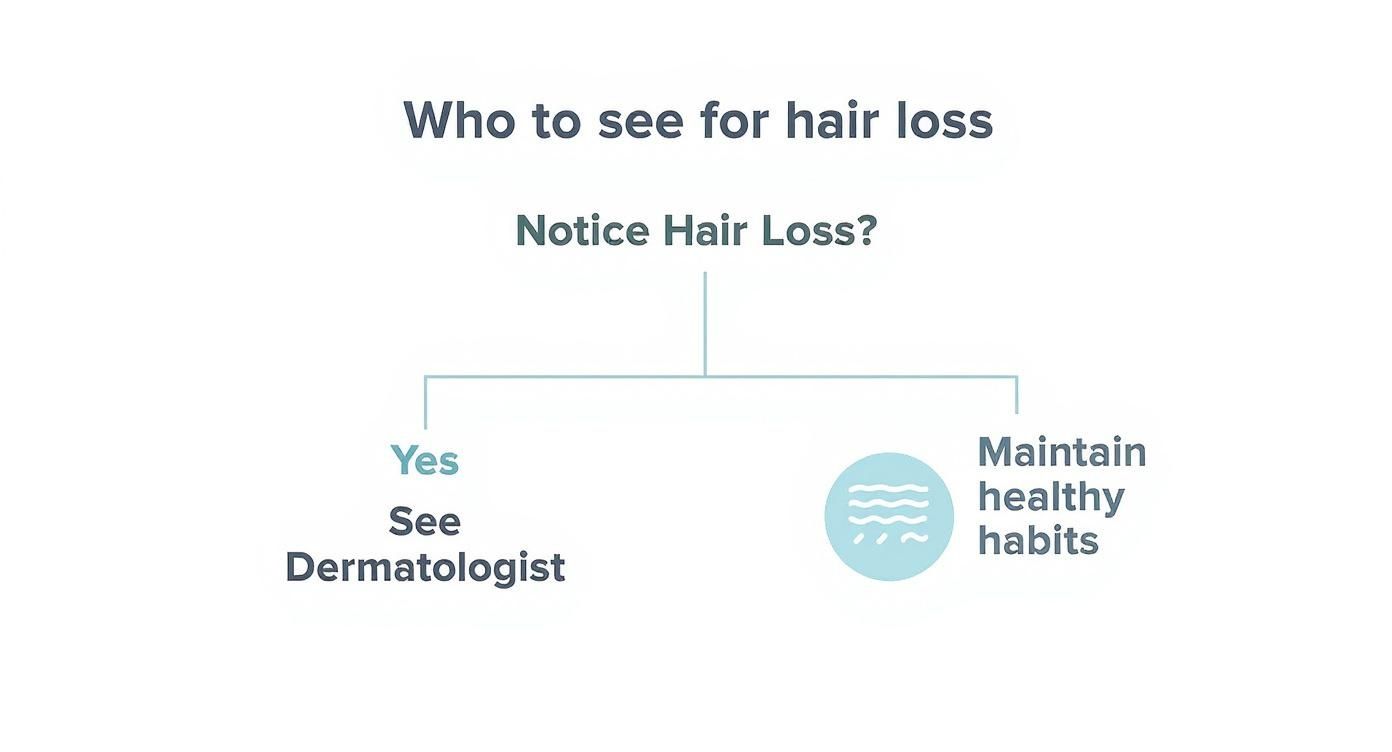
The main takeaway is simple: a dermatologist should be your first call for a proper medical workup.
Who Else Might You Encounter?
As you research options, you'll likely come across other titles. A trichologist, for example, is a specialist in the science of hair and scalp health, but it's crucial to know they are not medical doctors. They can offer great advice on scalp care and cosmetic treatments, but they can't diagnose medical conditions or write prescriptions.
To help you decide, here's a quick guide to the different professionals you might see.
Choosing the Right Hair Loss Professional
This table offers a quick guide to help you select the right expert based on your specific hair loss concerns.
| Professional | What They Focus On | When to See Them |
|---|---|---|
| Dermatologist | Medical diagnosis of hair, skin, and nail conditions. Can prescribe medication and perform procedures. | Always your first stop. See them for a definitive diagnosis and a comprehensive, medically-backed treatment plan. |
| Endocrinologist | Hormonal imbalances and disorders (e.g., thyroid issues) that can cause hair loss. | If bloodwork from your dermatologist suggests a hormonal problem, they will likely refer you to an endocrinologist. |
| Trichologist | Cosmetic scalp health, hair care routines, and non-medical treatments like scalp facials. | After you have a medical diagnosis, they can be helpful for complementary scalp care and styling advice. |
Understanding these roles ensures you get the right kind of help from the start.
Ultimately, your journey back to healthier hair starts with an expert who can give you a real medical diagnosis, not just a well-intentioned guess. To dive deeper into what makes this specialist your best starting point, check out our guide on seeing a dermatologist for hair loss.
Why a Dermatologist Should Be Your First Stop
When you're trying to figure out which doctor to see for hair loss, the answer is pretty straightforward: start with a dermatologist. It's easy to think of hair loss as just a cosmetic problem, but it’s often a medical signal. Your body might be telling you something is off, whether it's your genes, hormones, or an underlying health issue.
Think of a dermatologist as a detective for your skin and hair. They’re trained to look beyond the obvious thinning and connect the dots to find the real culprit. This kind of medical expertise is critical. Guessing on your own can lead you down a rabbit hole of ineffective products, wasting both time and money.
This focus on getting the diagnosis right is what makes them the go-to specialist. Hair loss isn't a small problem; it's a global concern. Consider that 250 million people in China and nearly 63% of men in India between 21 and 61 are dealing with it. These huge numbers show why getting a proper diagnosis from a physician is so important. They know how to tell the different types of hair loss apart, which is the first step to effective treatment. You can see more on these trends in this in-depth look at hair restoration statistics.
What to Expect at Your First Visit
So, what happens when you walk into that first appointment? Expect a thorough investigation. Your dermatologist will want to get the complete picture of what's going on with you.
They’ll start by asking a lot of questions, covering things like:
- Your medical history: Any past illnesses or chronic conditions you have.
- Family history: Since male pattern baldness is often genetic, they'll want to know if it runs in your family.
- Lifestyle factors: They’ll ask about your diet, stress levels, and any medications or supplements you take.
- Your hair loss story: When did it start? Is it happening in patches or all over?
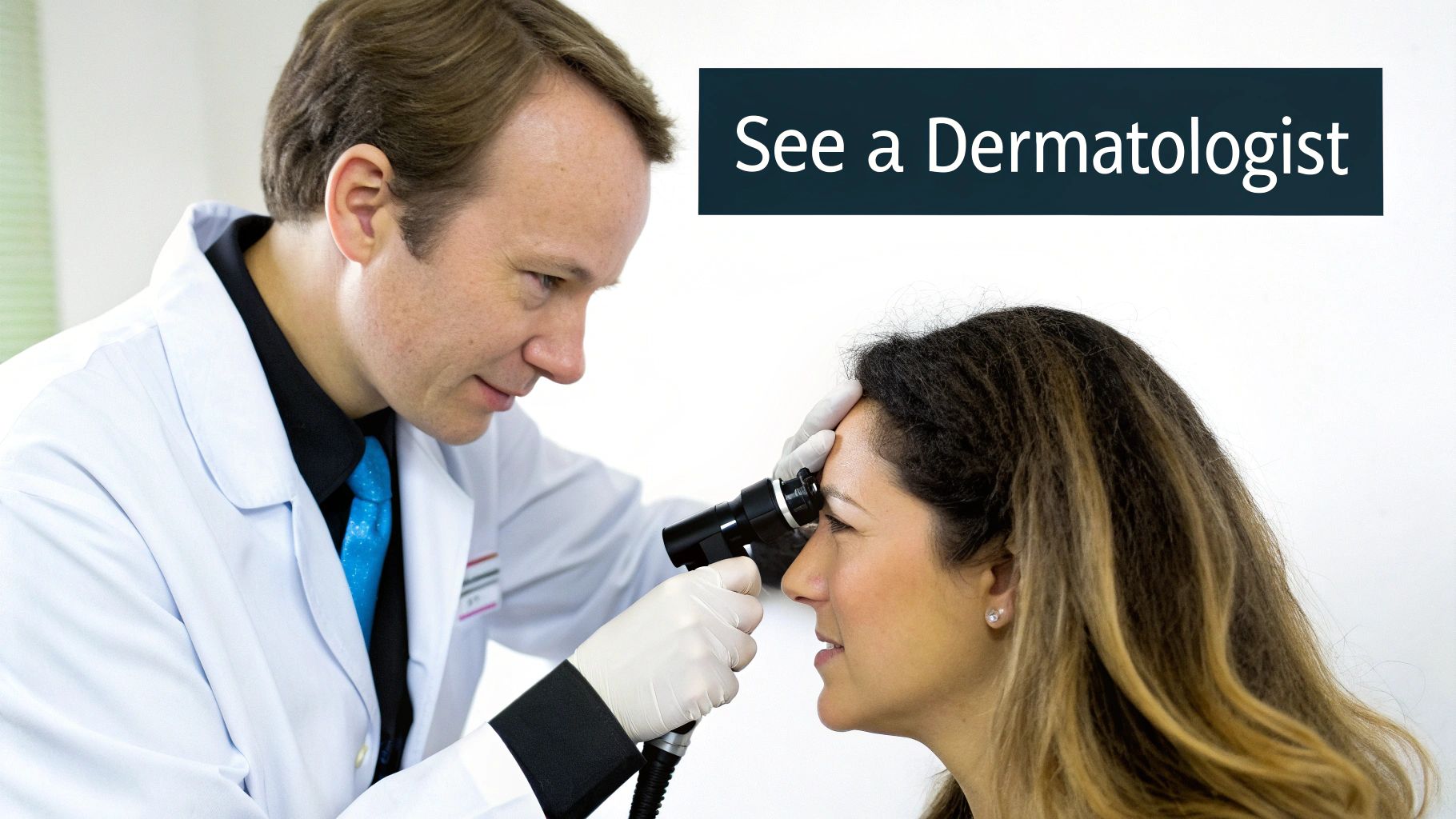
After the chat, they'll do a physical exam. This usually involves a dermatoscopy, where they use a special magnifying tool to get a close-up look at your scalp and hair follicles. It's a quick, painless way for them to gather vital clues about what’s causing your hair loss.
Sometimes, they might suggest blood work to rule out other causes, like a thyroid problem, low iron, or a hormonal imbalance. Knowing what to expect makes the whole process less intimidating and helps you feel more in control of finding a solution.
When Your Doctor Recommends a Specialist
While a dermatologist is your go-to expert for an initial diagnosis, your treatment journey might eventually lead you to a different kind of specialist. If your hair loss is pretty advanced or just isn't responding to the first line of defense, your doctor might suggest you see a hair restoration surgeon.
Think of it this way: your dermatologist is the detective who figures out why you're losing hair and can manage it with medications and other therapies. The hair restoration surgeon is more like a master craftsman, the expert you see for surgical solutions when other methods just aren't cutting it anymore.
This kind of teamwork is standard in medicine. It’s a good sign, actually—it means your doctor is focused on getting you the right care for your specific situation instead of just sticking to a generic plan.
When Is a Specialist Necessary?
Getting a referral to a hair restoration surgeon doesn't happen for everyone. It's a step reserved for when specific conditions are at play, and it can be a game-changer for the right person.
So, when does it make sense to see a specialist? Here are a few common scenarios:
- Advanced Male Pattern Baldness: This is when thinning has become significant, especially across the scalp and at the hairline.
- Exploring Surgical Options: You might be a good candidate for a hair transplant, like an FUE or FUT procedure, and need an expert opinion.
- Permanent Hair Loss: In cases of scarring alopecia, where hair follicles are permanently damaged, medical treatments often hit a wall.
The demand for specialized care is growing. People are seeking professional help earlier, with more than half of all surgical patients being between 30 and 49 years old.
The numbers back this up. In a single year, over 2 million patients sought treatment for hair loss, and men accounted for a massive 84.2% of all surgical patients. This isn't just a trend; it shows that more men are taking a proactive approach to their hair loss.
You can discover more about this increasing demand for hair restoration procedures online. Seeing a specialist isn’t a last resort—it’s the logical next step in a well-thought-out treatment plan.
How to Prepare for Your First Consultation
Walking into that first appointment can feel a little intimidating, but a bit of prep work beforehand can make all the difference. Think of it less like a passive doctor's visit and more like a strategy session where you’re the key player.
The more information you bring to the table, the faster your doctor can start connecting the dots. Your goal is to help them get a crystal-clear picture of your health, your family's history with hair loss, and how your own situation has evolved over time.
What to Bring to Your Appointment
Before you head out the door, take a few minutes to get your story straight. This isn't about doing the doctor's job for them; it's about making sure nothing important gets missed in the conversation.
Here's a quick checklist of what to gather:
- A Photo Timeline: Snap a few clear pictures of your hair from the front, top, and back (the crown). Good lighting is key. Having photos from a few months ago, or even a year ago, can be incredibly helpful for tracking the progression.
- A Full Medication List: Jot down everything you take—prescriptions, over-the-counter meds, vitamins, and even that protein powder you use. Don't forget the dosages. Some common medications can surprisingly contribute to shedding.
- Your Family Tree of Hair: Does baldness run in the family? Make a mental note of which relatives (on both your mom's and dad's side) have experienced hair loss and, if you know, around what age it started for them.
Questions You Should Ask the Doctor
This is a two-way street. You should leave the clinic with answers, not more questions. Preparing a list beforehand ensures you don't get home and realize you forgot to ask something critical.
A great consultation isn't a lecture; it's a conversation. Asking smart questions helps you grasp what's going on and gives you the confidence to own your treatment plan.
Here are a few to get you started:
- Based on what you see, what do you think are the most likely causes?
- What tests, like blood work, do you think we need to run to confirm anything?
- Can you walk me through the treatment options you'd recommend for someone in my situation? What kind of results are realistic?
If the doctor does order blood work, you'll want to understand what it all means. For a deeper dive, check out our guide on how to read blood test results.
Decoding Common Hair Loss Treatments

Once your doctor figures out why you're losing your hair, the conversation will shift to a treatment plan. It's important to know this isn't about finding an overnight miracle cure. It’s about using proven medical strategies to slow down thinning, stop further loss, or even encourage new growth.
The go-to options usually involve either daily medications or simple in-office procedures. These are often the first line of defense, especially for the very common male pattern baldness, because they're non-invasive and backed by solid research. They work by directly addressing the biological triggers that cause hair follicles to shrink and go dormant.
Medications and In-Office Procedures
When you talk to a dermatologist, two names will almost certainly come up: Minoxidil and Finasteride. They approach the problem from different angles but ultimately aim for the same result—keeping and regrowing your hair.
- Minoxidil (Rogaine): You probably know this one. It’s a topical treatment you apply right to your scalp. Think of it as a wake-up call for sleepy hair follicles, pushing them out of their resting phase and back into a state of active growth.
- Finasteride (Propecia): This is a daily pill that gets to the root of the hormonal cause. Finasteride works by blocking the production of DHT (dihydrotestosterone), the hormone most responsible for male pattern hair loss. Getting a handle on testosterone's role in hair loss really helps you understand why this is such a common and effective approach.
If you're looking for another option, your doctor might bring up in-office procedures like Platelet-Rich Plasma (PRP) therapy. This technique uses a concentration of your own blood's growth factors, which are then injected into the scalp to stimulate follicles.
Every man's hair loss journey is different. The real keys to success are consistency and patience. It can easily take three to six months—sometimes longer—to see meaningful results from any medical treatment.
A Quick Look at Hair Loss Treatment Options
To help you get a clearer picture of what your doctor might suggest, here’s a quick comparison of the most common medical treatments.
| Treatment | How It Works | Best Suited For | Administered By |
|---|---|---|---|
| Minoxidil | A topical foam or liquid that stimulates hair follicles and improves blood flow to the scalp. | General thinning and early-stage male pattern baldness. | At-home use, prescribed by a dermatologist or GP. |
| Finasteride | An oral pill that reduces the body's levels of DHT, the hormone that shrinks hair follicles. | Men with classic male pattern baldness, particularly at the crown and mid-scalp. | Prescription only, from a dermatologist or GP. |
| PRP Therapy | Injects a concentration of your own blood platelets into the scalp to promote healing and cell growth. | Those seeking a non-medication option to stimulate follicle health and hair thickness. | Dermatologists, cosmetic surgeons, or specialized clinics. |
| Hair Transplant | Surgically moves healthy hair follicles from one part of the scalp (the donor area) to the thinning or bald areas. | Men with more advanced hair loss who have stable donor hair. | A specialist hair transplant surgeon. |
This table is just a starting point. Ultimately, finding the best hair loss treatment for you means having a candid conversation with your doctor about your goals, lifestyle, and what you can realistically expect from each option.
Finding a Qualified Doctor and Avoiding Scams

This is probably the most important step you'll take. With countless clinics and online ads promising a full head of hair overnight, it's incredibly easy to get pulled in by a slick marketing campaign. Your first and only priority should be finding a trustworthy, board-certified clinician who genuinely cares about your health.
So, where do you begin? Start by checking credentials. You'll want to look for a dermatologist who is a member of a respected organization like the American Academy of Dermatology (AAD). This isn't just a fancy title—it's proof that the doctor has gone through years of specialized medical training and passed demanding exams in their field.
Red Flags to Watch Out For
Sadly, the hair loss industry isn't without its pitfalls. The rise of unqualified providers and dangerous "black market" clinics means you have to be extra vigilant. These illegal operations often rely on untrained technicians, which can lead to serious complications and results you'll regret.
It’s up to you to be your own best advocate and learn how to spot the warning signs. Here’s what should make you immediately skeptical:
- High-Pressure Sales Tactics: If a clinic makes you feel rushed or pushes you to sign up for an expensive package on the spot, that’s your cue to leave.
- Promises of a "Cure": Real doctors understand that hair loss treatment is a process, not a magic trick. Be wary of anyone promising 100% guaranteed results.
- Vague Credentials: If you can't easily find a doctor's board certifications and medical background on their website, consider it a major red flag.
The spread of these illegal clinics is a real and growing problem. A recent survey from the International Society of Hair Restoration Surgery (ISHRS) found that 59% of its members reported black market clinics operating in their cities. Even more concerning, these legitimate surgeons now spend an average of 10% of their time fixing the damage caused by these botched procedures.
You can learn more about the risks of these black market procedures and see why professional oversight is non-negotiable. A little due diligence now can save you a world of trouble later. For a solid starting point, our guide on finding reputable hair restoration clinics near you can help.
Answering Your Top Questions About Hair Loss
When you're trying to figure out which doctor to see for hair loss, a lot of questions pop up. Let's get right into the most common ones men ask.
Can I Just See My Regular Doctor?
Your primary care physician (PCP) is a great first stop on your journey. Think of them as the detective who does the initial legwork. They can order blood tests to check for common culprits like thyroid issues, anemia, or vitamin deficiencies that might be causing your hair to thin.
However, once those possibilities are ruled out, your PCP will almost certainly pass the baton. For a deep-dive diagnosis and a specialized treatment plan, you'll need to see a board-certified dermatologist.
What About a Trichologist? Are They Doctors?
This is a common point of confusion. A trichologist is a hair and scalp specialist, but they are not a medical doctor. They can't write prescriptions for medications like finasteride or perform medical procedures such as PRP injections.
While a trichologist can offer fantastic advice on improving scalp health and managing your hair cosmetically, they can't diagnose or treat the underlying medical condition causing your hair loss. For that, a dermatologist is your go-to expert.
A lot of guys worry about seeing hair in the shower drain, but it's important to know the difference between normal shedding and actual hair loss. Understanding how much daily hair loss is normal can help you decide when it's officially time to book that appointment.
How Much Will a Hair Loss Consultation Cost Me?
The cost really depends on where you live and your insurance plan. A visit to a dermatologist is often covered by insurance, particularly if the hair loss might be a symptom of a medical issue.
The best move? Call your insurance provider and the doctor's office before your visit. This way, you'll have a clear picture of any co-pays or out-of-pocket costs, especially since many cosmetic treatments aren't covered.
 PRP For Hairloss
Leave a comment