What you eat has a bigger impact on your hair than any shampoo or treatment you can buy. Before you even think about what you're putting on your scalp, you have to get serious about what you're putting in your body. Your hair follicles are tiny factories, and they need the right raw materials—protein, vitamins, and minerals—to produce strong, healthy hair.
Build Your Hair From The Inside Out
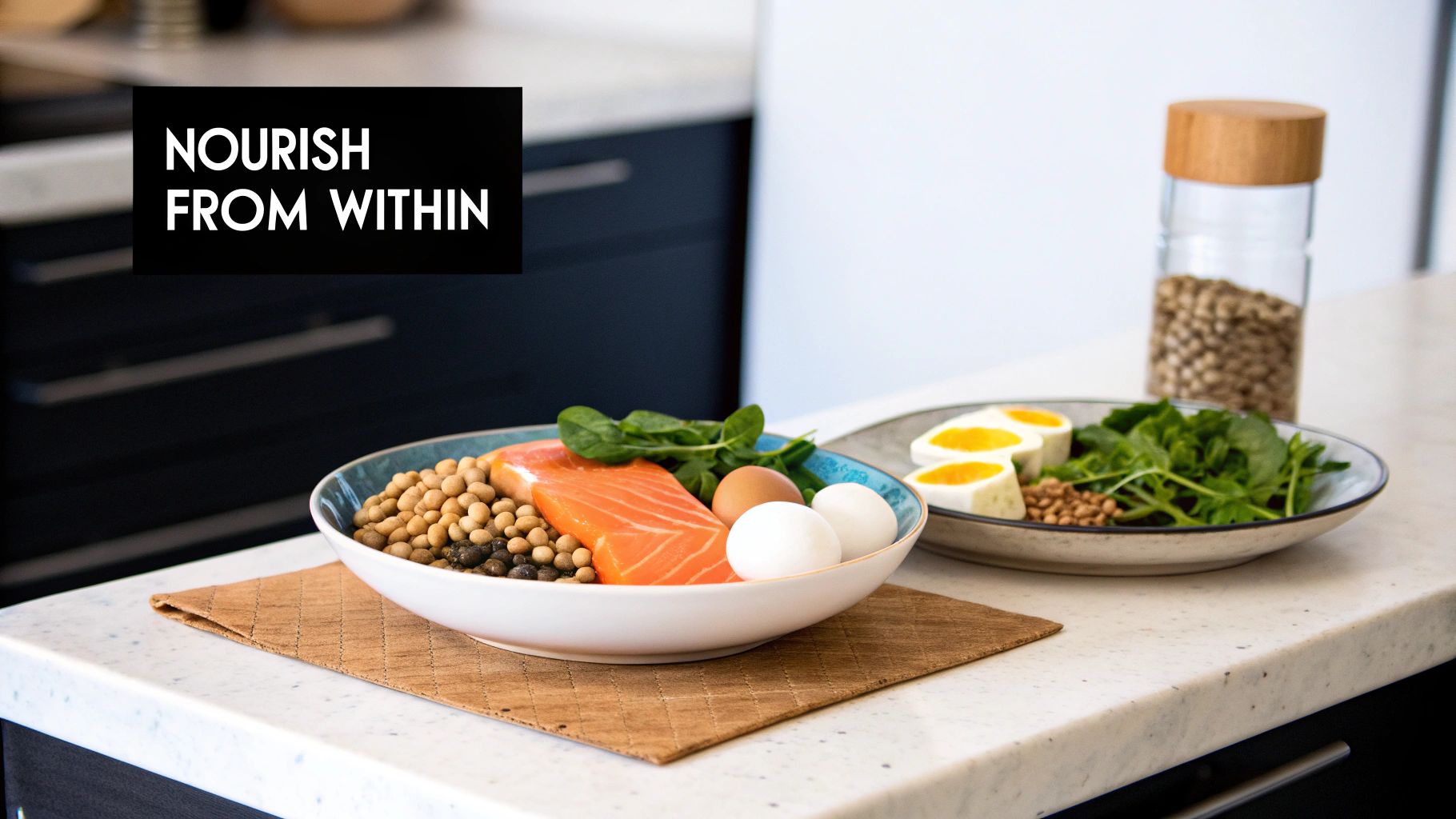
Forget restrictive diets. This is about being strategic and intentional with your meals to give your hair the specific fuel it's crying out for. Think of it as laying the foundation for all your other hair growth efforts. Without this, everything else is just a temporary fix.
Protein: The Unsung Hero of Hair Structure
Here's a simple fact: your hair is mostly made of protein, a specific type called keratin. If you're not eating enough protein, your body goes into conservation mode. It prioritizes essential functions and puts hair growth on the back burner, which often leads to shedding and brittle, weak strands.
Getting enough protein is absolutely non-negotiable. I tell my clients to aim for a quality source with every single meal.
- Breakfast: Instead of a carb-heavy muffin, go for eggs or a bowl of Greek yogurt.
- Lunch: Toss some grilled chicken, salmon, or a scoop of chickpeas onto your salad.
- Dinner: Build your plate around lean meats, fish, or plant-based options like lentils and tofu.
This consistent intake provides a steady stream of amino acids, the literal building blocks for stronger hair.
Essential Vitamins And Minerals
Protein is the star, but it needs a strong supporting cast of micronutrients. I've seen countless men struggle with thinning hair, only to find out they have a simple deficiency in iron or zinc. It's a surprisingly common and overlooked culprit.
Iron is crucial because it helps red blood cells deliver oxygen to your follicles, powering the growth cycle. Zinc, on the other hand, is all about tissue growth and repair, ensuring the oil glands around your follicles are functioning properly. You can dive deeper into this connection by reading our guide on the top vitamins for hair growth.
A well-rounded diet is your first line of defense against hair loss. Nutrient deficiencies can silently sabotage your hair growth efforts, making it crucial to focus on what you eat before seeking other solutions.
To help you get started, here’s a quick-reference table to easily incorporate these hair-healthy foods into your daily routine.
Key Nutrients and Foods for Hair Growth
| Nutrient | Why It Matters for Hair | Easy Food Sources |
|---|---|---|
| Biotin | Helps produce keratin, the primary protein in hair. | Eggs, almonds, salmon, avocados, sweet potatoes |
| Iron | Carries oxygen to hair roots, helping them grow and function. | Spinach, red meat, lentils, oysters, tofu |
| Zinc | Plays a key role in hair tissue growth and repair. | Oysters, beef, pumpkin seeds, lentils, chickpeas |
| Vitamin C | An antioxidant that helps create collagen and aids iron absorption. | Oranges, bell peppers, strawberries, broccoli |
| Vitamin E | A powerful antioxidant that can help reduce oxidative stress in the scalp. | Sunflower seeds, almonds, spinach, avocados |
Think of this table not as a strict list, but as a guide to building a more powerful, hair-focused diet one meal at a time.
The Role Of Supplements
Even with the best intentions, our diets aren't always perfect. That’s where supplements can step in to fill the gaps. The global market for hair growth supplements is set to explode, growing from USD 810.14 million in 2024 to a projected USD 2.88 billion by 2033. This massive jump shows a clear shift toward using nutrition to fight thinning hair from within.
Supplements like collagen are gaining a lot of attention for hair health; you can learn more about the amazing benefits of collagen. But remember, it’s always smart to talk to your doctor before starting any new supplement to make sure it's the right choice for your specific needs.
Master Your Scalp Health for Better Growth

Let's think of your scalp like the soil in a garden. If the soil is hard-packed, choked with weeds, and lacking nutrients, you're never going to grow healthy plants. It’s the exact same idea with your hair. A scalp that’s irritated, flaky, or has poor circulation is a terrible environment for hair follicles, basically stopping new growth in its tracks.
Getting your scalp in top condition is one of the most fundamental things you can do. This isn't about some complicated, expensive routine—it's about creating a healthy foundation where your hair can actually thrive.
Kickstart Circulation With a Simple Massage
One of the easiest—and most overlooked—ways to boost scalp health is a daily massage. Sure, it feels great, but the real magic is mechanical. Massaging your scalp literally gets the blood flowing, and that blood is what delivers all the crucial nutrients from your diet directly to your hair follicles. More blood means more oxygen and more of the good stuff reaching the root of the problem.
It’s not just a hunch, either. One study showed that just four minutes of daily scalp massage over 24 weeks led to noticeably thicker hair. You don’t need any special tools, just the pads of your fingertips. Apply some gentle but firm pressure and move in small circles across your entire scalp for a few minutes. It's a simple habit that pays off.
If you really want to get into the weeds on technique, our guide on how a scalp massage for hair growth can make a difference is a great resource.
Choose Your Shampoo and Conditioner Wisely
The products you wash your hair with can either be your best ally or your worst enemy. A lot of the shampoos you see on store shelves are loaded with harsh detergents like sulfates (SLS and SLES), which are notorious for stripping away the natural oils that protect your scalp. This often leads to a cycle of dryness, irritation, and inflammation—all things that sabotage hair growth.
Switching to gentler, more natural products is a game-changer. It's a move more and more guys are making, too. The global natural hair care market is projected to skyrocket to USD 16.99 billion by 2030, showing that people are catching on to the fact that what you don't put on your scalp is just as important as what you do.
When you're reading ingredient labels, your mindset should be "nourish and stimulate," not "strip and dry." Your scalp will thank you by becoming a place where hair actually wants to grow.
Keep an eye out for products that feature beneficial ingredients that support a healthy scalp. Here are a few standouts:
- Peppermint Oil: Gives you that cool, tingling sensation because it’s actively boosting circulation right at the surface.
- Tea Tree Oil: A powerhouse with natural anti-fungal and antibacterial properties. It’s fantastic for keeping the scalp clean and fighting off dandruff.
- Aloe Vera: Incredibly soothing. If you’ve got an itchy or inflamed scalp, aloe is your best friend for calming things down while providing moisture.
By ditching the harsh chemicals and opting for these kinds of ingredients, you help maintain your scalp's delicate natural balance. This one simple swap can dramatically improve the health of your scalp, paving the way for stronger, more resilient hair down the line.
Use Home Remedies That Actually Work
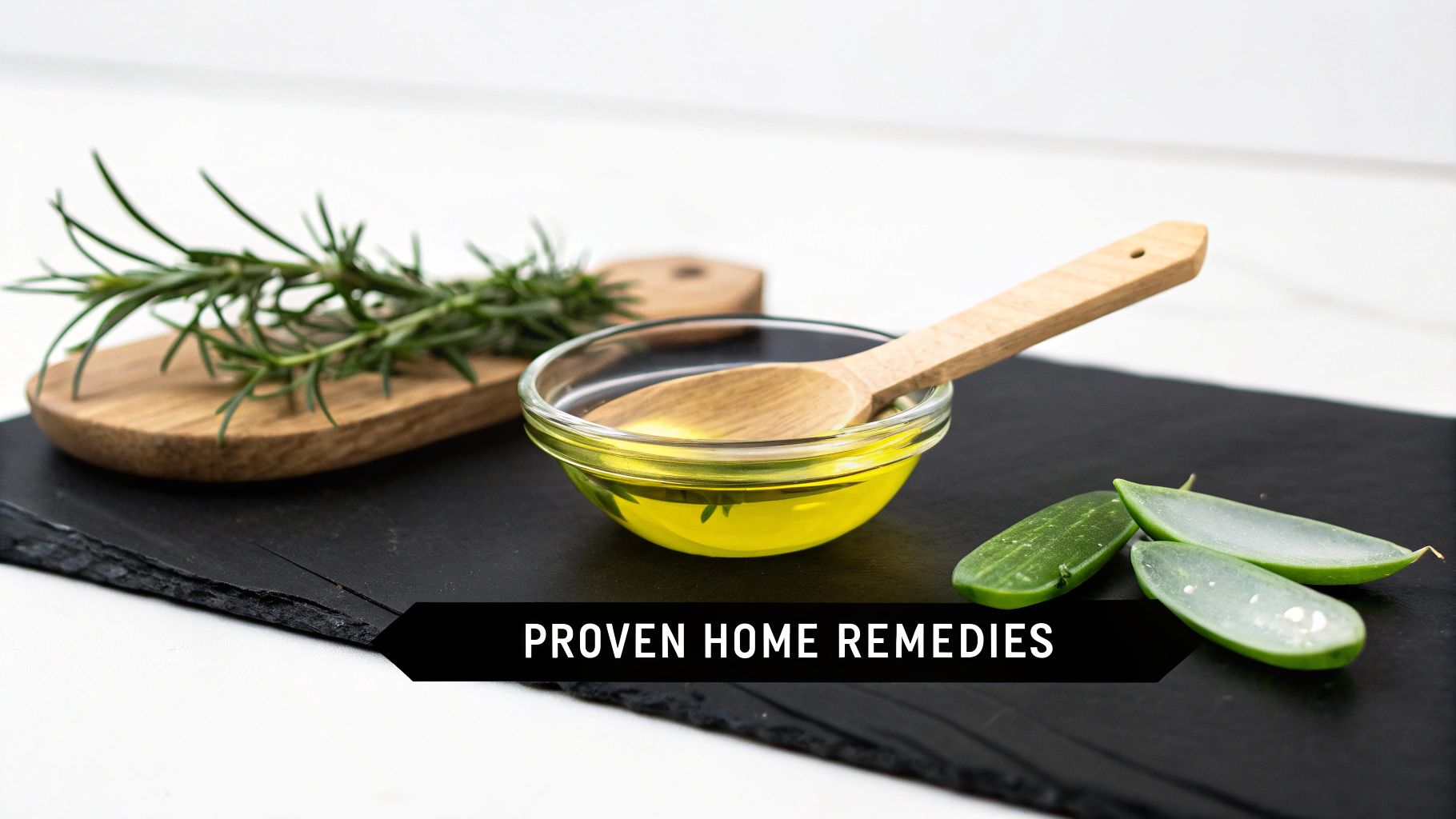
The internet is overflowing with supposed DIY hair growth hacks, from onion juice rinses to questionable food pastes. Let's be honest, most of them are a waste of time and will just make your bathroom smell strange. We're going to cut through that noise and focus on a few simple, science-backed remedies you can easily make at home.
The real secret to making any of these work isn't some magical ingredient; it’s consistency. These aren’t overnight fixes. But when you use them regularly, they help create a much healthier environment for your scalp to do its job and support your hair’s natural growth cycle.
The Power Of Rosemary Oil
There’s a lot of buzz around rosemary oil lately, and for good reason—it’s not just hype. Some really promising science is backing it up.
In fact, one key study put rosemary oil head-to-head with minoxidil 2% (the active ingredient in Rogaine) for treating androgenetic alopecia. After six months, both groups saw a significant jump in hair count. The kicker? The group using rosemary oil reported less scalp itching, positioning it as a fantastic natural alternative. It’s believed to work by boosting circulation to the hair follicles while also offering some protection against DHT, the hormone at the root of male pattern baldness.
To get a better sense of how this and other oils can help, you might be interested in our breakdown of the best essential oils for hair growth.
An easy way to start is by adding a few drops to a carrier oil like jojoba or argan oil. Just massage it into your scalp and let it sit for at least 30 minutes before you shampoo.
Soothing Aloe Vera And Nourishing Coconut Oil
Beyond stimulating growth, sometimes your scalp just needs to be calmed down and nourished. An inflamed, dry, or irritated scalp is a terrible place for hair to grow. This is where ingredients like aloe vera and coconut oil really shine.
- Aloe Vera: This plant is a natural anti-inflammatory powerhouse. Applying pure aloe vera gel directly to your scalp is an incredible way to soothe itchiness and deliver a dose of much-needed moisture.
- Coconut Oil: Famous for its ability to actually penetrate the hair shaft, coconut oil helps prevent protein loss. This keeps your existing hair strong and far less likely to break. Using it as a pre-shampoo treatment can make a noticeable difference in your hair's texture and strength.
Think of these remedies as your hair's support team. Rosemary works to stimulate, aloe works to soothe, and coconut oil works to protect. Using them consistently is a proactive step toward creating the ideal conditions for healthy hair.
Simple DIY Hair Mask Recipes
You don't need a complicated formula. Here are two straightforward masks you can try today:
Rosemary Scalp Stimulator:
- Mix 2 tablespoons of a carrier oil (jojoba is great; melted coconut oil works too).
- Add 5-7 drops of a high-quality rosemary essential oil.
- Take a few minutes to really massage the mixture into your dry scalp to boost circulation.
- Leave it on for 30-60 minutes, then wash your hair as you normally would. Aim for once or twice a week.
Aloe Vera Scalp Soother:
- Scoop out 2-3 tablespoons of pure aloe vera gel (the kind without added alcohol).
- Apply it right onto your scalp, concentrating on any spots that feel itchy or irritated.
- Let it sit for 20-30 minutes before rinsing with lukewarm water. This is a great pre-shampoo treatment.
With any of these, consistency is your best friend. Pick a remedy that fits your routine, stick with it for a few months, and you’ll be giving your scalp the backup it needs to grow stronger, healthier hair.
Adapt Your Lifestyle to Support Your Hair
You can have the perfect diet and the most meticulous scalp care routine, but if your lifestyle is working against you, you're fighting an uphill battle. It’s a hard truth, but the connection between how you live and the health of your hair is crystal clear. Things like chronic stress and skimping on sleep aren't just making you tired and cranky; they're directly impacting your hair follicles.
The good news? You don’t need a complete life overhaul. It's really about making a few smart, targeted adjustments to the habits that are quietly sabotaging your hair growth efforts.
Tame Your Stress Levels
Ever notice you shed more when you're under pressure? That's not a coincidence. When you’re constantly stressed, your body floods your system with a hormone called cortisol. Think of it as your body's built-in alarm system. The problem is, when the alarm is always on, high cortisol levels can shove your hair follicles straight into the telogen, or "resting," phase. This means more hair falls out and less new hair grows in.
Finding a practical way to manage that stress is non-negotiable. And no, you don't need to become a meditation guru overnight.
- Try short bursts of activity: Just a brisk 15-minute walk can be enough to bring those cortisol levels down.
- Practice mindful breathing: It sounds simple, but taking five minutes to focus on deep, steady breaths can really calm your nervous system.
- Set aside tech-free time: Give your brain a break. Putting your phone away for even 30 minutes before bed helps your mind shift out of high-alert mode.
These small, consistent habits signal to your body that it’s safe to stop focusing on survival and get back to other important jobs—like growing a healthy head of hair.
This timeline gives you a great visual of how stress and poor sleep can derail your hair health, while making positive changes gets things back on track.
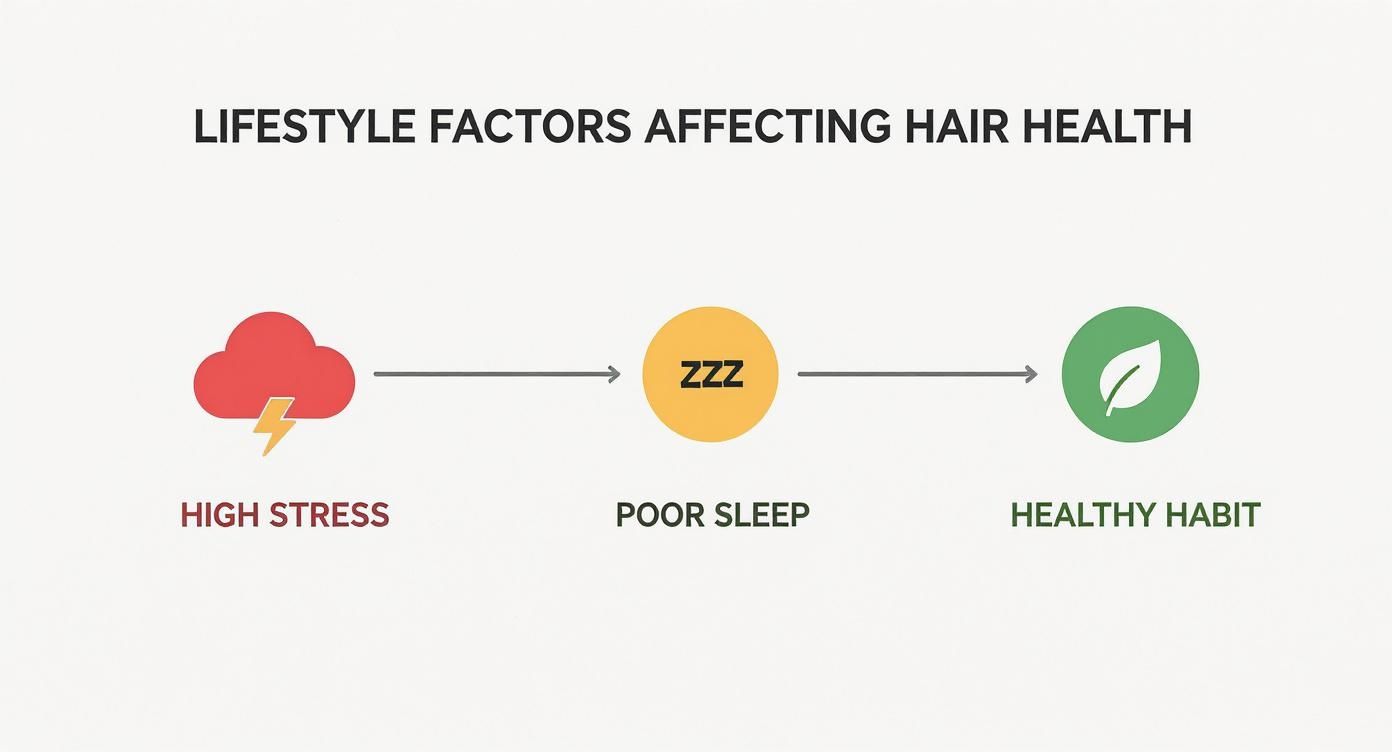
As you can see, shifting away from those detrimental habits is fundamental to creating the right internal environment for your hair to thrive.
Prioritize Quality Sleep
Sleep is prime time for your body's repair and regeneration work, and that absolutely includes your hair follicles. While you’re in a deep sleep, your body is busy producing hormones essential for cell growth and repair.
If you’re consistently getting less than 7-8 hours of quality sleep a night, you're basically cheating your follicles out of their crucial maintenance window. Over time, this can throw the entire hair growth cycle out of whack, leading to weaker strands and more shedding.
Think of quality sleep as the nightly maintenance crew for your hair follicles. Skimping on sleep is like telling the crew to take the night off—eventually, things will start to break down.
Kick Habits That Restrict Blood Flow
Some habits do direct damage by cutting off the nutrient supply to your hair. Smoking is a huge one. Nicotine actually causes your blood vessels to constrict, which severely limits blood flow to the scalp. Less blood flow means fewer nutrients and less oxygen can get to your follicles, essentially starving them.
This habit is so harmful that we've created a detailed guide exploring the clear link between smoking and hair loss. The global hair growth enhancement market is projected to hit USD 18.92 billion by 2030, and a big reason for that boom is men looking for answers to widespread hair loss—a problem that lifestyle choices often make worse.
Making these changes isn't always easy, but it gives your natural hair growth efforts a real fighting chance.
Comparing Natural and Pharmaceutical Approaches
Deciding how to tackle hair loss can feel overwhelming. There are natural, lifestyle-focused methods and well-known pharmaceutical options. To help you understand the landscape, here's a look at how they stack up.
| Aspect | Natural Methods (Diet, Lifestyle, Oils) | Pharmaceuticals (Minoxidil, Finasteride) |
|---|---|---|
| Mechanism | Supports the body's natural hair growth processes and reduces inhibitors like inflammation. | Directly stimulates follicles (Minoxidil) or blocks DHT, a hormone linked to hair loss (Finasteride). |
| Time to Results | Slower and more gradual; typically 3-6 months or more to see noticeable changes. | Can be faster, often within 3-4 months, but varies by individual. |
| Side Effects | Rare and usually mild (e.g., skin irritation from essential oils). No systemic side effects. | Potential for side effects like scalp irritation, unwanted hair growth, or sexual dysfunction (Finasteride). |
| Cost | Generally lower cost, integrated into daily routines (groceries, supplements). | Ongoing cost of purchasing the medication monthly or quarterly. |
| Sustainability | Focuses on long-term health and well-being, creating a sustainable foundation for hair growth. | Requires continuous, long-term use. Stopping the medication typically reverses the results. |
Ultimately, both paths have their merits. Natural methods build a strong, healthy foundation from the inside out, while pharmaceuticals offer a more direct, targeted intervention. Many men find success by combining elements of both, but understanding the trade-offs is the first step toward making an informed choice that’s right for you.
Play the Long Game: Patience and Progress Tracking
Let's talk about the single most important part of this whole process. After learning about nutrition, scalp health, and lifestyle tweaks, it's easy to get amped up and expect to see a brand-new head of hair in a few weeks. But I need to be real with you from the get-go: this is a marathon, not a sprint.
Hair grows at a snail's pace—about half an inch a month on average. That means you literally cannot see a huge difference overnight. The real secret is to stop looking for a quick fix and start building a healthy foundation that lets your hair thrive for the long haul.
Think about it like hitting the gym. You wouldn't expect a six-pack after one workout, right? It takes months of showing up consistently. Your hair is no different. It's the small, daily habits that add up to big results over time.
How to Actually See Your Progress
Staring at your hairline in the mirror every morning will drive you crazy. You're just too close to it to notice the subtle, slow changes. A much smarter (and saner) way to do this is to set up a simple tracking system.
- Take Monthly Photos: This is non-negotiable. It's the best visual proof you'll have. Pick a day each month—say, the 1st—and snap a few clear pictures.
- Keep It Consistent: Always use the same spot and lighting. Stand near a window for good natural light and take photos of the front, the top of your head, and your crown. Consistency is the key to an accurate comparison.
- Compare Every Three Months: After 90 days, put your first and third month's photos side-by-side. That's when you'll spot the real changes—the slight thickening, the new vellus hairs, the improved density—that you'd otherwise completely miss.
This takes all the emotion and guesswork out of it. It gives you cold, hard proof that what you're doing is working, which is the motivation you need to keep going when you feel like giving up.
Patience isn't just about waiting. It's about keeping a good attitude and sticking to the plan while you wait. Trust that every healthy meal, scalp massage, and good night's sleep is an investment in your hair.
A Simple Weekly Routine to Get You Started
So, how does all this fit into a normal, busy schedule? The goal is to build habits that stick, not to overwhelm yourself. Here’s a sample framework that shows you how to incorporate these practices without taking over your life.
-
Daily Habits (5-10 minutes):
- Pop your hair supplements with breakfast.
- Do a 4-minute scalp massage while you’re watching TV or just before bed.
- Make getting 7-8 hours of quality sleep a priority.
-
A Few Times a Week (2-3x):
- Before you shower, apply a rosemary oil treatment to your scalp and leave it on for 30-60 minutes.
- Wash your hair with a gentle, sulfate-free shampoo and conditioner.
To really keep yourself on track and motivated, it's a great idea to build these into your daily life. Check out these life-changing habits to track in your daily routine for more ideas on how to make them stick. Remember, this simple schedule is all about consistency—that’s the real key to getting results.
Common Questions About Natural Hair Growth
As you start exploring how to get your hair growing naturally, you're bound to have some questions. It's a journey, and it's totally normal to feel a bit overwhelmed at first. Let's tackle some of the most common things men wonder about when they begin.
How Long Does It Realistically Take To See Results?
This is the big one, right? The honest answer is: it takes time.
Hair grows at a snail's pace—about half an inch a month on average—so patience is key. You'll likely notice the first positive signs, like less hair in the drain or a healthier-feeling scalp, within 2-3 months.
But for that visible new growth or a noticeable difference in thickness, you really need to give it at least 4-6 months of consistent effort. The results you see are a direct reflection of how dedicated you are to your new diet, scalp care, and lifestyle changes.
Can I Really Reverse Genetic Hair Loss Naturally?
Here's the straight talk: you can't change your DNA. But you can absolutely influence how those genetics express themselves. Natural methods are fantastic for slowing down the march of male pattern baldness and making the hair you have as healthy and long-lasting as possible.
I like to think of it this way: your genetics might load the gun, but it's your lifestyle and daily habits that pull the trigger.
By creating the best possible environment for your hair—inside and out—you give your follicles a real fighting chance. Great nutrition, better circulation, and less stress can make a huge difference, potentially delaying significant thinning for years.
A common myth is that natural approaches are useless against genetics. The truth is, they put you back in the driver's seat. You're controlling the factors you can influence, building a foundation of health that gives your hair its best shot.
Are There Any Natural DHT Blockers?
The hormone DHT, or dihydrotestosterone, is the main culprit behind male pattern baldness. While there are prescriptions that target it, a few natural ingredients have shown some real promise in helping manage its impact.
Here are a few of the most well-researched options:
- Saw Palmetto: This herbal extract is probably the most well-known. It’s often studied for its ability to inhibit 5-alpha-reductase, the enzyme that turns testosterone into hair-follicle-shrinking DHT.
- Pumpkin Seed Oil: Much like saw palmetto, research points to its potential DHT-blocking properties. In one study, men who took pumpkin seed oil saw a 40% increase in average hair count over 24 weeks.
- Rosemary Oil: It's not just for improving circulation. Some evidence suggests rosemary oil can help shield follicles from DHT damage.
Of course, another big piece of the puzzle is making sure nothing else is holding you back. For example, did you know a vitamin deficiency can cause hair loss? It’s a crucial angle to consider.
At PRP For HairLoss, we're all about giving you clear, practical information so you can take control of your hair health. Check out our resources to learn more about effective strategies and treatments. Find out more at https://prpforhairloss.com.

 PRP For Hairloss
Leave a comment