It's a feeling many of us know all too well. You spot a few too many strands in the shower drain or on your pillow, and that sinking question hits: "Why am I losing hair?" Before you jump to the worst conclusion, it's good to know that shedding 50 to 100 hairs every day is completely normal. It’s just part of your hair's natural lifecycle.
The real question is when that normal shedding crosses the line into something more. The answer usually isn't just one thing, but a mix of factors—from your family tree and hormones to your stress levels and what's on your plate.
Your Guide to Understanding Hair Loss
Watching your hair thin can feel isolating, but trust me, you're in good company. Hair loss impacts an estimated 80 million people in the United States alone. It’s an incredibly common part of life, especially for men. The trick is figuring out the difference between everyday hair fall and a more accelerated loss that signals a disruption in your hair's growth cycle.
Think of it this way: your hair is always going through a process of growing, resting, and eventually shedding. When something throws that cycle off balance, that's when you start to notice thinning.
The Normal Hair Growth Cycle
Imagine each hair follicle as a tiny, independent factory. Most of these factories are in a productive growth phase (the anagen phase) that lasts for several years. At any given time, a smaller number are in a brief resting phase (the telogen phase) just before the hair is shed. This staggered cycle is what keeps a full head of hair on your head.
The problem kicks in when certain triggers—whether internal hormonal shifts or external pressures—force a large number of follicles to enter that shedding phase all at once. That's when you start to see the thinning.
Hair loss is more common—and more manageable—than you might think. The most important thing is to focus on what you can control: caring for your scalp, managing stress, and using science-backed approaches that support hair health.
What Can Disrupt This Cycle?
So, what are these triggers? Several key factors can knock your hair's natural rhythm off-kilter. Getting a handle on them is the first real step toward finding a solution that actually works for you.
- Genetics: Like it or not, hereditary-pattern baldness is the single most common cause of hair loss. Thanks, Mom and Dad.
- Hormonal Changes: This is a big one. An imbalance, especially with a testosterone byproduct called DHT, is notorious for shrinking hair follicles until they stop producing hair altogether.
- Stress and Illness: A major physical or emotional shock can trigger a temporary but dramatic shedding condition known as telogen effluvium.
- Nutritional Deficiencies: Your hair is literally built from the nutrients you consume. A diet lacking in key vitamins and minerals can weaken its very structure.
This guide will walk you through each of these potential causes, helping you connect the dots. For a deeper dive right away, you can learn more about what causes hair loss in our detailed article.
Common Reasons for Hair Loss at a Glance
To make things a bit clearer, here’s a quick breakdown of the main culprits behind hair loss and who they most often affect.
| Cause Category | Primary Factors | Commonly Affected Groups |
|---|---|---|
| Hereditary | Genetic predisposition (androgenetic alopecia) | Men and women, typically post-puberty |
| Hormonal | DHT sensitivity, thyroid issues, pregnancy | Primarily men, but also women |
| Medical & Lifestyle | Stress, illness, medications, poor nutrition | Anyone, often temporary |
| Autoimmune/Traumatic | Alopecia areata, traction alopecia (hairstyles) | Varies by condition |
This table gives you a bird's-eye view, but keep in mind that these factors can often overlap. Understanding the root cause is the most critical step toward finding an effective treatment.
Is Your Hair Loss Written in Your DNA?
For most men wondering "why am I losing my hair," the answer is usually hiding in their family tree. If your dad or grandfathers dealt with thinning hair or went bald, there’s a good chance your hair loss is hereditary. This isn't just a coincidence; it's a specific genetic condition called androgenetic alopecia, but most of us just know it as male pattern baldness.
Think of it this way: your genes are a blueprint passed down from your parents. For a lot of people, that blueprint includes a sensitivity to a hormone called dihydrotestosterone, or DHT. Over time, DHT starts to shrink the hair follicles. As they get smaller, the hair they produce becomes finer, shorter, and weaker, until eventually, the follicle just gives up.
The Role of Hormones and Time
This whole process, which we call miniaturization, doesn't happen overnight. It’s a slow, predictable retreat. For men, this usually starts with a receding hairline or a thinning spot at the crown of the head.
It's important to know that everyone has DHT. The real difference is how your hair follicles react to it, and that’s all decided by your genes. This is exactly why one brother can have a full head of hair into his 60s, while another starts noticing significant thinning in his 20s.
The infographic below shows the normal hair growth cycle, which is what gets thrown off balance by androgenetic alopecia.
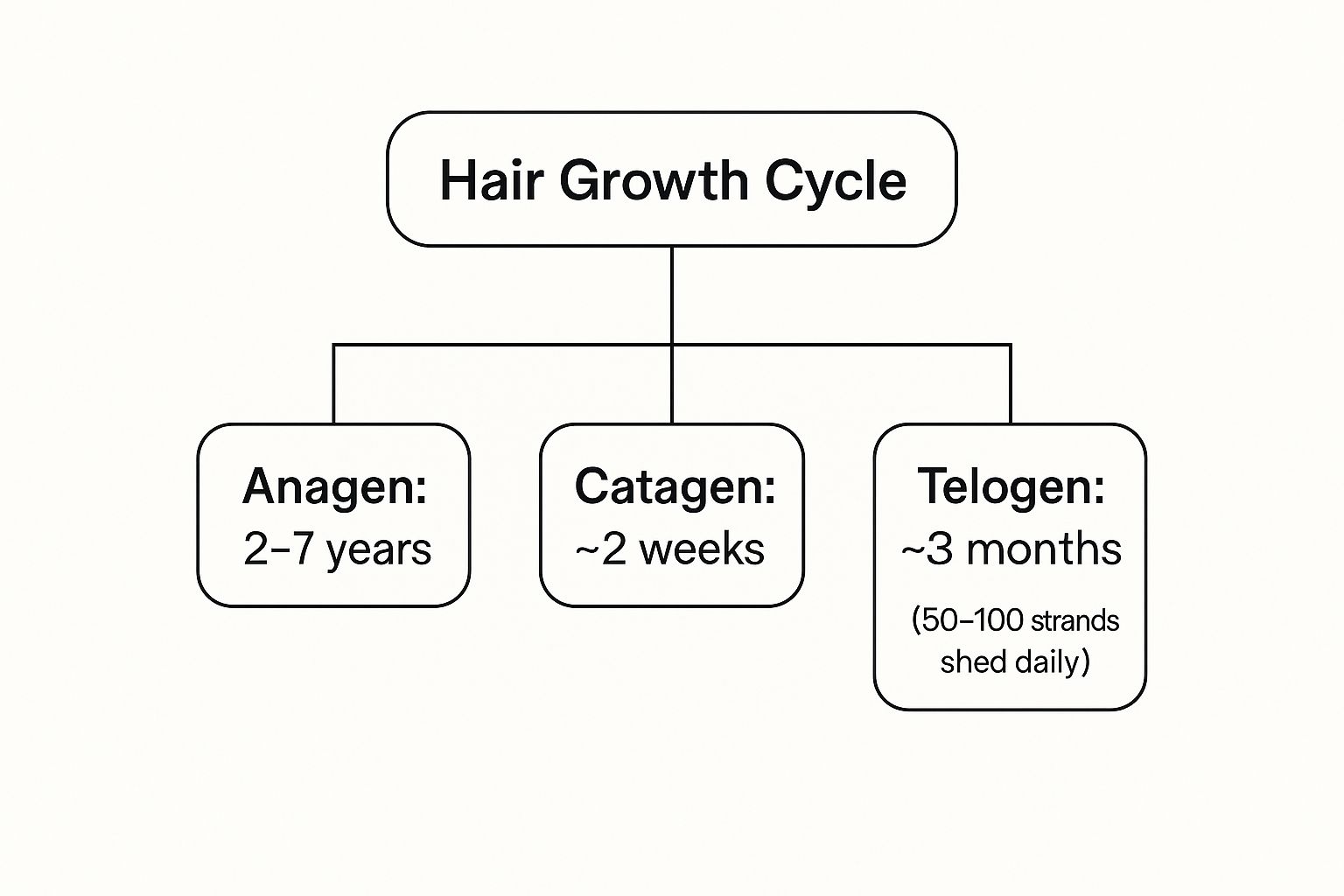
With genetic hair loss, the growing phase (Anagen) gets shorter and shorter, while the resting phase (Telogen) gets longer. The result is less visible hair on your head at any given time.
A Common Story for Men and Women
While we often think of pattern baldness as a men's issue, women absolutely experience it too, though it tends to look different. By the time they reach 50, about 85% of men will have some noticeable hair loss. For women, that number is closer to 33%. This stark difference really shows how much genetics and hormones drive male pattern baldness, which is responsible for about 95% of all hair loss cases.
For women, the thinning is usually more spread out across the scalp instead of being focused on the hairline. And while genes are still a major player, other things like the hormonal shifts from menopause can be a big trigger.
The key takeaway is that for the vast majority of men, hair loss isn't your fault. It's a natural, genetically-driven process that plays out over many years.
Understanding your genetic risk is the first real step toward finding a solution that works. Science has come a long way, and now we can even identify your risk before the thinning gets too far along. You might find our guide on genetic hair loss testing helpful; it breaks down how these tests work and what they can reveal about the future of your hair. Once you recognize the genetic component, you can stop worrying and start looking at proactive strategies.
How Your Lifestyle Impacts Your Hair Health

While your genes might set the stage for hair loss, your daily habits and environment often direct the show. Your lifestyle—what you eat, how you manage stress, and even your surroundings—plays a massive role in the health of your hair follicles. If you ignore these factors, you might find yourself asking, "why am I losing hair?" even without a strong genetic predisposition.
Think of your body as a finely tuned system. When it’s under pressure, it has to decide what to prioritize. And let's be honest, growing hair isn't high on its list of survival functions. When resources are scarce, your body will divert energy and nutrients away from your hair to support more essential organs.
The Connection Between Stress and Shedding
Chronic stress is one of the biggest culprits behind unexpected hair thinning. When you’re constantly stressed, your body pumps out a hormone called cortisol. Think of cortisol as your body's alarm system—it's incredibly useful in short bursts but damaging when it’s always on.
This constant state of high alert can push a large number of your hair follicles into the shedding phase of their cycle all at once. This condition, known as telogen effluvium, often appears a few months after a stressful event, leading to a sudden and very noticeable increase in hair fall.
"The link between stress and hair loss is a frustrating cycle: you notice more shedding, which leads to more stress, and the pattern continues. The good news is that stress-related hair loss is often temporary."
Getting a handle on your stress levels through exercise, mindfulness, or even just getting enough sleep can help break this cycle and get your hair back to its normal growth pattern.
How Your Diet Feeds Your Follicles
At its core, your hair is made of a protein called keratin. If your diet is lacking in protein and other key nutrients, your body simply won't have the building blocks it needs to produce strong, healthy hair. It's really as simple as that.
Several key deficiencies are well-known contributors to hair loss:
- Iron: This mineral is critical for producing hemoglobin, which carries oxygen to the cells that stimulate hair follicles. Without enough oxygen, they can't grow and repair themselves properly.
- Vitamin D: Low levels of Vitamin D have been directly linked to alopecia. And even though we get some from the sun, many of us are still deficient.
- Biotin and Zinc: Both are absolutely essential for hair tissue growth and repair.
A diet rich in the right nutrients, especially protein, is vital for strong hair. You can learn more about incorporating high protein foods into your meals. For a deeper dive into crafting the perfect menu for your hair, check out our guide on the ideal hair loss diet.
It's also interesting to see how these factors play out on a global scale. Hair loss prevalence differs substantially across countries. Spain, for instance, has one of the highest rates of male pattern baldness, affecting an estimated 44.5% of its male population. In contrast, countries like the United States and Germany have rates closer to 41%. These regional variations often reflect a blend of differences in diet, genetics, and other environmental factors.
Uncovering Hidden Medical Causes of Hair Loss

While we often point the finger at genetics and lifestyle choices, sometimes the real reason you're losing hair is hidden deeper inside your body. Think of your hair as an early warning system—sudden or unusual shedding can be a signal that something else needs your attention. It's often one of the first visible symptoms of an underlying medical issue or a major hormonal shift.
Imagine your body's hormones are a finely tuned orchestra. When one section, like the thyroid, starts playing out of sync, the whole performance suffers. This kind of internal disruption can throw your hair's sensitive growth cycle into chaos, forcing follicles into a shedding phase long before they're ready.
When Hormones Are the Culprit
Hormones are the body's powerful messengers, controlling everything from your mood to your metabolism. They also have a massive influence on your hair's life cycle, and when their levels fluctuate, your hair is one of the first places you'll see the effects. In fact, a hormonal imbalance is one of the most common culprits behind thinning hair.
Several specific situations can set off these imbalances:
- Thyroid Issues: It doesn't matter if your thyroid is overactive (hyperthyroidism) or underactive (hypothyroidism)—either condition can lead to widespread hair thinning. The thyroid gland is a powerhouse for regulating metabolism and growth, so when it's not working correctly, hair development is one of the first things to suffer.
- Menopause and Andropause: The dramatic drop in estrogen and progesterone that happens during menopause can cause hair to become much finer and shed more easily. Men experience something similar as they age; hormonal shifts can accelerate thinning beyond what's expected from typical male pattern baldness.
- Pregnancy and Postpartum: During pregnancy, a surge in hormones often leads to a wonderfully thick head of hair. The party ends after childbirth, though. Hormone levels plummet, triggering a temporary but often shocking period of shedding called postpartum telogen effluvium.
Understanding why your body is responding this way is key. Since hormonal imbalances are such a frequent cause, learning how to naturally balance your hormones can be a vital part of taking a whole-body approach to your hair's health.
Autoimmune Responses and Other Conditions
It’s not just about hormones. Sometimes, your body's own defense system can turn against your hair follicles. This is exactly what happens in autoimmune conditions.
Alopecia areata is the classic example. Here, the immune system gets confused and mistakenly attacks the hair follicles, causing hair to fall out in small, coin-sized patches. It can be incredibly stressful, but the good news is that the follicles usually aren't permanently destroyed.
Finally, don't overlook your medicine cabinet. Certain prescription drugs and medical treatments can list hair loss as a known side effect. If you’ve noticed more shedding after starting a new medication, it’s definitely something to bring up with your doctor. Our guide to medications that cause hair loss offers more insight.
Simply recognizing that your hair loss might be a symptom of a larger health picture is the most important first step toward finding a real, lasting solution.
Exploring Professional Hair Restoration Treatments
https://www.youtube.com/embed/Q5x2nfmONm8
Once you have a better idea of why you're losing your hair, the next logical question is what you can do about it. When the over-the-counter foams and serums just aren't cutting it, it might be time to look at professional treatments. These are more advanced options designed to work directly with your body’s biology to get hair growing again.
One of the most promising treatments people are talking about is Platelet-Rich Plasma (PRP) therapy. This is a procedure that uses a concentrated dose of your own blood platelets to help rejuvenate your hair follicles, going far beyond surface-level fixes to address the problem at its source.
What Is PRP Therapy and How Does It Work?
Think of PRP as a potent, organic fertilizer made just for your scalp. The whole process starts with a simple blood draw, just like you’d get at a routine check-up. That blood is then placed in a centrifuge—a machine that spins it at high speed to separate the platelets from everything else.
These platelets are the real heroes here; they're packed with special proteins called growth factors, which are basically your body's natural repair crew. This highly concentrated, platelet-rich plasma is then carefully injected into the areas of your scalp where thinning is most visible. The idea is to wake up dormant hair follicles and nudge them back into the business of producing thicker, healthier hair.
The core idea behind PRP is to leverage your body's own healing mechanisms. By delivering a super-concentrated dose of growth factors directly to the hair follicles, you're giving them the precise tools they need to restart the growth cycle.
What makes this approach so appealing is that you're not introducing anything foreign into your system. You're simply redirecting and amplifying your body's innate ability to regenerate and heal itself.
Who Is a Good Candidate for PRP?
PRP tends to work best for people who are in the earlier stages of hair loss. It's a fantastic option for those dealing with thinning hair or patches of weakening growth, but it's not really designed for areas that have been completely bald for a long time.
A good candidate for PRP usually has a few things in common:
- Recent Thinning: We often see the best results in people who've noticed their hair thinning significantly over the last few years.
- Active But Weak Follicles: PRP is all about stimulating existing follicles that have become sluggish or miniaturized. It doesn't create new ones from scratch.
- Good Overall Health: Being healthy means your platelets are high-quality and your body is in a good position to respond well to the treatment.
It’s about intervention, not resurrection. The treatment gives a much-needed boost to follicles that are struggling but still have some life left in them. If you're weighing your next steps, exploring different hair restoration treatment options can give you a clearer picture of what will work for your specific situation, helping you move from concern to confident action.
Answering Your Top Hair Loss Questions
Let's be honest, trying to figure out why your hair is thinning can feel like falling down a rabbit hole of confusing information and old wives' tales. This last section is all about cutting through that noise. We're going to tackle the most common questions people ask when they first notice more hair in the brush.
Is My Hair Loss Permanent?
This is usually the first and biggest fear, and the answer is often a resounding no. Many of the reasons people lose their hair are actually temporary. For instance, shedding triggered by intense stress, a recent surgery, or a vitamin deficiency usually stops once your body gets back on track.
Now, what about the most common culprit, androgenetic alopecia (also known as pattern baldness)? While that condition is progressive, "permanent" isn't quite the right word. With the right approach, you can significantly slow it down and even regrow some of what you've lost. The trick is always to catch it and act on it early.
One of the biggest myths out there is that all hair loss is a one-way street. The reality is that many forms are treatable or temporary. Once you correct the underlying imbalance, your hair usually follows suit.
Can High Stress Really Cause Hair Loss?
It absolutely can. In fact, prolonged stress is a classic trigger for a condition called telogen effluvium. Think of it this way: when your body is under constant pressure, it goes into survival mode. It starts redirecting energy away from things it considers "non-essential," and unfortunately, hair growth is one of the first things to get sidelined.
This process shoves a huge number of your hair follicles into the shedding (telogen) phase all at once. You won't notice it right away, but a few months after a really stressful event, you might see a sudden and alarming amount of shedding. The good news? This kind of hair loss is almost always temporary. With some TLC and better stress management, your hair can make a full comeback.
Which Vitamins Actually Help Hair Grow?
While there's no single magic pill, a handful of vitamins and minerals are absolutely essential for keeping your hair follicles healthy and productive. If you're running low on any of them, you might notice your hair starting to thin.
- Iron: This is non-negotiable. Iron helps create hemoglobin, which is responsible for carrying oxygen to all your cells—including the ones that build your hair.
- Vitamin D: Researchers have found clear links between low vitamin D levels and different types of hair loss. Since so many of us are deficient, it's a really important one to look at.
- Biotin (Vitamin B7): You've probably seen this in supplements. It’s famous for a reason—it’s a key player in producing keratin, the protein that hair is made of.
- Zinc: This mineral is vital for growing and repairing hair tissue. It also helps the oil glands around your follicles work properly, keeping your scalp healthy.
Eating a well-rounded diet is always your best first step. But if you think a deficiency is the problem, the only way to know for sure is to see a doctor for some simple blood tests.
How Can I Tell If My Shedding Is Normal?
This is such an important question. Everyone sheds hair every single day; it’s just part of the natural hair growth cycle. Losing anywhere from 50 to 100 hairs per day is considered totally normal.
The time to pay attention is when you notice a real shift from your personal normal. Is the shower drain suddenly getting clogged every time you wash your hair? Is your brush filling up way faster than it used to? Can you see more scalp than before, or is your part line looking wider? These are the clues that your shedding has probably crossed from normal into excessive, and it’s a great signal to start investigating the potential causes we've talked about.
We know that dealing with hair loss can feel isolating and stressful, but understanding what’s happening is the first real step toward taking back control. At PRP For HairLoss, our entire mission is to give you clear, honest information so you can move forward with confidence. To learn more about advanced, science-backed treatments like PRP therapy, explore the rest of our resources at https://prpforhairloss.com.
 PRP For Hairloss
Leave a comment