Think of Platelet-Rich Plasma (PRP) therapy as a custom-blended, super-concentrated fertilizer, but for your scalp. It's a non-surgical approach that taps into your body's own healing mechanisms to give struggling hair follicles a serious boost, paving the way for healthier, more natural growth.
What Is PRP for Hair, In Simple Terms?

At its heart, PRP (Platelet-Rich Plasma) is a form of regenerative medicine. We aren't introducing anything foreign into your system. Instead, we’re concentrating the powerful healing components already present in your blood to fight hair loss.
The whole thing kicks off with a simple blood draw, no different from one you’d get at a routine physical.
That blood sample then goes for a spin in a centrifuge. This machine separates the blood into its different layers, allowing us to isolate the most valuable part: the platelet-rich plasma. It’s often called 'liquid gold' for a good reason—it’s packed with regenerative potential.
For a quick overview, here's a simple breakdown of the therapy.
PRP Hair Therapy at a Glance
| Aspect | Description |
|---|---|
| Treatment Name | Platelet-Rich Plasma (PRP) Therapy |
| Primary Goal | To stimulate natural hair regrowth and improve hair thickness. |
| Procedure Type | Non-surgical, minimally invasive injections. |
| Source Material | Your own blood. |
| Key Ingredient | Concentrated platelets and growth factors. |
| Session Duration | Typically 60-90 minutes per session. |
| Typical Plan | An initial series of treatments followed by maintenance sessions. |
This table gives you the essentials, but the real magic is in the biology.
The Power Locked Inside Your Platelets
So, what’s the big deal with this plasma? It’s teeming with platelets and growth factors—the body's own first responders. Whenever you get a cut, these are the tiny powerhouses that rush to the scene, telling your cells to start repairing and regenerating tissue. You can get a deeper dive into the science by checking out our guide on what platelet-rich plasma is.
When we re-introduce this highly concentrated solution into your scalp, we're delivering that healing power directly to the hair follicles. These growth factors act like a wake-up call for dormant or miniaturizing follicles, pushing them back into an active growth phase.
This targeted stimulation helps to:
- Improve the blood supply feeding each hair follicle.
- Increase the thickness and strength of the hair shaft.
- Trigger the growth of new, healthier hair.
The entire concept behind PRP is bio-stimulation. We aren't relying on outside chemicals or surgery. Instead, we're simply amplifying your body's natural, built-in ability to heal itself and regrow hair.
This minimally invasive, natural approach is becoming incredibly popular. The U.S. market for PRP and stem cell hair loss treatments was valued at around USD 255.20 million in 2024 and is projected to keep climbing. It's a clear signal that people are looking for effective, regenerative options that work with their bodies, not against them.
The Science Behind How PRP Revives Hair Follicles
To really get what PRP for hair is all about, you need to understand the journey your blood takes after it’s drawn. It's a remarkably straightforward process that takes a basic blood sample and transforms it into a potent hair growth solution, all during your appointment. It all comes down to isolating and concentrating your body's own natural healing components.
First, we take a small sample of your blood—no different than a routine lab test. This sample is then placed into a centrifuge. If you’ve never seen one, just picture a machine that spins test tubes at incredibly high speeds. This rapid spinning generates a powerful force that separates the blood into different layers according to its density.
The result is a test tube with three distinct layers: red blood cells at the bottom, platelet-poor plasma on top, and a thin, golden-colored layer in the middle. That middle layer is exactly what we're looking for: the platelet-rich plasma (PRP). This is the good stuff, containing a concentration of platelets up to 5-10 times greater than what’s normally circulating in your bloodstream.
Unleashing Your Body's First Responders
So, what makes these platelets so special? Think of platelets as your body's internal emergency response team. Whenever you get a cut, they're the first to arrive on the scene. Their job is to stop the bleeding and, just as importantly, to kick off the entire healing cascade.
They do this by releasing a powerful cocktail of proteins called growth factors. These are like little biological messengers that instruct nearby cells on how to repair damage, generate new tissue, and improve circulation. You can dive deeper into the platelet-rich plasma preparation process in our detailed guide.
With hair loss, we're essentially taking this natural healing mechanism and putting it to work for a very specific purpose. By concentrating the platelets, we’re creating a super-serum of these growth factors.
The core idea behind PRP therapy is bio-stimulation. We aren't adding synthetic chemicals or foreign substances. Instead, we are delivering a supercharged dose of your body's own healing and regenerative instructions directly to the hair follicles that need it most.
Waking Up Dormant Hair Follicles
When we strategically inject this concentrated PRP into your scalp, those growth factors get to work right away. They send a wake-up call to hair follicles that have become miniaturized or dormant, rousing them from their slumber. This targeted boost has a few critical effects:
- Improved Blood Supply: Growth factors stimulate the formation of new micro-capillaries around the follicles, improving the delivery of vital oxygen and nutrients.
- Strengthened Hair Shafts: With a better nutrient supply, existing hairs become stronger, thicker, and more robust.
- Extended Growth Phase: Hair grows in cycles, and PRP helps prolong the active anagen phase. This means hair grows for a longer period, resulting in greater length and density over time.
In the end, this entire process breathes new life into weakened follicles, coaxing them to produce thicker, healthier hair. It's a way of using your body's own powerful systems to push back against thinning and restore your hair's density from the inside out.
Your PRP Treatment Journey From Start to Finish
Thinking about getting PRP therapy? It helps to know exactly what the process looks like from beginning to end. Knowing what to expect on treatment day can calm any nerves and make the whole experience feel much more straightforward.
Let’s walk through a typical session, from the moment you arrive at the clinic to the simple aftercare you’ll follow at home.
Your journey really starts with an initial consultation. This is where a specialist takes a close look at your scalp, evaluates your hair loss, and makes sure you're a good candidate for the treatment. It's the perfect time to ask all your questions and get a clear, realistic idea of what PRP can do for you.
What Happens on Treatment Day
When you show up for your appointment, the procedure itself is surprisingly quick—usually all wrapped up in about an hour.
First up is a simple blood draw from your arm, no different than what you’d have done for a routine lab test. That small sample of your blood is all that’s needed to create the PRP.
Next, while your blood is in a special machine called a centrifuge—which spins it at high speeds to separate the platelet-rich plasma—your scalp will be prepped. The practitioner will clean the area and apply a topical numbing cream. This cream usually needs about 20-30 minutes to take full effect, ensuring you’re comfortable during the next step.
This infographic breaks down the simple, three-step process of preparing and injecting the PRP.
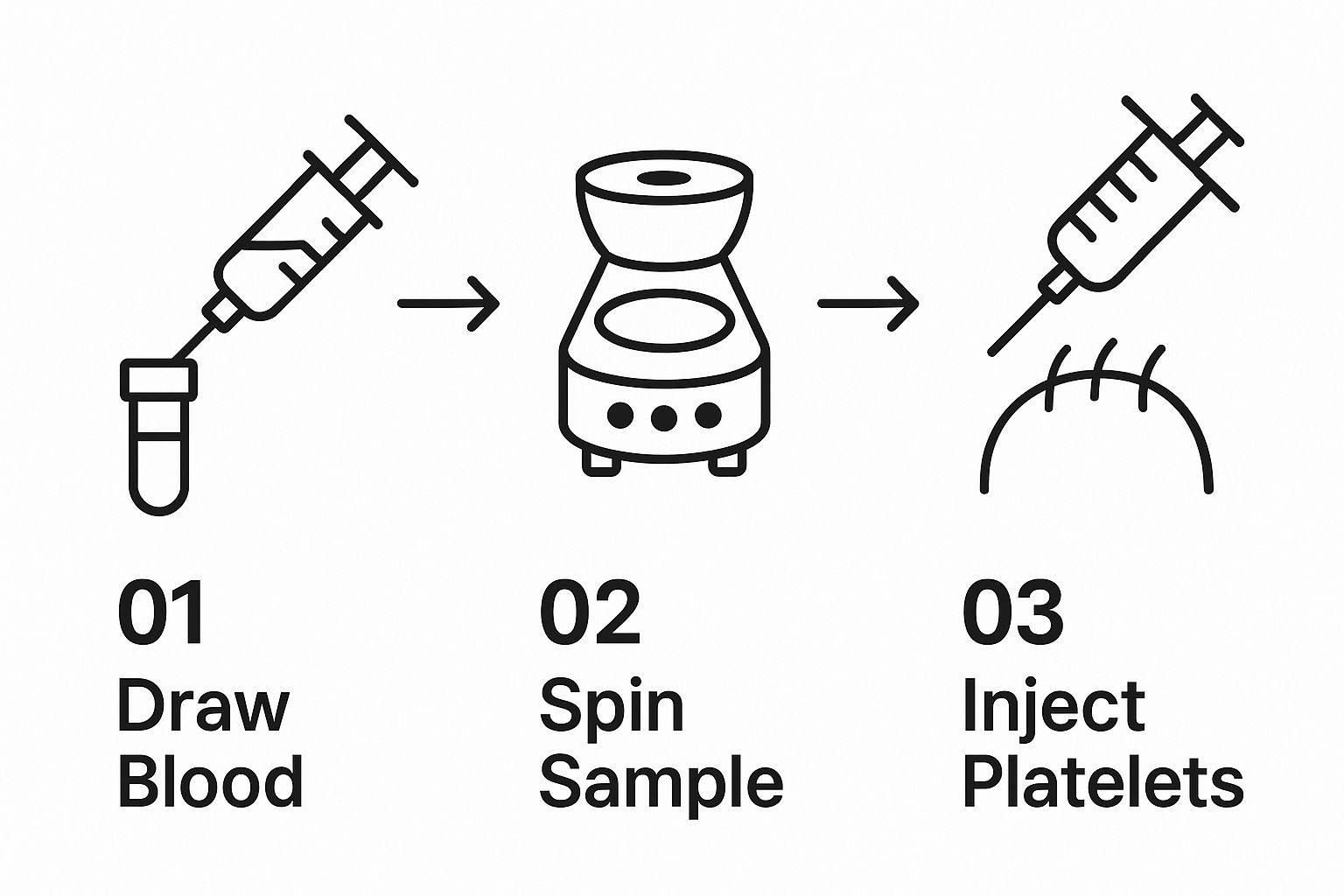
As you can see, the whole concept is about concentrating your body's natural healing power and putting it right where it's needed most.
Once the PRP is ready and your scalp is numb, it's time for the injections. Using a very fine needle, the practitioner will carefully inject the plasma into the specific areas of your scalp where you're experiencing thinning. Most people say it feels like a series of quick, tiny pricks or a bit of light pressure. The injection part is over before you know it, often taking just 10 to 15 minutes.
Aftercare and Getting the Best Results
And just like that, you're done! The best part is there’s no real downtime, so you can head right back to your normal daily routine. Your provider will give you a short list of simple aftercare instructions to follow.
Typically, you'll be told to:
- Wait at least 24 hours before washing your hair.
- Avoid harsh chemical hair treatments or dyes for a few days.
- Skip strenuous exercise, saunas, or steam rooms for a day or two to keep any potential swelling to a minimum.
It's common to have some mild redness, a little soreness, or slight swelling where the injections were made, but this almost always fades within a day or two. Some clinics even combine PRP with complementary procedures like microneedling to potentially boost results, which is something you can discuss with your specialist.
Following these simple guidelines helps your scalp heal perfectly and sets you up for the best possible outcome. To get a better sense of what to expect in the following weeks and months, you can check out our complete PRP hair treatment timeline.
Real Results and What You Can Expect from PRP
Let's get straight to it: does PRP for hair loss actually work? When you’re putting your time and money on the line, you deserve to know what a realistic outcome looks like. While clinical studies and patient stories are overwhelmingly positive, it’s crucial to go in with the right expectations.
PRP isn’t a magic wand for hair loss. It’s a biological therapy that works with your body, and that process takes time. I often tell my patients to think of it like tending a garden—you wouldn't plant seeds and expect a full bloom the next morning. You’re coaxing your hair follicles back to life, and that requires a bit of patience.
A Realistic Timeline for Hair Growth
Most people start seeing the first signs of change about two to three months after their initial treatments. This usually isn't a sudden explosion of new hair. Instead, the first big win is a dramatic decrease in hair shedding. Noticing fewer hairs on your pillow or in the shower drain is a fantastic sign that the growth factors are getting to work.
From there, the more noticeable results start to appear between months three and six. This is the window where you’ll begin to feel—and see—denser, thicker hair as those reawakened follicles start producing stronger, healthier strands. To get a visual, you can browse a gallery of real PRP hair treatment results to see what this progression looks like for others.
The goal of PRP isn't just about damage control; it's about actively improving the quality and feel of your hair. Many people report their hair feeling stronger and having more body after finishing their initial treatment series.
What the Research Shows
The science behind PRP is solid and encouraging. For instance, one key study focusing on androgenetic alopecia (the classic male pattern baldness) found some seriously impressive improvements after just three sessions.
Researchers observed an increase in hair density of over 60%. Even more telling, active hair shedding plummeted—dropping from affecting 75.6% of patients down to just 12.2% after treatment. These aren't small numbers; they show the real-world potential of PRP.
Of course, your personal results will hinge on a few key variables:
- Your Type of Hair Loss: PRP shines brightest for androgenetic alopecia, where the follicles are still alive but have gone dormant.
- The Stage of Thinning: Catching hair loss in its earlier stages almost always yields more dramatic results.
- Your Commitment: Sticking to the recommended treatment and maintenance schedule is non-negotiable for success.
When you understand the timeline and the factors at play, you can set realistic goals and truly appreciate the process of bringing your hair back to life.
Benefits and Potential Side Effects of PRP Therapy
Every single treatment out there has its pros and cons. To make a smart decision about your hair, you really need to understand both sides of the story. When we look at what PRP can do for hair loss, the advantages are pretty compelling, but it's just as crucial to know about the potential downsides.
One of the biggest pluses for PRP therapy is that it's autologous. That's just a fancy way of saying the treatment comes directly from your own body. This simple fact is a game-changer because it nearly eliminates the risk of allergic reactions or your body rejecting the treatment. You’re essentially just kicking your own natural healing system into a higher gear.
On top of that, it's a non-surgical procedure. There are no scalpels, no stitches, and no real downtime to speak of. Most people can walk out of the clinic and get right back to their day, which makes it a practical choice for anyone with a busy schedule.
The Upside of Using Your Own Biology
The benefits go way beyond just being safe and convenient. Because PRP works by waking up and nourishing your hair follicles, the goal is to grow hair that doesn't just look thicker but actually is healthier and stronger.
The psychological boost from this can be huge. In a survey at the Cleveland Clinic, patients reported a significant jump in their self-esteem and social confidence just three months after their PRP treatments. It's not just about hair; it's about how you feel.
Understanding the Potential Side Effects
Now, let's talk about the other side of the coin. The good news is that because PRP uses your own blood, serious side effects are incredibly rare. The vast majority of issues people run into are mild, temporary, and directly tied to the injections themselves.
Here's what you might experience:
- Minor soreness or tenderness right where the injections were made.
- Slight swelling or a bit of redness on the scalp.
- Pinpoint bleeding right after the procedure is finished.
- A feeling of tightness in your scalp that usually fades in a day or two.
These symptoms almost always clear up on their own within about 48 hours. For a much deeper dive into what you can expect, take a look at our complete guide on PRP hair treatment side effects.
The single most important factor in ensuring a safe and effective treatment is the skill of your provider. Choosing an experienced, qualified practitioner is the best way to minimize risks and achieve the results you’re hoping for.
Common Questions About PRP for Hair Loss
Alright, let's get down to the nitty-gritty. You understand the science behind PRP and what the process looks like, but now it's time for the practical questions—the ones everyone has before committing to a treatment. Getting straight answers to these common concerns is the best way to feel confident about moving forward.
How Much Does PRP for Hair Cost?
Let's talk about the investment. It’s usually one of the first things people ask, and for good reason. The cost of PRP therapy for hair loss varies quite a bit, but you can generally expect a single session in the United States to run anywhere from $500 to $2,500.
So, why the wide range? A few key things come into play:
- Your Location: Just like with most things, clinics in big cities like New York or Los Angeles tend to have higher prices to cover their higher overhead.
- The Clinic's Reputation: You're often paying for expertise. A board-certified dermatologist who specializes in hair restoration with a long history of great results will likely charge more than a general medspa.
- What's Included: Some clinics bundle their PRP sessions with other services, like a detailed scalp analysis or follow-up therapies, which can influence the total price.
Since you'll need more than one session to get things going, most clinics offer package deals for the initial round of treatments. This almost always works out to be a better value than paying for each visit one by one.
Is PRP Treatment Painful?
The idea of needles in your scalp sounds pretty daunting, I get it. But honestly, it’s much less intense than most people imagine.
Before anything starts, your practitioner will apply a potent topical numbing cream to your scalp. They’ll let that sit for about 20-30 minutes to make sure the area is thoroughly desensitized.
Most patients I've spoken with describe the injections as a series of quick, tiny pricks or a bit of pressure. It’s not exactly comfortable, but it's very manageable, and the actual injection part is over in just a couple of minutes. Any soreness you feel afterward is usually mild and disappears pretty quickly.
How Many PRP Sessions Will I Need?
PRP isn't a "one and done" deal. Think of it more like tending to a garden—it requires consistent effort to see real, lasting growth. The standard approach starts with what we call a "loading phase" to really wake up those sleepy hair follicles.
This initial phase typically involves three to four treatments, scheduled about four to six weeks apart. This rhythm gives the growth factors time to accumulate in your scalp and kickstart the regenerative process.
After that initial series, the game plan switches to maintenance. To keep your results going strong, you'll likely need a follow-up session every six to twelve months. This ongoing support is what truly locks in the long-term benefits.
Who Is the Ideal Candidate for PRP Hair Therapy?
PRP can be a game-changer, but it’s not for everyone. It works best for people who are in the earlier stages of hair thinning or loss. Why? Because PRP is all about reviving and strengthening hair follicles that are weak or dormant—it can't bring back follicles that are long gone.
The treatment has shown the most success for individuals with androgenetic alopecia, which is the clinical term for male or female pattern baldness. The key is that the follicles must still be viable. If you have extensive baldness that's been there for years, the follicles have likely shut down for good, and PRP won't be able to do much.
The only way to know for sure is to sit down with a specialist. They can assess your specific type and stage of hair loss to tell you if you're a good candidate.
Ready to explore how PRP can work for you? At PRP For HairLoss, we provide men with the clear, honest information they need to tackle hair loss head-on. Find more answers and guidance by visiting us at https://prpforhairloss.com.

 PRP For Hairloss
Leave a comment