Yes, there's absolutely a direct link between zinc deficiency and hair loss. When your body is running low on this crucial mineral, it can throw a wrench into the hair growth cycle, often leading to thinning and shedding. Why? Because zinc is a non-negotiable ingredient for building strong hair proteins and keeping your hair follicles healthy and productive.
The Real Connection Between Zinc and Hair Health
If you're noticing more hair on your brush or in the shower drain, it's easy to jump to conclusions about genetics or stress. But sometimes, the culprit is a nutritional gap you might not even know you have—specifically, your zinc levels. Zinc is an essential mineral that acts like a master architect for your hair, overseeing the construction of each strand from the follicle up.
Think of it like this: each strand of hair is a complex building, and zinc is the foreman on site. It’s in charge of protein synthesis, the process that creates keratin—the tough, fibrous protein that makes up over 90% of your hair. When the foreman is missing, the whole project can grind to a halt. Not enough zinc means weaker, more brittle hair that's prone to breakage.
Zinc's Role in Hair Follicle Integrity
Beyond just building the hair shaft, zinc is also a key player in the rapid cell division happening inside your hair follicles. This constant, high-energy process is what physically pushes new hair out. A zinc shortage stalls this activity, disrupting the natural hair growth cycle.
This isn't just a minor inconvenience. Zinc deficiency is a serious global health issue, affecting nearly two billion people around the world. It’s also a known factor in common types of hair loss, including alopecia areata and telogen effluvium. Digging into the research behind zinc's role in hair health really highlights its importance.
A lack of zinc doesn't just put the brakes on hair growth; it can actively damage the structure of the hair follicle itself, which can lead to progressive thinning over time.
So, this mineral isn't just another supplement—it's a foundational element for your hair's entire life cycle. Understanding its role is the first step toward addressing potential zinc deficiency hair loss. While zinc is a big piece of the puzzle, it’s also helpful to understand how other vitamin deficiencies can cause hair loss to get a complete picture of your hair’s nutritional needs.
Identifying the Warning Signs of Low Zinc
When you’re trying to get to the bottom of hair loss, it's natural to focus only on what's happening on your scalp. But sometimes, the real culprit sends out signals all over your body, and thinning hair is just one of them. Recognizing these wider symptoms is the key to figuring out if a nutritional shortfall is what’s really behind your hair troubles.
Think of it this way: your body is an interconnected system. When a crucial mineral like zinc is running low, the impact isn't isolated. It creates a ripple effect, and the subtle but persistent issues that pop up are your body's way of waving a red flag.
It's More Than Just Hair
One of the most telling clues of low zinc is how your body handles simple repairs. Do you notice that small cuts and scrapes seem to take forever to heal? That’s a classic sign. Zinc is a powerhouse for cell growth and immune function, both of which are non-negotiable for proper wound healing.
On that note, your immune system relies heavily on zinc. If you feel like you’re constantly fighting off colds or catching every bug that makes the rounds, it could mean your body's natural defenses are running on empty due to a lack of this vital mineral.
The image below breaks down some of the most common reasons a zinc deficiency can develop in the first place.
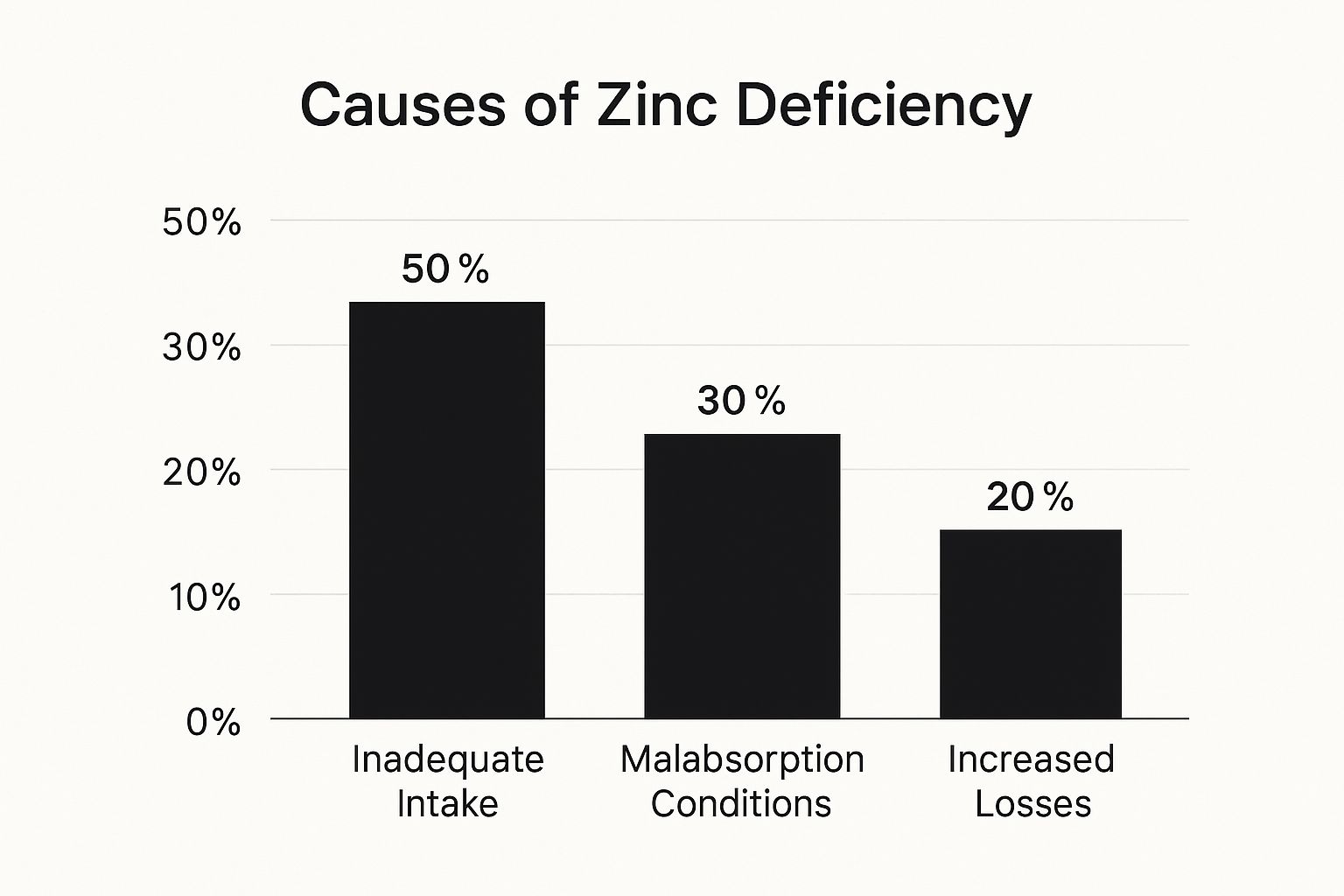
It's clear that while not getting enough zinc from your diet is a major factor, problems with nutrient absorption and other underlying health conditions also play a huge role.
A Quick Symptom Checklist
To help you connect the dots, I've put together a table summarizing the common physical signs that can point to a zinc deficiency. Look for patterns; it's rarely just one isolated issue.
Common Symptoms Associated with Zinc Deficiency
| Symptom Category | Specific Signs to Look For |
|---|---|
| Hair and Nails | Diffuse hair thinning (general shedding, not bald spots), brittle or splitting nails, white spots on nails (leukonychia). |
| Skin Health | Dry or rough skin, unexplained rashes (especially around the mouth or hands), slow wound healing for minor cuts and scrapes. |
| Immune Function | Frequent colds, infections, or feeling generally run down. |
| Sensory Changes | A noticeable loss of appetite, or finding that food doesn't taste or smell as strong as it used to. |
| Cognitive & Mood | Difficulty concentrating, irritability, or mood swings that seem out of character. |
| Other Physical Signs | Unexplained diarrhea, acne or skin lesions. |
Seeing a few of these signs together—like thinning hair plus slow healing and weak nails—paints a much clearer picture and strongly suggests a potential zinc issue.
If this list hits a little too close to home, it's a good time to learn more about how to tell if your hair is thinning and consider speaking with a healthcare professional. Spotting these warning signs is the first, most important step toward addressing the root cause and getting your hair health—and overall wellness—back on track.
Why Your Zinc Levels Might Be Dropping
Figuring out you might have low zinc is one thing, but understanding why is the key to actually fixing it. It's usually not an overnight problem. Instead, it’s a gradual dip caused by everyday factors you might not even think about.
Think of your body's zinc reserves like a bank account. If you're not making enough deposits (through diet) or you're making too many withdrawals (due to health issues or lifestyle), your balance is going to drop. It’s often a combination of things, which is why two people can eat the exact same diet but have totally different zinc levels.
Dietary Habits and Absorption Blockers
The most obvious place to start looking is your plate. Plenty of foods have zinc, but some eating habits can prevent your body from actually absorbing it. This is a common hurdle for people on plant-based diets.
Here’s why: plant-based foods like legumes, whole grains, and nuts are loaded with compounds called phytates. These phytates latch onto zinc in your gut, creating a bond that your body can't break down and absorb. It’s like having the right key to a lock, but the keyhole is jammed. You're eating the zinc, but you’re not getting the benefits.
Zinc from animal sources like red meat and poultry is generally more bioavailable, meaning your body can absorb and use it much more efficiently than zinc from plant sources.
Underlying Health and Gut Issues
Sometimes the problem isn't what you're eating, but how well your gut is processing it. If your digestive system is out of whack, your zinc levels can plummet, no matter how good your diet is.
Conditions that mess with your digestive tract are often the culprits. We see this a lot with:
- Crohn's disease or ulcerative colitis, where chronic inflammation gets in the way of nutrient absorption.
- Celiac disease, which damages the small intestine and hinders its ability to pull in nutrients.
- Chronic diarrhea, which can literally flush zinc out of your system before it has a chance to be absorbed.
Even the delicate balance between digestive enzymes and probiotics can make a huge difference. If that internal machinery isn't running smoothly, you can end up with a deficiency. It's important to see the big picture, as these issues are often just one of the many interconnected causes of hair loss.
Lifestyle and Increased Bodily Demands
Finally, your lifestyle can put a bigger drain on your zinc supply. Heavy alcohol consumption is a big one—it messes with zinc absorption and makes you lose more of it through urine.
Certain life stages also ramp up your body's zinc needs. Think about pregnancy or intense athletic training. Your body is working overtime to grow and repair cells, which requires a lot more zinc. If you don't increase your intake to match this higher demand, your levels will start to drop, and you might find yourself dealing with zinc deficiency hair loss.
Getting a Proper Diagnosis for Zinc Deficiency
If you've started connecting the dots between your thinning hair and a few other nagging symptoms, your next step is to get a professional diagnosis. Trying to guess the root cause of hair loss is a frustrating game—it often leads to a lot of wasted time, money, and ineffective treatments. A proper diagnosis is the only way to get the clarity you need to move forward.
The best way to confirm if zinc deficiency hair loss is the real culprit is to talk to your doctor or a dermatologist. They won't just glance at your hairline; they'll take a comprehensive look at your overall health to understand the complete picture.
What to Expect at Your Appointment
Typically, the diagnostic process starts with a simple blood test. A small sample is taken to measure your serum zinc levels, which tells the doctor how much of the mineral is actively circulating in your bloodstream. It’s a direct snapshot of your current zinc status.
But a single blood test isn't always the whole story. Your zinc levels can fluctuate throughout the day, influenced by things as simple as what you had for lunch. That’s why a good clinician will interpret your results within the broader context of your symptoms and medical history.
A blood test is a crucial piece of the puzzle, but a skilled clinician will use it alongside a physical exam and a detailed discussion of your symptoms to make an accurate diagnosis.
This holistic approach is essential. It ensures that other potential causes of your hair loss aren't being missed.
Preparing for a Productive Conversation
To make the most of your visit, it pays to show up prepared. Your doctor will need to ask about your health and lifestyle to piece everything together, so having the answers ready is a huge help.
Be ready to talk about:
- Your Diet: What does a typical week of eating look like for you? Are you vegan, vegetarian, or do you have other dietary restrictions?
- Your Symptoms: Make a list of everything you've been experiencing, even things that seem unrelated to your hair, like wounds that heal slowly or catching colds more often.
- Medical History: Be sure to mention any digestive problems, previous surgeries, or ongoing health conditions.
- Medications: Bring a complete list of all medications and supplements you're currently taking.
Being open and detailed helps your doctor see the bigger picture. Knowing when to see a dermatologist for hair loss and arriving ready for a thorough discussion can dramatically speed up the journey to finding the right solution and getting on the road to recovery.
A Practical Plan to Restore Your Zinc Levels
So, you've confirmed a zinc deficiency. What now? The first step isn't to rush out and buy the first supplement you see. The best and safest way to correct any nutritional gap is to start with your diet. Think of it as building a solid foundation before you start decorating the house.

This is about creating a sustainable, long-term habit. Your body, and especially your hair follicles, need a steady supply of high-quality zinc to get back on track. A food-first approach provides that consistency in a way your body can easily recognize and use.
Building Your Plate with Zinc-Rich Foods
The good news is that you can find excellent sources of zinc no matter your eating style. You just have to know where to look. The goal is to focus on whole foods where zinc is naturally present and highly bioavailable.
- For Meat-Eaters: When it comes to zinc, oysters are the undisputed champions. Nothing else even comes close. But red meat like beef and lamb, along with poultry, are also fantastic, everyday sources.
- For Vegetarians and Vegans: It takes a little more mindfulness, but it's completely doable. Your go-to's will be legumes (think chickpeas, lentils, and beans), seeds (pumpkin and hemp seeds are powerhouses), nuts like cashews, and whole grains such as oats and quinoa.
Don't forget that many everyday items like breakfast cereals and milk are often fortified with zinc. For a deeper dive into meal planning, check out our guide on the best foods for hair growth.
Navigating the World of Zinc Supplements
Sometimes, diet alone isn't enough to correct a significant deficiency, and that's when a supplement can be a game-changer. But it's crucial to understand that not all zinc supplements are created equal. The form it comes in dramatically impacts how much your body actually absorbs.
Zinc picolinate and zinc gluconate are two of the most well-absorbed forms you'll find. They are generally a much better choice than zinc oxide, which your body struggles to absorb effectively.
This is not a "more is better" situation. In fact, going overboard with zinc can do more harm than good, which is why a conversation with your doctor before starting any supplement is an absolute must.
The Critical Importance of Proper Dosage
Taking too much zinc can throw your body's delicate mineral balance out of whack. It directly competes with copper for absorption, and if you take too much zinc, you can inadvertently create a copper deficiency. The cruel irony? A copper deficiency can also cause hair loss.
The safe upper limit for adults is 40 mg of zinc per day from all sources combined—food and supplements. Playing guessing games with high-dose supplements without a doctor's guidance is a recipe for creating a brand new problem.
This isn't a niche issue. The World Health Organization estimates that zinc deficiency affects about 31% of the global population. One study in Japan found that 46% of men had borderline zinc deficiency, proving that even in developed countries, it's more common than you'd think. Always work with a professional to find a safe, effective dosage to address your zinc deficiency hair loss.
How Zinc Supports Other Hair Loss Treatments
Getting your zinc levels back on track is a huge step forward, but it’s rarely the whole story. The best way to think about it is like preparing the soil before planting a garden. For more advanced hair loss treatments to really take root and flourish, they need a healthy, nutrient-rich environment to work in. That’s precisely the foundation that proper zinc levels provide.
When you’re fighting zinc deficiency hair loss, your body is essentially in a state of crisis management. Your hair follicles just don't have the resources they need to respond properly to other therapies. Correcting that deficiency first is like flipping the "on" switch, making sure your follicles are primed and ready for the growth signals that other treatments send their way.
Hair loss is an incredibly common struggle, touching the lives of an estimated 85% of men and 33% of women at some point. While genetics often play the leading role, study after study shows that people with various types of alopecia tend to have lower zinc levels. You can discover more insights about these hair loss statistics to see just how widespread this issue is.
Boosting the Effectiveness of PRP Therapy
Platelet-Rich Plasma (PRP) therapy is a perfect example of this teamwork. PRP treatments concentrate the natural growth factors found in your own blood and inject them directly into the scalp to wake up sleeping hair follicles. This process triggers a massive wave of cellular repair and new growth.
For PRP to deliver the best results, your hair follicles need the raw materials to build new, healthy hair. Zinc is a non-negotiable part of that toolkit, directly involved in the protein synthesis and cell division that PRP aims to stimulate.
Trying to get results from PRP without enough zinc is like sending a team of expert builders to a construction site but forgetting to order any bricks or mortar. The treatment can send all the right signals, but your follicles won’t have the fundamental building blocks they need to actually do the work. Making sure your zinc levels are where they should be isn't just a side quest; it's a foundational part of making your investment in treatments like PRP truly count.
Answering Your Questions About Zinc and Hair Loss
When you're dealing with hair loss, it's natural to have a lot of questions. Let's tackle some of the most common ones that come up when we talk about zinc.
How Long Does It Take for Hair to Grow Back After Correcting a Zinc Deficiency?
This is a marathon, not a sprint. If a zinc deficiency was the main reason for your hair shedding, you might see the hair fall slow down within a few months of getting your levels back to normal.
But for actual, noticeable regrowth? You have to be patient. Hair grows at its own pace—roughly half an inch per month. That means it could realistically take six months to a year to see a real difference in thickness and length. Your results will also depend on how severe the deficiency was, how well your body absorbs zinc, and your overall health.
The first goal is to stop the excessive shedding. After that, it's all about giving your hair follicles the consistent support they need to get back into a healthy growth cycle.
Can Taking Too Much Zinc Actually Cause Hair Loss?
Yes, absolutely. This is a critical point that many people miss. Taking too much zinc can throw your body's mineral balance completely out of whack.
Specifically, an overload of zinc can interfere with how your body absorbs copper and iron—two other minerals that are vital for healthy hair. This creates a new nutritional imbalance, which can ironically trigger even more hair loss. That’s why following a doctor's guidance is so important; the goal is always balance, not just more of a single nutrient.
Should I Just Start Taking Zinc Supplements Anyway?
It’s tempting to try a quick fix, but it's really not a good idea to supplement without knowing for sure. Taking zinc you don't need can cause the problems we just discussed.
The safest first step? Focus on adding more zinc-rich foods to your diet. Things like oysters, beef, pumpkin seeds, and lentils are great natural sources.
If you’re still worried about your hair, the best thing you can do is talk to your doctor and get a blood test. This gives you a clear answer and makes sure you're treating the real cause of your hair loss, not just guessing.
At PRP For HairLoss, we believe that understanding the complete picture of your hair health is the first step toward finding a lasting solution. Explore our resources to learn more about effective, science-backed treatments for men experiencing hair loss.
 PRP For Hairloss
Leave a comment