So, you’re looking into how to regrow your hairline naturally. The good news is, it's definitely possible. But let's be real—it’s not about finding a single magic bullet. It's about building a smart, consistent routine that helps your body's own hair-growing power get back on track.
Think of it as creating the perfect environment for your hair to thrive again. This means combining dedicated scalp care, the right nutrition, and a few key lifestyle tweaks. It’s a process that calls for some patience, but the results can be well worth the effort.
Your Realistic Path to a Fuller Hairline
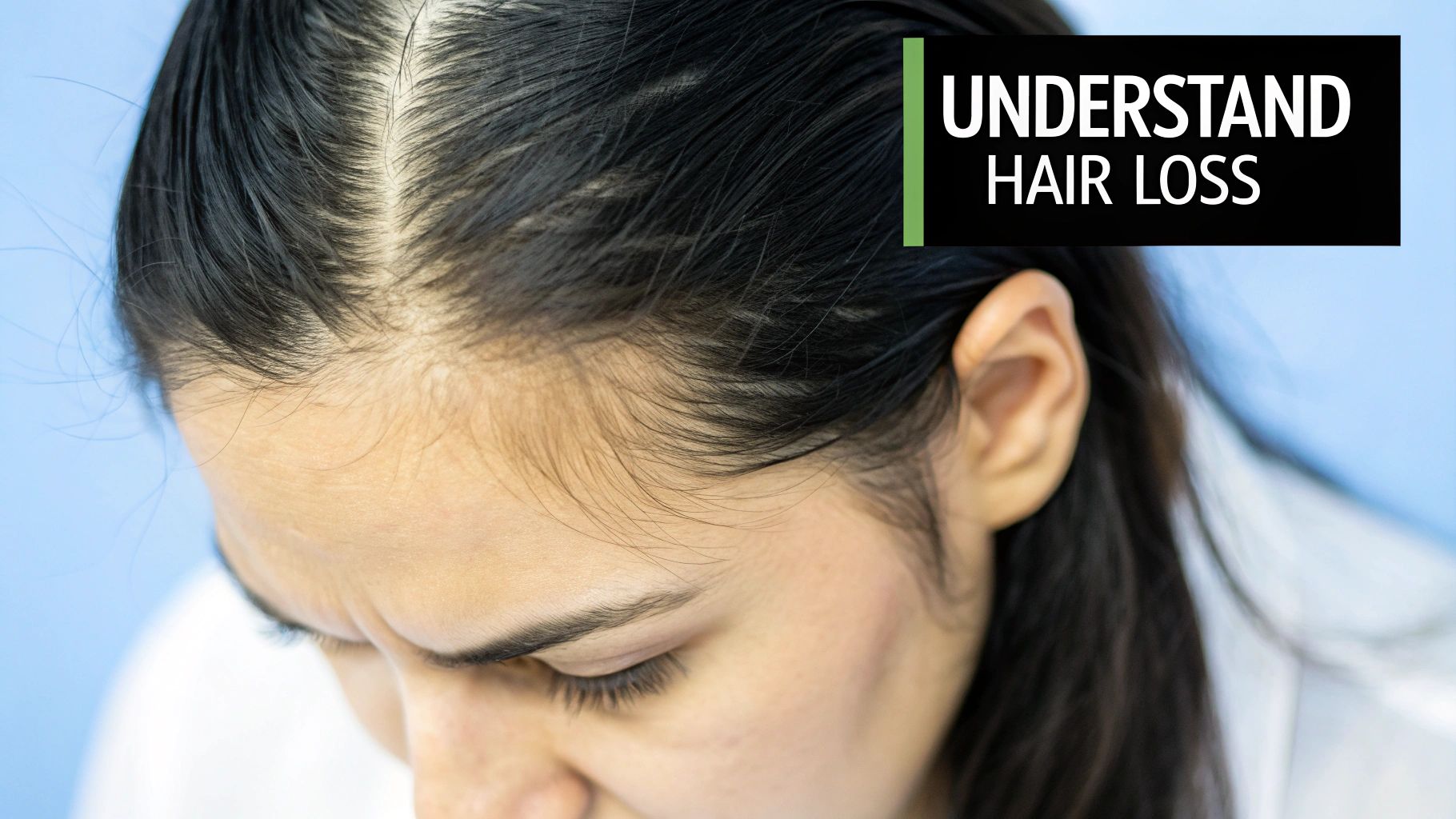
Watching your hairline start to change can be a real knock to your confidence, but you have more control over the situation than you might think. Getting that hairline back in shape is less about some miracle quick fix and more about consistently giving your hair follicles exactly what they need to wake up and get back to work.
From what I've seen, success really boils down to a few core ideas:
- Boost Scalp Circulation: Getting more blood flowing to the scalp is priority number one. This is how vital oxygen and nutrients actually reach the hair follicles to kickstart new growth.
- Fuel from the Inside Out: Your hair is literally built from the proteins, vitamins, and minerals you eat. A diet that's missing these key nutrients will always hold you back.
- Cut Down on Follicle Stress: Chronic stress, inflammation, and harsh hair products can all put the brakes on hair growth. Easing up on these gives your follicles a real chance to recover and rebuild.
It also helps to know what you’re up against. For a lot of guys, figuring out the root cause is the first step, and you can get more insight into why hair might be thinning in the front.
The best approach is always a holistic one. I often tell my clients to think of it like gardening—you can't expect a great harvest from poor soil. Your scalp is the soil for your hair.
To give you a clearer picture of how these strategies fit together, here’s a quick-start guide summarizing the natural methods we'll be diving into.
Natural Hairline Regrowth Quick-Start Guide
| Strategy | Primary Action | Key Benefit |
|---|---|---|
| Scalp Massage | Daily manual or tool-assisted massage | Directly stimulates blood flow to the follicles |
| Balanced Nutrition | Eating a diet rich in protein, vitamins & minerals | Provides the essential building blocks for strong hair |
| Topical Remedies | Applying natural oils like rosemary or peppermint | Can reduce inflammation and promote circulation |
| Lifestyle Changes | Managing stress and getting adequate sleep | Reduces hormones that can contribute to hair loss |
Ultimately, the single most important factor is consistency. Sticking with these natural habits over the long haul is what sets the stage for real, lasting results and a stronger, healthier hairline.
Waking Up Dormant Follicles with Scalp Stimulation
Think of your scalp as the soil for your hair. If you want to see new growth, especially along a thinning hairline, you have to get that soil healthy first. This starts with waking up any dormant or sluggish hair follicles.
This isn't just about a feel-good massage—it's about physiology. When you physically work the scalp, you're kickstarting blood flow. This brings a fresh supply of oxygen and crucial nutrients right to the base of your hair follicles, signaling them to get back into their active growth phase.
Your Go-To Fingertip Massage
You don’t need any fancy gadgets to get started. Honestly, one of the best tools is right at your fingertips.
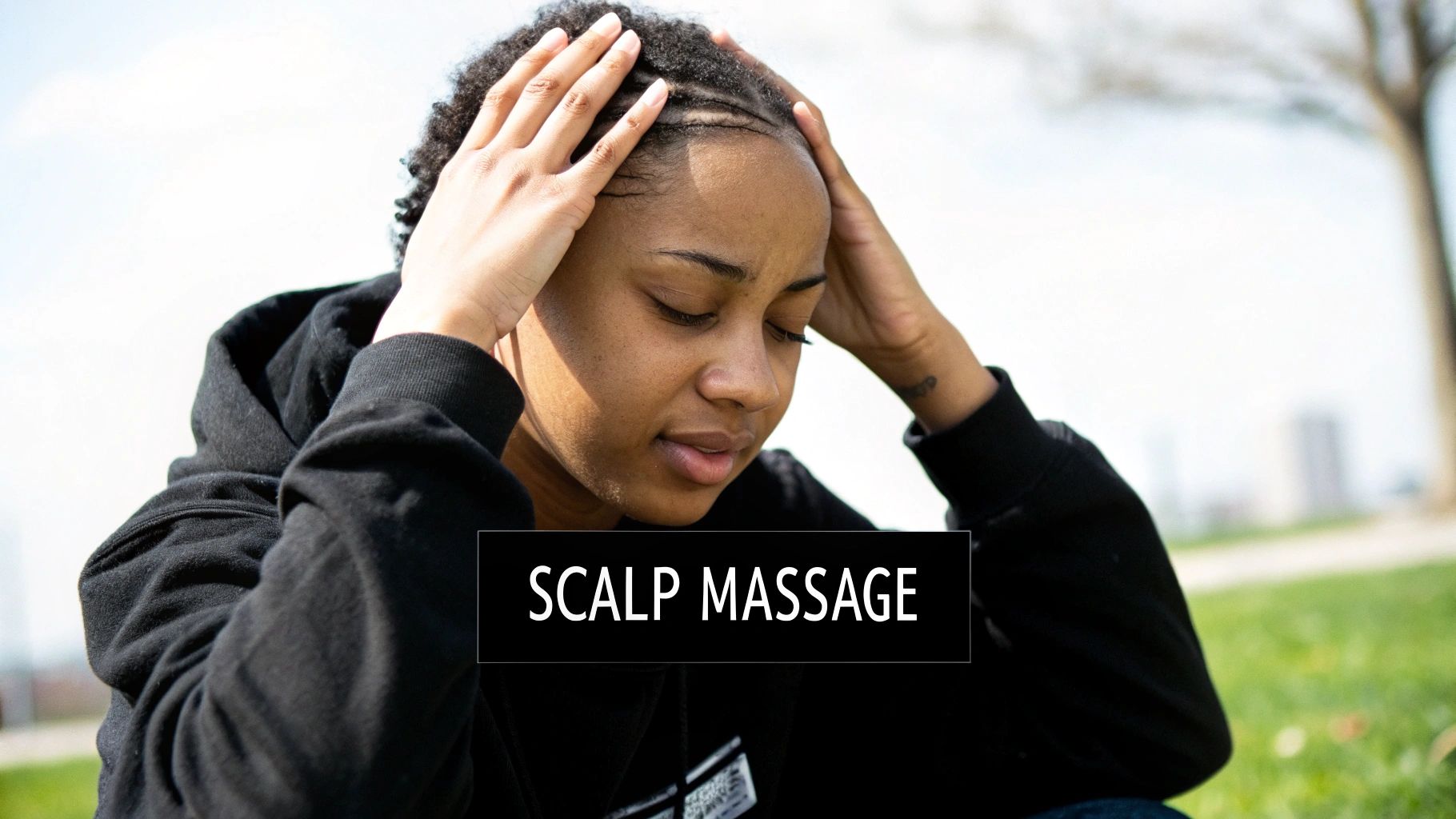
When you’re in the shower shampooing or even just sitting on the couch, place your fingertips along your hairline and temples. Apply firm, but gentle, pressure and make small circles. The trick is to move the skin itself over the bone, not just rub your fingers across the surface. I tell my clients to aim for at least four to five minutes every single day. Consistency really pays off here.
If you want to get more advanced, there are some excellent guides out there that break down different methods. You can find a pretty comprehensive overview of the benefits of scalp massage for hair growth.
Scalp stimulation is like a workout for your hair follicles. Consistent effort helps strengthen them and creates the ideal environment for regrowth, even in stubborn areas like the hairline.
A daily massage is an amazing first step, but it works best when you’re also building strong hair from the inside out. Think nutrition and hydration. This infographic really drives home the key nutritional building blocks that support everything you're doing on the surface.
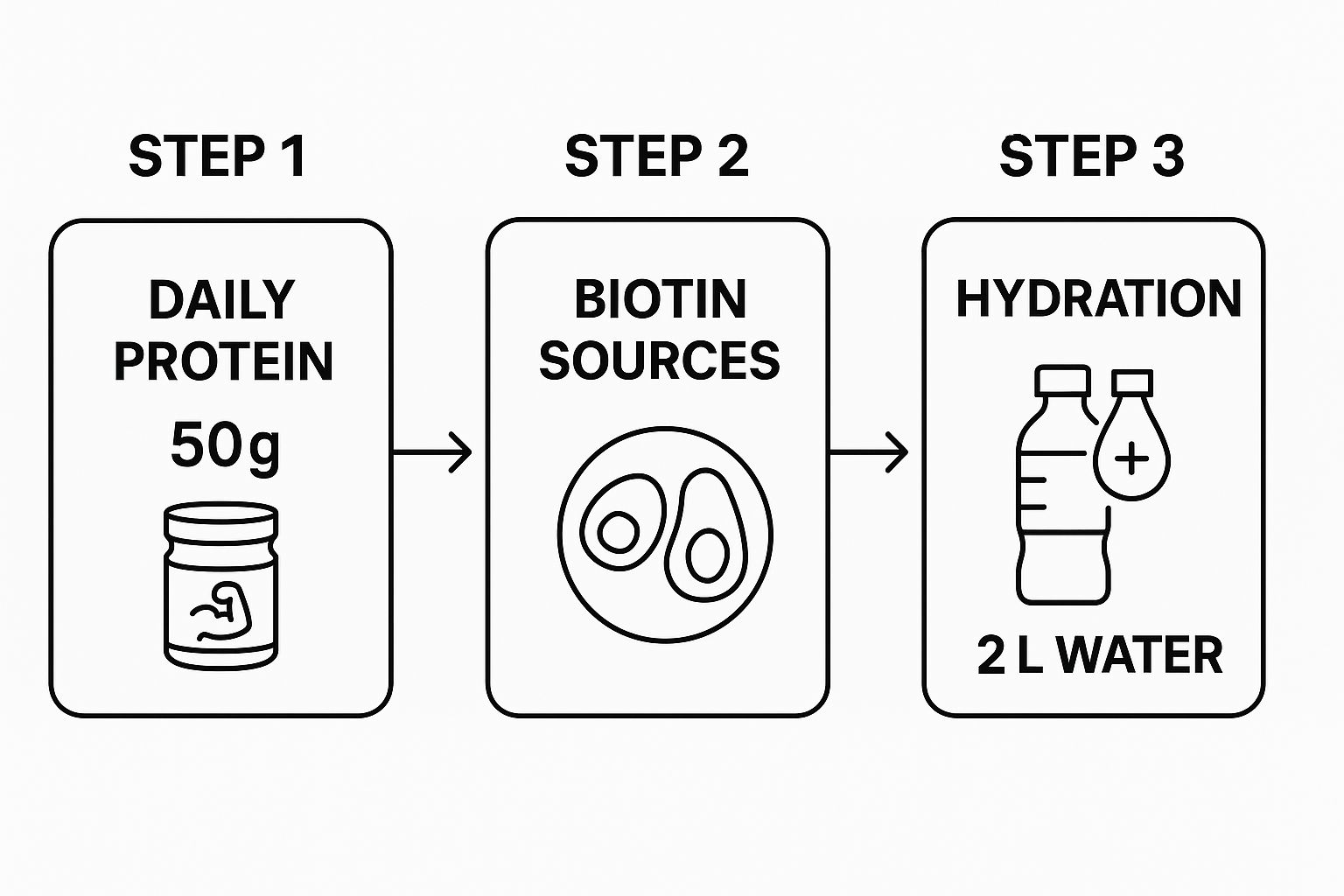
As you can see, daily protein, key vitamins like biotin, and staying hydrated are the non-negotiables. They provide the raw materials your body needs to actually build new hair.
Leveling Up Your Scalp Stimulation Game
Once you’ve got the manual massage down, a few tools can amplify the effects.
- Silicone Scalp Massagers: These little handheld brushes are great. They can give you a more vigorous massage than you can with your fingers, and they do a nice job of exfoliating dead skin cells at the same time.
- Dermarollers (Microneedling): This is a more advanced technique. A dermaroller creates tiny, painless micro-injuries on the scalp. This triggers the body's natural healing process, which in turn can stimulate collagen and other growth factors that help rejuvenate follicles.
A word of caution with dermarolling: start with a small needle size (0.25mm to 0.5mm) and always, always use it on a clean scalp to prevent infection. With any of these methods, the goal is consistency, not aggression.
Applying Natural Remedies Directly to Your Scalp
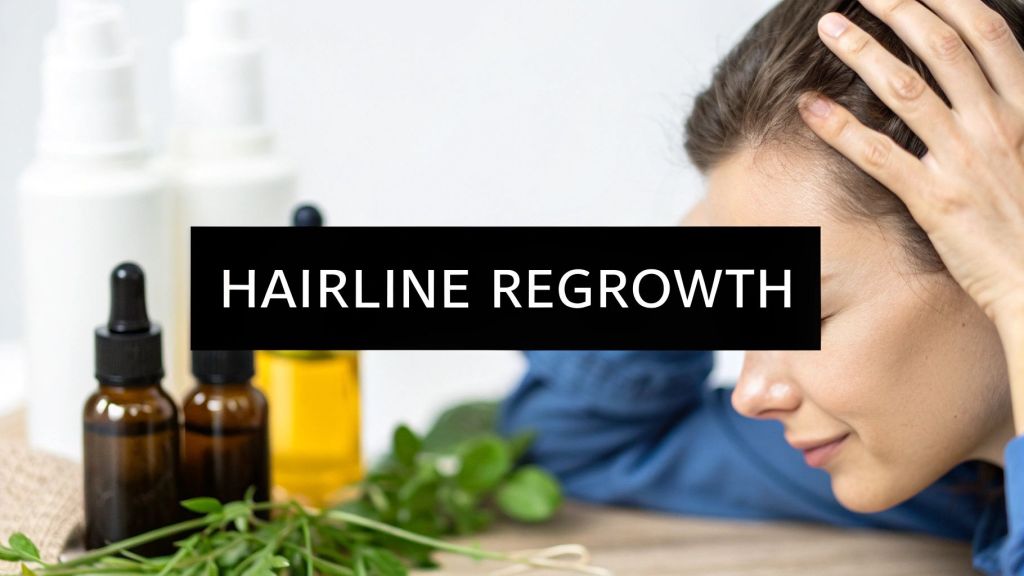
Okay, so you're getting the blood flowing with scalp massage. That's a fantastic first step. Now, let's talk about what you can put on your scalp to give those follicles an extra boost. Think of topical remedies as targeted nourishment, delivering helpful compounds right where you need them most.
This direct approach works hand-in-hand with massage and a good diet. The goal is to create the healthiest possible environment for new growth by improving circulation and dialing down any low-grade inflammation that might be holding your hairline back.
The Power of Essential Oils
You’ve probably heard the buzz around certain essential oils for hair growth, and for good reason. Rosemary and peppermint oil are two of the heavy hitters, largely because they're believed to increase circulation right at the follicle. More blood flow means more nutrients and oxygen, which is exactly what dormant follicles need.
But hold on before you apply them directly. These oils are incredibly potent and can easily irritate your skin if you use them straight from the bottle.
- Pick a Carrier Oil: You always need to dilute essential oils. Jojoba, coconut, or argan oil are all excellent choices that have their own hair-nourishing benefits.
- Get the Ratio Right: A safe and effective starting point is adding 3-5 drops of essential oil to one tablespoon of your carrier oil.
- How to Apply: Work the mixture gently into your hairline with your fingertips. Let it sit for at least 30 minutes before washing your hair as usual. This gives the oils time to penetrate.
If you want to explore more options, our guide on the best essential oils for hair growth goes into much more detail on different oils and how they work.
Crucial Tip: Always do a patch test. Before you go all-in, apply a tiny amount of the mixture to a discreet patch of skin, like behind your ear. Wait 24 hours to make sure you don't have a reaction.
It’s also helpful to keep these natural methods in perspective. For comparison, a one-year study of 984 men using a 5% minoxidil solution found that 62% experienced a reduction in their hair loss area. You can read the full research about these findings to see how conventional treatments perform.
Simple Remedies from Your Kitchen
Believe it or not, your kitchen pantry might hold a few secrets to a healthier scalp. While the hard science is still catching up on some of these, people have been using them for generations with great results.
Take green tea, for instance. It’s packed with antioxidants. A simple green tea rinse is a popular home remedy—just brew a strong cup, let it cool completely, and then pour it over your hair and scalp after shampooing.
With any of these natural approaches, the real key is consistency. You won't see changes overnight, but sticking with a routine for several months gives your hairline the best possible chance to respond.
Fueling Hair Growth From The Inside Out
While stimulating the scalp from the outside is a great start, what you put on your plate has a massive impact on your hair's future. I like to think of hair follicles as tiny, high-powered factories. If you don't give them the right raw materials, production is going to slow way down—or even shut down completely.
That’s why getting your nutrition right is one of the most fundamental things you can do to get your hairline back on track.
Your hair is literally made of protein—mostly a tough, fibrous type called keratin. If your diet is low in protein, your body simply can't build strong, healthy hair strands. It’s that simple. Making sure you get enough protein from sources like eggs, lean meats, lentils, and nuts is absolutely non-negotiable for hair resilience.
The Micronutrient Power Players
Beyond the big stuff like protein, a whole host of vitamins and minerals play critical supporting roles. For instance, iron deficiency is a very common and well-documented cause of hair thinning, especially in women. Loading up on spinach, beans, and red meat can make a real difference.
Zinc is another one you can't ignore. It’s essential for hair tissue growth and repair, helping to keep the oil glands around the follicles working properly.
A few other key players to get on your radar:
- Biotin: This is probably the most famous "hair vitamin." This B-vitamin is a key player in producing keratin. You’ll find it in foods like salmon, avocados, and sweet potatoes.
- Vitamin C: It’s a powerful antioxidant that helps protect your follicles from damage. It also helps your body create collagen, a protein that literally makes hair strands stronger. Citrus fruits and bell peppers are fantastic sources.
- Vitamin E: This antioxidant is crucial for maintaining a healthy scalp. You can get plenty from sunflower seeds and almonds.
For a more comprehensive look, our guide on essential vitamins for hair growth really gets into the nitty-gritty of what your follicles are craving.
The real magic happens when all these nutrients work together. A consistently balanced diet will always beat chasing a single "miracle" supplement.
To help you get started, here's a quick-reference guide to the most important nutrients and where you can easily find them.
Hair-Boosting Nutrients And Where To Find Them
| Nutrient | Why It's Important | Natural Food Sources |
|---|---|---|
| Protein (Keratin) | The literal building block of every hair strand. | Eggs, chicken, fish, lentils, beans, nuts |
| Iron | Prevents anemia, a common cause of hair loss. | Spinach, red meat, lentils, fortified cereals |
| Zinc | Essential for hair tissue growth and repair. | Oysters, beef, pumpkin seeds, lentils |
| Biotin (Vitamin B7) | Helps produce keratin and can improve hair thickness. | Eggs, almonds, salmon, sweet potatoes |
| Vitamin C | Creates collagen and protects follicles from damage. | Oranges, strawberries, bell peppers, broccoli |
| Vitamin E | An antioxidant that supports a healthy scalp. | Sunflower seeds, almonds, avocados, spinach |
| Omega-3s | Reduces inflammation and nourishes hair follicles. | Salmon, mackerel, walnuts, chia seeds, flaxseeds |
This table should give you a solid foundation for building a hair-healthy shopping list.
Don't forget about essential fatty acids, either. Omega-3s are brilliant for reducing inflammation, which can be a hidden cause of hair thinning. If you’re plant-based, there are plenty of options—check out this great resource on the best vegan sources of Omega 3 fatty acids.
Finally, one of the simplest yet most overlooked habits is proper hydration. Drinking enough water is like ensuring the delivery trucks can get the nutrients to the factory. It keeps your scalp healthy and helps transport all those amazing vitamins and minerals to your hair follicles. It’s easy, free, and incredibly effective.
Exploring Advanced Natural Hair Therapies

So, you’ve been diligent with scalp massages and nutrition, but you’re still not seeing the hairline results you were hoping for. When those foundational methods aren't quite enough, it might be time to look at some more advanced, yet still natural, therapies.
Don't let the clinical names fool you. These treatments work by stimulating your body's own incredible ability to heal and regenerate. Think of them as a powerful assist, giving your natural growth processes a major boost right where it's needed most.
Platelet-Rich Plasma (PRP) Therapy
You've probably heard the buzz around PRP therapy, and for good reason. It sounds high-tech, but the core concept is brilliantly simple: it uses the healing power of your own blood. A small sample is drawn and spun in a centrifuge to concentrate the platelets, creating a liquid gold packed with potent growth factors.
This platelet-rich plasma is then meticulously injected into the scalp along your thinning hairline. The idea is to deliver a direct message to sluggish or dormant hair follicles, basically waking them up and signaling them to get back to work. For a deeper dive into what the procedure involves, check out this guide on PRP therapy for hair loss.
The science backing this up is getting stronger all the time. One key double-blind study found that people receiving PRP saw significant improvements in hair density compared to those who got a placebo. In fact, a follow-up analysis involving 165 patients reinforced these positive results, showing it’s a biologically effective approach.
Low-Level Laser Therapy (LLLT)
If you're looking for a completely non-invasive option, LLLT, or Low-Level Laser Therapy, is one to consider. This treatment uses red light at a very specific wavelength to gently stimulate the cells in your hair follicles.
It’s like giving your scalp a targeted energy drink. The light helps energize the mitochondria (the 'powerhouses') within the cells, which can improve blood flow and reduce the kind of low-grade inflammation that often chokes out hair follicles. This, in turn, can help extend the hair's active growth phase.
It's important to have realistic expectations. These advanced therapies are incredibly promising, but they aren't a one-and-done miracle cure. Lasting results often require an initial series of treatments followed by periodic maintenance sessions.
Understanding the cellular mechanics can really help you see the value. To learn more about how this technology works on a cellular level, you can explore the broad benefits of red light therapy. It's all about creating the healthiest possible environment for your hair, right from the root.
Got Questions About Regrowing Your Hairline? Let's Get Them Answered
It’s only natural to have a few questions swirling around after learning about these methods. You’re probably wondering what’s realistic, what’s possible, and when it might be time to get an expert involved.
Let's clear up some of the most common concerns so you can move forward with confidence.
How Long Until I Actually See a Difference?
This is probably the biggest question on your mind. When it comes to natural regrowth, patience truly is a virtue. You’re working with your body’s natural hair growth cycle, and that process can’t be rushed.
A great first sign is a reduction in shedding, which many people start to notice within the first couple of months. As for new growth, you'll want to keep an eye out for those soft, fine "baby hairs" along the hairline. These typically start to appear after 3 to 6 months of consistent daily effort.
To see a real change in the density and thickness of your hairline, you're looking at a commitment of at least 6 months to a year. It's a marathon, not a sprint, and sticking with your routine is what will ultimately get you across the finish line.
What If Hair Loss Runs in My Family?
Ah, the genetics question. It’s a valid concern. While you can't rewrite your genetic code, you can absolutely create an environment where your hair has the best possible chance to thrive.
Think of it this way: natural strategies help fortify your existing hair, slow down the rate of thinning, and can even nudge dormant follicles back into action. You're essentially giving your hairline the support it needs to push back against its genetic blueprint.
When Should I Talk to a Doctor?
Self-care is powerful, but it’s just as important to know when to call in a professional. It’s time to book an appointment with a dermatologist or your primary care physician if you experience any of the following:
- Hair loss that is sudden and comes on fast
- Noticeable bald patches appearing
- Any pain, persistent itching, or redness on your scalp
These symptoms can point to an underlying medical issue that needs a proper diagnosis. Also, if you’ve been diligent with these natural methods for over six months and you’re just not seeing any progress, a doctor can help figure out what’s really going on and discuss other treatment avenues.
Here at PRP For HairLoss, our goal is to give you clear, honest information for your hair restoration journey. Our blog is a resource for exploring effective solutions, from PRP therapy to other proven methods for men dealing with hair loss. To find out more about advanced, science-backed treatments, come visit us at https://prpforhairloss.com.
 PRP For Hairloss
Leave a comment