Yes, ketoconazole shampoo can be an effective tool in your fight against certain types of hair loss, particularly when you're up against androgenic alopecia (the classic term for pattern baldness). Its real strength is in improving your overall scalp health and calming down inflammation, which helps create a much better environment for your hair follicles to grow.
Your Quick Guide to Ketoconazole for Hair Loss
If you've been digging into treatments for thinning hair, you’ve probably seen ketoconazole shampoo pop up. It was originally created as a potent antifungal to knock out things like dandruff and seborrheic dermatitis, but it’s gained a lot of buzz for its unexpected benefits in the world of hair loss.
Think of it as a specialized groundskeeper for your scalp. It's not out there planting new seeds, but it’s meticulously clearing out the weeds and enriching the soil so your hair can grow strong and free from interference.
Its secret is a two-pronged attack. First, it directly tackles scalp inflammation, which we know is a major player in hair shedding. Second, and this is where it gets really interesting for hair loss, some studies suggest it has a mild anti-androgenic effect. This means it might help disrupt the hormone DHT right at the scalp level. That one-two punch makes it a really valuable player in many people's hair care routines.
Understanding Its Role
Ketoconazole shampoo isn't a miracle cure that works in a vacuum, but it's an incredible supporting actor in a broader hair loss strategy. It really shines for people whose hair loss is tied to:
- Scalp Inflammation: If you're dealing with issues like stubborn dandruff or a constantly irritated scalp, you're creating a hostile environment for hair follicles. Ketoconazole helps calm all that down.
- Androgenic Alopecia: It’s a fantastic addition to a routine aimed at tackling pattern baldness. For those looking at a multi-faceted approach, understanding other treatments like PRP for male pattern baldness can give you a more complete picture of what's possible.
Ketoconazole shampoo creates a healthier foundation on your scalp. By reducing microscopic inflammation and fungal activity, it helps remove key obstacles that can worsen hair thinning and prevent healthy growth.
To give you a clear overview, here’s a quick summary of what you need to know.
Ketoconazole Shampoo at a Glance
| Aspect | Key Information |
|---|---|
| Primary Use | Medicated shampoo for dandruff & seborrheic dermatitis |
| Hair Loss Benefit | Fights scalp inflammation & has mild anti-DHT properties |
| Best For | Androgenic alopecia (pattern baldness) & inflammatory scalp issues |
| Available Strengths | 1% over-the-counter; 2% by prescription |
| Usage Frequency | Typically 2-3 times per week, leaving it on for 3-5 minutes |
| Key Ingredient | Ketoconazole (an antifungal agent) |
| Works Well With | Other hair loss treatments like minoxidil and finasteride |
This table should help you see where ketoconazole fits into the bigger picture of hair loss treatments.
While ketoconazole is a potent medicated option, it’s also smart to look at the whole hair care landscape. Lots of people get great results by rotating different shampoos or finding a gentle daily-use product that works well with their medicated one. If you’re curious about other supportive options, you might want to check out this list of the best shampoo for thinning hair to find something that fits your needs.
Now, let's get into the nitty-gritty of how this stuff actually works.
The Link Between an Unhealthy Scalp and Thinning Hair
Think about trying to grow a lush garden in poor, weed-infested soil. It’s a losing battle, right? No matter how good your seeds are, they just won't thrive. Your scalp is the "soil" for your hair, and its health is the absolute bedrock for growing strong, thick hair.
When that foundation is weak, your hair is the first thing to suffer. A major problem is microscopic inflammation, something you might not even notice until you see a lot more hair circling the shower drain. This constant irritation creates a hostile environment for your hair follicles, seriously messing with their natural growth cycle.
Often, this inflammation is kicked off by an overgrowth of a common yeast called Malassezia globosa. This little microbe lives on most of our scalps without causing any trouble. But when it gets out of control, it leads to the irritation, flaking, and itching we all know as dandruff. It's a surprisingly common issue, and it's worth understanding the truth about dandruff and hair loss to see just how connected they are.
The Follicle Under Siege
Picture each hair follicle as a tiny factory that churns out a single strand of hair. When the scalp around it is inflamed, that factory's production line gets thrown into chaos. This chronic, low-level stress can do real damage over time, making it harder for the follicle to produce a healthy, robust hair.
This whole process can speed up something called hair follicle miniaturization. It’s a gradual decline where the follicle physically shrinks, producing finer, shorter, and weaker hairs with each new cycle. Eventually, the follicle might just give up and stop producing hair altogether. This slow-motion weakening is a classic sign of pattern baldness.
A healthy, balanced scalp gives follicles the best shot at staying in their growth phase (anagen) for as long as possible. On the flip side, an inflamed scalp can force them into the resting (telogen) and shedding (exogen) phases way too soon, leading to thinning you can actually see.
Why Scalp Health is Your First Line of Defense
If you only focus on the hair strands, you're missing the point—it's like polishing the leaves on a sick plant instead of treating the roots. To make any real headway against hair loss, you have to start with the environment where the hair actually grows. A calm, clean, and balanced scalp isn't just a "nice-to-have"; it's a non-negotiable.
Here’s why putting your scalp first is so crucial:
- It Cuts Down on Follicular Stress: By calming inflammation, you’re basically giving your hair follicles the breathing room they need to do their job properly.
- It Fights Miniaturization: A healthy scalp environment can help put the brakes on follicle shrinkage. To really get into the weeds on this, you can learn more about understanding hair follicle miniaturization and its role in thinning.
- It Boosts Other Treatments: If you're using something else like minoxidil, a clean and healthy scalp helps the product absorb better and work more effectively.
This is exactly where a shampoo like ketoconazole comes in. It’s designed to tackle the root causes of scalp irritation and restore that crucial balance—in short, it cleans up the soil so your hair has the best possible chance to grow.
How Ketoconazole Shampoo Fights Hair Loss
So, how exactly does a dandruff shampoo help with hair loss? It's a fair question, and the answer is surprisingly clever. Ketoconazole shampoo works on two key fronts, making it more than just a simple scalp cleanser. Think of it as part peacekeeper, part bodyguard for your hair follicles.
First and foremost, it’s a powerful antifungal. As we covered, an overgrowth of yeast like Malassezia can throw your scalp's ecosystem into chaos, causing inflammation that literally chokes the life out of hair follicles. Ketoconazole steps in and gets that yeast population under control, calming the irritation and letting your scalp breathe again.
Beyond a Healthy Scalp
But that’s only half the story. The really interesting part for anyone with androgenic alopecia is its mild anti-androgenic effect. It provides a localized defense against the hormone DHT right where it does the most damage—at the hair follicle.
Picture DHT as a key that slowly shrinks the "lock" on your hair follicles over time. Eventually, the follicle becomes so small it can no longer produce a strong, healthy hair. Ketoconazole interferes with this process on the surface of your scalp, helping to protect follicles from this slow-motion takeover.
It's all about restoring balance to the scalp to create the right environment for hair to thrive.
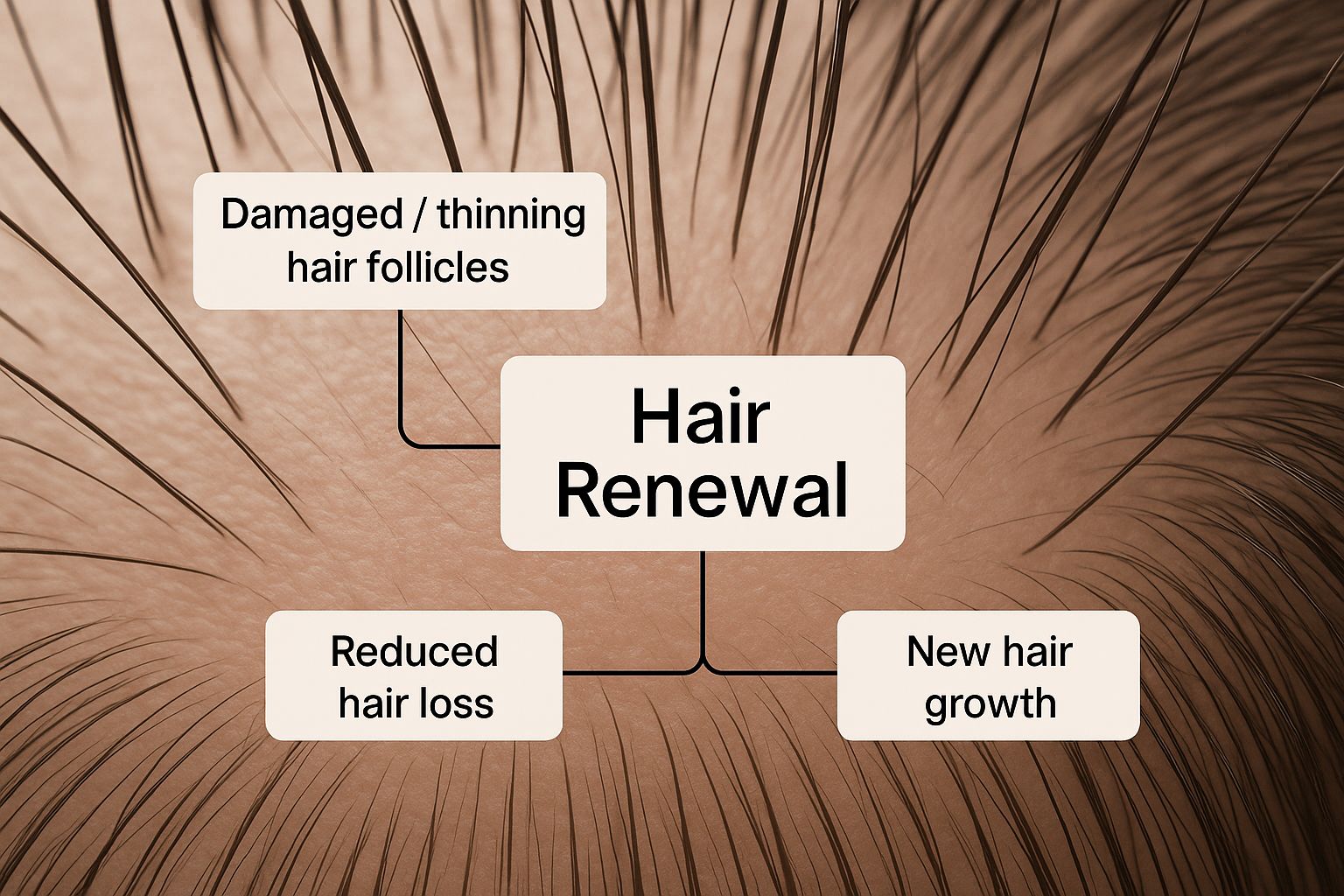
It’s this two-pronged attack that makes ketoconazole such a compelling tool. While it's not a powerhouse DHT blocker like oral medications, it offers targeted action with a much lower risk of side effects, making it a fantastic addition to almost any hair loss treatment plan.
Ketoconazole’s real strength is its unique blend of antifungal, anti-inflammatory, and mild anti-androgenic properties. It tackles several contributing factors to hair thinning at once, right at the source.
Evidence of Its Effectiveness
And this isn't just wishful thinking; there's solid science to back it up. One landmark study put 2% ketoconazole shampoo head-to-head with 2% minoxidil, the gold standard for topical hair growth stimulants. The findings were pretty remarkable: ketoconazole was found to be nearly as effective at improving hair density and boosting the number of hairs in the active growth phase. You can read the full research about ketoconazole's efficacy to dig into the data yourself.
This kind of evidence shows that ketoconazole is more than just a supporting player; it’s a legitimate treatment for pattern baldness. It also plays incredibly well with other therapies. For example, getting your scalp in top condition with ketoconazole can make other treatments, like minoxidil, work even better. It also complements advanced procedures that stimulate follicles directly, which you can learn about in our guide on PRP injection for hair loss.
By addressing both the scalp environment and the hormonal triggers at the follicle, ketoconazole offers a comprehensive topical defense against hair loss.
How to Actually Use Ketoconazole Shampoo in Your Routine
Knowing that ketoconazole shampoo can fight hair loss is one thing, but using it correctly is what really matters. Let's move from theory to practice—it's pretty simple once you have a clear plan. Building a consistent routine is the key to getting the results you're after for your hair and scalp.
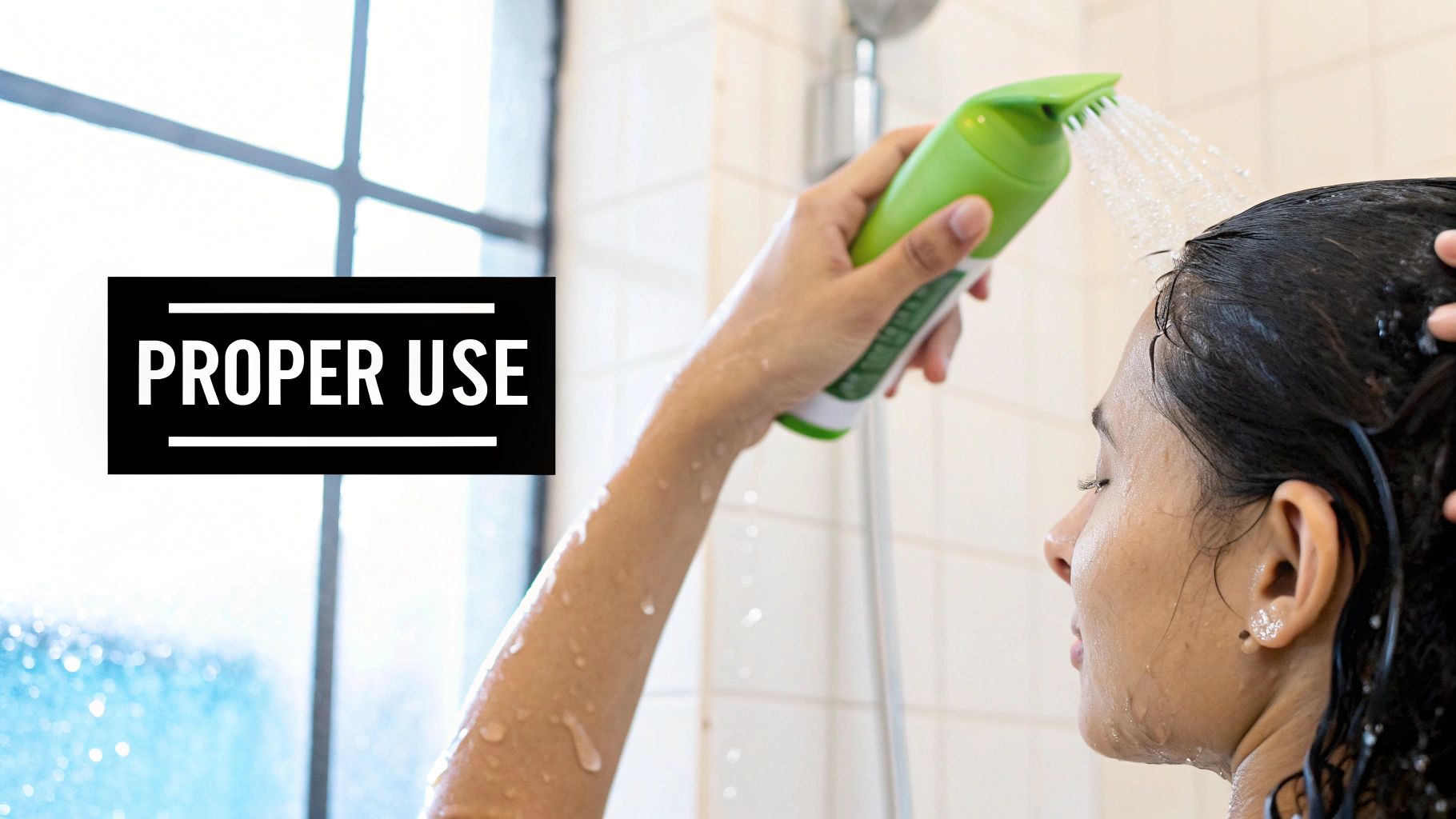
The first decision you'll need to make is which strength to use. Ketoconazole shampoo generally comes in two concentrations, each one tailored for different situations.
-
1% Over-the-Counter (OTC) Formula: This is the version you can easily grab at most drugstores, often under the brand name Nizoral. It’s an excellent starting point for anyone new to using ketoconazole for hair loss or for those dealing with milder scalp issues.
-
2% Prescription Formula: For this more potent version, you'll need a prescription from a doctor. It's usually reserved for more stubborn conditions like severe dandruff or seborrheic dermatitis, or when a dermatologist decides a more aggressive approach is needed to get your scalp health under control.
For most people just starting out, the 1% formula is perfectly effective and a very sensible place to begin.
Your Step-by-Step Usage Guide
To get the full benefit of this medicated shampoo, you need to do more than just a quick wash-and-go. The active ingredient needs time to actually work on your scalp. Follow these steps to make sure you're doing it right.
-
Stick to a Schedule: This isn't an everyday shampoo. The sweet spot for most people is two to three times per week. On the other days, just use your regular gentle shampoo to keep your hair and scalp from getting too dry.
-
Apply and Massage In: Wet your hair, then apply the shampoo, making sure to focus it directly on your scalp. Take a minute to gently massage it in, especially in the areas where you're noticing thinning.
-
Let It Sit (This Part Is Crucial): This is the most important step, and the one people often skip. You have to leave the lather on your scalp for at least 3 to 5 minutes. This waiting period is what allows the ketoconazole to properly penetrate the skin and hair follicles to do its job.
-
Rinse It All Out: Once the time is up, rinse the shampoo out completely. Lukewarm water is best.
-
Always Follow with a Conditioner: Ketoconazole can be a bit drying. To combat this, always follow up with a good moisturizing conditioner, applying it to the mid-lengths and ends of your hair. This will put the moisture back and keep your hair from feeling brittle.
Adding Ketoconazole to Your Existing Hair Loss Stack
One of the best things about ketoconazole shampoo is how well it plays with others. It's not an "either/or" situation; think of it as a team player that can boost the effectiveness of other proven hair loss treatments.
Think of ketoconazole as prepping the battlefield. It creates a healthy, inflammation-free scalp, which in turn allows other topical treatments like minoxidil (Rogaine) to absorb better. It also helps systemic treatments like finasteride work in an optimal environment, free from scalp-related interference.
Using them together is simple. On the days you use ketoconazole, wash and condition your hair first as described above. After towel-drying your hair, you can apply your minoxidil foam or solution just like you normally would. This multi-pronged attack—tackling scalp health, stimulating new growth, and blocking DHT—is often the most powerful way to manage hair loss for the long haul.
Setting Realistic Expectations for Your Results
Before starting any new hair loss treatment, it's crucial to get your expectations in check. When you add ketoconazole shampoo to your routine, think of it as playing defense for your hair, not a miracle cure for regrowth. It’s about creating a healthy foundation and protecting the hair you still have.
The first thing you’ll probably notice is a healthier scalp. Within just a few weeks, you might find that the itchiness, flakes, and general irritation have calmed down significantly. This is a fantastic early sign that the shampoo is doing its job and creating a better environment for hair to grow.
When it comes to seeing thicker hair, however, you have to be patient.
Timeline for Visible Results
Any real change in your hair's thickness or a reduction in shedding simply won't happen overnight. Hair growth is a notoriously slow process, and you need to give it time. Stick with the shampoo consistently for at least 3 to 6 months before you even think about judging the results.
Think of it this way: Ketoconazole shampoo is stabilizing the foundation of a building. You won't see a new floor appear overnight, but you're stopping the existing structure from weakening further.
This is a marathon, not a sprint. Sticking with it consistently during those first few months is what truly paves the way for any long-term benefits.
Who Benefits the Most?
Results will always be different from person to person, but some people are definitely more likely to see a positive change. Ketoconazole shampoo really shines for:
- People dealing with scalp issues like dandruff or seborrheic dermatitis.
- Those in the early stages of male or female pattern baldness who want to slow things down.
- Anyone using it as one piece of a bigger, more comprehensive hair loss treatment plan.
Hair loss is a huge issue, and it's no wonder people are looking for answers. The US National Institutes of Health reports that about 80 million Americans are dealing with hereditary hair loss. This widespread need has made ketoconazole a popular supporting player in the fight against hair loss, often recommended alongside other proven therapies.
Understanding how hair loss works is half the battle. If you want to get into the science, our article on why hair stops growing is a great place to start. A realistic outlook helps you appreciate ketoconazole for what it is: a steady defender in your long-term strategy.
Potential Side Effects and How to Manage Them
While ketoconazole shampoo is a fantastic tool in the fight against hair loss, we need to have a real conversation about the potential downsides. The good news is that most people handle it just fine.
When side effects do pop up, they’re almost always minor and stick to the scalp. It’s smart to know what to look for, just in case.
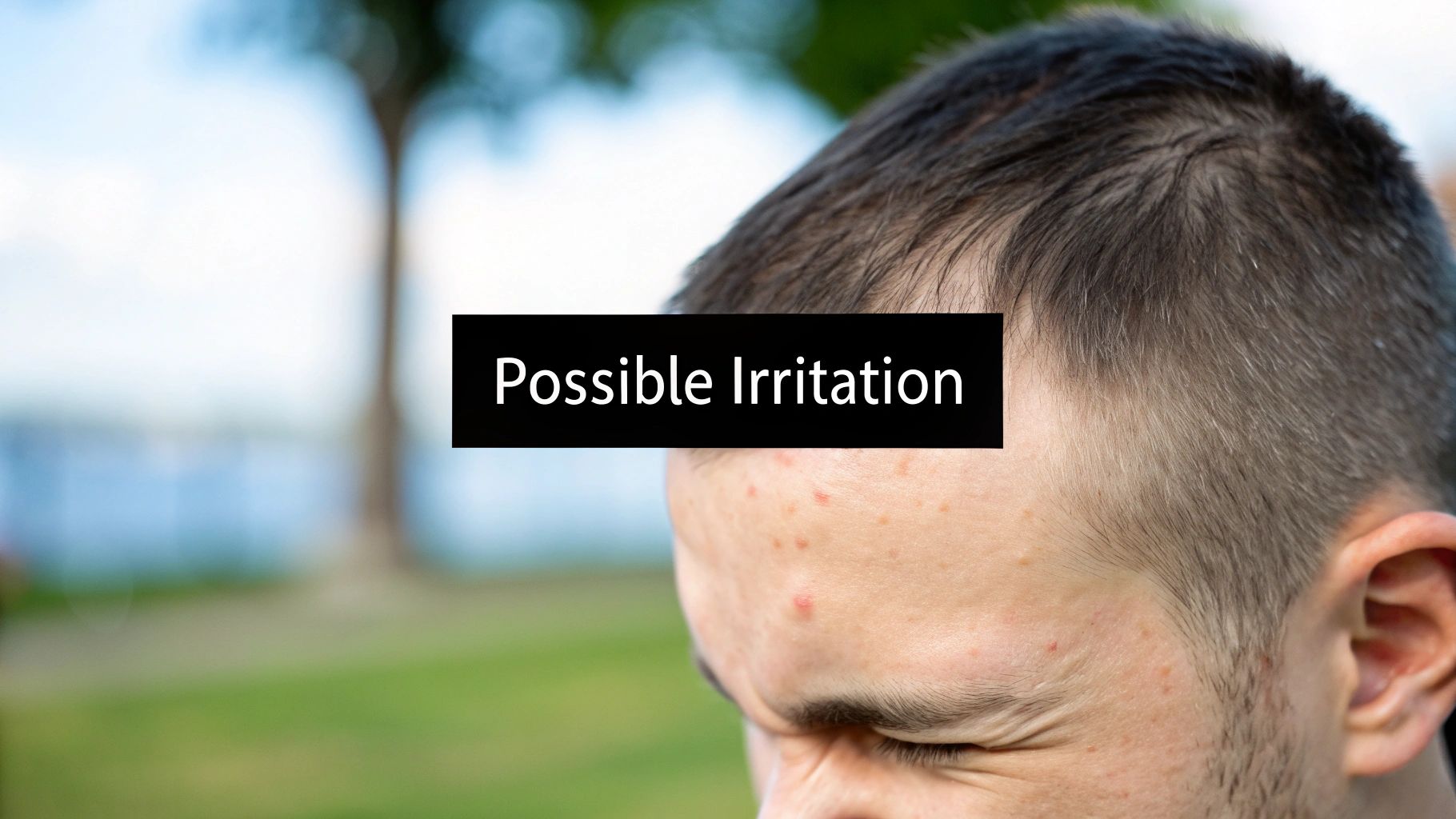
The most common complaints stem from the shampoo's powerful cleansing properties. You might notice some dryness, itching, or general irritation where you apply it. A few people also mention a temporary change in their hair texture—it might feel a bit oilier or, more commonly, unusually dry right after washing.
The key takeaway is that these side effects are typically manageable and shouldn't force you to stop treatment. With a few simple adjustments, you can usually find a comfortable balance that works for you.
Being proactive is the best way to handle any issues. If you’re dealing with minor but annoying side effects, you’ve got options.
Simple Solutions for Common Issues
Often, all it takes is a small tweak to your routine to get things back on track. Here are a few practical steps to keep your scalp happy while you continue your treatment:
-
Experiencing Dryness? This is hands-down the most frequent issue. The fix is usually simple: follow up with a high-quality, moisturizing conditioner. Make sure to focus it on the mid-lengths and ends of your hair. You can also try cutting back your usage to just twice a week.
-
Feeling Some Irritation? If your scalp feels itchy or looks a little red, the formula might just be a bit too strong for you. If you're using a 2% prescription shampoo, it's worth asking your doctor if switching to the milder 1% over-the-counter version makes sense.
-
Hair Texture Feels Off? Sometimes your hair and scalp just need a little time to adjust to a new product. If the problem doesn't go away, be sure you're rinsing the shampoo out completely and using a conditioner that’s a good match for your hair type.
These little adjustments can make a world of difference. It's common to manage minor side effects with many hair loss treatments; for perspective, you can see what to expect with other procedures by reading our guide to PRP hair treatment side effects.
Answering Your Questions About Ketoconazole
Even with the best information, you're bound to have a few questions when starting a new treatment. Let's tackle some of the most common ones about using ketoconazole shampoo for hair loss so you can move forward with confidence.
Can I Use Ketoconazole Shampoo Every Day?
That's a great question, but the short answer is no. For treating hair loss, you don't need to use it daily.
Most people find the sweet spot is two to three times a week. This is frequent enough to keep scalp inflammation and fungus in check without stripping your hair and scalp of essential moisture.
On the days you aren't using ketoconazole, stick with a gentle, hydrating shampoo and conditioner. It's best to think of ketoconazole as a specialized scalp treatment, not your daily go-to cleanser.
Does Ketoconazole Work for Women's Hair Loss, Too?
Absolutely. Ketoconazole can be a fantastic part of a hair restoration plan for women, especially when the hair loss is connected to scalp inflammation or female pattern hair loss (androgenic alopecia).
Dermatologists often recommend it because it works right at the source—the scalp—to create a healthier environment for hair to grow. Since it's a topical product, it provides these benefits without the systemic side effects that can come with oral medications, making it a valuable tool for many women.
Ketoconazole is a versatile ally for both men and women. At its core, it's about optimizing scalp health, and that’s a universal requirement for good hair growth, no matter your gender.
Will My Hair Fall Out Again if I Stop Using It?
This is the million-dollar question, and it's important to be realistic. Ketoconazole shampoo is a management tool, not a permanent cure. It works by actively keeping issues like inflammation and the follicle-shrinking effects of DHT under control.
If you stop using it completely, the conditions that were causing your hair to thin can gradually return. Inflammation might flare up again, and the protective effect on your follicles will fade. Over time, you'd likely see the hair loss start to creep back in.
Because of this, it’s best to view using ketoconazole shampoo for hair loss as a long-term part of your hair care routine. Consistency is the key to maintaining your results.
At PRP For HairLoss, we believe that understanding all your options is the first step toward reclaiming your confidence. While ketoconazole is a powerful tool for improving scalp health, exploring treatments like PRP can offer a direct approach to stimulating hair follicles. Learn more about how our advanced solutions can fit into your hair restoration journey by visiting us at PRPforhairloss.com.

 PRP For Hairloss
Leave a comment