If you're tired of seeing more hair in your brush than on your head, you've probably gone down the rabbit hole of hair loss treatments. Let's talk about one that’s getting a lot of attention: PRP, or Platelet-Rich Plasma therapy. In a nutshell, it uses your own blood to wake up tired hair follicles. Think of it like a concentrated, all-natural fertilizer for your scalp, giving your hair a much-needed boost from the inside out.
What Is PRP For Hair Loss In Simple Terms?
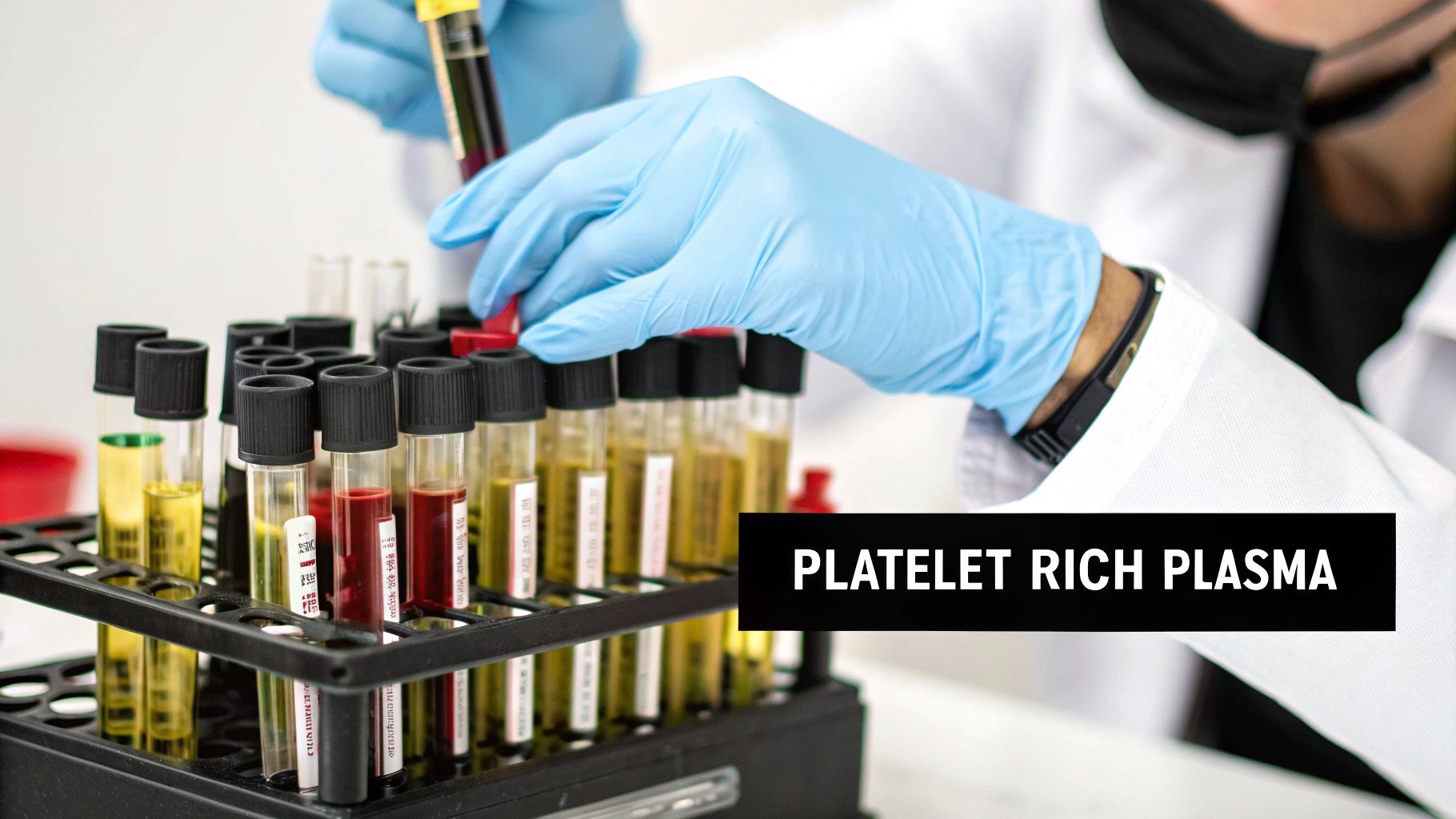
When you're dealing with thinning hair or a hairline that's starting to retreat, it's easy to get overwhelmed by all the options. PRP is different because it relies on something your body already has in abundance: its own incredible healing power. Instead of using foreign chemicals or undergoing surgery, this treatment isolates the most powerful regenerative parts of your blood and puts them to work right where you need them—your scalp.
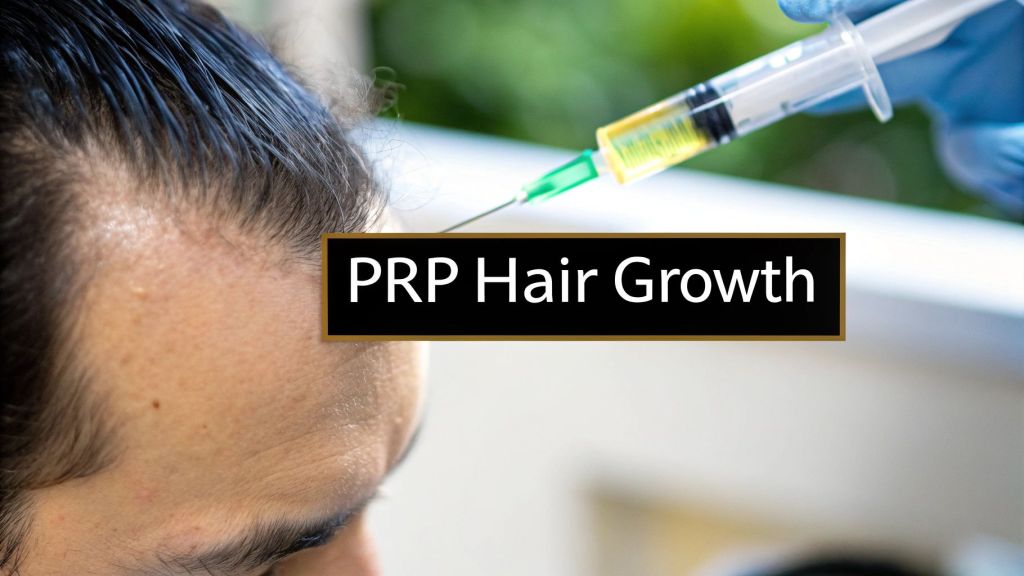
The whole thing is surprisingly straightforward. A small amount of blood is drawn (just like a regular blood test), then it’s spun in a centrifuge to separate and concentrate the platelets. This platelet-rich plasma—often called “liquid gold” for good reason—is then carefully injected into the areas of thinning hair. It's like sending a wake-up call to follicles that have gone dormant, encouraging them to get back to the business of growing hair.
PRP Hair Therapy at a Glance
Before we get into the nitty-gritty, here's a quick look at what PRP hair therapy is all about:
PRP Hair Therapy at a Glance
| Aspect | Description |
|---|---|
| Source | Your own blood, centrifuged to concentrate platelets |
| Key Component | Platelet-Rich Plasma loaded with growth factors |
| Procedure Time | Usually about 60–90 minutes from start to finish |
| Typical Sessions | 3–4 initial sessions, spaced 4–6 weeks apart |
| Recovery | Minimal; you might have a tender scalp for a day or so |
| Success Rate | Around 70–80% of people see improvement in early-stage hair loss |
This gives you a solid overview, but let's dive into the science behind it.
The Science Behind The Treatment
The real magic is inside those tiny platelets. They are packed with a whole host of growth factors—powerful proteins that act like little messengers, telling your hair follicles to repair themselves and start growing again.
Here's what they do:
- Stimulate Dormant Follicles: They give a nudge to hair follicles that have slowed down or stopped producing hair.
- Improve Blood Flow: They encourage the formation of new blood vessels, which brings more oxygen and nutrients to the scalp.
- Strengthen Existing Hair: They can help thicken the hair shaft, making your current hair look and feel fuller.
This isn't just wishful thinking. Studies have shown a success rate of around 70–80% for people with early to moderate hair loss, with many reporting a noticeable increase in hair density and less shedding.
Who Benefits From This Approach?
PRP is a game-changer for many people dealing with androgenetic alopecia—what we commonly call male or female pattern baldness. It works best when the follicles are still there but have become dormant. Starting treatment earlier rather than later often yields the best results, as it's easier to revive struggling follicles than to bring back ones that have completely given up.
For a closer look at the injection process, our guide on PRP Injection for Hair Loss breaks it all down. And if you're curious about how PRP pairs with other treatments, check out this piece on RF Microneedling with PRP to see how these therapies can work together.
With this foundation, you can better understand the what and why of PRP as we explore the procedure, benefits, and costs in the next sections.
How PRP Wakes Up Your Hair Follicles
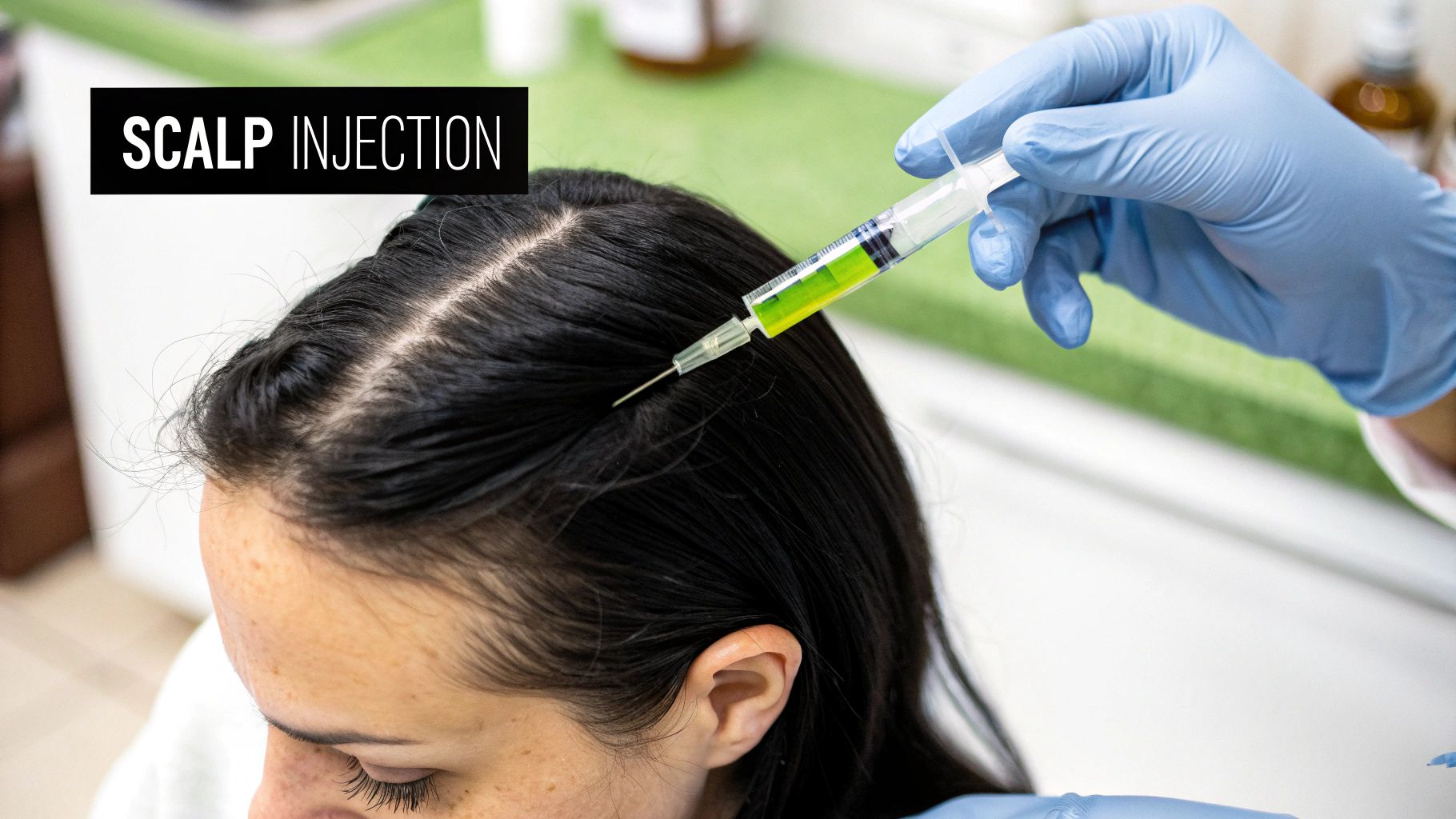
You don’t need a PhD in biology to understand how PRP gets the job done. At its heart, the process is about harnessing your body's natural repair crew to breathe new life into struggling hair follicles.
Think of your blood as a superhighway. It carries all kinds of important things, but for our purposes, we're interested in the platelets. These are your body’s first responders. When you get a cut, platelets rush to the scene to stop the bleeding and begin the healing process.
But they're more than just tiny plugs. Each platelet is loaded with powerful proteins called growth factors. These are the biological signals that tell your cells to rebuild, regenerate, and get stronger. PRP therapy is simply a clever way to concentrate these natural repair kits and deliver them directly to your scalp where they’re needed most.
The Construction Crew Analogy
Imagine your scalp is a construction site where work has slowed to a crawl. The hair follicles are the workers, but they've become lazy and underfunded. Many have even walked off the job and gone dormant. The result? Thinner, weaker hair—or no new hair at all.
PRP therapy is like bringing in a new, highly motivated management team—the concentrated platelets—to get the project back on track.
- The Project Managers (Platelets): These are the platelets themselves, gathered in a powerful concentration and ready to direct the revitalization.
- The Blueprints (Growth Factors): These are the instructions carried by the platelets, telling the follicle "workers" exactly what to do to start building healthy hair again.
- The Supply Lines (Blood Flow): The growth factors also signal for better blood circulation, which brings fresh oxygen and nutrients to the job site.
When this super-charged plasma is injected into your scalp, the growth factors get to work right away. They give your tired follicles a powerful pep talk and all the resources they need to start producing healthy hair again.
What’s Happening on a Biological Level?
If we look a little closer, the science is solid. The growth factors released by the platelets directly interact with the stem cells located in a part of the hair follicle called the bulge.
This interaction essentially nudges the hair follicle out of its resting phase (telogen) and pushes it back into the active growth phase (anagen), extending the time it spends producing hair. It's a natural reset button for your hair's life cycle.
The treatment also creates a healthier scalp by promoting the formation of new blood vessels. This is vital for delivering a steady stream of nutrients to each follicle, helping existing hairs grow stronger while encouraging dormant ones to start producing new strands.
Because PRP uses your own biological material, it's generally very safe. Of course, it's always wise to be aware of any risks. You can get a clearer picture by reading about potential PRP hair treatment side effects.
Ultimately, PRP doesn't introduce anything foreign into your body. It just amplifies its natural ability to heal, directing that power right to the root of your hair loss problem.
A Step-by-Step Walkthrough of a PRP Session
The idea of using your own blood to stimulate hair growth might sound a bit intense, but the actual procedure is surprisingly routine and well-managed. Knowing what to expect can make the whole experience feel much less daunting. It all comes down to three main steps.
First, a small blood sample is taken. This part is exactly like a standard blood test at your doctor's office—a quick draw from your arm into a sterile tube. For most people, it's a familiar process that's over in just a minute.
Preparing the Liquid Gold
Now for the fascinating part. Once your blood is collected, it's placed in a special machine called a centrifuge. Think of it as a high-speed spinner that separates your blood into different layers based on density.
As it whirls around, the heavier red blood cells sink to the bottom, while the lighter, golden-colored plasma and platelets rise to the top. This process creates a super-concentrated solution of platelets, often four to seven times richer than what's normally floating around in your blood. This is the platelet-rich plasma, or "liquid gold," that will be used in your treatment.
This image gives a great visual of how this powerful plasma gets to work waking up your hair follicles.
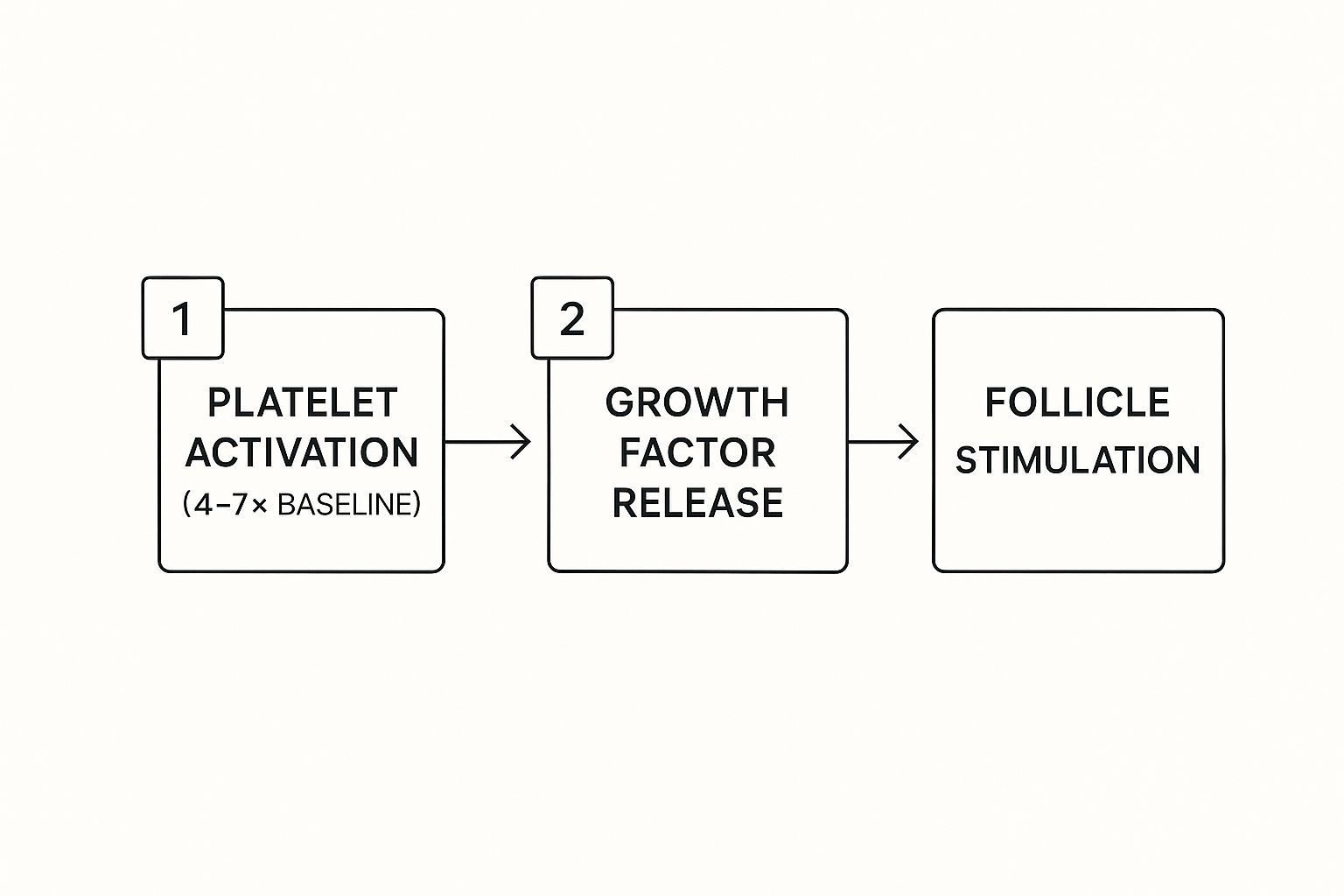
As you can see, the real action starts when these activated platelets release a flood of growth factors, essentially telling dormant hair follicles it's time to get back to work.
The Treatment and Comfort Measures
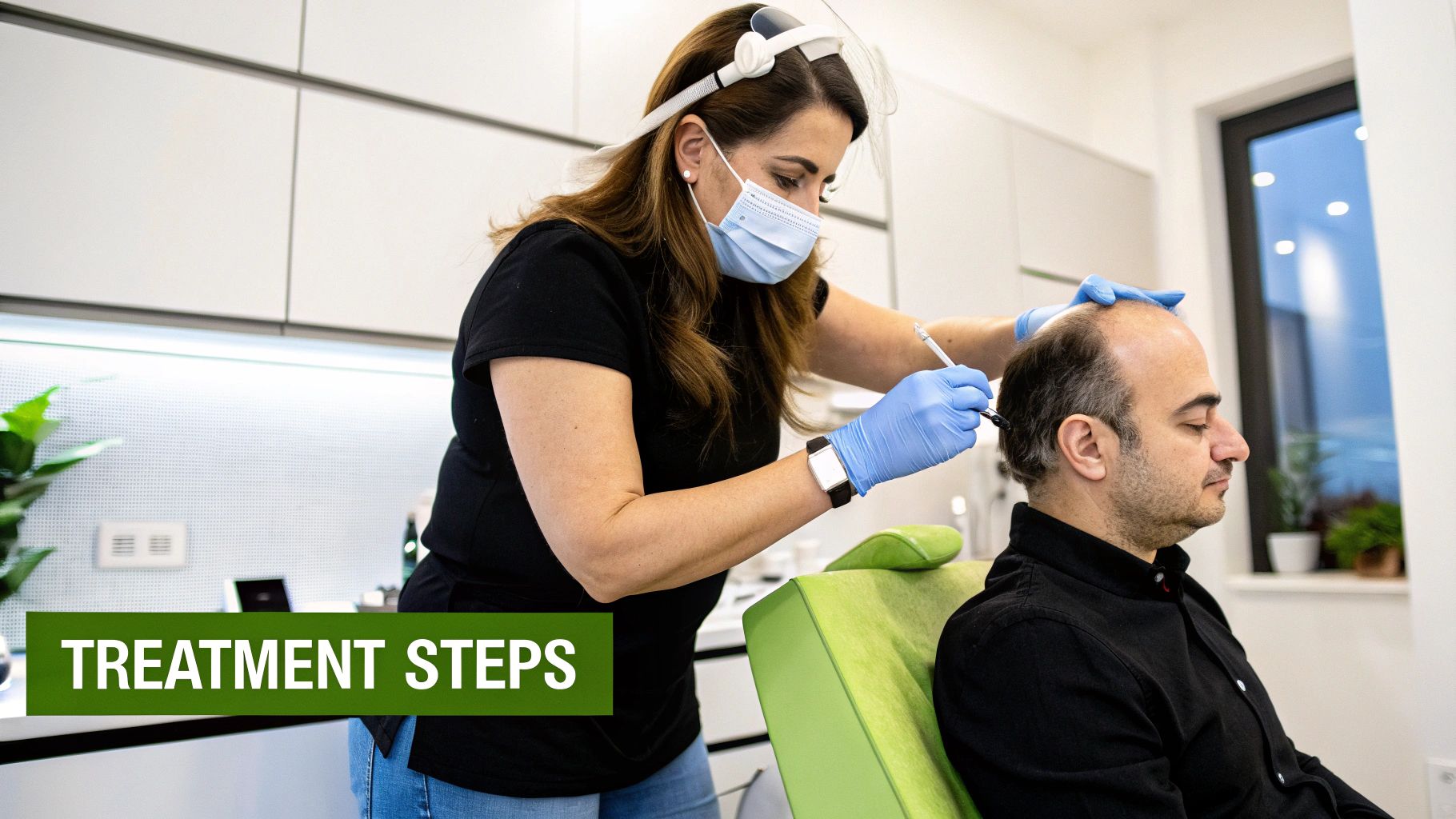
With the PRP ready, the last step is delivering it where it can do the most good. The practitioner will meticulously inject the concentrated plasma into the areas of your scalp where hair is thinning. Throughout this part of the process, your comfort is the top priority.
To ensure the procedure is as painless as possible, clinics usually apply a numbing cream to the scalp beforehand. Some also use tools like a cooling device or a gentle vibrating instrument to distract you from the sensation of the tiny injections. The goal is to make the entire experience feel manageable and stress-free.
From the blood draw to the final injection, the whole appointment typically takes about an hour. Most people can go right back to their normal activities afterward, although your scalp might feel a little tender for a day or two.
To give the scalp an extra boost and help the PRP absorb more effectively, many clinics combine the treatment with microneedling procedures. This involves using very fine needles to create tiny, invisible channels in the skin, which not only enhances PRP penetration but also stimulates the scalp's own natural healing response.
Of course, what everyone really wants to know is what the results look like. To see the kind of changes that are possible, take a look at these powerful PRP hair loss before and after photos from real people. Knowing each step of the journey can help you walk into your first session feeling confident and well-prepared.
Does PRP Really Work for Hair Loss?
Alright, we've covered the science and the step-by-step process. Now let's tackle the big question: does this treatment actually work? The short answer is a resounding yes for many people, but it’s important to have realistic expectations about what "working" really means.
Success with PRP isn't about waking up one morning with a lion's mane. It's more of a gradual, steady improvement from the inside out. For most people, positive signs include a significant decrease in hair shedding, thicker individual hair shafts, and dormant follicles slowly coming back to life. These small victories add up to create a noticeable improvement in overall hair density.
Managing Your Expectations
Patience is key when it comes to PRP. Because the treatment relies on your body's natural hair growth cycle, results don't appear overnight. The first sign that things are heading in the right direction is often subtle—you might notice less hair in your shower drain or on your brush within the first couple of months.
More visible changes, like hair that feels thicker and looks fuller, typically start to emerge after three to six months. This timing usually coincides with the completion of your initial series of treatments, which often consists of three or four sessions spaced about a month apart.
The primary goal of PRP is to rejuvenate the follicles you already have, not to create new ones from scratch. It’s about turning back the clock on thinning hair, making it an excellent choice for those in the earlier stages of hair loss.
Keeping this in mind helps set a clear, achievable goal for your treatment. The focus is on making your existing hair follicles healthier and more productive.
What the Clinical Evidence Shows
PRP has really made a name for itself in treating androgenetic alopecia (AGA)—the clinical term for male and female pattern baldness. This is where most of the research has been focused, and the results are quite encouraging.
For example, one major study demonstrated a significant increase in hair density, rising from an average of 71 to 93 follicles per square centimeter after a series of PRP treatments. That's a real, measurable improvement. Other studies have found that between 40.6% and 54.7% of patients with AGA experienced a visible improvement that was confirmed by independent evaluators.
This growing body of evidence confirms that PRP can effectively awaken dormant follicles and improve hair density, solidifying its place as a legitimate, non-surgical option for hair loss.
How PRP Stacks Up Against Other Treatments
To get the full picture, it's helpful to see how PRP compares to other popular hair loss treatments. Each approach works differently, and the best choice really depends on your specific situation, lifestyle, and goals.
Here's a quick comparison of the most common options.
PRP vs. Other Hair Loss Treatments
| Treatment | Mechanism | Pros | Cons |
|---|---|---|---|
| PRP Therapy | Uses your own blood's growth factors | Natural, minimal risk of allergic reaction, no daily upkeep | Requires multiple sessions, cost can be a factor |
| Minoxidil | Topical solution that stimulates blood flow | Over-the-counter, easy to apply at home | Must be used daily, can cause scalp irritation for some |
| Finasteride | Oral medication that blocks the hormone DHT | Very effective for male pattern baldness | Prescription-only, potential for systemic side effects |
| Hair Transplant | Surgical procedure to relocate hair follicles | Permanent, natural-looking results | Invasive, higher cost, requires significant recovery time |
As you can see, PRP fills a unique spot. It's a biological therapy that leverages your body's own healing systems, letting you avoid daily medications or invasive surgery.
For a more in-depth look at its performance, you can explore our full breakdown of how effective PRP is for hair loss to see real-world outcomes. This will help you weigh your options and decide if it's the right move for you.
The Real Costs and Typical Treatment Plans
Whenever you're considering a treatment, the cost is always a big piece of the puzzle. Let's be upfront: PRP for hair loss is not a one-and-done fix. It’s a strategic investment in restoring your hair, and the cost reflects the commitment needed to get—and maintain—your results.
The price for a single PRP session can vary quite a bit, typically falling somewhere between $750 and $2,500. Several factors influence this range. Your geographic location plays a significant role, as do the clinic's reputation and the experience of the practitioner. It stands to reason that a leading specialist in a major city will have different pricing than a provider in a smaller town.
It’s helpful to view it as an investment in your confidence. The cost covers the specialized equipment, the medical expertise required to prepare and inject the PRP safely, and the peace of mind that comes with a professionally administered procedure.
Structuring Your Treatment Schedule
PRP therapy for hair loss is a journey, not a single event. The most effective plans start with an initial series of treatments to kick things off, followed by regular sessions to keep the momentum going.
Here’s what a typical treatment schedule might look like:
- Initial Phase: Most experts recommend beginning with a series of three treatments. These are usually scheduled about one month apart to give your hair follicles a consistent, powerful boost. This initial phase is crucial for waking up those dormant follicles.
- Follow-Up: After the first three months, you'll likely return for another session about three months later. This serves as a checkpoint to assess your progress and reinforce the initial effects.
- Maintenance Phase: To maintain your new, healthier hair, ongoing support is key. Most people find that a maintenance session every six to twelve months is enough to keep the scalp environment healthy and the hair follicles productive.
This structured plan is designed to provide your follicles with a continuous supply of growth factors, preventing them from slipping back into dormancy and helping you hold onto the fuller, thicker hair you've worked hard to achieve.
Remember, choosing the right provider is just as important as the treatment itself. Look for a board-certified dermatologist or a clinic specializing in hair restoration. For a more detailed look at the financial side of things, our guide on the PRP hair treatment cost can help you budget for your sessions.
Ultimately, understanding both the financial and time commitments is the first step in deciding if this is the right path for you.
Got Questions? We've Got Answers
Even after diving into the details, you might still have a few questions bouncing around in your head. That’s perfectly normal. Let's go over some of the most common things people ask about PRP for hair loss to help clear things up.
Am I a Good Candidate for PRP Hair Treatment?
Honestly, the best results are usually seen in people who are in the earlier stages of hair thinning. It’s a fantastic option for those with androgenetic alopecia (the classic male or female pattern baldness) where the hair follicles are still present, just not doing their job. If an area of your scalp has been completely smooth for several years, those follicles may have shut down for good, and PRP won't have anything to work with.
Because PRP comes from your own blood, it's incredibly safe for most individuals. However, if you're on blood thinners, have certain blood disorders, or a low platelet count, it might not be the best choice for you. The only way to know for sure is to have a one-on-one consultation with a specialist. They'll assess your hair loss and medical history to give you a straight answer.
How Long Until I Actually See Results?
This is where you have to be patient. PRP isn't an overnight miracle; it works in sync with your body's natural hair growth cycle, and that takes time. The first positive change most people notice is a welcome one: less hair shedding. This often becomes apparent within the first couple of months.
As for the more visible results, like thicker hair and improved density, you’ll typically start to see those around the three to six-month mark. The full effect really starts to shine after you've completed your initial series of treatments. Think of it as waking up a sleepy workforce; the results build gradually as more and more follicles get back to business.
Does the PRP Procedure Hurt?
Most people are pleasantly surprised by how manageable the procedure is. It all starts with a simple blood draw from your arm, which feels no different from a routine blood test.
When it's time for the scalp injections, your provider will do everything they can to ensure you're comfortable. They have a few tricks up their sleeve to make it easier.
To minimize any discomfort, clinics almost always apply a topical numbing cream to the scalp beforehand. Many also use tools like a cold air blower or a small vibrating device to distract from the sensation of the tiny injections.
You might feel a bit of pressure or a quick pinch with each injection, but it's over in a flash. It's quite common to have a tender scalp for a day or two afterward, but that feeling typically fades quickly.
Can I Use PRP with Other Hair Loss Treatments?
Absolutely! In fact, many experts actually recommend it. A combination approach often yields the most powerful and lasting results. While PRP is a fantastic standalone treatment, it works very well with other proven hair loss therapies.
For example, pairing PRP with daily treatments like topical Minoxidil (Rogaine) or oral Finasteride (Propecia) can create a powerful synergy. The PRP works from the inside to supercharge the follicles, while the other treatments help maintain a healthy growth environment from the outside.
PRP is also frequently used to enhance the results of a hair transplant. By preparing the scalp and improving blood supply, it helps newly transplanted follicles take root and grow strong, leading to a much better outcome from the surgery.
At PRP For HairLoss, our goal is to provide clear, honest information so you can face hair loss with confidence. To dive deeper and see what's possible, check out our complete guide at https://prpforhairloss.com.
 PRP For Hairloss
Leave a comment