When you're looking for hair growth products that actually work, the sheer number of options can feel overwhelming. The truth is, most genuinely effective solutions fit into one of three buckets: FDA-approved medications, targeted nutritional supplements, and advanced clinical treatments.
Each one tackles hair loss from a different angle, and finding the right fit really depends on what's causing your hair to thin in the first place.
Navigating the Maze of Hair Growth Solutions
If you're tired of sifting through products that promise the world but don't deliver, you're in the right place. Most guys' journey to healthier hair starts with a bathroom cabinet cluttered with failed experiments and a good dose of frustration. This guide is designed to cut through that marketing noise and focus only on what's been proven to work.
We’re not just going to list products; we’re going to dig into the why behind each one. Understanding how these treatments actually function is the key to making a smart decision for your hair. It’s about saving you time, money, and the headache of another failed attempt.
Understanding the Proven Categories
To find a real solution, you need to know what you're looking for. The most reliable hair growth methods are backed by solid clinical data and a deep understanding of hair biology. We'll break down the approaches that have shown real, measurable results for thousands of men.
These proven methods include:
- FDA-Approved Medications: These are the heavy hitters, put through rigorous testing to prove they’re safe and effective. They work by directly targeting the biological pathways that lead to common forms of hair loss.
- Vital Supplements and Nutrients: Think of these as the foundational support system. They work from the inside out, filling nutritional gaps and creating the ideal environment for your hair to grow strong.
- Advanced Clinical Options: For those who need a bigger boost, treatments like Platelet-Rich Plasma (PRP) therapy offer a way to directly stimulate dormant follicles using your body’s own natural healing power.
A smart strategy often involves more than one approach. For example, using an FDA-approved medication to stop further loss while taking supplements to nourish existing hair can create a powerful one-two punch for better results.
By getting a handle on these distinct categories, you can move past the hype and start building a plan that makes sense. Let’s dive into each one to see how it works, who it’s best for, and what kind of results you can realistically expect.
Here’s a quick overview to get us started.
Quick Guide to Proven Hair Growth Methods
This table breaks down the main treatment types to help you quickly see how they differ and which one might be the right starting point for you.
| Treatment Category | Mechanism of Action | Ideal Candidate |
|---|---|---|
| FDA-Approved Meds | Directly block DHT (the hair loss hormone) or stimulate blood flow to the scalp to revive follicles. | Men with classic male pattern baldness (androgenetic alopecia) looking for a scientifically validated solution. |
| Nutritional Supplements | Supply essential vitamins, minerals, and amino acids that are the building blocks for healthy hair. | Individuals whose hair loss may be linked to or worsened by nutritional deficiencies. |
| Clinical Treatments (PRP) | Use concentrated growth factors from your own blood to "wake up" dormant hair follicles and boost cell repair. | Those with thinning hair who want a non-surgical, natural approach to stimulate new growth. |
With this framework in mind, we can now take a closer look at the specifics of each category, starting with the most widely recognized and prescribed options.
Why We Lose Hair and How It Grows Back
Before we can talk about hair growth products that actually work, we need to get a handle on what’s really going on up there. You don't need a biology degree, but understanding the basics is the key to picking a solution that actually targets the root of your problem.
Think of each hair on your head as having its own life cycle, a bit like the seasons of a plant. Each strand follows its own unique timeline, which is why shedding between 50 to 100 hairs a day is perfectly normal.
It’s only when this natural cycle gets knocked out of whack that you start noticing real, visible thinning.
The Three Seasons of Your Hair
Getting to know this natural rhythm is the first step. It's a simple, repeating pattern that keeps your hair regenerating over your lifetime.
- The Anagen (Growth) Phase: This is your hair's long, productive summer. For anywhere from two to seven years, the strand is actively growing longer.
- The Catagen (Transition) Phase: Think of this as a brief autumn. It lasts just a few weeks as the hair follicle shrinks and cuts itself off from the blood supply, getting ready to rest.
- The Telogen (Resting) Phase: This is winter. The old hair sits dormant in the follicle for about three months before it finally falls out, making way for a brand new hair to start the cycle all over again.
When this well-oiled machine gets disrupted, you can end up with shorter growth phases, longer resting phases, or follicles that just give up on producing healthy hair. And that brings us to the usual suspects behind hair loss.
Common Reasons the Hair Growth Cycle Is Disrupted
Hair loss is rarely a one-size-fits-all issue. A number of factors can mess with this cycle, either by shortening that crucial anagen phase or by forcing too many hairs into the telogen phase at once.
The most common culprit? It’s written in our DNA. Androgenetic alopecia—what most of us call male pattern baldness—is the number one cause of hair loss in men, affecting up to 50% of men by the time they hit 50. This is all down to a genetic sensitivity to a hormone called dihydrotestosterone (DHT).
DHT is the main antagonist in male pattern baldness. It attaches to receptors in your hair follicles and, over time, causes them to shrink. This process is called miniaturization. With each new growth cycle, the hair that comes back is thinner, shorter, and weaker, until eventually, the follicle stops producing hair at all.
This shrinking process is fundamental to understanding hair loss. For a deeper dive, check out our guide to understanding hair follicle miniaturization and hair loss.
Beyond genetics, a few other things can throw a wrench in the works:
- Telogen Effluvium: Ever notice a lot of shedding after a major illness, surgery, or a really stressful period? That's this. A shock to the system can push a huge number of follicles into the resting phase all at once, leading to a sudden, temporary increase in hair fall a few months later.
- Nutritional Gaps: Your hair follicles are tiny factories, and they need the right raw materials to run properly. If you’re low on essentials like iron, zinc, biotin, or protein, it can directly impact your hair’s structure and ability to grow.
- Hormonal Imbalances: Issues with your thyroid or other major hormonal shifts can also interfere with the hair growth cycle and cause thinning.
Once you can pinpoint the "why" behind your hair loss, you can stop guessing and start making smart choices. This knowledge is your foundation for finding a treatment that tackles the actual cause, giving you the best shot at seeing results.
The Gold Standard in Hair Loss Treatments
If you're searching for hair growth products that actually work, your best bet is to start with treatments that have been put through the wringer—rigorously tested, FDA-approved, and backed by solid science. These aren't just hopeful "remedies"; they are the foundational pillars of any serious hair restoration plan.
Two names consistently pop up: Minoxidil and Finasteride. For years, they've been the undisputed champions because they directly tackle the biological machinery behind male pattern baldness.
Minoxidil: The Growth Stimulator
Think of Minoxidil (you probably know it as Rogaine) as the ultimate groundskeeper for your scalp. Its main job is to create a healthier, more fertile environment for your hair follicles to thrive. It pulls this off by acting as a vasodilator.
Simply put, it widens the blood vessels. Imagine upgrading a tiny garden hose to a fire hose—that's basically what Minoxidil does for your scalp's circulation. This supercharges the flow of blood, oxygen, and nutrients to each hair follicle, waking up dormant ones and pushing them back into the growth (anagen) phase.
It's a fun bit of trivia that Minoxidil was first developed as a high blood pressure medication. The hair-growing side effect was so noticeable that it was completely repurposed into the topical treatment we have today. That history really speaks to its powerful effect on circulation.
Minoxidil is usually a foam or liquid you apply directly to your scalp. The data is pretty solid: with consistent use, up to 60% of men see some level of regrowth, typically becoming noticeable after three to six months of daily application.
This diagram helps visualize where different treatments, like topicals and prescriptions, fit into the bigger picture.
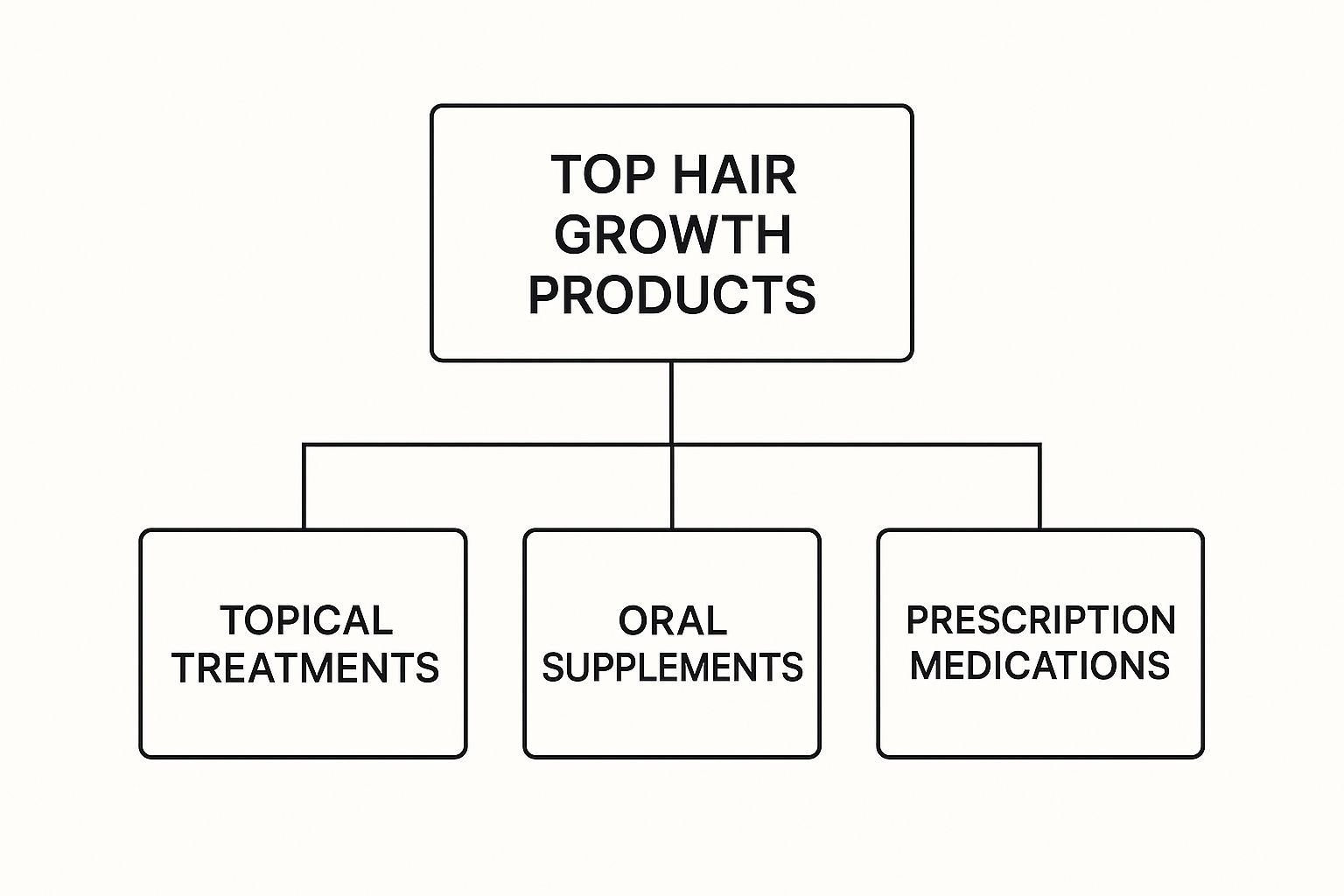
It’s a helpful way to see that a good hair care strategy often comes down to picking the right tool for the job.
Finasteride: The Follicle Protector
If Minoxidil is playing offense by boosting growth, Finasteride (sold as Propecia) is on defense. Picture it as a personal bodyguard for your hair follicles, with one very specific target: Dihydrotestosterone (DHT).
DHT is the main culprit in male pattern baldness. It latches onto hair follicles, causing them to shrink over time until they just give up and stop producing hair. Finasteride’s genius is that it inhibits the enzyme—5-alpha reductase—that converts testosterone into DHT in the first place.
By dramatically lowering DHT levels throughout your body, Finasteride shields your follicles from this miniaturizing attack. This gives them the breathing room they need to stay healthy, strong, and productive.
Taken as a daily pill, Finasteride's effectiveness is undeniable. Clinical trials show it can halt hair loss progression in nearly 90% of men. You can find a great breakdown of all the options in this hair loss treatment for men guide.
Weighing the Pros and Cons
Both of these are heavy hitters, but they’re not without their trade-offs. They require commitment and a clear understanding of what you’re signing up for.
-
Minoxidil (Topical)
- Pros: It’s available over-the-counter and works right where you need it—on the scalp—which means very few systemic side effects.
- Cons: You might see some initial shedding (that’s actually a good sign!), and some people experience scalp irritation. Plus, you have to keep using it, or the results will disappear.
-
Finasteride (Oral)
- Pros: It's incredibly effective at treating the root cause of hair loss, and taking a pill a day is super convenient.
- Cons: You need a prescription. A small minority of men (around 2-3%) report sexual side effects, though these almost always go away if you stop the medication.
It's absolutely essential to talk this over with a doctor. They can help you weigh the benefits against the risks for your specific situation. For many guys, the ultimate one-two punch is using both together—protecting follicles from DHT with Finasteride while stimulating new growth with Minoxidil.
How Supplements Support Healthier Hair Growth
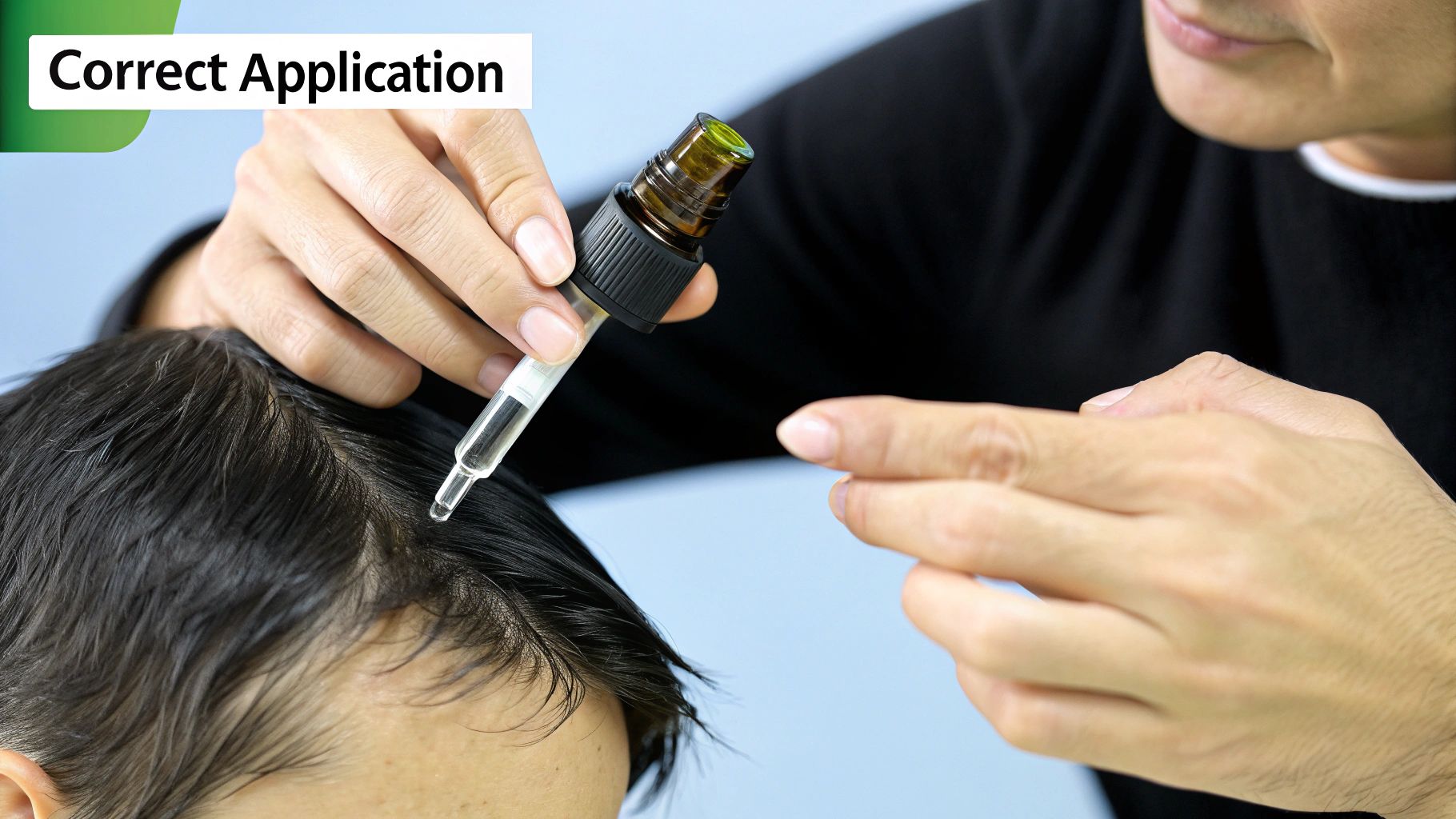
While medications like Minoxidil and Finasteride go to work directly on your scalp and hormones, there's another powerful strategy: building healthier hair from the inside out.
Think of your hair follicles as tiny factories. To produce strong, healthy hair, those factories need a steady supply of the right raw materials. That’s where supplements come in, solidifying their place among hair growth products that actually work.
Let’s be clear: supplements aren't magic pills that can single-handedly reverse severe genetic hair loss. Their main job is to fill nutritional gaps that might be holding your hair back. If your body is low on key vitamins and minerals, your hair is often the first to suffer since it's not essential for survival.
This foundational approach is gaining serious traction. The global market for hair growth supplements, valued at around USD 810 million in 2024, is expected to explode to nearly USD 2.88 billion by 2033. This boom is driven by a simple, growing understanding of how much nutrition really matters for hair health. You can dig into the numbers in the full hair growth supplements market research.
The Building Blocks of Healthy Hair
So, what are these "raw materials" your hair is craving? A few key vitamins, minerals, and compounds play a starring role in how your hair is built. Making sure you have enough of them is the first step toward creating the perfect internal environment for growth.
- Biotin (Vitamin B7): Often nicknamed the "hair growth vitamin," biotin is crucial for producing keratin, the very protein that makes up each strand of hair. A deficiency can lead straight to thinning, which is why it's a non-negotiable in most hair supplements.
- Keratin: This is the literal stuff your hair is made of. While you can't just eat keratin and have it go straight to your head, supplements with hydrolyzed keratin give your body the amino acid building blocks (like cysteine) it needs to construct its own strong hair fibers.
- Collagen: As a major protein in your skin, collagen helps keep your dermis—the layer where your hair follicles live—healthy and strong. Think of it as improving the "soil" from which your hair grows.
These ingredients team up to fortify your hair's structure and keep the biological growth cycle humming along smoothly.
It's all about realistic expectations. Supplements deliver the best results when they're correcting a specific nutritional shortfall. If your hair loss is purely hormonal, like with classic male pattern baldness, supplements alone won't stop it. What they can do is ensure the hair you have is as strong and healthy as it can possibly be.
Key Vitamins and Minerals for Your Scalp
Beyond those big three, an entire crew of micronutrients is needed for your follicles to function at their best. Knowing what they do helps you decipher any supplement label.
A top-tier formula will usually contain a whole spectrum of these supportive nutrients. For a complete rundown, you can check out our detailed guide on the most important vitamins for hair growth.
Here are a few of the most critical players:
- Zinc: This mineral is a powerhouse for hair tissue growth and repair. It also helps the oil glands around the follicles work properly, keeping your scalp in balance.
- Iron: An iron deficiency is a well-known cause of hair loss, especially a type of shedding called telogen effluvium. Iron is essential for helping red blood cells carry oxygen, and your follicles need a rich supply.
- Vitamin D: Research has linked low Vitamin D levels to alopecia. Scientists believe it helps create new follicles—the tiny pores where new hairs can sprout.
Saw Palmetto A Natural DHT Blocker
For men tackling androgenetic alopecia, one supplement ingredient really stands out: Saw Palmetto. This herbal extract has gained a lot of attention for its potential to act as a natural DHT inhibitor.
Derived from the fruit of a small palm tree, Saw Palmetto is thought to work by blocking 5-alpha reductase, the same enzyme that Finasteride targets. While its effect is much milder than the prescription drug, some studies suggest it can help slow down the DHT-driven process that shrinks hair follicles over time.
This makes it a popular choice for guys looking for a less aggressive, supportive option to add to their routine. It neatly bridges the gap between general nutrition and targeted hormonal support, offering a more holistic approach from within.
A Closer Look at Clinical Hair Treatments
When you've tried all the over-the-counter foams and supplements and still aren't seeing the results you hoped for, it might be time to explore more direct, powerful options. For men looking for a significant boost in their hair restoration journey, clinical treatments are the next step up.
These aren't just another product to add to your bathroom shelf. We're talking about medical technology designed to directly target the scalp and kickstart dormant hair follicles. Two of the most effective and widely discussed treatments in this space are Platelet-Rich Plasma (PRP) therapy and Low-Level Laser Therapy (LLLT).
Platelet-Rich Plasma: Using Your Body's Own Healing Power
Platelet-Rich Plasma (PRP) therapy is a clever process that taps into your body's natural healing abilities to breathe new life into your scalp. The best way to think about it is creating a custom-made, super-potent growth serum using your own blood.
The procedure itself is surprisingly simple. A small sample of your blood is drawn—just like a standard blood test—and placed in a centrifuge. This machine spins the blood at high speed, separating out the platelets. These tiny platelets are the real heroes here; they're loaded with powerful growth factors that signal your body to repair and regenerate tissue. This concentrated, platelet-rich liquid is then meticulously injected back into the areas of your scalp that need it most.
At its core, PRP therapy works by giving struggling hair follicles a massive dose of natural growth signals. The goal is to nudge them out of their resting phase and back into the active growth (anagen) phase, which can lead to thicker hair shafts and a healthier scalp environment.
Keep in mind, PRP isn't a one-shot solution. It usually requires an initial series of treatments, typically scheduled about a month apart, to get the best results. Since it’s a non-surgical procedure that uses your own biological material, it has become a very popular choice for many men. To get a better grasp of this technique and others like it, you can dive into the world of non-surgical hair restoration and see what's possible.
Low-Level Laser Therapy: Re-Energizing Follicles with Light
Another fascinating option is Low-Level Laser Therapy, often called LLLT. This treatment uses a specific wavelength of red light to gently stimulate activity at a cellular level right inside the hair follicle. It sounds futuristic, but the science behind it is well-established.
Think of your hair follicle cells as having tiny engines that have slowed down over time. LLLT acts like a jump-start, boosting their energy production (specifically a molecule called ATP). When these cells are re-energized, their metabolism improves, and blood flow to the area increases, creating a much more fertile ground for hair to grow.
This light-based therapy is delivered in a couple of ways:
- In-Office Systems: These are powerful, professional-grade laser hoods or panels that provide deep, even coverage across the entire scalp.
- At-Home Devices: You can now find FDA-cleared laser caps, combs, and headbands that make it easy to stay consistent with treatments from the comfort of your own home.
Research has backed up LLLT's effectiveness, with studies showing it can increase both hair count and thickness. Many users see a 20-25% increase in hair density after a few months of consistent use. It’s completely painless and non-invasive, which also makes it a great therapy to pair with other treatments like minoxidil or finasteride to enhance your overall results.
Putting Together Your Personal Hair Growth Plan

After looking at all the options—medications, supplements, and in-office treatments—it’s pretty clear there's no single magic bullet for hair loss. The best approach is always the one you can realistically stick with for the long haul. It's all about building a personal plan by pulling together the right pieces for your specific needs.
This isn't just about throwing everything at the wall and hoping something works. The goal is to make smart, sustainable choices that pair targeted treatments with good daily habits. This way, you’re taking back control of your hair's future.
Taking Stock of Where You Are
First things first, you need an honest look at your current situation. A solid plan has to be grounded in the reality of your hair loss and your lifestyle.
Start by asking yourself a few simple questions:
- What am I trying to achieve? Is your main goal to slow down rapid thinning, or are you looking to add some density to areas that are just starting to look a little see-through?
- What's my budget? Be real about what you can comfortably invest in your hair care every month.
- How much daily effort can I commit? Can you genuinely remember to take a pill every day or apply a topical solution twice a day without fail?
Your answers to these questions will point you toward the right combination of hair growth products that actually work for you, not just for someone else.
Creating a Routine That Covers All Bases
A truly effective strategy supports your hair from every possible angle. This means combining a core, proven treatment with lifestyle habits that create the best possible environment for hair to grow.
A popular and highly effective approach is to fight the battle on two fronts: Use a clinically-proven treatment like Minoxidil or Finasteride to block the biological cause of hair loss, and at the same time, double down on a nutrient-packed diet to give your hair the raw materials it needs to grow strong.
Think about weaving these supportive habits into your daily life:
- Fuel Your Follicles: Your hair is built from protein, so make sure you're getting enough lean meats, eggs, and beans. Foods high in zinc, iron, and biotin—like spinach, nuts, and avocados—are also non-negotiable.
- Keep Stress in Check: High levels of the stress hormone, cortisol, can seriously mess with your hair growth cycle. Simple things like regular exercise, meditation, or even a quick daily walk can make a world of difference.
Consistency is Everything
If there's one golden rule in hair restoration, it's this: consistency beats intensity every time. Using a product correctly, day in and day out, will always get you better results than inconsistent, high-effort attempts.
It’s also important to set realistic expectations. Hair growth is a marathon, not a sprint, and you won't see a full head of hair overnight. You’ll typically need to stick with a routine for at least three to six months before you start seeing any real, noticeable changes.
Pushing through that initial period is crucial. Once you establish that habit, you've built a sustainable, long-term plan that gives you the best possible shot at success.
Common Questions About Hair Growth Products
Diving into the world of hair growth products always brings up a ton of questions. Let's cut through the noise and tackle the things most guys want to know when they start looking for hair growth products that actually work.
How Long Until I See Results?
This is the big one, and the answer is simple: you have to be patient. With clinically proven treatments like Minoxidil and Finasteride, you're looking at 3 to 6 months of consistent, daily use before you'll spot any real changes. Hair growth just isn't an overnight process.
You might even notice some extra shedding in the first month or two. It can be a little jarring, but it's usually a good sign. It means weaker, older hairs are being pushed out to make room for stronger, healthier ones to grow in. Consistency is everything here—if you don't stick with it, you won't see results.
Can I Combine Different Hair Growth Treatments?
Absolutely. In fact, it's often the best way to get a great result. Think of it as a multi-front attack on hair loss, with different treatments targeting the problem from different angles.
For example, a classic and very effective combo is using topical Minoxidil to kickstart the follicles directly, while taking oral Finasteride to block the DHT that's shrinking them in the first place. You can even add a solid nutritional supplement to make sure your body has all the raw materials it needs. Just make sure to chat with your doctor before you start mixing and matching treatments.
Combining treatments allows you to play both offense and defense. You can actively stimulate new growth while simultaneously protecting your existing hair from the underlying cause of your hair loss.
Are Natural Hair Growth Options Effective?
The "natural" route is a mixed bag. Some ingredients, like saw palmetto or rosemary oil, have shown some promise in early studies, seeming to have mild effects similar to Finasteride or Minoxidil.
The key word there is mild. These options just don't have the mountain of rigorous, large-scale clinical data that backs FDA-approved medications. Natural products are probably best used as a supporting player in your routine or for very mild, early-stage thinning—not as the main event for significant hair loss.
Do I Have to Use These Products Forever?
When you're dealing with genetic hair loss (male pattern baldness), the answer is pretty much yes. Minoxidil and Finasteride manage an ongoing condition; they don't cure it. Now, if your hair loss is due to something else, like stress, the situation can be different. You can learn more about how to identify and manage stress-related hair loss to see if that's what you're up against.
But for genetic loss, if you stop the treatment, the underlying process fires back up. Any hair you've held onto or regrown will likely be lost within a few months. It's best to think of it as part of your daily maintenance routine, like brushing your teeth.
At PRP For HairLoss, we believe that understanding all your options is the first step toward reclaiming your confidence. We specialize in providing clear, factual information about advanced treatments like PRP. If you're ready to explore what modern hair restoration can do for you, visit us at https://prpforhairloss.com.
 PRP For Hairloss
Leave a comment