Want to increase your testosterone naturally? It all comes down to mastering the fundamentals: a solid foundation of resistance training, quality sleep, and a nutrient-dense diet packed with healthy fats and proteins. These core lifestyle habits work in harmony to create the right hormonal environment in your body, setting you up for better energy, a sharper mind, and a real sense of vitality.
Why Optimizing Testosterone Matters Now
Let's be direct. When we talk about testosterone, it's not just about muscle mass or sex drive. This hormone is the bedrock of a man's overall well-being. Your day-to-day energy levels, your ability to stay focused, and even your mood are all directly tied to healthy T-levels.
It’s easy to write off things like constant fatigue, brain fog, or a dip in motivation as just part of "getting older." But often, these are the first subtle signals that your hormonal health needs some attention. Ignoring them is a missed opportunity to feel and perform at your peak.
A Growing Concern for All Ages
This isn't just a conversation for men over 40 anymore. The data is showing a pretty concerning trend of declining testosterone levels in younger men, which makes this a critical health topic for every generation.
Believe it or not, studies have tracked a significant drop in total testosterone among men aged 15-39 over the last couple of decades. Some research even suggests that about 20% of men in this younger group might have levels that are clinically low. That’s not just a statistic; it has real-world consequences for long-term health and your quality of life.
It's clear that taking proactive steps to support your hormones is a non-negotiable part of modern men's health.
Taking control of your testosterone isn't about chasing a number on a lab report. It's about reclaiming your energy, sharpening your mental clarity, and building a foundation for lifelong health and vitality.
Beyond the Immediate Benefits
When you optimize your testosterone naturally, you kick off a cascade of positive effects that go way beyond the gym. It's a game-changer for maintaining a healthy body composition, especially since low T is often linked to an increase in body fat—particularly that stubborn fat around the midsection.
This hormonal balance is also key to managing bigger-picture health issues. For example, healthy testosterone is closely tied to better metabolic function. For more on this, it's worth understanding how conditions like prediabetes can impact your hormonal health.
The strategies we’ll cover, like dialing in your diet and getting regular sun exposure, are all connected. To learn more, check out our guide on https://prpforhairloss.com/does-sunlight-increase-testosterone.
At the end of the day, learning how to increase testosterone naturally is a direct investment in a more resilient, energetic, and healthier you.
Fueling Hormone Production Through Nutrition
Think of your diet as the raw material for your body’s hormone factory. What you put on your plate directly provides the building blocks for testosterone. This isn't about some miserable, restrictive diet—it's about making smart, strategic choices that give your body exactly what it needs to function at its peak.
Forget chasing a single "superfood." Real, lasting results come from consistently fueling yourself with the right balance of macronutrients: fats, proteins, and carbohydrates. Get this trifecta right, and you'll create the ideal internal environment for your hormones to thrive.
Build Your Hormones With Healthy Fats
Let's get one thing straight: healthy fat is not the enemy. In fact, it's the absolute foundation of your sex hormones. Cholesterol, which has been unfairly demonized for years, is the direct precursor to testosterone. Without enough of it from high-quality sources, your body simply can't manufacture what it needs.
This is precisely why those ultra-low-fat diets from the 90s were so disastrous for male hormonal health. You're essentially starving the assembly line of its most critical component.
To fuel up the right way, make these foods a regular part of your routine:
- Whole Eggs: The yolk is where the magic happens. It's packed with the cholesterol and nutrients needed for hormone synthesis.
- Avocados: A fantastic source of monounsaturated fats that support heart health and hormone production.
- Olive Oil: Extra virgin olive oil is another powerhouse of healthy fats and anti-inflammatory compounds.
- Nuts and Seeds: Almonds, walnuts, and chia seeds offer a potent mix of healthy fats and essential micronutrients.
A simple yet powerful change? Swap that sugary breakfast cereal for a couple of whole eggs. You'll be giving your body the exact materials it needs to kickstart hormone production first thing in the morning.
Prioritize Protein for Muscle and More
If fats are the building blocks, think of protein as the catalyst for growth and repair. Getting enough protein is non-negotiable for building and maintaining lean muscle. So, what does that have to do with testosterone? Simple: more muscle mass is directly linked to better insulin sensitivity and a healthier overall hormonal profile.
It’s a powerful cycle. Strength training signals the demand for more testosterone, and a high-protein diet provides the resources to rebuild bigger and stronger. Aim for high-quality sources like grass-fed beef, wild-caught fish, chicken, and, of course, eggs.
Your plate should be a strategic tool. Each meal is an opportunity to provide your body with the precise nutrients—healthy fats for production, quality protein for support, and smart carbs for energy—that create a pro-testosterone environment.
Before you overhaul your diet, it’s a good idea to know what your body actually needs. A great place to start is learning how to calculate your daily calorie needs. This ensures you’re eating enough to support hormone production without accidentally over- or under-eating.
Don't Fear Carbohydrates
Carbs have gotten a bad rap lately, but they play a crucial role in your hormonal health. They are your body's preferred energy source and, critically, they help manage cortisol—the stress hormone. Chronically high cortisol is a notorious testosterone killer; the two hormones exist in a seesaw-like relationship.
The key is choosing the right kind of carbs. Ditch the processed junk and refined grains that send your blood sugar on a rollercoaster. Instead, opt for complex carbohydrates that deliver sustained energy.
- Sweet potatoes
- Quinoa
- Oats
- Rice
- Fruits and vegetables
A pro tip is to time your carb intake around your workouts. Eating carbs post-workout helps replenish your muscle glycogen stores and blunts the cortisol spike from intense exercise, keeping your body in a more anabolic (muscle-building) state.
The Micronutrient Power Players
Beyond the big three macros, certain vitamins and minerals are absolute game-changers for testosterone. A deficiency in any one of these can create a major bottleneck, sabotaging your efforts even if the rest of your diet is on point.
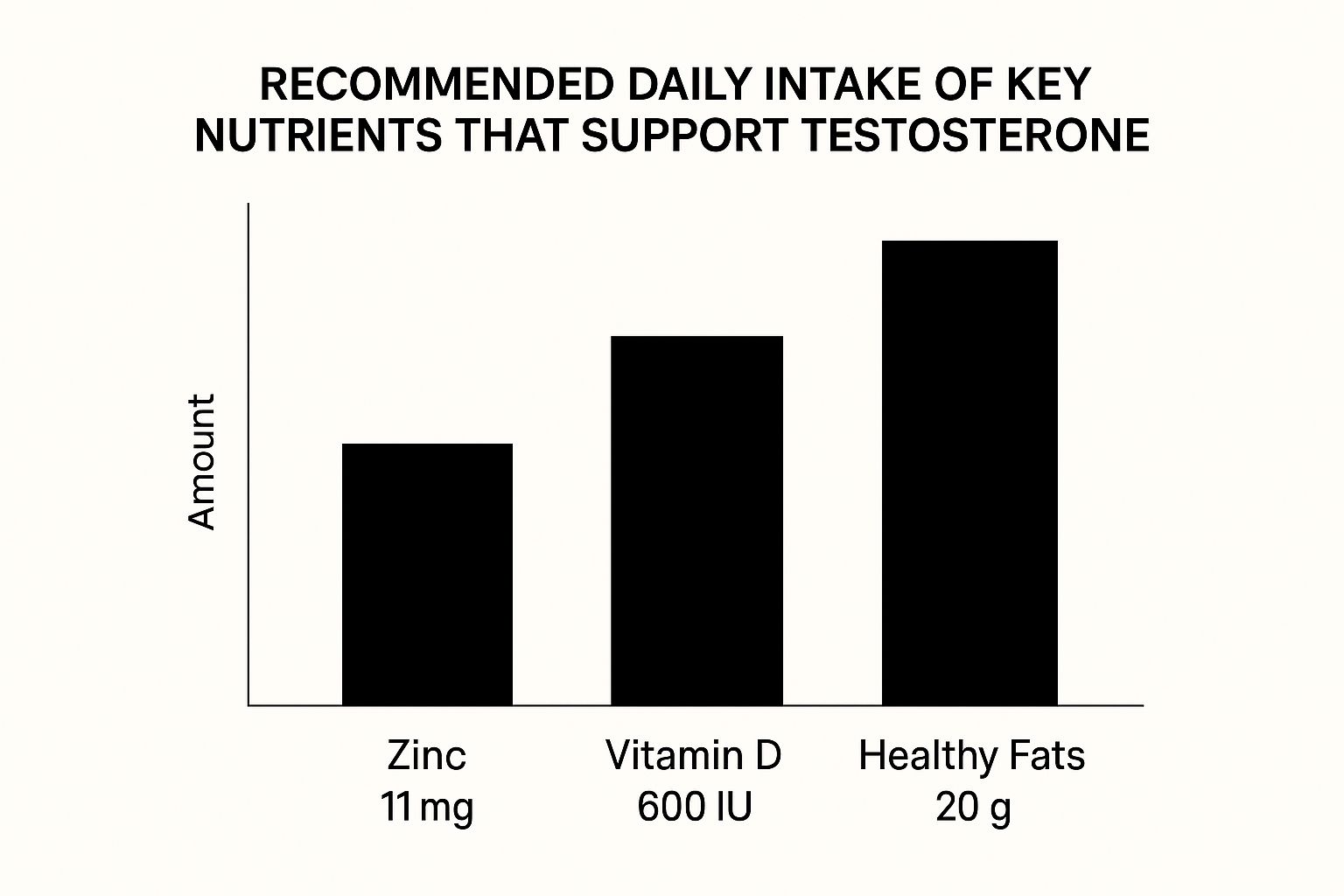
While the big picture of your diet is what matters most, it’s crucial to make sure you're getting enough of these specific nutrients. They are the gears that keep the entire hormonal machine running smoothly.
A balanced diet should provide most of what you need, but knowing which foods are richest in these key players can help you make smarter choices.
| Key Nutrients for Natural Testosterone Support | |
|---|---|
| Nutrient | Role in Testosterone Production |
| Zinc | An essential mineral directly involved in the enzymatic pathways that synthesize testosterone. A deficiency can severely limit production. |
| Vitamin D | Functions like a steroid hormone in the body. Studies consistently link higher Vitamin D levels with higher total and free testosterone. |
| Magnesium | Involved in over 300 biochemical processes. It helps increase "free" testosterone by reducing the activity of Sex Hormone-Binding Globulin (SHBG), a protein that otherwise makes testosterone inactive. |
Let's dig a little deeper into these essentials.
1. Zinc
This mineral is a true MVP for male health. Think of it as a spark plug for testosterone production. Oysters are the most famous source for a reason, but you can also get plenty from beef, pumpkin seeds, and lentils.
2. Vitamin D
Often called the "sunshine vitamin," this nutrient acts more like a hormone in your body. There's a mountain of research showing a strong correlation between healthy Vitamin D levels and higher testosterone. Your best source is direct sunlight, but you can also get it from fatty fish like salmon, egg yolks, and fortified foods. Many men, especially in colder climates, find they need to supplement.
3. Magnesium
This mineral is a workhorse, involved in hundreds of critical bodily functions, including sleep, muscle function, and hormone regulation. It helps "un-bind" testosterone from a protein called SHBG, which allows more of your testosterone to be "free" and biologically active. You can find it in dark leafy greens like spinach, almonds, and avocados.
It’s worth noting that many of these same nutrients are vital for other areas of health, too. For instance, if hair health is on your mind, you might find our guide on key vitamins for hair growth helpful. A nutrient-dense diet creates a ripple effect of benefits that go far beyond just one goal.
Training for an Optimal Hormonal Response

When it comes to boosting testosterone, how you train matters just as much as if you train. It’s about being strategic. We're not just trying to burn calories here; the goal is to send a powerful signal to your endocrine system to up its game. Think of your workout as a direct request to your body for more strength, more muscle, and more vitality.
This is where we get past the generic "lift weights" advice. The specific exercises you choose, the intensity you bring, and even how long you rest between sets all play a part in creating a powerful anabolic environment.
Prioritize Big, Compound Movements
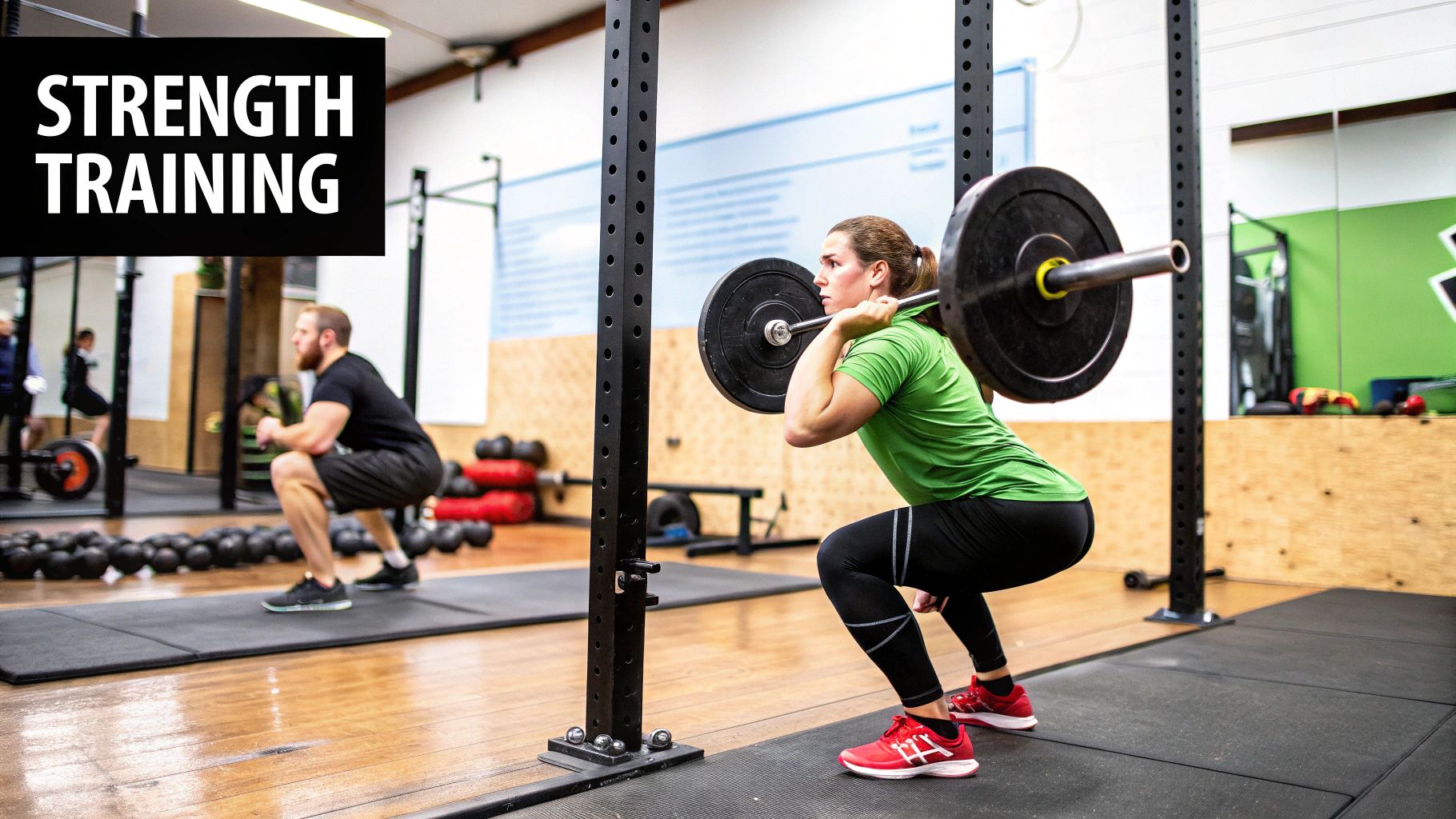
If you want the biggest hormonal bang for your buck, your workouts need to be built around compound exercises. These are the multi-joint lifts that recruit huge amounts of muscle all at once. We're talking about the classics: squats, deadlifts, overhead presses, and heavy rows.
Why are these so much better than isolation work? Simple. When you force massive muscle groups to work together under a heavy load, your body has no choice but to respond. It floods your system with anabolic hormones—testosterone and growth hormone—to handle the stress and kickstart the repair and growth process. A bicep curl just can't create that same level of systemic demand.
The most powerful hormonal trigger in the gym isn't the weight itself, but the amount of muscle you force it to move. That's why squats and deadlifts are, and always will be, the kings of natural testosterone optimization.
So, ditch the routines full of leg extensions and tricep pushdowns. Instead, build your sessions around those foundational lifts. Your sweet spot is a challenging weight you can handle for 4-8 reps, where those last one or two are a real grind. That intensity is what flips the hormonal switch.
Some guys worry that this level of intense lifting might have other side effects. If you've ever wondered about the connection, you can learn more by reading our article on whether working out can cause hair loss.
Harness the Power of HIIT
While heavy lifting is your foundation, High-Intensity Interval Training (HIIT) is your finisher. HIIT is an incredibly efficient tool that involves short, all-out bursts of effort followed by brief, easy recovery periods. Studies have shown this approach can give testosterone a significant kick without the hormonal downsides of long, slow cardio.
Here’s a dead-simple HIIT workout you can do with sprints or on a stationary bike:
- Warm-up: 5 minutes of light jogging.
- Go Time: Sprint as hard as you can for 30 seconds.
- Recover: Slow it down to a walk or easy pedal for 60-90 seconds.
- Repeat: Go through this cycle for 6-8 rounds.
- Cool-down: 5 minutes of walking to bring your heart rate down.
That’s it. You’re done in under 20 minutes, but you’ve sent a powerful signal to your metabolism and your hormones. It’s the perfect way to get your cardio in without killing your gains.
The Downside of Chronic Cardio
This brings us to what you should avoid: excessive endurance training. I’m talking about those long, slow, hour-plus jogs. While great for cardiovascular health, this type of "chronic cardio" can be a real testosterone killer.
The reason is a hormone called cortisol. Long-duration exercise significantly elevates this stress hormone, and cortisol has a see-saw relationship with testosterone. When cortisol is chronically high, testosterone production gets suppressed. You’re essentially trading your hormonal health for endurance, which is the opposite of our goal.
A Sample Training Week for Hormonal Health
Let's put it all together. A smart training plan is all about balancing intensity with recovery. Remember, the magic happens when you rest—that's when your muscles grow and your hormones adapt.
Here’s a sample weekly schedule designed to maximize that anabolic response:
| Day | Focus | Key Exercises |
|---|---|---|
| Day 1 | Lower Body Strength | Squats, Deadlifts, Leg Press |
| Day 2 | Upper Body Push | Bench Press, Overhead Press, Dips |
| Day 3 | Rest or Active Recovery | Light walk, stretching |
| Day 4 | Upper Body Pull | Pull-ups, Barbell Rows, Lat Pulldowns |
| Day 5 | HIIT and Core | Sprints (treadmill or bike), Planks, Hanging Leg Raises |
| Day 6 & 7 | Rest and Recovery | Essential for growth and hormonal regulation |
This structure ensures you’re hitting every major muscle group with heavy, compound lifts, getting a powerful HIIT session in, and—most importantly—giving your body the time it needs to recover and come back stronger. This is how you train smarter, not just harder.
Get Your Sleep and Stress Under Control
You can follow the perfect diet and have a killer workout plan, but if you're skimping on sleep and constantly stressed out, you’re basically running on a treadmill going nowhere. Honestly, getting these two areas of your life dialed in might be the single most powerful thing you can do for your testosterone levels. A lot of guys just ignore them, which is precisely why making them a priority gives you such a massive edge.
It's not just some vague "wellness" advice, either. There's a direct, hard-wired connection here. Your body produces a huge chunk of its daily testosterone while you're in the deep stages of sleep. When you cut that process short, you're literally robbing yourself of T production.
The Real Power of a Good Night's Sleep
Think of sleep as the time when your body’s hormonal factory is running at full steam. Getting 7-9 hours of solid, uninterrupted sleep every night isn't just a nice idea—it's a non-negotiable part of the equation.
One study really drove this home for me. It found that after just one week of sleeping only five hours a night, healthy young men saw their daytime testosterone levels plummet by 10-15%. That’s a staggering drop from just a few bad nights.
But it’s not just about the hours logged. The quality of that sleep is what truly matters. This is where your sleep habits, or what experts call sleep hygiene, come into play.
Here are a few simple tweaks that have worked wonders for me and countless others:
- Declare a "Digital Sunset." The blue light blasting from your phone, tablet, and TV screen directly interferes with melatonin—the hormone that tells your brain it's time to power down. Make it a rule to put all screens away at least an hour before you plan to go to sleep. It feels weird at first, but it can make a night-and-day difference in how fast you fall asleep.
- Turn Your Bedroom Into a Cave. Your bedroom should be for two things: sleep and intimacy. That's it. Get it as dark, cool, and quiet as humanly possible. Most people find a temperature somewhere between 60-67°F (15-19°C) is the sweet spot for deep, restorative sleep.
- Live by the Clock. As much as you can, try to go to bed and wake up at roughly the same time every single day. Yes, even on weekends. This consistency locks in your body's internal clock (your circadian rhythm), which makes falling asleep and waking up feel much more natural over time.
It’s pretty incredible how everything in the body is connected. For instance, poor sleep doesn't just mess with your hormones; it can impact everything from your immune response to your hair. You can learn more about the surprising connection between a lack of sleep and hair loss.
Sleep isn't a luxury you can earn; it's a fundamental biological need. Making 7-9 hours of high-quality sleep a priority is one of the most effective, evidence-based ways to support healthy testosterone.
Little things can make a big difference. For example, wearing a pair of blue light glasses for sleep in the evening is a simple hack that can really improve your rest, which in turn helps your body's natural T production.
Taming Cortisol: The Testosterone Killer
Now for the other side of the coin: stress. More specifically, we need to talk about its primary henchman, a hormone called cortisol. Cortisol and testosterone have a see-saw relationship—when one goes up, the other tends to go down.
A short burst of stress is fine; it's part of life. The real problem is the chronic, grinding stress from work deadlines, financial worries, and the general chaos of modern life. Living in that constant "fight-or-flight" mode keeps your cortisol levels jacked up around the clock, which actively suppresses your body's ability to make testosterone.
Simple, Practical Ways to Manage Stress
You don't need to book a two-week silent retreat to get your stress under control. Small, consistent daily actions can make a massive difference in keeping cortisol from running wild.
Here are a few to try:
- Get Some Morning Sun. As soon as you can after waking up, step outside and get 10-15 minutes of direct sunlight on your face and skin. This simple act helps set your circadian rhythm for the day, which improves sleep later on and helps regulate your cortisol levels.
- Practice "Micro-Mindfulness." You don't have to become a meditation guru. Just taking five minutes to sit quietly and focus on your breathing can slam the brakes on an acute stress response. If you're new to this, apps like Calm or Headspace are great guides.
- Schedule Your Downtime. Actively block out time in your calendar for things you actually enjoy doing, with no goal other than enjoyment itself. Whether it’s strumming a guitar, tinkering with your car, or going for a hike, these outlets are crucial for letting your mind decompress and lowering those stress hormones.
Lifestyle Adjustments for a Lasting Impact
Beyond what you do in the gym and the kitchen, your daily habits create the environment where your hormones either thrive or struggle. Think of these lifestyle factors as the missing pieces of the puzzle. Getting them right can amplify all your other efforts, turning good habits into exceptional results.
One of the most powerful levers you can pull is managing your body composition. This isn't just about looking better; it's about hormonal chemistry.
The Connection Between Body Fat and Estrogen
Excess body fat, particularly the visceral fat packed around your organs, isn't just inactive weight. It's a metabolically active organ that works directly against your goals. This fatty tissue is loaded with an enzyme called aromatase, and its main job is to convert your hard-earned testosterone into estrogen.
This creates a frustrating downward spiral: low T can contribute to fat gain, which in turn creates more aromatase, further tanking your testosterone. A solid training and nutrition plan isn't just for building muscle and losing fat—it's a direct intervention to protect your testosterone.
Think of excess body fat as a hormone-hijacking factory operating 24/7 inside your body. By getting leaner, you’re not just improving your health; you’re shutting down the assembly line that turns your testosterone into estrogen.
Harness the Power of Smart Sun Exposure
Vitamin D is another crucial player. We call it a vitamin, but it really acts more like a steroid hormone in the body. Unsurprisingly, there's a strong, well-documented link between healthy Vitamin D levels and optimized testosterone.
While you can get some from food, your best source is completely free: the sun.
Making a conscious effort to get 15-20 minutes of midday sun exposure on a good portion of your skin a few times a week can make a huge difference. It’s a simple, natural way to support your entire hormonal system. This is also a cornerstone of a healthy lifestyle that has other benefits, like helping you learn how to prevent hair loss.
Ditching the Everyday Hormone Killers
Finally, let's talk about the common habits that can silently sabotage your T levels. These are the subtle drains that can hold you back even when you feel like you're doing everything else right.
Making a few conscious swaps can build a protective shield for your hormones.
-
Rethink Your Alcohol Intake: Look, an occasional beer or glass of wine isn't going to ruin you. But chronic or heavy drinking is a known testosterone suppressant. It directly poisons the Leydig cells in the testes—the very cells that produce testosterone—and can spike the stress hormone cortisol. If you're serious about this, cutting back to just a few drinks per week is a non-negotiable.
-
Be Mindful of Plastics: Many common plastics, especially when heated, leach chemicals known as endocrine disruptors (like BPA and phthalates). These compounds can mimic estrogen in the body, throwing your natural hormonal balance out of whack.
You don't have to live in a bubble. Just make a few simple swaps to lower your exposure:
* Ditch the plastic Tupperware: Store your food, especially hot leftovers, in glass containers.
* Never microwave plastic: This is a big one. Don’t let plastic wrap touch your food in the microwave, and never heat food in plastic containers.
* Upgrade your water bottle: Get a stainless steel or glass bottle instead of relying on disposable plastic.
Just how much of a difference does lifestyle make? A lot. Globally, average testosterone levels vary dramatically, suggesting our environment and choices play a massive role. Men in Uzbekistan, for example, have an average T level of 773 ng/dL, while the U.S. average is a much lower 517 ng/dL. These numbers make it clear just how much control you really have through your daily choices.
Common Questions on Boosting Testosterone
As you start putting these strategies into action, questions are bound to pop up. It's totally normal. Here, I'm going to tackle some of the most frequent and practical questions I hear from guys who are serious about learning how to increase testosterone naturally. My goal is to give you clear, straightforward answers to help you stay the course with confidence.
How Long Until I Actually Feel a Difference?
This is the big one, and the honest answer is: it depends, but you need to be patient.
Everyone’s body responds at a different pace, but a lot of guys I've worked with report feeling subjective improvements—like better energy, a more stable mood, and a noticeable uptick in libido—within just a few weeks of being consistent. These initial changes are often the first sign you're on the right track.
However, for significant, measurable changes that would actually show up on a blood test, you have to think in terms of months, not days. This is a long game.
Give yourself a solid three to six months of consistent effort before you expect to see major shifts. This journey is about building a new, healthier lifestyle, not finding a temporary quick fix.
Are There Any Superfoods for Testosterone?
I'd be very skeptical of anyone who tries to sell you on a single "magic bullet" food. While certain foods are incredibly supportive, no one food works in isolation.
Sure, oysters are fantastic for their high zinc content, and whole eggs are powerhouses for healthy fats and cholesterol—both are critical for T-production.
But the real results come from the synergy of your entire dietary pattern. A holistic approach that prioritizes whole foods, quality protein, and healthy fats will always outperform a diet where you're just trying to cram in one specific "superfood." It's the consistency of your overall nutrition that moves the needle.
Can I Boost My Testosterone Too Much Naturally?
This is a common concern, especially for guys who are really committed to their training and diet, but you can put it to rest. It's virtually impossible to raise your testosterone to unhealthy or supraphysiological levels using only natural methods like diet, exercise, and sleep optimization.
Your body is smarter than that. It has sophisticated hormonal feedback loops designed to keep everything within a healthy, optimal range. These natural strategies are about helping you reach your own genetic potential, not artificially exceeding it. You're simply giving your body the tools it needs to function at its best.
Should I Take Natural Testosterone Booster Supplements?
My advice here is always the same: master the fundamentals first.
Your foundation for hormonal health must be built on solid nutrition, intelligent training, deep sleep, and stress management. Supplements are, at best, a minor addition to an already solid foundation—they can never replace it.
That said, some specific supplements can provide support if you have a genuine need.
- Mineral Support: Well-researched minerals like Zinc, Magnesium, and Vitamin D can be very helpful, especially if blood work shows you have a deficiency. Many men are low in these key nutrients.
- Proprietary Blends: I would strongly caution against most "testosterone booster" pills that contain a long list of herbal ingredients with hyped-up claims. The evidence for many of these is weak, and you're better off spending your money on high-quality food.
Always build your house on rock-solid fundamentals before you even think about adding supplements to the mix. And, of course, it's always a good idea to talk with your doctor before starting any new supplement regimen.
At PRP For HairLoss, we believe that understanding your body's hormonal health is a key part of overall wellness. For more insights into men's health and practical solutions, explore our resources at https://prpforhairloss.com.
 PRP For Hairloss
Leave a comment