If you've been digging around for the best essential oils for hair growth, you’ve likely noticed a few names showing up time and time again. Rosemary, peppermint, and lavender almost always top the list, and there’s a good reason for that. These potent plant extracts have built a solid reputation for creating a healthy scalp, which is the absolute foundation for encouraging thicker, fuller-looking hair.
Your Natural Path to Thicker, Fuller Hair

It’s always a little disheartening to see a clump of hair in your brush. If you're looking for a more natural way to support your hair's vitality, you’ve landed in the right spot. This guide is designed to cut through the online noise and show you exactly how essential oils can become a valuable part of your hair care routine.
It’s best to think of them not as overnight miracle cures, but as powerful, plant-derived allies that work with your body’s natural processes. Let's get into the most effective oils and break down why they've earned their status as hair growth champions.
Why Bother With Essential Oils for Hair?
To truly get a handle on hair thinning, you have to go straight to the source. While a whole host of factors can be at play, creating the best possible environment for your hair follicles is a non-negotiable first step. If you want to get a clearer picture of what might be going on under the surface, you can learn about what causes hair loss in our detailed guide.
Essential oils are so effective because they help with several key things that directly impact your hair’s health:
- Boosting Scalp Circulation: Think of it like this: better blood flow is like a better delivery service for oxygen and vital nutrients to your hair follicles. This is absolutely critical for growth.
- Calming Inflammation: An irritated, inflamed scalp is a stressful place for hair to grow. Many oils have powerful soothing properties that help keep things calm and balanced.
- Fighting Off Microbes: Keeping your scalp clean and free from unwanted fungus and bacteria can prevent problems like dandruff, which can get in the way of healthy hair growth.
Think of your scalp as the soil in a garden. If you want lush, vibrant plants, the soil needs to be nourished, well-aerated, and free of weeds and pests. Essential oils help create that perfect "soil" for your hair follicles to thrive.
Now that we’ve set the stage, let’s take a closer look at the top oils, what they do, and how you can start using them with confidence. To give you a quick snapshot, here’s a breakdown of the heavy hitters we’ll be discussing.
Quick Guide to Hair Growth Essential Oils
| Essential Oil | Primary Hair Growth Benefit | Best For |
|---|---|---|
| Rosemary | Stimulates follicles & circulation | Thinning hair, androgenetic alopecia |
| Peppermint | Increases blood flow & follicle depth | Slow growth, low hair density |
| Lavender | Soothes scalp & promotes cell growth | Stress-related hair loss, scalp irritation |
| Cedarwood | Balances oil production & fights bacteria | Oily scalp, dandruff-related thinning |
| Thyme | Prevents hair loss & reduces dandruff | Scalp conditions, shedding |
This table is just a starting point. Next, we'll dive deeper into the science behind each of these oils and give you practical ways to add them to your routine.
How Essential Oils Support Hair Growth
So, how can a simple plant extract actually make a difference for your hair? It’s not magic—it's all about creating the perfect environment on your scalp for healthy growth to take root.
Think of your scalp like a garden. You can’t expect beautiful flowers to grow in poor, compacted soil. Essential oils act like a specialized treatment for that soil, prepping it for robust growth and ensuring the roots—your hair follicles—get everything they need.
Boosting Blood Flow to the Follicles
One of the main ways the best essential oils for hair growth work is by improving circulation. When you massage an oil like peppermint into your scalp, that tingling sensation you feel is more than just a feeling. It's a sign of increased blood flow right at the surface.
This process is called vasodilation, which simply means the blood vessels are temporarily widening. This improved circulation acts like an express delivery service, rushing more oxygen and vital nutrients straight to the base of your hair follicles. This surge of nourishment can help coax dormant follicles back into action and support a stronger hair shaft from the very start.
This infographic breaks down the key concepts for applying essential oils safely to get the most out of them.
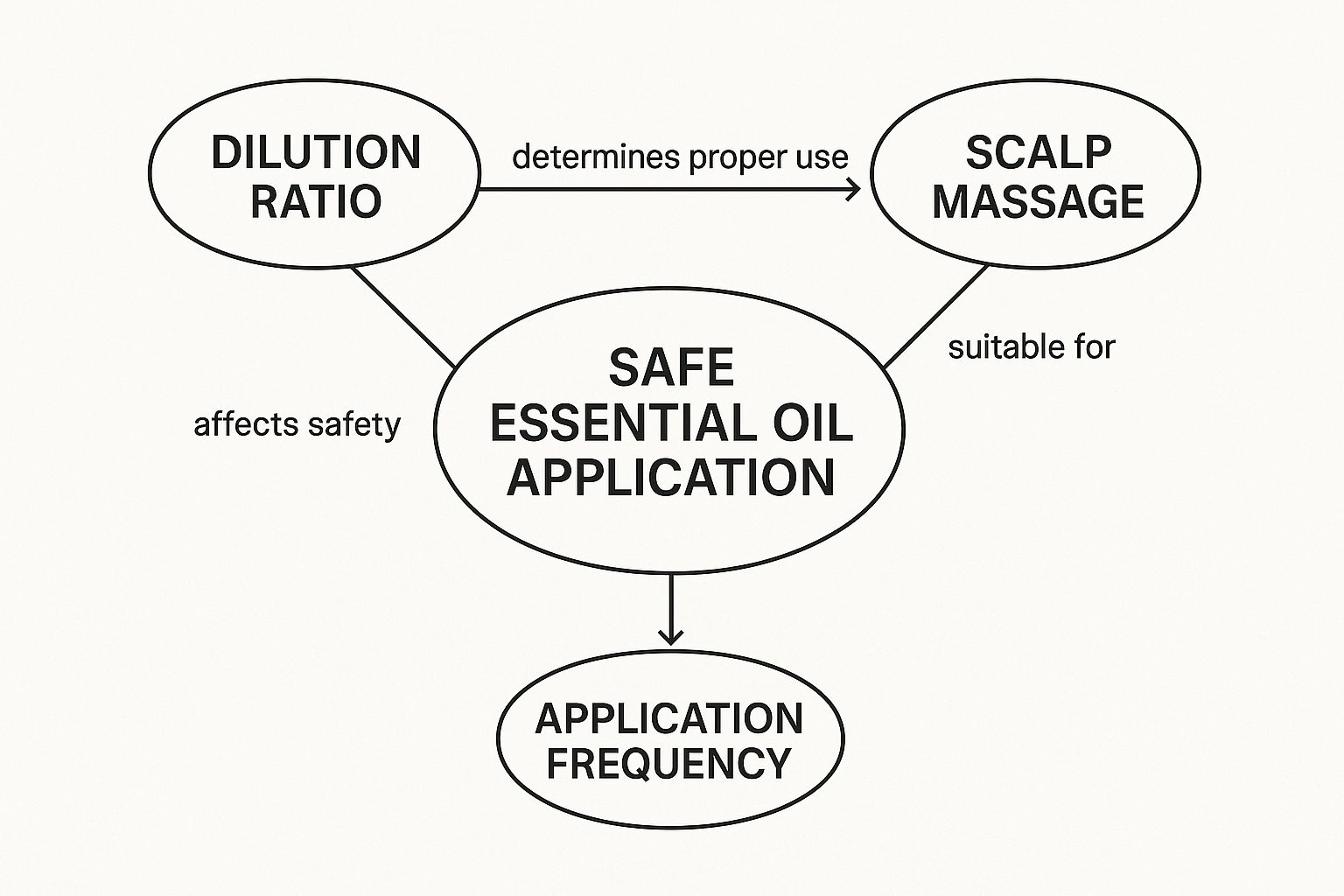
As you can see, success isn't just about picking the right oil. It’s about how dilution, massage, and consistency all come together to create a routine that's both effective and safe.
Creating a Healthier Scalp Environment
Beyond just boosting blood flow, essential oils are brilliant for balancing the overall health of your scalp. Many of the most effective oils—like lavender, cedarwood, and thyme—have powerful antimicrobial and anti-inflammatory properties.
They get to work clearing out the microscopic gunk, bacteria, and irritation that can clog hair follicles and get in the way of healthy growth.
A calm, clean, and balanced scalp is the foundation of healthy hair. By reducing inflammation and managing excess oil production, essential oils remove common roadblocks that often lead to thinning and shedding.
This helps create the ideal conditions for your hair to enter and stay in its active growth phase for longer. To see how this all fits together, you can explore the different stages in our detailed guide to the hair growth cycle.
Ultimately, a healthier scalp allows your hair to spend more time growing and less time resting or falling out. That targeted action is what makes essential oils such a powerful addition to any natural hair care routine.
The Top 5 Essential Oils for a Healthy Scalp
Alright, let's dive into the heavy hitters of the essential oil world when it comes to hair care. We're going to move beyond just a simple list and really get into what makes each of these oils so special. Each one brings something unique to the table, offering a different way to support a healthy scalp and encourage stronger, more vibrant hair.
This is about more than just nice smells. It's about using targeted, plant-based compounds to give your hair follicles the support they need. Figuring out which oil does what is the first real step toward building a routine that actually works for you.
Rosemary Oil: The Circulation Booster
If one oil has shot to superstardom for hair growth, it’s rosemary. It’s getting a ton of attention for its incredible ability to boost circulation right where it matters—at the scalp. Think of it like clearing up traffic on the delivery routes that bring vital nutrients to your hair’s roots.
In fact, its benefits are so well-regarded that some studies have even put it head-to-head with minoxidil, a mainstream hair loss treatment. For many people, rosemary oil is a compelling natural alternative, often without the annoying scalp irritation that can come with conventional products.
Peppermint Oil: The Follicle Energizer
You know that cool, tingling feeling you get from peppermint oil? That’s not just refreshing; it's a sign that it's getting to work. The menthol in peppermint is a fantastic vasodilator, which is a fancy way of saying it helps widen blood vessels. This little action kicks blood flow into high gear.
This invigorating effect can actually help nudge dormant hair follicles back into their active growth phase. It can even increase the number and depth of the follicles themselves. Peppermint is an amazing choice if your hair growth feels stuck in slow motion and just needs a little wake-up call. And if you're curious about other options, you can explore more of the natural hair growth remedies we've covered.
By improving circulation and energizing the scalp, oils like rosemary and peppermint create a more dynamic environment for hair growth. They ensure that follicles are well-fed and ready to produce stronger, healthier hair strands.
Lavender Oil: The Calming Regenerator
We all know stress can be a major cause of hair shedding, and lavender oil is the undisputed champion of calm. But its benefits for your hair go way beyond just helping you relax. Lavender also contains properties that can help speed up cell regeneration on the scalp.
A healthy scalp is a clean one, and lavender's antimicrobial muscle helps keep unwanted bacteria and fungi from setting up shop. This helps prevent issues like dandruff that can get in the way of healthy hair growth, making it a wonderful all-rounder for keeping your scalp balanced and happy.
Cedarwood Oil: The Scalp Balancer
Do you struggle with a scalp that’s either an oil slick or a flaky desert? If so, cedarwood oil might just be your new best friend. Its real talent lies in its ability to help balance the oil-producing glands (the sebaceous glands) in your scalp. Too much oil can clog follicles, while too little leads to dryness and itchiness—neither is a good situation for growing hair.
With its lovely, grounding, woodsy scent, cedarwood gets to work restoring that delicate equilibrium. By creating a perfectly balanced foundation, it helps foster an environment where your hair follicles can do their job without being thrown off course.
Thyme Oil: The Potent Protector
Don’t let its size fool you—thyme is a powerhouse oil. It's highly respected for its potent ability to stimulate the scalp and help put the brakes on hair loss. Its strong properties make it a serious contender for tackling more significant hair thinning, even for conditions like alopecia areata.
Because it's so strong, you always need to use thyme oil carefully and in very small, diluted amounts. That said, its stimulating effect can be incredibly effective for reviving sluggish follicles. A landmark 1998 clinical trial investigated a blend of thyme, lavender, rosemary, and cedarwood for treating alopecia areata. Over seven months, the group using the essential oil blend saw significant improvement compared to the group that didn't. You can read the full research about this aromatherapy trial to see the fascinating results for yourself.
A Closer Look at Peppermint Oil for Hair
You know that cool, refreshing tingle you feel when you use something with peppermint? That’s not just a nice sensation. It’s a sign that something powerful is happening on your scalp, which is why it’s earned its spot as one of the best essential oils for hair growth.
That invigorating feeling comes from a rush of blood flow to the area. The menthol in peppermint oil is a natural vasodilator, which is just a fancy way of saying it helps widen blood vessels. Better circulation means more oxygen and nutrients can get delivered directly to your hair follicles, waking them up and giving them the fuel they need to get growing.
Peppermint Oil vs. Minoxidil
The buzz around peppermint oil isn't just word-of-mouth, either. There's some impressive science showing it can hold its own against minoxidil, a common ingredient in many commercial hair loss treatments.
A fascinating 2014 study put this to the test. Researchers compared a 3% peppermint oil solution against saline, jojoba oil, and even a 3% minoxidil solution. The results were pretty eye-opening. After only four weeks, the peppermint oil group showed the most significant hair growth. You can discover more insights about these findings directly from the study.
So what does this mean for your hair? The researchers found that peppermint oil didn't just grow more hair; it increased the number of follicles, pushed them deeper into the scalp, and even thickened the skin's dermal layer. It was literally building a stronger, healthier foundation for new hair.
This is exactly why peppermint oil is such a powerhouse. It does more than just feel stimulating—it actively creates a better environment for your hair to thrive, encouraging the growth phase and improving your scalp's overall structure to support thicker, fuller hair.
Why Rosemary Oil Is a Hair Growth Superstar
If there's one essential oil that has truly earned its buzz for promoting hair growth, it's rosemary. It’s no longer just a social media trend; it has graduated into a legitimate, science-backed solution for thinning hair. So, what’s the secret behind this humble herb's power?
The magic is in its multi-pronged attack. First and foremost, rosemary oil is fantastic at boosting circulation right where it counts—at the scalp. Think of it as upgrading the superhighway that delivers vital nutrients and oxygen directly to your hair follicles. For healthy hair growth, that delivery system is everything.
This ramped-up blood flow creates the perfect, energized environment for your follicles to thrive. On top of that, rosemary oil provides a potent dose of antioxidant protection, helping to shield follicles from the environmental stress and damage that can accelerate shedding.
Standing Up to Conventional Treatments
What really puts rosemary oil in a class of its own is the clinical data comparing it head-to-head with minoxidil, the active ingredient in many mainstream hair loss products. While minoxidil works for a lot of guys, it often comes with frustrating side effects like scalp irritation and itchiness. This is where rosemary steps in as a compelling, plant-based alternative.
A landmark study in 2022 revealed that applying rosemary oil over six weeks delivered hair growth results on par with a 2% minoxidil solution. That’s a game-changer. For many people, this evidence makes rosemary oil an appealing first line of defense against thinning. You can read more about these impressive findings to get the full scientific breakdown.
By directly stimulating follicles and protecting them from damage, rosemary oil addresses hair loss at the root. Its performance in clinical settings solidifies its reputation as more than just a folk remedy.
This makes it a standout choice among the best essential oils for hair growth, particularly for those tackling androgenetic alopecia (pattern baldness). When you're looking into natural hair care, it's smart to know all your options. For more insights, you might want to check out our guide on 7 natural ways to prevent hair loss for men in 2025.
How to Use Essential Oils for Hair Growth Safely
Picking the right essential oils is only half the battle. How you actually use them is what truly matters—it's the difference between a good idea and a routine that gets you real results.
Let's get one thing straight right away: never, ever apply essential oils directly to your scalp. These are powerful, concentrated plant extracts. Putting them on your skin undiluted is a recipe for irritation, not hair growth. Think of it like a shot of espresso; you wouldn't drink it straight, you mix it into water or milk.
That's where carrier oils come into play. They act as the perfect base, diluting the essential oil to a safe level and helping to "carry" all those beneficial compounds right to your hair follicles.
Choosing Your Carrier Oil
The carrier oil you choose isn't just a mixer; it can bring its own set of benefits to the party. The best one for you really depends on your hair and scalp.
- For Oily Hair: Jojoba oil is a game-changer. Its molecular structure is incredibly similar to our skin's natural sebum, which means it can help balance oil production without weighing your hair down.
- For Dry or Brittle Hair: Look no further than coconut oil or argan oil. These are hydration heroes, offering a deep drink of moisture for a thirsty scalp and smoothing down the hair cuticle for a sleeker finish.
- For All Hair Types: When in doubt, sweet almond oil is a fantastic all-rounder. It's lightweight, packed with vitamins, and absorbs beautifully without leaving a greasy film.
Once you’ve found your perfect match, it's all about getting the ratio right.
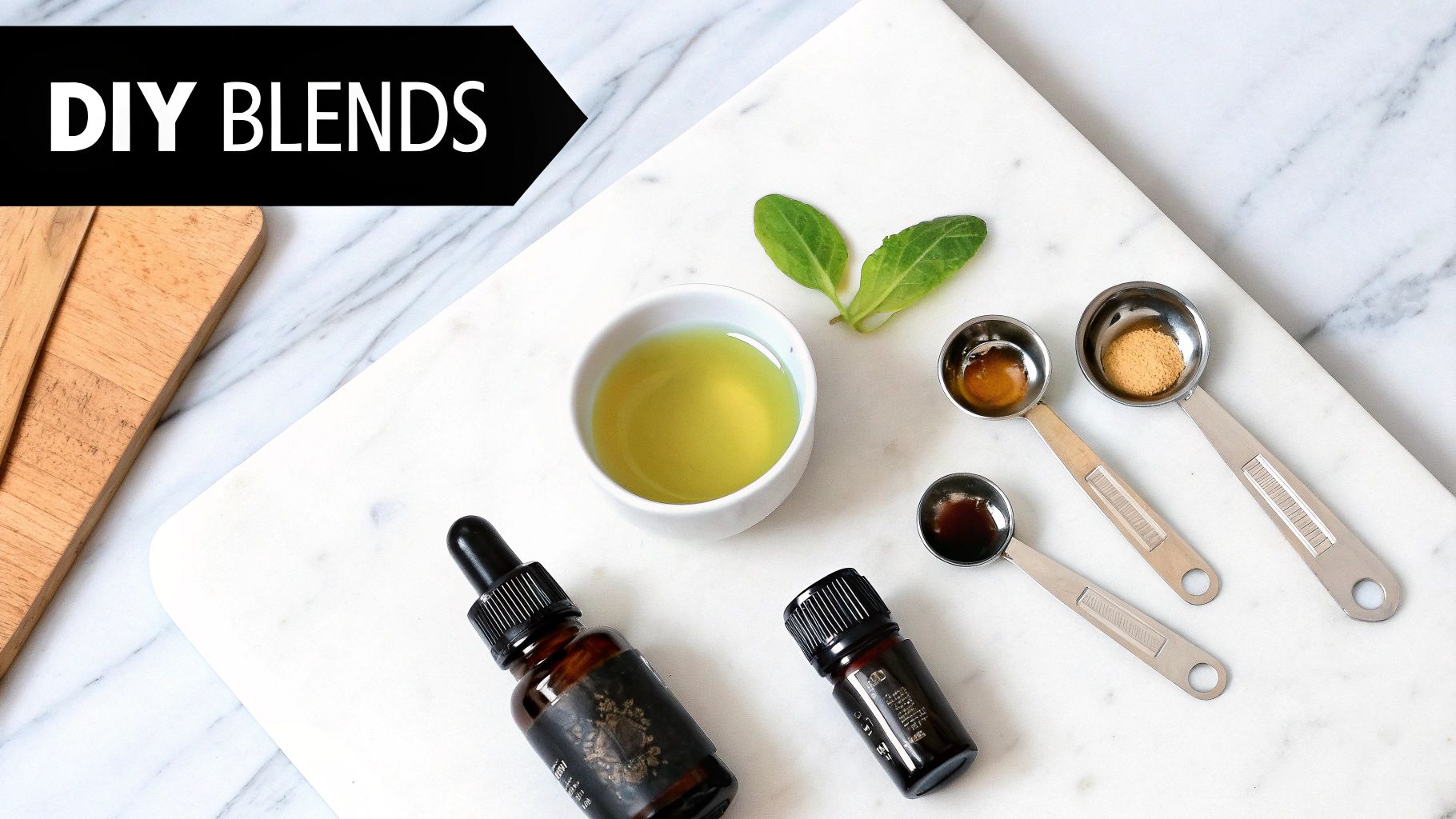
For a safe and effective scalp treatment, the magic number is a 2% dilution. This breaks down to a simple formula: 12 drops of essential oil for every one ounce (30 ml) of carrier oil.
Creating and Applying Your Hair Growth Serum
With your oils picked out, you’re ready to mix up your own custom hair serum.
- Measure Your Carrier Oil: Start by pouring one ounce (roughly two tablespoons) of your carrier oil into a small glass bowl or dropper bottle.
- Add Your Essential Oils: Now for the fun part. Carefully add a total of 12 drops of your essential oil or oils. You could try a blend of 6 drops of rosemary and 6 drops of peppermint for a powerful combination.
- Mix Thoroughly: Close the bottle and give it a gentle shake, or stir if you're using a bowl, to make sure everything is blended together perfectly.
- Application is Key: Part your hair in sections and use a dropper or just your fingertips to apply the oil blend directly onto your scalp. Focus on getting even coverage across the whole area.
- Massage for Success: This step is crucial. Spend a good 3-5 minutes gently massaging your scalp with your fingertips. This isn’t just relaxing—it stimulates blood flow to the follicles, which is vital for growth. To learn more about the technique, check out our guide on how a scalp massage for hair growth can seriously boost your results.
Let the oil work its magic for at least 30 minutes. If you want a more intensive treatment, you can even leave it in overnight. Afterward, just shampoo and condition as you normally would. For best results, consistency is key—try to make this a part of your routine two or three times a week.
Got Questions About Using Essential Oils for Hair? Let's Clear Things Up.
So, you're ready to start using essential oils, but you've got a few questions. That’s a great sign—it means you're being thoughtful about your hair care, and that's exactly what leads to real results. Let's walk through some of the most common queries I hear.
How Long Until I Actually See a Difference?
This is probably the number one question, and for good reason! When you're putting in the effort, you want to know when to expect a payoff. The key here is to think of it like tending a garden; you can't plant a seed today and expect a full bloom tomorrow. Hair growth is a slow, steady process.
Patience and consistency are your two best friends on this journey. Because you're working with your body's natural hair growth cycle, most people start to see noticeable changes in thickness and new growth after about 3 to 6 months of consistent use.
Can I Mix Different Essential Oils Together?
Absolutely! In fact, I highly recommend it. Creating your own custom blend is one of the smartest ways to get the most out of your oils. It lets you tackle several issues at once, creating a powerhouse treatment tailored just for you.
Think of it like building a team of specialists. You could create a fantastic synergy by mixing:
- Rosemary Oil: The circulation booster for waking up follicles.
- Lavender Oil: The calming agent to soothe any scalp irritation.
- Cedarwood Oil: The balancer to keep oil production in check.
Together, they form a well-rounded serum that covers all your bases. The main rule to remember is dilution. Just stick to a safe ratio of about 2-3 total drops of your essential oil blend for every tablespoon of carrier oil.
Are These Oils Safe for Color-Treated Hair?
This is another great question. The answer is generally yes. Since you’re applying the diluted oils directly to your scalp, they shouldn't mess with your hair color or any chemical treatments you've had.
That said, it never hurts to be cautious. A quick patch test on your skin (like behind your ear) and a strand test on a small, hidden section of hair will give you total peace of mind before you go all in.
At PRP For HairLoss, our goal is to give you clear, science-backed guidance for your hair health journey. To explore more resources and learn about advanced treatment options, feel free to visit us online.
 PRP For Hairloss
Leave a comment