PRP: Your Hair Regrowth Journey Starts Here
Experiencing hair loss? See how PRP (Platelet-Rich Plasma) can help. This listicle showcases six compelling PRP hair loss before and after examples, demonstrating its potential to revitalize your hair. Discover how PRP can address male pattern baldness, female diffuse thinning, alopecia areata, enhance transplant results, and combat stress-related or long-term hair loss. Reclaim your confidence and explore the possibilities of PRP for hair regrowth.
1. Male Pattern Baldness Reversal with PRP
Male pattern baldness, a common source of insecurity for many men, can be effectively addressed with PRP (Platelet-Rich Plasma) therapy. This innovative treatment leverages the body's natural healing capabilities to stimulate hair regrowth, particularly in the crown and frontal hairline areas commonly affected by androgenetic alopecia. PRP therapy involves extracting a small amount of the patient's blood, processing it in a centrifuge to isolate the platelet-rich plasma, and then injecting this concentrated solution back into the scalp. The platelets contain growth factors that revitalize dormant hair follicles, promoting hair growth and improving hair density. This approach makes it a popular choice for those seeking a natural and minimally invasive solution to hair loss.
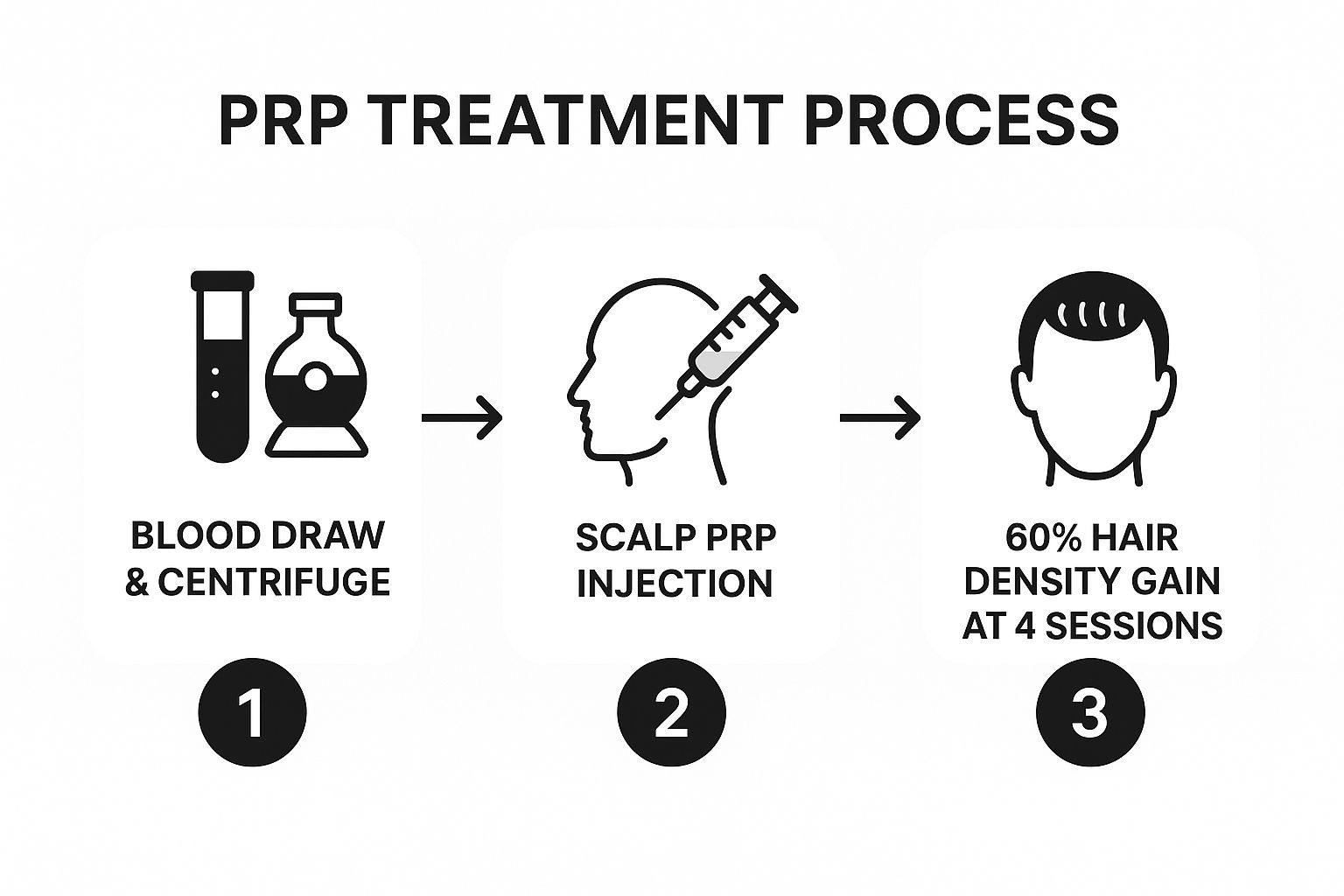
The infographic below details the PRP process for hair restoration.
As shown in the infographic, the key steps include blood draw, PRP preparation via centrifugation, and injection into the scalp. This precise sequence ensures optimal concentration and delivery of growth factors to the targeted areas.
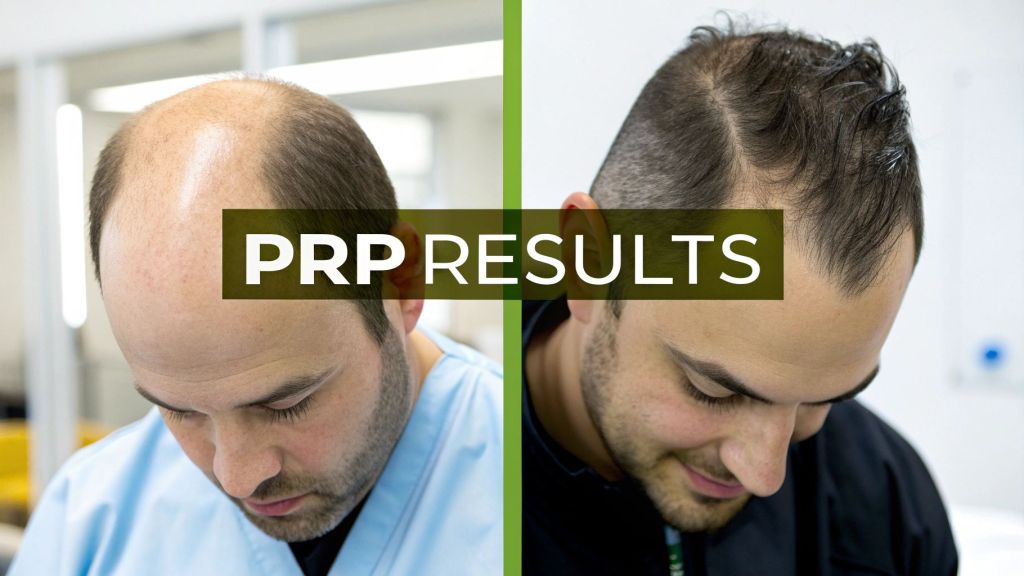
PRP therapy typically requires multiple sessions spread over 3-6 months to achieve optimal results. Progressive improvement, including enhanced hair density and thickness, becomes visible within this timeframe. While results vary based on individual factors, many men experience significant regrowth. For example, a 35-year-old male with Norwood scale 3 baldness saw a 60% density improvement after 4 PRP sessions, while a 42-year-old with a receding hairline experienced visible hairline restoration after 6 months of treatment. These examples showcase the potential of PRP for addressing different stages and patterns of hair loss.
Pros of PRP therapy:
- Autologous treatment: Uses the patient's own blood, minimizing the risk of rejection.
- Minimally invasive: Requires only injections, with no significant downtime.
- Combinable: Can be used in conjunction with other hair loss treatments like minoxidil.
Cons of PRP therapy:
- Multiple sessions: Requires multiple treatments for best results.
- Variable results: Outcomes depend on individual factors.
- Maintenance required: Periodic maintenance sessions are typically needed to sustain results.
- Cost: Relatively higher cost compared to topical treatments.
Tips for maximizing PRP results:
- Combine with minoxidil: Discuss combining PRP with minoxidil with your doctor for potentially enhanced results.
- Avoid blood thinners: Refrain from taking blood thinners before treatment.
- Post-treatment care: Diligently follow post-treatment care instructions provided by your clinician.
- Track progress: Take baseline photos to accurately monitor progress.
PRP therapy earns its place on this list due to its effectiveness, minimally invasive nature, and use of the body's own resources to combat hair loss. While it's not a permanent solution and requires multiple sessions, the potential for significant regrowth and improved hair density makes it a compelling option for men seeking prp hair loss before and after results. Pioneered by experts like Dr. Jeffrey Rapaport, and further popularized by celebrities like Kim Kardashian who brought attention to PRP treatments with "vampire facials," this treatment continues to gain recognition for its potential in hair restoration.
2. Female Diffuse Hair Thinning Treatment with PRP
Female pattern hair loss, characterized by diffuse thinning across the scalp, often affecting the crown and widening the part line, can be effectively addressed with PRP (Platelet-Rich Plasma) therapy. This innovative treatment utilizes the growth factors present in your own blood to stimulate dormant hair follicles and strengthen existing hairs. PRP injections work by concentrating platelets, which are rich in growth factors, from a sample of your blood. This concentrated solution is then injected into the scalp at the areas experiencing thinning. The growth factors in the PRP signal the hair follicles to enter the growth phase, leading to improved hair density and coverage, effectively reducing visible scalp and restoring a fuller appearance. This makes PRP therapy a powerful tool in combating hair loss and achieving noticeable prp hair loss before and after results.
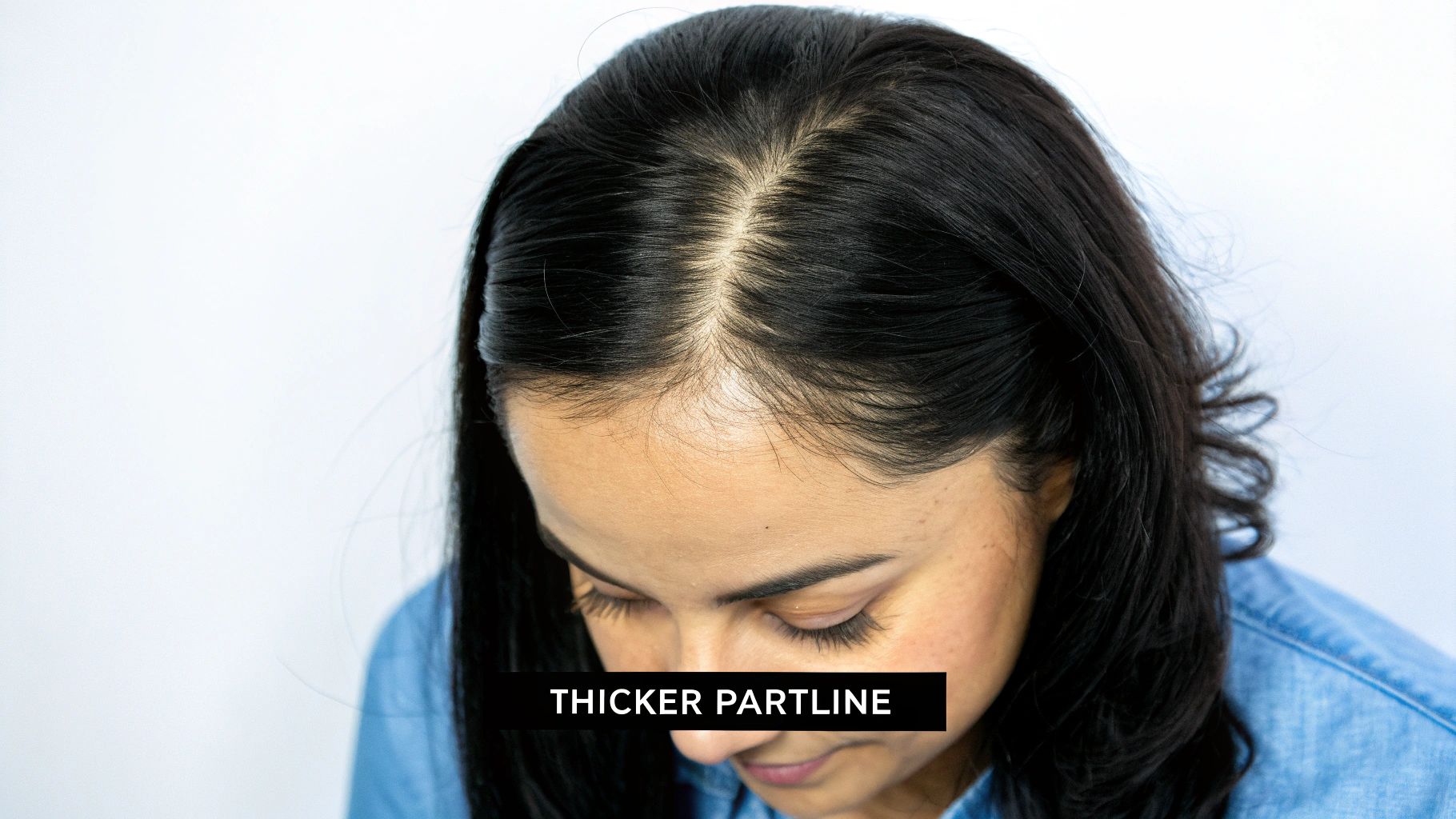
This approach is particularly beneficial for women experiencing hormone-related hair loss, such as post-pregnancy hair shedding or thinning associated with menopause. A typical treatment plan involves 3-4 initial sessions spaced 4-6 weeks apart, with maintenance treatments recommended thereafter to sustain results. For example, a 38-year-old female experiencing post-pregnancy hair loss saw a 40% increase in hair density after just 3 treatments. Another example showcases a 52-year-old menopausal woman who experienced significant improvement in her part line width after 6 months of PRP therapy. While this treatment targets female pattern hair loss, the underlying science of stimulating hair follicles with growth factors can be relevant to men experiencing similar diffuse thinning patterns as well. PRP offers a natural-looking solution without surgical intervention, and the relatively short treatment sessions can often be performed during a lunch break with minimal downtime. Furthermore, it's compatible with ongoing hormone treatments or birth control, offering a versatile solution for women seeking to address their hair loss concerns.
While highly effective for hormone-related female pattern hair loss, PRP therapy is less effective for advanced hair loss where the follicles are completely dormant. It's important to have realistic expectations, as results may plateau after the initial improvement phase, necessitating ongoing maintenance treatments. Some individuals may experience discomfort during the injections, though proper numbing techniques can minimize this.
To maximize the benefits of PRP therapy and ensure optimal prp hair loss before and after results, follow these tips:
- Use sulfate-free hair products post-treatment: This helps protect the treated area and promotes healthy hair growth.
- Continue normal hair care routine the day after treatment: Resuming your usual routine quickly minimizes disruption.
- Avoid chemical treatments (coloring, perming) for 1 week after PRP: This allows the scalp to heal and minimizes potential irritation.
- Schedule treatments during non-menstrual periods for reduced discomfort: Hormone fluctuations during menstruation can increase sensitivity.
PRP therapy has been popularized by hair restoration specialists like Dr. Robin Unger and even celebrities such as actress Alyssa Milano, who openly discussed her PRP treatments for post-COVID hair loss. This growing popularity speaks to the effectiveness and accessibility of this treatment option for those seeking a non-surgical solution for hair loss. This method deserves its place on this list because it offers a natural, effective way to combat a common concern for many women, and can also be a valuable option for men experiencing similar patterns of diffuse thinning.
3. Alopecia Areata Recovery with PRP
PRP therapy offers a promising approach to tackling hair loss, particularly for men experiencing alopecia areata. This autoimmune condition, which causes patchy hair loss, can be distressing and difficult to treat. Seeing noticeable prp hair loss before and after results can be incredibly encouraging for those struggling with this condition. But what exactly is involved, and how effective is it?
Alopecia areata occurs when the immune system mistakenly attacks hair follicles, leading to round or oval bald patches on the scalp, and sometimes even on the beard or body. PRP (Platelet-Rich Plasma) therapy works by harnessing the healing power of your own blood. A small sample of your blood is drawn and then spun in a centrifuge to separate the platelet-rich plasma from the other components. This PRP, which is rich in growth factors and anti-inflammatory proteins, is then injected directly into the affected areas of the scalp. The growth factors stimulate the dormant hair follicles, encouraging regrowth, while the anti-inflammatory properties help to calm the overactive immune response that’s attacking the follicles.
This targeted treatment focuses specifically on the discrete bald patches characteristic of alopecia areata. It combines both anti-inflammatory and regenerative effects, making it a powerful tool against this challenging condition. Treatment protocols often involve more frequent initial sessions, typically spaced 4-6 weeks apart, and may utilize higher concentration PRP formulations for optimal results.
Why Choose PRP for Alopecia Areata?
PRP offers several advantages over traditional treatments for alopecia areata, especially for men. It’s a less aggressive alternative to steroid injections, which can have unwanted side effects. Furthermore, PRP can be effective even in cases resistant to conventional treatments. Importantly, it addresses the underlying autoimmune factors contributing to hair loss, rather than just masking the symptoms. It’s particularly effective for smaller, newer patches, making early intervention key.
Success Stories:
Real-world examples demonstrate the potential of PRP for alopecia areata: A 22-year-old male with a quarter-sized alopecia patch experienced complete hair regrowth after just 4 PRP sessions. Another case involving a 34-year-old man with multiple patches showed an 80% improvement after 6 months of combined PRP and topical therapy. These prp hair loss before and after results illustrate the transformative potential of this treatment.
Pros and Cons:
- Pros: Less aggressive than steroid treatments, can work on cases resistant to conventional treatments, addresses underlying autoimmune factors, particularly effective for smaller, newer patches.
- Cons: Less predictable results compared to androgenetic alopecia treatment, may require combination with other immunomodulatory treatments, higher number of sessions typically needed, not as effective for long-standing alopecia areata.
Tips for Maximizing Results:
- Early Intervention is Key: Begin treatment as soon as possible after the appearance of a patch.
- Track Your Progress: Document patch size regularly with photographs to monitor the effectiveness of the treatment.
- Holistic Approach: Combine PRP with stress reduction techniques, as stress can exacerbate alopecia areata.
- Consider Adjunctive Therapies: Discuss with your doctor the possibility of combining PRP with other treatments like topical immunomodulators.
Influential Figures:
Research by figures like Dr. Jerry Cooley, a prominent researcher in PRP for autoimmune hair disorders, has helped to popularize this treatment. Public figures like Jada Pinkett Smith, who has openly discussed her experiences with alopecia areata, have also raised awareness about available treatment options, including PRP.
If you’re a man struggling with the emotional and cosmetic impact of alopecia areata, PRP therapy may provide a viable solution. Consult with a qualified dermatologist specializing in hair loss to determine if PRP is the right treatment option for you and discuss potential prp hair loss before and after outcomes based on your specific situation.
4. Post-Transplant PRP Enhancement Results
For men seeking to maximize the results of their hair transplant procedure, PRP (Platelet-Rich Plasma) therapy offers a powerful complementary treatment. This approach uses your body's own growth factors to create an optimal environment for newly transplanted follicles to thrive, leading to improved graft survival, faster healing, and enhanced density. PRP therapy administered during and after a hair transplant works by concentrating platelets from your blood, which are rich in growth factors, and injecting them into the scalp. These growth factors stimulate cell regeneration and promote blood vessel formation, nourishing the transplanted hair follicles and encouraging robust growth. This method addresses both the transplanted hair and the surrounding native hair, potentially leading to a fuller, healthier overall appearance.
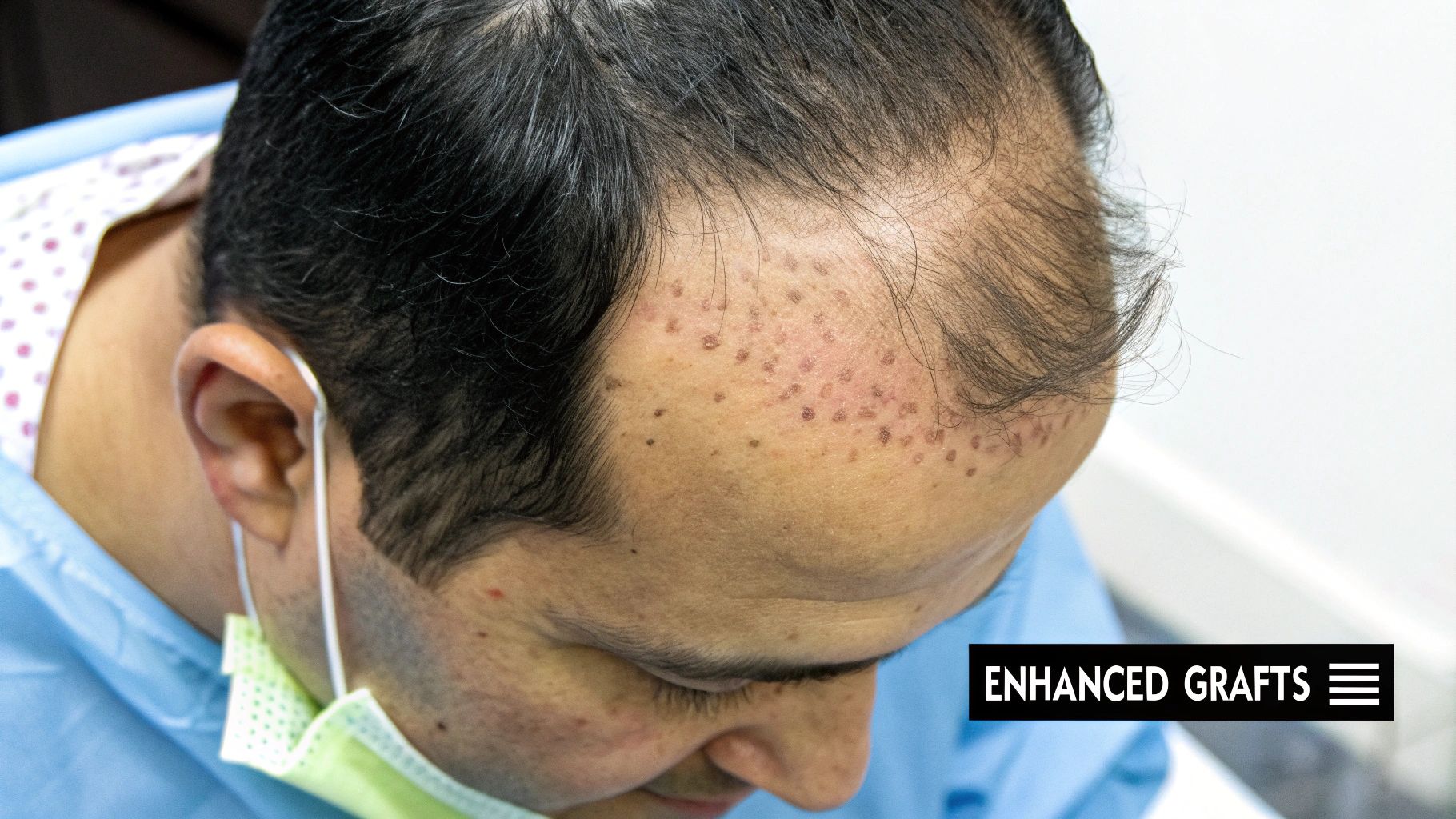
This approach deserves a place on this list due to its potential to significantly improve hair transplant outcomes. The application of PRP directly to the recipient sites during the transplant procedure, followed by strategic follow-up sessions at 1, 3, and 6 months post-transplant, creates a sustained environment conducive to hair growth. Specifically, PRP used in this context aims to enhance graft survival rates, reduce the shedding phase that typically follows a transplant, and improve the overall texture and quality of the transplanted hair. It can also create better density by enhancing both the transplanted and adjacent native hair. For example, a 45-year-old FUE transplant patient utilizing adjunct PRP therapy experienced a 15% higher graft survival rate. Another case, a 38-year-old man, saw visible density enhancement in the crown area that extended beyond the transplanted zone, suggesting a positive impact on existing hair growth.
While the benefits are compelling, it's crucial to consider the pros and cons.
Pros:
- Accelerated Healing: PRP can speed up the healing process by 30-50%, minimizing recovery time.
- Reduced Shedding: The post-transplant shedding phase can be significantly reduced, providing earlier visible results.
- Improved Hair Quality: PRP can contribute to thicker, healthier-looking transplanted hair.
- Enhanced Density: By stimulating both transplanted and native hair, PRP can create a fuller overall appearance.
Cons:
- Added Cost: PRP adds to the already substantial cost of a hair transplant.
- Extra Clinic Visits: Follow-up PRP sessions require additional visits to the clinic during the recovery period.
- Difficult to Isolate Results: It can be challenging to definitively separate the benefits of PRP from the results achieved by the transplant alone.
- Lack of Standardization: PRP protocols can vary between clinics, making it difficult to compare results and ensure consistent treatment.
Tips for maximizing the benefits of post-transplant PRP:
- Schedule the first PRP session concurrently with the transplant procedure itself.
- Maintain consistent follow-up PRP treatments at 30 days, 90 days, and 6 months post-transplant.
- Use gentle, PRP-compatible hair products during the recovery period to avoid irritating the scalp.
- Take standardized photos under consistent lighting conditions to accurately track progress and compare before and after results.
Pioneering figures like Dr. John Diep, a prominent hair transplant surgeon known for his PRP protocols, and Dr. William Rassman, an early adopter of this combination therapy, have popularized the use of PRP in hair restoration. For men considering a hair transplant and looking to optimize their results, PRP therapy represents a valuable option worthy of further investigation. Discuss it with your hair restoration specialist to determine if this approach aligns with your individual needs and goals.
5. Stress-Related Telogen Effluvium Recovery Using PRP
Stress can wreak havoc on your body, and your hair is often a casualty. Telogen effluvium (TE) is a common type of hair loss triggered by severe stress, shock, or trauma, pushing hair follicles into a dormant resting phase. This results in noticeable shedding, thinning, and a significant reduction in hair density. While TE often resolves naturally, it can take anywhere from 6-12 months, leaving you with a frustratingly prolonged period of hair loss. This is where Platelet-Rich Plasma (PRP) therapy can make a significant difference in your "prp hair loss before and after" journey.
PRP therapy leverages the healing power of your own blood. A small sample of your blood is drawn and processed to concentrate platelets, which contain growth factors essential for tissue repair and regeneration. This concentrated PRP is then injected into your scalp, directly targeting the affected hair follicles. For stress-related hair loss, PRP works by reactivating these prematurely dormant follicles and kickstarting the hair growth cycle. This accelerates recovery, allowing you to see improvements in your prp hair loss before and after results much sooner than if you relied on natural recovery alone.
Features and Benefits:
- Treats temporary but dramatic shedding: PRP is specifically effective for acute TE, the type often triggered by sudden stressful events.
- Reactivates dormant follicles: PRP's growth factors stimulate the follicles to re-enter the growth phase.
- Faster recovery: Shortens the recovery timeframe from the typical 6-12 months to 3-6 months.
- Fewer treatments: Typically, only 2-3 PRP treatments spaced 4-6 weeks apart are needed for TE.
Pros:
- Significantly reduces recovery time.
- Highly effective for acute, recent-onset TE.
- Requires fewer treatments compared to chronic hair loss patterns.
- Delivers noticeable before and after results, leading to high patient satisfaction.
Cons:
- Might be unnecessary for mild cases that would resolve naturally.
- Results can sometimes be difficult to distinguish from natural recovery.
- Less cost-effective if your condition would self-resolve.
- Not as effective for chronic stress-induced hair loss without addressing the underlying stress.
Examples of PRP for Telogen Effluvium Success:
- A 29-year-old female experiencing post-COVID TE saw a 70% restoration in hair density after just two PRP treatments.
- A 33-year-old male suffering from stress-related shedding experienced full recovery in 3 months with PRP, compared to the expected 9-month natural timeline. His prp hair loss before and after pictures clearly demonstrated the treatment's effectiveness.
Tips for Maximizing PRP Results:
- Early Intervention: Begin PRP therapy within 2-3 months of noticing increased shedding for optimal results.
- Holistic Approach: Address underlying stress factors through lifestyle changes, stress management techniques, or therapy alongside PRP.
- Nutritional Support: Supplement with biotin and iron if you have deficiencies, as these nutrients are crucial for hair growth.
- Cosmetic Enhancements: Use volumizing products during the recovery phase to improve the appearance of your hair while waiting for full regrowth.
Why PRP for TE Deserves Its Place on the List:
PRP offers a scientifically-backed, effective solution for men experiencing stress-induced hair loss. While TE can be a distressing experience, PRP provides a proactive approach to accelerate recovery and regain your hair density faster, leading to improved confidence and a quicker return to your normal hair growth cycle. The potential to cut the recovery time in half, combined with a relatively low number of required treatments, makes PRP a compelling option for men seeking visible prp hair loss before and after improvements. Remember to consult with a qualified dermatologist specializing in hair loss to determine if PRP is the right treatment for your specific situation.
6. Long-Term PRP Maintenance Results
Witnessing impressive PRP hair loss before and after results often hinges on a commitment that extends beyond the initial treatment phase. This is where long-term PRP maintenance comes into play, a crucial aspect often overlooked when considering this hair restoration therapy. It involves a strategic, ongoing protocol designed to preserve and even enhance the initial gains achieved with PRP, ultimately leading to more sustainable and natural-looking results over time.
After the initial “loading phase” of 3-4 PRP treatments, typically spaced a month apart, maintenance sessions are recommended every 4-6 months. This ongoing approach addresses the progressive nature of hair loss, ensuring that the stimulated follicles continue to thrive and produce thicker, healthier hair. Instead of reaching a plateau and then experiencing regression, consistent PRP maintenance fosters continued improvement in hair density, diameter, and scalp coverage. This is documented through standardized photography over multi-year periods, providing clear visual evidence of the treatment's efficacy.
Why Long-Term Maintenance Matters:
This approach deserves its place on the list because it addresses the long-term reality of hair loss. Unlike a one-time fix, hair loss is an ongoing process influenced by factors like genetics, aging, and hormonal fluctuations. Long-term PRP maintenance tackles this head-on by providing consistent support to the hair follicles, preventing regression of initial gains and promoting further improvement. This creates a more natural, gradual change in hair density and appearance, rather than an abrupt, obviously "treated" look. It also allows for personalized adjustments to the maintenance schedule based on individual responses to the treatment.
Examples of Success:
Documented cases highlight the benefits of this commitment. For example, a 48-year-old male maintained 85% of his initial gains after 3 years with bi-annual PRP treatments. Similarly, a 57-year-old female experienced progressive improvement over 4 years of consistent quarterly treatments, demonstrating the potential for continued growth and density improvement even in later stages of hair loss.
Pros and Cons:
Pros:
- Prevents regression of initial PRP hair loss before and after gains
- Demonstrates cumulative improvement beyond initial results
- Creates more natural, progressive changes
- Allows for personalized protocol adjustments
Cons:
- Significant long-term financial investment
- Requires ongoing commitment to the treatment schedule
- Diminishing returns after 2-3 years for some patients
- Results can be affected by aging and hormonal changes despite treatment
Actionable Tips for Long-Term PRP Maintenance:
- Consistency is Key: Maintain a consistent 4-6 month maintenance schedule as recommended by your physician.
- Document Your Progress: Standardized photography is essential for tracking progress and making informed decisions about treatment adjustments.
- Personalized Approach: Consider adjusting maintenance intervals based on your individual response and results assessments.
- Combination Therapy: Explore combining PRP with at-home treatments like low-level laser therapy (LLLT) between sessions to further enhance and maintain results.
When to Consider Long-Term Maintenance:
Long-term PRP maintenance is ideal for individuals committed to preserving and maximizing their PRP hair restoration results. It is particularly beneficial for those experiencing ongoing hair loss or who desire a more gradual, natural-looking improvement over time. This approach acknowledges that hair loss is a chronic condition requiring ongoing management and proactive measures to achieve lasting results. While it represents a financial and time commitment, the potential for sustained, and even progressive, hair growth makes long-term PRP maintenance a valuable consideration for men seeking a long-term solution to hair loss. Consult with a qualified hair restoration specialist to determine if this approach aligns with your individual needs and goals.
6-Case PRP Hair Loss Results Comparison
| Treatment Type | 🔄 Implementation Complexity | ⚡ Resource Requirements | 📊 Expected Outcomes | 💡 Ideal Use Cases | ⭐ Key Advantages |
|---|---|---|---|---|---|
| Male Pattern Baldness Reversal with PRP | Moderate: multiple sessions over months | Moderate: blood draw, centrifuge, injections | Significant regrowth (up to 60% density gain) after 3-6 months | Men with crown/frontal baldness, Norwood scale 2-4 | Uses autologous blood, minimally invasive, combinable with other treatments |
| Female Diffuse Hair Thinning Treatment | Moderate: 3-4 treatments spaced monthly | Moderate: injection sessions, scalp focus | Visible coverage improvement, ~40% density increase | Women with diffuse thinning, hormonal or stress-related loss | Natural results, minimal downtime, compatible with hormone treatments |
| Alopecia Areata Recovery with PRP | High: frequent sessions, targeted patches | Higher: concentrated PRP, possible adjunct therapies | Variable; ~60-70% response for recent small patches | Autoimmune patchy hair loss, early stage alopecia | Addresses underlying autoimmune inflammation, less aggressive than steroids |
| Post-Transplant PRP Enhancement | Moderate-High: adjunct treatment during & post surgery | High: multiple PRP sessions alongside transplant | Improved graft survival (+15%), faster healing, enhanced density | Hair transplant patients seeking enhanced graft success | Accelerates healing, reduces shedding, improves transplanted & native hair quality |
| Stress-Related Telogen Effluvium Recovery | Low-Moderate: 2-3 treatments over 2-3 months | Moderate: quick treatment sessions | Faster recovery (65% acceleration), visible density gains | Acute, recent-onset telogen effluvium cases | High satisfaction, fewer sessions, accelerates natural recovery |
| Long-Term PRP Maintenance | Moderate: initial loading plus ongoing maintenance | High: recurring sessions every 4-6 months | Sustained & progressive improvement over years | Patients committed to long-term hair health maintenance | Prevents regression, cumulative benefits, customizable protocols |
Ready to Explore PRP? Your Next Steps
Throughout this article, we've explored the transformative potential of PRP therapy for various hair loss conditions, showcasing compelling "prp hair loss before and after" results. From male pattern baldness and female diffuse thinning to alopecia areata and even post-transplant enhancement, PRP offers a promising path towards hair restoration. We've seen how it can help with stress-related telogen effluvium and provide long-term maintenance for sustained hair growth. The key takeaway? PRP can be a powerful tool, regardless of the cause of your hair loss.
Understanding the different applications and potential outcomes of PRP is essential for making informed decisions about your hair restoration journey. If you're looking for other ways to address hair loss or enhance the results of PRP, it's worth exploring other hair treatments as well. The article "Los Mejores Tratamientos para el Cabello en 2025" from mirik beauty offers insights into various treatments for hair loss.
The next step is to connect with a qualified hair restoration specialist. They can evaluate your individual hair loss situation, discuss realistic expectations based on your "prp hair loss before and after" research, and create a personalized treatment plan. This personalized approach is crucial for maximizing the benefits of PRP and achieving your desired results.
Ready to take control of your hair loss and begin your journey toward a fuller, healthier head of hair? Dive deeper into the world of PRP therapy and discover real "prp hair loss before and after" stories at PRP For HairLoss. This comprehensive resource provides evidence-based information, empowering you to make informed decisions about your hair restoration options.


Leave a comment