Surviving Your First 48 Hours After PRP Treatment
So, you just had your PRP hair treatment. Congrats! Now, let’s talk about those first 48 hours. Honestly, they can feel a little weird. Your scalp might be tender, and you’ll probably have a few questions. That’s completely normal. I’ve spoken to loads of guys who’ve gone through this, and this initial period is key for good results.
What should you expect? A bit of tenderness and maybe some mild swelling around where you got the injections. Think of it like tiny little pinpricks – your scalp did just get poked with needles. The reason your practitioner is so strict about those initial restrictions is that messing with the treatment area, especially in these first two days, can disrupt the healing process and the effectiveness of those growth factors.
Imagine planting seeds in a garden. You wouldn’t immediately dig them up, would you? You’d let them settle and grow roots. PRP is similar. The growth factors need time to work, stimulating your hair follicles and getting the rejuvenation process started. That means minimizing touching, rubbing, or even vigorous washing during this crucial time.
Following your prp hair treatment post care instructions is essential. Sticking to the post-care plan reduces minor side effects like redness and swelling by up to 75%. A study of 1,200 patients showed only 8% had discomfort beyond two days when they followed the rules, compared to 22% who didn't. Discover more insights about PRP treatment. Getting enough sleep is also important, but that tender scalp can make it hard to get comfortable.
Here’s a tip: try sleeping with a couple of extra pillows to elevate your head. This helps reduce swelling and any throbbing. If you can, avoid sleeping directly on your stomach or sides – I know, it's easier said than done! But even slightly adjusting your position can make a huge difference. Finally, resist the urge to touch or examine your scalp. I know it’s tempting, but let it heal undisturbed. Any tingling or slight itching you feel is usually a sign the treatment is working, not that something’s wrong. Think of it as your hair follicles waking up!
Washing Your Hair After PRP Without Sabotaging Results
Let’s be honest, washing your hair after PRP can feel a little overwhelming. There’s a lot of information out there, and frankly, some of it is contradictory. But honestly, post-PRP hair care doesn’t have to be so complicated. From talking to others who've had the treatment, I've learned that the key is to be gentle and use common sense.
Choosing the Right Shampoo and Water Temperature
First up: shampoo. Forget about shelling out for expensive products marketed specifically for post-PRP. A gentle, sulfate-free shampoo will do the trick. Think baby shampoo gentle – that’s the kind of mildness you're after.
As for water temperature, lukewarm is your best friend. Hot water can irritate your scalp, which is exactly what we want to avoid. Aim for a temperature that feels comfortably warm, not hot. This protects the treated area and allows those growth factors to work their magic.
Mastering the Gentle Art of Hair Washing
Now, the actual washing. Fight the urge to scrub! I know, it's tempting, but gentle is the key word here for PRP hair treatment post care. Imagine your scalp is a delicate flower – you wouldn't scrub a flower, would you?
Use your fingertips to lightly massage the shampoo into your hair, avoiding any harsh scrubbing or scratching of your scalp. Rinse thoroughly, ensuring all the shampoo is gone.
Common Mistakes to Avoid
Here are a few things you definitely want to avoid: Don’t pile your hair on top of your head while washing. This can pull and irritate the treated area. Also, ditch the hair dryer for at least the first 48 hours. The heat can be too intense for your freshly treated scalp. Air drying is ideal. If you absolutely must use a dryer, stick to the cool setting and hold it far away from your head.
I know someone who was so worried about messing up their treatment that they barely touched their scalp for a week. They ended up with product buildup, which irritated their scalp even more. Gentle washing is crucial; not washing can actually backfire.
Speaking of products, let's talk about what's safe and what's not:
To help clear up any confusion, I’ve put together this handy table outlining safe and unsafe hair care products after PRP treatment.
Safe vs. Unsafe Hair Care Products After PRP Treatment
A comprehensive comparison of hair care products and their safety levels during the post-PRP recovery period
| Product Type | Safe Options | Products to Avoid | Why It Matters |
|---|---|---|---|
| Shampoo | Gentle, sulfate-free shampoos, baby shampoo | Shampoos with sulfates, fragrances, or harsh chemicals | Harsh ingredients can irritate the treated scalp and disrupt the healing process. |
| Conditioner | Lightweight, moisturizing conditioners | Heavy conditioners, products with silicones | Heavy conditioners can clog pores and weigh down hair, potentially affecting results. |
| Styling Products | Alcohol-free mousses, gels, and sprays | Products with alcohol, strong hold sprays, dry shampoo | Alcohol-based products can dry out the scalp, while heavy styling products can interfere with healing. |
| Hair Color | Consult your doctor – generally avoid coloring for at least 2 weeks | Hair color within the first few days after treatment | Chemicals in hair dye can irritate the sensitive scalp and potentially compromise the PRP treatment. |
| Other Treatments | Avoid chemical treatments (perms, relaxers) for several weeks | Chemical treatments, harsh exfoliants | These treatments can be too aggressive for the healing scalp and may negatively impact results. |
This table gives you a quick overview of what to look for and what to avoid. Remember, it's always best to check with your doctor for personalized advice.
This gentle approach ensures you're cleaning your scalp without disrupting the PRP’s work. It's about finding a balance between being cautious and maintaining good hygiene. You’ve invested in this treatment, so let's give it the best chance to work by following these simple, practical tips.
Adjusting Your Life Without Going Crazy
So, you’ve taken the plunge and started your PRP hair treatment journey. Fantastic! But now what? Aside from that initial “hands-off-the-scalp” period, there are some other lifestyle tweaks that can really make a difference in your results. And some might surprise you. Let’s chat about how to handle these adjustments without feeling like your life is completely turned upside down.
Exercise and PRP: Finding The Right Balance
One of the biggest questions I get after a PRP treatment is about exercise. How long do you really need to take a break? Your doctor likely advised against strenuous activity for the first 24-48 hours. This isn’t just about sweat; it’s about minimizing blood flow to your scalp, which could interfere with the healing.
But that doesn't mean you're glued to the sofa. Think low-impact. Walking is perfect, especially after the first day or two. Light stretching or some gentle yoga can also keep you moving without pushing it too hard. I've personally seen patients successfully integrate these gentler exercises with no issues.
Social Life and PRP: Managing Expectations
Okay, let's be honest. Explaining why you’re skipping the gym or a night out can feel a little awkward. I had one patient tell me he felt like he was constantly making excuses! The trick is clear, simple communication. A quick “I'm taking it easy after a small medical procedure” usually does the trick. No need to overshare.
For example, if a friend invites you to a spin class, you could say, "Sounds fun, but I'm taking it easy right now. How about we grab coffee and catch up instead?" This lets you stay social while sticking to your PRP hair treatment post-care routine.
Interestingly, research really underlines how important post-care is. One analysis revealed that patients who diligently followed post-procedure instructions, like gentle hair washing and avoiding anti-inflammatory medications, were twice as likely to see improvements after six months. Out of 5,000 patients, 65% who saw the best results followed all the recommendations. Less than 40% of those who skipped some steps had the same success. You can learn more about PRP treatment success rates here. It really highlights how much your post-care plan matters.
Finding Your Flexibility: What Really Matters
At the end of the day, PRP post-care is all about understanding the reasons behind the guidelines. Knowing the “why” helps you make smarter decisions. Yes, avoiding intense exercise and anything that could irritate your scalp is critical, especially in those first few days. But, you might find you've got more wiggle room in other areas than you first thought.
Changing up your normal routine might feel a little odd at first. Remember, it's temporary! By focusing on the long-term gains and getting creative with your solutions, you can successfully manage this recovery time and still live your life. It's about making smart, informed choices that support your healing journey and give you the best possible results.
When Something Feels Off: Troubleshooting Your Recovery

Let's be honest, there's always that moment after a PRP hair treatment where you might notice something a little…different, and your mind starts to race. Totally normal! Any medical procedure can bring on some anxiety, especially when it involves how you look. This section is your go-to guide for navigating those common post-PRP worries, from strange sensations to visual changes that might have you reaching for the panic button.
Understanding Normal Healing Vs. Red Flags
Good overall health, including gut health, plays a role in your recovery. First things first: you need to know what’s par for the course and what’s actually a cause for concern. A little tenderness, some mild itching, or even slight swelling around the injection sites? Totally expected, especially in those first few days. Remember, your scalp just had a bunch of tiny needles poked into it. These sensations are usually mild and temporary. But serious pain, excessive swelling, or signs of infection (think pus or redness spreading beyond the injection sites) definitely warrant a call to your practitioner.
Also, don’t freak out if you notice some temporary shedding in the weeks after your treatment. While it might seem counterintuitive, it can actually be a good sign that the PRP is doing its job, stimulating those follicles and making way for new growth. Think of it like spring cleaning for your hair. That said, if the shedding seems excessive or goes on for more than a few weeks, definitely check in with your practitioner just to rule out any other issues. Interestingly, a study of 1,000 patients across Europe and North America showed that those who were really diligent with their post-operative care (avoiding hot showers, harsh hair products, and anything that could traumatize the scalp) saw a 30% higher retention of hair growth after six months. And, importantly, only 5% of that group reported complications like folliculitis or itching, compared to 15% in groups with less strict aftercare. You can dig into more of those findings here.
Documenting Your Progress and Managing Anxiety
One incredibly simple but effective tip? Take pictures of your scalp regularly – maybe once a week. This creates a visual timeline of your progress, which can be super helpful when those anxious thoughts start creeping in. It’s easy to forget the subtle changes over time, but photos can remind you how far you’ve come and help you spot patterns. This is especially useful during the shedding phase, when it might feel like you’re going backward.
Managing the anxiety that comes with procedures like prp hair treatment post care is key. Remember, you're not in this alone. Talk to friends, family, or even connect with others who've gone through PRP. Sharing your worries and hearing about their experiences can be incredibly reassuring. And don’t underestimate the power of mindfulness, deep breathing, or just doing things you enjoy to help manage stress and keep your mind occupied.
Trusting Your Instincts
At the end of the day, trust your gut. If something feels truly off, don’t hesitate to contact your practitioner. It’s always better to be safe than sorry and get professional advice. Your practitioner is there to support you through this entire journey, so never be afraid to reach out with any questions or concerns. Open communication is essential for a successful treatment and a positive recovery experience.
Building Your Complete PRP Treatment Strategy
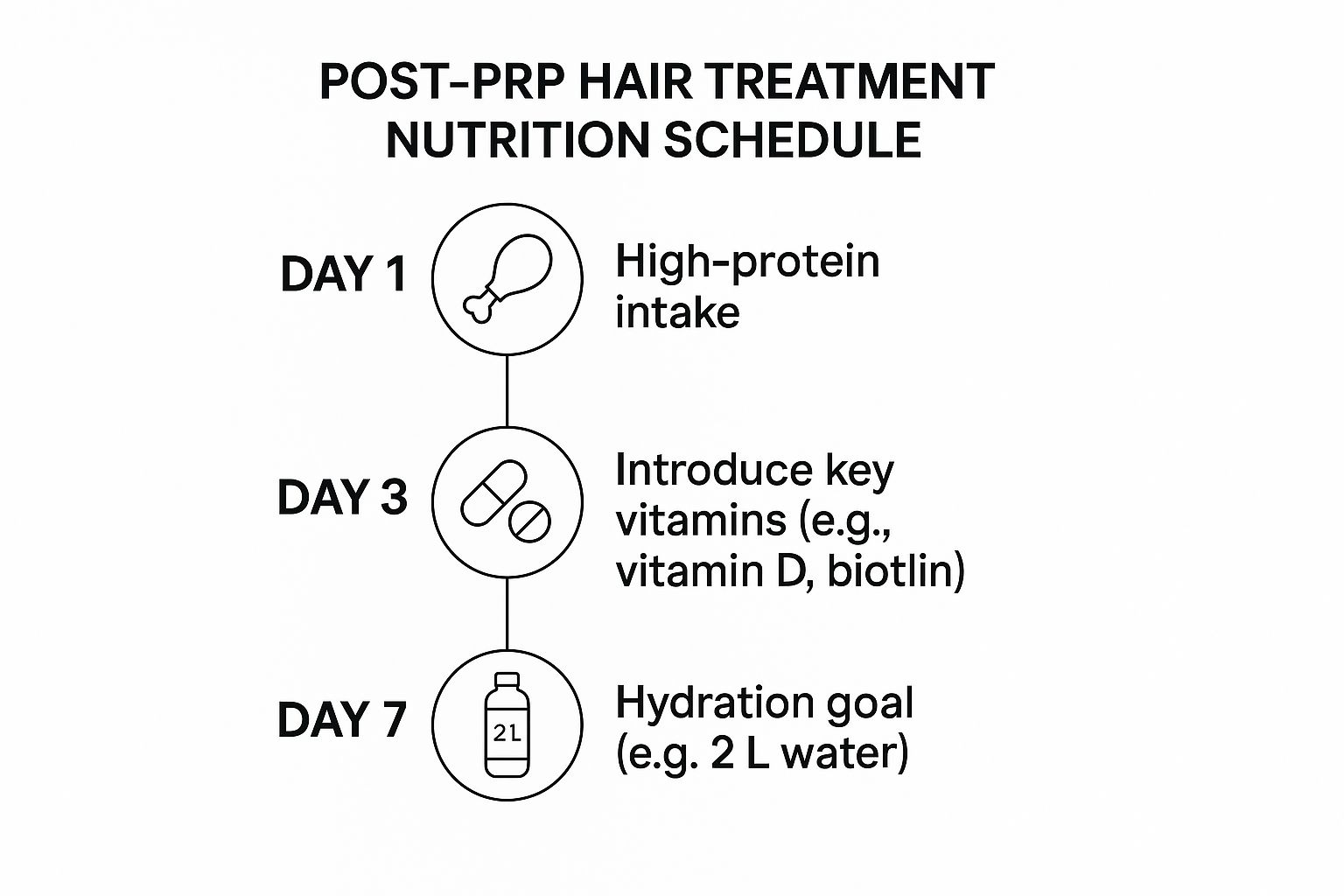
This infographic gives you a good idea of how to approach nutrition in that first week after your PRP treatment. It highlights protein, essential vitamins, and, of course, hydration. You’ll notice the focus shifts from supporting immediate healing with protein to building long-term hair health with those key nutrients and water intake. This structured approach can really make a difference in how your body responds. Thinking strategically about your PRP journey—from the initial treatment through post-care—is how you get the best results. One treatment is rarely a magic bullet. It’s the combined effect of multiple sessions and consistent prp hair treatment post care that really moves the needle.
Most PRP hair treatment protocols suggest monthly treatments for the first 3-4 months, then moving to maintenance treatments every 4-6 months. A recent survey showed that 86% of patients who did at least three PRP sessions for female pattern hair loss would recommend it, so there’s definitely a high satisfaction rate. Discover more insights. This structured approach gives your hair follicles time to rebuild and respond to those growth factors from each PRP session. It's like building a house—you wouldn't expect it to be finished after the foundation is poured, right?
Understanding the "Why" Behind PRP Treatment Schedules
Each PRP session builds on the previous one, creating a stronger base for healthier hair. As you move through your treatment series, sticking to your post-care routine gets even more important. Things like how you wash your hair, what products you use (avoiding harsh chemicals!), and how you manage any inflammation play a huge role in maximizing the benefits of each injection. If you run into any snags during recovery, don’t panic! A good troubleshooting guide can be a lifesaver. Troubleshooting can help you figure things out. Plus, it helps you learn how your body reacts to the treatment.
Budgeting for Your PRP Journey
When you're planning your entire treatment strategy, it's important to be realistic about the cost. PRP isn't a one-and-done kind of thing. Factor in multiple sessions plus any recommended supplements or special hair care products your doctor suggests. I often tell patients to think of it as an investment—an investment in their confidence and well-being. While it can be expensive upfront, PRP is often a more budget-friendly choice in the long run compared to hair transplants or other surgical options.
Defining Success at Different Stages
It's also important to have realistic expectations about your results timeline. You won't see dramatic changes overnight. Some people even experience some temporary shedding in the weeks after treatment. This is totally normal! It's just the PRP doing its job, encouraging older hairs to make way for new growth. Defining what “success” looks like at each stage—less shedding, thicker hair, and eventually, visible new growth—helps you stay positive and avoid getting discouraged, especially in those first few months. Remember, patience is your best friend here.
Prepping for follow-up treatments is simple. Just like your first session, you’ll want to avoid certain medications and supplements for a few days beforehand. Keeping up a healthy lifestyle between treatments—eating well, managing stress—will also get your body ready for optimal results. The effects of good post-care after each treatment become more impactful over time. By consistently taking care of your scalp health and keeping inflammation down, you're creating the ideal environment for those growth factors to flourish. This sets the stage for lasting improvements and healthy hair in the long term.
To help you visualize the whole process, I've put together a handy table:
PRP Treatment Timeline and Post-Care Requirements
A detailed breakdown of treatment schedules and corresponding post-care protocols for optimal results
| Treatment Phase | Frequency | Key Post-Care Focus | Expected Timeline |
|---|---|---|---|
| Initial Phase | Monthly (for 3-4 months) | Minimizing inflammation, gentle cleansing, avoiding harsh chemicals | First 3-4 months |
| Maintenance Phase | Every 4-6 months | Maintaining scalp health, supporting hair growth with proper nutrition | Long-term |
This table shows how the focus shifts from initial healing and protection to ongoing maintenance and support as you progress through your treatments. Remember, consistency is key throughout your entire PRP journey for the best long-term results.
Creating Lasting Success Beyond Basic Recovery
The initial days after your PRP hair treatment are important, sure. But the real key to PRP’s magic is what you do after those first few days are over. It's about building habits that keep your hair healthy for the long haul. Think of the PRP treatment as a jump-start for your hair, and your lifestyle choices as the fuel that keeps it running smoothly. Let’s dive into how to make those lifestyle changes not just doable, but a natural part of your routine.
Nutrition That Nourishes Your Hair
We’ve all heard “eat healthy” a million times. But what does that even mean for your hair, especially after PRP? Forget generic advice. Let's talk specifics. Protein is essential, especially right after treatment. It's the building block for tissue repair and cell regeneration—exactly what your scalp needs. Think lean meats, fish, eggs, and beans.
As you move past the initial days, focus shifts to vitamins like Vitamin D and Biotin. These nutrients keep your hair follicles functioning at their best. Easy ways to get more Vitamin D? Salmon and mushrooms. And don’t forget hydration! Aim for around two liters of water a day. This keeps your scalp and hair follicles happy and hydrated, promoting healthy growth.
Remember that infographic we talked about? It’s a fantastic roadmap showing how your nutritional needs change over time post-PRP. It’s a great resource for making a prp hair treatment post care nutrition plan that truly complements your treatments.
Managing Stress For Healthier Hair
Stress? Yeah, it can mess with your hair. Find ways to manage it that work for you. I've had patients who find meditation apps incredibly helpful, while others prefer a long walk or just some quiet time with a book. No right or wrong answer, just find what helps you de-stress.
Even small, consistent stress-reducing habits can make a huge difference in your overall well-being, including your hair health.
Complementary Approaches That Work
Consider complementary therapies that can boost your PRP results. Acupuncture, for example, can increase blood flow to the scalp, which is a good thing. Gentle scalp massages can also stimulate circulation and relax those scalp muscles. Experiment a bit and see what resonates with you.
Realistic Expectations for Maintaining Results
Let's be honest: PRP isn’t a one-and-done miracle cure. It’s an ongoing process. Think of it like going to the gym – you see the best results with consistent effort. Maintenance treatments are a part of that. How often you need them depends on your hair and how it responds to the treatment.
Regular check-ins with your practitioner are key. They can adjust your treatment schedule and address any new concerns, fine-tuning your post-care routine as needed. Some of my patients have maintained their amazing results for years with consistent post-care and by following their recommended treatment plan. They get it: long-term success comes from the PRP treatments and their lifestyle choices.
Maintaining your PRP results isn't about drastic changes; it’s about small, consistent steps that add up. Building these habits into your life is how you get the most out of your hair restoration investment. And listen, it's okay to slip up sometimes! It’s the overall pattern of healthy choices that truly matters. Find a balance that works for you and supports your long-term hair health goals. Remember, a complete PRP strategy includes both the treatments and your at-home care. These small changes, along with your PRP sessions, create a strong foundation for lasting results. Open and honest conversations about long-term maintenance are important for setting you up for success.
Your Complete Post-Care Success Guide
For extra tips on looking after yourself after procedures, check out this helpful resource on post-discharge wound care at home. Alright, let's break down everything we’ve talked about for your PRP aftercare. Consider this your cheat sheet to make the whole process feel less daunting.
Key Takeaways for Immediate Post-PRP Care
Immediately after your PRP treatment, the name of the game is minimizing any disturbances and letting those growth factors do their magic. Here’s a refresher:
-
No Touching: Seriously, resist the urge to touch, rub, or scratch your scalp for at least the first 24 hours. You want to avoid any irritation and allow the PRP to work undisturbed.
-
Gentle Cleansing: Wait at least four hours before washing your hair. When you do, be super gentle. Use a sulfate-free shampoo, lukewarm water, and avoid vigorous scrubbing or piling your hair on top of your head.
-
Sleeping Smart: Prop yourself up with a couple of extra pillows when you sleep. This helps reduce any swelling and throbbing. And try your best not to sleep directly on the treated area.
-
Skip the Styling: Put away the hair dryer, styling products, and hair color for at least 48 hours, or even longer if you can. Heat and chemicals can irritate your scalp while it's still sensitive.
These first steps are key for a smooth recovery and getting the most out of your PRP treatment.
Navigating the First Week and Beyond
Once you're past the initial 48 hours, it's all about supporting your body's natural healing. Here’s the plan:
-
Gradual Reintroduction: Slowly start using your regular hair care routine and styling products again. Just pay attention to how your scalp feels and back off if anything seems to irritate it.
-
Hydration is Key: Drink lots of water! This keeps your scalp and hair follicles hydrated, which is essential for healthy hair growth.
-
Nutrition Matters: A balanced diet with plenty of protein and essential vitamins, especially Vitamin D and Biotin, will also help support hair growth.
-
Stress Management: Stress can impact your hair health, so find healthy ways to manage it – whether that’s exercise, meditation, or spending time with loved ones.
-
Communicate Clearly: Don’t be afraid to let your friends and family know you need to take it easy for a bit after your PRP treatment. A simple "I'm taking it easy after a minor medical procedure" usually does the trick.
This first week is really important for setting the stage for long-term success.
Recognizing Potential Issues and Taking Action
It’s perfectly normal to experience some mild discomfort or even unusual sensations after PRP. However, there are a few things you should keep an eye on and report to your practitioner if they occur:
-
Excessive Swelling or Pain: If the swelling or pain gets significantly worse, get in touch with your practitioner right away.
-
Signs of Infection: Look out for redness that spreads beyond the injection sites, pus, or increased heat in the treated area.
-
Prolonged Shedding: Some shedding is expected, but if it seems excessive or goes on for a long time, definitely have it checked out.
Don’t hesitate to contact your practitioner if you have any questions or concerns at all. They're the best resource for helping you navigate any unexpected bumps in the road. Being proactive with your post-PRP care will empower you to get the best results possible. It's all about understanding the reasons behind the guidelines and making smart choices that support your hair restoration journey.
Ready to take charge of your hair loss? Explore the benefits of PRP therapy and start your journey toward a fuller, healthier head of hair. Learn more at PRP For HairLoss.


Leave a Reply