The Science Behind PRP Hair Treatment Success
Platelet-Rich Plasma (PRP) hair treatment offers a promising solution for hair loss by utilizing your body's natural healing abilities to stimulate hair growth. The process involves drawing a small blood sample, isolating and concentrating the platelets, and then injecting this PRP into the scalp. But what makes this treatment so effective?
The success of PRP treatment hinges on the growth factors within platelets. These cells contain a potent mix of proteins crucial for tissue repair and regeneration. Platelet-derived growth factor (PDGF) and transforming growth factor-beta (TGF-β) stimulate cell growth and differentiation. Vascular endothelial growth factor (VEGF) promotes new blood vessel formation, enhancing blood supply to hair follicles. This improved circulation delivers essential nutrients and oxygen, fostering a healthier environment for hair growth. PRP treatment utilizes the principles of regenerative medicine, similar to applications of cell-based therapy, harnessing the body's inherent healing mechanisms to encourage hair regrowth.
How PRP Impacts the Hair Growth Cycle
PRP injections directly target hair follicles, the structures that produce hair. The growth factors in PRP activate inactive or dormant follicles, prompting them to re-enter the anagen phase, the active growth phase of the hair cycle. This leads to increased hair production and density. These growth factors can also extend the anagen phase, resulting in longer, thicker hair. PRP can also stimulate stem cells within the follicles, further contributing to hair regeneration.
PRP treatment has garnered attention for its effectiveness. Statistical analysis from meta-analyses demonstrates that PRP injections can significantly increase hair count per square centimeter. One study found a mean difference (MD) of 38.75, with a 95% confidence interval (CI) of 22.22–55.28, and a P-value less than 0.00001, indicating a substantial improvement in hair density after PRP treatments. This suggests PRP offers a promising, minimally invasive alternative for those experiencing hair loss. More detailed statistics can be found here.

Evolution of PRP Therapy
Initially used in fields like orthopedics and wound healing, PRP's regenerative properties were eventually applied to hair restoration. This demonstrates the versatility of the therapy and its ability to address various medical issues. Today, PRP hair treatment is a popular procedure for those seeking a natural and effective solution for hair loss. Understanding the science behind PRP provides insights into how it works and why its popularity continues to grow.
What Happens During Your PRP Hair Treatment Journey
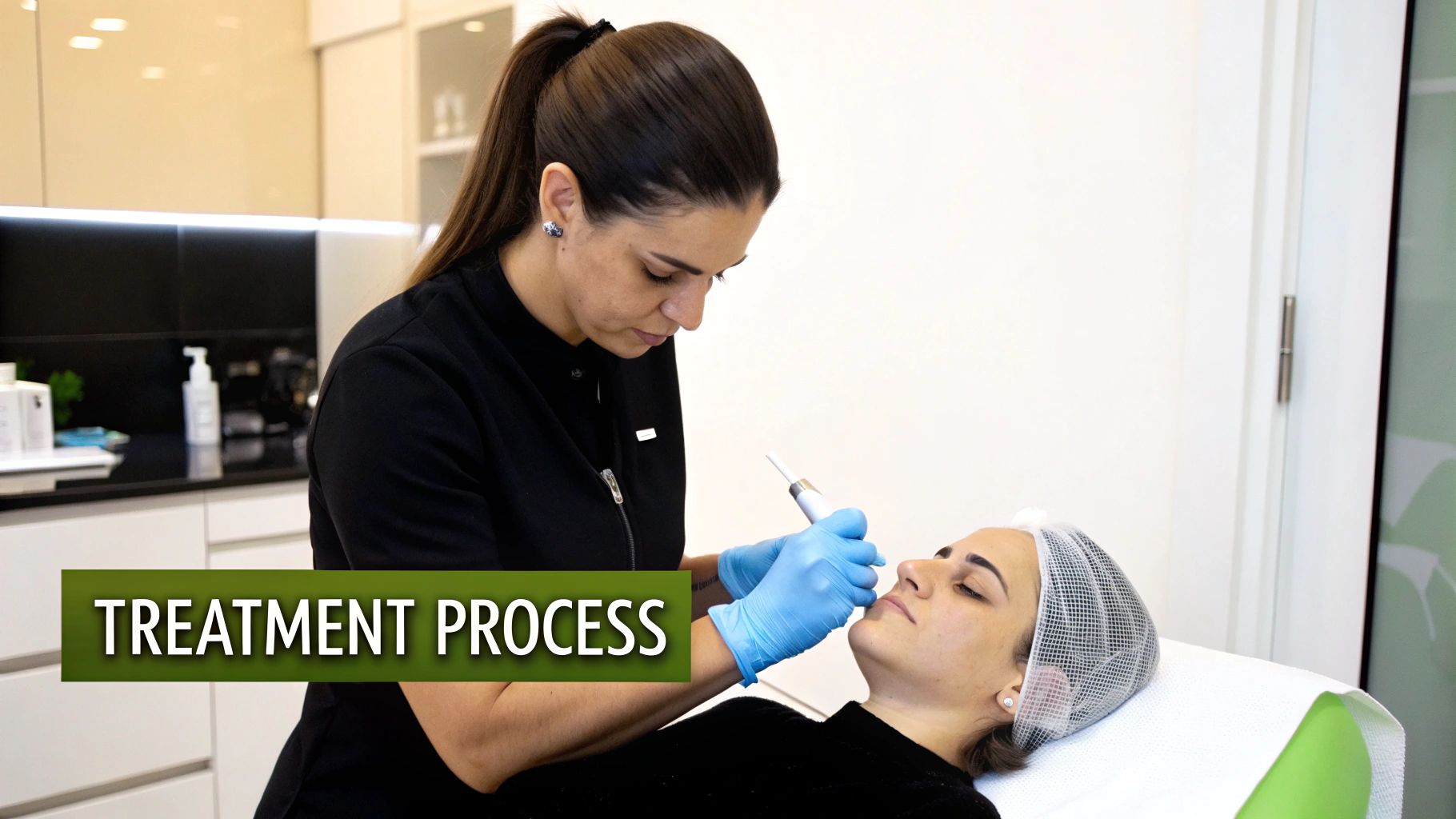
A PRP hair treatment journey is a straightforward process. Understanding each step can help you feel more comfortable and set realistic expectations for this popular hair restoration method. Let's explore what a typical PRP treatment looks like from beginning to end.
Initial Consultation and Blood Draw
Your journey starts with a consultation. A medical professional will assess your hair loss, discuss your goals, and determine if PRP treatment is right for you. This initial assessment is key to tailoring the treatment to your individual needs. A small blood sample will then be taken, much like a routine blood test. This is a quick and generally painless procedure.
The following table outlines the typical PRP hair treatment process:
PRP Hair Treatment: Step-by-Step Process
A breakdown of what happens during each stage of the PRP hair treatment procedure
| Treatment Stage | What Happens | Duration | Patient Experience |
|---|---|---|---|
| Initial Consultation & Blood Draw | Medical professional assesses hair loss and draws a small blood sample. | 15-30 minutes | Generally painless, similar to a routine blood test. |
| PRP Preparation | Blood is placed in a centrifuge to separate the PRP. | 10-15 minutes | No patient involvement during this stage. |
| PRP Injection | PRP is injected into targeted areas of the scalp. | 20-30 minutes | May experience a mild tingling sensation. |
| Post-Treatment | Patient is free to return to normal activities. | N/A | Minimal downtime, possible mild redness or swelling. |
| Follow-Up & Maintenance | Subsequent treatments and maintenance sessions as needed. | Varies | Ongoing treatments help maintain results. |
This table summarizes the key steps involved in a typical PRP treatment, providing a clear overview of the timeline and patient experience.
PRP Preparation: Concentrating the Healing Power
After the blood draw, the sample is placed in a centrifuge. This machine spins rapidly, separating the blood components and isolating the platelet-rich plasma (PRP). PRP contains a high concentration of growth factors, which are essential for stimulating hair follicles. This concentration process ensures the injected solution is rich with the components necessary for hair growth.
The PRP Injection Process: Precise Targeting for Optimal Results
Once the PRP is prepared, it’s carefully injected into targeted areas of the scalp experiencing thinning or hair loss. The injections stimulate dormant hair follicles and encourage new growth. Most patients experience minimal discomfort, often describing it as a mild tingling. The entire injection process typically takes less than an hour.
Post-Treatment and Recovery: Quick Return to Normal Activities
Following your PRP hair treatment, you can typically resume your normal activities immediately. There's minimal downtime, making it easy to fit the treatment into your schedule. Some mild redness or swelling at the injection sites is possible, but it usually subsides quickly.
Follow-Up Treatments and Maintenance: Sustaining Your Results
PRP hair treatment generally involves a series of sessions spaced several weeks apart. The ideal number and frequency of these sessions will vary based on individual factors like the degree of hair loss and your response to the treatment. Maintenance treatments are often recommended to sustain long-term results and ensure continued hair growth. This ongoing approach maximizes the treatment's effectiveness, helping you achieve your hair restoration goals.
The Evidence: Does PRP Hair Treatment Actually Work?
Beyond the anecdotal excitement, what does scientific research say about PRP hair treatment’s effectiveness? This section dives into clinical studies, exploring their most compelling findings while also acknowledging factors that influence individual results.
Clinical Studies and Findings
Numerous studies suggest that PRP hair treatment can indeed promote hair growth, showing particular promise for people experiencing androgenic alopecia (male or female pattern baldness). One randomized, placebo-controlled study found that patients receiving PRP injections saw a mean increase of 33.6 hairs in the target area. They also experienced a mean increase in total hair density of 45.9 hairs per square centimeter after only three treatment cycles.
This significant improvement in hair regrowth and density was statistically significant compared to the control group. The study also reported no major adverse effects during or after treatment. More detailed statistics can be found here.
Further research indicates PRP injections can also improve hair shaft thickness and the duration of the anagen phase (the active growth stage of the hair cycle). This means PRP can stimulate new hair growth and improve existing hair quality.
Factors Influencing PRP Success
While PRP therapy shows promising results, individual outcomes vary. Several factors influence treatment effectiveness:
-
Stage of Hair Loss: PRP is generally most effective in the early stages of hair loss, when hair follicles are still active.
-
Overall Health: A healthy scalp and body provide the optimal environment for hair growth. Nutritional deficiencies or underlying health conditions can affect results.
-
Treatment Protocol: Consistency with the recommended treatment schedule and the expertise of the provider both play key roles in maximizing outcomes.
Honest Assessment of Limitations
It’s important to acknowledge that PRP hair treatment isn’t a guaranteed cure for all types of hair loss. Conditions like long-term scarring alopecia, where hair follicles are completely destroyed, may not respond well to PRP. While side effects are generally minimal, some people experience mild discomfort, redness, or swelling at the injection sites.
Translating Clinical Data into Practical Expectations
Understanding clinical measurements, like hair count and density, helps set realistic expectations. PRP can lead to noticeable improvements, but results are gradual and may not be immediately visible. Most patients start seeing initial changes within a few months, with more significant improvements over time with continued treatment.
To help understand how PRP compares to other hair loss solutions, take a look at the following table:
PRP Hair Treatment vs. Other Hair Loss Solutions
Comparison of PRP with other common treatments for hair loss
| Treatment | Effectiveness | Invasiveness | Side Effects | Treatment Duration | Cost Range |
|---|---|---|---|---|---|
| PRP Therapy | Moderate to High (for androgenic alopecia) | Minimally invasive | Mild discomfort, redness, swelling | Multiple sessions over several months | Varies, generally moderate to high |
| Minoxidil (Rogaine) | Moderate | Topical application | Scalp irritation, dryness | Ongoing, daily application | Relatively low |
| Finasteride (Propecia) | Moderate to High (for male pattern baldness) | Oral medication | Sexual side effects, decreased libido | Ongoing, daily medication | Moderate |
| Hair Transplant Surgery | High | Invasive surgery | Scarring, infection | Single session, but recovery can take several weeks | High |
| Low-Level Laser Therapy (LLLT) | Low to Moderate | Non-invasive | Minimal side effects | Multiple sessions over several months | Moderate |
As this table demonstrates, PRP offers a balance between effectiveness and invasiveness, making it a compelling option for many individuals. It's crucial to consult with a qualified medical professional to determine the most appropriate hair restoration approach based on your unique situation.
Are You an Ideal Candidate for PRP Hair Treatment?
PRP hair treatment isn't a one-size-fits-all solution for hair loss. Whether it's right for you depends on several factors, including your hair loss pattern, its progression, and your overall health. Let's explore the key elements that contribute to successful PRP treatment outcomes.
Factors Influencing PRP Treatment Success
Several factors influence how well someone responds to PRP hair treatment. The stage of hair loss is particularly important. PRP is generally most effective in the early stages of thinning, especially with androgenic alopecia. During these early stages, hair follicles are still active, though miniaturizing. PRP can help revitalize these follicles and encourage new growth.
Your overall health also plays a significant role. Just as a healthy garden helps plants thrive, a healthy scalp and body provide the optimal environment for hair growth. Good nutrition, stress management, and addressing any underlying health concerns all contribute to the best results. This means individuals with certain blood disorders or those taking specific medications may not be suitable candidates.
Choosing a skilled and experienced provider who employs proper PRP processing techniques is another critical factor. Different clinics use various methods for PRP preparation, which affects the concentration of growth factors in the final injection. Higher growth factor concentrations are generally associated with better outcomes.
Ideal Candidates for PRP Hair Treatment
So, who makes a good candidate for PRP? Individuals experiencing early-stage genetic hair loss often see excellent results. In these cases, PRP can effectively slow down the progression of thinning and stimulate new hair growth. Those with diffuse thinning, as opposed to completely bald patches, also tend to respond well. Diffuse thinning suggests that hair follicles are still present and potentially receptive to PRP therapy.
Conditions Less Responsive to PRP
PRP may not be the best solution for every type of hair loss. People with long-term scarring alopecia, where hair follicles are completely gone, are unlikely to see benefits from PRP. Similarly, those with certain medical conditions or taking specific medications might not be suitable candidates. For instance, individuals with bleeding disorders or those on anticoagulant medication may not be eligible due to the risk of increased bleeding.
Realistic Expectations and Consultations
It's important to have realistic expectations about PRP treatment. While it can be highly effective, it's not a quick fix. Results appear gradually and vary from person to person. A consultation with a qualified medical professional is essential to discuss your individual situation and determine if PRP is the right choice for you. They can evaluate your hair loss, review your medical history, and discuss potential outcomes, ultimately helping you make an informed decision and avoid investing in treatments that might not address your specific needs. A thorough consultation will guide you toward the best course of action for your hair restoration journey.
Real Patient Experiences With PRP Hair Treatment
Clinical studies provide valuable data. However, to truly understand the impact of PRP hair treatment, it's essential to explore real patient experiences. This section delves into these authentic journeys, highlighting both the successes and the challenges individuals have encountered.
Transformations in Hair and Self-Confidence
Many patients undergoing PRP hair treatment report significant improvements in hair density, leading to increased self-confidence. Some describe dramatic regrowth in areas previously thinned by hair loss. These individuals often share stories of feeling comfortable styling their hair in ways they hadn't been able to for years, demonstrating the positive psychological impact of hair restoration.
It's crucial to remember that individual results vary. Not everyone experiences a complete restoration. Some patients observe more subtle improvements, such as reduced shedding or increased hair thickness. Understanding this range of possible outcomes is vital for setting realistic expectations before starting PRP treatment.
Regarding patient satisfaction, PRP hair treatments are generally viewed positively. A Cleveland Clinic study involving 20 patients receiving PRP injections for androgenic alopecia demonstrated improvements in hair satisfaction and social well-being. You can learn more about patient satisfaction with PRP treatments here.
The Emotional Journey of Hair Regrowth
Hair regrowth can be an emotional process. Many patients initially express skepticism about PRP's effectiveness. This often transforms into excitement and hope as they begin to see new hair growth. The first glimpse of new hair in previously bare areas frequently marks a turning point in their PRP journey, providing a tangible sign of progress.
Common Patient Experiences and Timelines
Candid interviews and testimonials offer insights into the typical PRP treatment experience. Most patients report minimal discomfort during the injections, often describing the sensation as a mild tingling. Recovery is generally swift, allowing most individuals to resume normal activities immediately.
The timeline for visible results varies. Many patients start to see changes within 2-3 months, typically marked by reduced shedding and the emergence of finer hairs. More substantial improvements in density and thickness generally take longer, often becoming noticeable after 6-12 months.
This overview of patient experiences, encompassing both emotional and physical aspects, aims to provide potential PRP candidates with the information needed to make informed decisions and approach treatment with realistic expectations.
Navigating PRP Hair Treatment Costs and Provider Selection
Making a smart investment in your hair involves understanding both the financial commitment and selecting the right provider for PRP hair treatment. This section explores the costs and provides guidance on identifying a qualified, reputable provider.
Understanding PRP Hair Treatment Costs
PRP hair treatment costs vary, typically ranging from $300 to $1,500 per session. Several factors contribute to this range, including the provider's location and experience, along with the specific PRP processing techniques used. Some clinics utilize advanced PRP systems, like the EmCyte Pure PRP II, which can yield higher concentrations of growth factors, potentially justifying a higher cost. The total number of sessions required also impacts the overall cost, as most patients require multiple treatments spaced several weeks apart.
Justifying Premium Pricing vs. Unnecessary Markup
While some price differences reflect legitimate variations in quality, it's crucial to distinguish between justifiable premium pricing and unnecessary markups. A higher price doesn't guarantee better results. Legitimate factors influencing cost include:
- Advanced PRP Processing Methods: Clinics using advanced systems like the Arthrex ACP Double Syringe System to isolate and concentrate platelets may charge more. These systems often yield higher growth factor concentrations, potentially improving outcomes.
- Provider Experience and Expertise: Highly experienced and specialized providers may command higher fees. Their expertise can ensure proper treatment administration and personalized care.
- Clinic Location and Overhead: Clinics in prime locations or with higher operating costs may have higher prices.
Evaluating Provider Credentials and Experience
Choosing the right provider is essential for a successful PRP hair treatment journey. Consider these factors:
- Board Certification: Select board-certified dermatologists or plastic surgeons specializing in hair restoration. Board certification from organizations like the American Board of Dermatology signifies rigorous training and education.
- Experience with PRP: Ask about the provider's specific experience with PRP hair treatment. How many procedures have they performed, and what are their typical patient outcomes?
- Positive Patient Reviews: Check online reviews and testimonials for insights from other patients. Platforms like RealSelf can be helpful resources.
Red Flags to Watch Out For
Be cautious of providers who:
- Promise Guaranteed Results: Hair growth is complex, and no provider can guarantee specific outcomes.
- Pressure You into Treatment: A reputable provider will assess your needs and discuss options without pressure.
- Lack Transparency About Costs: Ensure the provider is upfront about all costs, including per-session prices, the number of sessions typically required, and any additional fees.
Insurance Coverage and Payment Options
PRP hair treatment is generally considered cosmetic and is typically not covered by insurance. However, some clinics offer financing or payment plans. Discuss these options during your consultation.
Evaluating PRP Processing Methods
Ask about the clinic's PRP processing methods. The gold standard involves achieving a platelet concentration several times higher than whole blood. Inquire about the specific system used and the typical platelet concentration achieved.
Making Informed Decisions for Successful PRP Treatment
By understanding the factors affecting PRP treatment costs and provider selection, you can make informed decisions to maximize your investment and improve your chances of achieving successful results. Thorough research and careful provider evaluation are crucial for a positive PRP treatment experience.
Ready to learn more? Visit PRP For HairLoss to explore this hair restoration solution.
 PRP For Hairloss
Leave a comment