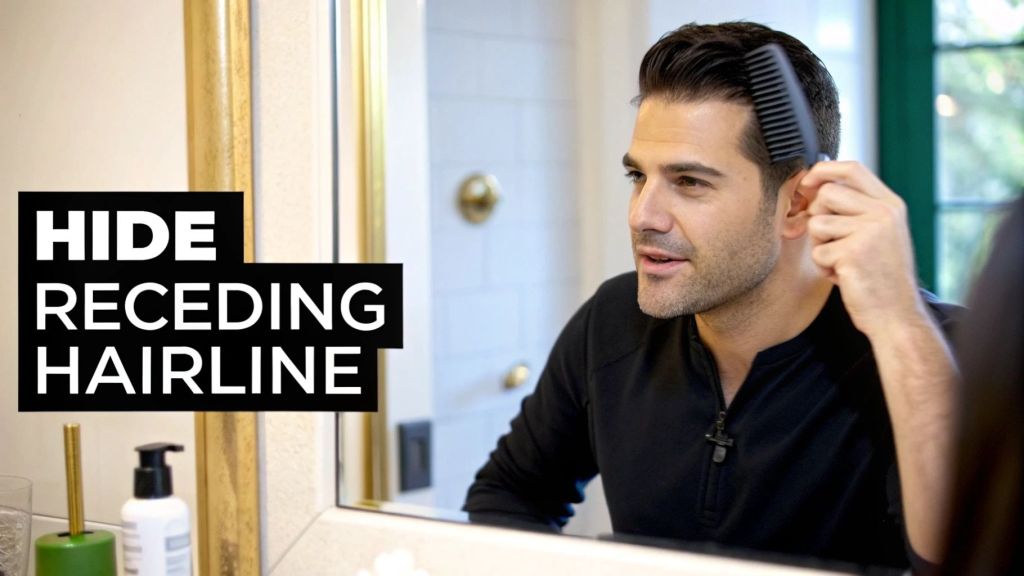
Let's be real—seeing your hairline start to creep back in the mirror can be a tough moment. I've been there. But here's the thing: it's an incredibly common part of life for millions of guys. The trick isn't to stress about it, but to learn how to hide a receding hairline with some smart, stylish techniques. It really boils down to finding a haircut that works for you, using a few simple styling tricks, and choosing products that help you create a look you feel great about.
Taking Control of Your Receding Hairline
If you're noticing your hairline making a retreat, the first thing to remember is that you're in good company. This isn't some bizarre issue; it's just a reality for a huge portion of the male population. Male pattern baldness is incredibly widespread, especially in Western countries.
Just take a look at the data. In Spain, it affects nearly 44.5% of men. North America is right behind, with the United States at 42.68% and Canada just under 41%. These numbers help put things in perspective and show why finding effective ways to manage hair loss has become such a big focus for men everywhere. You can dive deeper into the global hair loss statistics to see the full picture.
This guide is all about putting that control back in your hands. We're not talking about miracle cures or snake oil. This is a practical playbook, filled with real strategies you can start using today to see a difference.
It's All About a Mindset Shift
The goal here isn't to just slap a patch over thinning spots; it's about making a conscious choice to rock a style that works with your hair. When you own your look, you highlight your best features and can walk around with confidence, no matter what your hairline is up to. We're going to dive into:
- Game-changing haircuts that create the illusion of density and pull attention exactly where you want it.
- Simple styling tricks that can add instant volume and texture, making a huge difference in just minutes.
- Smart product choices that will become your go-to toolkit for managing your look every day.
The most powerful tool you have is your perspective. Seeing your hairline not as a flaw but as a chance to find a new, sharp style changes everything. It’s about working with what you have to look and feel your absolute best.
Think of it as a style evolution. With the right know-how, you get to define your look on your own terms.
The Right Haircut Is Your Strongest Ally
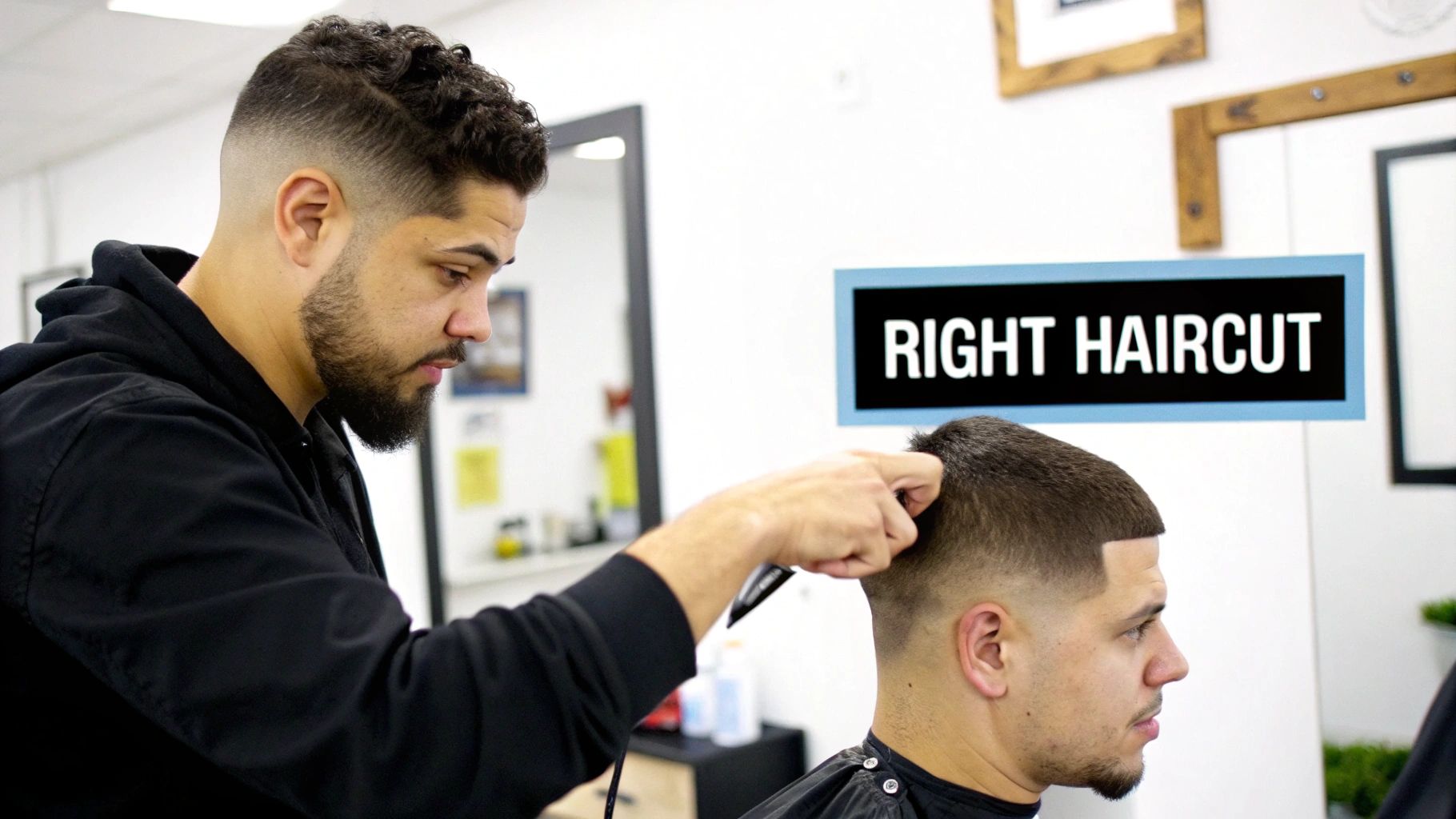
Before you even think about styling products or concealers, your first and most powerful move is getting the right haircut. A great cut is the foundation for everything else. Stop thinking about "hiding" your hairline and start thinking about choosing a style that intentionally flatters your features and creates a sharp, balanced look. The goal isn't to conceal; it's to reframe.
If you're noticing some thinning up top, you're not alone. Androgenetic alopecia, or male pattern baldness, is the culprit behind over 95% of hair loss cases in men. By the time they hit 35, roughly two-thirds of American men will see some noticeable thinning. That number jumps to a massive 85% by age 50. Knowing how common this is helps shift the perspective—it's not a personal failure, just a normal part of life for most guys.
The Art of Proportion and Distraction
The secret to a great haircut for a receding hairline comes down to two main ideas: mastering proportions and creating a new focal point. When you keep the hair on the sides and back short and tight, the hair on top immediately looks thicker and fuller by comparison.
This simple trick of visual misdirection is your best friend. A sharp fade, for example, draws the eye upward, pulling attention away from the temples. A messy, textured crop top breaks up the distinct line of a receding hairline, making it blend right in.
Essential Haircuts to Have on Your Radar
Not all short styles are created equal when it's time to deal with a changing hairline. Some are specifically designed to work with what you've got. You can check out our detailed guide on the 8 best haircuts for thinning hair to try in 2025, but here are a few standouts that are practically foolproof.
The Buzz Cut: This is the ultimate power move. By taking everything down to one short, uniform length, you pretty much erase the contrast between your hair and scalp, making the recession almost disappear. It’s clean, super low-maintenance, and exudes confidence.
The Crew Cut: A true classic for a reason. The crew cut keeps the sides buzzed short while leaving just enough length on top to play with. You can style it forward or sweep it to the side for a little texture and subtle coverage.
The Textured Crop (or French Crop): Easily one of the most popular and effective choices out there today. The hair is kept short and pushed forward, with a bit of a fringe that falls over the corners of your hairline. Adding choppy texture makes it look deliberate and stylish.
The High and Tight: This military-inspired cut is all about strong, clean lines. The fade goes way up the sides, leaving a distinct block of hair on top. The powerful shape makes your hairline an afterthought.
Receding Hairline Haircut Cheat Sheet
To make things even easier, here’s a quick-reference table to help you match a haircut to your situation. Think of it as a cheat sheet for your next trip to the barber.
| Haircut Style | Best For | Key Benefit | Styling Effort |
|---|---|---|---|
| Buzz Cut | Significant recession or overall thinning | Minimizes contrast between hair and scalp | Very Low |
| Crew Cut | Early to moderate recession | Timeless look with subtle top coverage | Low |
| Textured Crop | Recession at the temples | Forward fringe directly covers problem areas | Medium |
| High and Tight | Any stage of recession | Creates a strong, masculine shape | Low to Medium |
All of these styles work by strategically drawing attention where you want it, making the most of the hair you have.
Your barber is your most important partner here. Instead of just saying, "I want to hide my receding hairline," get specific. Try something like, "Let's do a tight fade on the sides to make the top look fuller," or, "Can we add a lot of texture up top so I can style it messy and forward?"
Communicating your goal clearly is half the battle. A good barber will know exactly how to use their tools to create the illusion of density and give you a cut that makes you feel amazing. It’s not about fighting your hair—it’s about working with it.
Everyday Styling Techniques for Fuller Hair
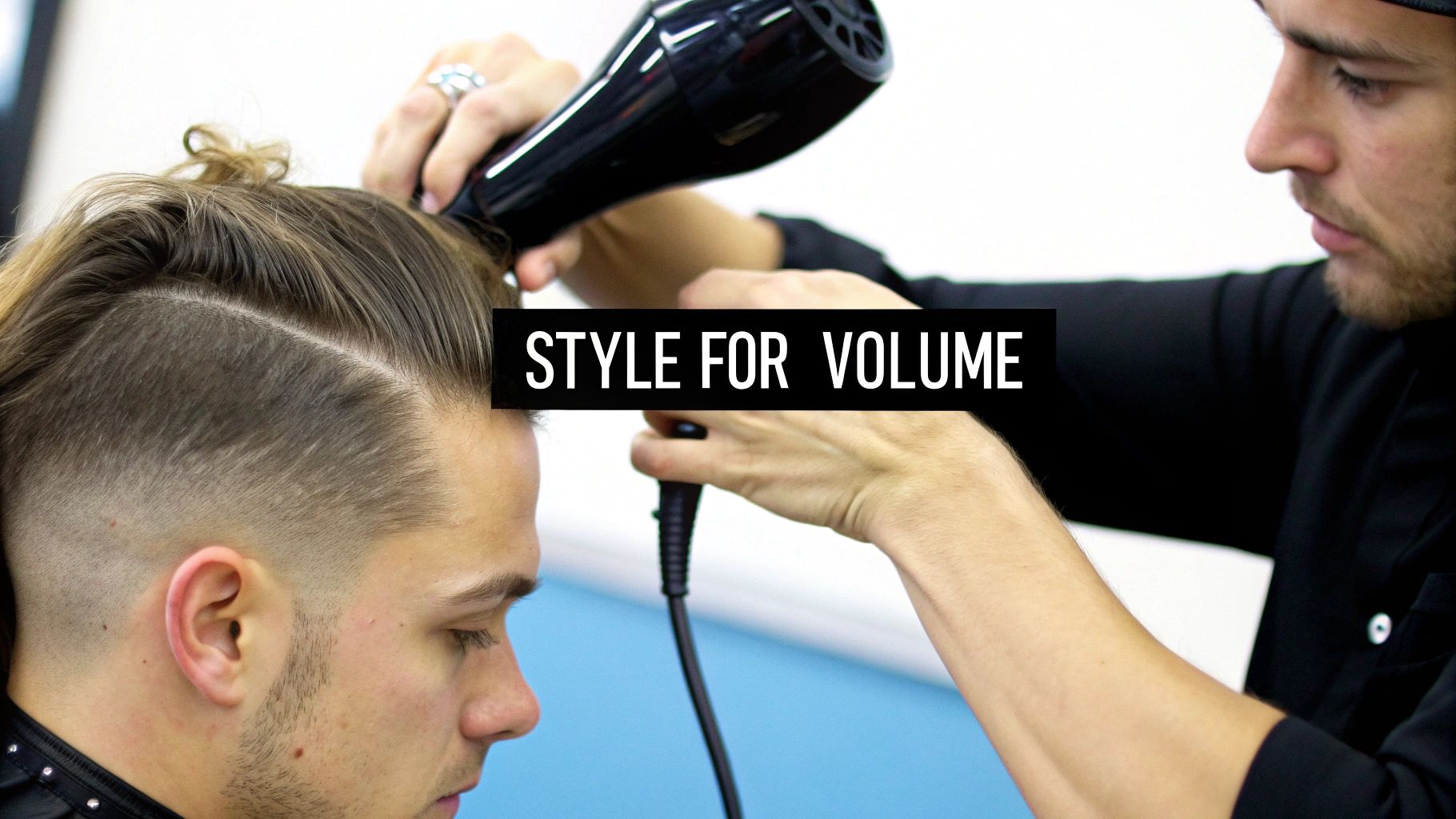
A great haircut is your foundation, but your daily styling routine is where the magic really happens for a fuller-looking head of hair. This is where you can make a huge visual difference in just a few minutes each morning. The mission is simple: create texture and volume to soften the hairline and draw the eye away from it.
First things first: forget everything you know about those old-school, wet-look gels. They're infamous for clumping hair together, which separates the strands and can actually make your scalp more visible. That's the exact opposite of what we're going for.
The modern way to handle a receding hairline revolves entirely around matte-finish products. Think of them as your new best friends in the fight for fuller-looking hair.
Master Your Product Selection
Picking the right product is easily half the battle. You’re looking for something that adds a bit of thickness and absorbs light rather than reflecting it. This simple trick creates a softer, denser appearance.
Here’s what you should have in your toolkit:
Styling Clay or Paste: These are your go-to for creating a textured, slightly messy look. They provide a strong but flexible hold without any of that tell-tale shine, letting you manually shape your hair to cover thinner areas.
Volumizing Powder: This stuff is a genuine game-changer, especially if you have fine or thinning hair. A light sprinkle at the roots gives you instant lift and a gritty texture that makes hair feel significantly thicker and way easier to style.
Thickening Creams or Mousses: Think of these as a primer for your hair. Applied to damp hair before you even touch a blow-dryer, these "pre-stylers" coat each strand, making them look and feel fuller from the get-go.
When you're figuring out how to style thinning hair, just remember that less is almost always more. Start with a tiny, pea-sized amount of product. You can always add more if you need it, but overloading your hair will just weigh it down and ruin all your hard work.
The Blow-Drying Method for Maximum Volume
Your blow-dryer is so much more than a tool for drying your hair—it’s an essential device for building volume exactly where you need it most. Using heat to set your hair in a specific direction creates a look that actually lasts all day.
Here's a simple, repeatable process that I've found works wonders:
Start with Damp Hair: After a shower, towel-dry your hair so it's damp but not sopping wet. This is the perfect starting point for styling.
Apply a Pre-Styler: Grab your volumizing mousse or thickening cream and work a small amount through your hair, focusing on the roots at the front and top.
Direct the Airflow: Set your dryer to medium heat and get to work. The real key here is to lift the roots with your fingers as you dry, aiming the airflow from the root upwards. For the front, point the dryer so you’re pushing the hair slightly forward and up, not straight back.
Finish with a Cold Shot: Once your hair is about 90% dry, hit the cool-shot button on your dryer for a final blast. This simple step "locks" the volume in place by closing the hair cuticle.
Your goal with the blow-dryer isn't just to get your hair dry; it's to actively build shape and lift. Directing the hair forward while adding texture breaks up the hard line of a recession, helping it blend in seamlessly.
Once your hair is completely dry, you can go in with your matte clay or paste to finish the style. This combination—pre-styling, strategic blow-drying, and a finishing product—is hands-down the most effective way to make your hair look instantly thicker and give you total control over your look.
Your Toolkit for Instant Density and Confidence
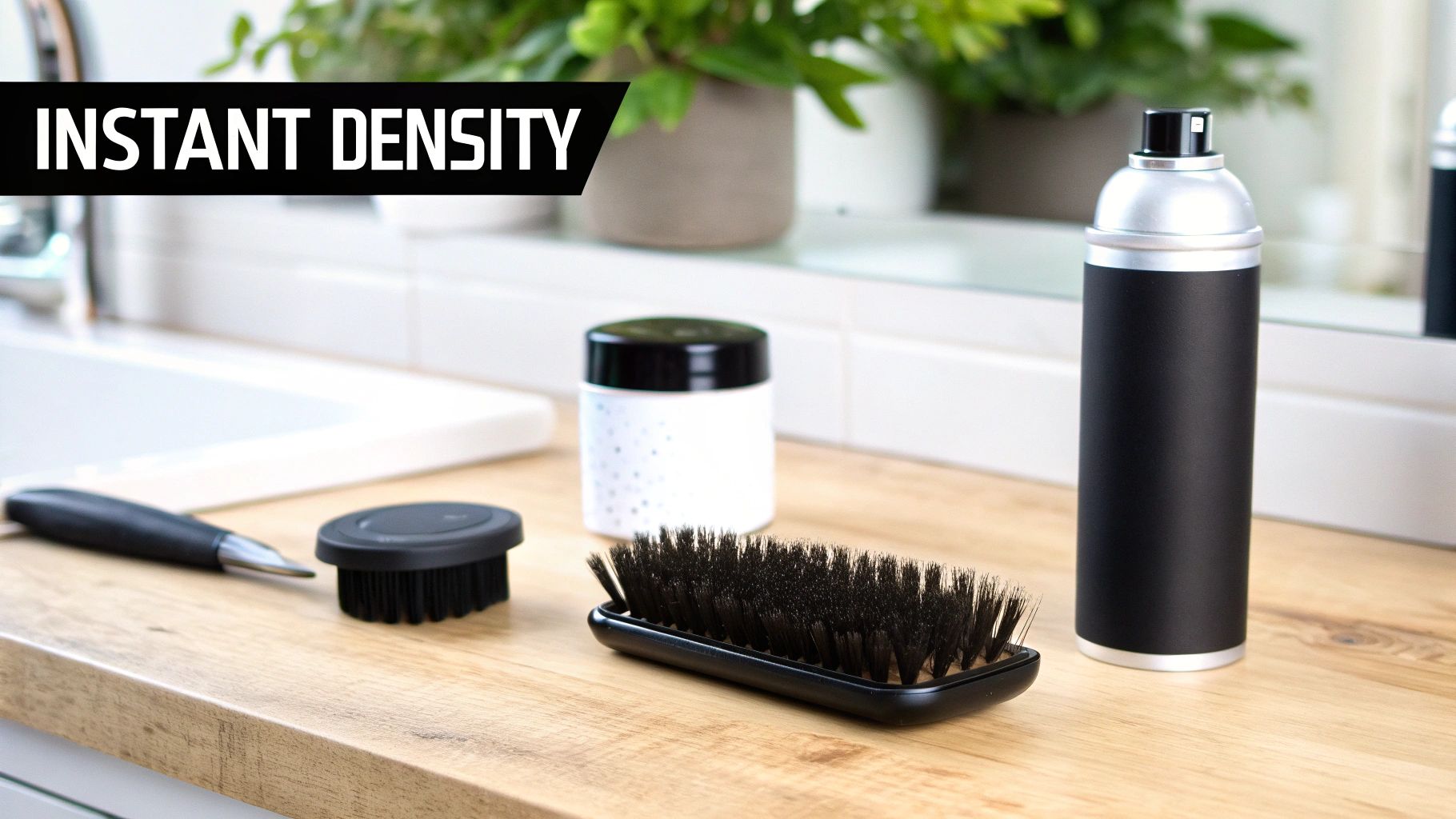
Sometimes, the right haircut and styling technique just need a little backup. Whether it's for a big event, an important meeting, or just a day when you want to feel totally secure, hair concealers are an incredible tool to have in your grooming arsenal.
Let's be clear: these aren't the clumpy, obvious cover-ups from decades ago. Modern products are sophisticated, effective, and can offer an instant, natural-looking boost of density when you need it most. They put you in control of your look, providing a quick fix on your own terms.
Of course, concealers are just one piece of the puzzle. For a more comprehensive approach, it's worth checking out our guide on the best hair thickening products for men.
Hair Fibers: The Secret to Thicker-Looking Strands
Hair fibers are your best friend for faking fullness. These are microscopic particles, usually made from keratin—the same protein that makes up your own hair. The science behind them is surprisingly simple: static electricity.
When you sprinkle them onto your hair, they cling to your existing strands like tiny magnets. This instantly beefs up the diameter of each hair, which dramatically reduces the contrast between your hair and scalp. The result is a much denser look that makes thinning areas virtually disappear.
Mastering the Art of Application
Getting a flawless, undetectable finish with hair fibers is all about technique. The two biggest mistakes I see guys make are rushing the process and using way too much product. Slow down and follow this approach for a natural look every time.
- Start with Dry, Styled Hair: This is key. Fibers should always be the last step. Apply them after you've used your go-to pomade, clay, or paste, as this gives the fibers a textured surface to grab onto.
- Choose the Right Shade: Don't guess. For the most realistic look, I always recommend picking a color that's one shade darker than your natural hair. This mimics the subtle shadows found in a full head of hair, creating a more convincing sense of depth.
- Tap, Don't Shake: Hold the container a few inches above your head and gently tap or sprinkle the fibers onto the target areas. You're aiming to coat the hair, not dump product directly onto your scalp.
- Pat and Set: Once applied, lightly pat your hair with your fingertips. This helps disperse the fibers evenly and sets them in place. For an all-day, bulletproof hold, finish with a light mist of hairspray to lock everything in.
My biggest piece of advice: Always start with less than you think you need. You can easily add more, but it’s a pain to take it away. A light dusting is often all it takes for a significant—but still subtle—improvement.
A little practice is all it takes to make this a quick, easy part of your routine. And for those days when you'd rather not style at all, remember a good hat can be a stylish solution. You can explore top golf hat styles that work just as well off the course.
Hair Concealer Product Comparison
Beyond fibers, there are several types of concealers, each with its own strengths. Here’s a quick breakdown to help you find the right one for your specific needs.
| Product Type | How It Works | Best For | Pro Tip |
|---|---|---|---|
| Hair Fibers | Tiny keratin particles that cling to existing hair via static electricity, making strands look thicker. | Adding overall density and covering diffuse thinning. Great for the crown and hairline. | Apply to dry, styled hair and lock in place with a light-hold hairspray for maximum longevity. |
| Scalp Powders | A colored, pressed powder that's applied directly to the scalp with a brush or sponge to reduce contrast. | Sharpening a hairline, filling in a wide part, or covering smaller, more defined thinning areas. | Use a small, dense brush for precise application along the hairline. A little goes a long way. |
| Colored Sprays | An aerosol spray that deposits color on both the hair and scalp, like a temporary root touch-up. | Quick, extensive coverage for larger thinning areas. A good option for a last-minute fix. | Hold the can at least 6-8 inches from your head and use short, light bursts to avoid a painted-on look. |
| Hair Crayons | A waxy, stick-based concealer that is drawn directly onto the scalp or hair. | Very small bald spots, concealing gray hairs, or touching up a very specific, small area. | Warm the tip with your fingers before applying to help it glide on smoothly and blend more easily. |
Choosing the right product comes down to the specific area you want to address and the kind of finish you're looking for. Don't be afraid to experiment with a couple of different types to see what works best for you and your routine.
Exploring Longer-Term Hair Loss Solutions
While mastering the right haircut and styling tricks gives you great day-to-day control, it's also smart to know what your longer-term options are. This isn't about pushing you toward any specific treatments, but about laying out the facts so you have the full picture.
Looking past daily concealers means exploring solutions that actually tackle hair loss on a biological level. These are proactive, science-backed treatments designed to help you keep the hair you have and, for some guys, even stimulate new growth. Just knowing these exist can give you a real sense of control over your hair's future.
Getting to Know Proactive Treatments
When you start digging into more permanent solutions, you’ll find a few common approaches that are well-researched and widely used. These aren't overnight miracles; they’re designed to create a healthier environment for your hair follicles to do their job.
One of the most talked-about methods is Platelet-Rich Plasma (PRP) therapy. It sounds more complicated than it is. The process uses a concentrated sample of your own blood platelets—which are packed with growth factors—and injects them directly into your scalp.
Think of it like this: PRP gives your scalp a super-concentrated dose of your body's own natural healing and regenerative power, directly stimulating weak or dormant hair follicles. It's about using your own biology to kickstart healthier hair growth.
This approach has become popular because it relies on your body's own resources. Instead of introducing foreign chemicals, you're just enhancing a natural biological process that's already happening.
What to Expect from Medical Interventions
Deciding to explore medical treatments for hair loss is a big step, and it's crucial to go in with realistic expectations. Treatments like PRP, and others you might research, demand consistency and patience. You won't see a change overnight; results build up gradually over a series of sessions and several months.
Here’s a practical look at what the journey involves:
- Consultation Is Non-Negotiable: Your first move should always be a conversation with a qualified professional. They can diagnose your specific type of hair loss and tell you if you're even a good candidate for these treatments.
- It’s a Series, Not a Single Shot: Most therapies, PRP included, start with an initial series of treatments. These are usually spaced a few weeks apart to get the process going.
- Maintenance Is Part of the Deal: To keep any results you get, you'll almost certainly need follow-up sessions. It’s best to think of it as ongoing maintenance, just like any other part of your health or grooming routine.
Having this knowledge puts you in the driver's seat. It gives you the power to make an informed choice if you ever feel that daily styling tricks just aren't cutting it anymore. You can dive deeper into the top 8 best hair loss treatments for men in 2025 to get a better handle on all the available options.
Common Questions About Hiding a Receding Hairline
Once you start noticing your hairline changing, a million questions probably pop into your head. It's totally normal. You're trying to figure out what's a myth, what's a fact, and what you should actually be doing. Let's cut through the noise and tackle some of the most common questions I hear from guys in your situation.
Will Wearing Hats Make My Hairline Worse?
Let's clear this one up right away: no, wearing a hat will not cause your hairline to recede. This is probably one of the biggest myths out there, but you can put it to rest.
The old wives' tale about hats "suffocating" hair follicles just isn't based in reality. The only way a hat could possibly cause damage is if it was so painfully tight that it literally cut off blood flow to your scalp for long periods. That's just not going to happen with your favorite baseball cap or beanie. So, wear your hats with confidence; they aren't the culprit.
What Is the Single Worst Hairstyle to Choose?
This is an easy one: the combover. Growing one section of your hair long to sweep it over a thinning spot is, without a doubt, the worst move you can make.
Why? Because it almost never works the way you think it will. Instead of hiding anything, the long, thin strands tend to separate, get greasy, and ultimately draw far more attention to the very area you're trying to conceal. It just looks awkward and unnatural.
A great haircut works with your hairline, not against it. The goal isn't to cover it up with long, flimsy strands but to create a strong, intentional shape that makes your hairline part of a great style.
How Often Should I Get a Haircut?
When you’re managing a receding hairline, consistency is everything. If you've opted for a shorter, sharper style like a buzz cut, crew cut, or a fade, you'll want to get a trim every 2 to 4 weeks.
This isn't just about looking tidy. Regular maintenance keeps the style looking deliberate and clean. As soon as the sides start to get bushy or the top grows out unevenly, the contrast can make the thinning on top more obvious. Staying on top of your cuts ensures the whole look remains balanced and sharp.
Can Styling Products Cause More Hair Loss?
Good news here. Modern, high-quality styling products—think matte clays, pomades, and texture powders—aren't going to cause male pattern baldness. These products sit on the hair shaft and scalp; they don't seep into the follicle and disrupt your hair's growth cycle.
The real key is simple hygiene. You've got to wash the product out thoroughly at the end of the day. A scalp clogged with product buildup isn't healthy for your hair, but the product itself isn't the cause of genetic thinning. Stick with good brands, wash your hair regularly, and you're good to go. If you're interested in more than just styling, you can dig deeper into whether thinning hair can grow back with our other guides.
Here at PRP For HairLoss, we're committed to giving you the straight facts on all your options. From simple grooming tips to the latest treatments, our mission is to provide you with clear, expert information so you can take control of your hair loss. Explore our resources to learn more.
 PRP For Hairloss
Leave a comment