Watching your hair grow can feel like watching paint dry, especially if you're trying to move on from a bad haircut or you're noticing more thinning than you'd like. The real secret to encouraging faster, healthier hair growth isn't some miracle cure—it's about working with your body's natural cycle. That means giving it the right fuel, taking care of your scalp, and adopting habits that support strong, resilient hair from the inside out.
Setting Realistic Hair Growth Expectations

Before we get into the nitty-gritty, let’s be clear about something: there's no magic potion that will add inches to your hair overnight. Your hair has a natural speed limit, one that's basically hardwired into your DNA.
Our job isn't to try and break that speed limit but to make sure you're actually hitting it. This guide is all about cutting through the noise and focusing on science-backed strategies that genuinely make a difference.
The core idea is simple: create the best possible environment for your hair follicles to do their job. Think of it less like forcing growth and more like removing the roadblocks that are slowing it down.
We're going to focus on practical, sustainable changes that support your body's own processes. It's about giving your hair the best shot at thriving, not chasing impossible claims.
Understanding Your Natural Growth Rate
So, what should you actually expect? On average, scalp hair grows about 1 cm per month. Of course, this isn't set in stone; studies show it can range anywhere from 0.6 cm to 3.36 cm per month depending on your genetics, age, and ethnicity.
For guys dealing with androgenetic alopecia (male pattern baldness)—a condition that affects a staggering 85% of men by age 50—this pace can feel particularly slow. It’s crucial to understand that while these natural methods can absolutely improve the health and thickness of the hair you have, they won't reverse genetically-driven hair loss on their own.
Knowing these limitations helps you set achievable goals and recognize when it might be time to look at other treatments. If you want a deeper dive into the science, you can learn more about the complete hair growth cycle and what's happening beneath the surface.
This table provides a quick overview of the key areas we’ll be focusing on to maximize your natural hair growth potential.
Quick Guide to Natural Hair Growth Pillars
| Growth Pillar | Primary Goal | Key Actions |
|---|---|---|
| Internal Nutrition | Provide the essential building blocks for strong hair. | Focus on protein, iron, zinc, and vitamins A, C, D, and E through a balanced diet. |
| Scalp Health | Create a clean, stimulated, and healthy foundation for growth. | Use gentle shampoos, massage the scalp regularly, and avoid product buildup. |
| Lifestyle Factors | Minimize stress and damage that can hinder growth and cause breakage. | Manage stress levels, get enough sleep, and avoid harsh chemical treatments or tight hairstyles. |
By focusing on these three pillars, you’re creating a comprehensive support system for your hair. You're not just treating the hair you can see; you're nurturing the entire system responsible for producing it.
Fueling Your Hair From the Inside Out
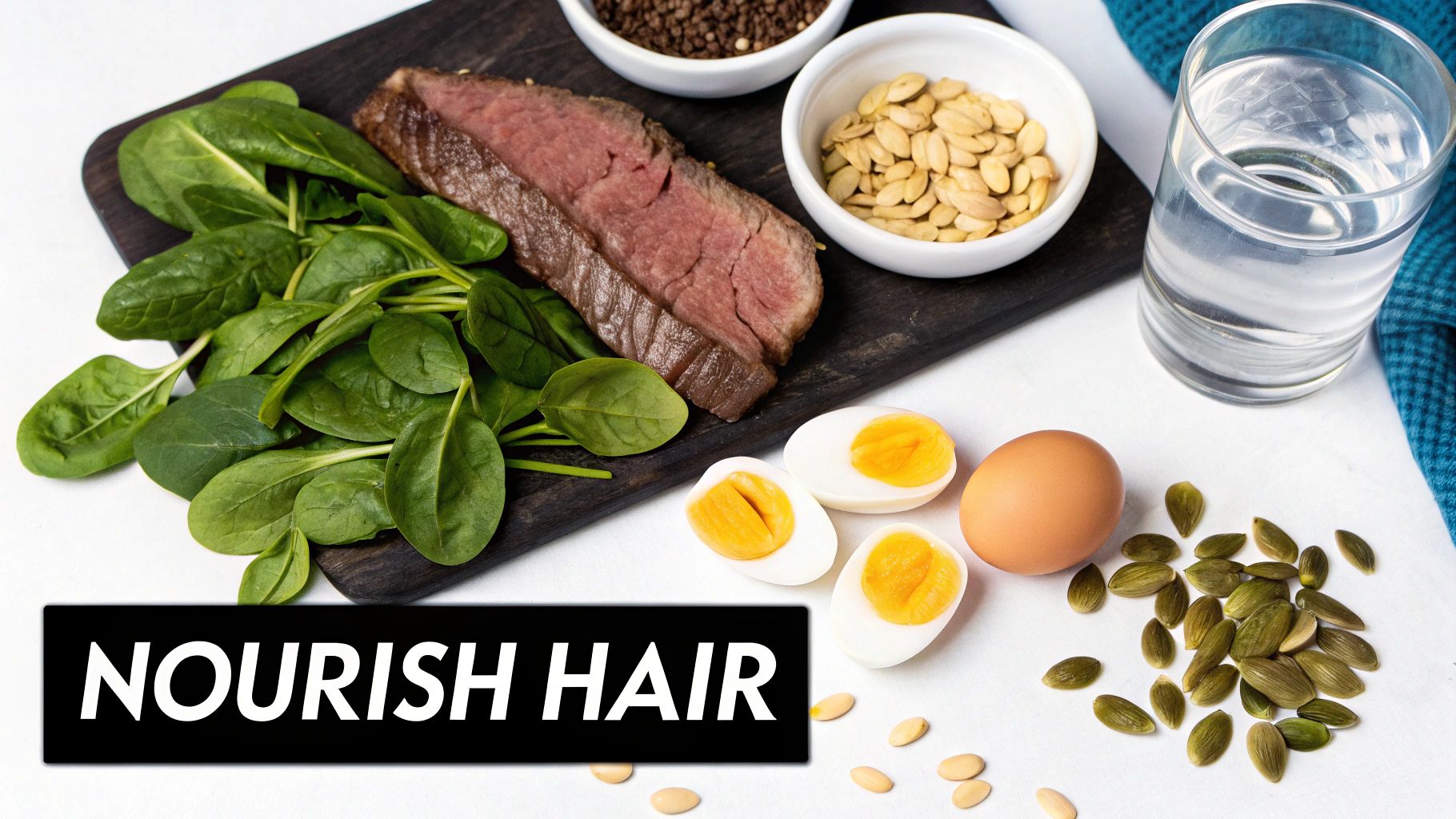
Think of your hair follicles as tiny engines. Like any engine, they can't run on empty. What you put on your plate directly impacts the strength, thickness, and even the speed at which your hair grows. This isn't about some restrictive, miserable diet; it’s about making smart additions to what you already eat to give your hair the raw materials it needs to thrive.
Let's get past the generic "eat healthy" advice and dig into what your hair is actually hungry for.
The Undeniable Importance of Protein
At its most basic level, your hair is made of a protein called keratin. If you're not eating enough protein, your body starts rationing it. And since growing hair isn't as critical as, say, repairing your organs, it's one of the first things to get short-changed. The result? Weaker strands and stalled growth.
You can't build a house without bricks. For your hair, protein is the brick.
To keep your personal "hair factory" running at full steam, you need a steady supply. This means weaving high-quality protein sources into every meal. Good options include:
- Lean Meats: Chicken breast, turkey, and lean cuts of beef are loaded with the amino acids needed to build strong keratin.
- Eggs: Often called nature's multivitamin, eggs provide a perfect protein punch along with biotin and zinc—two other hair-growth powerhouses.
- Fish: Salmon and mackerel don't just deliver protein; they're also rich in omega-3 fatty acids, which are fantastic for scalp health.
- Plant-Based Options: For those who skip meat, lentils, chickpeas, tofu, and quinoa are all excellent choices.
Since your hair is made almost entirely of protein, getting enough is non-negotiable. If you're struggling to hit your targets, you can learn how to increase protein intake with practical, easy-to-follow strategies.
Key Vitamins and Minerals for Faster Growth
While protein lays the foundation, a whole crew of vitamins and minerals does the construction work. A deficiency in any one of these can hit the brakes on hair growth, so getting enough through your diet is crucial.
A balanced plate ensures every part of the hair growth cycle is supported, from the follicle deep in your scalp to the tip of each strand.
Iron and Zinc: The Growth Regulators
Iron is absolutely vital for producing hemoglobin, the protein in your red blood cells that carries oxygen. That oxygen is needed for cell growth and repair, including the cells that fire up your hair follicles. When iron levels are low—a surprisingly common issue for men—oxygen delivery sputters, and your hair growth can stall out.
Zinc, meanwhile, is a master of hair tissue growth and repair. It also helps the oil glands around the follicles work properly. A zinc deficiency can quickly lead to a dry, flaky scalp and even noticeable shedding.
Pro Tip: Pair iron-rich foods like spinach or lean steak with a source of Vitamin C (think bell peppers or an orange). Vitamin C dramatically boosts your body's ability to absorb iron.
To make sure you're covered, focus on these foods:
- For Iron: Lean red meat, spinach, lentils, and fortified cereals.
- For Zinc: Oysters, beef, pumpkin seeds, and lentils.
Just a handful of pumpkin seeds a day is an incredibly simple way to top up your zinc levels.
Biotin and B-Vitamins: The Production Team
You’ve probably seen biotin hyped up in every hair supplement on the shelf, and for good reason. Biotin (Vitamin B7) is essential for producing keratin. While a true deficiency is rare, making sure your levels are optimal can definitely support better growth.
To give your hair a natural boost, a solid target is 0.8g of protein per kg of body weight daily, especially since hair is about 95% keratin. Getting enough biotin is also key, as some studies have shown deficiencies can slow growth by up to 20%. And don't forget zinc—a deficiency, found in about 17% of men, can sometimes cut growth speed in half.
For a deeper dive into crafting a hair-friendly diet, check out our guide on the best foods for hair growth.
Don't Forget Hydration
Finally, let's talk about the most overlooked element: water. A single strand of hair is almost 25% water by weight. When you're dehydrated, hair growth can come to a screeching halt, and existing strands become dry, brittle, and far more likely to snap.
It’s simple, but it works. Aim for at least eight glasses of water a day. A well-hydrated body means a well-hydrated scalp, and that creates the perfect environment for your follicles to get to work.
Building the Foundation with Better Scalp Care
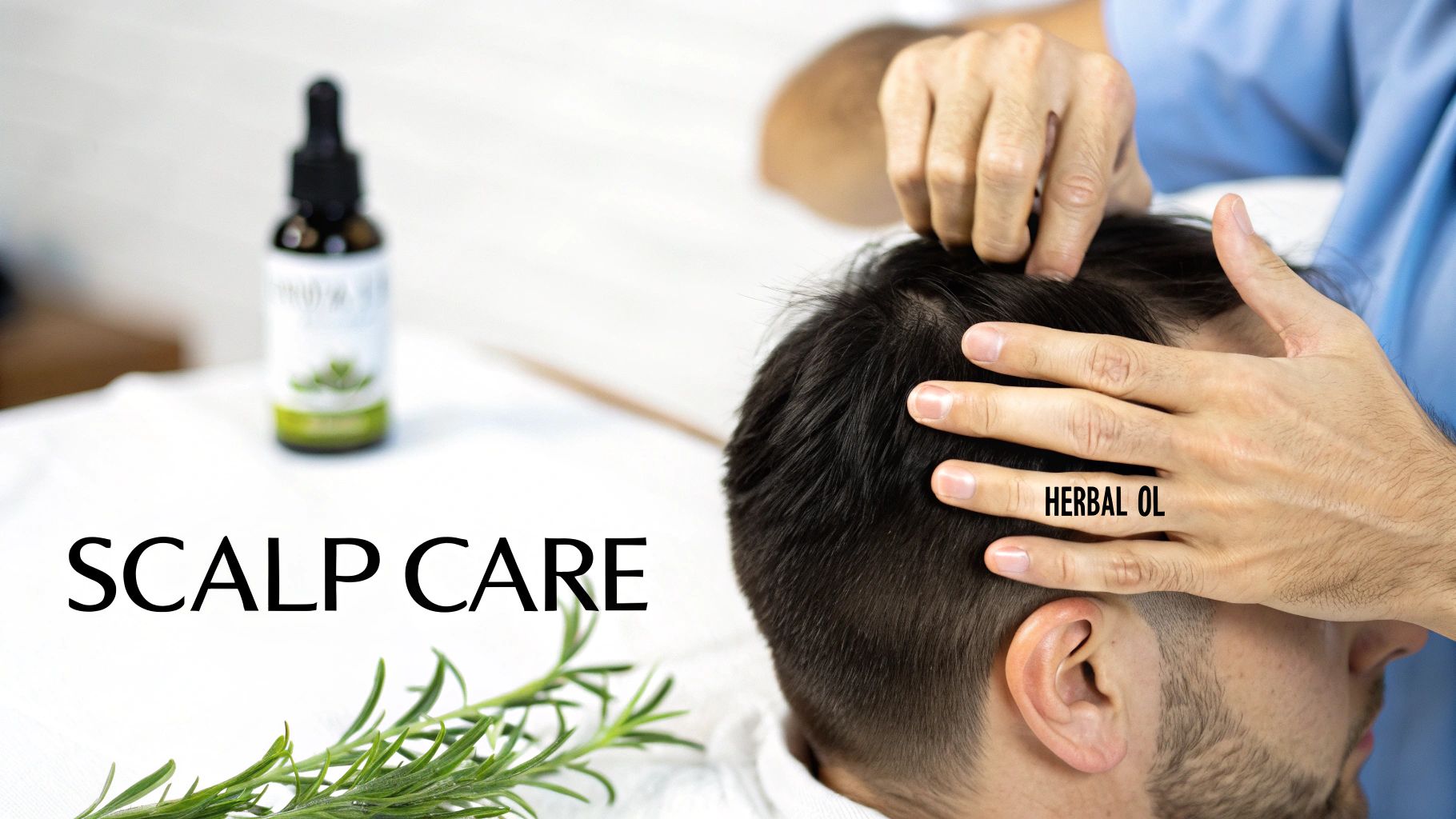
Think of your hair like a plant. You can't get a healthy, thriving plant from depleted, unhealthy soil. The exact same principle applies to growing your hair faster and stronger—it all starts with creating the best possible environment at the root.
A lot of guys get caught up focusing on the hair they can see, loading up on conditioners and styling products. But the real magic happens beneath the surface. A healthy scalp is clean, well-circulated, and free from the inflammation and product buildup that can literally choke off hair follicles and grind growth to a halt.
This section is all about getting back to the fundamentals. We’ll cover a few simple, practical habits you can build into your routine to make sure your scalp is fertile ground for growth, not a roadblock.
Boosting Blood Flow with Scalp Massage
One of the most effective—and frankly, easiest—things you can do for your scalp is to get the blood flowing. Your blood is a delivery service, carrying oxygen and all those key nutrients we covered earlier directly to your hair follicles. If circulation is poor, your follicles are essentially being starved of the very fuel they need to kickstart and sustain their growth phase.
This is where scalp massage comes in. It's not just some relaxing spa treatment; it’s a powerful tool for stimulating circulation. A compelling study showed that men who performed a daily four-minute scalp massage saw a noticeable increase in hair thickness after just 24 weeks.
The technique is simple enough for anyone to do:
- You can start with dry hair or use a few drops of a lightweight oil (more on that later).
- Using the pads of your fingertips—never your nails—apply gentle but firm pressure to your scalp.
- Work in small, circular motions, making sure you cover the entire area from your hairline all the way back to the nape of your neck.
Think of it as a daily workout for your scalp. You’re physically encouraging blood vessels to pump more "fuel" to the follicles. If you want to get into the weeds on the mechanics, you can learn more about the science behind scalp massage for hair growth.
The goal is consistency, not intensity. A few dedicated minutes each day is far more effective than one long, aggressive session once a week. This simple habit can be a game-changer in your journey to grow hair faster naturally.
Choosing the Right Scalp-Friendly Products
What you use to wash your hair matters more than you might think. Many of the shampoos you grab off the shelf at the drugstore are packed with harsh detergents like sulfates (you'll see it listed as Sodium Lauryl Sulfate or SLS). They're great at creating that rich, foamy lather we've been conditioned to expect, but they can be terrible for your scalp's health.
These aggressive chemicals strip away your scalp’s natural protective oils, called sebum. While you don’t want a greasy scalp, a healthy amount of sebum is critical for moisturizing the skin and protecting your hair. Wiping it out completely can lead to dryness, irritation, and inflammation—all of which are sworn enemies of healthy hair growth.
Making the switch to a gentle, sulfate-free shampoo is a non-negotiable first step. These formulas are designed to clean away dirt and buildup without sending your scalp's natural ecosystem into chaos. When your scalp isn't constantly fighting to recover from a chemical assault, it can focus its energy on its main job: growing strong, healthy hair.
Natural Ingredients That Support the Scalp
Beyond just avoiding the bad stuff, you can actively nourish your scalp with a few natural ingredients that have shown real promise. Two of the most talked-about are rosemary oil and peppermint oil.
And this isn't just hype; there’s some solid science behind it. In one study, rosemary oil was put head-to-head against minoxidil 2% (a well-known hair growth drug). After six months, both groups saw a significant increase in hair count, but the people using rosemary oil reported less scalp itching. It’s believed to work by improving circulation and providing antioxidant benefits right where you need them.
Peppermint oil has a similar stimulating effect. The menthol it contains is a vasodilator, meaning it can help temporarily widen blood vessels when applied, which can give a nice boost to local blood flow.
How to Use Natural Oils for Scalp Health
- Never Apply Directly: Essential oils are highly concentrated and can cause irritation if you use them straight from the bottle.
- Mix with a Carrier Oil: Always dilute them first. Add 2-3 drops of rosemary or peppermint oil to a tablespoon of a carrier oil like jojoba, coconut, or argan oil.
- Massage and Wait: Gently massage this mixture into your scalp for a few minutes. Let it sit for at least 30 minutes (or even overnight) before washing it out with your gentle shampoo.
Doing this simple treatment a couple of times a week is a great way to supercharge your scalp care routine, combining the physical benefits of massage with the stimulating properties of these potent natural ingredients.
It’s Not Just What You Eat—It’s How You Live
It's easy to get laser-focused on supplements and special shampoos, but we often forget that our hair's health is a direct reflection of our overall well-being. The way you handle stress, how much you sleep, and even simple things like how you dry your hair can make or break your progress.
These daily habits create the environment your hair grows in. They can either support strong, steady growth or actively sabotage it. Let's dig into the three biggest lifestyle factors you have control over and some simple, no-nonsense adjustments that can make a surprising difference.
Stress Is a Known Hair Killer
We all have stress. But when it becomes chronic—a constant, low-grade hum of pressure in the background of your life—your hair is one of the first things to suffer. Your body responds to this constant strain by pumping out the stress hormone cortisol.
In the short term, cortisol is helpful. But when levels are always high, it can shove a big chunk of your hair follicles straight from the growing phase into the resting (telogen) phase. These follicles go dormant, and then a few months down the line, you start seeing way more hair in the shower drain. It’s a classic case of stress-induced shedding, technically called telogen effluvium.
The bottom line is this: you can't expect your hair to thrive if your body is in a perpetual state of high alert. Managing stress isn't just a "nice-to-have"; it's a core part of any effective hair growth plan.
Here are a few practical ways to dial back your cortisol levels:
- Master the 4-7-8 Breath: It sounds simple, but it works. Inhale for 4 seconds, hold for 7, and exhale slowly for 8. Doing this just a few times can interrupt your body's stress response almost instantly.
- Take a "Movement Snack": You don't need an hour-long gym session. Just a brisk 15-minute walk at lunch is enough to burn off stress hormones and get some feel-good endorphins flowing.
- Declare a 30-Minute No-Fly Zone: Put your phone away. I mean in another room. For 30 minutes, do something analog—read a book, listen to an album, or just stare out the window. Give your brain a break from the digital noise.
Sleep Is When the Magic Happens
Your body does its best work while you're asleep. This is prime time for repair and regeneration at a cellular level, and that absolutely includes the cells responsible for building your hair. During deep sleep, your body releases key growth hormones that are critical for tissue repair.
When you consistently shortchange yourself on sleep, you're denying your hair follicles that essential maintenance window. Over time, this leads to weaker strands, sluggish growth, and yes, even more shedding. Think of it as forcing a construction crew to work around the clock without ever getting new materials or a chance to fix their equipment—the quality of their work is going to plummet.
On top of that, poor sleep can send your other hormones into a tailspin, further messing with the hair growth cycle. If you want to dive deeper into the science, you can learn more about how a lack of sleep contributes to hair loss right here. Making a real effort to get 7-8 hours of quality sleep each night is one of the most powerful things you can do for your hair.
Stop Breaking Your Hair Before It Can Grow
Finally, let's talk about physical damage. You could have the perfect diet and be a zen master, but if you're too rough with your hair, you'll snap it off faster than your body can produce it. Preventing breakage is just as important as encouraging growth.
Here are two of the most common mistakes I see men make, and the easy fixes:
- The Rough Towel Rub-Down: Wet hair is incredibly fragile. When you vigorously rub it with a standard, coarse cotton towel, you’re creating a ton of friction that shreds the hair's protective outer layer (the cuticle). This is a direct cause of frizz, weakness, and breakage.
- The Fix: Ditch the rub. Instead, gently pat or squeeze the water out of your hair. Use a soft microfiber towel or even an old, clean t-shirt. This one small change dramatically cuts down on mechanical stress.
- Blasting It with High Heat: Using a blow-dryer on the hottest setting might seem efficient, but it's brutal on your hair. That intense heat actually boils the water inside the hair shaft, creating tiny steam bubbles that cause permanent damage from the inside out.
- The Fix: If you need to use a blow-dryer, turn it to the lowest heat and speed setting. Always hold it at least six inches from your scalp and keep it moving. And honestly? Whenever you can, just let your hair air-dry. It’s the safest way to go.
Separating Hair Growth Myths From Reality
If you’re trying to grow your hair faster naturally, you’ve probably noticed the internet is a minefield of bad advice. It's easy to get lost in a sea of myths and half-truths that promise the world but deliver nothing but frustration. Let's clear the air and separate popular fiction from the hard facts.
One of the most stubborn myths out there is that frequent trims make your hair grow faster. It's a nice thought, but it’s just not true. Hair grows from the follicle in your scalp, not from the ends. Trimming your hair has zero impact on the biological process happening at the root.
So, why does everyone say it? Because regular trims do help with length retention. By snipping off split ends, you stop them from traveling up the hair shaft and causing more damage and breakage. This preserves the length you already have, creating the illusion of faster growth because you're holding onto more of it.
The Limits Of Natural Solutions
Another common worry is whether everyday habits can cause serious harm. Lots of guys are convinced that wearing a hat will lead to baldness by "suffocating" their hair follicles. This is another one that needs to be put to rest. Your follicles get oxygen from your bloodstream, not the air.
Unless a hat is so tight that it's actually cutting off circulation—which would be incredibly uncomfortable—it’s not going to make you lose your hair. We get into the nitty-gritty of why wearing hats doesn't cause hair loss in another one of our guides.
This simple flowchart helps trace common hair issues back to their real root causes, which almost always come down to key lifestyle factors.
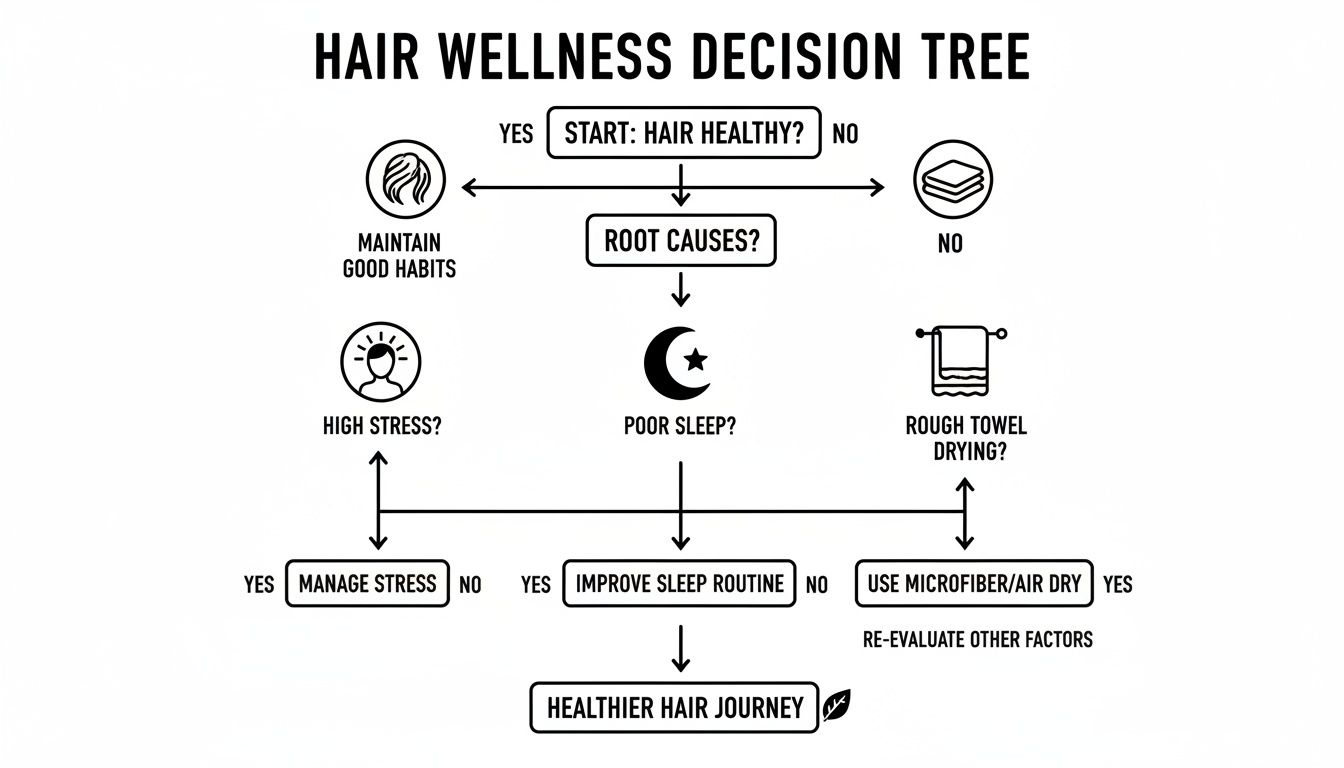
As you can see, things like high stress, poor sleep, and rough towel-drying are far more likely culprits for hair problems than throwing on your favorite cap.
Natural Methods vs. Male Pattern Baldness Realities
It's crucial to have an honest conversation about where natural methods hit their limit, especially when you're up against male pattern baldness. While a great diet, solid scalp care, and a healthy lifestyle create the perfect environment for hair to thrive, their main job is to help your hair reach its maximum genetic potential.
These natural strategies are about optimization, not reversal. They can improve the health of existing hair and slow down some types of shedding, but they cannot fundamentally change a genetic predisposition to hormonal hair loss.
Understanding this distinction is the key to managing your expectations and your hair. Here’s a quick breakdown of what you can realistically expect.
| Factor | Natural Methods' Impact | Male Pattern Baldness Consideration |
|---|---|---|
| Growth Potential | Maximizes your hair's genetically predetermined growth rate and thickness. | Cannot reverse the miniaturization of hair follicles caused by DHT. |
| Shedding | Can reduce shedding related to stress, nutritional deficiencies, or breakage. | The underlying cause of hair loss is hormonal and progressive. |
| Hair Quality | Improves shine, strength, and texture of existing hair strands. | Follicles continue to shrink over time, producing thinner, weaker hairs. |
| Regrowth | Minimal to no regrowth in areas where follicles have become dormant. | Regrowth requires medical intervention to counteract DHT and reactivate follicles. |
For men with androgenetic alopecia (male pattern baldness), natural methods alone might help slow down the loss in about 30-40% of cases, but they typically offer very little in the way of actual regrowth. The hormone DHT is actively shrinking those follicles, and no amount of rosemary oil or biotin can stop that process entirely.
This is where treatments like PRP come into play. By using powerful growth factors drawn from your own blood, PRP can deliver a measurable boost where natural remedies fall short. Clinics often report an average thickness increase of 27% after just three sessions.
Knowing when you've pushed natural approaches as far as they can go helps you set realistic goals. It also makes it clear when it might be time to explore clinically proven treatments if you're looking for more significant results.
Answering Your Natural Hair Growth Questions
Even with a solid plan, questions always pop up. When you're trying to get your hair to grow faster naturally, it's easy to get bogged down by the details and wonder if you're actually on the right track. Let's tackle some of the most common questions I hear from guys.
We'll clear up any lingering doubts so you can focus on what really works: consistency and patience.
How Long Does It Realistically Take to See Results?
This is the big one, isn't it? You've cleaned up your diet, started massaging your scalp, and you're treating your hair better than ever. So, when do you get to see the payoff?
The honest answer: it takes time. Hair grows, on average, about half an inch per month. You simply won't see dramatic changes overnight. For real, noticeable improvements in thickness and health, you're looking at three to six months of consistent effort.
Remember, you're not just improving the hair you can see. You're creating a healthier environment for the new hair just starting its growth cycle deep within the follicle. The healthier strands you see in a few months are the direct result of the work you're putting in today.
Are Hair Growth Supplements Actually Worth the Money?
The supplement aisle is packed with bottles promising thicker, fuller hair. But do they deliver? The best answer I can give is a definite maybe.
Supplements can be a game-changer if you have a genuine nutritional deficiency. If you're low on iron, zinc, or biotin, a targeted supplement can absolutely help fill that gap and get your hair growth back on track.
But if your diet is already solid, more isn't necessarily better. Your body just gets rid of the excess vitamins it can't use. For those who want a more targeted approach, options like Folisin, a hair loss support product, can be part of a broader strategy, but they should always complement a healthy diet, not replace it.
Does Trimming Your Hair Really Make It Grow Faster?
Let's bust this myth once and for all. Trimming your hair has zero effect on the speed at which it grows from the follicle. Your hair grows from the root, deep in your scalp, and what happens at the tips doesn't send a signal back to headquarters to speed up production.
So why is this advice so common? Because regular trims are all about length retention.
- Trims get rid of split ends.
- By snipping off split ends, you stop them from traveling up the hair shaft and causing more damage.
- This prevents breakage, which means you hold onto more of the length you've worked so hard to grow.
Think of it this way: trimming doesn't make your hair grow faster, but it absolutely helps it grow longer by preventing the damage that sets you back.
Can a Dead Hair Follicle Be Brought Back to Life?
This is a critical question for setting realistic expectations. Once a hair follicle is truly dead and has scarred over—a process known as cicatricial alopecia—it cannot be brought back with natural methods. No amount of scalp massaging or vitamins can regenerate a follicle that is completely gone.
However, a lot of follicles that seem "dead" are actually just dormant. They've been weakened and shrunk by factors like DHT, but they are still alive. These are the follicles that can often be reactivated. If you're curious about the science, our article explaining if you can learn more about reviving dead follicles offers a deeper look into what's possible. The distinction between dormant and dead follicles is where the opportunity lies.
At PRP For HairLoss, we believe that understanding the science behind hair growth is the first step toward achieving real results. While natural methods are a powerful foundation, we specialize in advanced treatments that can support your journey when you're ready to take the next step. Explore our resources to learn more about how PRP can help you achieve the thicker, fuller hair you're looking for. Find out more at https://prpforhairloss.com.
 PRP For Hairloss
Leave a comment