If you’re seeing more hair on your pillow or in the shower drain, you're definitely not alone. The first step in finding natural ways to stop hair loss that actually work is to get to the root of why it's happening in the first place. For most guys, it's a mix of genetics, hormones, and daily lifestyle habits all playing a role.
Why Is My Hair Thinning? Understanding the Real Causes
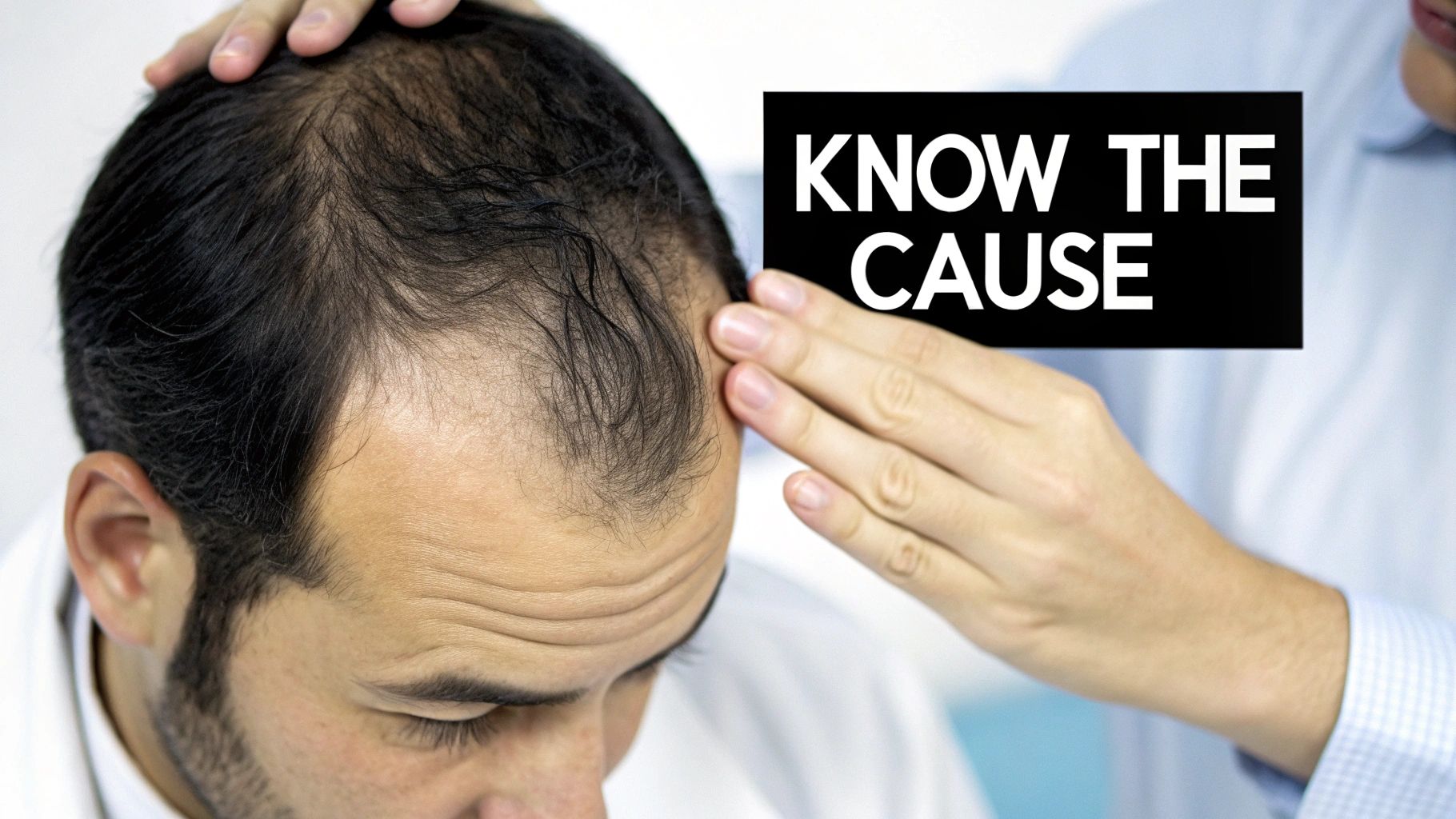
Before you can start to fight back, you need to know what you’re up against. For about 85% of men, the main culprit behind thinning hair is a condition called androgenetic alopecia. You probably know it better as male pattern baldness. It’s not a disease—it’s just a natural, biological process that’s written into your DNA.
You can think of it this way: your genetics load the gun, but it's your hormones that pull the trigger.
The Role of DHT: The Hormone Behind Hair Loss
At the center of it all is a powerful male hormone called dihydrotestosterone, or DHT. It's an offshoot of testosterone, and some men simply have hair follicles that are genetically more sensitive to its presence on the scalp.
Imagine your hair follicles are like tiny gardens. For some of us, DHT acts like a slow-acting poison, gradually weakening them over time. It latches onto receptors in the scalp and kicks off a process called "miniaturization." This literally shrinks the follicles, making it impossible for them to grow strong, healthy hair.
The result is that any new hair that grows comes in finer, shorter, and weaker. Eventually, the follicle just gives up and stops producing hair altogether. This is the very mechanism that powers a receding hairline or that thinning spot at the crown.
Key Takeaway: Male pattern baldness isn't really about "losing" hair. It's a slow-motion replacement of your thick, healthy terminal hairs with fine, nearly invisible "vellus" hairs as follicles are choked out by DHT.
Beyond Genetics: The Other Contributing Factors
While your genes and DHT are the main drivers, they aren’t the whole story. Other things can absolutely speed up the process or cause shedding, which is why a well-rounded approach is so important. Getting a handle on the various hair loss causes is a critical first step.
These secondary factors can have a real impact on your hair's health:
- Chronic Stress: Constantly high levels of the stress hormone cortisol can throw your hair's growth cycle out of whack, forcing more follicles into the shedding phase than normal.
- Nutritional Deficiencies: Your hair follicles are hungry. They need a steady stream of vitamins and minerals to function properly. Skimping on essentials like iron, zinc, and protein can weaken the hair itself and stunt growth.
- Poor Scalp Health: An unhealthy scalp is bad soil for hair. Inflammation, chronic dandruff, or even just heavy product buildup can create a hostile environment that suffocates follicles.
These issues can either make genetically driven hair loss worse or cause temporary shedding all on their own. For a closer look at the root causes and how you can work toward a fuller head of hair, it’s worth exploring resources on understanding and addressing hair thinning. Once you know what you're dealing with, you can choose the natural strategies that will give you the best shot at making a difference.
Why More Men Are Looking at Natural Hair Loss Solutions
If you’ve started noticing more hair in the drain or a slightly higher hairline in the mirror, you’re not alone. And if your first thought isn’t to call a doctor for a prescription, you’re in good company there, too. We’re seeing a major shift in how men are tackling hair thinning, with more and more guys exploring natural, lifestyle-based options first.
This isn’t about chasing some miracle cure you saw in a pop-up ad. It's about taking a smarter, more holistic approach. Men are waking up to the fact that hair health is deeply connected to overall health—what you eat, how you handle stress, and even the stuff you put on your scalp. It’s a proactive strategy that puts you back in the driver's seat.
Taking Control Without the Side Effects
A huge reason for this trend is pretty simple: guys want to avoid potential side effects. Prescription drugs like finasteride and minoxidil definitely work for a lot of men, but they come with a list of possible drawbacks. These can range from annoying scalp irritation to much more serious issues like sexual side effects. For a man just beginning to see some thinning, those risks can feel way too steep.
Natural solutions flip the script. Instead of targeting the problem with a powerful drug, the goal is to create an environment—both inside your body and on your scalp—where hair can actually thrive. Think of it like taking care of a classic car. You don't wait for the engine to seize up before you do something. You give it regular oil changes, use good quality fuel, and keep the tires inflated. It’s those small, consistent efforts that prevent a catastrophic breakdown later.
This move toward natural ways to stop hair loss is really about empowerment. It’s a sensible first line of defense that lets you take positive, healthy steps without immediately committing to a lifetime of medication.
This proactive mindset is catching on everywhere. As awareness about hair loss grows, many men are turning to their diet, specific supplements, and lifestyle tweaks as their starting point. To give you an idea of the scale, one dermatology clinic in Israel saw hair-loss–related visits skyrocket from 1.24% of all appointments in 2010 to 9.44% in 2020. That’s a more than seven-fold jump, showing just how many men are looking for answers. You can read the full research about these hair loss trends02558-5/fulltext) to see the bigger picture.
Building a Strong Foundation for Whatever Comes Next
It's important to have the right expectations. Natural methods aren't going to regrow a completely bald head. Their real power lies in the early stages of hair loss, where the focus is on slowing down the thinning process and making the hair you have stronger and healthier.
Think of it as building a strong foundation with four key pillars:
- Nutritional Support: Giving your hair follicles the raw materials they need to build strong hair, like protein, iron, and zinc.
- Stress Management: Getting a handle on cortisol, the stress hormone that can push more hairs into the shedding phase.
- Better Scalp Health: Making sure your scalp is a clean, calm, and inflammation-free zone where follicles can function properly.
- Gentle Topical Support: Using natural, plant-based ingredients directly on the scalp that may help block some of the effects of DHT.
This approach doesn't just work on its own; it also sets you up for success if you decide to pursue medical treatments later. By getting these healthy habits in place, you’re creating the ideal canvas for something like Platelet-Rich Plasma (PRP) therapy to be more effective. A healthy body simply responds better to treatment. It’s a smart, sustainable plan for the long game.
How to Feed Your Hair From the Inside Out
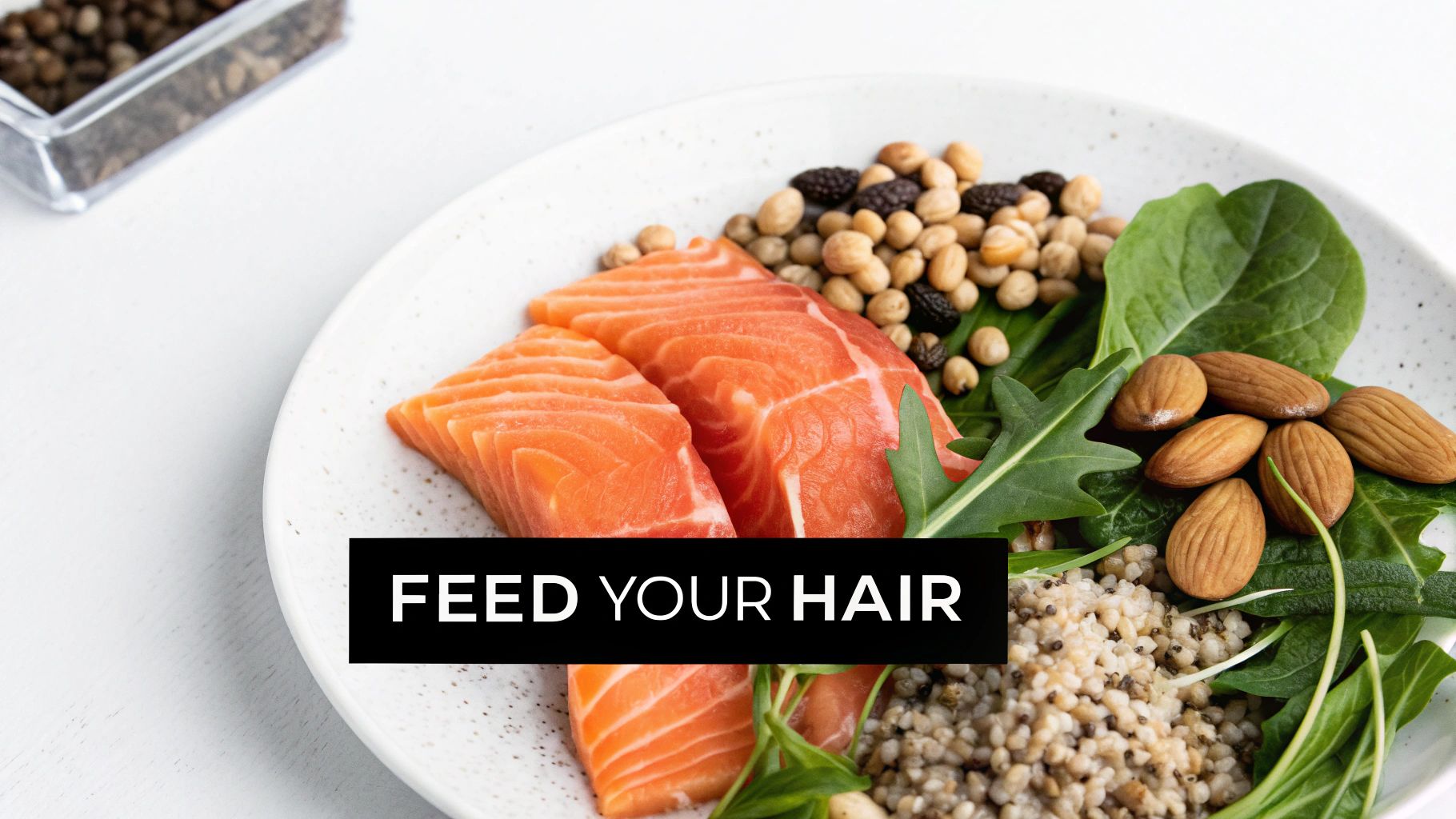
If you're looking for natural ways to slow hair loss, your most powerful tool is probably already in your kitchen. Before you drop a small fortune on specialized shampoos or supplements, it's vital to understand that strong, healthy hair is built from the inside out.
Think of your hair follicles as tiny, high-production factories. They need a constant supply of quality raw materials to do their job. When those supply lines get thin, your body wisely starts cutting back on non-essential projects—and hair growth is one of the first things to get sidelined. That's why a nutrient-poor diet is one of the quickest ways to see more hair in the drain.
So, instead of hunting for a single "magic pill," let's reframe the goal to something far more effective: feeding your follicles.
The Building Blocks of Healthy Hair
Your hair is made almost entirely of a protein called keratin. It’s no surprise, then, that getting enough high-quality protein in your diet is absolutely non-negotiable. If your protein intake is too low, your body simply can't manufacture strong keratin, and your hair will be the first to show it.
Beyond protein, a few key micronutrients play starring roles in the hair growth cycle. Think of them as the essential crew members that keep the follicle factory running without a hitch.
Here's a closer look at the key nutrients that are absolutely essential for maintaining healthy hair, what they do, and where you can find them.
Key Nutrients for Hair Health and Their Food Sources
| Nutrient | Role in Hair Health | Best Food Sources |
|---|---|---|
| Protein (Keratin) | The fundamental building block of the hair shaft. | Lean meats, fish, eggs, dairy, legumes, tofu, nuts. |
| Iron | Helps red blood cells carry oxygen to your follicles. | Red meat, spinach, lentils, chickpeas, fortified cereals. |
| Zinc | Essential for hair tissue growth, repair, and scalp health. | Oysters, beef, pumpkin seeds, lentils, spinach. |
| Biotin (B7) | A key B-vitamin involved in keratin production. | Eggs (yolk), almonds, salmon, sweet potatoes, avocados. |
| Vitamin C | An antioxidant that helps produce collagen and aids iron absorption. | Citrus fruits, bell peppers, strawberries, broccoli. |
| Vitamin D | Helps create new follicles, the tiny pores where new hair can grow. | Fatty fish (salmon, mackerel), fortified milk, sunlight. |
For a more detailed breakdown of what to put on your plate, you can explore our guide to the best foods for hair growth and build a shopping list that supports your goals. This simple, proactive approach turns every meal into an opportunity to strengthen your hair from its very foundation.
The Mediterranean Diet: A Blueprint for Stronger Hair
So, what does a hair-healthy diet actually look like in practice? One of the most studied and effective models is the Mediterranean diet. It’s less of a strict "diet" and more of a lifestyle—one that happens to be naturally packed with the nutrients your hair craves.
This way of eating is rich in fruits, vegetables, whole grains, nuts, and healthy fats like olive oil, rounded out with lean proteins from fish and chicken. It’s a plant-forward approach that has been shown to lower inflammation, which is a known enemy of healthy hair follicles.
Diet is one of the most intensely studied "natural" levers for slowing hair loss. A 2022 review noted that plant-rich dietary patterns such as the Mediterranean diet are associated with a lower risk of alopecia. Discover more insights about these dietary findings on PMC.
Debunking the Biotin Myth
Walk down any vitamin aisle and you’ll be bombarded with supplements promising miraculous hair growth, almost always with biotin as the star ingredient. While biotin is absolutely essential for hair, the popular idea that megadosing it will solve all your hair loss problems is largely a myth.
Here's the truth: biotin supplementation only really works if you have a genuine deficiency. While one study found that 38% of women with hair loss had low biotin levels, that means the majority did not. For most men, blindly taking high-dose biotin is unlikely to move the needle. You'll get far more bang for your buck from a broad, nutrient-dense diet that provides all the building blocks your hair needs, not just one.
Using Natural Topical Treatments for Your Scalp
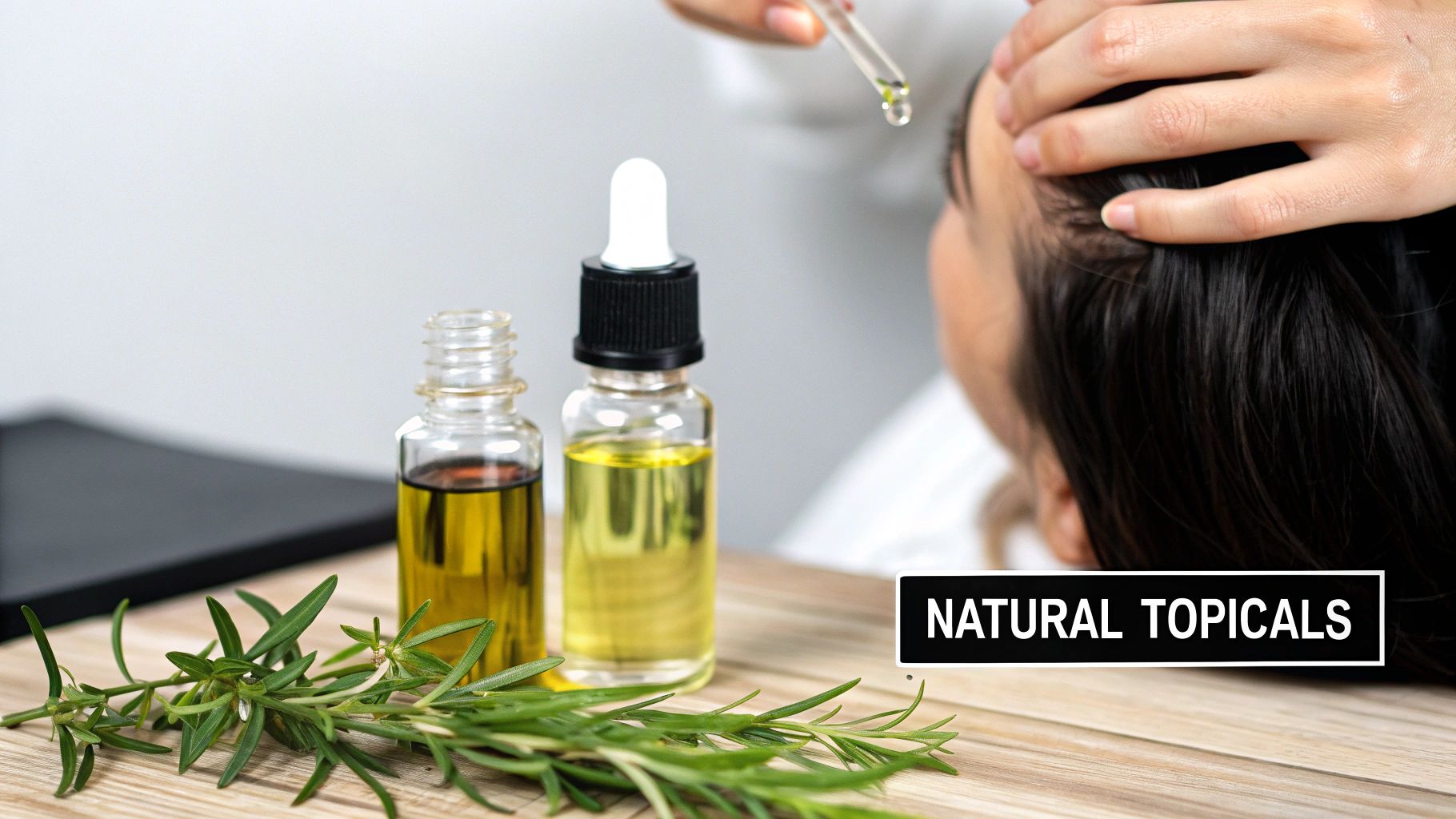
While feeding your hair from the inside out is the critical first step, what you put on your scalp can play a huge supportive role. Think of your scalp as the soil in a garden. Even with the best fertilizer (your diet), the soil itself needs to be healthy to grow strong plants. This is where natural topicals come in as one of the most direct natural ways to stop hair loss.
These treatments work right at the source, delivering beneficial compounds directly to the hair follicles. The most popular options aim to do one of two things: calm down scalp inflammation or help block the effects of DHT, the hormone that gradually shrinks follicles in male pattern baldness.
The Science Behind Popular Natural Oils
When you start looking into topical remedies, you'll see a few names pop up again and again. It's not just old folklore; a growing body of research shows they have real potential.
Rosemary oil is probably the most impressive. A landmark study put it head-to-head with 2% minoxidil—the active ingredient in Rogaine. After six months, the group using rosemary oil saw an increase in hair count that was statistically on par with the minoxidil group, but with a lot less scalp itching. Researchers believe it works by boosting circulation and possibly interfering with DHT activity at the follicle.
Another heavy hitter is pumpkin seed oil. This oil is loaded with antioxidants and fatty acids, and research has shown it can act as a mild 5-alpha reductase inhibitor. That's the enzyme that converts testosterone into the follicle-shrinking DHT, making pumpkin seed oil a natural way to tackle the root hormonal cause of thinning. Our guide on the best essential oils for hair growth goes into more detail on these and other great options.
How to Use Topical Oils Safely and Effectively
Getting started with oils is easy, but doing it the right way is what gets you results without causing irritation. Essential oils like rosemary are incredibly concentrated and should never be applied straight to the skin.
Crucial Tip: Always dilute essential oils in a "carrier oil" before putting them on your scalp. The carrier oil not only makes it safe for your skin but also helps it spread evenly and absorb properly.
Good carrier oils are gentle and nourishing themselves. Some of the best choices include:
- Jojoba Oil: Its structure is almost identical to your skin's natural sebum, so it absorbs beautifully without feeling greasy.
- Coconut Oil: Famous for its ability to penetrate the hair shaft, it can help reduce protein loss and lock in moisture.
- Argan Oil: Packed with Vitamin E and fatty acids, it's fantastic for moisturizing a dry scalp and protecting hair from damage.
To make a simple blend, just mix a few drops of rosemary oil into a tablespoon of your chosen carrier oil. Gently massage it into your scalp, paying extra attention to thinning areas, and let it sit for at least 30 minutes before you shampoo. For this to work, consistency is everything—aim for two to three times per week.
Setting Realistic Expectations
It’s important to frame these treatments correctly: they are supportive therapies, not miracle cures. The benefits build slowly and require consistent use over many months. The whole idea is to create a healthier scalp environment to slow down thinning and support the hair you already have.
Plant-derived compounds are gaining a lot more credibility in dermatology for this very reason. A comprehensive review of herbal remedies found that several botanicals have measurable pro-growth effects on hair follicles. Many dermatologists now see these natural topicals as valuable additions alongside evidence-based treatments, not necessarily as stand-alone solutions. You can read the full review on herbal remedies for hair loss to understand their growing role.
Simple Lifestyle Changes for Better Hair Health
It’s easy to overlook, but your daily habits have a huge say in your hair’s future. While we often focus on diets and what we put on our hair, the real foundation for healthy growth starts with how we live—managing stress, getting enough sleep, and even just washing our hair the right way.
Think of it like this: your body is a system, and when one part is under duress, other things start to go sideways. Chronic stress is one of the biggest culprits, and it has a direct line to your hair follicles.
Taming the Stress Hormone Cortisol
When you’re constantly under pressure, your body is flooded with the hormone cortisol. A little bit is fine—it's part of our natural fight-or-flight response. But when cortisol levels are chronically high, they can basically tell your hair follicles to stop growing and start shedding.
This can trigger a condition known as telogen effluvium, which is just a clinical term for widespread, noticeable shedding. For any guy already dealing with male pattern baldness, high cortisol is like pouring gasoline on the fire; it can accelerate the whole process. Getting a handle on your daily stress is one of the most powerful, non-medical things you can do to combat stress-related hair loss and give your hair a fighting chance.
The good news is you don’t need to go on a month-long silent retreat to see a difference. Small, consistent habits are what really move the needle.
- Mindful Moments: Even just five minutes of focused breathing can dial down your nervous system. Apps for guided meditation or simply paying attention to your breath can lower cortisol over time.
- Daily Movement: You don't need to live in the gym. A brisk 30-minute walk, especially if you can get outside, is a fantastic stress reliever. Exercise helps your body clear out those excess stress hormones.
- Quality Sleep: Skimping on sleep is a huge physical stressor. Your body does its most important repair work when you're asleep, and that includes repairing the cells in your hair follicles. Aim for 7-8 hours a night.
By actively managing stress, you're doing more than just feeling better. You're sending a direct signal to your hair follicles that it's safe to stay in the growth phase, not the shedding phase.
Mastering Your Scalp Care Routine
What’s happening inside your body is half the battle; the other half is what’s happening on your scalp. An irritated, inflamed, or clogged scalp is hostile territory for hair growth. The goal here is to be gentle but effective.
Think of it like gardening. You wouldn't use harsh chemicals or blast your soil with a pressure washer. You’d gently clear debris and make sure the soil is nourished and can breathe. Your scalp deserves that same thoughtful approach.
Practical Steps for a Healthier Scalp
Take a hard look at what you’re doing now. A lot of common habits can unknowingly cause damage and irritation.
- Choose a Gentle Shampoo: Ditch the harsh stuff. Look for sulfate-free shampoos that clean your scalp without stripping away every last bit of its natural, protective oils. Over-stripping leads to dryness and inflammation.
- Wash Correctly: Use lukewarm water. Super-hot water can also strip oils and dry out your scalp. And when you lather up, use your fingertips—never your nails—to gently massage the shampoo in. This prevents tiny scratches and irritation.
- Incorporate Scalp Massage: This is one of the simplest and most beneficial things you can do. A few minutes of gentle massage with your fingertips each day gets the blood flowing to your follicles, delivering the oxygen and nutrients they need to thrive.
When you pair these stress management techniques with a smarter scalp routine, you get a powerful one-two punch. These small adjustments don't cost a thing, but they compound over time to build a much healthier and more resilient foundation for your hair.
When Natural Approaches Aren't Enough
Putting in the work with diet, scalp care, and lifestyle changes is a fantastic foundation for healthier hair. But it’s equally important to be realistic and know when these natural efforts might need some backup. Understanding the limitations helps you make smart, timely decisions about what to do next.
So, how do you know you've hit that wall? There are a few clear red flags. If you've been consistent for 6-12 months and seen absolutely zero improvement, that’s a pretty telling sign. Also, pay close attention to any sudden, rapid shedding or the appearance of distinct bald patches—that’s not the typical slow progression of male pattern baldness and really needs a professional evaluation.
If you’ve given natural methods an honest try and your hair loss is still progressing, it might be time to get a professional opinion. For specialized care, you can explore options like consulting an online dermatologist to get a proper diagnosis and talk through your treatment options.
This simple decision tree can help you nail down the foundational habits that create a healthier environment for your hair.
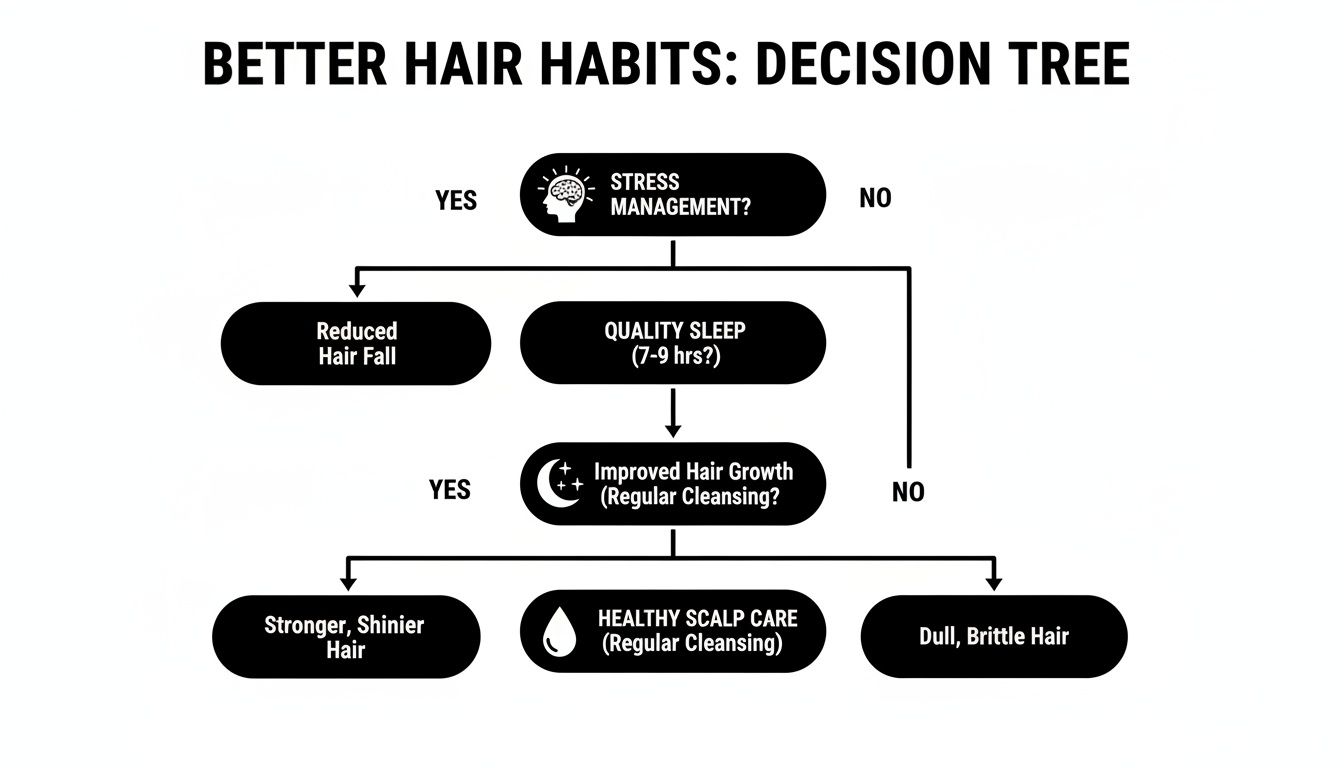
The main point here is that stress, sleep, and scalp care aren't separate issues; they're interconnected pillars that hold up your hair's overall health.
Bridging the Gap to Clinical Treatments
Moving toward clinical treatments doesn’t mean you failed or have to ditch the healthy habits you've built. Think of it as adding a new, more powerful tool to your toolkit. One of the most logical next steps, Platelet-Rich Plasma (PRP) therapy, actually complements the natural groundwork you’ve already laid.
PRP isn't a synthetic drug or a major surgery. It's a minimally invasive procedure that harnesses the healing power already inside your body to wake up dormant hair follicles and kickstart new growth.
The process itself is surprisingly simple. A small sample of your blood is drawn—just like a standard blood test—and spun in a centrifuge. This separates and concentrates the platelets, creating a golden serum packed with your body's own natural growth factors. This "liquid gold" is then carefully injected into the areas of your scalp that are thinning.
Why PRP Is a Smart Next Step
Think of PRP as a highly targeted super-fertilizer for your scalp. Your diet and lifestyle provide the good soil and steady watering, but PRP delivers a concentrated blast of nutrients directly to the follicles that are struggling. It’s not a last resort; it’s a powerful, natural-adjacent treatment that can amplify all your other efforts.
For those curious about other paths, our guide on 10 effective hair loss treatment options for men dives into more choices that pair well with a healthy lifestyle. This way, you can see clinical treatments not as a defeat, but as a strategic next move in your long-term plan to keep your hair.
Common Questions About Natural Hair Loss Treatments
When you start digging into natural ways to manage hair loss, a lot of questions pop up. It’s easy to get overwhelmed. Let's clear the air and answer some of the big ones so you can set realistic goals and build a routine that actually works.
How Long Until I See Results With Natural Methods?
This is probably the most common question, and the answer is simple: it takes time. We're not talking about a quick fix; we're talking about improving your body's foundational health to support better hair growth.
You’ll likely start to notice less hair in the drain and an improvement in your hair’s texture within 3 to 6 months of consistently sticking with diet and lifestyle adjustments. For topical applications like rosemary oil, most of the solid research points to seeing significant results after a minimum of six months of dedicated use. Think of it as a long-term investment in your scalp's health, not an overnight miracle.
Can I Combine Natural Methods With PRP or Minoxidil?
Absolutely. In fact, this is often the most powerful strategy. Think of your natural routine—great nutrition, stress management, and proper scalp care—as creating the most fertile ground possible for hair to grow.
Medical treatments like PRP or minoxidil then come in as targeted growth boosters, directly stimulating the follicles. This combined approach hits hair loss from every angle, giving you the best possible shot at success.
It’s always a good idea to chat with your dermatologist before you start mixing and matching, though. They can help you build a safe, effective plan where every part of your routine works in harmony, not against each other.
Are There Any Risks With Natural Treatments?
While generally very safe, "natural" doesn't automatically mean zero risk. When it comes to supplements, the biggest potential issue is taking high doses of a nutrient your body doesn’t actually need, which can throw other things out of balance.
For anything you put on your scalp, like essential oils, skin irritation or an allergic reaction is a possibility. That’s why you should always do a small patch test on your skin first and make sure to dilute potent essential oils with a carrier oil like jojoba or coconut. With diet and lifestyle changes, the only real "risk" is not staying consistent enough to see the results you're after.
At PRP For HairLoss, we’re focused on giving you clear, evidence-based information so you can make confident decisions about your hair. If you want to learn how advanced, science-backed treatments can complement a natural approach, we have the resources to help. You can discover your options at https://prpforhairloss.com.
 PRP For Hairloss
Leave a comment