When you first google "minoxidil before and after," you're hit with a flood of dramatic transformations. Some look so good they almost feel fake. But here's the honest truth from someone who's seen it all: minoxidil is a marathon, not a sprint. Real, lasting progress unfolds gradually over many months, and understanding that timeline is the single most important part of sticking with it long enough to see results.
What A Real Minoxidil Journey Looks Like
Starting any new hair loss treatment is a mix of high hopes and nagging uncertainty. You're eager for change, but it’s absolutely crucial to set realistic expectations from day one. Minoxidil is a proven workhorse in the fight against hair loss, but everyone’s journey is a little different. This isn't about an overnight miracle; it's all about patience and consistency.
Think of this as your roadmap. It's designed to give you a clear, no-nonsense picture of the path ahead, so you can stay the course even when you don't see an instant transformation in the mirror.
To give you a bird's-eye view, here's a quick breakdown of what you can generally expect.
Quick Overview of the Minoxidil Journey
| Timeframe | What to Expect | Key Action |
|---|---|---|
| Weeks 2-8 | Increased hair shedding (the "dread shed"). This is a normal and even positive sign. | Stay Consistent. Don't panic and stop the treatment. |
| Months 3-4 | Shedding subsides. The first signs of new, fine "peach fuzz" (vellus hairs) appear. | Look Closely. These early hairs are a major milestone. |
| Months 6-9 | Vellus hairs begin to mature into thicker, pigmented terminal hairs. Noticeable density improves. | Document Progress. Take monthly photos to track visible changes. |
| Months 9-12+ | Full results become apparent. Hair is visibly thicker and scalp coverage is maximized. | Maintain. Continue daily use to keep your new growth. |
This table helps set expectations, but remember that consistency is your best friend throughout this entire process.
The Initial Shedding Phase
One of the first things that happens can be the most alarming: the initial shedding phase, or what we call the "dread shed." Within the first few weeks to two months, you might see more hair in the drain than usual. It feels completely counterintuitive, but this is genuinely a good sign.
Minoxidil is essentially waking up your dormant hair follicles. It pushes out the old, weak hairs to make room for new, healthy ones. Think of it like a gardener clearing out old brush before planting a new garden.
First Signs of New Growth
Once the shedding slows down—usually around the three to four-month mark—you'll start seeing the first real signs of life. Keep an eye out for very fine, soft, and almost colorless hairs. This is often called "peach fuzz" or vellus hair. These are the tiny pioneers of your regrowth.
Don't be discouraged by how delicate they look. The appearance of these baby hairs is a critical milestone. It's the proof you need that your follicles are responding to the treatment.
To get a better idea of what you're looking for, you might want to check out our guide on the early signs your hair is growing. It can help you spot the subtle changes that confirm the process is working.
The Gradual Thickening Process
From six months onward, the journey shifts into a new gear. Those initial vellus hairs will slowly but surely mature, becoming stronger, thicker, and darker terminal hairs. This is the phase where you'll begin to see a real, noticeable improvement in your hair's density and scalp coverage.
It's a fascinating backstory—minoxidil was originally a blood pressure pill in the 1950s before doctors noticed its unusual side effect on hair growth. This happy accident led to its FDA approval in 1988 as the first over-the-counter treatment for male pattern baldness. Clinical studies show that 40% to 60% of men see some degree of regrowth after 3 to 6 months. This gradual improvement is exactly why taking your own monthly "minoxidil before and after" photos is so vital for staying motivated.
How Minoxidil Wakes Up Sleeping Hair Follicles
To really get what's happening in those "before and after" pictures, we need to go beneath the surface of the scalp. Forget the dense science for a second and think of it this way: your dormant hair follicles are like tiny seeds buried in a garden, just waiting for the right conditions to finally sprout.
Minoxidil is basically a wake-up call for these sleeping follicles. Its main job is to kick off something called vasodilation. That’s just a fancy way of saying it opens up the tiny blood vessels around each hair follicle.
This widening effect is the secret sauce. It massively boosts the flow of oxygen, blood, and all the good stuff—the nutrients—right to the hair's root. Picture a tiny, clogged-up side street suddenly turning into a multi-lane highway, letting a fleet of delivery trucks rush in with much-needed supplies.
The Science of Waking Up Hair Follicles
This surge of nourishment accomplishes two crucial things for your hair.
First, it jolts the follicle out of its resting state, which is known as the telogen phase. This is the stage where the hair just hangs out, not growing, before it eventually falls out.
Second, and this is the big one, it lengthens the active growth phase, or the anagen phase. By keeping follicles in this productive stage for a longer period, minoxidil gives new hairs the extra time they need to grow in thicker, stronger, and healthier before the whole cycle starts over.
At its core, minoxidil transforms the follicle's environment from one of scarcity to one of abundance. This targeted nourishment is what wakes up sleeping follicles and encourages them to get back to the business of growing hair.
This isn't just about waking up old follicles; it’s about improving the quality of the hair they produce. Over time, all this action at the cellular level is what adds up to the real-world changes you see in minoxidil before-and-after photos.
From Resting to Regrowth
The journey from a dormant follicle to a visible strand of hair is a gradual process, all fueled by that improved circulation. Here’s a quick breakdown of how it all goes down:
- Increased Blood Flow: You apply minoxidil, and it gets to work widening those blood vessels, immediately improving circulation right where you need it.
- Nutrient Delivery: This supercharged blood flow acts like an express delivery service, dropping off a rich supply of oxygen and nutrients to the hair follicle roots.
- Follicle Activation: The follicles get the message. They’re shaken out of their dormant telogen phase and nudged into the active anagen growth phase.
- Extended Growth Cycle: The anagen phase gets an extension, which allows the hairs to grow longer and become much more robust than they would have on their own.
So, to be clear, minoxidil doesn't magically create new hair follicles. What it does is revitalize the ones you already have—the ones that have shrunk or gone dormant because of things like male or female pattern baldness. It simply creates the perfect environment for them to thrive again. If you're looking into other methods, you can learn more about how to stimulate hair follicles through a variety of approaches.
Understanding this science helps explain why results don't happen overnight. Every follicle is on its own schedule, and waking up thousands of them across your scalp takes patience and consistent use over several months.
Your Month-by-Month Guide to Minoxidil Results
Starting a minoxidil regimen is a masterclass in patience. It’s easy to get motivated by dramatic "minoxidil before and after" photos, but what really keeps you going is understanding the slow, steady process behind them. Think of it less like flipping a switch and more like tending to a garden that needs time to grow.
Let's walk through a realistic diary of what you can expect, month by month. We'll cover everything from that initial, slightly terrifying shedding phase to the satisfying arrival of thicker, healthier hair.
Months 1 to 2: The Dread Shed
The first leg of your minoxidil journey can feel completely backward. During the first one or two months, a lot of people actually notice more hair falling out. This is famously known as the "dread shed," and it’s the exact point where many people panic and give up, convinced the treatment is making things worse.
But the opposite is true. This shedding is actually a great sign that the minoxidil is kicking into gear. It’s actively pushing out old, weak hairs that were already in their resting (telogen) phase to clear the way for new, strong hairs to grow in.
Think of it as your scalp doing a bit of spring cleaning. It’s making room for the robust, healthy growth that’s on its way. Sticking with your routine through this phase is probably the single most important thing you can do for long-term success.
This initial period is all about trusting the process. You’re laying the groundwork for the real results that will start showing up in a few months.
Months 3 to 4: Spotting the First Signs of Life
Once you've made it through the initial shed, you’ll start to see the first real rewards for your dedication. Around the three to four-month mark, you should notice the shedding has slowed down dramatically or stopped completely.
Now’s the time to get up close and personal with your scalp. You might start to see fine, soft, almost colorless hairs sprouting. These are called vellus hairs, but you'll often hear them called "peach fuzz" or "baby hairs."
These tiny sprouts are the first tangible proof that your follicles are waking up. They might seem insignificant, but they are the pioneers of your regrowth journey, signaling that things are moving in the right direction. For a deeper dive into this stage, our article on how soon Rogaine can start working has more details.
My best advice? Take monthly progress photos. Use the same lighting and angles every time. The day-to-day changes are so gradual you might not notice them, but photos don't lie.
Months 6 to 9: Maturing Hair and Visible Thickness
This is where your patience really starts to pay off. Between six and nine months, the transformation becomes much more obvious. Those little vellus hairs begin to mature into terminal hairs—the thicker, stronger, pigmented hairs that you're used to.
As these new hairs gain some substance and color, you'll start to notice a real difference in density. Areas where your scalp was peeking through may look fuller, and your hair should feel like it has more body and volume.
This happens because minoxidil is waking up your follicles, boosting blood flow to nourish them, and keeping them in their growth phase for longer.
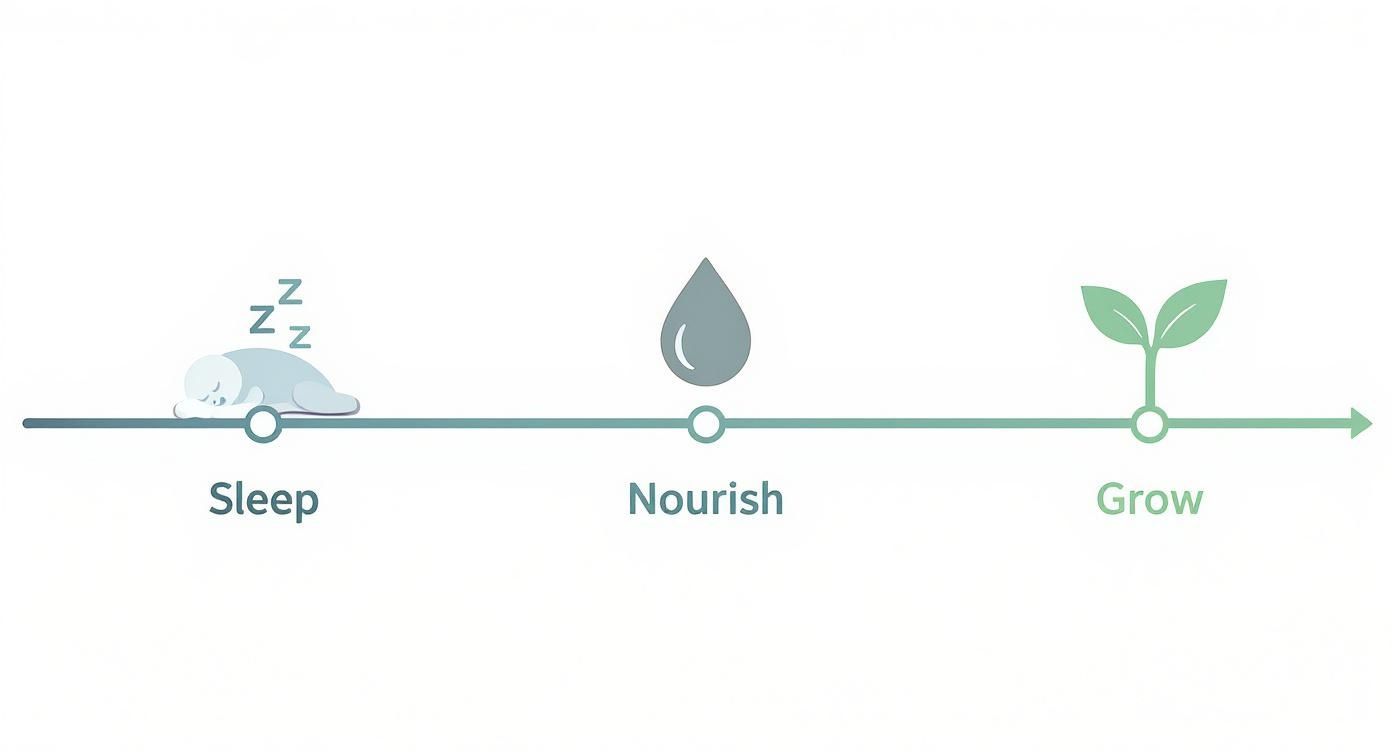
This simple visual nails the process: minoxidil takes follicles from a dormant "sleep" state, to a "nourished" state, which finally leads to active "growth."
Month 12 and Beyond: The Peak and Maintenance Phase
By the time you hit the one-year mark, you're likely seeing the peak results of your minoxidil treatment. Your hair should be noticeably thicker and fuller than when you started, showing the full effect of the treatment on your hair cycles.
From here on out, the goal shifts from regrowth to maintenance. To hang on to the hair you’ve gained, you have to keep using minoxidil consistently. If you stop, your follicles will eventually revert to their previous state, and the new hair will most likely fall out within a few months.
This isn't just anecdotal—clinical trials back it up. One major study found that after 48 weeks of using a 5% minoxidil solution, an impressive 81.8% of subjects saw an improvement in hair regrowth. It’s solid proof that the stuff works when you stick with it.
Remember, everyone’s timeline will be slightly different, but this gives you a reliable roadmap for what a successful minoxidil journey looks like.
How to Maximize Your Minoxidil Success
Getting a great "minoxidil before and after" photo isn't just about slapping some foam on your head and hoping for the best. It's about creating a consistent, supportive routine that gives the treatment the absolute best chance to work. Think of it as your game plan for tipping the scales in your favor.
The single most important factor? Unwavering consistency. Seriously. Minoxidil isn't a weekend warrior kind of treatment. It demands daily commitment to keep your follicles stimulated and locked into their growth phase. Skipping applications is like hitting the pause button on your progress.
Perfecting Your Application Technique
How you apply minoxidil is just as critical as remembering to do it every day. The goal is simple: get the product directly onto your scalp, where the follicles are. If it’s just sitting on your hair, it’s not doing you any good.
For the best possible absorption, nail down these simple but crucial steps:
- Start with a Dry Scalp: Never apply it to a wet or damp scalp. Water can dilute the minoxidil and weaken its effect. Make sure your hair and scalp are completely dry first.
- Part Your Hair: Grab a comb and create small parts in the areas where you're thinning. This creates a clear runway to the skin, ensuring the product gets where it needs to go.
- Apply Directly to the Scalp: Whether you're using foam or liquid, massage it gently into your scalp with your fingertips. The target is the follicle under the skin, not the hair shaft itself.
- Let It Absorb: Give it a solid 20-25 minutes to soak in before you hit the pillow or use any other hair products. This prevents it from getting rubbed off before it has a chance to work.
These little tweaks can make a huge difference in how much of the active ingredient actually gets absorbed. The form you use can also matter, and you can learn more about the pros and cons of oral vs topical minoxidil to figure out which fits your life better.
Supporting Your Hair from the Inside Out
While minoxidil gets to work on the surface, you can give your hair a major boost from within. A holistic approach—combining diet, gentle hair care, and stress management—builds a much stronger foundation for new hair to grow.
A balanced diet packed with the right nutrients is non-negotiable for building healthy hair. Make sure you're getting plenty of these:
- Iron: Crucial for carrying oxygen to your cells, including the ones that build your hair.
- Zinc: Plays a key role in hair tissue growth and repair. A deficiency is often linked to hair shedding.
- Biotin: The famous B-vitamin that helps your body produce keratin, the protein that hair is made of.
- Protein: Hair is literally made of protein. If you're not getting enough from lean meats, eggs, or plant-based sources, your body can't build strong strands.
Your hair is often a direct reflection of your overall health. When you fuel your body with the right stuff, you’re not just improving your well-being—you’re feeding your hair follicles exactly what they need to thrive.
Finally, be kind to your hair and your mind. Chronic stress can trigger shedding, so finding ways to unwind, whether it's through exercise or just quiet time, can help. At the same time, lay off harsh chemical treatments and avoid tight hairstyles that constantly pull on your roots. Every little positive change adds up.
Navigating Side Effects and Common Concerns
When you start any new treatment, it's wise to understand the whole picture—not just the good stuff, but the potential bumps in the road, too. While minoxidil is a trusted ally for countless people, knowing about the common concerns and side effects from the get-go helps you manage them without getting discouraged. It's all about feeling confident and in control of your routine.
The good news is that most issues are minor and totally manageable. The most common ones happen right on the scalp, which makes sense, since that’s where the action is.
Managing Scalp Irritation
Let's talk about the most frequent complaint: scalp irritation. This can pop up as some annoying dryness, itching, or even a little bit of redness. More often than not, the culprit is an ingredient in the liquid solution called propylene glycol. It's great at helping minoxidil absorb, but it can be a bit drying for some people.
If you notice your scalp feeling sensitive, don't just give up. There are a few simple and effective things you can do first:
- Switch to the Foam: For many, the foam version of minoxidil is a total game-changer. It’s made without propylene glycol, making it a much gentler choice if your skin is on the sensitive side.
- Use a Medicated Shampoo: Adding a ketoconazole shampoo (like Nizoral) to your routine once or twice a week can work wonders to calm inflammation and dial down any flakiness.
- Moisturize Your Scalp: Your scalp is skin, after all! A light, non-comedogenic scalp moisturizer can help soothe dryness and restore balance.
Sticking with the treatment long-term is how you get those impressive "minoxidil before and after" results. While side effects like scalp irritation affect about 5% to 10% of users, they are almost always mild and fixable. Thankfully, newer formulations, especially the foam, have made the experience much more comfortable for everyone.
The Dread Shed Revisited
We’ve already touched on this, but the initial shedding phase—the "dread shed"—is worth another look because it’s easily the biggest freak-out moment for new users. Seeing more hair fall out when you’re desperately trying to grow it back feels completely counterintuitive.
But it's so important to reframe what's happening.
The "dread shed" isn't a sign that minoxidil is failing you. It's proof that it's working. The treatment is pushing out the old, resting hairs to clear the way for new, stronger ones to grow in their place.
Think of it as a necessary changing of the guard. Once you understand the biology behind it, you can see this temporary shedding as a positive sign that your hair follicles are waking up and getting ready for a new growth cycle.
When to Talk to a Doctor
While the vast majority of side effects are harmless, you should always know when it's time to check in with a professional. Systemic issues are rare, but they need to be taken seriously. For a deeper dive into this, our guide on potential oral minoxidil side effects is a great resource.
You should give your doctor a call if you experience any of the following:
- Chest pain or a rapid heartbeat
- Dizziness or feeling faint
- Sudden, unexplained weight gain
- Swelling in your hands, feet, or face
Again, these are very uncommon, but your health and safety always come first. Being aware of these signs empowers you to use minoxidil safely and get the best possible results on your hair regrowth journey.
Pairing Minoxidil with Other Hair Loss Treatments
While minoxidil is a strong performer on its own, it's best to think of it as a key player on a team rather than a solo act. For many people, the most impressive "minoxidil before and after" results don't come from a single product, but from a smart, multi-pronged strategy. This kind of approach tackles hair loss from several different angles, creating a much more powerful defense.
Think of it like trying to save a struggling plant. You could give it more water (that's Minoxidil, boosting circulation), but what if the soil is also missing key nutrients? The best approach is to do both. This is the core idea behind combination therapy for hair loss.
The Two-Front Attack on Hair Loss
Minoxidil is primarily a vasodilator, meaning it widens blood vessels to boost blood flow and nutrient delivery to the hair follicle. It’s working on the circulatory side of the problem. But the most common cause of hair loss, androgenetic alopecia (male and female pattern baldness), is also driven by hormones.
This is where a treatment like finasteride comes in. Finasteride works by blocking the production of dihydrotestosterone (DHT), the specific hormone that shrinks hair follicles and causes them to stop producing hair. By pairing them, you're launching a two-front attack:
- Minoxidil: Works on the outside, feeding the follicles.
- Finasteride: Works on the inside, protecting those same follicles from DHT damage.
This one-two punch is a well-documented powerhouse. Study after study has shown that using both treatments together delivers significantly better results than using either one alone.
By addressing both the hormonal and circulatory causes of hair loss, combination therapy gives your follicles the best possible environment not just to survive, but to thrive.
Comparing Hair Loss Treatment Options
Of course, the world of hair loss treatment extends beyond finasteride. Several other popular options have emerged, each with its own unique way of working. It’s helpful to understand the landscape so you can have a well-rounded conversation with your doctor about what’s right for you.
Here is a quick look at how minoxidil stacks up against some of the other common therapies available today.
| Treatment | How It Works | Best For | Typical Cost |
|---|---|---|---|
| Minoxidil | Improves blood flow to follicles and extends the growth phase. | General thinning, especially at the crown. Widely accessible. | $ (Low) |
| PRP Therapy | Uses growth factors from your own blood to stimulate follicle repair. | Individuals seeking a natural, non-daily treatment to boost growth. | $$$ (High) |
| LLLT | Uses red light to stimulate cellular activity within the follicles. | Those with early-stage hair loss or looking for a non-chemical option. | $$ (Moderate) |
As you can see, each option has its place. Platelet-Rich Plasma (PRP) therapy, for example, involves drawing your blood, concentrating the healing platelets, and injecting them back into your scalp to kickstart natural regeneration. Meanwhile, Low-Level Laser Therapy (LLLT), often done with at-home caps or headbands, uses light energy to energize sluggish follicles.
These aren't always either/or choices, either. Many specialists now create plans that combine several of these treatments for an even greater effect. When building a complete hair restoration plan, some even explore combining Minoxidil and Finasteride with scalp micropigmentation—a cosmetic procedure that creates the illusion of fuller hair.
Ultimately, the best strategy is always a personal one. Understanding how these treatments work allows you to ask the right questions and build a plan that gives you the best shot at achieving your hair goals.
Common Questions About Using Minoxidil
Even with a clear timeline in mind, you probably have a few questions popping up as you start thinking about minoxidil. That’s completely normal. Getting answers to the common “what-ifs” can give you the confidence to stick with the treatment long enough to see those impressive before-and-after results.
Let’s dive into some of the questions I hear most often.
What Happens If I Stop Using Minoxidil?
This is the big one. If you stop using minoxidil, the new hair you’ve grown will likely shed within three to six months. It's crucial to understand that minoxidil isn't a cure for hair loss; it's a maintenance drug that works by keeping your hair follicles in an active growth phase.
Once you stop applying it, that support system is gone. Your hair follicles will revert to their previous state, and you'll eventually end up back where you started. It’s a long-term commitment to keep the gains you’ve made.
Think of it like watering a plant. To keep it thriving, you need to water it consistently. Stop the water, and the plant will eventually wilt. Minoxidil works the same way for your hair.
Can I Use Minoxidil for My Beard or Eyebrows?
Officially, minoxidil is only FDA-approved for treating hair loss on the scalp. That said, some people do use it "off-label" to try and encourage thicker beard or eyebrow growth.
The key thing to know is that its safety and effectiveness for these areas haven't been rigorously studied. You have to be especially careful applying anything near your eyes. Before you even consider an off-label use like this, have a conversation with your dermatologist to weigh the potential risks and benefits.
Is the 5 Percent Solution Better Than the 2 Percent?
Yes, generally it is. For men, clinical studies have consistently shown that the 5% concentration is significantly more effective at regrowing hair than the 2% formula. It’s pretty much the standard recommendation for male pattern baldness.
For women, both strengths are available, and the 5% solution has also been proven to deliver better results. Of course, when it comes to choosing the right medicine for hair loss in women, there are often other factors to consider beyond just the concentration.
Does Minoxidil Work for a Receding Hairline?
Minoxidil tends to work best on the crown, or vertex, of the scalp. That's where it has the most research-backed success.
While it can help slow down thinning at the hairline and even spur some regrowth for some people, the results in this area are often less dramatic. The follicles along the frontal hairline are notoriously stubborn. Still, many users find it's a worthwhile part of their routine for improving overall hair density and holding the line against further recession.
At PRP For HairLoss, we believe that clear, honest information is the best tool for tackling hair loss. Understanding the facts empowers you to make the best decisions for your journey. To learn more about advanced, science-backed treatments, visit us at https://prpforhairloss.com.

 PRP For Hairloss
Leave a comment