If you're starting to see more hair in the sink than on your head, you're not alone. For a lot of guys, a quality hair growth oil for men is one of the smartest first moves you can make toward a healthier scalp and stronger hair. The whole idea is simple: create the best possible environment for your hair to grow.
Why More Men Are Reaching for Hair Growth Oil
Let’s be real, the way men approach grooming has completely changed. The days of a quick splash of water and calling it a day are long gone. Today, taking an active role in your hair's health is just part of the deal, and hair growth oils are right at the center of this new approach.
This isn't just some fad; it's a much bigger shift. Guys are more invested than ever in what they're putting on their bodies, and they're hunting for solutions that actually work and are based on natural ingredients.
The numbers tell the same story. The global men's hair care market, which includes these specialized oils, was valued at USD 36.76 billion in 2025 and is expected to climb to a staggering USD 56.72 billion by 2032. This boom is all about evolving grooming standards and men wanting to take charge of their hair health. You can dig into more of these market growth insights over at ResearchAndMarkets.com.
Shifting from Panic to Proactive Care
For many of us, the first sight of thinning hair can trigger a mild panic. The modern mindset, however, is less about reacting to hair loss and more about proactively building a stronger foundation for the hair you already have.
Think of it like this: you wouldn't wait for your car's engine to smoke before getting an oil change. In the same way, using a hair growth oil is about routine maintenance for your scalp and hair follicles before major problems kick in. It’s a foundational piece of a solid grooming routine.
This proactive approach is empowering. Instead of feeling like you're fighting a losing battle, you're taking a real, tangible step to support your hair's vitality. This is exactly why a good hair growth oil for men has become a fixture in so many bathroom cabinets.
The goal is simple: create an optimal environment on the scalp. A healthy scalp is the bedrock of healthy hair, and oils are exceptionally good at nourishing that foundation.
What Makes Oils a Great Starting Point
So, with all the options out there, why start with oils? For most guys, they hit a sweet spot. They’re less intense and have fewer side effects than prescription medications but are far more targeted than just your average shampoo.
Here’s a quick breakdown of why they’re such an appealing first step:
- Natural Ingredients: The best oils are packed with plant-based extracts and essential oils known to boost scalp circulation and deliver crucial nutrients.
- Accessibility: You can find them easily over the counter. There's no need for a doctor's visit, making it a simple addition to your current routine.
- Focus on Scalp Health: They get right to the root of the problem—literally. They moisturize, help calm inflammation, and deliver nourishment directly to the scalp where it matters most.
Ultimately, picking up a hair growth oil is a decision to invest in the long-term health of your hair, starting right now. It’s a practical, accessible, and often very effective way to take back control.
How Hair Growth Oils Actually Work
Let's ditch the dense science for a second and use an analogy. Picture your scalp as a garden. You can't grow strong, healthy plants in dry, nutrient-starved soil, right? The same exact principle applies to your hair.
For your hair to truly thrive, its "soil"—your scalp—needs three things: good irrigation (blood flow), quality fertilizer (nutrients), and protection from pests (like inflammation and the hormone DHT). Hair growth oils are basically a targeted treatment designed to improve this entire ecosystem from the ground up.
These oils aren't a magic potion that sprouts a full head of hair overnight. Instead, they work on creating the absolute best conditions for your existing hair follicles to kick into gear and stay in their productive growth phase.
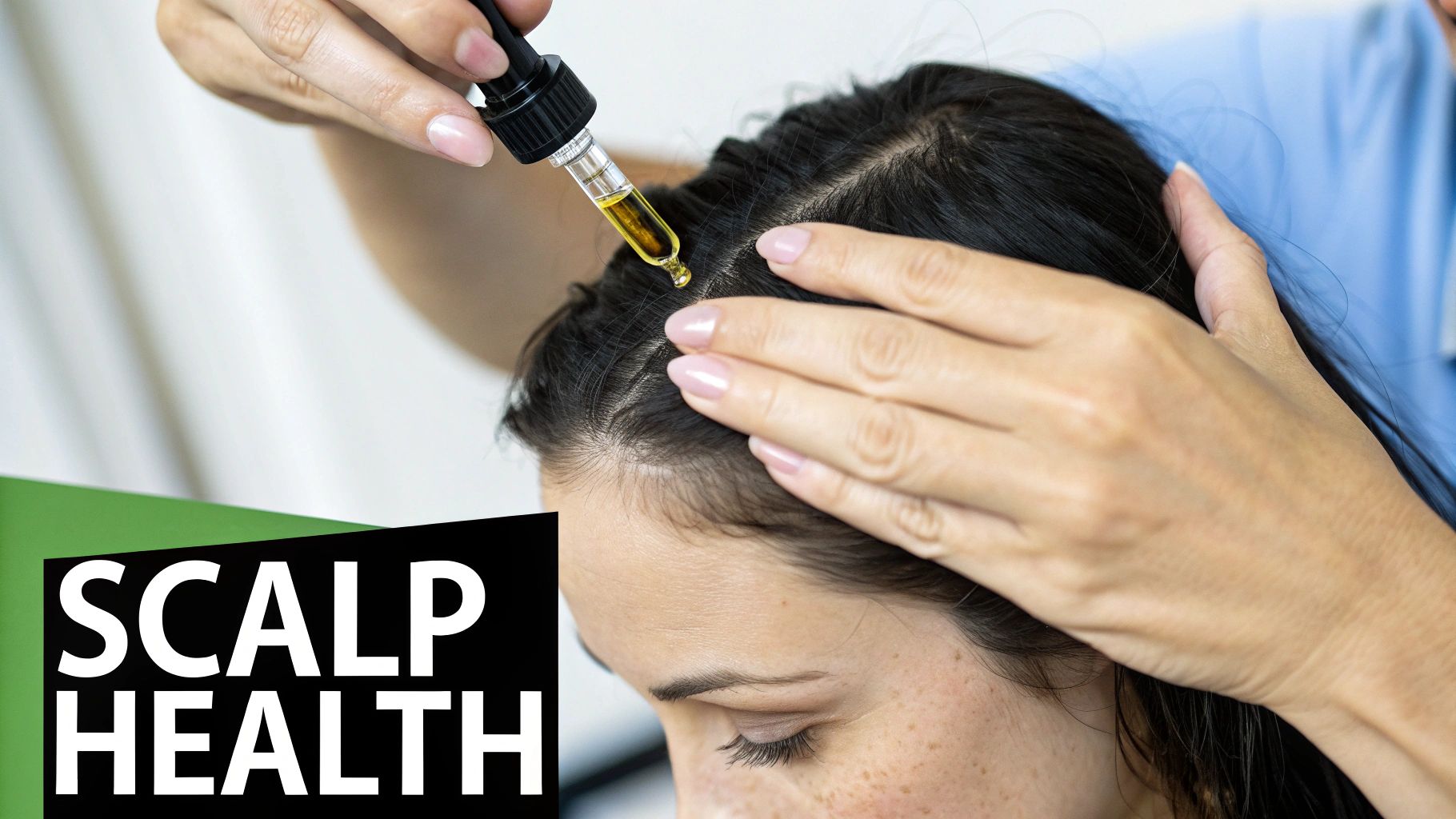
Boosting Circulation to the Scalp
Just like a garden needs water, your hair follicles need a steady supply of blood. Blood is the delivery truck, carrying the oxygen and nutrients essential for building hair. When that blood flow is weak, follicles can go dormant or start producing thinner, weaker strands.
Many of the star ingredients in hair growth oils, like peppermint or rosemary oil, are famous for their stimulating effects. When you massage them in, that mild, pleasant tingling you feel is actually a sign of increased microcirculation right at the surface of your scalp.
This boost in blood flow essentially "wakes up" sleepy follicles, making sure they get the fuel they need to do their job. Improving circulation is one of the most direct ways to support the natural hair growth cycle.
Delivering Nutrients and Fighting Inflammation
Beyond just getting the blood moving, hair growth oils act as a direct delivery system for vital nutrients. They’re often loaded with antioxidants, fatty acids, and vitamins—all crucial building blocks for strong keratin, the very protein your hair is made of.
Think of it as fertilizing your garden. You're giving the scalp the raw materials it needs for robust growth, right where it counts. This is a game-changer, because a nutrient-deficient scalp simply can't support healthy hair.
At the same time, many of these oils contain potent anti-inflammatory compounds. Scalp inflammation is a sneaky problem; it's often invisible but can seriously damage hair follicles and is a common culprit behind hair thinning in men.
By calming irritation and soothing inflammation, these oils help shield the follicles from damage. This creates a much healthier, more stable environment where hair can grow without interruption.
Tackling Hormonal and Environmental Stressors
For many men, a primary cause of hair loss is a hormone called Dihydrotestosterone, or DHT. This hormone latches onto receptors in your hair follicles, causing them to shrink over time until they eventually stop producing hair altogether.
Certain natural oils contain compounds that are believed to help counteract DHT's effects right at the scalp level. While they aren't a replacement for medical treatments, they can be a fantastic supportive measure in your routine.
It's no surprise that the market for these solutions is booming. The therapeutic hair oil market, valued at $3.62 billion in 2025, has surged in popularity as more men seek out effective, natural options to support their hair health. You can see more on this trend in a report from Future Market Insights.
So, to wrap it all up, a good hair growth oil for men works on multiple fronts:
- Stimulation: It gets the blood flowing to deliver more oxygen and nutrients to your follicles.
- Nourishment: It feeds your scalp with the essential fatty acids, vitamins, and minerals it’s hungry for.
- Protection: It fights off the inflammation and oxidative stress that can damage follicles.
- Balancing: It helps address scalp-level issues like DHT sensitivity.
At the end of the day, these oils take a holistic approach. They aren’t just treating the hair itself; they're conditioning the scalp to become a place where strong, healthy hair can truly flourish.
The Best Natural Ingredients for Men's Hair
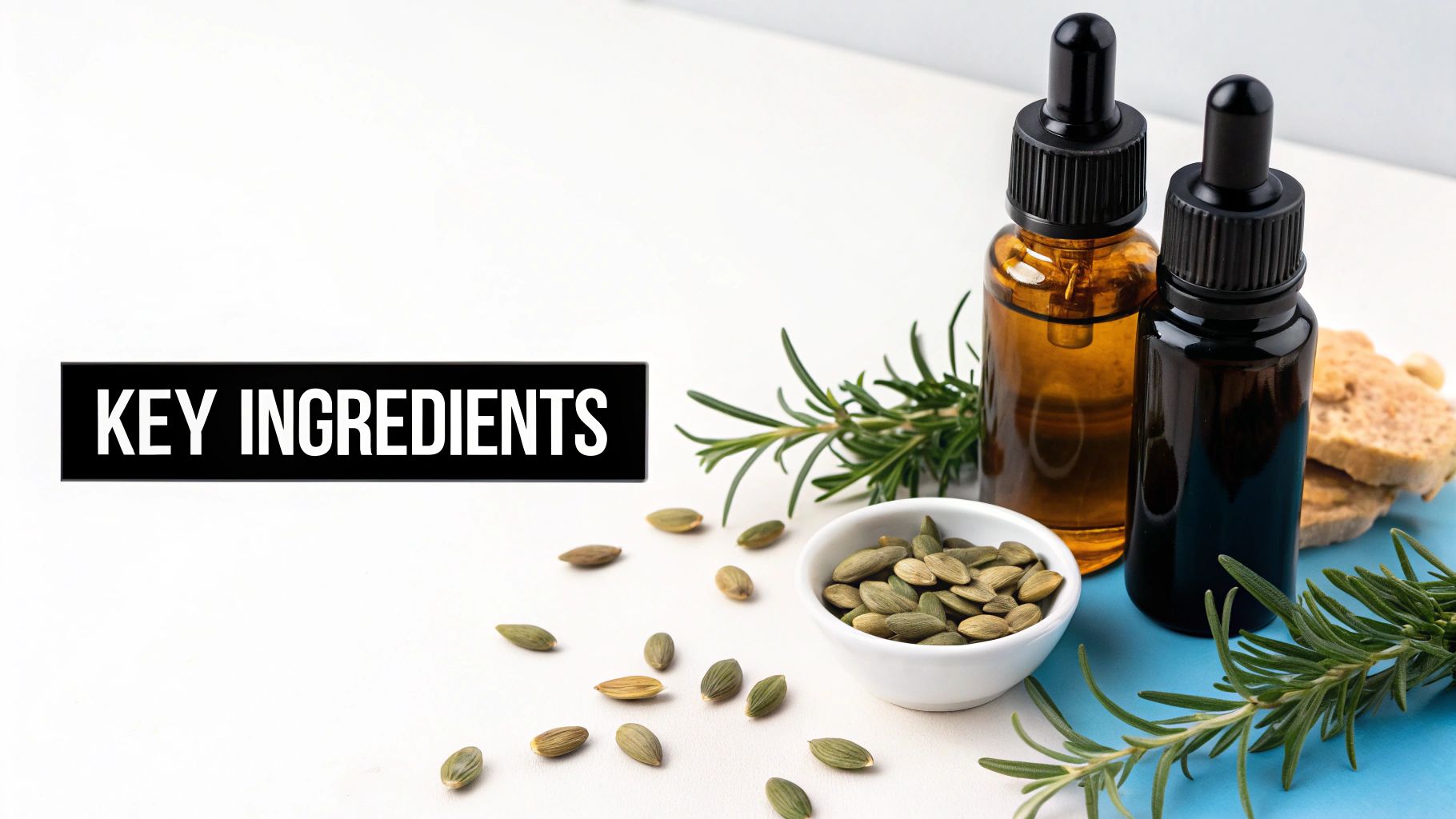
When you’re staring at a shelf full of hair products, it’s easy to feel overwhelmed. But here’s the thing: not all hair growth oils for men are created equal. The real magic isn't in the fancy bottle; it's in the ingredient list. Some are loaded with powerful, science-backed botanicals, while others are little more than scented moisturizers.
Knowing what to look for is your best defense against clever marketing. Think of it like checking the engine specs before buying a car—you want to know what’s actually driving the results. Let's break down the all-star ingredients that have truly earned their reputation in men's hair care.
Rosemary Oil: The Natural Minoxidil Alternative
If there's any buzz in the natural hair care world, it's about rosemary oil. And for good reason—this isn't just folklore. Modern science has put this humble herb to the test, and the results are pretty stunning.
One landmark study put rosemary oil head-to-head against 2% minoxidil (the active ingredient in Rogaine) for treating male pattern baldness. After six months, both groups experienced a similar increase in hair count. That’s a huge deal. It suggests a natural oil can hold its own against one of the most established pharmaceutical treatments on the market.
It’s thought to work by boosting circulation to the scalp and possibly shielding follicles from DHT damage, which is surprisingly similar to how its synthetic rival operates.
Key Takeaway: The fact that rosemary oil performed just as well as 2% minoxidil in a clinical trial makes it arguably the most compelling natural ingredient for guys dealing with thinning hair.
Pumpkin Seed Oil: The DHT Blocker
For most men dealing with hair loss, the hormone DHT is public enemy number one. It latches onto hair follicles and shrinks them until they stop producing hair. This is where pumpkin seed oil (PSO) enters the fight.
PSO is loaded with compounds called phytosterols. These plant-based goodies are believed to block the enzyme that converts testosterone into the follicle-killing DHT. By slowing down this process right at the scalp, pumpkin seed oil helps protect your hair from thinning out.
The evidence is compelling. In one key study, men taking 400mg of pumpkin seed oil daily for 24 weeks saw their average hair count jump by an incredible 40%. The placebo group? Just 10%.
Peppermint Oil: The Circulation Booster
Ever used a product with peppermint and felt that cool, tingling sensation? That’s not just for show. It’s the menthol in the peppermint oil getting to work as a vasodilator.
In simple terms, it temporarily widens your blood vessels. This dramatically increases blood flow to your scalp, delivering a fresh rush of oxygen and nutrients to hungry hair follicles. A well-fed follicle is a happy follicle, and this boost can help nudge it into a more active growth phase.
This stimulating effect makes peppermint oil a fantastic team player, working alongside other ingredients to create the ideal environment for hair to thrive. If you're looking for a wider list of botanicals, our deep dive into the best essential oils for hair growth is a great resource.
Castor Oil: The Nutrient Powerhouse
Castor oil might not have the same direct DHT-blocking cred as the others, but its strength is in its incredible nutritional makeup. It’s almost 90% ricinoleic acid, a unique fatty acid you don’t find just anywhere.
This fatty acid is a potent anti-inflammatory, perfect for calming down an irritated or itchy scalp. A calm, healthy scalp is the foundation you need for any real hair growth.
Plus, castor oil is a humectant, meaning it draws moisture into the hair and scalp, preventing the kind of dryness and brittleness that leads to breakage. It helps you hold onto the hair you already have. To understand how these potent compounds are drawn from nature, you can learn more about different herbal extraction methods and what makes for a quality ingredient.
By choosing products that lean on these four key players, you can be confident you're getting a formula that's backed by both solid science and time-tested wisdom.
How to Use Hair Growth Oil for the Best Results
Having a great hair growth oil is one thing, but knowing how to use it is what separates wishful thinking from actual results. Think of it like this: you can have the best ingredients in the kitchen, but technique is what makes the meal. This is your guide to making every application a powerful step toward a healthier scalp.
It’s clear men are taking this seriously. The market for these oils has exploded, and guys are a huge part of that growth. Online sales alone have hit about 120 million units a year, which tells you just how many of us are trying to improve our hair health at home. You can dig into the numbers yourself over at Archive Market Research.
Let's break down how to make sure every drop of oil is actually doing its job.
Step 1: Start with a Clean Slate
You wouldn't wax a dirty car, right? Same logic applies here. Applying oil to a scalp loaded with product buildup, sweat, and natural oils is a waste of your time. You’ll just trap all that gunk and prevent the good stuff from ever reaching your follicles.
For maximum absorption, you want to work with a clean, dry, or slightly damp scalp. This doesn't mean you have to shampoo right before every single application, but starting with a relatively clean base from the day is crucial.
Step 2: Get the Amount Just Right
This is where a lot of guys go wrong. The instinct is to think "more is better," but drenching your scalp will just clog your pores and leave your hair a greasy mess. The goal is a thin, even layer that your skin can actually absorb.
Here’s a simple rule of thumb:
- For specific thinning spots: If you're targeting your temples or crown, use the dropper to place 3-5 drops directly on those areas.
- For your whole scalp: Part your hair in a few different places and run 1-2 drops along each part. You should only need about a full dropper for your entire head.
The mantra here is less is more. You want to nourish the scalp, not drown it. If the oil is dripping, you've used too much.
Step 3: Master the Scalp Massage
Don't skip this step. Seriously. The massage is arguably just as important as the oil itself. It does two crucial things: it spreads the oil evenly, and more importantly, it physically boosts blood flow to your hair follicles.
Use the pads of your fingertips—never your nails—and work the oil into your scalp using slow, circular motions. Aim for about 3 to 5 minutes with firm but gentle pressure. Not only does it feel incredible, but it helps the oil penetrate and wakes up those dormant follicles. To really get a handle on the technique, check out our full guide on using a scalp massage for hair growth.
Step 4: Let It Work Its Magic
Once the oil is massaged in, it needs time to do its thing. How long you leave it in depends on the oil and your scalp type, but these are solid guidelines to follow.
- Quick Treatment: Leave it on for at least 30 to 60 minutes before you wash your hair. This is a great starting point, especially if your scalp tends to be on the oily side.
- Deep Treatment: For a more intense session, you can leave it in for a few hours or even overnight. Just be sure to throw a towel over your pillowcase to avoid making a mess.
Remember, consistency beats intensity every time. Using your hair growth oil for men two or three times a week is what will deliver noticeable results over the long haul.
So, How Do These Oils Stack Up Against Medical Hair Loss Treatments?
When you’re standing at a crossroads, trying to decide between a natural hair growth oil and a more conventional medical treatment, it’s all about understanding the trade-offs. There’s no single “best” answer—it’s about what’s best for you.
Think of natural oils as your first line of defense. They're fantastic for improving the overall health of your scalp and can be a great starting point if you're just beginning to notice some thinning. They're gentle and focus on creating a better environment for your hair to grow.
On the other side, you have the heavy hitters: medical-grade solutions like Minoxidil (Rogaine) and Finasteride (Propecia). These are powerful tools that often require a prescription or at least careful monitoring. They tend to work faster and more dramatically, with some studies showing 73% of men using Minoxidil reporting visible thickening, compared to around 40% improvement for certain oils.
But that extra power comes with a higher risk of side effects and a bigger price tag. We're talking potential scalp irritation, and in some cases with Finasteride, more serious hormonal issues. So, the real question is: what are your priorities? Let's break it down.
Hair Growth Oils vs. Medical Treatments: A Quick Comparison
To make sense of it all, let’s put these two approaches side-by-side. This should help clarify where each one shines and what you can realistically expect.
| Factor | Hair Growth Oils | Medical Treatments (Minoxidil, Finasteride, PRP) |
|---|---|---|
| Effect Timeline | Slower, more gradual changes, often noticeable in 8–12 weeks. | Faster, more visible growth, typically seen within 12–16 weeks. |
| Side Effects | Very rare. Maybe some minor itching or a bit of greasiness. | More common. Can include scalp irritation, dryness, and potential sexual side effects (with Finasteride). |
| Cost per Year | Low, usually in the $20–$100 range. | Higher, ranging from $120–$600+ for prescriptions or much more for PRP. |
| Commitment Level | Moderate. Requires scalp massages 2–3 times a week. | High. Often requires daily application or pills, plus regular clinic visits for treatments like PRP. |
As you can see, oils are the low-risk, low-cost option perfect for maintenance and early intervention. Medical treatments pack a bigger punch and deliver faster results, but they demand a bigger commitment in terms of cost, routine, and managing potential side effects.
Key Insight: Natural oils are your go-to for safety and affordability, while medical treatments win on speed and potency.
This little decision tree gives you a great visual for figuring out where to start based on what you’re seeing in the mirror.
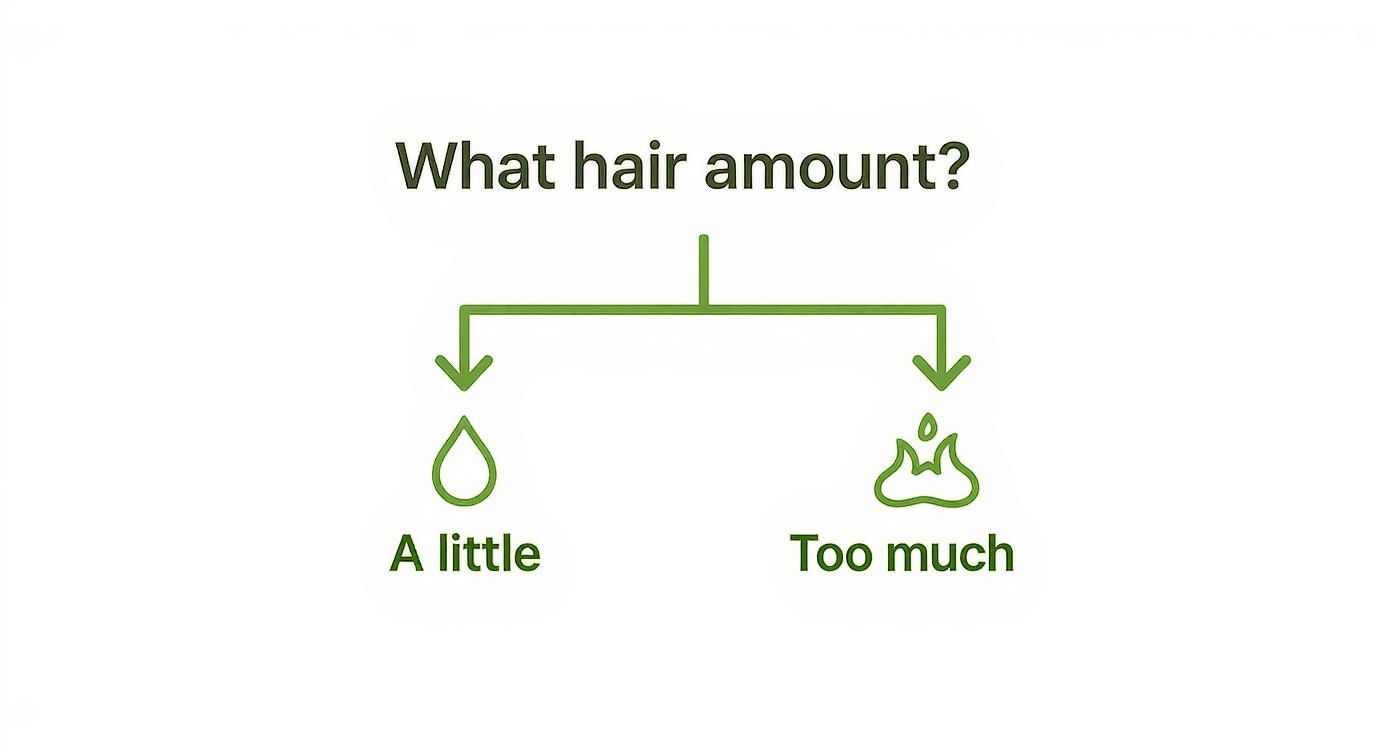
The takeaway is simple: if you're just noticing the first signs of thinning, an oil is an excellent first step. If the hair loss is more significant, it might be time to look into medical interventions. For a deeper dive, you can explore more about your options in our guide to non-surgical hair loss treatments.
Making the Right Choice for Your Situation
So, how do you decide what’s right for your life and your hair? It really boils down to your personal goals and comfort level.
- Go with oils if: You’re in the very early stages of thinning and want to focus on scalp health as a preventative measure. You prefer a gentle, low-risk approach and are patient enough to wait for subtle results.
- Turn to medical treatments like Minoxidil or Finasteride if: You’re looking for more significant, measurable gains in hair density and you want to see them within a few months. You’re okay with the daily commitment and have discussed the potential side effects with a doctor.
- Consider PRP (Platelet-Rich Plasma) if: You want a powerful, medically-driven solution without the hassle of a daily pill or topical. You’re prepared for the cost and the schedule of clinic visits.
The Commitment: Time and Monitoring
No matter which path you choose, consistency is king. You won't see results overnight. With oils, you’ll need to set aside about 5 minutes for a good scalp massage a few times a week. It can actually be a pretty relaxing ritual.
With medical therapies, the commitment is different. It might mean a daily application that becomes part of your morning routine or, if you’re on Finasteride, regular check-ins with your doctor. I always tell my clients to take "before" photos and then track their progress every month. It’s a huge motivator and helps you see the small changes that happen over time.
A Real-World Example
Think of someone like Mark. He started noticing his hair was thinning a bit at the crown. He wasn't ready to jump into medication, so he started using a rosemary oil blend twice a week and switched to a gentler shampoo. After about three months, he saw a real drop in how much hair he was shedding and his scalp just felt healthier. A year later, when he wanted to be more aggressive, he added Minoxidil to his routine.
This kind of phased approach is a smart way to go. You can start with a low-risk foundation and add more powerful treatments if and when you feel you need them.
Ultimately, choosing a path isn’t about finding the one “right” answer. It's about finding what fits your lifestyle, budget, and hair goals. A hair growth oil for men can be a fantastic standalone tool or a great complementary therapy alongside medical treatments. My best advice? Start small, be patient, and listen to what your hair and scalp are telling you.
Your Game Plan for Healthier Hair
We’ve waded through a lot of information, but the takeaway is refreshingly simple. This isn't about chasing some miracle cure that promises results overnight. It's about building a smart, consistent routine that gives your hair the absolute best environment to thrive.
The two most powerful allies you have are patience and consistency. Think of using a quality hair growth oil as an investment in your future self—you're creating the right conditions on your scalp today for better hair down the road.
This is the start of a long-term strategy for your hair's health, and just as importantly, for your own confidence.
Your Essential Action Steps
So, let's distill all of this into a clear, no-nonsense plan. You’re now armed with the knowledge to pick the right product and, crucially, use it the right way.
Here’s what to focus on:
- Choose Wisely: Your first step is to ignore the marketing hype and look at the label. You want products built on proven ingredients like rosemary, pumpkin seed, and peppermint oil. The formula is everything.
- Apply Correctly: A few drops directly onto a clean scalp is all it takes. Drenching your head won't speed things up; it'll just waste product.
- Massage It In: This is non-negotiable. Spend a solid 3-5 minutes working the oil into your scalp with your fingertips. This simple action is what boosts blood flow and helps the active ingredients get where they need to go.
- Stay Consistent: Find a rhythm that works for you, aiming for 2-3 applications per week. Occasional, sporadic use just won't cut it.
Remember, the goal is to nourish the scalp, calm inflammation, and give your hair follicles the support they need. Every time you stick to the routine, you’re taking another step in the right direction.
To really cover all your bases, think beyond the bottle. Environmental factors play a huge role in scalp health. Hard water, for example, is notorious for leaving mineral deposits that can clog follicles, irritate the scalp, and leave hair feeling brittle. An easy fix like installing an Althy Vitamin C Revitalizing Shower Water Filter can make a surprising difference by filtering out chlorine and heavy metals before they even touch your hair.
When you combine a targeted hair growth oil with a supportive lifestyle, you’re not just hoping for the best—you're building a powerful, proactive plan. This approach, along with other tips on how to boost hair growth naturally, gives you the best possible shot at success.
Common Questions About Hair Growth Oil for Men
Diving into a new hair care routine always brings up a few questions. It’s smart to get the lay of the land before you commit. Here, we’ll tackle some of the most common questions guys have about using a hair growth oil for men, giving you clear, no-nonsense answers so you can start with confidence.
Let's clear up any doubts you might have.
How Long Does It Really Take to See Results?
This is the big one, and the honest answer is: you have to be patient. Hair growth is a marathon, not a sprint. The hair you see on your head actually started its journey weeks ago, deep inside the follicle, so any treatment needs time to influence the new hairs that are still forming under the scalp.
With consistent use, most guys start noticing some early signs of improvement—like less shedding and a healthier-feeling scalp—within 8 to 12 weeks. For more visible changes in hair density and thickness, you're usually looking at a timeline of 3 to 6 months.
Think of it like a fitness routine. You don't build muscle after one trip to the gym. The real results come from steady, consistent effort over a period of months.
Can I Use Hair Growth Oil if I Have an Oily Scalp?
Absolutely. In fact, it might even help get things under control. It sounds backward, I know, but sometimes an oily scalp is actually a dehydrated scalp. When the skin is stripped of its natural moisture, it can overcompensate by pumping out even more oil, or sebum.
The right kind of oil can soothe and moisturize the skin, sending a signal to your glands that they can dial back the oil production. The key is to stick with lightweight, non-comedogenic oils like jojoba or grapeseed and maybe skip heavier ones like coconut oil on your scalp. You can also adjust how long you leave it in. Instead of an overnight treatment, try applying the oil for just 30-60 minutes before you shampoo.
Will Hair Growth Oil Make My Hair Fall Out at First?
It's not very common, but a few guys do notice a small, temporary uptick in shedding right when they start a new scalp treatment. In the hair loss community, this is sometimes called the "dread shed," and it can actually be a sign that the product is kicking things into gear.
Basically, the stimulation from the oil can push resting hairs (those at the end of their lifecycle) out of the follicle to make way for new, stronger hairs to begin their growth phase. If the shedding seems like more than just a little, or if it continues for more than a few weeks, it’s a good idea to stop and talk to a professional to make sure it isn’t an allergic reaction or irritation.
Are Expensive Brands Better Than Simple Natural Oils?
Not necessarily. A fancy bottle and "for men" branding often have more to do with marketing savvy than a superior formula. What really matters is what's inside the bottle.
A simple bottle of pure, high-quality rosemary oil or pumpkin seed oil can be far more effective than an expensive blend that’s mostly filler—think silicones, artificial fragrances, and cheap carrier oils. The best hair growth oil for men will have its powerful, active ingredients listed right at the top of the label. Always read the label; that's where the truth is.
Ready to take the next step in understanding your hair health? The team at PRP For HairLoss is dedicated to providing clear, evidence-based information on a wide range of hair loss solutions, from natural approaches to advanced medical treatments like PRP. Explore our resources and empower yourself with knowledge by visiting https://prpforhairloss.com.

 PRP For Hairloss
Leave a comment