It usually starts with a quiet observation. A few more hairs in the sink than usual, a part line that looks a bit wider, or that sinking feeling when you realize your forehead seems to be expanding. For millions of guys, facing the first signs of hair loss is a frustrating and deeply personal moment. But here's the good news: there has never been a better time in history to fight back. The era of snake oil and empty promises is over. Today, we've got an arsenal of scientifically proven treatments that can stop hair loss in its tracks and, in many cases, even regrow what you thought was gone for good.
The key isn't to chase some mythical miracle cure. It's about understanding the different, effective options out there and picking the one that actually fits your type of hair loss, your lifestyle, your budget, and what you’re hoping to achieve. Think of this guide as your straightforward, no-nonsense playbook. We're going to give you a realistic look at the best hair loss treatments for men, breaking down how each one works, who it’s best for, and what kind of results you can genuinely expect. We'll skip the confusing medical jargon and give you the practical, actionable advice you need to take back control of your hairline with confidence.
1. Finasteride (Propecia)
Finasteride, probably better known by its brand name Propecia, is one of the most effective and widely used oral medications for fighting male pattern baldness. It’s an FDA-approved treatment that gets right to the hormonal root of the problem. Interestingly, it was first developed to treat an enlarged prostate, but its powerful effect on hair growth was a happy accident that led to its approval for hair loss.
How It Works
Male pattern baldness is mostly caused by a hormone called Dihydrotestosterone, or DHT. DHT latches onto receptors in your hair follicles, causing them to shrink and "miniaturize." This process messes with the hair's growth cycle, leading to finer, shorter hairs until the follicle just gives up and stops producing hair.
Finasteride’s job is to block the enzyme, 5-alpha-reductase, that converts testosterone into DHT. By taking a daily 1mg pill, you can drastically lower the DHT levels in your scalp, giving your hair follicles a fighting chance. This not only helps stop hair loss from getting worse but can often lead to regrowth from follicles that had gone dormant.
This quick reference summarizes the compelling clinical data on Finasteride's effectiveness.
These numbers really show why Finasteride is considered a cornerstone treatment; it doesn't just halt hair loss for the vast majority of men, it actually promotes significant regrowth for a huge chunk of them.
Actionable Tips for Success
If you want to get the best results with Finasteride, consistency and patience are your two best friends. This is a marathon, not a sprint.
- Consistency is Key: Make taking your pill at the same time every day a habit. This keeps DHT suppression stable.
- Be Patient: You're not going to see changes overnight. It usually takes at least 3-6 months to notice the first improvements, with the full effect often taking a year.
- Track Your Progress: Snap a few photos of your scalp each month in the same lighting. It’s the best way to objectively see the changes over time.
- Start Early: Finasteride works best at preventing more loss, so it's most effective when you start at the first signs of thinning.
- Consult Your Doctor: If you run into any side effects, talk to your physician. They might suggest tweaking the dose instead of just quitting cold turkey.
By sticking to these tips and being consistent, you give yourself the best shot at seeing the kind of results found in clinical studies. To get into the nitty-gritty, you can learn more about how finasteride stops hair loss and what to expect from this top-tier treatment.
2. Minoxidil (Rogaine)
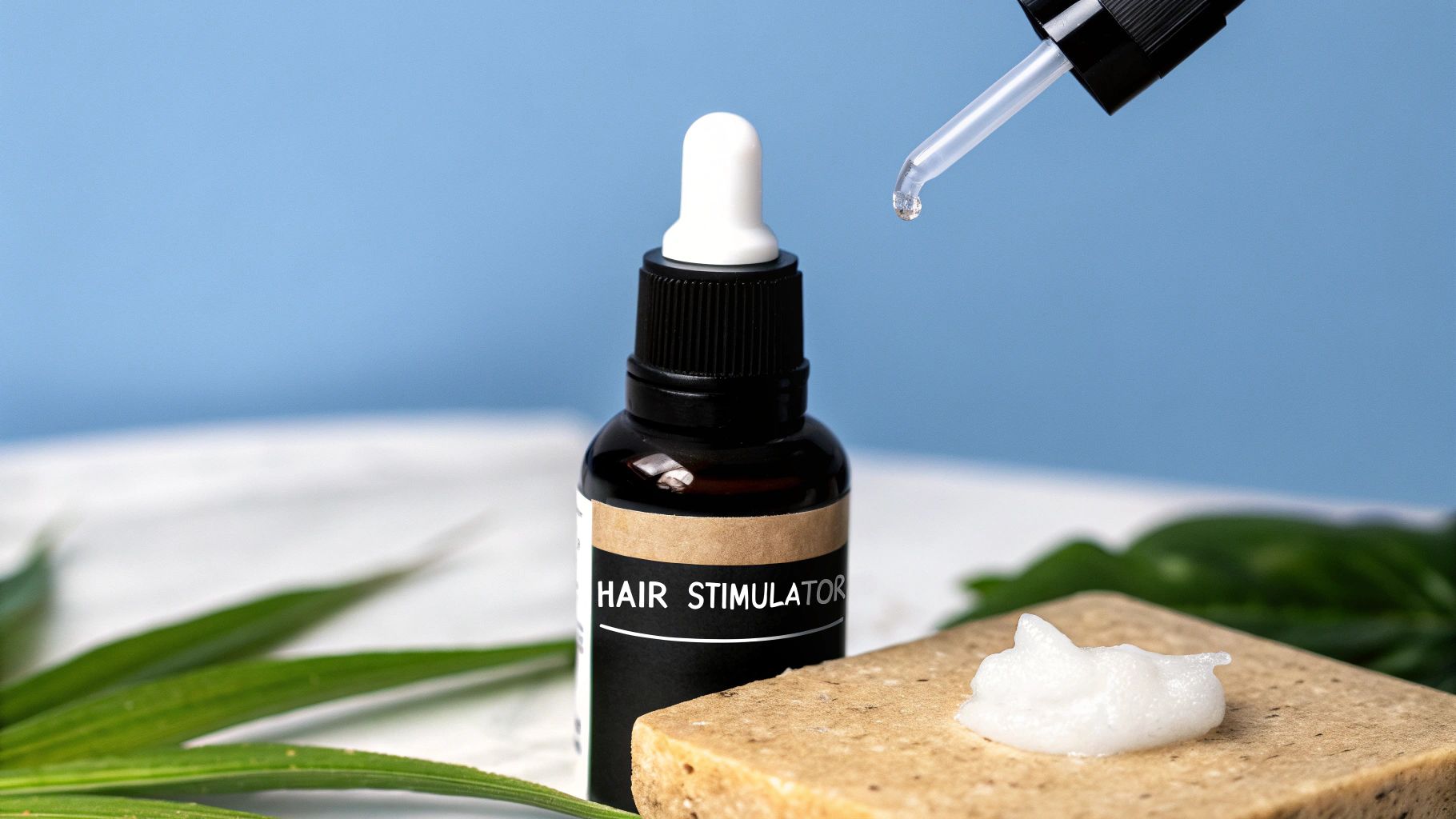
Minoxidil, which everyone knows as Rogaine, is a true staple in the world of hair loss treatments and one of the easiest to get your hands on. It’s an FDA-approved, over-the-counter topical that you apply directly to your scalp to kickstart hair follicles. Like finasteride, it had a different original purpose—it was an oral medication for high blood pressure. The hair-growing side effect was so noticeable that it was repurposed into the topical treatment we know today.
How It Works
Unlike Finasteride, Minoxidil isn't a DHT blocker. It works as a vasodilator, which is a fancy way of saying it widens the blood vessels in your scalp. The idea is that this improves blood flow, bringing more oxygen and nutrients straight to your hair follicles.
Minoxidil also seems to work by opening up potassium channels, which helps to extend the anagen (growth) phase of the hair cycle while shortening the telogen (resting) phase. This one-two punch helps revive shrunken follicles, encouraging them to produce thicker, longer hairs over time. It's available in 2% and 5% strengths, with studies confirming that the 5% formula works better for men.
Actionable Tips for Success
Getting the best results with Minoxidil comes down to applying it correctly and sticking with the routine. It's a long-term game, but these habits can make a real difference.
- Apply to a Dry Scalp: Make sure your scalp and hair are totally dry before you put it on. This helps it absorb properly.
- Target the Skin, Not Hair: Part your hair where it's thinning and use the dropper or foam applicator to get the solution right onto the scalp itself.
- Choose Foam to Reduce Irritation: The foam version doesn't contain propylene glycol, which can irritate some people's skin. It’s a big reason why 84% of users say they prefer the foam over the liquid.
- Allow for Absorption Time: Give it at least four hours to fully absorb before you wash your hair, go for a swim, or throw on a hat.
- Be Patient and Consistent: Apply it twice a day, every day. You might even see some initial shedding—don't panic, that's normal. Visible improvements usually take 4-6 months, with the best results showing up around the one-year mark.
By making these steps part of your daily routine, you can effectively use one of the best hair loss treatments for men to fight thinning. While the topical version is standard, some people look into other forms, so it's smart to understand the potential side effects of oral Minoxidil before thinking about alternatives.
3. Low-Level Laser Therapy (LLLT) / Red Light Therapy
Low-Level Laser Therapy, also known as Red Light Therapy, is a non-invasive, FDA-cleared treatment that uses medical-grade lasers to wake up your hair follicles. It's a pain-free way to use the energy of light to your advantage, making it a great standalone option or a powerful teammate for medications and topicals. You'll see it in at-home devices like caps, helmets, and combs from brands like HairMax and Capillus, as well as in more heavy-duty systems at professional clinics.
How It Works
The science here is called photobiomodulation. It sounds complicated, but the idea is simple. Specific wavelengths of red light (usually between 630-670 nanometers) penetrate the scalp and get soaked up by the mitochondria in your hair follicle cells. This gives them a serious energy boost by increasing the production of adenosine triphosphate (ATP), which is basically cell fuel.
With all this extra energy, the cells in your hair follicles can do their job better. This can help extend the growth phase of the hair cycle, push dormant follicles back into action, and improve blood flow to the scalp. The payoff? Potentially less shedding, better hair density, and healthier hair overall—all without chemicals or drugs. One 26-week study found that the LLLT group gained an average of 19 hairs per square centimeter, compared to just 7 in the placebo group.
Actionable Tips for Success
To really get something out of Low-Level Laser Therapy, you have to be consistent. The effects build up over time, so sticking to the routine is everything.
- Choose Wisely: Look for devices that have FDA clearance (specifically 510k approval). This doesn't guarantee it will work for you, but it does verify its safety and that it’s intended for hair growth.
- Be Consistent: Most at-home gadgets require you to use them for 15-30 minutes, 3-4 times a week. Make it part of your schedule and don't skip sessions.
- Ensure Good Contact: Position the device so the light is evenly distributed across all thinning spots. A clean scalp helps the light penetrate better, too.
- Combine Therapies: LLLT plays well with others. Using it alongside minoxidil or finasteride can create a powerful, synergistic effect because they all tackle hair loss from different angles.
- Track Your Progress: The changes are slow. Take clear pictures of your hair every month in the same spot with the same lighting so you can actually see the difference over a 6 to 12-month period.
By following these practices, you can give this innovative technology the best chance to work for you. To get a better handle on the science, you can explore the specifics of red light therapy for hair and see how it might fit into your overall game plan.
4. Hair Transplant Surgery (FUE & FUT)
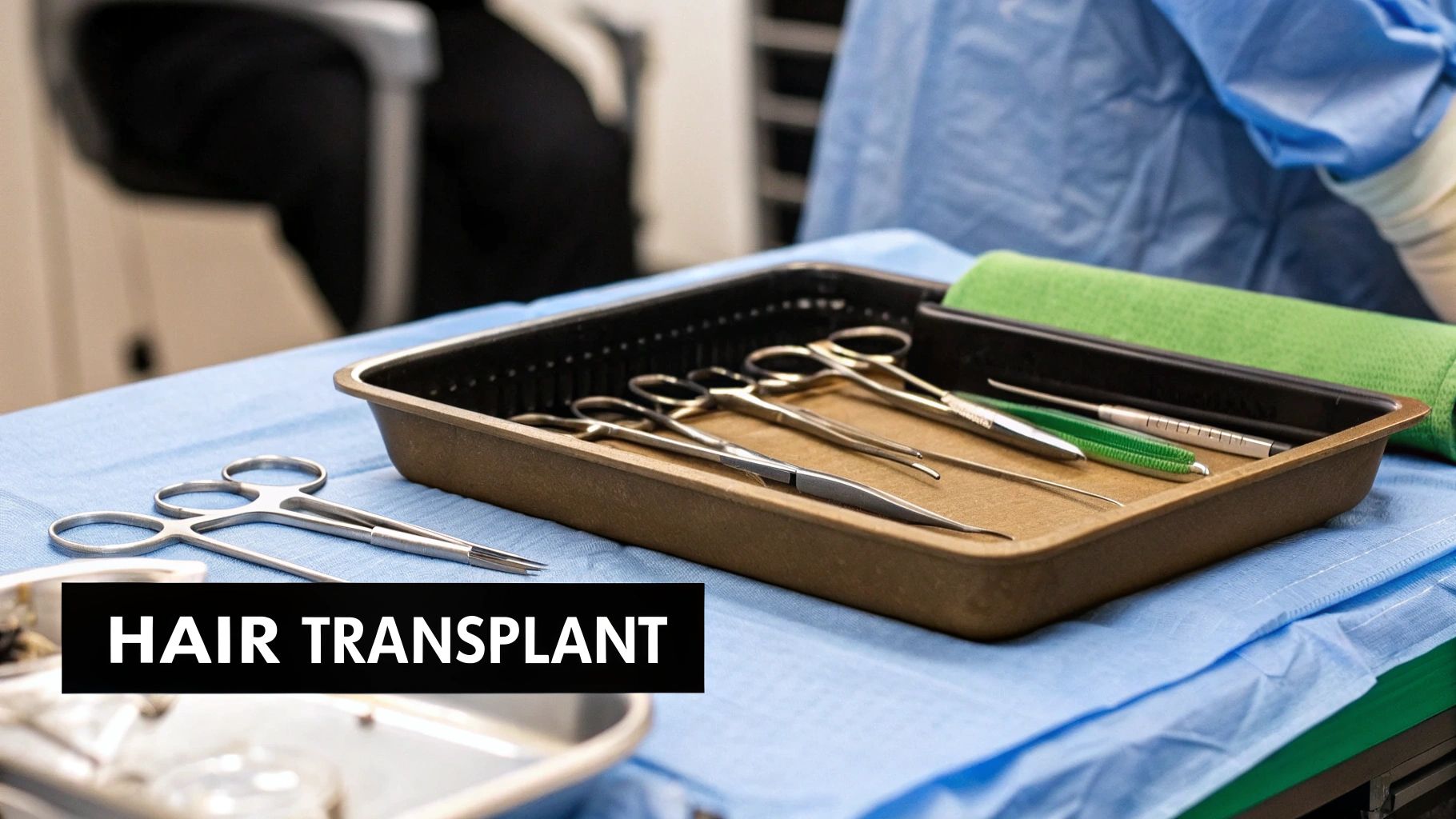
For men who want a permanent, game-changing solution, hair transplant surgery is the gold standard. This procedure doesn't create new hair; instead, it cleverly relocates your own healthy, DHT-resistant hair follicles from the back and sides of your head (the donor area) to the areas where you're thinning or bald. It's about strategically redistributing your permanent hair to rebuild a natural-looking hairline and restore density.
How It Works
The magic behind a hair transplant lies in a concept called "donor dominance." The hair on the back and sides of your head is genetically wired to resist the DHT hormone that causes balding. When these resilient follicles are moved to the top or front of your scalp, they keep that genetic trait and continue to grow for the rest of your life.
There are two main techniques used today: Follicular Unit Transplantation (FUT), which involves removing a strip of scalp to harvest follicles, and Follicular Unit Extraction (FUE), where individual follicular units are taken out one by one. FUE has become the more popular choice because it’s less invasive and doesn't leave a linear scar, which is great for guys who like to wear their hair short. A skilled surgeon using modern FUE techniques can achieve graft survival rates of 85-95%, leading to incredibly dense and natural-looking results.
Actionable Tips for Success
A hair transplant is a serious investment of both time and money. Smart planning and diligent aftercare are crucial to protecting that investment and getting the best possible result.
- Do Your Homework: Don't just pick the first surgeon you find. Research them thoroughly. Look for certifications from groups like the ABHRS (American Board of Hair Restoration Surgery) and spend time looking through their before-and-after photos.
- Set Realistic Expectations: You need to understand the limitations. The aim is a major cosmetic improvement, not to get back every single hair you had as a teenager.
- Protect Existing Hair: A transplant only fixes the bald spots. It's vital to keep using treatments like finasteride or minoxidil to hold on to the native hair you still have.
- Plan for Recovery: Book at least 7-10 days off work for the initial healing. You’ll have visible redness and scabbing during this time.
- Follow Post-Op Instructions: Listen to your clinic! Strictly follow their rules on washing, sleeping, and physical activity to give the new grafts the best chance of survival.
By choosing a great surgeon and committing to the recovery process, you can get a permanent, life-changing result. To learn more about what makes or breaks a procedure, you can read up on the factors influencing hair transplant success rates and what you should expect.
5. Dutasteride (Avodart)
Dutasteride, often sold as Avodart, is like the supercharged big brother to finasteride. It's a powerful option for guys who need a more aggressive treatment. While it’s officially FDA-approved for treating an enlarged prostate, it’s become a popular and highly effective off-label treatment for male pattern baldness. Doctors often consider it for men who didn't get the results they wanted from finasteride or who are dealing with very rapid or advanced hair loss.
How It Works
Just like finasteride, dutasteride goes after the hormonal cause of hair loss: DHT. But it's more thorough about it. Finasteride mainly blocks the type II version of the 5-alpha-reductase enzyme. Dutasteride, on the other hand, inhibits both the type I and type II versions. This double-barreled approach leads to a much bigger drop in DHT levels.
A standard 0.5mg daily dose of dutasteride can slash serum DHT levels by up to 95%, while finasteride gets you to about 70%. This superior DHT suppression gives your hair follicles much stronger protection against miniaturization, which can stop hair loss more effectively and potentially trigger even more significant regrowth. Dutasteride also has a much longer half-life, meaning it sticks around in your system longer for more consistent DHT reduction.
The clinical evidence backing it up is strong. One major Korean study found that dutasteride resulted in a 1.5 times greater increase in hair count compared to finasteride over the same timeframe. This makes it a serious contender among the best hair loss treatments for men.
Actionable Tips for Success
Because it's so potent and used off-label, you need to approach dutasteride thoughtfully and with a doctor's guidance.
- Consult a Specialist: This is non-negotiable. Have a serious talk with a hair loss specialist or dermatologist. Given its off-label status for hair loss, expert supervision is a must.
- Consider Flexible Dosing: To lower the risk of side effects, some doctors recommend alternative dosing schedules, like taking it every other day or three times per week.
- Patience is Paramount: Just like other treatments, dutasteride needs time to work. Give it at least 6-8 months to fairly judge its effectiveness before deciding to make a change.
- Monitor Yourself Closely: Pay attention to how you feel, especially in the first few months. Report any potential side effects to your doctor right away.
- Ideal for Non-Responders: This treatment is often best suited for guys with aggressive hair loss or those who tried finasteride for a year with little to no success.
6. Platelet-Rich Plasma (PRP) Therapy
Platelet-Rich Plasma (PRP) therapy is a cutting-edge, non-surgical treatment that uses the healing factors from your own blood to kickstart hair growth. It’s a technique that has made its way from sports medicine—where it helps athletes heal faster—to the front lines of hair restoration. It's considered one of the best hair loss treatments for men who are looking for a natural option that uses their body's own resources.
How It Works
PRP therapy leverages the powerful growth factors packed inside your blood's platelets. The whole process begins with a simple blood draw, just like you'd have at a regular check-up. That blood is then spun in a centrifuge, a machine that separates the blood into its different parts. This step isolates the platelet-rich plasma from everything else.
This concentrated "liquid gold," which is loaded with growth factors like Platelet-Derived Growth Factor (PDGF) and Vascular Endothelial Growth Factor (VEGF), is then carefully injected into the areas of your scalp where hair is thinning. These growth factors act like a wake-up call for dormant hair follicles, improving blood supply and extending the growth phase of the hair cycle. The end result is a natural boost to the health and productivity of your hair follicles.
Actionable Tips for Success
To get the best results from PRP therapy, you need a smart approach that covers preparation, choosing the right provider, and sticking with follow-ups.
- Choose an Expert: Find a practitioner who has a ton of experience specifically with PRP for hair loss, not just general cosmetic procedures. Ask to see before-and-after photos of their actual patients.
- Inquire About Protocol: Ask them about the centrifuge system they use and what platelet concentration they typically achieve. Higher concentrations are often linked to better results.
- Prepare Adequately: For about a week before your appointment, avoid blood-thinning medications and supplements like NSAIDs (ibuprofen), fish oil, and vitamin E to minimize bruising.
- Stay Hydrated: Drink plenty of water in the 24 hours before your session. It makes the blood draw easier and can even improve the quality of your plasma.
- Plan for a Series: PRP isn't a one-and-done deal. For the best outcome, commit to an initial series of 3-4 treatments, spaced about 4-6 weeks apart.
- Budget for Maintenance: To keep your results going strong, plan on having follow-up treatments every 4-6 months, as your provider recommends.
7. Microneedling with Dermarolling/Dermapen
Microneedling, done with tools like a dermaroller or a dermapen, has become a surprisingly powerful way to stimulate hair growth. The technique involves creating thousands of tiny, controlled micro-injuries in the scalp. This might sound counterintuitive, but it taps into your body's natural wound-healing response to rejuvenate hair follicles. It's now considered one of the best hair loss treatments for men, particularly when paired with other therapies.
How It Works
The whole idea behind microneedling is to trigger a healing cascade. When the tiny needles pierce the skin, they cause the release of important growth factors, such as Platelet-Derived Growth Factor (PDGF) and Vascular Endothelial Growth Factor (VEGF). This process boosts blood flow to the scalp, encourages collagen production, and can help activate dormant stem cells within the hair follicle itself.
This stimulation doesn't just strengthen the hair you already have; it creates a better environment for new growth. On top of that, the micro-channels created by the needles dramatically improve how well topical treatments like minoxidil are absorbed, letting them get deeper into the scalp where they can do the most good. A landmark 2013 study really drove this point home, showing that men who used microneedling with minoxidil saw nearly four times the increase in hair count compared to men who used minoxidil by itself.
As the video shows, doing it the right way is key for both safety and results. This method shares principles with other scalp treatments, and you can discover more about mesotherapy for hair loss to understand some related techniques.
Actionable Tips for Success
To get the most out of microneedling, you have to be safe and consistent. Whether you're using a dermaroller at home or getting professional treatments, these tips will help you maximize your results.
- Start Conservatively: Begin with a shorter needle depth, like 0.5mm, and see how your scalp handles it. You can gradually work your way up to 1.0mm or 1.5mm.
- Prioritize Hygiene: This is crucial. Always sterilize your device with isopropyl alcohol before and after every single use. Make sure your scalp is clean before you start, too.
- Use Proper Technique: Roll the device gently over the thinning areas. Use light, even pressure and roll in multiple directions (up and down, side to side, and diagonally), about 6-8 times per section.
- Time Your Topicals: After a microneedling session, give your scalp at least 24 hours to recover before applying minoxidil or other topicals to avoid irritation and excessive absorption.
- Establish a Schedule: For deeper treatments (1.0mm-1.5mm), only do it once every 1-2 weeks to give your scalp time to heal properly. Shorter needle depths (0.5mm) can be used more often.
- Know When to Replace: The needles on a dermaroller get dull. Replace your device every 3-4 months to keep it effective and hygienic.
8. Topical Finasteride/Dutasteride Solutions
For men who want the powerful DHT-blocking effects of finasteride or dutasteride but are worried about taking an oral pill, topical solutions are an exciting alternative. These treatments let you apply the medication directly to the scalp, aiming to focus its effects right on the hair follicles while minimizing how much gets into your bloodstream. It's a promising approach for anyone concerned about the potential side effects of oral meds.
How It Works
Just like the pills, topical finasteride and dutasteride are designed to fight male pattern baldness by blocking the 5-alpha-reductase enzyme. This is the enzyme that turns testosterone into DHT, the hormone that shrinks hair follicles. By putting the medication right on the scalp, it works locally to bring down DHT levels in and around the follicles.
This targeted delivery is the whole point. The goal is to protect your follicles from miniaturization with much less impact on your body's overall DHT levels. These solutions usually come in a liquid or gel and are often combined with minoxidil in a single formula to create a potent, two-in-one treatment that both blocks DHT and stimulates growth.
Actionable Tips for Success
To make topical finasteride or dutasteride work for you, correct application and realistic expectations are key. Success really boils down to consistent, direct contact with the scalp.
- Choose the Right Formulation: Talk to your doctor or compounding pharmacy about liposomal formulations. They can help the medication penetrate the scalp better and may further reduce systemic absorption.
- Apply to a Dry Scalp: For the best results, always apply the solution to a totally dry scalp. Part your hair in several spots to make sure the liquid is getting on the skin, not just your hair.
- Start with a Lower Concentration: If you're worried about side effects, ask about starting with a lower concentration (like 0.025% finasteride) and only increasing it if necessary.
- Be Patient and Consistent: Like their oral cousins, topicals take time. You'll need to give it a good 6-12 months to see noticeable results, so daily application is a must.
- Monitor for Irritation: Keep an eye out for any redness or irritation on your scalp. If you notice any, check in with your provider, as the base liquid carrying the medication might need to be changed.
Top 8 Hair Loss Treatments Comparison
| Treatment | Implementation Complexity 🔄 | Resource Requirements ⚡ | Expected Outcomes 📊 | Ideal Use Cases 💡 | Key Advantages ⭐ |
|---|---|---|---|---|---|
| Finasteride (Propecia) | Moderate – daily oral medication, prescription required | Low – once daily pill, affordable generics | High – stops hair loss in ~90%, regrowth in ~65% (3-6+ months) | Men with early to moderate male pattern baldness | Clinically proven, convenient dosing, extensive safety data |
| Minoxidil (Rogaine) | Moderate – twice daily topical application | Low – OTC topical, foam/liquid forms | Moderate to high – ~40% users see regrowth, best on crown (3-12 months) | Men and women with vertex or mild hair loss | No prescription needed, safe for both genders, minimal systemic effects |
| Low-Level Laser Therapy (LLLT) | Moderate to high – regular 15-30 min sessions 3-4 times/week | High upfront cost for FDA-cleared devices | Moderate – improved density/thickness, best as adjunct (4-6+ months) | Users seeking non-drug, non-invasive adjunct treatment | Painless, no side effects, compatible with other treatments |
| Hair Transplant Surgery (FUE & FUT) | High – surgical procedure requiring skilled surgeon | Very high – costly, surgical facilities needed | Very high – permanent natural hair regrowth (9-12 months full result) | Advanced hair loss or hairline reconstruction | Permanent solution, once-off procedure, natural appearance |
| Dutasteride (Avodart) | Moderate – daily oral medication, prescription and monitoring | Moderate – more expensive than finasteride | Very high – superior DHT reduction and regrowth (4-12+ months) | Men with aggressive or finasteride-resistant hair loss | More potent DHT suppression, longer half-life, effective in advanced cases |
| Platelet-Rich Plasma (PRP) Therapy | Moderate – repeated injections every 4-6 weeks initially | High – costly per session, requires clinic visits | Moderate – variable results, improved thickness/density (3-6 months) | Patients seeking natural, drug-free adjunct treatment | Autologous, minimal systemic risks, can combine with other therapies |
| Microneedling with Dermarolling | Moderate – weekly to monthly treatments | Low to moderate – affordable devices or professional sessions | High with minoxidil – enhances absorption and regrowth (3-4 months) | Enhancement of topical treatments, safe home use | Boosts topical efficacy, stimulates natural growth factors, affordable |
| Topical Finasteride/Dutasteride | Moderate – daily topical application, may require compounding | Moderate – cost varies, limited availability | Moderate to high – comparable to oral with fewer side effects (4-6+ months) | Users sensitive to oral side effects wanting targeted DHT block | Reduced systemic absorption, combined with minoxidil, alternative to oral use |
Making Your Move: Choosing the Right Path Forward
Trying to figure out the world of hair loss solutions can feel like you're trying to read a complicated map without a compass. You’ve just gone through a deep dive into the best hair loss treatments for men, covering everything from the foundational FDA-approved meds like Finasteride and Minoxidil to permanent surgical fixes like FUE transplants and exciting regenerative therapies like PRP. It’s a lot to take in, but the goal isn't to become a scientist overnight. It’s to become an informed patient who knows enough to take the next, most important step.
If there's one thing to take away from all this, it's that there is no single "miracle cure." What you have instead is a whole spectrum of effective, science-backed treatments. Each one works differently, requires a different level of commitment, and is best for a different type of person. Your journey is your own, and the best strategy will be the one that’s tailored specifically to you.
Synthesizing the Information: Your Action Plan
So, what now? The most important thing you can do is switch from just reading about it to actually doing something. Staring at your hairline in the mirror won't change anything, but a smart plan will. Here’s how to take everything you've just learned and turn it into a real plan.
- Identify Your Goals and Commitment Level: What are you really looking for? A low-cost, entry-level option like Minoxidil or microneedling to just slow things down? Or are you ready for a more powerful, systemic attack on DHT with a prescription like Finasteride or Dutasteride? Be honest with yourself about how much time, money, and effort you're willing to put in.
- Understand the Root Cause: For most guys, male pattern baldness is genetic and hormonal, with DHT as the main villain. But other things can play a part. Getting a sense of your own hormonal health can give you valuable clues. Looking into resources for understanding your testosterone levels can be a good first step to seeing the bigger picture.
- Consult a Professional (Your Most Important Step): Trying to self-diagnose can lead you down a rabbit hole of wasted time and money. Make an appointment with a dermatologist or a hair loss specialist. They have tools that can accurately measure your hair density and miniaturization and can recommend a plan that’s built for you. This is your chance to bring up what you've learned about LLLT, PRP, or topical solutions and work together on a strategy.
The Power of Combination and Consistency
One of the most powerful ideas in modern hair restoration is the multi-pronged attack. The guys who get the best results often aren't just using one thing; they’re combining several treatments to fight hair loss from all angles.
Key Insight: Think of it like a team strategy. Finasteride is your defense, blocking DHT. Minoxidil is your offense, stimulating the follicles. Microneedling and LLLT are your support players, improving the scalp environment and making your main treatments work even better.
This synergistic approach can give you results that are far better than any single treatment on its own. But none of it matters without the one ingredient you have to bring to the table: consistency. Hair growth is a slow, biological process that happens over months, not days. Whether you choose a simple topical or a complex routine, sticking with it every single day is the secret sauce that makes it work.
You now have a clear map of the most effective tools available in the fight against hair loss. The power is officially in your hands. You're no longer just watching your hairline change—you're an active participant who is equipped to take back control. Choose your path, commit to it with patience, and start the journey to not just restore your hair, but to rebuild your confidence from the scalp up.
Ready to explore a powerful, natural approach that uses your body's own healing factors to stimulate hair growth? At PRP For HairLoss, we specialize in Platelet-Rich Plasma therapy, a cutting-edge treatment detailed in this guide. Discover if this innovative, non-surgical solution is the right next step for you by visiting our website: PRP For HairLoss.
 PRP For Hairloss
Leave a comment