If you're looking for a non-surgical way to tackle hair loss, mesotherapy is a treatment that gets right to the root of the problem. It involves a series of micro-injections that deliver a potent blend of vitamins, minerals, and other growth-promoting ingredients directly into your scalp.
Think of it as a highly targeted nutrient boost for your hair follicles, designed to halt thinning and kickstart new growth.
What is Mesotherapy for Hair Loss?
You've probably come across the term "mesotherapy" in your research, but what does it actually involve? Let's use an analogy. Imagine your scalp is a garden, and your hair is the plants you're trying to grow. If the soil (your scalp) lacks the right nutrients, your plants will naturally struggle to grow strong and healthy.
You could take oral supplements, which is a bit like spreading fertilizer all over the garden and hoping some of it seeps down to the roots. Mesotherapy, on the other hand, is like using a tiny, precise tool to inject a custom-mixed, high-potency fertilizer directly at the base of each individual plant.
This direct-delivery system is what makes mesotherapy for hair loss so effective. It bypasses the digestive system and gets that powerful, nutrient-rich solution straight to the mesoderm—the middle layer of skin where your hair follicles live and work.
For a quick overview of what this treatment entails, here's a simple breakdown:
Mesotherapy for Hair Loss at a Glance
| Aspect | Description |
|---|---|
| Treatment Type | Non-surgical, minimally invasive |
| Procedure | Micro-injections into the scalp's middle layer (mesoderm) |
| Injected Solution | A customized "cocktail" of vitamins, minerals, amino acids, and growth factors |
| Primary Goal | Nourish follicles, improve blood flow, reduce hair fall, stimulate new growth |
| Session Duration | Typically 15-30 minutes per session |
| Number of Sessions | Usually 4-6 sessions initially, followed by maintenance treatments |
| Downtime | Minimal to none |
This table gives you the essential details, but the real magic is in how the treatment works.
The Two-Fold Approach of Mesotherapy
Mesotherapy has a clever, two-pronged strategy for reviving your hair.
First, there's the physical action of the micro-injections themselves. Each tiny puncture creates a controlled micro-wound in the scalp. Your body's natural reaction is to kick its healing processes into high gear, which means flooding the area with blood, oxygen, and growth factors. This process alone can help awaken dormant or sluggish follicles.
Second, there's the specially formulated serum that's being injected. This isn't a one-size-fits-all solution; it's a personalized "cocktail" designed to give your follicles exactly what they're missing. Common ingredients include:
- Vitamins: Biotin and Vitamin B5 are stars here, known for strengthening the hair's structure.
- Minerals: Zinc and copper are essential for maintaining healthy follicle function.
- Amino Acids: These are literally the building blocks of keratin, the protein that makes up over 90% of your hair.
- Growth Factors: These are powerful compounds that act like messengers, telling your cells to repair and regenerate.
By combining this mechanical stimulation with a direct infusion of nutrients, mesotherapy creates the perfect environment to reduce hair shedding and encourage thicker, healthier hair to grow in its place.
Of course, knowing why your hair is thinning is a crucial first step. It's also worth comparing mesotherapy to similar regenerative options like PRP treatment for hair loss, which also uses injections but relies on your body's own platelets.
Ultimately, the goal of mesotherapy is to bring your scalp back into balance, giving your follicles the support they need to thrive.
Your Mesotherapy Procedure Step by Step
Walking into any new treatment can be a little nerve-wracking, but knowing exactly what to expect can really put your mind at ease. The great thing about mesotherapy for hair loss is that the process is surprisingly straightforward and designed to fit right into your regular life. Let's walk through the entire journey, from that first chat with a specialist to what you need to do after your session.
It all starts with a proper consultation. This isn't just a formality; it's where a professional gets to know you and your hair. They'll examine your scalp, talk through your history of hair loss, and figure out if this treatment is the right fit for you. This is also where they’ll map out a plan and customize the nutrient-rich cocktail for your specific needs.
The Treatment Session Itself
When it's time for the procedure, you'll get settled in a comfortable chair. To make sure you’re completely comfortable, some clinics might apply a numbing cream to your scalp first, though many people find the treatment gentle enough without it.
The heart of the procedure is a series of very quick, shallow injections across the areas where your hair is thinning. Using an incredibly fine needle, the specialist delivers that revitalizing serum directly into the mesoderm—the middle layer of your skin. Most people say it feels like a light tapping or a very mild prickling. The whole thing is over fast, usually taking just 15 to 30 minutes. That’s why it's often called a "lunchtime procedure."
This infographic shows you exactly how the process works.
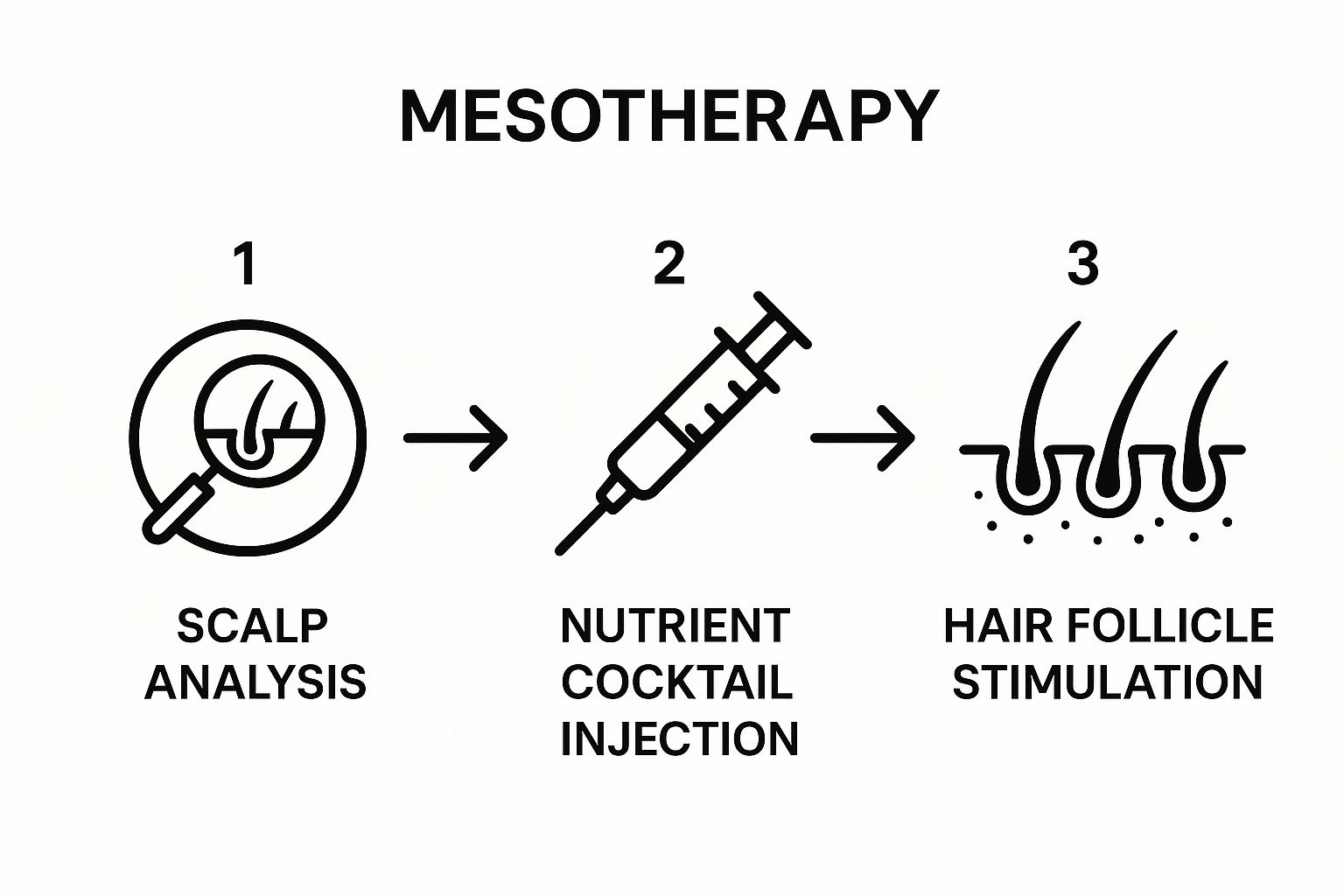
As you can see, the method is precise, flowing from diagnosis right to follicle stimulation. It’s a targeted approach that’s really catching on. In fact, the global hair mesotherapy market is expected to hit $540 million by 2033, a number that shows just how much trust people are putting into these kinds of minimally invasive hair treatments.
After the Session: What to Expect
Once the injections are done, your practitioner will give you a few simple aftercare tips. The best part? There’s basically no downtime, so you can head right back to your day. To get the most out of your treatment, though, you’ll want to follow a few simple rules.
- Wait to Wash: Hold off on washing your hair for at least 48 hours. This gives the nutrient solution plenty of time to work its magic.
- No Heat Styling: Avoid blow dryers and other hot tools for a day or two to keep your scalp from getting irritated.
- Avoid Sun Exposure: Try to keep your scalp out of direct sunlight for about two days after your session.
- Skip the Gym: It's a good idea to avoid any intense workouts for 24 hours to prevent excessive sweating.
A typical treatment plan usually kicks off with 4 to 6 sessions, spaced a few weeks apart. After that, you'll just need occasional maintenance sessions to keep your results going strong.
This steady-and-consistent approach is quite different from other treatments that might be more intensive. If you're weighing your options, you might find it helpful to learn more about the PRP injection for hair, which works in a different way to encourage growth. No matter which path you choose, consistency is always the secret to success.
Who Is the Ideal Candidate for Hair Mesotherapy?

While mesotherapy for hair loss is a fantastic option for many people, it isn't a silver bullet for every type of hair loss. The most important first step is figuring out if your specific situation is what this treatment is designed to fix. It's like any good project—you need to match the right tool to the right job to get the best results.
Think of it this way: mesotherapy is most effective when the hair follicles are still alive but just aren't performing well. They might be dormant, shrinking, or starved of nutrients. The treatment works by waking up and revitalizing these weakened follicles, not by bringing dead ones back to life.
Prime Candidates for Mesotherapy
So, who really benefits from this targeted scalp treatment? The ideal candidate is usually someone whose hair loss is in the earlier stages or is being caused by something temporary.
Here are a few profiles of people who typically see great results:
- Early Stages of Pattern Baldness: If you're a man just starting to see thinning at the crown or a receding hairline, you're a prime candidate. At this point, the follicles are usually just beginning to miniaturize, and the direct nutrient boost from mesotherapy can help halt or even reverse that process.
- Temporary Hair Shedding (Telogen Effluvium): Ever notice more hair in the drain after a period of intense stress, a major illness, or a big dietary change? Mesotherapy can be a huge help here. It gives the scalp the direct resources it needs to recover and get back to a healthy growth cycle.
- Patchy Hair Loss (Alopecia Areata): For some cases of non-scarring alopecia areata, where you lose hair in small, distinct patches, mesotherapy can help stimulate the follicles in those specific zones and encourage regrowth.
- Individuals with Damaged Hair: If your hair has become weak and brittle from over-processing, chemical treatments, or environmental damage, mesotherapy nourishes the scalp from within. This helps improve the health and strength of the hair you already have.
The common thread here is the presence of active, albeit weakened, hair follicles. Mesotherapy is all about intervening before the hair loss gets too advanced, giving those struggling follicles the direct support they need to start functioning properly again.
Who Might Not Be a Good Fit
It's just as crucial to know when mesotherapy isn't the right move. Being honest about its limitations saves you from investing time and money into something that won't deliver the results you're hoping for. To get a better grasp of different conditions, you can read up on topics like what is androgenic alopecia to understand its progression.
Generally speaking, mesotherapy is less likely to be effective for:
- Advanced Hair Loss: If you have large areas of your scalp that have been completely bald for several years, the follicles there have likely shut down for good. In these situations, the treatment probably won't be able to stimulate new growth.
- Certain Medical Conditions: People with active skin infections, chronic skin disorders on the scalp (like psoriasis), or blood-clotting problems may not be suitable candidates.
- Allergies: This one is straightforward. If you have a known allergy to any of the ingredients commonly used in the mesotherapy solution, this treatment is not for you. A detailed consultation is key to identifying any potential issues.
Benefits and Potential Side Effects Explained
Every treatment has its pros and cons, and when it comes to your hair, you want to walk in with your eyes wide open. Mesotherapy for hair loss has some really compelling benefits, especially if you're not keen on the idea of surgery. But just like anything else, it's not without a few potential downsides.
Let's get into what you can realistically expect, starting with the good stuff.
The Upside: What Are the Key Benefits?
The real magic of mesotherapy is how it delivers nutrients directly to the source of the problem—the hair follicle. Think of it like watering the roots of a plant instead of just spraying the leaves. This targeted approach can lead to some pretty significant improvements.
- Waking Up Dormant Follicles: This is probably the biggest win. The blend of micro-injuries and the nutrient cocktail creates the perfect environment to nudge sleeping follicles back into their active growth phase.
- Less Hair Fall: Many patients report a noticeable drop in hair shedding. By making the existing hair shafts stronger and improving overall scalp health, you'll likely see less hair on your brush or in the shower drain.
- Thicker, Healthier Hair: It’s not just about growing new hair; it’s about making the hair you already have better. The infusion of vitamins and minerals helps beef up existing strands, making them look and feel thicker and more robust.
- Minimally Invasive with Zero Downtime: Compared to a hair transplant, mesotherapy is a walk in the park. The sessions are quick, and you can get right back to your day. No need to clear your schedule.
The core idea is simple: mesotherapy gives a highly concentrated dose of support exactly where it's needed most. This helps restore a healthy balance to your scalp and kickstart a better hair growth cycle.
Understanding the Potential Side Effects
Now, let's talk about the other side of the coin. The great news is that since mesotherapy is so minimally invasive, the side effects are usually mild and don't stick around for long. Most of what you might experience is just your body's natural reaction to the micro-injections.
Here’s what some people experience:
- Temporary Soreness: Your scalp might feel a little tender or sensitive for a day or two after the session.
- Minor Bruising or Redness: It’s common to see small bruises or some redness at the injection sites, but this typically fades fast.
- Slight Swelling: A bit of puffiness can happen, but it usually goes down within 24 to 48 hours.
It’s interesting how social media has shifted our perspective on treatments like this. One report found that over 90% of people believe cosmetic procedures are more popular now thanks to influencers, and 38% admitted they were influenced by before-and-after photos online. Mesotherapy's low-risk profile and quick recovery make it an "Instagram-friendly" option compared to more intense surgeries. For a different perspective, you can also check out the potential PRP for hair loss side effects in our detailed guide.
Mesotherapy vs Other Hair Loss Treatments
It can be tough to decide which path to take for hair restoration. To help you see where mesotherapy fits in, here’s a quick comparison with other popular treatments.
| Treatment | Invasiveness | Downtime | Typical Cost | Best For |
|---|---|---|---|---|
| Mesotherapy | Minimally Invasive | None to 24 hours | $$ | Early-stage thinning, improving hair quality. |
| PRP Therapy | Minimally Invasive | 24-48 hours | $$$ | Stimulating growth, androgenetic alopecia. |
| Minoxidil (Rogaine) | Topical | None | $ | General thinning, maintaining existing hair. |
| Finasteride (Propecia) | Oral Medication | None | $ | Men with male pattern baldness. |
| Hair Transplant | Surgical | 1-2 weeks | $$$$ | Advanced, permanent hair loss. |
Ultimately, mesotherapy shines as a middle-ground option. It's more direct than topical foams or pills but far less intense and costly than a full-blown surgical procedure, making it an excellent choice for many people just starting to tackle their hair loss.
What's New in Hair Mesotherapy?
Hair restoration is a field that never stands still, and mesotherapy for hair loss is right there at the forefront of the change. What started as a simple injection-based treatment has evolved, bringing in new technologies that make it more effective and a whole lot more comfortable for patients.
One of the biggest game-changers is no-needle mesotherapy. Instead of injections, this technique uses a clever process called electroporation. Imagine creating tiny, temporary doorways in your skin with a gentle electrical field. These invisible channels allow the custom-blended serum to sink deep into the scalp and get right to the hair follicles—no needles required. It's a completely painless option.
A Powerful Combination: Pairing Mesotherapy with Other Treatments
We're also seeing fantastic results from combining mesotherapy with other powerful hair loss treatments, particularly microneedling.
When you pair the two, you get a one-two punch against hair thinning. The microneedling device creates thousands of tiny, controlled punctures in the scalp, which accomplishes two things:
- Supercharged Absorption: The micro-channels from the microneedling act like express lanes, helping the mesotherapy cocktail get absorbed far more effectively.
- Natural Growth Boost: The microneedling itself kicks your body’s healing process into high gear, stimulating the production of collagen and other growth factors essential for healthy hair.
This teamwork creates a result that's much bigger than the sum of its parts. It's this kind of innovative thinking that’s pushing regenerative medicine forward. You can see similar principles at play when you read our guide on stem cell hair therapy.
By bringing in modern tools and techniques, mesotherapy isn't just an option anymore—it's becoming a highly sophisticated and dynamic solution for hair restoration.
These advancements are also driving major growth in the industry, especially in North America and East Asia where both aesthetic awareness and medical technology are booming. In places like China, researchers are zeroing in on techniques like Electroporation Mesotherapy (EPM) to really dial in the results. To get a better sense of these global trends, you can discover more insights about the mesotherapy market on biospace.com.
All this constant improvement means mesotherapy continues to be one of the most relevant and effective tools we have for fighting hair loss.
Your Questions About Hair Mesotherapy, Answered
Alright, we've covered the what and the how, but you probably still have some practical questions. That's completely normal. This is where we get into the nitty-gritty—the common questions that pop up when you're seriously considering mesotherapy.
Let's tackle what people really want to know before they commit.
How Long Does It Take to See Results?
When it comes to hair growth, patience is key. Think of it like planting a garden; you won't see sprouts overnight. The first good sign most people notice is a reduction in hair shedding, which can happen within the first few weeks, often after just two or three sessions.
But for the visible, more exciting changes—like improved hair density and the first fuzz of new growth—you'll need to give it a bit more time. Generally, you can expect to see these more substantial results in about three to six months. This window allows your newly awakened hair follicles to complete their growth cycle and start producing healthy strands.
Is Mesotherapy for Hair Loss Painful?
Most people find the treatment surprisingly comfortable. The needles used are incredibly fine, and they only penetrate the very top layer of the scalp. Many describe the sensation as a series of quick, light pricks or a gentle tapping, not true pain.
To ensure the experience is as pleasant as possible, most clinics will apply a topical numbing cream to your scalp beforehand. If you do have any mild soreness afterward, it typically disappears within 24 to 48 hours.
The goal is to make the experience as gentle as it is effective. While everyone's pain threshold is different, the vast majority of patients say the procedure is very easy to tolerate.
Can I Combine Mesotherapy with Other Hair Loss Treatments?
Not only can you, but it's often a great idea. Mesotherapy can be a fantastic team player in a larger strategy to fight hair loss, often boosting the results of other treatments you might be using.
Here's how it can fit into a multi-pronged approach:
- Topical Treatments: Using mesotherapy alongside something like minoxidil can help improve the scalp's condition, potentially making the topical solution more effective.
- Oral Medications: It works well with medications like finasteride, which tackles the hormonal side of hair loss from the inside out.
- Other Procedures: Mesotherapy pairs exceptionally well with PRP (Platelet-Rich Plasma) therapy or Low-Level Laser Therapy (LLLT). Each treatment stimulates the follicles in a slightly different way, creating a powerful synergistic effect.
Combining treatments means you're addressing hair loss from several angles at once, which can lead to faster, more robust results. The key is to work with your specialist to map out a plan that’s safe and tailored specifically to you.
At PRP For HairLoss, our goal is to give you clear, honest information so you can make the best choice for your hair restoration journey.
Explore our resources to learn more about advanced hair loss solutions today
 PRP For Hairloss
Leave a comment