That sinking feeling when you see more hair in your brush than on your head? It’s a feeling a lot of us know all too well. But there's some good news on the horizon: PRP therapy offers a way to fight back by stimulating new growth, reducing shedding, and improving your hair's overall density, all by using your body's own incredible healing powers.
A Smarter Path to Hair Restoration
If you're exploring real solutions for hair loss, you've probably felt swamped by options that promise the world but don't quite deliver. This is where Platelet-Rich Plasma (PRP) therapy really changes the conversation. It's an approach grounded in science that works from the inside out.
Instead of relying on harsh chemicals or going under the knife, PRP taps into the powerful growth factors already doing their thing in your blood. You can think of it like taking your body's best repair crew and sending them straight to your scalp to wake up those sleepy hair follicles.
This minimally invasive treatment is designed to get right to the root of the problem—literally. By nudging follicles that have slowed down or stopped producing hair, PRP doesn't just aim to restore what’s been lost; it helps bring back your confidence, too.
So What Makes PRP Such a Good Choice?
The real appeal of PRP is how natural it is—and the results it can bring to the table. For anyone in the early stages of hair loss, it’s a smart, proactive way to manage thinning and kickstart some fresh growth.
The core advantages really boil down to a few key things:
- Waking Up Dormant Follicles: PRP delivers a concentrated shot of growth factors that can jolt inactive hair follicles back into action.
- Boosting Hair Density: Many people report seeing thicker, fuller hair as more of their follicles switch back into the active growth phase.
- Putting the Brakes on Shedding: The treatment helps strengthen the hair you already have, which means less breakage and fallout day-to-day.
- Improving Scalp Health: A healthy scalp is the foundation for healthy hair, and PRP helps create the perfect environment for strong growth.
This isn’t about wishful thinking; it's about biology. The effectiveness of PRP is backed by some really promising data, offering a hopeful path forward for a lot of people.
Clinical studies have shown that PRP hair treatments have a success rate somewhere around 70–80% for folks with early to moderate hair loss. It’s pretty common for patients to see a noticeable increase in hair density and less shedding within just a few months. That's why it's become a leading option for non-surgical hair restoration. You can discover more about PRP success rates and see what they could mean for you.
How PRP Wakes Up Your Hair Follicles
So, how exactly does PRP give your hair follicles that much-needed wake-up call? It all comes down to tapping into your body's own natural healing system. Picture the platelets in your blood as a team of tiny, on-call medics, always ready to rush to the scene of an injury to start repairs. PRP therapy simply gathers an all-star team of these medics and sends them directly where they're needed most—your scalp.
The whole process is surprisingly straightforward and uses nothing but your own biological material. We're not talking about foreign chemicals or complicated drugs here—just a concentrated dose of your body's own healing power.
Your Body's Natural Growth Engine
It all kicks off with a simple blood draw, just like one you’d get during a routine physical. That small blood sample is then placed into a centrifuge, a special machine that spins it at an incredibly high speed.
This rapid spinning neatly separates your blood into its core components. The prize we're after is the platelet-rich plasma, a golden-colored liquid that is absolutely packed with powerful proteins known as growth factors.
These growth factors are the real heroes of the story. They act like little messengers, telling your cells to get busy repairing damage, regenerating tissue, and kickstarting growth.
The infographic below walks you through this simple three-step journey, from your arm and back to your scalp.
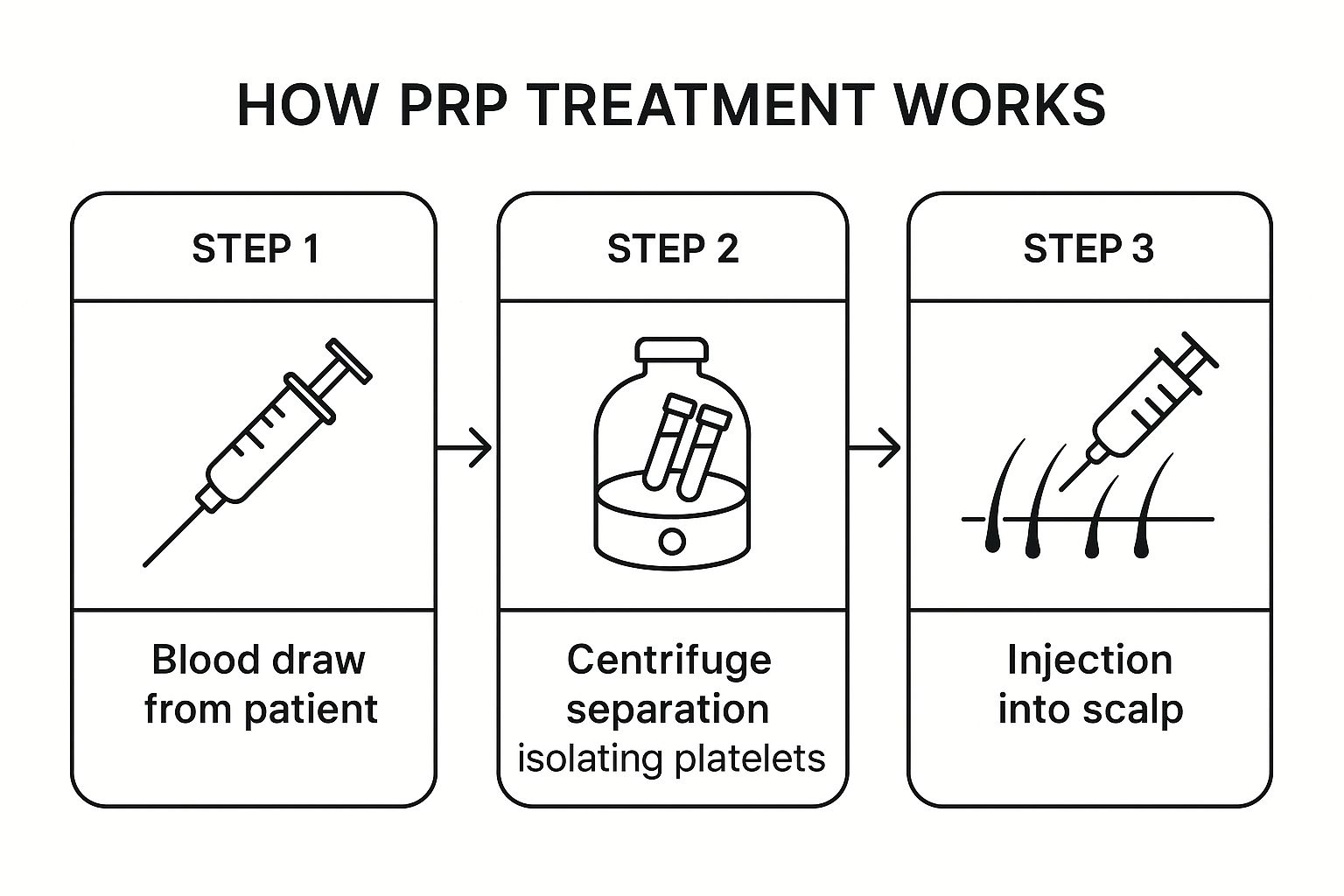
As you can see, the treatment is all about concentrating your body's own healing components. This makes it an incredibly safe and natural way to tackle hair restoration. The final PRP solution is basically a supercharged shot of your body's own healing abilities.
Delivering the Wake-Up Call
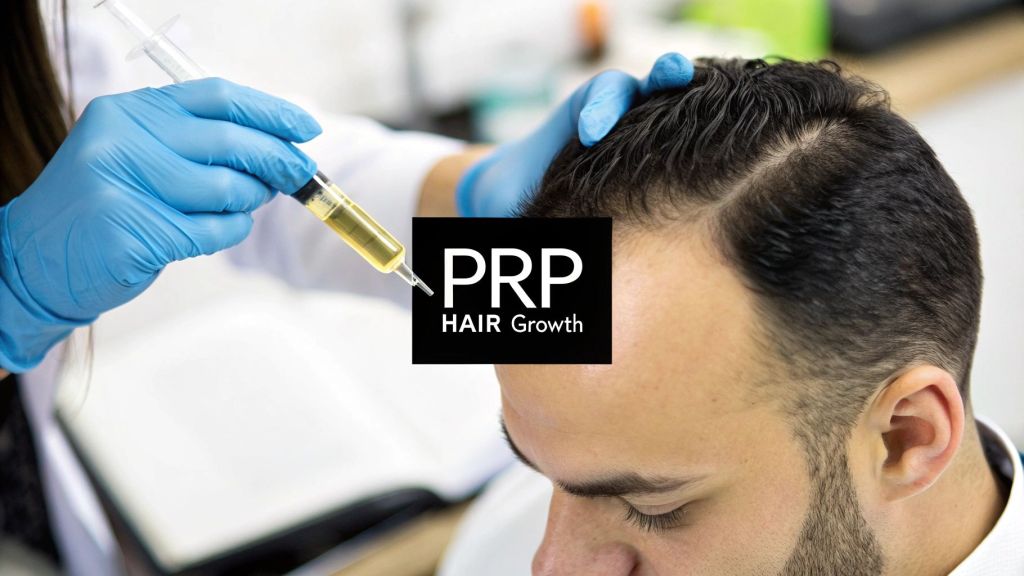
Once this nutrient-dense plasma is ready, it's carefully injected into the specific areas of your scalp where hair is thinning. This is where the magic really begins.
The concentrated growth factors get to work right away, sending a powerful signal to those dormant or struggling hair follicles. You see, many follicles affected by conditions like androgenetic alopecia haven't died off—they've just gone to sleep. For anyone wondering, does PRP really work for hair loss, this biological mechanism is the key.
PRP doesn't magically create brand new follicles. What it does is revitalize the ones you already have, nudging them back into the anagen, or active growth, phase of the hair cycle.
This targeted stimulation triggers some fantastic results:
- It kickstarts new growth by waking up those sleeping follicles and telling them it's time to produce hair again.
- It thickens and strengthens existing hair by boosting blood supply and delivering more nutrients to the root, which leads to stronger, healthier strands.
- It can extend the growth phase of the hair cycle, allowing your hair to grow longer and fuller over time.
In a nutshell, PRP therapy optimizes your scalp's environment, creating the perfect conditions for your hair to thrive. It’s not some miracle cure—it's just a brilliant way of applying your body’s own healing intelligence right where you need it most.
The Real-World Results: What PRP Hair Therapy Can Actually Do For You
Let's cut through the science for a moment and talk about what really matters: results. When you're dealing with hair loss, you want to know what a treatment can actually deliver in the real world. The benefits of PRP go far beyond just wishing for more hair; they're about creating tangible, visible changes by tapping into your body's own healing potential.
The most celebrated benefit, and the one most people are crossing their fingers for, is a real increase in hair density and thickness. PRP isn't magic; it doesn't create new hair follicles where none exist. What it does is wake up the ones that have gone dormant. By stimulating these sleepy follicles, the treatment encourages them back into action, prompting them to produce thicker, stronger hair shafts. Over time, this leads to that fuller look we're all after.
As a direct result, you'll also notice a drop in one of the most stressful parts of hair loss—the constant shedding. With PRP strengthening the hair at the root and fostering a healthier scalp environment, you'll start seeing fewer strands in your brush, on your pillow, and circling the shower drain.
Building Stronger Hair from the Inside Out
Another major plus is the boost in health and resilience for the hair you already have. The concentrated growth factors in PRP kickstart blood flow to the scalp, which is like opening up a superhighway for oxygen and vital nutrients to reach your follicles.
This rush of nourishment fortifies each strand from within. The result? Hair that's less brittle, feels healthier, and has a natural shine to it, all of which contribute to a more robust and vibrant appearance.
One of the most reassuring things about PRP is its incredible safety record. Because the treatment uses a powerful concentrate made from your own blood, the risk of allergic reactions, rejection, or other serious side effects is practically zero.
This makes it a fantastic choice for anyone who's wary of harsh chemicals or more invasive surgical options. It’s a completely natural process that works with your body, not against it.
Hard Numbers: The Proof Is in the Count
These improvements aren't just something you think you see; they're backed up by solid clinical evidence. One landmark study looking at men with androgenic alopecia (that's classic male pattern baldness) found a significant jump in hair density after just a few treatments. The average hair count increased by about 22 follicular units per square centimeter. If you're a data person, you can read the full research on PRP's effect on hair count yourself.
This kind of data confirms what so many people experience firsthand: a genuine, measurable increase in hair. The best way to get a feel for how this is achieved is to understand the treatment itself. You can find a detailed breakdown of the PRP injection for hair treatment and what a session actually involves.
To bring it all together, let’s quickly summarize the key advantages you can expect from PRP therapy.
PRP Hair Treatment Benefits at a Glance
This table breaks down the main ways PRP therapy can help restore your hair, focusing on how its natural approach leads to effective and safe outcomes.
| Benefit | How It Helps You | Key Outcome |
|---|---|---|
| Increased Hair Density | Wakes up dormant follicles, encouraging them to enter a new growth phase. | A visibly fuller and thicker head of hair. |
| Reduced Hair Shedding | Strengthens hair at the root and improves overall follicle health. | Less hair falling out during daily brushing and washing. |
| Improved Hair Health | Boosts the supply of nutrients and oxygen directly to the scalp. | Stronger, more resilient hair with a healthier texture and shine. |
| High Safety Profile | Uses your own body's biological material, eliminating foreign substances. | An extremely low risk of allergic reactions or serious side effects. |
Ultimately, PRP offers a multifaceted approach that not only encourages new growth but also enhances the quality and strength of the hair you already have.
Could PRP Hair Treatment Be Right for You?
While the potential of PRP for hair loss is exciting, it's not a silver bullet for everyone. The single most important step is figuring out if you're a good candidate. It's all about matching the right person with the right treatment at just the right time.
Think of your scalp like a garden. Your hair follicles are the seeds, and PRP is a potent, all-natural fertilizer. It delivers a powerful boost of nutrients that can help dormant seeds sprout again and thrive.
But here’s the catch: if a patch of soil has been barren for years and the seeds are long gone, no amount of fertilizer will magically create a lush lawn. That’s why PRP works wonders for people in the early to moderate stages of hair loss—when the "seeds" are still there, just waiting for that wake-up call.
Identifying the Ideal Candidate
So, who sees the best results? The ideal candidate is often someone with androgenetic alopecia (the classic male or female pattern baldness). In these cases, the follicles haven't disappeared; they've just shrunk and gone dormant. PRP’s growth factors are fantastic at "waking up" these sleeping follicles.
Success with PRP therapy really comes down to a few key things:
- Early Intervention: The sooner you tackle hair thinning, the better your odds. When you act while the follicles are still viable, you give PRP the best possible chance to work its magic.
- Active Follicles: Remember, the treatment revitalizes existing—albeit miniaturized—hair follicles. It can't create new ones from scratch in areas that are completely slick and bald.
- Good Overall Health: A healthy body produces high-quality, platelet-rich plasma and responds more effectively to the healing process.
If you're dealing with extensive or long-term baldness, it’s really important to set realistic expectations. You might still see some improvement, but the results probably won't be as dramatic as for someone who just started noticing their hair thinning. For a clearer picture of what to expect over time, check out our guide on how long PRP lasts for hair loss and what a typical maintenance schedule looks like.
Who Should Steer Clear of PRP Treatment
Knowing who shouldn't get PRP is just as critical as knowing who should. The therapy isn't a good fit for everyone, and certain health conditions can make it ineffective or even unsafe.
For safety reasons alone, people with specific medical issues are generally advised not to proceed with the treatment.
A thorough consultation isn't just a formality—it's the most critical part of the process. It ensures the treatment is safe for you and aligns with your hair restoration goals.
You might not be a good candidate for PRP if you have any of the following:
- Blood-Clotting Disorders: Any condition that affects your blood's ability to clot can create risks and undermine the treatment's effectiveness.
- Active Scalp Infections: You'll need to completely clear up any infections on your scalp before getting PRP injections to prevent complications.
- Certain Chronic Illnesses: Some medical conditions can interfere with your body’s natural healing response, which would make PRP less likely to succeed.
Ultimately, there’s only one way to know for sure if PRP is the right move for you: sit down with a qualified professional. They can properly assess your unique pattern of hair loss, review your medical history, and give you an honest, straight-up opinion on the kind of results you can realistically hope for.
Your PRP Journey: From First Session to Final Results
Knowing what to expect during and after your treatment can make the whole process a lot less intimidating. A typical PRP session is surprisingly quick and straightforward. Most of the time, you'll be in and out of the office in under an hour, which makes it easy to fit into even the busiest of schedules.
I get it, the thought of scalp injections can sound a bit daunting. But rest assured, most providers apply a topical numbing cream to your scalp beforehand to keep you comfortable. You might feel a little pressure during the injections, but the vast majority of people find the process very manageable.
Afterward, it's completely normal for your scalp to feel a little tender or look a bit swollen for a day or two. But one of the best things about PRP is that there's no real downtime. You can pretty much get right back to your daily life as soon as you walk out of the clinic.
What to Expect After Treatment
It's so important to remember this one thing: hair growth is a marathon, not a sprint. PRP results don't just appear overnight. It takes time for those powerful growth factors to wake up your dormant hair follicles and nudge them back into their active growth phase.
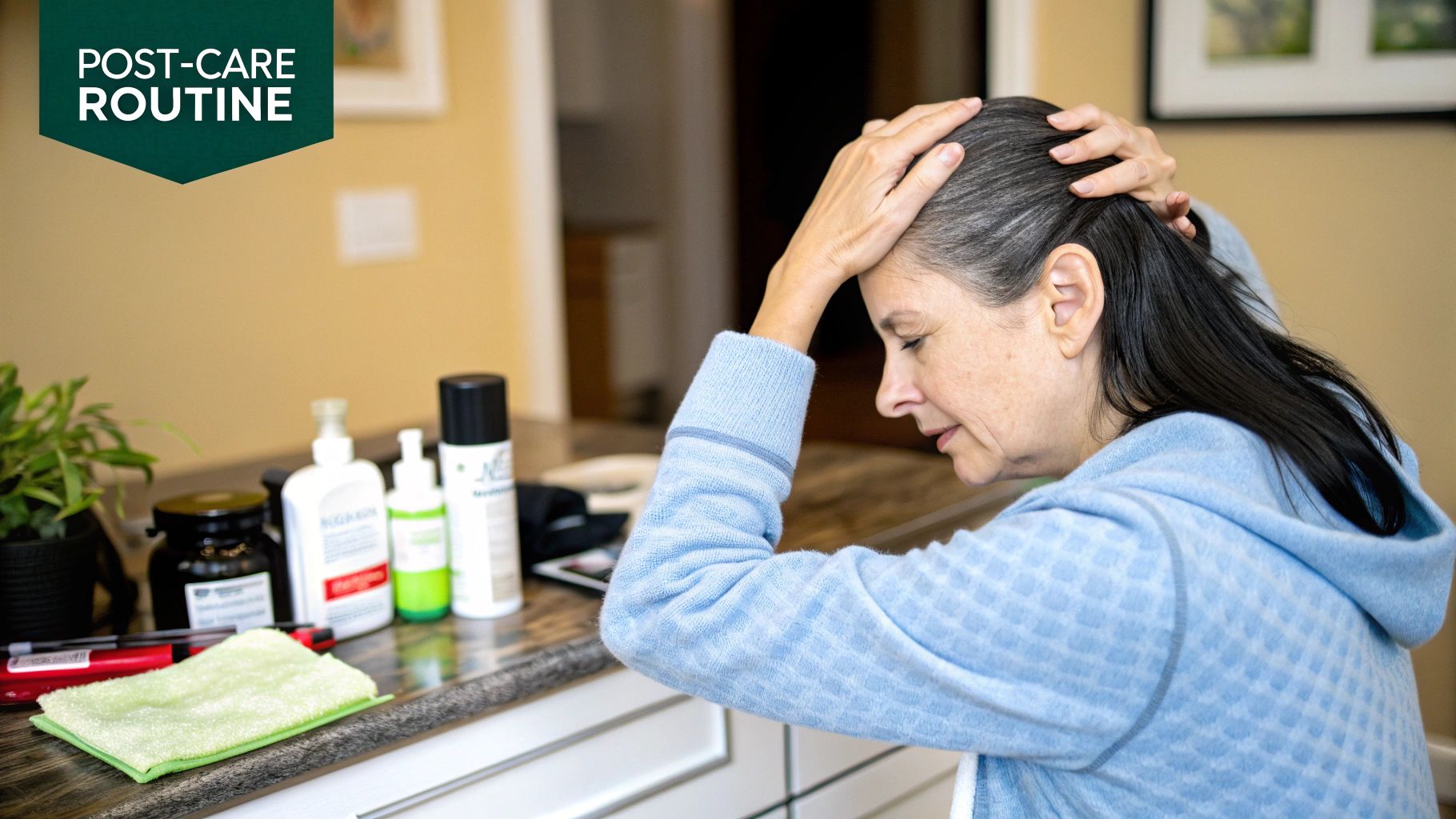
Patience really is your best friend here. While you won't see a full head of new hair the next morning, you will start to see subtle improvements over time. Following a good aftercare routine is crucial for getting the best possible outcome. For a detailed guide, take a look at our article on what to do after PRP hair treatment care.
A Realistic Timeline for Results
Your path to thicker, fuller hair is going to happen in stages. Understanding this timeline helps you manage your expectations and spot the signs of progress along the way.
It's not just word of mouth, either. A major review of 21 different studies found that PRP treatments, especially when continued over six months, significantly reduced hair shedding and had a very low risk of side effects. This really drives home the point that consistency is what delivers the best results.
Here’s a general idea of what you can expect as you move through your treatment plan:
- First Month (After Session 1): The very first change most people notice is less hair falling out in the shower or on their brush. This is the earliest sign that your follicles are getting stronger.
- Months 2-3 (After Sessions 2-3): This is when things get exciting. You might start to see the first hints of new growth—often fine, soft "baby hairs" sprouting in the treatment areas. Many also report an improvement in their hair's overall texture.
- Months 4-6 (After Your Initial Series): Now we're talking. This is typically when the most visible changes appear. Your hair should look and feel noticeably thicker, with better density in those areas that were previously thinning.
The whole idea behind PRP is to create a progressive, natural-looking improvement. Each session builds on the one before it, steadily boosting your hair's health and appearance over time.
Answering Your Top PRP Questions
It's completely normal to have a list of questions when you're looking into a new treatment for hair loss. To give you the clarity you need, we've put together some straightforward answers to the questions we get asked all the time.
Let's dive into the practical side of things—what the treatment feels like, how many sessions it takes, and what you can expect down the road.
Is the PRP Procedure Painful?
The big question on everyone's mind: does it hurt? For most people, the answer is no. The feeling is more of a minor discomfort than actual pain. To make sure you're comfortable, your provider will typically apply a topical numbing cream to your scalp before starting.
You might feel a quick, slight pinch or a bit of pressure during the injections, but these sensations are temporary and most people handle them just fine. The whole thing is over pretty quickly, and any sensitivity fades fast.
How Many PRP Sessions Are Usually Needed?
There's no one-size-fits-all answer here, but there is a typical game plan to get the ball rolling. Most people start with an initial series of three to four sessions, scheduled about a month apart. This first round is designed to really wake up the hair follicles and build a solid foundation for new growth.
After that initial push, the focus shifts to upkeep.
- Initial Phase: A series of 3-4 treatments to kickstart growth.
- Maintenance Phase: Follow-up sessions every 6 to 12 months to keep your results going strong.
This strategy ensures your follicles get the consistent support they need to stay active and healthy.
How Long Do the Benefits of PRP Last?
It's best to view PRP as an ongoing strategy for managing hair loss, not a one-and-done fix. The results—thicker, fuller hair—can be very long-lasting, but only if you commit to a regular maintenance schedule.
The secret to long-term success with PRP is consistency. It's like tending to a garden; you can't just water it once and expect it to thrive forever. Regular maintenance sessions are crucial for sustaining the health and activity of your hair follicles.
Simply put, how long your results last is directly linked to how well you stick to the follow-up plan your specialist creates for you. Those maintenance treatments are what protect your investment and keep your hair looking great.
Of course, it's always smart to have the complete picture of any medical procedure. To learn more, check out our guide on potential PRP hair treatment side effects, which are generally minor and short-lived. Being fully informed helps you make the best possible choice on your path to restoring your hair.
At PRP For HairLoss, we're committed to giving men clear, trustworthy information to understand and tackle hair loss. Check out our resources to see how treatments like PRP can help you get your confidence back. https://prpforhairloss.com
 PRP For Hairloss
Leave a comment