Losing your hair can feel like a lonely journey, but you’re far from out of options. In its simplest form, stem cell hair therapy uses your body's own natural repair system to wake up sleeping hair follicles and kickstart new growth. It’s like giving your scalp the specific tools it needs to rebuild itself from the inside out.
The Promise of Stem Cell Hair Therapy
Watching your hair thin can be frustrating, often taking a toll on your confidence and how you see yourself. For a long time, the only real choices were topical creams, prescription pills, or major surgery like a hair transplant. But thankfully, the world of hair restoration is evolving. Stem cell hair therapy is leading the charge, presenting a promising and more natural path forward.
This guide will walk you through exactly what this treatment is, the science behind it, and what kind of results are actually possible. Think of it as a comprehensive look into one of the most exciting developments for anyone struggling with hair loss.
A Quick Overview
So, what’s the big idea here?
Let's use an analogy. Imagine your hair follicles are like tiny flower bulbs in a garden that have gone dormant and stopped blooming. Stem cell therapy is like applying a potent, specialized fertilizer to the soil. This isn't just generic plant food; it’s a formula designed to send a powerful "wake-up call" to those sleeping bulbs, encouraging them to start the growth cycle all over again.
The treatment works by isolating your body's own regenerative cells and reintroducing them directly to your scalp. The goal is to reboot those dormant follicles, leading to thicker, denser hair that grows naturally. What really sets this apart is its focus on fixing the underlying problem, rather than just masking the symptoms.
Key Insight: The main advantage of stem cell hair therapy is its regenerative nature. It doesn't rely on outside chemicals or drugs. Instead, it taps into your body's innate power to heal itself and grow new tissue, which is why the results can look and feel so authentic.
The sheer number of people experiencing hair loss makes it clear why better solutions are needed. It affects roughly 50% of men and 25% of women worldwide, showing just how many people could benefit from new treatments. The demand is reflected in the market size; the global value for regenerative alopecia treatments, including PRP and stem cells, was estimated at USD 451.8 million in 2025. Experts expect that number to grow as awareness and accessibility increase. You can read more about these market trends and projections to see where the industry is headed.
To help you get a clear picture right from the start, let's break down the fundamentals of the therapy.
Stem Cell Hair Therapy At a Glance
The table below offers a quick snapshot of the treatment, its purpose, and who it's best suited for.
| Concept | Ideal Candidate | Primary Goal | Treatment Approach |
|---|---|---|---|
| Uses your body's own stem cells to stimulate hair growth. | Individuals with early-stage hair thinning or androgenetic alopecia. | To reactivate dormant hair follicles and improve hair density. | A minimally invasive procedure involving cell extraction and injection into the scalp. |
With these core ideas in mind, you're ready to explore the science, the procedure itself, and whether it might be the right path for you.
How Stem Cells Can Revive Your Hair
So, how exactly can a bunch of cells bring your hair back? It’s less complicated than it sounds. Think of your hair follicles like tiny seeds planted in your scalp. When conditions are right, they sprout and grow hair. But sometimes, they go dormant—they’re still there, just not growing. Stem cell hair therapy is like giving these dormant seeds the perfect fertilizer to jolt them back to life.
To really get a grip on this, you first have to understand how your hair grows naturally. It’s a constant cycle of growing, resting, and then shedding. This whole show is run by a special group of stem cells nestled right at the base of every single hair follicle. These are your hair’s master cells.
These hair follicle stem cells are the real MVPs. They’re in charge of repairing the follicle and kicking off a new growth (anagen) phase right after an old hair falls out. They keep the assembly line moving, making sure a new strand is always ready to replace the one you lost.
When the Growth Cycle Is Disrupted
The trouble starts when this beautifully balanced cycle gets knocked out of whack. A few different culprits can cause your follicles to shrink or go into hibernation, essentially putting those crucial stem cells to sleep.
- Genetics: This is the big one. Androgenetic alopecia, what most of us call pattern baldness, is caused by a genetic sensitivity to DHT. This hormone slowly shrinks the follicles until they just give up on producing hair.
- Aging: Let's face it, as we get older, our body’s repair systems slow down. The stem cells in our follicles are no exception. They become less active, meaning hair spends more time resting and less time growing.
- Environmental Factors: Things like chronic stress, a poor diet, or hormonal shifts can also mess with the signals that tell your follicles to grow, leading directly to thinning hair and loss.
When these follicles go dormant, they're not dead—they're just taking a nap. This is a critical detail because it means they can still be woken up.
The Core Concept: Stem cell hair therapy isn’t about creating brand-new hair follicles. It’s all about waking up the sleepy ones you already have by introducing a powerful concentration of your body's own regenerative cells directly to the scalp.
These newly introduced cells act like a strong cup of coffee for your follicles. They release a flood of growth factors and special proteins that speak directly to the dormant stem cells, telling them it's time to get back to work. This effectively pushes the follicles from their resting state back into an active growth phase. It’s a targeted reboot for your natural hair factory.
The Role of Adipose-Derived Stem Cells
One of the most promising sources for these powerful cells is your own fat, or adipose, tissue. Why fat? It turns out that fat is an incredibly rich reservoir of mesenchymal stem cells (MSCs), which are the body's natural experts in repair and regeneration.
Here’s a quick look at what these MSCs do once they arrive at the scalp:
- Reduce Inflammation: They calm down any irritation around the follicle that might be choking off growth.
- Promote Blood Flow: They trigger the formation of new blood vessels, which means more oxygen and nutrients can get to the hair roots.
- Signal for Growth: This is the most important part. They release a cocktail of growth factors that directly prod the existing follicle stem cells into action.
This strategy is similar in principle to other regenerative treatments, like platelet-rich plasma (PRP), which also relies on growth factors to wake up follicles. However, many experts see stem cell therapy as a more direct and potent approach. You can learn more about how PRP treatment works for hair to see the parallels and differences for yourself.
Ultimately, by reintroducing a high concentration of active stem cells, the therapy aims to completely reset the scalp's environment. It creates the ideal conditions for follicles to thrive, helping them return to a normal, productive growth cycle. This is the real biology behind how stem cell hair therapy can lead to visibly thicker, fuller hair.
Exploring Different Treatment Approaches
When you hear the term stem cell hair therapy, it’s easy to picture a single, one-size-fits-all procedure. But in reality, it’s more of a family of treatments. Several different methods fall under this umbrella, each with its own unique way of sourcing and using regenerative cells to combat hair loss.
Of these, one technique has risen to the top as the most established and widely practiced. It relies on a source you might not expect: your body’s own fat tissue.
This approach, sometimes called an autologous fat transfer (meaning the cells come from you), has become the gold standard for good reason. Adipose tissue—the clinical term for fat—is one of the body's richest and most accessible reservoirs of powerful mesenchymal stem cells (MSCs). These are the versatile repair cells we talked about earlier, the ones that can orchestrate tissue regeneration and essentially wake up dormant hair follicles.
The procedure itself is surprisingly straightforward. A small amount of fat is taken from an area like the abdomen or flank in a process that’s a lot like a mini-liposuction. This fat is then carefully processed in a specialized device to isolate and concentrate the stem cells, creating a potent regenerative cocktail. This final solution is then precisely injected into the areas of the scalp where thinning has occurred.
The Adipose-Derived Stem Cell (ADSC) Method
So, why fat? The logic is sound. First and foremost, the cells are your own. This simple fact nearly eliminates any risk of rejection or an allergic reaction. Your body recognizes them instantly and lets them get straight to work without any fuss.
Here's a closer look at what makes this method so effective:
- Abundant Supply: Even a tiny sample of fat contains millions of high-quality stem cells. This means we can get more than enough cellular firepower for a successful treatment without an invasive procedure.
- Minimally Invasive: The harvesting process is quick, requires only local anesthesia, and involves minimal discomfort and downtime. Most people are back to their normal routine very quickly.
- Rich in Growth Factors: The final injection isn’t just pure stem cells. It’s a complete regenerative blend, packed with various growth factors that help the cells survive and amplify the healing signals sent to your follicles.
This self-contained loop—taking your body’s own repair kit from an area of abundance and moving it to an area of need—has become the clinical standard for a reason. It's safe, logical, and effective.
Other Emerging Techniques
While using fat-derived stem cells is the most common path, the field is always exploring new possibilities. You might hear about other methods, but it's important to know that some are more experimental than they are ready for mainstream clinical use.
Important Distinction: Not all treatments labeled "stem cell" are the same. True clinical stem cell therapy involves harvesting and injecting your own live, active cells. Many over-the-counter products use plant-derived "stem cell extracts," which work on a completely different—and far less potent—biological principle.
Here are a few other approaches you might encounter:
- Bone Marrow-Derived Stem Cells: Like fat, bone marrow is a great source of MSCs. The major drawback? Harvesting them is a much more invasive and painful procedure, making it an impractical choice for a cosmetic treatment like hair restoration.
- Allogeneic Stem Cells (Donor Cells): This method uses stem cells from a carefully screened donor, often from umbilical cord tissue. While this removes the need for harvesting, it introduces new complexities around immune system compatibility and regulatory hurdles.
- Plant-Derived Extracts: Some topical products on store shelves claim to use "stem cells" from apples or argan trees. These are not living cells and they absolutely do not function like human stem cells. At best, they are botanical extracts with some antioxidant benefits, but they can't provide the true regenerative power of stem cell hair therapy.
The field is expanding quickly, fueled by a growing demand for more natural and effective solutions to hair loss. In fact, the global market for this type of therapy is projected to grow at a compound annual rate of around 15.2% between 2025 and 2031. This explosive growth shows a clear shift toward regenerative treatments and ongoing innovation in cell-based therapies.
You can explore the full hair regeneration market projections to get a sense of this rising tide. By understanding these different approaches, you can ask the right questions and make sure you know exactly what a clinic is offering.
What to Expect on Treatment Day: Your Patient Journey
Walking into a clinic for any new procedure can feel a bit daunting. It’s the unknown that usually causes the most stress, not the treatment itself. So, let’s pull back the curtain and walk through what a stem cell hair therapy session actually involves.
This step-by-step look will give you a clear, reassuring picture of the entire process, helping you feel confident and prepared.
The First Steps: Consultation and Preparation
Your journey really starts with a detailed consultation, well before the day of the procedure. A specialist will examine your scalp, talk through your goals, and make sure this treatment is the right fit for you. Once you're ready to proceed, the treatment day itself is surprisingly efficient and broken down into three main phases.
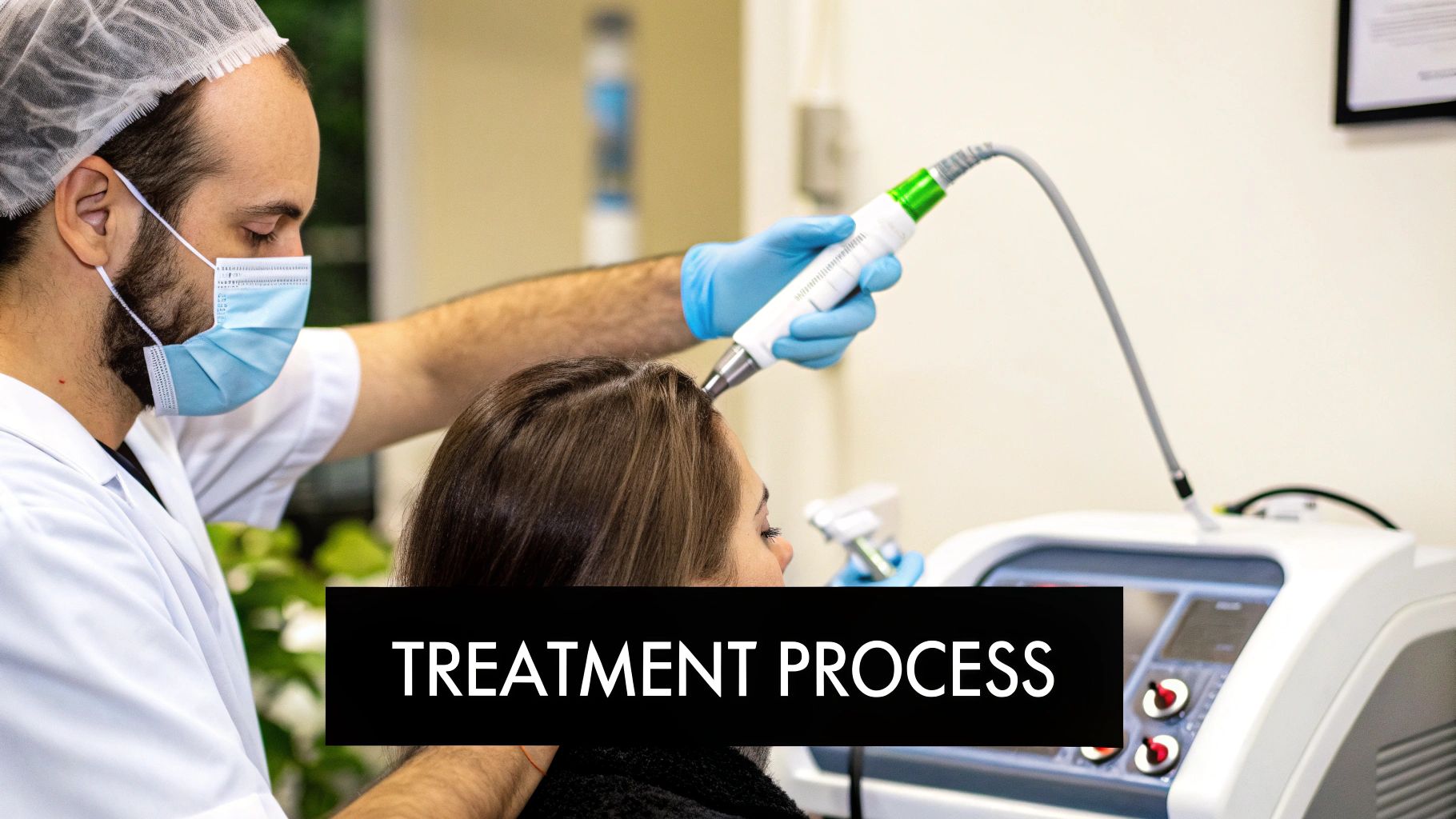
The first order of business is collecting the fat tissue where your stem cells reside. This is a quick and minimally invasive step. A local anesthetic is used to completely numb the area—usually your abdomen or love handles. Then, the clinician uses a specialized tool called a cannula to draw out a small amount of fat, typically just enough to fill a large syringe. Most patients just report a feeling of pressure, but no real pain.
Behind the Scenes: Isolating the Stem Cells
With the fat sample collected, you'll have a bit of downtime while the magic happens in the lab. Your sample is processed in a sophisticated, FDA-cleared device right there on-site. This machine uses a gentle, mechanical process to break down the fat and neatly separate the powerful regenerative cells from the rest of the tissue.
The result is a highly concentrated "liquid gold" packed with your own mesenchymal stem cells and growth factors. This potent serum is what will be used to wake up your dormant hair follicles. The entire isolation process usually takes less than an hour.
The image below gives you an idea of how a clinical study might flow, from bringing patients in to treatment and tracking the impressive results.
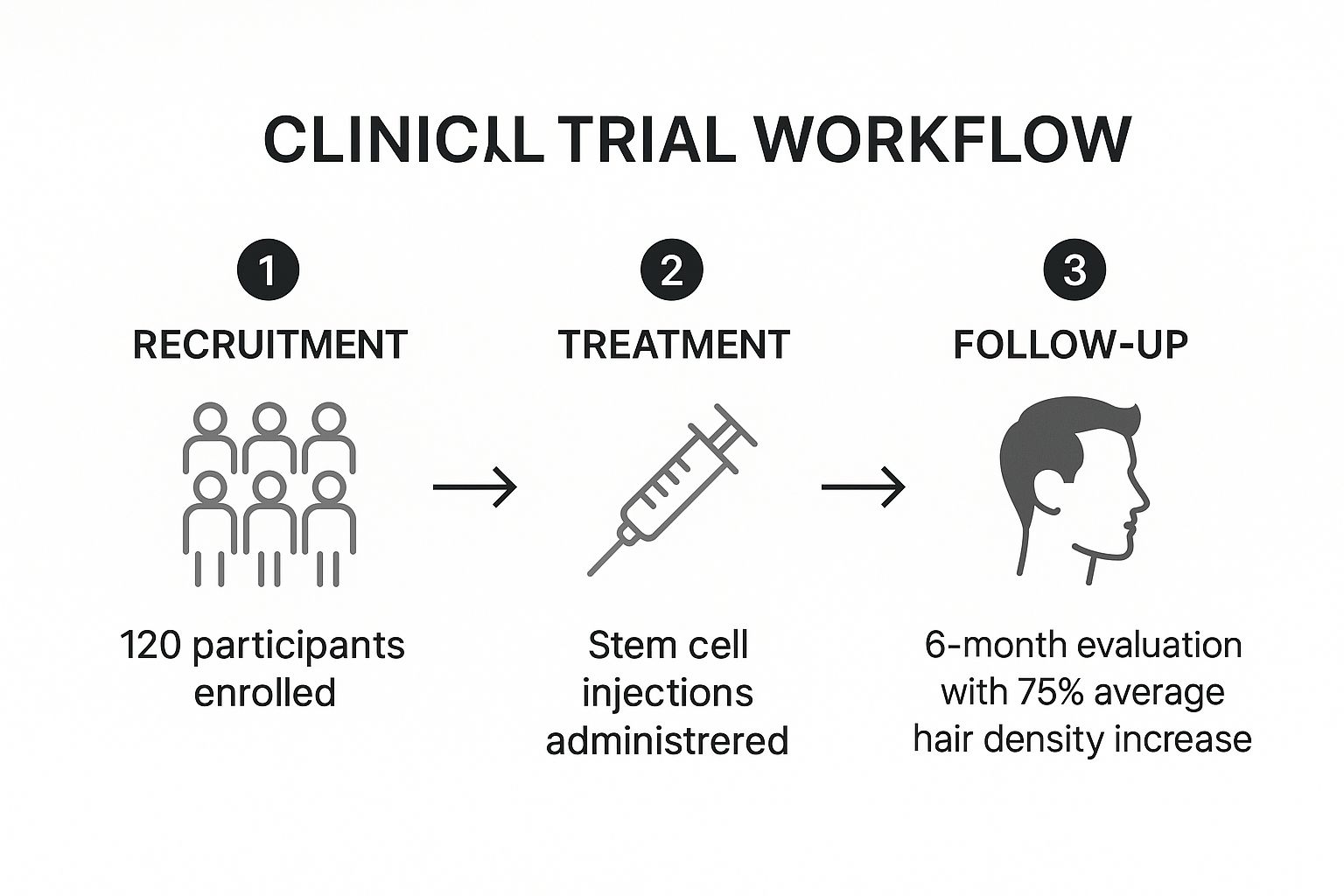
As you can see from this kind of workflow, the journey from treatment to follow-up can produce some incredible changes. In fact, some studies have reported an average hair density increase of 75% just six months after the procedure.
The Final Phase: Injection and Recovery
Once the stem cell solution is prepared, it's time for the final step. Your scalp is numbed with a local anesthetic to make sure you're completely comfortable. The clinician then uses a very fine needle to administer a series of small injections, precisely delivering the stem cell concentrate into the areas of thinning hair.
The whole injection process is usually done in about 30 minutes. The vast majority of patients find it very easy to tolerate.
Patient Experience: Most people are surprised at how comfortable the scalp injections are. Thanks to the local anesthetic, the feeling is often described as just a series of light pricks—far less intense than they imagined.
Afterward, there’s practically no downtime. You can drive yourself home and get back to most of your normal routine by the next day. You might have some minor swelling, redness, or tenderness where the injections were made, but this typically fades within a couple of days. Of course, the PRP hair treatment cost is a major factor, and comparing it to stem cell therapy can help you make an informed decision.
Patience is key when it comes to seeing results. Hair growth happens on its own schedule. The first thing you'll likely notice is less shedding, followed by visible new growth around the three to six-month mark. The full, impressive results of your stem cell hair therapy will continue to improve for up to a year.
Stem Cell Therapy Versus PRP Hair Treatment

When you start digging into non-surgical hair restoration, two names pop up constantly: stem cell hair therapy and Platelet-Rich Plasma, or PRP. At first glance, they can seem almost interchangeable. Both are minimally invasive treatments that use your body’s own biological material to kickstart hair growth. But that's where the similarities end.
The truth is, they operate on completely different principles.
Think of PRP as a high-powered energy drink for your hair follicles. It gives your existing, tired follicles a potent dose of stimulation to wake them up. Stem cell therapy, on the other hand, is more like bringing in a construction crew to rebuild the very foundation the follicles live in. It introduces powerful new cells to repair and regenerate the scalp environment itself.
Grasping this fundamental difference is the key to deciding which approach might be the right fit for your unique hair loss journey.
The Source of Regenerative Power
The first major fork in the road is where the "magic" comes from. This source material defines how each treatment works.
With PRP therapy, the process starts with a standard blood draw, just like you'd have at a doctor's office. That blood is then spun in a centrifuge, which separates the platelets to create a highly concentrated plasma. This plasma is packed with growth factors—essentially messenger proteins that tell your existing follicles to get to work.
Stem cell therapy sources its power from a different place, most often your own fat tissue (adipose). A small sample of fat is taken and then specially processed to isolate powerful mesenchymal stem cells (MSCs). These aren't just messengers; they are the actual "builder" cells with the innate ability to orchestrate a wide-ranging repair and regeneration process in the scalp.
How They Work on the Scalp
Once prepared and injected into the target areas, these two treatments get to work in very distinct ways.
-
PRP's Role: PRP acts like a direct stimulant. When injected, the concentrated growth factors signal dormant or weakening hair follicles to improve blood flow and shift back into an active growth phase. It’s an excellent way to give underperforming follicles a significant boost.
-
Stem Cell's Role: Stem cells are far more versatile. They don't just stimulate—they actively regenerate. These intelligent cells can reduce scalp inflammation, promote the formation of new blood vessels for better nutrient delivery, and release their own unique blend of growth factors. Their primary function is to create a fundamentally healthier, more fertile ground for hair to thrive.
Key Takeaway: Think of it this way: PRP is like adding fertilizer to your garden to help the existing plants grow better. Stem cells are like amending the soil itself, creating a richer, healthier environment for everything to flourish.
While both can deliver results, they address the problem from different angles. It's also crucial to weigh the potential downsides of any procedure. You can read about the common side effects of PRP in our detailed guide to get a more complete understanding of that specific treatment.
A Head-to-Head Comparison
Sometimes the best way to see the differences is to put them side-by-side. The table below breaks down the key distinctions between stem cell hair therapy and PRP, giving you a clear, at-a-glance comparison.
Stem Cell Therapy vs PRP Hair Treatment Comparison
This table helps illustrate the core differences in where the treatments come from, how they work, and what the process typically looks like.
| Feature | Stem Cell Therapy | PRP Therapy |
|---|---|---|
| Source Material | Harvested from fat tissue (adipose) | Drawn from your own blood |
| Mechanism | Regenerates and repairs follicles with new cells | Stimulates existing follicles with growth factors |
| Number of Sessions | Typically a single session is needed | Usually requires a series of 3-4 initial treatments, plus annual maintenance |
| Typical Cost | Generally higher due to the cell processing involved | More affordable per session, but costs add up over multiple treatments |
Ultimately, choosing between these two powerful treatments isn't a decision to make alone. It really comes down to the severity and type of your hair loss, your budget, and, most importantly, the guidance of a specialist who can properly evaluate your scalp and recommend the best path forward for you.
Are You a Good Candidate for This Treatment?
Making the leap to a new hair restoration procedure is a big decision. The first and most important question is always: "Is this right for me?" While stem cell hair therapy is a powerful option, it's not a one-size-fits-all solution for every person or every type of hair loss. The best outcomes are consistently seen in people who meet certain criteria, which is why a detailed consultation with a specialist is the crucial first step.
The ideal candidate is typically someone who has started to notice thinning but isn't yet completely bald. Think of it this way: the therapy works by waking up sleeping hair follicles, not by creating brand new ones where none exist. If your follicles are still there, just not producing the thick, healthy hair they used to, you're in a great position to see real results.
Who Responds Best to This Therapy
The classic case where this therapy truly shines is with androgenetic alopecia—what most of us know as male or female pattern baldness. This is a genetic condition where hair follicles gradually shrink. Stem cell therapy directly tackles this by revitalizing the scalp's environment and giving those miniaturized follicles the support they need to thrive again.
You might be a strong candidate if:
- You have noticeable thinning but still have reasonable hair coverage. The main goal here is to boost density and restore thickness.
- Your hair loss started fairly recently. The sooner you act, the more viable (but dormant) follicles we have to work with.
- You are in good overall health. Any regenerative treatment relies on your body's natural healing capabilities, so general wellness plays a role.
It's also vital to have the right mindset. This isn't an overnight fix. It’s a biological process that encourages your body's own growth cycle, and that takes time. Understanding the causes of your hair loss is fundamental, as it helps set realistic expectations and confirms you're treating the right problem.
Weighing the Benefits and Potential Risks
Like any medical treatment, stem cell therapy has a list of pros and cons, and it's important to look at both honestly before moving forward. One of the standout advantages, especially when using your own fat cells, is the impressive safety profile.
Key Benefit: Since the procedure uses your own (autologous) cells, the risk of your body rejecting them or having an allergic reaction is practically zero. Your system recognizes the cells as its own, letting them get straight to work without any fuss.
Other key benefits include:
- Natural-Looking Results: The new growth comes from your existing follicles, so it perfectly matches your hair's original color and texture.
- Minimal Downtime: This is a minimally invasive procedure. Most people are back to their normal routine in just a day or two.
- A Single Session: In many cases, one treatment is all it takes to achieve significant and lasting improvement.
On the other hand, the potential risks are generally mild and don't last long. You might experience some minor swelling, redness, or tenderness where the cells were harvested and injected, but this usually fades on its own within a few days. The biggest "risk" is really about your choice of provider—finding a qualified, experienced clinic is essential to ensure the procedure is done safely and correctly, minimizing any chance of complications.
Regenerative medicine is booming, and stem cell treatments are at the forefront. The global stem cell therapy market was valued at about USD 18.61 billion in 2025 and is projected to climb to an astonishing USD 78.39 billion by 2032. This explosive growth shows just how much confidence and investment is pouring into these kinds of solutions. An informed decision starts with knowing who this treatment is for and what you can genuinely expect from it.
Common Questions About Stem Cell Hair Therapy
It’s completely normal to have questions even after you’ve done your homework on a new treatment. When you're looking into something like stem cell hair therapy, you want to be sure you have all the facts. Let's walk through some of the most common questions we get, so you can feel confident about your decision.
How Long Do the Results Last?
This is usually the biggest question on everyone's mind, and rightly so. The good news is that the results from stem cell hair therapy can be incredibly durable. Because the treatment works by fundamentally improving the health of your hair follicles and scalp, the effects are built to last.
Of course, the exact longevity varies from person to person. It depends on things like the root cause of your hair loss, how far it has progressed, your age, and your general health. While many people see significant, long-term improvement after just one session, remember that the natural aging process and your own genetics are still at play. Because of this, some people opt for a touch-up treatment every few years to maintain their best results.
Is the Procedure Painful?
I get it—the idea of needles and harvesting fat tissue sounds pretty intense. But the reality is much more comfortable than you'd think. The entire process is done under local anesthetic, which means we numb both the spot where the fat is taken from and your entire scalp before we start.
Patient Experience: Most people describe the feeling as a bit of pressure or a dull sensation during the procedure, but not outright pain. We also use very fine needles for the scalp injections, which makes the whole experience surprisingly tolerable.
How Long Until I See a Difference?
This is where you need a little patience. Hair growth follows its own biological timeline, and it can't be rushed. The stem cells start their repair work right away, but it takes a while before you’ll see the fruits of their labor in the mirror.
Here’s a rough idea of what to expect:
- 1-3 Months: The first thing you'll probably notice is less shedding. This is a fantastic sign that your follicles are getting stronger and stabilizing.
- 3-6 Months: This is when the exciting part begins. You might start seeing fine, new "baby hairs" sprouting and notice your existing hair feels a bit thicker and healthier.
- 6-12 Months: The most dramatic improvements in density and coverage usually show up in this window. Your hair will continue to mature and thicken for up to a full year.
Speaking of timelines, let’s talk cost. The price for stem cell hair therapy can vary quite a bit, typically falling in the range of $5,000 to $10,000. The final figure depends on the clinic's location, the specific technology being used, and the extent of your hair loss. Since it's considered a cosmetic procedure, it's almost never covered by insurance. As you weigh your options, learning more about different ways for how to stop balding can give you a better overview of all the strategies out there.
At PRP For HairLoss, we believe that being well-informed is the first step toward reclaiming your confidence. We hope this guide has given you a clear picture of what stem cell hair therapy involves. For more insights on hair restoration, explore our resources at https://prpforhairloss.com.

 PRP For Hairloss
Leave a comment