A PRP injection for hair loss is a medical treatment that cleverly uses a concentrated dose of your own blood platelets to kickstart dormant hair follicles. In essence, we're tapping into your body's built-in healing mechanisms to promote new hair growth and add density to thinning spots. It's quickly become a go-to non-surgical choice for men dealing with pattern baldness.
How PRP Wakes Up Your Hair Follicles
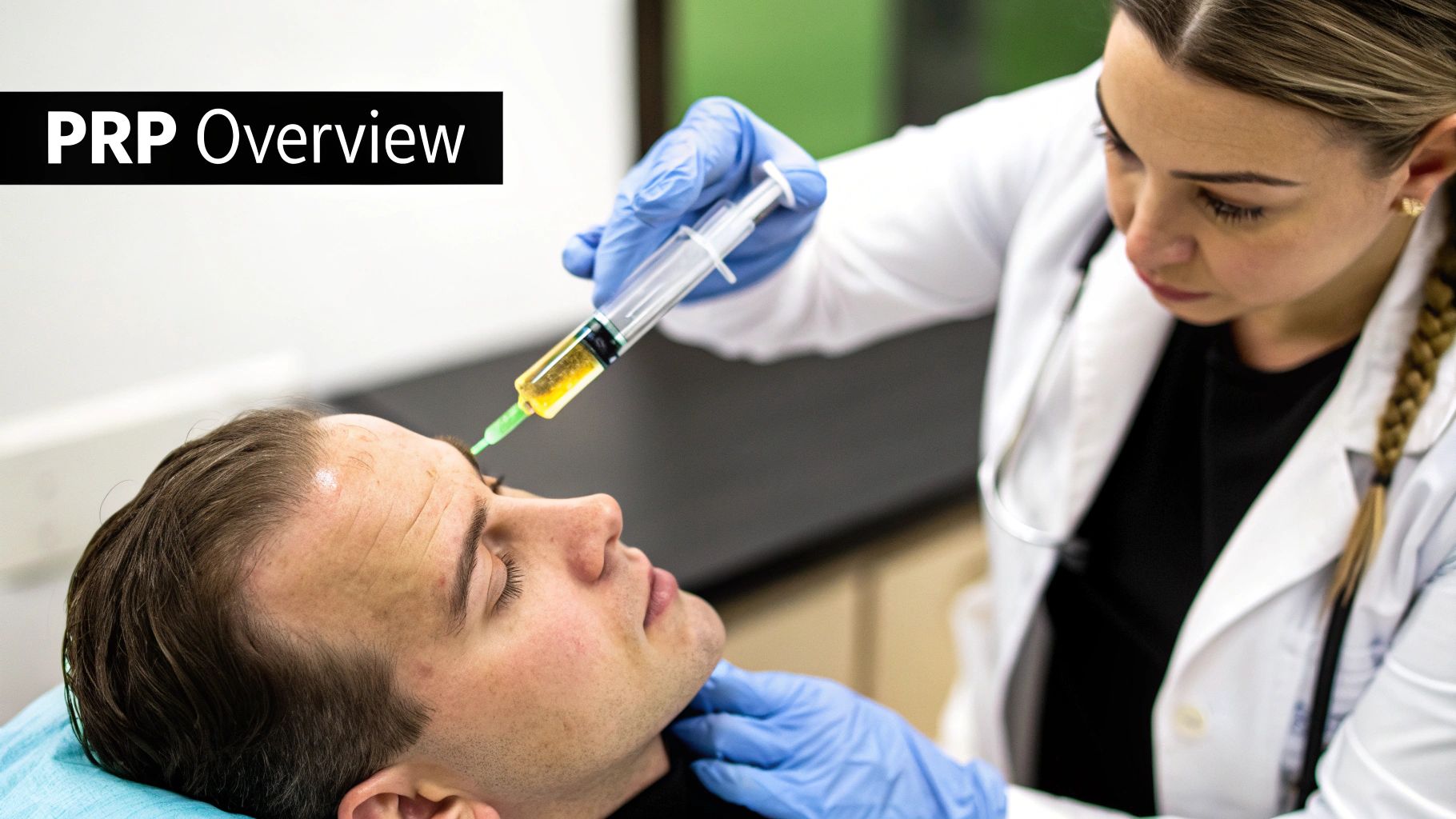
To really get how a PRP injection for hair loss works, just think of your body as having its own highly skilled repair crew on call 24/7. This crew is made up of platelets, which are special cells in your blood loaded with potent proteins known as growth factors.
Whenever you get a scrape or cut, these platelets are the first responders. They race to the scene to stop the bleeding and immediately start the repair process, signaling for other cells to come and help rebuild the damaged tissue. PRP therapy takes this natural process and puts it on steroids. We essentially gather this elite repair crew, concentrate its strength, and deploy it right where you need it most: your scalp.
For those looking for a quick rundown, here’s a simple breakdown of the treatment.
PRP for Hair Loss at a Glance
| Aspect | Description |
|---|---|
| Treatment Name | Platelet-Rich Plasma (PRP) Therapy |
| Procedure Type | Non-surgical, injectable |
| Primary Goal | Stimulate dormant hair follicles to promote growth and thickness. |
| How It Works | Uses a concentration of your own blood platelets and growth factors. |
| Key Benefit | Utilizes the body's natural healing process; minimal risk of reaction. |
| Typical Session | 30-45 minutes, including blood draw, processing, and injections. |
| Initial Schedule | Usually a series of 3-4 treatments, spaced 4-6 weeks apart. |
| Maintenance | Follow-up treatments every 6-12 months are common. |
This table gives you the core facts, but the science behind it is what makes PRP so compelling. Let's dig a little deeper.
The Science Behind the Syringe
It all starts with a simple blood draw, no different than what you’d have done for a routine physical. We take that blood and place it into a centrifuge—a specialized machine that spins at incredibly high speeds to separate the different components of your blood. Think of it as a high-tech sorting facility that pulls out the most valuable workers.
This rapid spinning isolates the platelet-rich plasma from the red blood cells. The final product is a golden, liquid concentration of platelets that is 3 to 5 times more potent than what’s normally circulating in your bloodstream. This supercharged solution is then carefully and strategically injected into the areas of your scalp where the hair is thinning.
The core idea is simple: deliver a high concentration of natural growth factors directly to dormant or weakening hair follicles to signal them to start growing again. It's a targeted boost using your body's own biological tools.
Once injected, these growth factors get right to work. They’re like project managers on a construction site, sending out "wake-up calls" to hair follicles that have become sluggish or have started to shrink—a process we call miniaturization.
Reversing Hair Follicle Miniaturization
The classic sign of androgenetic alopecia (male pattern baldness) is hair follicle miniaturization. This is where follicles that used to produce strong, thick hairs begin to shrink over time. Eventually, they produce hairs that are so fine they're almost invisible, or they just give up producing hair altogether.
The growth factors packed into PRP help fight this process in a few key ways:
- Boosting Blood Supply: They encourage the formation of new blood vessels around the follicles, making sure they get the oxygen and nutrients needed to thrive.
- Extending the Growth Phase: They help keep follicles in the anagen (growth) phase of the hair cycle for longer periods.
- Calming Inflammation: They can help reduce the low-grade inflammation around follicles that often contributes to hair loss.
It's important to understand that this regenerative approach doesn't create new hair follicles. What it does is revitalize the ones you already have that are dormant but still alive. By creating this rich, stimulating environment, PRP helps turn back the clock on miniaturization, leading to visibly thicker, stronger, and more numerous hairs over time. It’s a powerful method that builds on your body’s innate ability to heal and regenerate itself.
Is PRP the Right Choice for Your Hair Loss?
A PRP injection for hair loss isn't a silver bullet for everyone. The first—and most important—step is figuring out if you're a good candidate for the treatment. Its success comes down to a simple biological truth: PRP is meant to revitalize, not resurrect.
Think of your hair follicles as tiny, dormant gardens. If the soil still has some life left in it, PRP can act like a potent fertilizer, encouraging new growth. It's fantastic at waking up sluggish, underperforming follicles. However, if an area of your scalp has been completely smooth for years, the garden is likely barren, and PRP won't be able to sprout new life.
This means the best results are almost always seen in people who are in the earlier stages of androgenetic alopecia, more commonly known as pattern baldness.
Who Is an Ideal Candidate for PRP?
So, who gets the best bang for their buck with PRP? You're likely a great fit if you tick these boxes:
- You're in the early stages of hair loss. The sooner you act, the better. Catching thinning early gives you the best odds of preserving follicles and kickstarting regrowth.
- You have "miniaturized" hair. If you see those fine, wispy, almost translucent hairs in thinning spots, that's a great sign. It means the follicles are still alive and just waiting for a boost.
- You're in good overall health. Your body's natural healing response is what makes PRP work. A strong immune system and good health give the treatment the best possible foundation for success.
- Your expectations are realistic. PRP is a marathon, not a sprint. It delivers gradual, steady improvement—not an overnight miracle. Success means seeing thicker hair and less shedding over several months.
It's also important to look at the bigger picture. Understanding how certain lifestyle factors might impact hormonal balance can be part of the puzzle. A detailed consultation with a specialist will help you connect all the dots.
Who Should Avoid PRP Therapy?
On the flip side, PRP isn't a safe or effective option for everyone. Certain health conditions can get in the way. It’s best to steer clear of PRP if you have:
- Active Scalp Infections: Any infection on the scalp must be completely healed before you can safely get injections.
- Blood-Related Disorders: Conditions like platelet dysfunction, thrombocytopenia (a low platelet count), or clotting issues can make the therapy ineffective or even risky.
- Certain Autoimmune Diseases: If you have a condition like lupus or some forms of alopecia areata, the response can be unpredictable. A specialist needs to evaluate your specific situation.
- A History of Cancer: This is especially true for skin cancers on the scalp.
Setting realistic goals is everything. The aim of a PRP injection for hair loss is to increase hair density, fortify the hair you already have, and slow the thinning process. It's a powerful management tool, not a cure for baldness.
The good news is that PRP has also shown fantastic potential for female pattern hair loss (FPHL). In fact, a 2021 double-blind study found that women who received monthly PRP injections experienced significant improvements in hair count, density, and thickness compared to those who received a placebo. This really underscores PRP's ability to boost tissue regeneration without the widespread side effects of other common treatments.
By understanding where PRP truly shines—and where it falls short—you can make a confident and informed decision on your hair restoration journey.
What to Expect During Your PRP Treatment: A Step-by-Step Guide
The idea of any new medical procedure can be a little intimidating. To help ease any nerves, let's walk through exactly what happens during a PRP injection for hair loss treatment. Knowing the step-by-step process, from your initial chat with a specialist to the simple care instructions afterward, makes the whole thing feel much more manageable.
The entire appointment is surprisingly quick and designed for your convenience. From start to finish, you can expect the process to take between 30 and 45 minutes. It’s a very streamlined procedure that lets you get back to your day with almost no downtime.
Step 1: The Consultation
Your journey doesn't start with a needle—it starts with a conversation. A detailed consultation is arguably the most crucial step, as it lays the foundation for your success. Here, your provider will take a close look at your scalp, review your hair loss patterns and history, and make sure you're a good candidate for PRP.
This is your time to ask questions! Seriously, don't hold back. Ask about their experience with PRP for hair loss, the specific centrifuge system they use, and what a realistic outcome looks like for you. A great provider will offer clear, honest answers and make sure you feel completely comfortable before proceeding.
Step 2: The Blood Draw
Once you and your provider decide to move forward, the first real step is a simple blood draw. If you've ever given blood for a routine lab test, you know the drill. A small vial of blood—about the same amount needed for a standard physical—is drawn from your arm.
It’s quick, routine, and just a tiny pinch. This blood is the key ingredient, containing everything needed to create your body's own personalized hair-growth-boosting serum.
Step 3: Creating "Liquid Gold" in the Centrifuge
Now for the cool science part. Your blood sample goes into a high-tech machine called a centrifuge. Imagine a device that spins the vial at incredibly high speeds, using centrifugal force to separate the blood into layers based on weight and density.
When it's done spinning, your blood will be neatly divided into three distinct layers:
- Red blood cells (the heaviest parts at the bottom)
- Platelet-poor plasma (the lighter liquid)
- A thin, golden-colored middle layer: the platelet-rich plasma (PRP)
This PRP layer is the "liquid gold" we're after. It's packed with a concentration of platelets and powerful growth factors that is 3 to 5 times greater than what’s circulating in your blood normally. This super-concentrated healing solution is then carefully drawn into a syringe for the final step.
Step 4: Scalp Preparation and Injections
With the PRP ready to go, it's time for the treatment itself. To make the experience as comfortable as possible, your provider will likely apply a topical numbing cream to your scalp about 20-30 minutes before the injections begin. This does a great job of dulling the sensation.
After the numbing cream has taken effect, your scalp is cleansed. Then, using a very fine needle, the provider makes a series of small, shallow injections across the areas of thinning hair. The goal is to deliver the PRP directly to the hair follicles just beneath the skin's surface. You might feel a bit of pressure, but most people find the procedure very tolerable.
It’s completely normal for your scalp to feel a little tender, look a bit pink, or have some minor swelling right after the treatment. These effects are temporary and usually calm down within a few hours to a day.
Post-treatment care couldn't be simpler. You can get right back to your normal routine, though it’s wise to skip intense workouts, saunas, or harsh hair products for the first 24 hours. Your provider will give you a clear, easy-to-follow list of aftercare instructions.
This visual shows how hair density can improve over the initial course of treatments.
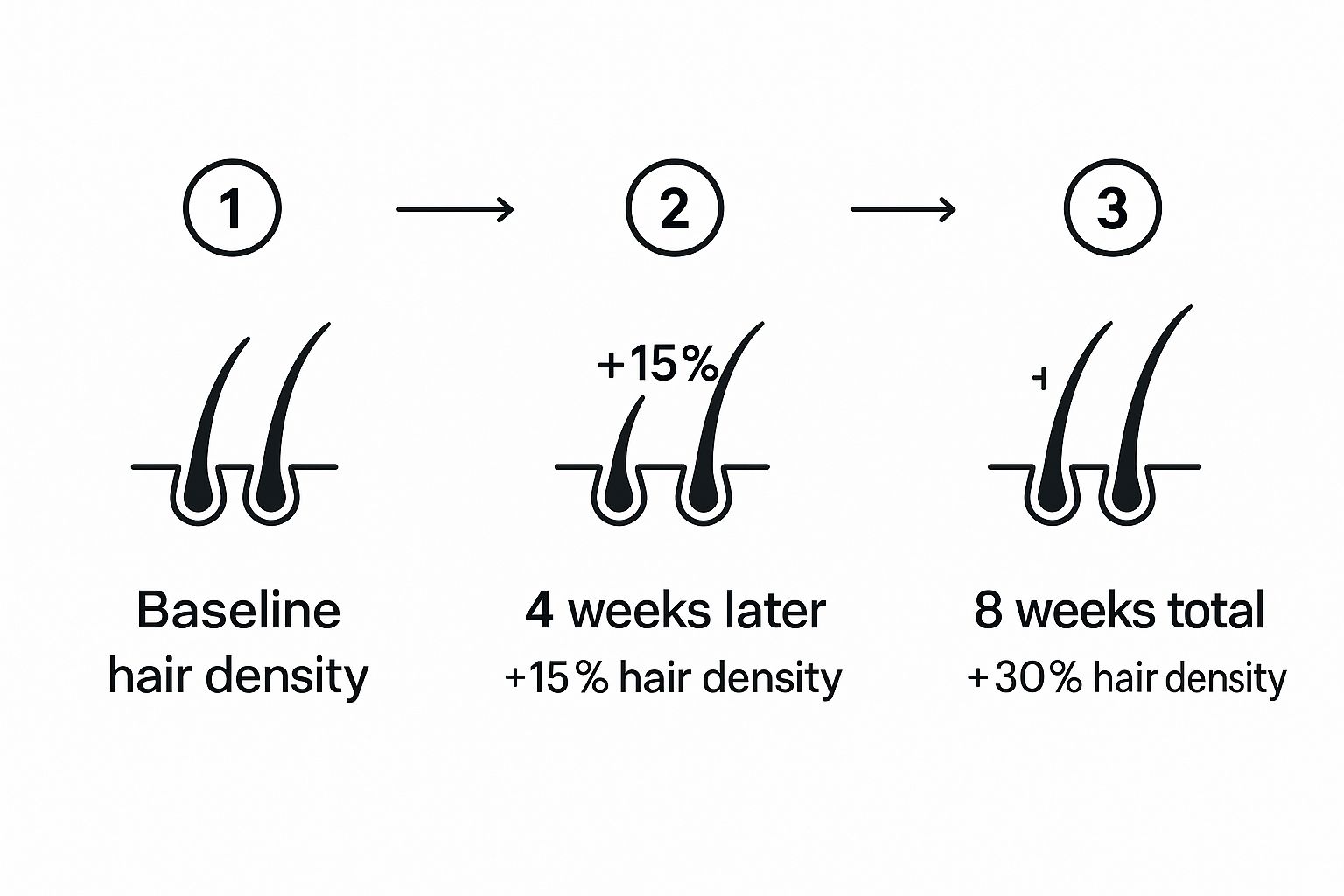
As you can see, the results are cumulative. Each session builds on the last, working to achieve a noticeable improvement in hair fullness and density over time.
The Timeline for Real PRP Results
One of the most important things I tell my patients about PRP injections for hair loss is to have realistic expectations. This isn't a magic bullet or an overnight fix. We're working with your body's own natural healing and regeneration process, and that simply takes time. Patience is your best friend here, as the results show up gradually, building on each other with every treatment.
The journey starts with changes you'll likely feel before you actually see them. Within the first one to two months after starting your treatments, the first sign of success is usually a sharp drop in hair shedding. You’ll notice fewer hairs on your pillow, in the shower drain, or tangled in your comb. It might seem like a small victory, but it’s a huge signal that the PRP is doing its job, helping to anchor your existing hair more securely in the follicles.
The First Visible Changes
Once the initial shedding slows down, the more exciting part begins. This is where the focus shifts from just holding onto the hair you have to actively regrowing new hair.
You can expect to see more concrete, visible results somewhere between three to six months. This is the sweet spot when dormant hair follicles, woken up by the PRP, start producing new, noticeable hair. What you’ll likely see is:
- Increased Hair Thickness: Your existing hairs may start to feel thicker and more robust.
- Improved Hair Density: Those thinning patches will begin to look fuller as new hairs sprout and existing ones plump up.
- A Healthier Scalp Environment: Many people also report their scalp just feels healthier overall, with less irritation.
Think of it like tending to a lawn. The first PRP session is like watering a dry, patchy yard to stop it from getting worse. The next few sessions are the fertilizer and continued watering that help new grass sprout and make the whole lawn thicker and greener. Each treatment builds on the progress of the last one.
This isn't just anecdotal, either. Clinical data backs up this gradual improvement. For instance, a notable 2015 study followed men with androgenic alopecia who had four PRP sessions. They saw their hair count jump from an average of 71 to 93 follicular units per cm². That's a significant increase in density, proving that PRP can genuinely kickstart new growth. You can dive deeper into these findings about PRP's effectiveness for hair loss on the National Center for Biotechnology Information's website.
Maintaining Your Results for the Long Term
Getting great results is only half the battle; keeping them is the other half. Because hair loss is typically a progressive condition, the benefits of your initial PRP treatments will eventually fade if you don't stick with a maintenance plan. The growth factors do a fantastic job stimulating your follicles, but the underlying reasons for your hair loss are still there.
To protect your investment and keep that new hair growth, follow-up treatments are absolutely necessary. Think of it as a tune-up for your scalp.
A typical maintenance plan looks something like this:
- A single maintenance session every 6 to 12 months.
- The exact timing really depends on how you respond to the treatment, the extent of your hair loss, and what your long-term goals are.
This ongoing care ensures your scalp keeps getting the regenerative signals it needs to fight off thinning. By committing to the full initial course and a smart maintenance strategy, you’re giving yourself the best possible shot at getting—and keeping—a fuller, healthier head of hair.
Is PRP a Safe Treatment for Hair Loss?
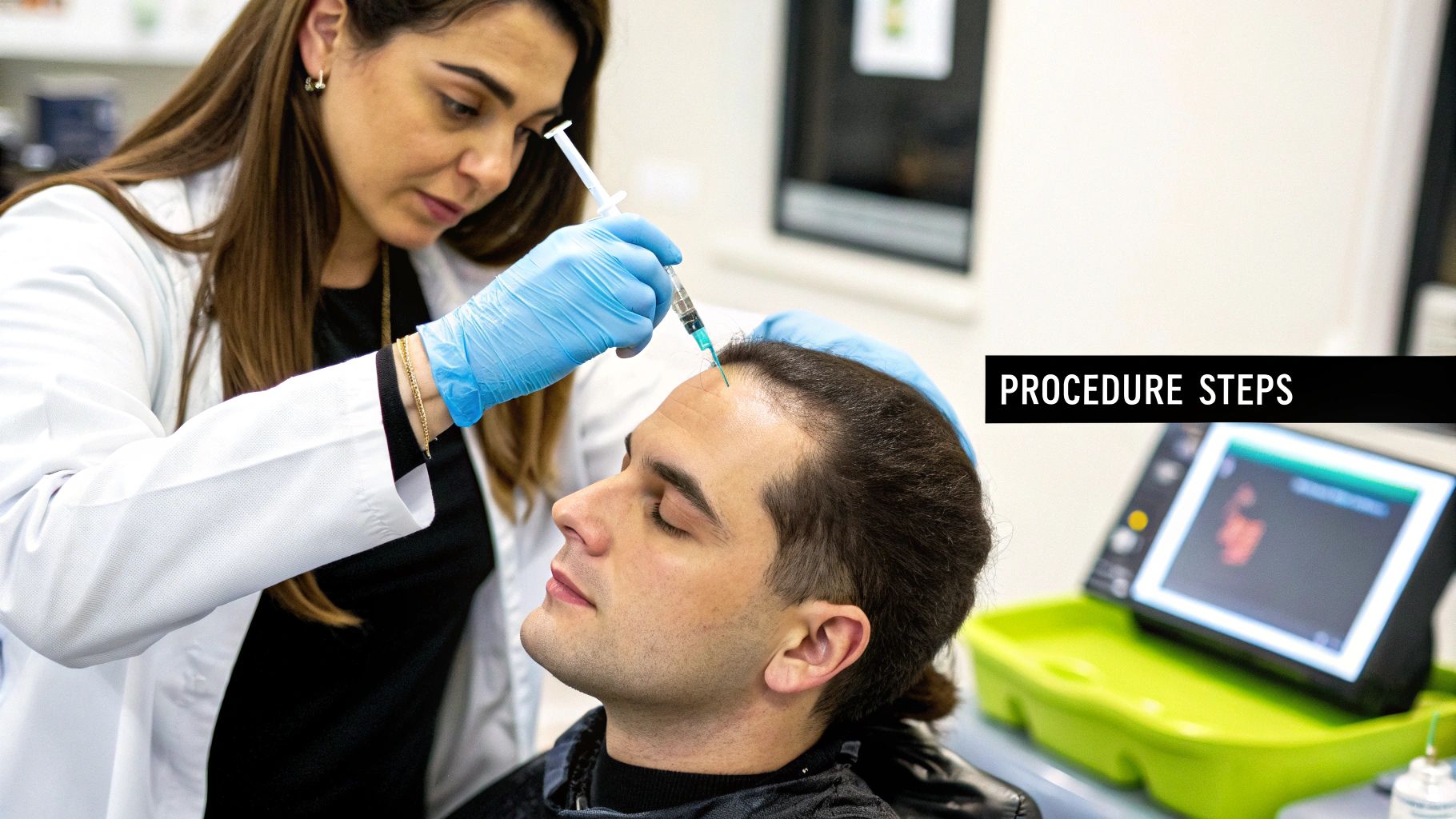
Whenever you're thinking about a medical procedure, the first question is always, "Is it safe?" When it comes to PRP injections for hair loss, the answer is a resounding yes, and the reason is remarkably simple. The treatment is autologous, which is just a fancy way of saying the healing ingredients come directly from your own body.
We're essentially taking a small sample of your blood, concentrating the most powerful healing components, and putting them back exactly where they're needed. Because it’s your plasma and your platelets, your body recognizes them. This all but eliminates the risk of allergic reactions or your immune system fighting back, which can sometimes happen with synthetic substances. It's one of the most natural and well-tolerated hair restoration treatments out there.
What to Expect Right After Your Session
While PRP is incredibly safe, it's still a medical procedure involving injections, so you can expect a few minor, temporary side effects. Think of them as signs that the treatment is kicking into gear. Most people find them completely manageable and short-lived.
Here’s what you might notice:
- Mild Scalp Soreness: Tenderness at the injection sites is the most common feedback we get. It usually feels a bit like a sunburn and fades within a day or two.
- Slight Swelling or Redness: A little bit of puffiness or a pinkish hue around the treated scalp is perfectly normal and goes away quickly.
- A passing Headache: A small number of patients mention a mild headache post-treatment, but this typically resolves by the next day.
These are just your body's natural inflammatory responses, signaling that the growth factors have arrived and are getting to work.
The fantastic safety record is a huge part of why PRP has become a go-to treatment. It allows people to take action on their hair loss without worrying about the systemic side effects that can come with daily medications or more invasive surgeries.
How to Avoid Serious (and Rare) Complications
With any procedure that breaks the skin, there's a theoretical risk of things like infection or nerve irritation. While these are extremely rare with PRP, you can practically eliminate them by making one smart choice: picking the right person to perform your treatment.
This isn't something you want done in a spa backroom. Seeing a qualified medical professional who operates in a sterile, clinical environment is your greatest safeguard. Their expertise in anatomy, sterile techniques, and proper injection depth makes the risk of any serious issue vanishingly small.
This isn't just anecdotal, either. Clinical studies from around the world have consistently backed up PRP's safety. A global review of these studies concluded that aside from temporary, localized pain, significant adverse effects are simply not reported. You can read more about these findings on PRP's safety and efficacy in the published research. This powerful combination of a high safety profile and proven regenerative potential is what makes a PRP injection for hair loss such a trusted and sought-after solution.
Budgeting for Your PRP Hair Treatment
Let's talk about the investment. Deciding to pursue PRP injections for hair loss is a big step toward regaining your confidence, so it’s important to understand the costs involved right from the start. There isn’t a single, flat fee for PRP; think of it more as a range influenced by a few key variables.
For a single session, you can generally expect the price to fall somewhere between $750 and $2,000. So, why the wide gap? It really boils down to three things:
- Geographic Location: Just like real estate, location matters. Clinics in major cities with higher overhead tend to have higher prices.
- Clinic and Provider Expertise: You're not just paying for the procedure; you're paying for the skill behind it. A seasoned, board-certified dermatologist who specializes in hair restoration will naturally command a higher fee than a more general practitioner.
- Technology Used: The equipment used to spin your blood and isolate the platelets makes a difference. Advanced centrifuge systems that produce a higher concentration of growth factors often come with a higher price tag.
It's crucial to remember that PRP is a process, not a one-and-done appointment. You need to plan for the full course of treatment to see real, lasting results.
Planning for the Full Treatment Course
To get the outcome you’re hoping for, you need to budget for the entire initial treatment plan. It’s less like buying a single movie ticket and more like getting a season pass for healthier hair.
A typical starting protocol consists of three to four sessions, spaced about a month apart. This schedule gives your body time to respond and lets each treatment build on the last. So, your total initial investment will be the cost of one session multiplied by the number of treatments your doctor recommends.
For instance, if a session is priced at $1,000 and the plan calls for three sessions, you should budget for $3,000. Many clinics understand this commitment and offer package pricing, which can give you a nice discount for paying for the series upfront. Don't hesitate to ask about this during your consultation!
Insurance Coverage and Financial Planning
One of the first questions most people ask is, "Will my insurance cover this?" In nearly all cases, the answer is no. A PRP injection for hair loss is considered a cosmetic procedure.
Since the treatment is aimed at improving appearance rather than treating a medical condition, insurance companies don't cover it. It’s best to plan for this as an out-of-pocket expense.
Knowing this upfront saves you from any financial surprises. When you go in for your consultation, be open about your budget. Ask for a transparent, all-inclusive quote that covers the entire initial series. Some clinics also partner with third-party financing companies, which can help you break the total cost into smaller, more manageable monthly payments.
By getting a clear picture of the full investment—from the first few sessions to potential maintenance down the road—you can embark on your hair restoration journey with total financial clarity and peace of mind.
Common Questions About PRP Injections for Hair
https://www.youtube.com/embed/ERGE3Dh_sCg
Even after getting the rundown on how PRP works, it’s completely normal to have some practical questions pop up. Feeling confident about a treatment means getting straight answers to those lingering "what ifs." Here, we’ll tackle some of the most common things people want to know about a PRP injection for hair loss, so you have all the details you need.
Let’s get into the nitty-gritty and address what you really want to know before taking the next step.
How Much Does the PRP Injection Hurt?
This is usually the first question I get, and I’ll give you the honest answer: it’s surprisingly manageable. Most people don’t describe it as "painful" but more like a series of quick, tiny pinches or a bit of pressure. Your comfort is a huge priority, and clinics have a few tricks up their sleeves to make the whole thing as easy as possible.
To start, a powerful topical anesthetic cream is applied to your scalp and left to work its magic for about 20-30 minutes. This does a fantastic job of numbing the area. Some providers also use a neat little trick—a cooling device that blows cold air on the spot being treated. It's a simple but effective way to distract the nerve endings and keep you comfortable.
Can I Combine PRP with Other Hair Treatments?
Absolutely. In fact, for many people, it's the best way to get results. Think of PRP as a powerful tool in your hair restoration toolkit. It gets to work on a cellular level to kickstart your follicles, but when you pair it with other treatments that tackle hair loss from different angles, you create a much more powerful, comprehensive strategy.
PRP works incredibly well with a few other popular therapies:
- Minoxidil (Rogaine): This topical solution is great for widening blood vessels and pushing hair into a longer growth phase. When you add PRP's regenerative power, it's like a one-two punch for encouraging new growth.
- Finasteride (Propecia): As an oral medication, this works by blocking DHT, the hormone largely responsible for male pattern baldness. Using it with PRP means you’re fighting the hormonal cause while also directly stimulating the follicles.
- Hair Transplants: PRP is a fantastic partner for hair transplant surgery. It can help improve the survival rate of the newly implanted hair grafts and significantly speed up the healing process after the procedure.
Combining treatments lets you attack hair loss from all sides. While PRP works to revitalize the follicles themselves, other therapies can manage hormonal triggers or boost blood flow, creating a complete plan for healthier, thicker hair.
Beyond these medical treatments, many people also support their journey with wellness supplements. For example, some find success with biotin gummies for overall hair, skin, and nail health. The key is to discuss all your options with your provider to build a plan that's perfectly suited to you.
What Is the Standard Time Between PRP Sessions?
When it comes to getting the best results from a PRP injection for hair loss, consistency is everything. The treatment schedule is specifically designed to keep your hair follicles stimulated as they progress through their natural growth cycles.
Typically, you'll start with a "loading phase" to really wake up those dormant follicles. This usually involves three to four initial sessions, with each one spaced about four to six weeks apart. This steady rhythm ensures your follicles get a continuous supply of those precious growth factors.
After that initial burst of treatments, you’ll shift to a maintenance plan to keep your new hair going strong. For most people, a single top-up session every six to twelve months is all it takes to maintain their results.
Is There Any Downtime After a PRP Session?
This is one of the best parts about PRP—there’s virtually no downtime. It's a true "lunchtime procedure." You can walk out of the clinic and head right back to your day.
Most people return to work or their normal routine immediately. That said, it's wise to follow a few simple guidelines for the first day or so to give your scalp the best chance to heal perfectly:
- Hold off on any intense exercise or anything that will make you sweat heavily for about 24 hours.
- Skip the sauna, steam room, or swimming pool for a day.
- Avoid using harsh chemicals, hair dyes, or heavy styling products on your scalp.
Your scalp might feel a little tender or look slightly pink right after, but this usually calms down within a few hours to a day. The easy recovery makes PRP a really convenient choice, even for those with the busiest schedules.
Ready to explore how PRP can help you reclaim a fuller head of hair? Visit PRP For HairLoss to learn more about this effective treatment and find answers to all your questions. Learn more at https://prpforhairloss.com.

 PRP For Hairloss
Leave a comment