Before you can figure out how to stop your hair from thinning, you have to get to the bottom of why it's happening in the first place. The best plans are the ones that go straight for the root cause, whether it's your genetics, a stressful period in your life, or even what you're eating. The goal is to shift from just worrying about the hair in the drain to taking smart, targeted action.
Why Is My Hair Falling Out?
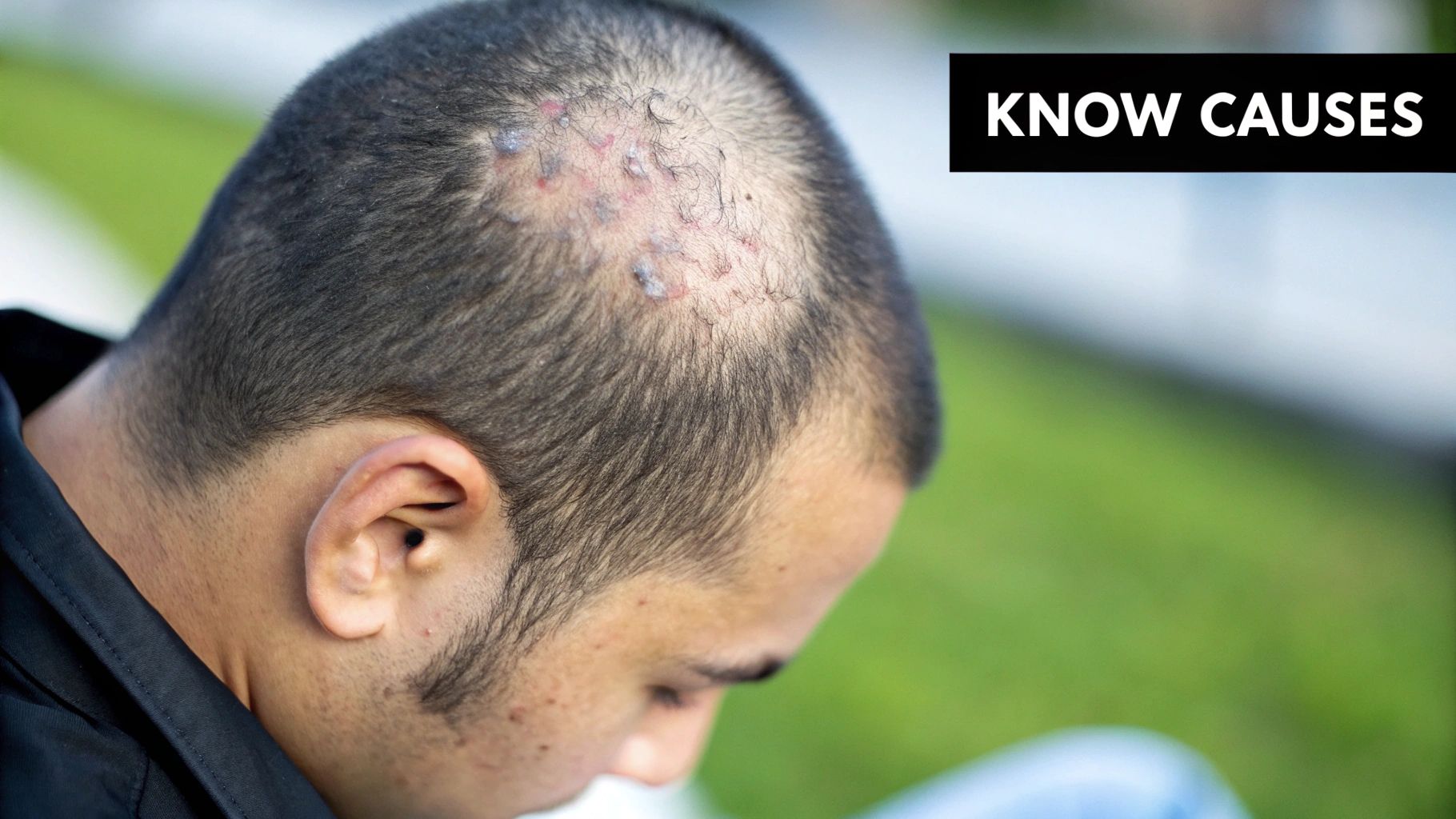
Think of yourself as a detective. The clues are on your scalp, and the culprit could be anything from your family tree to your daily stress levels. Solving this mystery is the single most important step toward getting back in control.
Without pinpointing the "why," you risk throwing away time and money on treatments that are a mismatch for your specific problem. It's the difference between blindly trying random supplements and following a strategy designed to fix the actual issue. Getting this right from the start empowers you to make much smarter, more effective choices for your hair.
The Genetic Blueprint: Androgenetic Alopecia
For most people, the reason for their hair loss is already written in their DNA. This is called Androgenetic Alopecia, but you probably know it as male or female pattern baldness. It's a hereditary condition where your hair follicles have a genetic sensitivity to a hormone called dihydrotestosterone, or DHT.
DHT, a byproduct of testosterone, is the main villain here. If your follicles are sensitive to it, DHT latches on and causes them to shrink over time—a process called miniaturization. As the follicles get smaller, the hair they produce becomes finer, shorter, and weaker, until eventually, they just stop producing hair at all.
This doesn't happen overnight. It's a slow, predictable process. For men, it often starts as a receding hairline or a thinning spot on the crown. For women, it typically shows up as a widening part or thinning all over the scalp. If this sounds familiar, you're not alone. Hair loss is incredibly common, affecting about 85% of men and 33% of women at some point. You can dig deeper into how widespread this is with these comprehensive hair loss statistics.
The most prevalent cause, impacting roughly 95% of those with hair loss, is Androgenetic Alopecia. Genealogy also plays a crucial role, with approximately 70.5% of people with hair loss reporting a family history of the condition.
When Stress Triggers Sudden Shedding
Ever go through a really tough time and suddenly notice way more hair in your brush? That's not your imagination. There's a specific condition called Telogen Effluvium, which is a form of temporary, diffuse hair shedding brought on by major physical or emotional stress.
Here’s a quick rundown of what happens:
- Your hair naturally cycles through growing, resting, and shedding phases.
- A major shock to your system—think surgery, a serious illness, sudden weight loss, or intense emotional trauma—can disrupt this cycle.
- This shock pushes a large number of hairs that should be in the growing (anagen) phase prematurely into the shedding (telogen) phase.
The result? About two to three months after the stressful event, you might see a sudden and dramatic increase in shedding. It can be alarming, but the good news is that Telogen Effluvium is almost always temporary. Once the stressor is gone, your hair cycle gets back on track, and regrowth typically starts within six to nine months.
Other Culprits Worth Investigating
While genetics and stress are the big two, several other factors can cause or worsen hair loss. Figuring out if any of these apply to you is essential for creating a complete picture of your hair's health.
To make it easier to see what might be going on, here’s a quick summary of the most common hair loss triggers.
Common Hair Loss Triggers At a Glance
This table summarizes the primary causes of hair loss, their typical signs, and who is most commonly affected, helping you identify potential reasons for your hair thinning.
| Cause | Primary Mechanism | Common Signs | Who It Affects Most |
|---|---|---|---|
| Androgenetic Alopecia | Genetic sensitivity to DHT shrinks follicles. | Receding hairline, crown thinning (men); widening part (women). | Men and women with a family history of hair loss. |
| Telogen Effluvium | Stress pushes many hairs into the shedding phase at once. | Sudden, diffuse shedding all over the scalp. | Anyone after a major physical or emotional event. |
| Nutritional Deficiencies | Lack of key nutrients (iron, zinc, vitamin D) disrupts growth. | General thinning, brittle or weak hair. | Individuals with poor diets or malabsorption issues. |
| Hormonal Imbalances | Conditions like thyroid disease disrupt the hair cycle. | Diffuse thinning, changes in hair texture. | People with thyroid conditions, PCOS, or during menopause. |
| Traction Alopecia | Constant pulling from tight hairstyles damages follicles. | Hair loss along the hairline or where hair is pulled tight. | People who frequently wear tight braids, ponytails, or extensions. |
Thinking through this table can help you narrow down the possibilities. For example, if your shedding started suddenly after a tough few months and is happening all over, stress could be the culprit. But if it's a slow, progressive thinning that runs in your family, genetics are the more likely cause.
Here are a few other factors to keep on your radar:
- Medications and Medical Conditions: Always check the side effects of any medications you're taking. Certain underlying health issues can also trigger hair loss.
- Damaging Hair Practices: Constant heat styling, harsh chemical treatments, and tight hairstyles that pull on the roots (Traction Alopecia) can cause significant breakage and follicle damage that looks a lot like hair loss.
Fortifying Your Hair From Within
Think of your hair like a high-performance engine. You wouldn't put low-grade fuel in a sports car and expect it to run well. The same goes for your hair. All the topical treatments in the world won't make a lasting difference if the internal "engine"—your body—isn't getting the right fuel and maintenance.
Learning how to stop hair loss is as much about what you put into your body as what you put on your scalp. It's about building a solid foundation through diet, stress management, and smarter daily habits.
Building a Hair-Centric Diet
Your hair is literally made of protein, specifically keratin. So, it's no surprise that a diet low in protein can leave your hair weak and brittle. But it's not just about protein. A whole team of nutrients is required to keep your hair growth cycle running smoothly.
Instead of just reaching for a generic multivitamin, let's get specific. Focus on getting these key players from whole foods first.
- Iron: This mineral is critical. It helps create hemoglobin, the protein in your red blood cells that carries oxygen everywhere—including to the cells that power hair growth. Low iron can trigger a shedding phase that looks a lot like Telogen Effluvium. You'll find it in lean red meat, spinach, and lentils.
- Zinc: Think of zinc as the repair crew for your hair. It’s essential for tissue growth and keeps the oil glands around your follicles working properly. Oysters are packed with it, but you can also get it from beef, pumpkin seeds, and chickpeas.
- Biotin (Vitamin B7): While a true deficiency is rare, getting enough biotin is a smart move. It directly supports the production of keratin. Eggs (don't skip the yolk!), nuts, and sweet potatoes are great sources.
What you don't eat can be just as important. For example, emerging research points to a link between high consumption of sugary drinks and more severe Androgenetic Alopecia. You can read more about these kinds of hair loss patterns and lifestyle factors on scandinavianbiolabs.com.
Key Takeaway: You can't out-supplement a bad diet. Start by building your plates around nutrient-dense foods. A balanced meal with lean protein, leafy greens, and healthy fats is the real foundation for strong hair.
If you feel your diet needs a boost, looking into the top supplements for hair loss can be a good next step to complement your food choices.
Managing Stress and Its Impact on Hair
We've already touched on how chronic stress can trigger Telogen Effluvium. When your body is stuck in "fight or flight" mode, it reroutes energy away from things it considers non-essential, like growing hair. This shoves a large number of follicles into the shedding phase all at once.
Getting a handle on your stress is a non-negotiable part of controlling hair loss. This doesn't mean you need to go on a month-long silent retreat. Small, consistent changes have a massive impact.
Try integrating one of these simple techniques into your day:
- Mindful Breathing: Feeling that wave of stress hit? Stop and take five minutes for deep, slow breaths. Inhale for four counts, hold for four, and exhale for six. This is a powerful and immediate way to calm your nervous system.
- Moderate Exercise: A brisk walk, a light jog, or a bike ride helps your body process and clear out stress hormones like cortisol. Just 30 minutes most days of the week is a great goal.
- Digital Detox Before Bed: The blue light from your phone or tablet messes with your sleep, and sleep is prime repair time for your entire body. Make it a rule to put screens away an hour before bed.
Adopting Hair-Friendly Styling Habits
Finally, everything you do to your hair physically can either help or hurt your cause. Harsh styling creates physical stress on the hair shaft and follicles, which can lead to breakage or even a specific type of hair loss called Traction Alopecia.
A few simple swaps in your daily routine can make all the difference.
- Loosen Up: Tight ponytails, severe buns, and tight braids constantly pull on your follicles. Give your scalp a break by opting for looser styles. And please, don't sleep with your hair pulled back tightly.
- Be Gentle When Wet: Your hair is at its absolute weakest when it's wet. Instead of roughing it up with a towel, gently squeeze the water out. Use a wide-tooth comb—never a brush—to work through tangles, starting from the ends and moving up to the roots.
- Turn Down the Heat: Constant blow-drying and flat-ironing on high heat literally cooks the protein in your hair, making it brittle. Let your hair air-dry when you can, and if you must use heat, always apply a protectant spray first.
Choosing the Right Topical Treatments

When you walk down the hair care aisle, it’s easy to get overwhelmed by the sheer volume of "hair growth" products promising the world. The real trick is to ignore the hype and focus on ingredients with actual science backing them up. For most people trying to stop hair loss, this journey begins with a proven topical treatment.
These solutions are applied directly to the scalp, where they get to work creating a better environment for hair growth and, in some cases, directly stimulating dormant follicles. Think of them as the foundation of a solid hair retention plan.
Minoxidil: The Go-To Starting Point
If there’s one topical that has earned its reputation as a first-line defense, it's Minoxidil. You’ve probably seen it sold under the brand name Rogaine. It has a fascinating backstory—it was originally a blood pressure medication until doctors observed an unexpected but welcome side effect: patients were regrowing hair.
How does it work? Minoxidil is a vasodilator, meaning it improves blood flow, but its real magic lies in its ability to extend the anagen (growth) phase of the hair cycle. It essentially wakes up sleepy follicles and encourages them to stay in their active growth phase for longer.
This mechanism makes it a powerful tool against Androgenetic Alopecia (male and female pattern baldness), a condition defined by shrinking follicles and a shorter growth cycle.
A quick reality check is in order. With consistent, daily use, a realistic outcome is a 14% to 18% increase in scalp hair count after one year. The best results often take a full year to materialize, so patience isn't just a virtue—it's a requirement.
Don't be alarmed if you notice an increase in shedding around the two-to-four-week mark. This is actually a good sign. It means the Minoxidil is pushing out the old, weaker telogen hairs to make room for new, stronger anagen hairs to grow in. This shedding phase usually settles down by week six.
The Supporting Cast: Ketoconazole and Caffeine
While Minoxidil is often the star of the show, other ingredients can play a fantastic supporting role. Their main job is to improve overall scalp health, which is a non-negotiable part of any successful hair growth strategy.
-
Ketoconazole: This is an antifungal agent, most famously found in shampoos like Nizoral. By tackling dandruff and reducing scalp inflammation, it clears the way for healthier growth. Even better, some studies suggest it has a mild anti-androgenic effect, helping to disrupt the follicle-damaging hormone DHT.
-
Caffeine: Don’t just drink it! Research shows that when applied topically, caffeine can help shield follicles from the effects of DHT and even stimulate the hair shaft itself. You’ll often find it in specialized hair growth shampoos and serums.
Working a shampoo with one of these ingredients into your routine a few times a week is a simple, effective way to create a healthier scalp that perfectly complements what Minoxidil is doing.
Making Your Topical Routine a Habit
From my experience, the number one reason topical treatments fail has nothing to do with the product. It’s a lack of consistency. You simply cannot miss applications and expect to see results.
Here’s how to make it stick and get the most out of every drop:
- Start with a Dry Scalp: Always apply the solution to a completely dry scalp. This ensures the product gets absorbed where it needs to go instead of getting diluted by water.
- Part Your Hair: This is key. Don't just rub the foam or liquid on top of your hair. Use a comb to create clear parts in your thinning areas and apply the treatment directly to the scalp skin.
- Gently Massage It In: Use your fingertips to gently work the product into your scalp for about 20-30 seconds. This helps with even distribution and absorption.
- Be Relentless with Consistency: Build it into your daily routine, right alongside brushing your teeth. Applying it every morning and every night without fail is the only way you'll know if it's going to work for you. Remember, if you stop the treatment, any hair you’ve gained will eventually be lost.
Advanced Medical and Clinical Options
When you've tried the lifestyle tweaks and over-the-counter foams and find they just aren't cutting it, it might be time to bring in the heavy hitters. Stepping into the world of medical treatments can feel like a big deal, but honestly, it’s often the most direct route to slowing, stopping, or even reversing hair loss, especially for genetic conditions like male pattern baldness.
These advanced options go beyond the surface, working on a deeper, systemic level. They all start with a conversation with a dermatologist or a hair loss specialist. They're the ones who can give you a proper diagnosis and help you figure out which treatment actually makes sense for your specific type of hair loss, your health, and what you’re hoping to achieve.
Oral Medications: The Hormonal Approach
For most guys dealing with androgenetic alopecia, the problem is hormonal. Plain and simple. This is where prescription oral medications come into play, offering a way to fight hair loss from the inside out. The most well-known and frankly, one of the most effective, is Finasteride.
So how does it work? Finasteride targets an enzyme called 5-alpha reductase. This enzyme is the troublemaker that converts testosterone into dihydrotestosterone (DHT)—the primary culprit behind the shrinking of hair follicles in male pattern baldness. By drastically lowering the DHT levels in your system, Finasteride essentially shields your follicles from its damaging effects. It's like hitting the pause button on the entire process.
For many men, it does more than just pause things. It can even spark regrowth as those miniaturized follicles get a chance to recover and regain their strength. A good candidate for Finasteride is usually a guy with mild to moderate hair loss who's looking for a long-term strategy to keep the hair he has and maybe even thicken it back up.
Here's the deal, though: Finasteride is a commitment. Just like any truly effective medication, you have to take it consistently to keep seeing the benefits. If you stop, your DHT levels will creep back up, and the hair loss will pick up right where it left off.
Platelet-Rich Plasma (PRP) Therapy
If you're hesitant about daily medication and are looking for a procedure that uses your body's own incredible healing abilities, you should definitely look into Platelet-Rich Plasma (PRP) therapy. This treatment has seriously gained momentum in recent years for its knack for stimulating hair growth naturally.
The process itself is pretty straightforward, though it has to be done in a proper clinical setting:
- Blood Draw: First, a small amount of your blood is drawn, no different than a routine blood test.
- Centrifuge Process: That blood is then spun in a centrifuge, a machine that separates the blood components at high speed. This isolates the good stuff: the platelet-rich plasma.
- Scalp Injections: Finally, this concentrated "liquid gold," packed with powerful growth factors, is carefully injected into the areas of your scalp where you're seeing thinning.
Think of those growth factors as a potent wake-up call for dormant hair follicles, nudging them back into the anagen (growth) phase. From what I’ve seen, PRP can make a real difference in hair density, improve the thickness of each strand, and kickstart new growth. It's an excellent choice for people who want to avoid daily pills or want to add another powerful tool to their hair-saving arsenal.
The buzz around treatments like PRP is no surprise. The global hair loss treatment market was valued at a massive $52.37 billion in 2022 and is expected to rocket to $88.18 billion by 2030. That tells you a lot about the demand for real solutions. You can discover more about the growing baldness solutions market and the innovation it's sparking.
Hair Transplants: The Permanent Fix
For those with more advanced hair loss who are looking for a truly permanent and life-changing result, a modern hair transplant is the gold standard. A transplant doesn't magically create new hair; what it does is far more clever. It relocates your own DHT-resistant hair follicles from a donor area (typically the back and sides of your head) to the areas where you're thinning or bald.
There are two main techniques surgeons use today:
- Follicular Unit Transplantation (FUT): Sometimes called the "strip method," this involves removing a small strip of tissue from the donor area. Technicians then meticulously dissect that strip into individual follicular units under a microscope before implanting them.
- Follicular Unit Extraction (FUE): This is a newer method where individual follicular units are harvested one by one directly from the scalp with a tiny micro-punch tool. Because FUE doesn't leave a linear scar, it's become incredibly popular for guys who like to wear their hair short.
When performed by a skilled and artistic surgeon, both methods are incredibly effective. The end result is your own natural hair, growing permanently in its new home. Yes, it's a significant investment of time and money, but for the right person, the payoff—restoring not just a hairline but a huge amount of confidence—is immeasurable.
Building Your Sustainable Hair Care Routine
Let's be real: successfully stopping hair loss isn't about finding a single magic bullet. It’s about building a smart, consistent, and long-term strategy that actually fits into your life. Think of it less like a frantic sprint and more like maintaining a healthy lifestyle—it requires commitment, but the payoff is hair that sticks around.
The most powerful game plan is almost always a combined one. Just as a healthy diet supports a good workout routine, different hair loss treatments can amplify each other's effects. When you pair a foundational medical treatment with supportive daily habits, you create a much stronger defense against thinning.
This simple guide shows an effective flow for daily hair care that minimizes damage and keeps your scalp in prime condition.
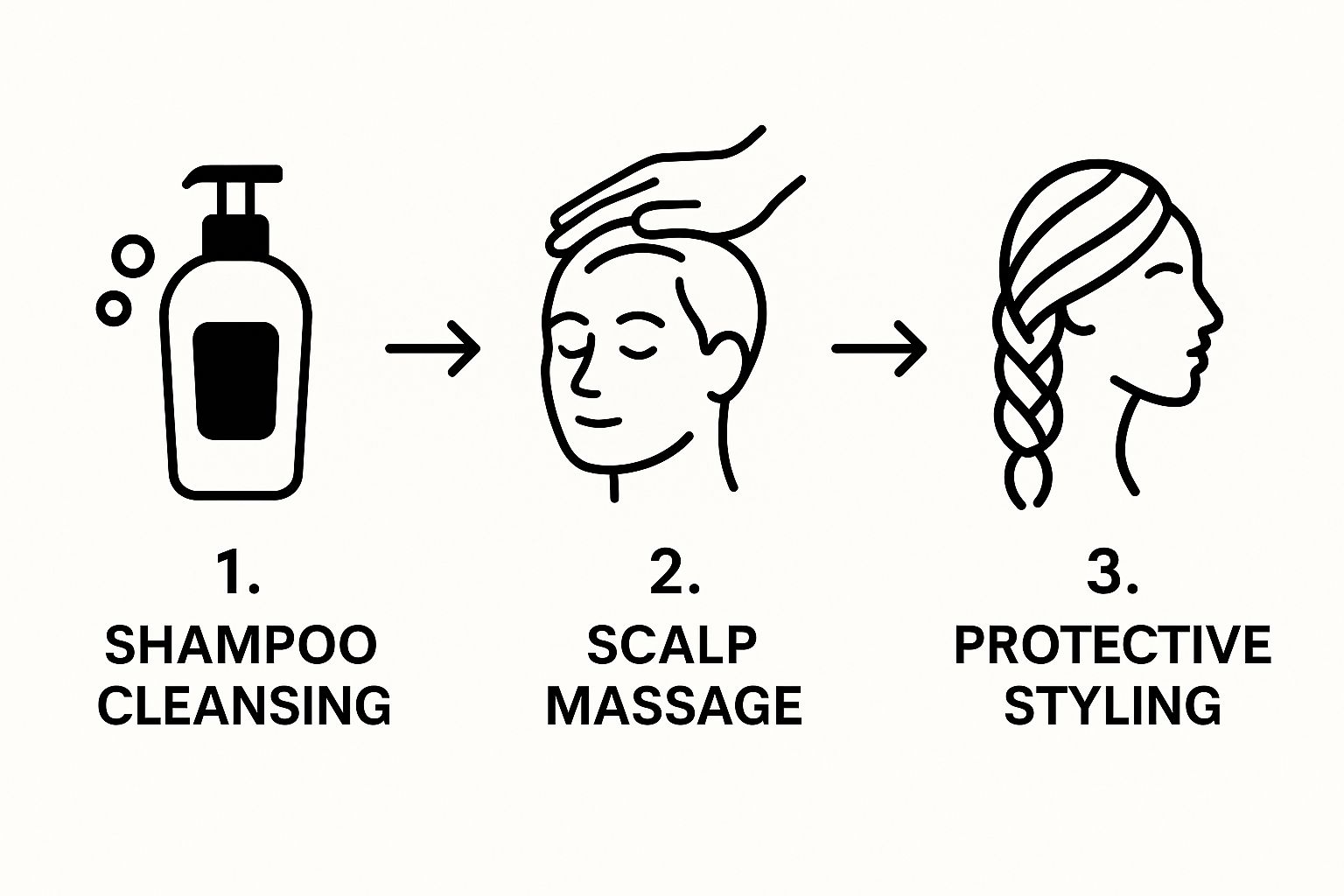
As you can see, a sustainable routine starts with gentle handling and scalp stimulation. This creates the best possible environment for your hair to not just survive, but thrive.
Combining Treatments for Better Results
Relying on just one method can work, but from my experience, stacking strategies often yields better, more noticeable results. The idea is to attack the problem from multiple angles.
For example, a man using oral Finasteride to block DHT internally can get a serious boost by also applying topical Minoxidil to stimulate follicles from the outside. This inside-out, outside-in approach covers more ground and gives you a better shot at success.
Here are a few powerful combinations I've seen work well:
- Medical and Topical: The classic combo of Finasteride (oral) and Minoxidil (topical) is a cornerstone for treating male pattern baldness for a reason. It's incredibly effective.
- Topical and Nutritional: Using a Minoxidil foam while also ensuring your diet is rich in iron, zinc, and protein provides both direct stimulation and the internal building blocks for healthy hair.
- Procedural and Supportive: After undergoing PRP therapy to kickstart follicle activity, maintaining a gentle hair care routine and using a ketoconazole shampoo helps protect that investment and maintain scalp health.
Remember, the goal is synergy. Each part of your routine should support the others. An anti-inflammatory shampoo makes your scalp more receptive to topical treatments, and a good diet gives those treatments the fuel they need to work.
The Critical Role of Patience and Progress Tracking
Here's a hard truth: hair grows slowly. You will not see significant changes overnight, and expecting them will only lead to frustration. Real, visible results take months, not weeks. This is why patience isn't just a virtue here; it's a mandatory part of the process.
To stay motivated and objectively figure out what's working, you have to track your progress. Our brains are notoriously bad at noticing gradual changes.
Here’s a simple system that works:
- Set a Baseline: Before you start any new treatment, take clear, well-lit photos of your hair. Get shots from the front (hairline), top (crown), and sides. Use the same lighting and location every time.
- Schedule Monthly Check-ins: On the same day each month, take the exact same set of photos. Put a reminder in your phone.
- Compare and Adjust: After three to six months, pull up your latest photos next to your baseline images. Are you seeing more density? Is your hairline holding steady? This visual evidence is the only way to know for sure if your plan is working.
This disciplined approach removes the guesswork. If after six months of consistent use you see zero change, that's your cue to talk to your doctor about adjusting the plan.
Creating a Realistic Long-Term Plan
Your hair care strategy only works if you can stick with it. A complicated, 10-step routine you can only manage for a week is useless. The best plan is the one you can realistically incorporate into your daily life for the long haul.
To give you an idea of how this might look, here's a sample weekly schedule. Think of it as a starting point, not a strict rulebook.
Sample Hair Care Regimen for Hair Loss Prevention
This table shows how you can integrate different strategies into a manageable weekly routine without feeling overwhelmed.
| Day of the Week | Morning Routine | Evening Routine | Dietary/Lifestyle Focus |
|---|---|---|---|
| Monday | Finasteride, Minoxidil | Protein-rich breakfast (eggs, Greek yogurt) | |
| Tuesday | Finasteride, Minoxidil | 30-minute walk for stress reduction | |
| Wednesday | Finasteride | Ketoconazole shampoo, Minoxidil | Focus on leafy greens (spinach, kale) for iron |
| Thursday | Finasteride, Minoxidil | ||
| Friday | Finasteride, Minoxidil | ||
| Saturday | Finasteride | Minoxidil | Mindful breathing session |
| Sunday | Finasteride | Ketoconazole shampoo, Minoxidil | Meal prep zinc sources (nuts, seeds) for the week |
Again, this is just a framework. You need to adjust it to fit your life, your specific treatments, and your budget. In the end, consistency will always beat intensity. Finding a sustainable rhythm is the ultimate key to maintaining your results and keeping your hair healthy for years to come.
Frequently Asked Questions About Hair Loss

Even with a solid plan in hand, you’re bound to have questions. Let's be honest, figuring out hair loss can feel overwhelming, but getting clear, direct answers makes a world of difference. Here, I'll tackle some of the most common questions we hear from people just like you.
Think of this as your practical guide for those "what if" moments. My goal is to demystify the process so you can move forward with confidence.
How Long Does It Take to See Results From Hair Loss Treatments?
This is the big one, and the honest answer is that it requires a healthy dose of patience. When you start a proven treatment like topical Minoxidil or oral Finasteride, you're playing the long game. Hair growth is a slow biological process, and there are no shortcuts.
Generally, you can expect to see the first real signs of progress—like less shedding or some fine, new "peach fuzz"—within three to six months of consistent, daily use. It's so important not to get discouraged early on. In fact, it's common to see a bit more shedding for the first few weeks. Don't panic! This is often a good sign that the treatment is pushing out old, weak hairs to make room for new, stronger ones.
To give any treatment a fair shot, you need to commit to it for at least six months. Many don't even hit their peak effectiveness until closer to the one-year mark.
Is It Possible to Regrow Hair That Is Already Gone?
The answer here is a firm "it depends," and it all hinges on the health of your hair follicles. Think of a follicle as a tiny factory. If that factory is just dormant or temporarily shut down, you can often get it running again.
If the follicle is still viable—even if it has shrunken—regrowth is absolutely possible. This is especially true for hair loss that started more recently. That's precisely what treatments like Minoxidil and PRP therapy are designed to do: "wake up" those sleeping follicles and get them producing again.
However, if a follicle has been dormant for many years and the scalp in that area is now smooth and shiny, that factory is likely closed for good. Once a follicle is gone, it’s gone. This is exactly why early and consistent intervention is your best bet for stopping hair loss in its tracks.
When Should I See a Doctor for My Hair Loss?
Starting with lifestyle tweaks and proven over-the-counter options is a smart first step. But there are definite times when you need to bring in a professional. A dermatologist or a dedicated hair loss specialist can give you an accurate diagnosis and open the door to more powerful treatments.
You should book an appointment if you notice any of these signs:
- Sudden or Patchy Hair Loss: If your hair starts falling out rapidly or in distinct circular patches, it could point to an autoimmune condition like alopecia areata.
- Scalp Symptoms: Is your hair loss accompanied by pain, intense itching, burning, redness, or scaling? A medical evaluation is needed to rule out scalp infections or inflammatory issues.
- You're Stuck: If you've been diligently using over-the-counter treatments for six to nine months with no improvement, it's time for a professional opinion.
A doctor can also run tests to check for underlying causes, like thyroid problems or nutritional deficiencies, and can prescribe medications like Finasteride.
Are Natural Hair Growth Products Actually Effective?
The world of "natural" hair loss remedies is massive, and to be blunt, their effectiveness is all over the map. It's really important to separate wishful thinking from scientific evidence.
Certain natural ingredients do show some real promise. For instance, things like rosemary oil, saw palmetto, and caffeine have been studied for their potential to boost scalp circulation or mildly inhibit DHT. They can be fantastic for improving the overall health of your hair and scalp.
But it’s critical to have realistic expectations. Think of these natural options as supportive players, not the stars of the show. They simply don't have the same level of robust, large-scale clinical evidence that FDA-approved medications like Minoxidil and Finasteride do for treating significant genetic hair loss.
Dealing with male pattern baldness is a journey, but understanding your options is the first step toward taking back control. At PRP For HairLoss, we're dedicated to giving you the information you need, especially on advanced treatments like PRP. Explore our resources to learn more about how to effectively manage your hair loss. Learn more at PRP For HairLoss.

 PRP For Hairloss
Leave a comment