Think of hair loss not as a single problem, but as a complex puzzle. The pieces come from all over—your family tree, your stress levels, what you eat, and even the environment around you. It's the way these pieces fit together that creates the final picture of your hair's health.
Why Hair Loss Happens: A Clear Overview
Pinpointing the exact reason for thinning hair often feels like searching for one single culprit, but that's rarely how it works. It's more about understanding how several interconnected factors team up to disrupt your hair's natural growth cycle. For most people, the story starts with genetics, but things like lifestyle choices and overall health are powerful supporting characters.
If you're dealing with hair loss, you're in good company. This is an incredibly common experience, affecting an estimated 85% of men and 33% of women at some point in their lives. The vast majority of these cases—around 95%, in fact—are due to a condition called Androgenetic Alopecia, better known as pattern baldness. That number alone shows just how widespread this is.
The Main Categories of Hair Loss
To get a real grip on this, it helps to break down the causes into four main buckets. Each one represents a different pathway that can ultimately lead to more shedding and thinner hair.
-
Genetics (Androgenetic Alopecia): This is by far the most common cause. You might know it as male or female pattern baldness. It's a hereditary condition where your hair follicles are basically pre-programmed to be sensitive to certain hormones.
-
Hormonal Fluctuations: Big shifts in your body's hormones can really throw your hair for a loop. The most well-known troublemaker is an increase in Dihydrotestosterone (DHT), which can literally shrink hair follicles. Other triggers can be thyroid problems or major life events like pregnancy.
-
Lifestyle and Environment: Think of this as the "outside-in" category. Chronic stress, a diet lacking key nutrients, or even exposure to pollutants can disrupt the hair growth cycle and weaken the hair itself.
-
Medical Conditions & Medications: Sometimes, hair loss isn't the primary problem but a symptom of something else going on in your body. It can also be a side effect of certain medications or medical treatments, which means the management strategy needs to be completely different.
To help you visualize these different pathways, here's a quick summary table.
Key Categories of Hair Loss Causes
| Category | Primary Driver | Commonly Known As |
|---|---|---|
| Genetics | Inherited sensitivity of hair follicles | Male/Female Pattern Baldness |
| Hormonal | Changes in androgens (like DHT) or thyroid | Hormonal Shedding |
| Nutritional | Deficiencies in key vitamins and minerals | Diet-Related Thinning |
| Environmental | Stress, toxins, or physical trauma to hair | Telogen Effluvium (Stress Shedding) |
As you can see, each category points to a different origin, but they often overlap and influence one another.
The key takeaway is that hair loss is rarely caused by one isolated factor. It's typically a combination of your genetic predisposition meeting an environmental or hormonal trigger.
For a deeper dive into all the contributing factors and what you can do about them, this ultimate guide to understanding hair loss causes and solutions is an excellent resource.
Is Hair Loss Written in Your DNA?

If you’ve ever glanced at your dad or grandad and wondered if their hairline was a sneak peek into your future, you were on the right track. When it comes to hair loss causes, genetics is the single biggest player in the game.
The scientific name for this is androgenetic alopecia, but most of us just call it male pattern baldness. It’s far and away the most common reason men lose their hair. Think of it less as a "baldness gene" and more like a set of genetic instructions that tell your hair follicles how to behave over your lifetime—specifically, how to react to certain hormones we'll cover next.
The Myth of the Maternal Gene
Let's clear up a common misconception right away: the old wives' tale that your hair's destiny is sealed by your mother's father is only part of the story. While the genes you get from your mom's side absolutely matter, they aren't the only ones.
The reality is that you can inherit the genetic tendency for hair loss from either side of your family. It's a bit of a genetic lottery. That's why your hairline might end up looking like your dad's, your mom's brother's, or a mix of relatives from both branches of the family tree.
Recognizing the Genetic Pattern
Unlike other types of hair loss that can come on suddenly, androgenetic alopecia follows a very predictable, slow-burn pattern. It often starts subtly, years before you really notice it in the mirror. For men, the classic signs are:
- A Receding Hairline: The hair at your temples starts to thin out and pull back, which often creates that classic "M" shape.
- Thinning at the Crown: You might notice a growing bald spot on the vertex, which is the top-back part of your head.
- Overall Thinning: Eventually, the receding hairline and the spot at the crown can meet, leaving that familiar horseshoe pattern of hair around the sides and back of the head.
It's important to grasp that the genes themselves don't make hair fall out. What they do is create a permanent sensitivity in your hair follicles. This makes them vulnerable to hormonal signals that, over time, tell them to shrink and stop growing hair.
This slow-shrinking process is called miniaturization. With each new growth cycle, the hair that emerges from an affected follicle gets progressively thinner, shorter, and weaker. It’s a lot like a healthy, robust tree that slowly withers over many seasons, producing smaller leaves each year until it stops altogether.
Getting your head around this genetic basis is the first real step. It helps you understand that you're not losing your hair because you wear a hat too much or use the wrong shampoo. This is a biological process that was written into your code from day one, just waiting for the right hormonal triggers to kick it into gear.
The Hormonal Trigger Behind Hair Thinning
If genetics writes the script for hair loss, then hormones are the actors that bring the whole production to life. Your DNA might set the stage, but it’s a specific hormonal process that actually flips the switch and starts the thinning. This is where many common hair loss causes meet and funnel into one powerful mechanism.
The main culprit here is a potent hormone called Dihydrotestosterone, or DHT for short.
The Lock and Key Analogy for Hair Loss
Think of it this way: testosterone is a "master key" that fits various locks all over your body, playing a role in everything from muscle mass to mood. But an enzyme called 5-alpha reductase acts like a rogue key-cutter. It takes that standard testosterone key and recuts it into a new, more powerful one: DHT.
For guys with a genetic tendency for hair loss, this new DHT key is a big problem. Why? Because the hair follicles on their scalp have specific "locks" (androgen receptors) that are a perfect fit for it.
When DHT snaps into these locks, it doesn't just kill the follicle outright. Instead, it sends a signal that begins a slow, methodical shutdown process.
We call this process miniaturization, and it’s the best way to understand how thinning happens over time. It's like someone installing a dimmer switch on your hair follicles. DHT signals the follicle to shrink, and with each new growth cycle, the hair that emerges is a little shorter, a little finer, and lighter in color. Eventually, the follicle shrinks so much that it simply goes dormant and stops producing hair.
This diagram shows how higher DHT levels directly cause follicle miniaturization, leading to the thinning we recognize as male pattern hair loss.
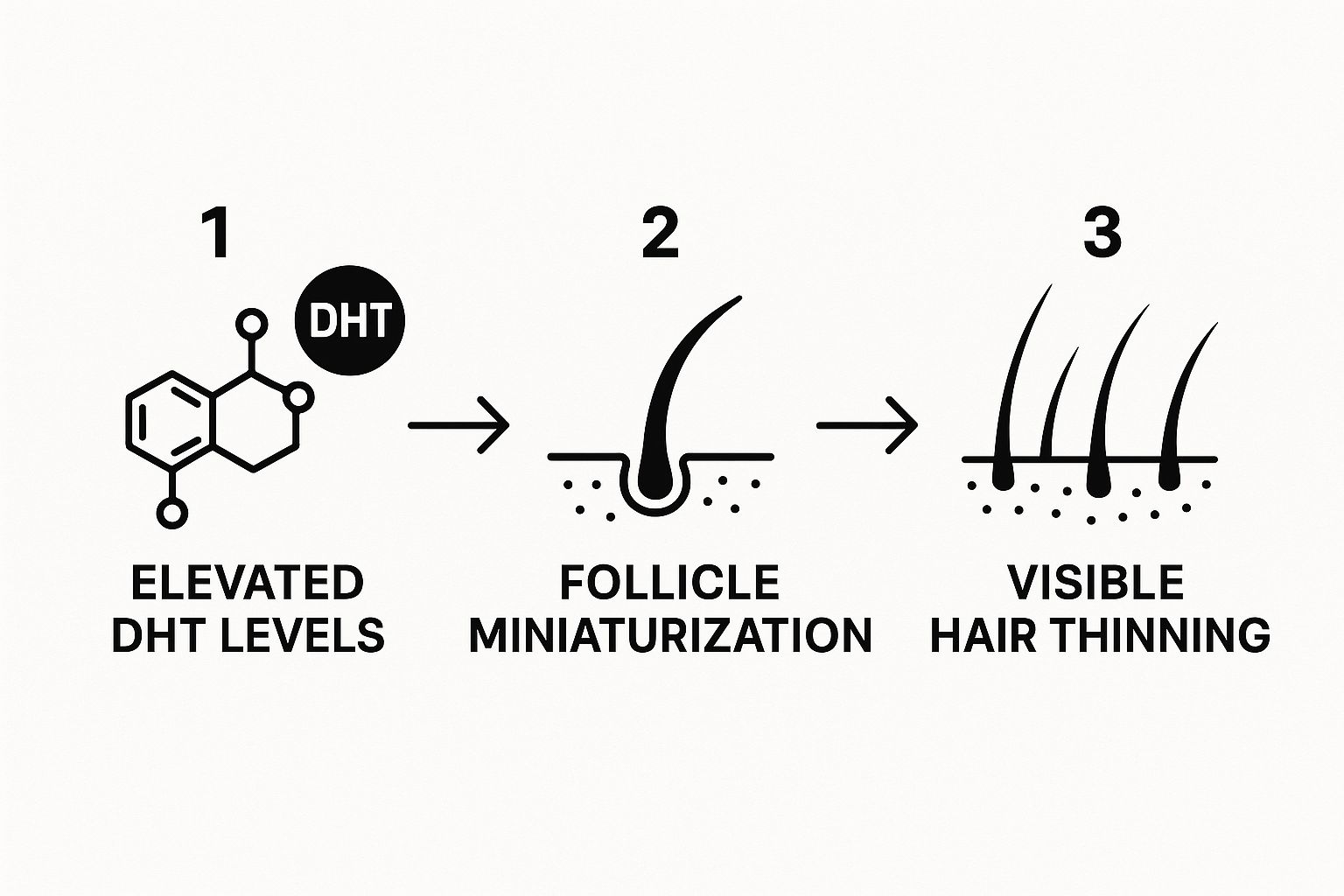
You can see how the hormonal trigger creates a physical outcome—a direct cause-and-effect relationship that plays out over many years.
The Step-by-Step Hormonal Process
Getting a handle on this sequence is key to understanding how and why most hair loss treatments work. The entire chain reaction breaks down into a few distinct steps:
- Testosterone Production: Your body produces testosterone. This is normal and essential for a healthy guy.
- The Conversion: The 5-alpha reductase enzyme gets to work, converting a small percentage of that testosterone into the much more potent DHT.
- Binding to the Follicle: If you have the genetic sensitivity, this DHT then binds to the androgen receptors on the follicles in your scalp.
- Miniaturization Kicks In: This connection triggers the shrinking process. The hair's growth phase (anagen) gets shorter, while its resting phase (telogen) gets longer.
- Visible Thinning: Over many growth cycles, the hairs become so weak and thin that they resemble "peach fuzz" (these are called vellus hairs), until the follicle can't even produce a visible hair anymore.
This hormonal cascade is the engine driving the vast majority of male hair loss. It explains why thinning often starts after puberty when hormones surge and why it’s a gradual decline, not an overnight event.
And here’s the most critical takeaway: it's not about how much testosterone you have. It’s about how much gets converted to DHT and, crucially, how sensitive your follicles are to its effects. Grasping that distinction is fundamental to understanding pattern baldness.
How Your Diet Feeds or Fights Hair Loss

While genetics and hormones certainly set the stage, your diet plays a surprisingly powerful, day-to-day role in the health of your hair. Of all the possible hair loss causes, the things you eat (or don't eat) are some of the most direct and controllable factors in the equation.
Think of each hair follicle as a tiny but very busy factory. To build strong, healthy strands of hair, that factory needs a constant supply of raw materials—proteins, vitamins, and minerals. If that supply chain gets disrupted, even for a short time, production slows way down and the quality of the final product suffers.
The result is hair that’s weaker, more brittle, and much more likely to fall out before its time. When your body senses a resource shortage, it’s smart; it will always route nutrients to critical life-sustaining organs first. That makes your hair one of the first things to suffer when your diet isn't up to par.
The Building Blocks for Healthy Hair
A few key nutrients are absolutely essential for a healthy hair growth cycle. If you're running low on even one of them, it can throw the whole process off track and lead to noticeable thinning.
- Iron: This mineral is a must-have for producing hemoglobin in your blood. Hemoglobin is the courier service that delivers oxygen to all your cells for growth and repair—and that includes the cells that power your hair follicles. Low iron is a classic, well-documented trigger for hair shedding.
- Zinc: Zinc is like the on-site foreman for hair tissue growth and repair. It also ensures the oil glands surrounding the follicles are working properly. It’s so important, in fact, that a deficiency can directly cause hair loss.
- Protein (Keratin): Hair is made almost entirely of a protein called keratin. If your diet is low in protein, your body starts rationing it, often by shutting down non-essential activities like hair production to save resources.
- Biotin (Vitamin B7): As one of the most famous "hair vitamins," biotin is a key player in producing that all-important keratin. While a true, severe deficiency is rare, getting enough is critical for strong, resilient hair.
Poor nutrition essentially forces your hair follicles into a low-power, energy-saving mode. It weakens the hair shaft itself and can prematurely shorten the anagen (growth) phase, leading to more shedding long before the hair has reached its full potential.
Fueling Your Follicles from the Inside Out
The good news is that you don’t need some radical, complicated diet. Making simple, targeted adjustments to what you eat can give your hair the high-quality fuel it needs to thrive. The goal is just to focus on nutrient-dense foods.
To give your body's "hair construction crew" the best tools for the job, try working a mix of these hair-friendly foods into your weekly meals.
Foods to Prioritize for Hair Health
| Nutrient | Best Food Sources |
|---|---|
| Iron | Spinach, lentils, red meat, and fortified cereals |
| Zinc | Oysters, beef, pumpkin seeds, and chickpeas |
| Protein | Eggs, chicken, fish, Greek yogurt, and beans |
| Biotin | Eggs (especially yolks), nuts, salmon, and avocados |
By making sure these raw materials are always on hand, you’re directly supporting your hair’s structural integrity. This helps fortify it against the other factors that can contribute to thinning and loss.
When Stress and Lifestyle Impact Your Hair

Beyond our genetic blueprint and hormonal shifts, the simple pressures of modern life can be powerful hair loss causes. If you've ever gone through a brutal year at work or a period of intense personal turmoil and noticed more hair in the shower drain, you're not imagining things. The connection is very real.
Your body is a master of crisis management. When it senses high stress, it goes into survival mode, rerouting energy and nutrients away from what it deems "non-essential" functions. Biologically speaking, growing a full head of hair is a luxury, not a necessity for survival.
This survival mechanism can trigger a condition known as Telogen Effluvium. It’s like your body hits the emergency brake on hair production. A significant shock to the system—think major surgery, a severe illness, or extreme emotional distress—can jolt a large number of hair follicles, pushing them all into the resting (telogen) phase at the same time.
The Delayed Fallout From Stress
Here’s the tricky part: the shedding doesn't happen right away. Typically, a few months after the stressful event, all those hairs that were prematurely sent into hibernation start to fall out at once. This results in a sudden, and often alarming, amount of hair loss. It feels dramatic because it is a dramatic physiological response to something that happened in your recent past.
The good news about Telogen Effluvium is that it’s almost always temporary. Once the underlying stressor is resolved and your body gets the "all-clear" signal, the hair growth cycle usually gets back on track within six to nine months.
But it’s not just the big, isolated events. Chronic, day-in-day-out stress from a demanding job or a tough personal situation can also throw your hair cycle out of whack. This constant, low-grade pressure keeps your body on high alert, which can subtly undermine hair health over the long term and even make conditions like androgenetic alopecia worse.
Comparing Different Hair Loss Triggers
It can be tough to distinguish one type of hair loss from another just by looking in the mirror. Each has its own distinct cause and progression. This table breaks down the key differences between the most common types.
| Condition | Primary Cause | Onset | Pattern |
|---|---|---|---|
| Androgenetic Alopecia | Genetics & Hormones (DHT) | Gradual, over years | Predictable (receding hairline, crown thinning) |
| Telogen Effluvium | Physical/Emotional Stress | Sudden, 2-3 months after a trigger | Diffuse, all-over shedding |
| Alopecia Areata | Autoimmune Disorder | Rapid, often unpredictable | Round, smooth patches of hair loss |
| Traction Alopecia | Physical Strain | Gradual, due to hairstyle | Thinning along the hairline where hair is pulled tightest |
Understanding these distinctions is the first step toward figuring out what's really going on with your hair and what you can do about it.
How Everyday Exposure Weakens Hair
Internal stress isn't the only culprit; your external environment plays a significant part, too. We're constantly exposed to factors that can weaken hair and damage the follicles.
- Pollution: Think of all the airborne grime and toxins in a city. They don't just sit on your skin; they can settle on your scalp, creating oxidative stress that directly harms hair follicles.
- Physical Stress: This is the mechanical damage we do ourselves. Constantly pulling hair back into tight ponytails can lead to traction alopecia. Harsh chemical treatments and excessive heat styling can also weaken the hair shaft, leading to breakage and loss.
- Lifestyle Habits: Things like smoking and excessive drinking aren't doing your hair any favors. They can constrict blood vessels and impair circulation, meaning fewer nutrients make it to your scalp to feed the follicles.
Often, these factors are all intertwined. A high-stress life can easily lead to poor dietary choices, smoking, and less time for proper hair care, creating a perfect storm for hair thinning.
2. Medical Conditions and Treatments Linked to Hair Loss
While genetics and hormones get most of the attention, your hair often acts as an early warning system for your overall health. A sudden uptick in shedding can be one of the first visible clues of an underlying medical problem, making this a critical area to understand when exploring hair loss causes.
Think of your body like a complex machine. When a key part, like your thyroid gland, isn't working right—either overactive or underactive—it throws off a whole host of processes, including the intricate cycle of hair growth. This imbalance can trigger diffuse, all-over thinning that seems to appear out of the blue.
Autoimmune diseases are another major culprit. With conditions like Alopecia Areata, the body’s immune system gets its signals crossed and mistakenly attacks healthy hair follicles. The result is often hair falling out in very distinct, typically round and smooth, patches.
The most important thing to remember is that when hair loss is a symptom, it's your body waving a red flag. It’s absolutely essential to see a doctor to find the real cause instead of trying to figure it out on your own.
When the Cure Causes the Problem
It's a frustrating paradox, but sometimes the very treatments meant to help us can be the direct cause of hair loss. This is a known side effect for several types of medications that can unfortunately interfere with the hair's natural growth phase.
Some of the most common medications linked to hair loss include:
- Certain Antidepressants: Some drugs used for mental health management can disrupt the hair cycle.
- Blood Thinners: Specific anticoagulants are known to sometimes increase hair shedding.
- Chemotherapy Drugs: These powerful drugs are designed to attack rapidly dividing cells, which sadly includes the healthy cells in our hair follicles.
- Some Blood Pressure Medications: Beta-blockers, for example, are another class of drugs with this potential side effect.
This isn't a small, isolated issue. Hair loss affects a staggering number of people globally. In the United States alone, an estimated 56 million people deal with it, and in China, that number balloons to around 250 million. Research from China has even found connections between lifestyle choices like sugary drink consumption and more severe hair loss, showing just how much our health and environment are intertwined.
When you're ready to look into targeted solutions, products like Vichy Dercos Aminexil Clinical 5 Anti-Hair Fall Treatment are designed to address these concerns. But if you have any inkling that a medical issue is at play, your first and most important step is always to talk it over with your doctor.
Common Questions About Hair Loss Causes
Even with a good grasp of the science, you probably still have a few nagging questions. Let's tackle some of the most common myths and concerns I hear all the time to clear up any lingering confusion about what's really going on up there.
Do Hats Cause Baldness?
This is one of the oldest myths in the book, and thankfully, it's just that—a myth. Wearing a hat, even if it's your daily go-to, will not cause male pattern baldness. The real culprits are the genetic and hormonal factors we've already covered.
The only way a hat could cause hair loss is if it were so incredibly tight that it physically pulled on your hair and damaged the follicles over a long period. This is known as traction alopecia, and it's extremely rare from simply wearing a cap.
Is Frequent Washing Bad for Hair?
Not at all. Washing your hair frequently doesn't cause it to fall out. In fact, keeping your scalp clean is one of the best things you can do for it, as this prevents the buildup of oil, dead skin, and dirt that can clog follicles and create an unhealthy environment for growth.
Those hairs you see circling the drain? They were already in the shedding (telogen) phase of their cycle. The shampoo simply helped them on their way out.
Don’t fear the shower. The hairs that fall out during washing were already scheduled to leave. A clean scalp is a healthy foundation for new growth.
How Quickly Can I See Changes?
When it comes to hair, patience really is a virtue. The timeline for seeing results depends entirely on the cause of your hair loss.
- If you're dealing with a temporary issue like stress-induced shedding (Telogen Effluvium), you can typically expect the shedding to slow and new growth to begin within six to nine months after the stressor is gone.
- For genetic hair loss, treatments often take a year or more to show their peak effect. Consistency is everything.
After getting to the bottom of what causes hair loss, many people look for natural ways to support their scalp and encourage thicker, healthier hair. Some explore options like Using Castor Oil for Hair Growth, which focuses on nourishing the scalp and strengthening existing strands.
At PRP For HairLoss, we believe that clear, accurate information is the first step toward finding a solution that works for you. To learn more about advanced treatment options, visit us at https://prpforhairloss.com.

 PRP For Hairloss
Leave a comment