Starting a new hair loss treatment, whether it’s Minoxidil, Finasteride, or a specialized procedure like PRP (Platelet-Rich Plasma), is a significant step. But after the initial commitment, an anxious question follows: "Is this actually working?" The hair growth cycle is a marathon, not a sprint, and progress can be frustratingly slow and subtle. It’s easy to get discouraged when you don't see a full, thick mane in the mirror after just a few weeks. Many men give up too early, mistaking the absence of dramatic change for a lack of results.
This guide is designed to empower you by detailing the specific, tangible hair growth signs to watch for. Instead of guessing, you'll learn how to become an expert observer of your own progress, identifying the crucial clues that your follicles are waking up and your efforts are paying off. We'll break down seven key indicators, from the barely-visible fuzz to noticeable changes in density, helping you track your journey with confidence and patience. Understanding these signals is essential for staying motivated and sticking with your regimen long enough to see meaningful improvement. This article will show you exactly what to look for.
1. New Hair Sprouting (Baby Hairs)
The appearance of fine, short, wispy hairs is one of the most exciting and definitive hair growth signs. Often called "baby hairs" or "peach fuzz," this new growth signifies that dormant hair follicles have re-entered the anagen (growth) phase. These new strands are typically lighter in color and much thinner than your mature, terminal hairs, but their presence is a powerful indicator that your treatment protocol is working.
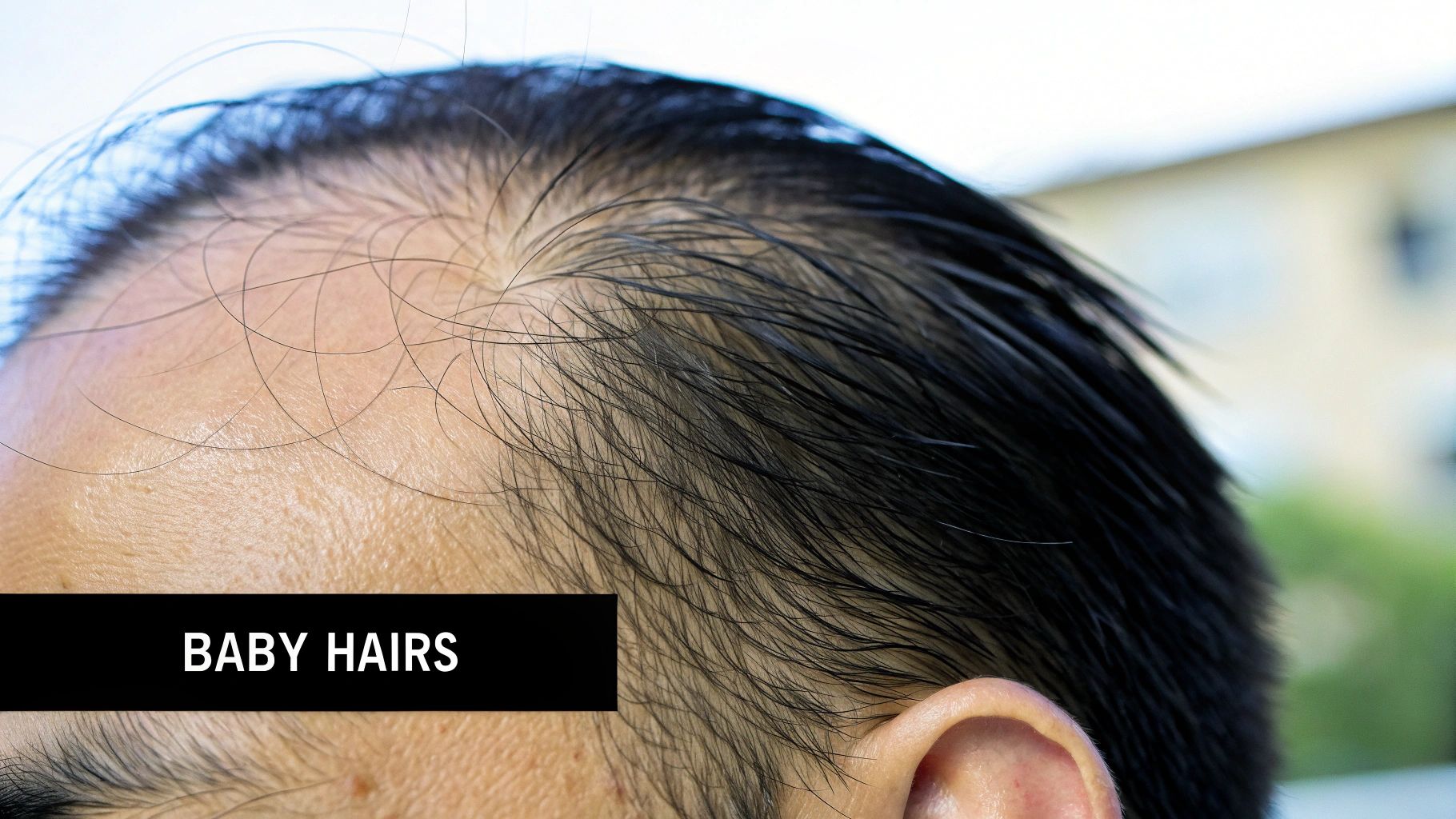
This phenomenon is common across various hair loss treatments. For instance, men using topical solutions like Minoxidil often report the first signs of these vellus hairs emerging along the hairline and in the crown area within 8 to 12 weeks. Similarly, those who have undergone a hair transplant can expect to see the first sprouts of new hair pushing through the scalp around 3 to 4 months post-procedure.
How to Spot and Track New Growth
Spotting these tiny hairs requires a bit of detective work, as they can be difficult to see with the naked eye. Consistency is key to accurately monitoring your progress and confirming these early hair growth signs.
- Use Proper Tools: A magnifying mirror and bright, direct lighting are your best allies. Stand under a bathroom light or use a ring light to illuminate your scalp, making the fine, translucent hairs easier to identify.
- Take Consistent Progress Photos: Capture weekly or bi-weekly photos of your target areas. Use the same location, lighting, and angle for every picture to create a reliable visual timeline. This makes it much easier to compare and confirm new sprouting over time.
- Be Patient and Gentle: Remember that these new hairs are delicate. It can take 6 to 12 months for them to mature, thicken, and darken into terminal hairs. Avoid harsh styling, excessive brushing, or over-manipulating the areas with new growth to give them the best chance to thrive.
2. Increased Hair Density
A gradual thickening of hair in previously sparse areas is another one of the most encouraging hair growth signs. This increased density happens when existing, miniaturized hairs become thicker and stronger, and dormant follicles reactivate to produce new strands. This creates a fuller appearance and better scalp coverage, often noticeable even before significant new length is achieved. It’s a clear signal that your hair follicles are responding positively to treatment.

This type of improvement is a hallmark of long-term treatments. For example, men using oral medications like Finasteride often report a noticeable increase in hair density and a reduction in scalp visibility after 6 to 12 months of consistent use. Similarly, individuals who incorporate regular scalp massage or use nutritional supplements rich in biotin and keratin may observe an overall improvement in thickness and a fuller feel to their hair over time.
How to Spot and Track Increased Density
Gauging hair density can be subjective, so a systematic approach is crucial for accurately tracking your progress and confirming these vital hair growth signs. Consistency in your monitoring methods will provide the most reliable feedback.
- Compare Photos Over Time: The most effective method is taking progress photos every 3 to 6 months. Stand in the same spot with the same lighting and part your hair consistently. Comparing these images side-by-side will make changes in scalp coverage and fullness undeniable.
- Get a Second Opinion: Ask a trusted friend or family member who sees you regularly to monitor your progress. An objective observer can often spot gradual changes that you might miss from looking in the mirror every day.
- Use Advanced Tools (Optional): For a more scientific approach, consider using a dermatoscope. This handheld magnifying device allows you to see your scalp up close, making it easier to track the number and thickness of hairs in a specific area. Many dermatologists use this tool to monitor treatment efficacy.
3. Reduced Hair Shedding
Before you see new growth, one of the most reassuring hair growth signs is a noticeable decrease in shedding. A healthy scalp naturally loses 50 to 100 hairs daily as part of its cycle. When your hair loss treatment starts working, it strengthens the hair follicle's hold, leading to fewer strands on your pillow, in your brush, or in the shower drain. This indicates your follicles are spending more time in the anagen (growth) phase and less time in the telogen (shedding) phase.
This reduction is often one of the first results people notice. For example, men using Minoxidil frequently report a significant drop in hair fall weeks before any new "baby hairs" appear. Similarly, individuals using medicated shampoos with ingredients like Ketoconazole often find much less hair clogging the drain. To further support this, you might consider incorporating effective anti-hair loss shampoos into your routine, as they are designed to fortify hair and reduce shedding.
How to Spot and Track Reduced Shedding
Monitoring a decrease in hair fall provides tangible evidence that your efforts are paying off. Since it can be subtle at first, a structured approach is the best way to track your progress and confirm these early hair growth signs.
- Establish a Baseline: Before starting a new treatment, try to count the hairs you lose during a typical day or wash for about a week. This gives you a baseline number to compare against later, making any reduction more obvious.
- Keep a Hair Diary: Use a notebook or a tracking app to log your observations. Note the amount of hair shed during specific activities like showering or combing. Documenting this consistently helps you identify a clear downward trend over weeks or months.
- Perform a Gentle Pull Test: A "pull test," often used by dermatologists, can be done at home. Gently grasp a small section of about 40-60 hairs between your thumb and forefinger and pull firmly but slowly. If more than six strands come out, shedding may still be active. As your treatment works, you should see this number decrease. Be mindful of seasonal shedding, which can temporarily increase hair fall in the autumn for some people.
4. Improved Hair Texture and Strength
Beyond just new growth, a significant improvement in the quality of your existing hair is a powerful hair growth sign. This change indicates that your follicles are receiving better nutrition and producing healthier, more robust strands. You may notice individual hairs feeling thicker, a reduction in breakage when brushing, and an overall sense of resilience and improved elasticity. This enhancement in hair health is a clear signal that your regimen is fortifying your hair from the root.
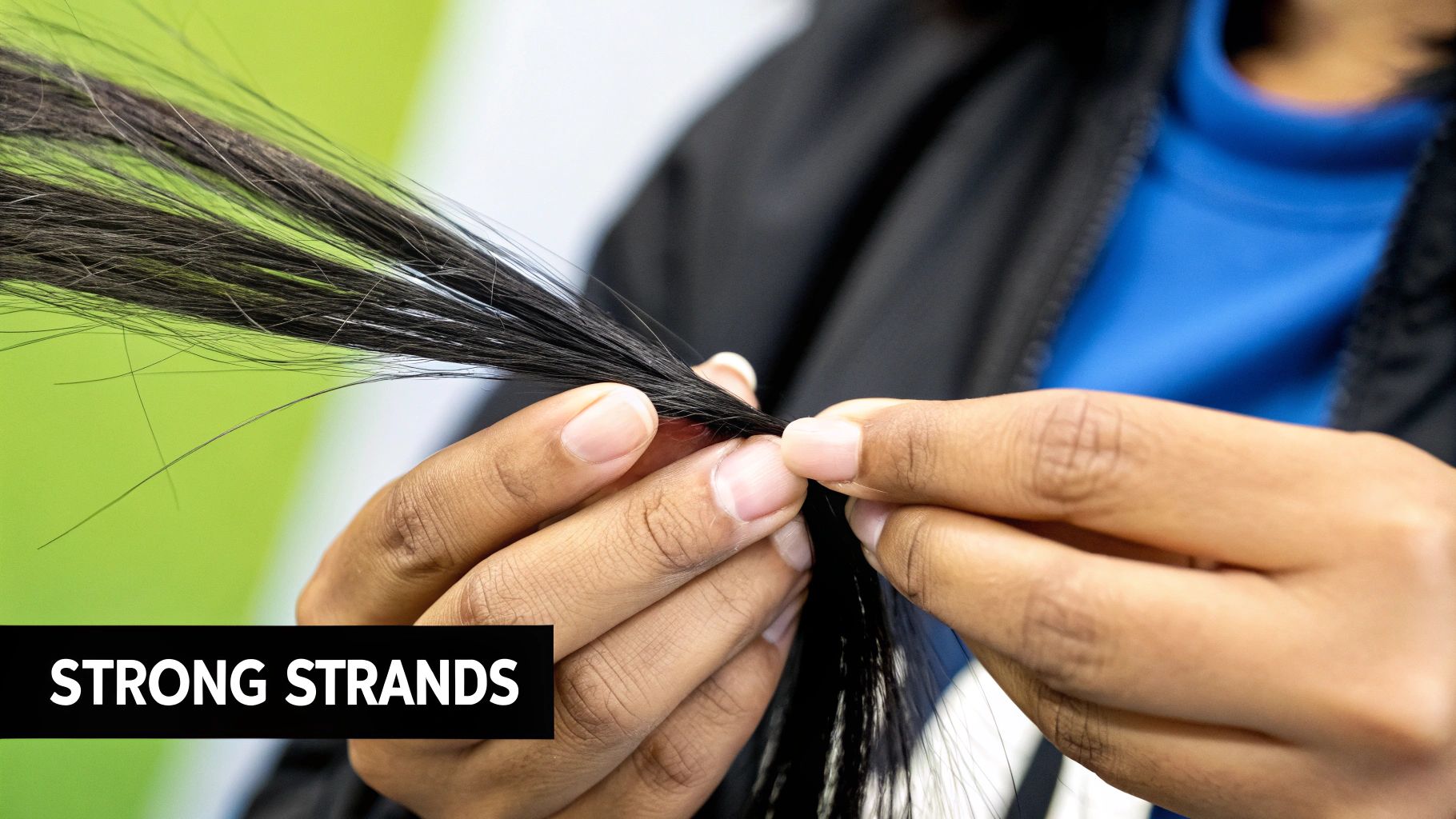
These qualitative improvements often precede or accompany new sprouting. For instance, men taking biotin supplements frequently report their hair feels less brittle and stronger within a few months. Likewise, those who incorporate regular protein treatments or reduce damaging heat styling often see a noticeable improvement in hair quality and manageability. For those seeking to enhance hair strength and texture through dietary supplements, consider the potential benefits of collagen matcha for stronger hair, as improved internal nutrition directly supports follicle function.
How to Spot and Track Improved Texture
Monitoring changes in hair texture requires paying close attention to how your hair feels and behaves over time. Consistent evaluation is the best way to confirm these positive developments.
- Perform an Elasticity Test: When your hair is wet, gently take a single strand and stretch it slightly. Healthy hair will stretch by about one-third of its length before returning to its original state. If you notice increased stretchiness and less snapping over the months, it’s a sign of improved health.
- Monitor Breakage: Pay attention to the number of hairs left in your brush or on the bathroom floor after styling. A visible decrease in shedding and breakage is a strong indicator that your hair strands are becoming more resilient.
- Take Close-Up Photos: Use your smartphone camera in macro mode to capture close-up images of your hair strands. Comparing photos taken weeks or months apart can reveal visible changes in thickness and shine that you might otherwise miss.
- Feel the Difference: Simply running your hands through your hair can be revealing. Notice if it feels smoother, fuller, or less wiry than before. Changes in how your hair responds to styling products or holds its shape can also be telltale signs of improved structural integrity.
5. Hairline Advancement and Edge Recovery
The forward movement or filling in of your hairline is one of the most visually impactful and rewarding hair growth signs you can experience. This is especially true for those dealing with male pattern baldness or traction alopecia, where a receding hairline or thinning edges are primary concerns. Seeing the frame of your face begin to restore itself provides powerful motivation to continue your treatment regimen.
This type of progress is a hallmark of several successful hair restoration journeys. For example, individuals who undergo a hair transplant often see their new, surgically designed hairline start to grow in around the six-to-nine-month mark post-operation. Similarly, consistent, long-term use of treatments like Finasteride and Minoxidil can lead to noticeable filling-in at the temples and a halt to further recession. Those recovering from traction alopecia may also see their edges return once damaging hairstyling practices are stopped.
How to Spot and Track Hairline Progress
Since hairline changes occur gradually, a structured approach to tracking is essential to confirm that your efforts are paying off. This area is often the last to show significant improvement, so patience and meticulous monitoring are crucial.
- Establish a Photographic Baseline: Take clear, well-lit photos of your hairline from the front and both sides. Ensure you use the same distance, angle, and lighting for every photo you take, ideally on a monthly basis. This creates a reliable visual record to compare against.
- Focus on the Overall Frame: Don't get fixated on perfect symmetry or individual hairs. Instead, look at the overall shape and density of your hairline and temples. The goal is to see a gradual filling-in and a stronger frame for your face over many months.
- Be Patient and Realistic: Hairline recovery is a marathon, not a sprint. The follicles in this area are often the most sensitive to DHT and can take the longest to respond to treatment. Seeing even minor advancement after 6 to 12 months is a fantastic sign of progress.
6. Scalp Health Improvement
A healthy scalp is the bedrock of healthy hair, and noticing positive changes in its condition is one of the most fundamental hair growth signs. Before new hairs can sprout, the environment must be optimal. This means reduced inflammation, balanced oil production, and improved circulation. When your scalp environment improves, it's a clear signal that your hair follicles are receiving the support they need to exit the resting phase and begin growing again.
This principle is widely recognized by dermatologists and trichologists. For example, men using ketoconazole shampoos (like Nizoral) to combat androgenetic alopecia often first notice a significant reduction in scalp itching, flaking, and redness. This anti-inflammatory and anti-fungal action creates a healthier foundation, which then paves the way for hair regrowth. Similarly, practices like regular scalp massage are known to boost blood flow, delivering more oxygen and nutrients to the follicles and leading to a healthier-looking scalp long before new hairs become visible.
How to Monitor Your Scalp's Condition
Tracking changes in your scalp health requires careful observation. Just like monitoring for baby hairs, consistency is crucial to confirm that your hair growth treatments are having a positive effect from the ground up.
- Look for Visual Cues: Once a week, part your hair in several places under bright, direct light. A healthy scalp should have a calm, even skin tone, not an angry red or pink one. Look for a reduction in flakes, redness, or visible irritation over time.
- Track Sensations: Pay attention to how your scalp feels. A decrease in itchiness, tightness, or general sensitivity are powerful indicators of improvement. If your scalp previously felt constantly irritated and now feels calm and comfortable, you're on the right track.
- Document with Photos: Taking close-up photos of your scalp in the same spots each week is an excellent way to create an objective record. This allows you to visually compare the scalp's color and texture, providing concrete evidence of these important, early hair growth signs.
7. Regrowth in Previously Bald Spots
Witnessing new hairs emerge in areas that were once completely or nearly bald is one of the most rewarding hair growth signs you can experience. This development signifies a significant breakthrough, indicating either the powerful reactivation of long-dormant follicles or the successful management of an underlying condition that was causing localized hair loss. This is more than just baby hairs along a receding hairline; it is tangible proof of reclamation in areas like the crown or distinct patches.
This kind of visible regrowth is a hallmark of success across several scenarios. For example, men on a consistent finasteride and minoxidil regimen often see the first signs of new growth filling in a thinning crown after 4 to 6 months. Patients with alopecia areata who respond well to corticosteroid injections or other treatments may see new sprouts appearing within the bald patches. Even those recovering from trichotillomania or post-chemotherapy hair loss can see this powerful sign as follicles heal and re-enter the anagen phase.
How to Monitor and Support Bald Spot Regrowth
Tracking progress in these areas requires patience and a structured approach, as filling in a completely bald area is a marathon, not a sprint. Proper care is crucial to ensure these new, vulnerable hairs survive and mature.
- Document with Multi-Angle Photos: A bald crown or patch looks different from various angles. Take monthly photos from the top, back, and sides to get a comprehensive view of the density changes. This creates an undeniable visual record of your progress.
- Be Patient with Coverage: The first hairs to appear will be fine and sparse. It can take a year or more for these vellus hairs to mature into thicker, pigmented terminal hairs that provide significant visual coverage. Celebrate the small victories along the way.
- Protect New Growth at All Costs: Newly sprouted hair is fragile and the scalp is exposed. Protect the area from direct sun exposure by wearing a hat or using a scalp-specific sunscreen. Avoid harsh chemical treatments, tight hairstyles, or aggressive brushing that could dislodge the new growth.
- Consider Professional Evaluation: If regrowth stalls or you want to optimize your results, consulting a dermatologist or trichologist is a smart move. They can assess your progress and potentially adjust your treatment protocol for maximum efficacy.
7 Hair Growth Signs Comparison
| Aspect | New Hair Sprouting (Baby Hairs) | Increased Hair Density | Reduced Hair Shedding | Improved Hair Texture and Strength | Hairline Advancement and Edge Recovery | Scalp Health Improvement | Regrowth in Previously Bald Spots |
|---|---|---|---|---|---|---|---|
| Implementation Complexity 🔄 | Low – early visible sign | Medium – gradual process | Low – easy daily monitoring | Medium – needs consistent care | High – slow, may need professional intervention | Low to Medium – ongoing scalp care needed | High – often requires multi-faceted treatments |
| Resource Requirements ⚡ | Minimal – lighting, patience | Moderate – consistent treatment & monitoring | Minimal – self-monitoring | Moderate – supplements/care products | High – photos, pro treatments | Low – shampoos, scalp treatments | High – medications, injections, therapy |
| Expected Outcomes 📊 | Initial fine, soft hair within 2-4 months | Fuller, thicker hair over 6-12 months | Reduced daily hair loss within weeks | Thicker, stronger strands, less breakage | Noticeable hairline fill-in after 6-12 months | Reduced inflammation, improved scalp comfort | New hair filling bald patches in 6-18 months |
| Ideal Use Cases 💡 | Early treatment progress indicator | Patients seeking density improvement | Those wanting to retain existing hair | Users targeting hair quality enhancement | Male pattern baldness, traction alopecia patients | Addressing scalp issues before hair growth | Severe hair loss, alopecia, scarring areas |
| Key Advantages ⭐ | Clear, early sign of follicle activity | Significant visual fullness boost | Easy to track and notice changes quickly | Improved manageability and healthy appearance | Dramatic, confidence-boosting facial framing | Creates optimal growth environment | Most impactful recovery sign, restores coverage |
Your Next Steps: Staying Consistent and Patient on Your Hair Growth Journey
Recognizing the subtle yet powerful hair growth signs we've explored is your greatest tool for staying motivated on this journey. From the first appearance of tiny, vellus-like baby hairs to a noticeable reduction in daily shedding, each sign is a critical milestone. It's confirmation that your efforts, whether through topical treatments, lifestyle changes, or advanced therapies, are beginning to pay off.
Remember, progress is rarely a straight line. You might experience significant scalp health improvements and less hair in the shower drain months before you see a tangible increase in overall density. This is normal. The hair growth cycle is a slow, methodical process, and patience is just as crucial as the treatment itself.
Key Takeaways for Long-Term Success
To truly master this process, shift your focus from seeking overnight miracles to celebrating incremental progress. Here are the most important takeaways to carry forward:
- Documentation is Your Ally: Your memory can be unreliable. Take clear, well-lit photos of your scalp and hairline from the same angles every 4-6 weeks. This objective record is the best way to track hairline advancement and regrowth in thinning spots, providing undeniable proof of your progress.
- Consistency Over Intensity: A consistent, daily routine is far more effective than sporadic, intensive efforts. Sticking to your chosen treatment plan without interruption gives your hair follicles the stable environment they need to move from the resting (telogen) phase to the active growth (anagen) phase.
- Holistic Health Matters: The signs of hair growth aren't just a result of what you put on your scalp; they are also a reflection of your internal health. Supporting your treatment with a balanced diet, adequate sleep, and stress management creates the optimal foundation for healthy follicular function.
Turning Knowledge into Action
Now that you can identify these seven key hair growth signs, the next step is to integrate this knowledge into a proactive management plan. Don't just wait for changes to happen; actively look for them. Use a journal or a note on your phone to log your observations. Did you notice less shedding this week? Are the hairs along your temples feeling stronger and less brittle?
This active monitoring transforms you from a passive observer into an engaged participant in your own hair restoration story. It empowers you to have more informed conversations with your dermatologist or trichologist, allowing you to fine-tune your approach for better results. By understanding and tracking these positive indicators, you build the resilience needed to see your journey through to its successful conclusion. Trust the process, celebrate the small victories, and stay the course.
If you're looking for a scientifically-backed treatment to kickstart these very signs of regrowth, consider Platelet-Rich Plasma (PRP) therapy. At PRP For HairLoss, we specialize in using your body's own growth factors to stimulate dormant follicles, making it an excellent option for seeing tangible hair growth signs. Visit our website to learn how PRP For HairLoss can be a cornerstone of your hair restoration strategy.

 PRP For Hairloss
Leave a comment