Navigating the world of hair loss can feel overwhelming, with countless products and promises that rarely deliver. Many men experience hair thinning or a receding hairline, but effective, science-backed strategies exist that go far beyond wishful thinking or outdated advice. This guide is designed to cut through the noise, offering a curated list of actionable hair growth tips for guys, all grounded in clinical research and real-world results. Forget generic suggestions; we are focusing on practical methods you can implement immediately to improve hair density and health.
This article will provide a clear roadmap to not just slow down hair loss, but to actively encourage regrowth. We'll explore foundational lifestyle adjustments like nutrition and stress management, proven topical treatments such as Minoxidil, and even the mechanics behind advanced options like microneedling. You won't find any miracle cures here, just a straightforward breakdown of what works and why. Whether you're just noticing the first signs of thinning or are looking to enhance your current hair restoration routine, these tips will empower you with the knowledge to take control of your hair's future. Let's dive into the strategies that truly make a difference.
1. Tip 1: Master Scalp Massage for Enhanced Blood Circulation
The foundation of healthy hair isn't a miracle product; it's a healthy scalp. Regular, targeted scalp massage is one of the most effective and accessible hair growth tips for guys. This simple, no-cost method directly stimulates blood flow to your hair follicles, which is critical for robust growth.
Increased circulation delivers a richer supply of oxygen and essential nutrients, which can awaken dormant follicles and prolong the anagen (growth) phase of your hair cycle. Think of it as feeding your hair from the inside out, directly at the root.
How to Implement Scalp Massage Correctly
Consistency and proper technique are key to seeing results. A haphazard rub won't be nearly as effective as a dedicated routine.
- Technique: Using the pads of your fingertips (not your nails), apply firm but gentle pressure to your scalp. Move your fingers in small, circular motions. The goal is to move the skin over the skull, not just to rub your hair.
- Duration: Aim for at least 4-5 minutes daily. You can break this into two sessions, perhaps in the morning and before bed, to make it more manageable.
- Method: Work systematically across your entire scalp. Start at the front hairline and slowly work your way back to the nape of your neck, ensuring you cover the crown and sides thoroughly.
Pro-Tip: For an enhanced experience, try performing the massage in the shower while shampooing. The lubrication from the lather reduces friction, and it’s an easy way to incorporate it into your existing routine.
When and Why to Use This Technique
This method is ideal for anyone looking to improve hair thickness, density, and overall scalp health. It is particularly beneficial for men experiencing the early stages of thinning, as it addresses a primary factor in follicle miniaturization: reduced blood flow.
You can also use a silicone scalp massager tool to achieve a deeper, more consistent pressure without tiring your fingers. Combining your daily massage with a few drops of a nutrient-rich oil like rosemary or peppermint oil (diluted in a carrier oil like jojoba or coconut) can further amplify the benefits, providing both mechanical stimulation and topical nourishment. This foundational practice is a powerful first step in any man's hair growth journey.
2. Protein-Rich Diet and Nutrition
While topical treatments get a lot of attention, what you put inside your body is just as crucial for hair growth. Your hair strands are composed almost entirely of a protein called keratin. Without sufficient dietary protein and key micronutrients, your body cannot efficiently produce strong, healthy hair, making this one of the most fundamental hair growth tips for guys.
Nutritional deficiencies can directly disrupt the hair growth cycle, pushing more follicles into the resting (telogen) phase and leading to noticeable thinning. A well-balanced, nutrient-dense diet provides the essential building blocks your follicles need to thrive.

How to Implement a Hair-Healthy Diet Correctly
Adopting a hair-healthy diet is about consistency, not radical, short-term changes. Focus on incorporating specific food groups that are rich in the nutrients hair craves.
- Technique: Prioritize high-quality protein sources in every meal. This doesn't mean you need to follow a bodybuilder's diet, but ensuring a steady supply of amino acids is vital. Supplement this with foods rich in iron, zinc, biotin, and essential vitamins.
- Duration: This is a lifelong habit, not a temporary fix. You may begin to notice improvements in hair strength and shedding rates within 3-6 months as new hair cycles begin.
- Method: Aim to build your meals around lean proteins, leafy greens, and colorful fruits and vegetables. For example, a breakfast of eggs and spinach, a lunch of grilled salmon salad, and a dinner of lean chicken with quinoa and broccoli covers many key nutrients.
Pro-Tip: Stay well-hydrated. Water is essential for transporting nutrients to your cells, including your hair follicles. Aim for 8-10 glasses of water daily to support overall cellular function and nutrient delivery.
When and Why to Use This Technique
This nutritional approach is essential for every man, regardless of his hair situation. It is particularly critical if you notice your hair becoming weaker, more brittle, or thinning, as these are often early signs of nutritional gaps. Men on restrictive diets, such as veganism, should be especially mindful of getting enough iron, zinc, and vitamin B12.
Consider adding specific foods to target key nutrient needs. Incorporate eggs and fish for biotin and protein, lean meats and legumes for iron, and nuts and seeds like pumpkin seeds for zinc. If your diet is lacking, a high-quality biotin supplement (around 2.5-5mg daily) or a multivitamin formulated for hair health can help bridge the gap, making your diet a powerful tool in your hair growth arsenal.
3. Tip 3: Harness the Power of FDA-Approved Minoxidil
When it comes to clinically proven over-the-counter hair growth tips for guys, Minoxidil stands as a cornerstone treatment. Originally developed as an oral medication for high blood pressure, its hair-growing side effect was so prominent that it was reformulated into a topical solution, becoming the first FDA-approved treatment for male pattern baldness.
Minoxidil is a vasodilator, meaning it works by widening blood vessels and opening potassium channels. This action increases blood flow to the hair follicles, extending the anagen (growth) phase of the hair cycle and potentially reversing follicle miniaturization, leading to thicker, more robust hair strands.
How to Implement Minoxidil Treatment Correctly
Success with Minoxidil hinges on diligent, long-term application. Missing applications can stall or even reverse progress, so building a consistent routine is paramount.
- Technique: Apply the recommended dose (typically 1ml of liquid or half a capful of foam) directly to the affected areas of a completely dry scalp, not just the hair. Gently massage it in with your fingertips.
- Formulation: Start with the 5% foam formulation. Many users find it less greasy, easier to apply, and less likely to cause irritation compared to the liquid version, which contains propylene glycol.
- Method: Apply twice daily, about 12 hours apart, unless directed otherwise. It is crucial to let it dry completely and not wash your hair or scalp for at least 4 hours after application to ensure full absorption.
Pro-Tip: Take clear, well-lit photos of your scalp from the same angles (front, top, crown) every month. Since growth is slow, these progress photos are the best way to objectively track your results and stay motivated.
When and Why to Use This Technique
Minoxidil is most effective for men in the early to moderate stages of androgenetic alopecia (male pattern baldness), particularly those with thinning on the crown or vertex. It is a commitment, as its benefits cease once you stop using it, so it's best for individuals ready for a long-term daily routine.
While Minoxidil directly stimulates the follicle, it doesn't address the hormonal cause of hair loss (DHT). This is why many dermatologists recommend a combination approach with other treatments. Beyond specific hair treatments, overall lifestyle factors like stress management play a significant role. Explore strategies for natural ways to lower stress to support a healthier growth environment from the inside out.
4. Tip 4: Master Stress Management and Sleep Optimization
Your mental state and sleep habits are powerful, often overlooked, hair growth tips for guys. Chronic stress floods your body with cortisol, a hormone that can prematurely push hair follicles from their active growth phase into a resting state (telogen effluvium), leading to noticeable shedding. Similarly, poor sleep disrupts the production of growth hormones and the cellular repair processes essential for healthy hair.
Addressing stress and prioritizing quality sleep creates an internal environment conducive to hair growth. By regulating cortisol and maximizing your body's nightly repair cycle, you give your follicles the stability they need to thrive. Studies have shown a direct correlation, with individuals like medical students experiencing hair regrowth after stressful exam periods once their cortisol levels normalize.
How to Implement Stress and Sleep Management Correctly
A consistent, mindful approach is more effective than occasional efforts. The goal is to build sustainable habits that lower your baseline stress and improve sleep quality.
- Technique: Integrate short, daily stress-reduction practices. This could be 10-15 minutes of guided meditation using an app, deep breathing exercises, or simply taking a quiet walk without your phone. For sleep, aim for a dark, cool, and quiet room.
- Duration: Commit to at least 7-9 hours of quality sleep per night. For meditation or relaxation, a daily practice of 10-15 minutes is a realistic and impactful starting point.
- Method: Create a consistent wind-down routine. Dim the lights an hour before bed, avoid screens, and try progressive muscle relaxation. Maintain a strict sleep schedule, even on weekends, to regulate your body's internal clock.
Pro-Tip: Limit your caffeine intake, especially after 2 PM. Caffeine has a long half-life and can significantly interfere with your ability to fall into the deep, restorative stages of sleep that are critical for cellular repair and hair follicle health.
When and Why to Use This Technique
This internal-first approach is crucial for any man, but especially for those who notice increased hair shedding during high-pressure periods at work, school, or in their personal life. If you've tried topical treatments without success, an underlying stress or sleep issue could be the missing piece of the puzzle.
Beyond managing stress, optimizing your sleep can profoundly affect your hair and overall well-being. Learn more about the impact of sleep on our overall health to understand the full scope of benefits. Integrating these practices doesn't just support your hair; it enhances your focus, energy, and resilience, making it a cornerstone of holistic health.
5. Tip 5: Gentle Hair Care and Washing Techniques
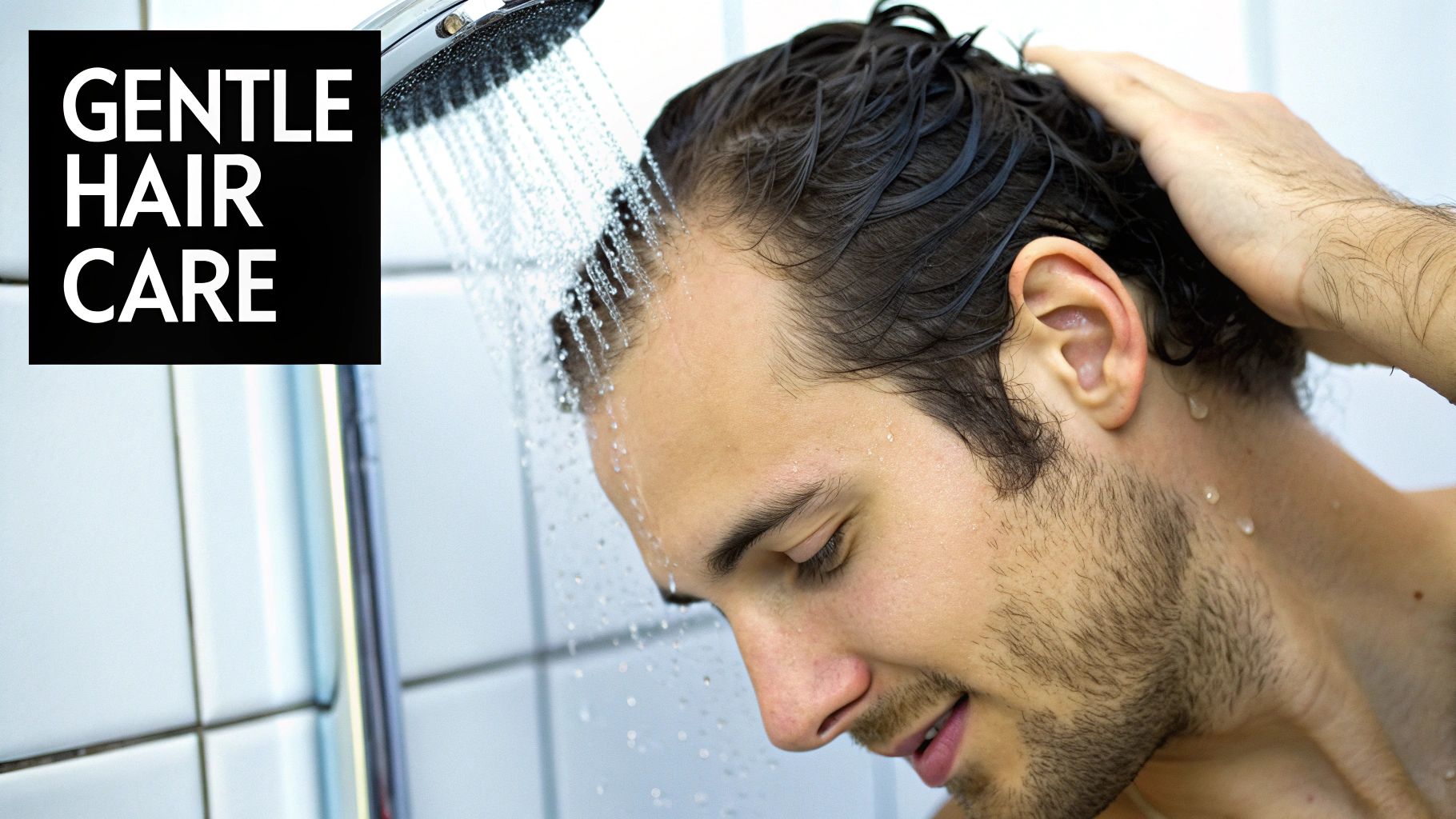
Aggressive washing and harsh products can do more harm than good, stripping your scalp of essential oils and causing physical damage to hair strands. Adopting gentle hair care and proper washing techniques is a critical, yet often overlooked, hair growth tip for guys. This approach focuses on preserving the scalp's natural biome and preventing mechanical stress that leads to breakage and follicle damage.
A healthy scalp environment is the bedrock of hair production. Over-washing with strong detergents can trigger the scalp to produce excess oil, leading to clogged pores, or cause excessive dryness and flaking, both of which hinder optimal hair growth. Gentle handling, from washing to drying, minimizes damage to the hair shaft and root, keeping more of your hair on your head.
How to Implement Gentle Hair Care Correctly
Making a few small adjustments to your routine can yield significant improvements in hair retention and scalp health. The key is to treat your hair and scalp with care, not aggression.
- Technique: When shampooing, use the soft pads of your fingertips in gentle, circular motions, similar to a scalp massage. Never use your nails, as this can create micro-scratches and irritate follicles. Apply conditioner primarily from the mid-lengths to the ends, where hair is oldest and needs the most moisture, avoiding the scalp to prevent buildup.
- Frequency: For most men, washing 2-3 times per week is ideal. This can vary based on your hair type and lifestyle; for example, athletes might need to rinse with water on non-shampoo days.
- Drying: Vigorously rubbing your hair with a standard cotton towel creates friction that roughens the hair cuticle and causes breakage. Instead, gently pat or squeeze your hair dry with a soft, microfiber towel.
Pro-Tip: If you have dry or curly hair prone to breakage, consider "co-washing," which means washing your hair only with conditioner. This cleanses the hair without the stripping effects of sulfates found in many shampoos, helping to retain moisture and reduce frizz.
When and Why to Use This Technique
This technique is essential for every man, but it's particularly vital for those with thinning, fine, or brittle hair. If you notice significant hair fall in the shower drain or on your towel, aggressive habits are likely a contributing factor. Men with sensitive or dry scalps will also see immediate benefits, experiencing less irritation and flaking.
Choosing the right products is just as important as the technique itself. Opt for sulfate-free shampoos that cleanse without stripping natural oils. This simple shift in your daily routine supports the structural integrity of your hair and fosters a healthy scalp environment, making it a cornerstone practice for anyone serious about improving their hair density and growth.
6. Consider Finasteride (Propecia) Treatment
For many men, addressing hair loss at its hormonal source is a critical step, and Finasteride is one of the most powerful tools available. It's an FDA-approved oral medication that directly targets the biological mechanism behind male pattern baldness. It works by inhibiting an enzyme called 5-alpha-reductase, which is responsible for converting testosterone into dihydrotestosterone (DHT).
DHT is the primary culprit in androgenetic alopecia; it binds to receptors in hair follicles, causing them to shrink (miniaturize) and eventually stop producing hair. By significantly lowering DHT levels in the scalp, Finasteride can effectively halt the progression of hair loss and, in many cases, even stimulate regrowth, making it one of the most effective hair growth tips for guys backed by clinical data.
How to Implement Finasteride Treatment Correctly
Success with Finasteride requires a doctor's prescription, patience, and a consistent routine. It is a long-term medical treatment, not a quick fix.
- Consistency: The standard dose is 1mg taken orally once per day. It's crucial to take it at the same time each day to maintain stable DHT suppression in your system.
- Patience: Results are not immediate. It typically takes 3-6 months to see a halt in shedding and initial signs of improvement, with full results often taking 12-18 months to become apparent.
- Medical Supervision: Regular check-ins with your doctor or dermatologist are essential. This allows you to monitor progress and discuss any potential side effects. Some men start with a lower dose, like 0.5mg, to assess tolerance before moving to the standard dose.
Pro-Tip: Finasteride works best when started at the earlier stages of hair loss. It is highly effective at preserving existing hair and thickening thinning areas but is less likely to regrow hair in completely bald spots.
This bar chart visualizes the proven efficacy of Finasteride based on extensive clinical trial data.
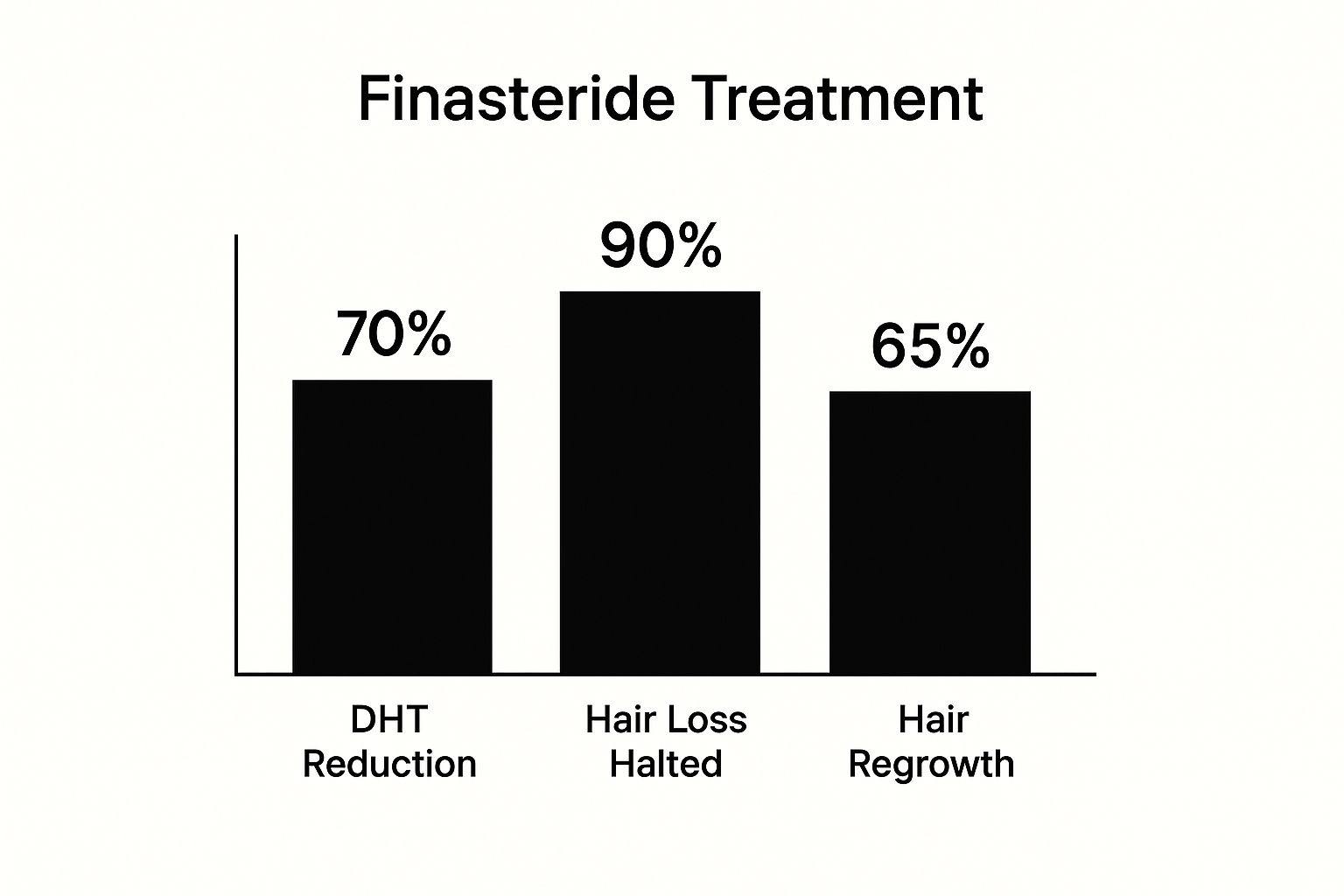
The data clearly illustrates that while Finasteride dramatically reduces the root cause (DHT), its most significant impact is on preventing further loss, with a substantial portion of users also experiencing regrowth.
When and Why to Use This Technique
This prescription treatment is specifically for men diagnosed with androgenetic alopecia (male pattern baldness). If your hair loss is characterized by a receding hairline or thinning at the crown, Finasteride is a scientifically validated option to discuss with your doctor. Its effectiveness is supported by decades of research, including 20-year studies showing sustained hair maintenance.
It is often used as a foundational treatment in hair restoration clinics, either alone or in combination with other therapies like Minoxidil or PRP, to achieve comprehensive results. Consulting with a healthcare professional is the mandatory first step to determine if this powerful treatment is the right choice for your hair growth journey.
7. Tip 7: Leverage Microneedling to Stimulate Follicles
To take your hair growth strategy to the next level, consider microneedling, a technique also known as derma rolling. This process involves using a device covered in tiny needles to create controlled micro-injuries on the scalp. This action triggers the body's natural wound-healing response, which is a powerful catalyst for hair regeneration.
This healing cascade releases growth factors, boosts collagen production, and significantly increases blood flow to the treated areas. The result is a more fertile environment for hair follicles to thrive, potentially reactivating dormant ones and thickening existing strands. When it comes to effective hair growth tips for guys, microneedling offers a potent, science-backed approach.
How to Implement Microneedling Correctly
Proper technique and hygiene are non-negotiable to ensure safety and maximize the benefits of microneedling at home.
- Technique: Gently roll the device over the thinning areas of your scalp. Roll vertically, horizontally, and then diagonally, applying only light pressure. The goal is to stimulate the skin, not to cause pain or significant bleeding.
- Frequency: Start with once a week or once every two weeks using a 0.5mm needle length. This allows your scalp adequate time to heal and regenerate between sessions.
- Hygiene: This is critical. Always sterilize your derma roller before and after each use by soaking it in 70% isopropyl alcohol for 5-10 minutes. Let it air dry completely.
Pro-Tip: Microneedling dramatically enhances the absorption of topical treatments. For a powerful combination, wait 24 hours after a session before applying a product like minoxidil. This allows the micro-channels to close sufficiently while still boosting product penetration.
When and Why to Use This Technique
This method is particularly powerful for men who are already using a topical treatment like minoxidil and want to amplify their results. Groundbreaking studies, such as those pioneered by Dr. Rachita Dhurat, have shown that combining microneedling with minoxidil can lead to significantly greater hair count increases compared to using minoxidil alone.
If your progress with topicals has stalled or you want to be more aggressive in combating thinning, incorporating a derma roller is a logical next step. It directly addresses follicle health by improving the scalp environment and acts as a delivery system for other treatments, making it one of the most impactful hair growth tips for guys seeking comprehensive results.
7 Key Hair Growth Tips Compared
| Method | Implementation Complexity 🔄 | Resource Requirements ⚡ | Expected Outcomes 📊 | Ideal Use Cases 💡 | Key Advantages ⭐ |
|---|---|---|---|---|---|
| Scalp Massage and Blood Circulation | Low – daily 5-10 min massage | Minimal – fingertips, optional oils | Moderate – visible results in 3-6 months | Stress-related hair loss, scalp health maintenance | No cost, stress reduction, improves scalp circulation |
| Protein-Rich Diet and Nutrition | Moderate – dietary changes and planning | Moderate – quality protein and supplements | Moderate – results in 2-3 months | Preventing premature hair loss, overall hair strengthening | Natural, supports overall health, sustainable |
| Minoxidil Treatment | Moderate – twice daily topical application | Moderate – purchase of topical solution | High – clinically proven 30-40% improvement | Male pattern baldness, crown and frontal hair | FDA-approved, regrows hair, OTC availability |
| Stress Management and Sleep Optimization | Moderate – lifestyle and habit changes | Low – time investment in techniques | Moderate – gradual, indirect | Stress-induced hair loss, telogen effluvium | Natural, improves overall wellbeing, no side effects |
| Gentle Hair Care and Washing Techniques | Low – adjust washing habits and products | Low to moderate – gentle shampoo/conditioner | Moderate – immediate appearance improvement | Sensitive scalp, hair breakage prevention | Prevents mechanical damage, maintains oil balance |
| Finasteride (Propecia) Treatment | Moderate – daily oral medication | Moderate to high – prescription and cost | Very High – stops hair loss in 90%, regrows in 65% | Male pattern baldness, crown and mid-scalp areas | Highly effective, convenient oral dose, synergistic with minoxidil |
| Microneedling (Derma Rolling) | Moderate – weekly procedure, sterile technique needed | Low to moderate – one-time equipment purchase | High – enhances minoxidil effectiveness by 40% | Enhancing topical treatments, stimulating natural growth factors | Clinically proven adjunct, at-home option, stimulates healing |
Your Action Plan for Thicker, Healthier Hair
Navigating the world of hair growth tips for guys can feel overwhelming, but the journey to a thicker, healthier head of hair is not about doing everything at once. It's about building a strategic, sustainable routine. We've explored a powerful arsenal of techniques, from foundational lifestyle adjustments to cutting-edge medical treatments. Your success hinges on creating a personalized action plan that addresses your unique situation from multiple angles.
The most effective approach is a synergistic one. Think of it as building a house. Your foundation consists of the non-negotiable daily habits: a protein-rich diet, stress management, and gentle hair care. These are the pillars that create the optimal internal and external environment for hair to thrive. Without them, any other treatment you add will be less effective, like trying to build on unstable ground.
Creating Your Synergistic Routine
Once your foundation is solid, you can begin layering on more targeted interventions. The key is to choose tools that complement each other and align with your goals.
- For Foundational Support: Start here. Prioritize a diet packed with lean proteins, vitamins, and minerals. Master gentle washing techniques and commit to at least 7-8 hours of quality sleep per night. These steps are low-cost, high-impact, and essential for everyone.
- For Boosting Growth: Introduce scalp massage and microneedling. These mechanical stimulation techniques work hand-in-hand to improve blood circulation and nutrient delivery directly to the follicle, enhancing the effects of your healthy lifestyle.
- For Clinically-Proven Intervention: If you're dealing with male pattern baldness, layering in FDA-approved treatments is your next logical step. Topical Minoxidil works to stimulate follicles, while a consultation with a doctor can determine if a DHT-blocker like Finasteride is appropriate for you.
Consistency is Your Greatest Ally
Remember, hair growth is a marathon, not a sprint. The most crucial ingredient in any of these hair growth tips for guys is consistency. Results from treatments like Minoxidil or changes in diet won't appear overnight. You must commit to your chosen regimen for at least three to six months to begin seeing noticeable changes.
To stay motivated, document your journey. Take clear, well-lit photos of your hairline and crown from the same angles every month. This visual evidence will be far more encouraging than staring in the mirror daily, helping you recognize subtle progress and stick with the plan. By combining these science-backed strategies, you're not just passively hoping for better hair; you are actively creating a powerful, multi-faceted system to combat hair loss and promote robust, healthy growth. The first step you take today is the most important one on your path to regaining confidence and control.
Ready to explore a powerful, non-surgical solution that uses your body's own healing factors to stimulate hair growth? At PRP For HairLoss, we specialize in Platelet-Rich Plasma therapy, a cutting-edge treatment that can be a game-changer in your hair restoration journey. Learn more about how PRP can complement your existing routine by visiting us at PRP For HairLoss.

 PRP For Hairloss
Leave a comment