So, what exactly is PRP hair restoration? In simple terms, it's a non-surgical treatment that uses the incredible healing power found right in your own blood to encourage new hair growth. We concentrate the platelets—your body's very own first responders for repair—and inject this powerful serum into the scalp. The goal is to wake up dormant hair follicles and improve the overall thickness and health of your hair.
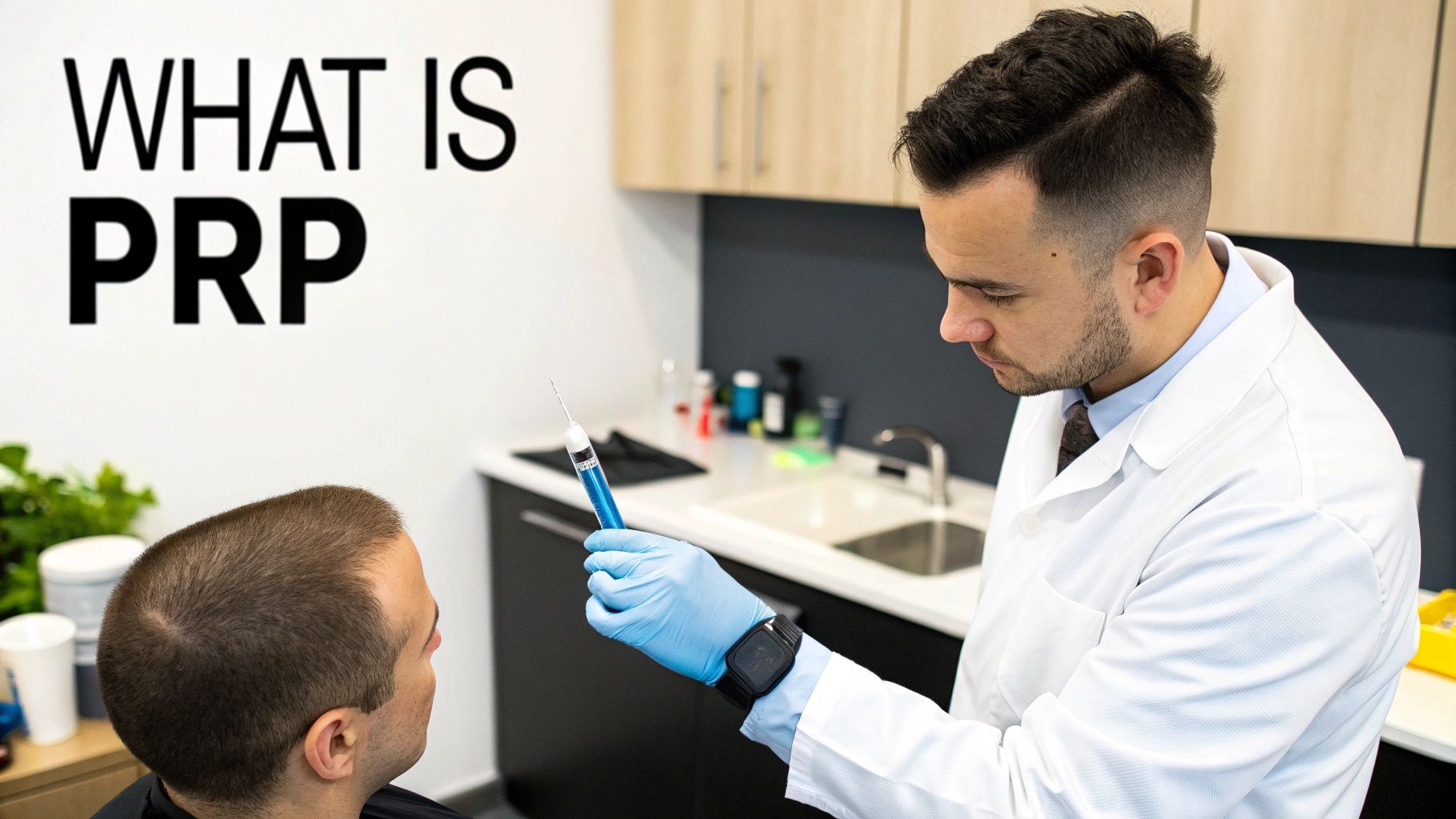
Unlocking Your Body's Healing Potential
At its heart, Platelet-Rich Plasma (PRP) therapy is a form of regenerative medicine. Think of it as creating a super-concentrated, organic fertilizer for your hair follicles, with the key ingredient being you. It’s all about harnessing your body's natural talent for healing itself.
The process itself is surprisingly straightforward. It starts with a simple blood draw, much like you’d have at a regular doctor's visit. That sample is then placed into a centrifuge, a machine that spins at incredibly high speeds. This separates the blood into its core components, allowing us to isolate the platelet-rich plasma—a golden liquid full of powerful growth factors.
To get a quick overview, here’s a simple breakdown of the treatment's key aspects.
PRP Hair Restoration At a Glance
| Aspect | Description |
|---|---|
| Treatment Type | Non-surgical, minimally invasive |
| Source Material | The patient's own blood |
| Active Ingredient | Platelet-Rich Plasma (PRP) |
| Mechanism | Stimulates hair follicles with natural growth factors |
| Primary Goal | To increase hair thickness, slow hair loss, and promote new growth |
This table shows just how focused and natural the procedure is, relying on your body's own systems to do the heavy lifting.
The Science of Stimulation
So, what makes this golden liquid so special? It's all about the growth factors. These are the biological powerhouses that truly make PRP hair restoration effective. When we inject this plasma with precision into areas of thinning hair, these growth factors send signals to your scalp to kickstart a few key processes:
- Improve Blood Flow: Better circulation is crucial. It means more oxygen and vital nutrients can reach the hair follicles, creating a much healthier environment for hair to thrive.
- Awaken Dormant Follicles: The treatment can nudge hair follicles that have become lazy or gone dormant, encouraging them to shift back into an active growth phase.
- Strengthen Existing Hair: PRP also helps thicken the actual hair shaft, which leads to visibly better hair density and scalp coverage over time.
This minimally invasive approach has become incredibly popular for good reason. The U.S. market for these types of treatments was valued at around USD 255.20 million and is expected to keep growing. This trend really speaks to how many people are looking for effective, less invasive ways to manage hair loss. For those interested in the numbers, you can explore more data on the U.S. alopecia treatment market and see where it's headed.
How Your Own Blood Can Regrow Your Hair
It might sound like something out of a science fiction movie, but the secret to fighting hair loss could be flowing through your own veins. The entire process hinges on harnessing your body's innate healing power through a fascinating journey that turns a simple blood sample into a potent hair restoration treatment. It all comes down to isolating one powerful component: Platelet-Rich Plasma (PRP).
The process starts with a small blood draw, just like you'd have at a routine check-up. We then place that blood into a centrifuge—think of it as a highly advanced spinner that separates everything by weight. As it spins at high speed, the heavier red blood cells sink to the bottom, leaving the lighter plasma and platelets at the top. This allows us to skim off the "liquid gold," a concentrated plasma teeming with platelets.
The Magic of Platelets and Growth Factors
So what makes this plasma so special for your hair? It's jam-packed with platelets. These are your body's natural first responders, the tiny cell fragments that rush to the scene of an injury to start the healing process. But more importantly, they are loaded with powerful proteins called growth factors.
Think of these growth factors as tiny biological messengers carrying specific instructions for your cells. When we inject this concentrated plasma into your scalp, those messengers go straight to work on your hair follicles.
Essentially, the growth factors signal dormant or underperforming follicles to wake up and get back to work. It’s like a targeted pep talk at a cellular level, kick-starting them back into the active growth phase of the hair cycle—all without a single foreign substance.
The key players doing the heavy lifting in PRP hair restoration include:
- Platelet-Derived Growth Factor (PDGF): This helps build and repair blood vessels, which is critical for improving blood flow to the scalp.
- Vascular Endothelial Growth Factor (VEGF): A master at creating new blood vessels, ensuring your follicles get a steady supply of oxygen and nutrients.
- Transforming Growth Factor (TGF): Plays a vital part in overall cell growth and regeneration.
By stimulating the scalp this way, we're creating a much healthier and more fertile environment for your hair. Better blood flow strengthens the follicles, and many patients find it even increases the thickness of the hair shaft itself. To be clear, PRP doesn’t create brand new follicles. Instead, it’s about reactivating and beefing up the ones you already have, leading to a visible difference in hair density and fullness.
Your Step-By-Step PRP Treatment Journey
Walking into a clinic for any new procedure can be a little nerve-wracking. The good news is that the PRP process is surprisingly straightforward and designed with your comfort in mind. A typical session is efficient and minimally invasive, usually wrapping up in about an hour.
Let's walk through what you can expect, step by step.
Step 1: A Simple Blood Draw
The whole process starts with a quick blood draw from your arm, much like you’d have during a routine check-up. This small sample is all that's needed to kickstart your personalized treatment. There’s no special prep required on your part beforehand.
Step 2: Creating Your "Liquid Gold"
Next, your blood sample goes for a spin in a special machine called a centrifuge. Think of it as a highly sophisticated device that separates your blood into its core components. As it spins at high speed, the heavier red blood cells sink, leaving the platelet-rich plasma—the good stuff—to rise to the top.
This concentrated, golden-hued plasma is what we're after. It’s packed with the growth factors that will be used to stimulate your hair follicles, which is why it's often nicknamed "liquid gold."
The entire process, from drawing your blood to preparing the PRP for injection, happens right there in the clinic during your appointment. This ensures everything is fresh and sterile, and because it’s your own biological material, the risk of an allergic reaction is practically zero.
Step 3: Targeted Injections
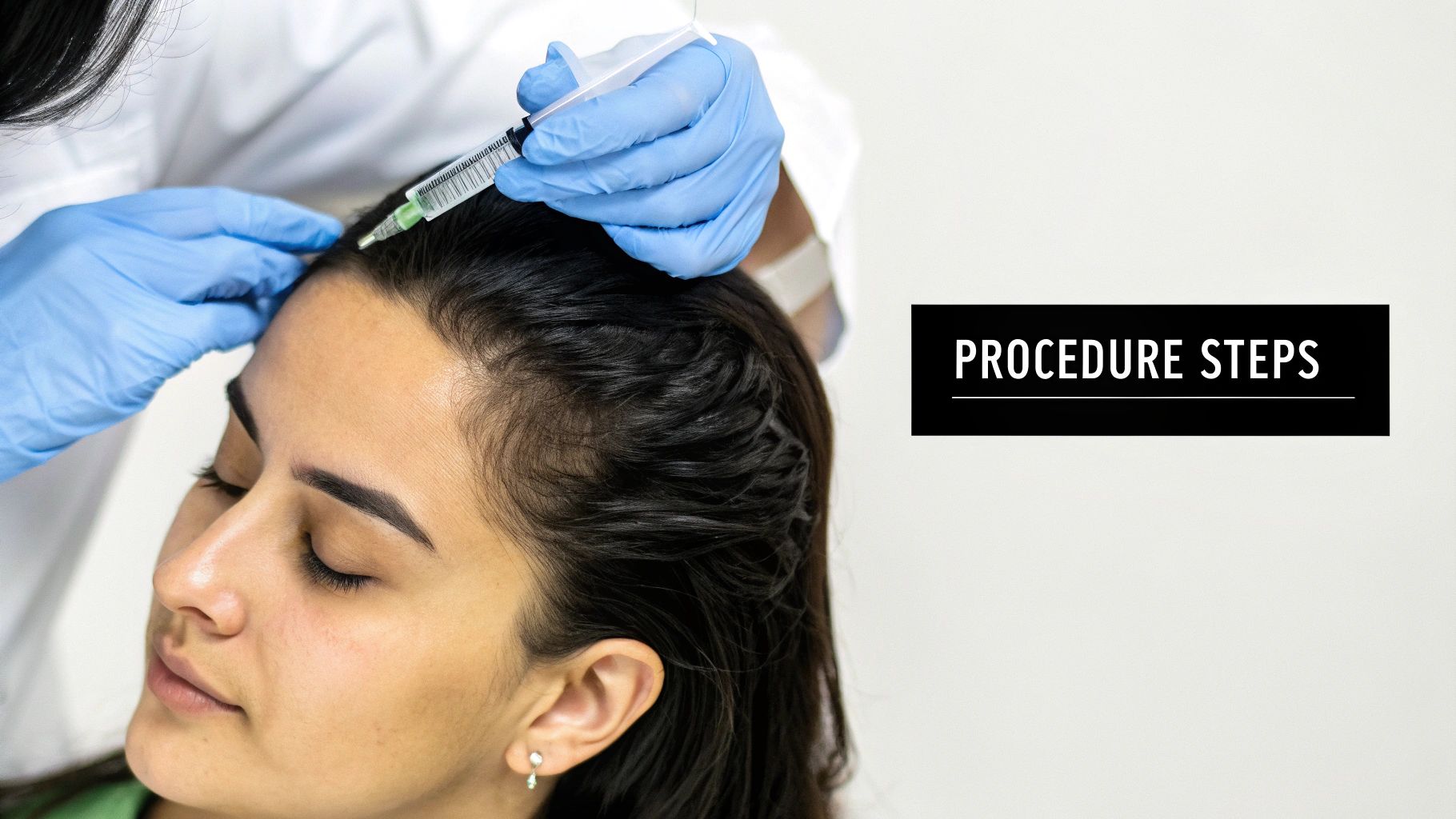
Finally, the practitioner carefully injects the prepared PRP directly into the areas of your scalp where you’re experiencing thinning. To make sure you’re comfortable, a local anesthetic or numbing cream is usually applied first. Most people say they feel only some light pressure or a mild sensation during the injections.
This visual guide maps out what a typical treatment timeline looks like, from the first session to seeing real results.
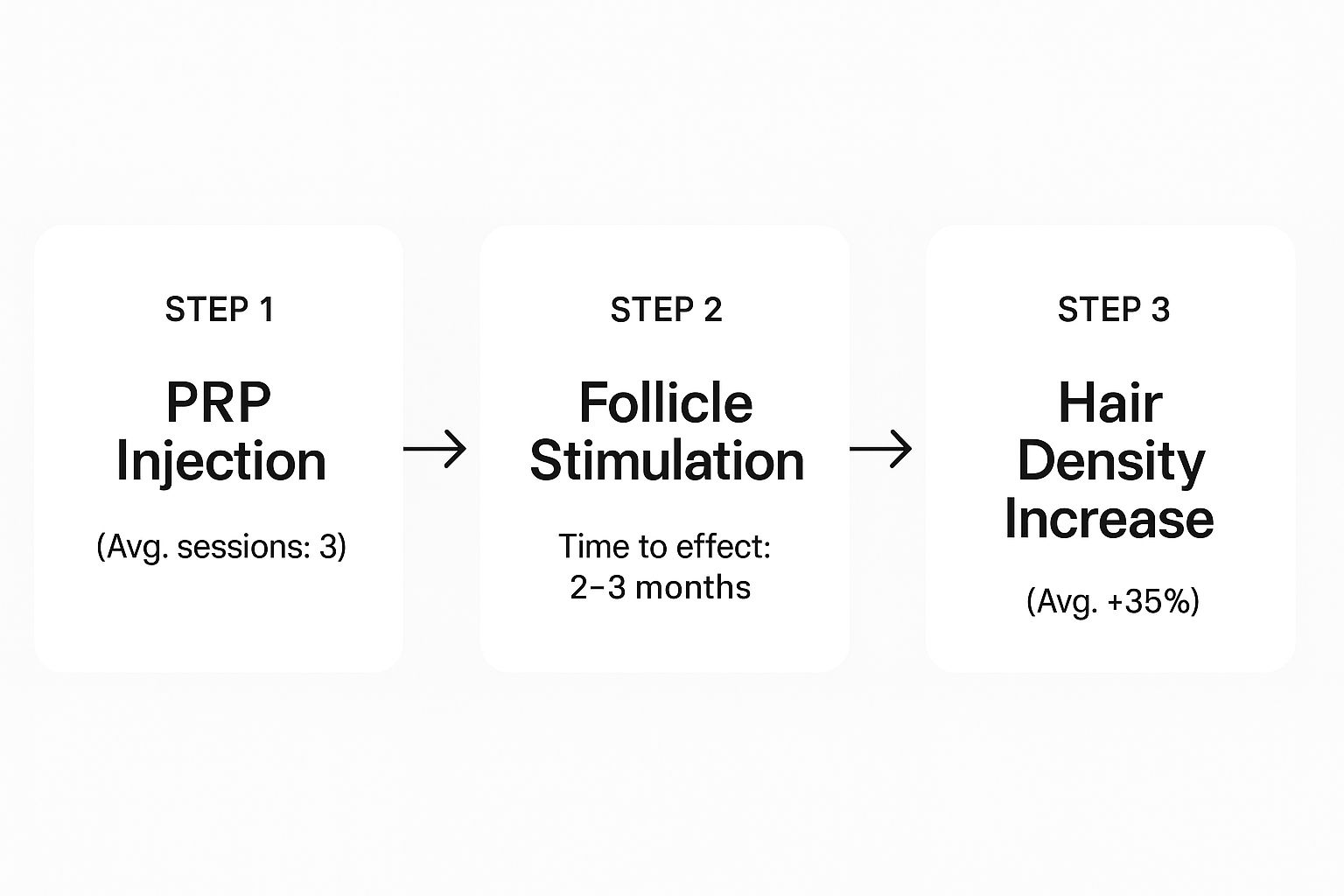
As you can see, the journey begins with an initial set of treatments. Over the next few months, these sessions get to work stimulating dormant follicles, ultimately leading to a noticeable improvement in hair density.
And the best part? Once the session is over, you can get right back to your day with virtually no downtime.
What Are the Real-World Benefits of PRP Hair Therapy?
When you’re exploring hair restoration options, it's easy to get lost in the science. But what really matters are the tangible, visible results you can expect. PRP therapy isn't just about waking up dormant follicles; it's about delivering real improvements that make a difference in how you look and feel.
The most immediate benefit people notice is a visible boost in hair health and density. Patients often tell me they see less shedding, which is a huge relief. Beyond that, the individual hairs themselves start to feel thicker and stronger. This combination leads to better scalp coverage and a much fuller, healthier appearance overall.
One of the biggest draws is its incredible safety. Because we're using your body's own growth factors, the risk of an allergic reaction or other serious side effects is practically nonexistent. It's a remarkably well-tolerated treatment for most people.
Key Outcomes and the Proof Behind Them
The success of PRP isn't just based on what patients report; it's backed by solid clinical evidence. For example, when studying its effect on androgenetic alopecia (pattern baldness), the results are quite impressive. One trial documented hair density jumping from an average of 40.76 hairs/cm² to 66.00 hairs/cm² after only three sessions.
That same research also saw a dramatic reduction in active hair loss. The percentage of patients with a positive hair pull test—a clinical sign of active shedding—plummeted from 75.6% before treatment to just 12.2% after. These numbers show just how effective PRP is at both strengthening existing hair and stopping it from falling out. You can dive into the specifics in the full study on PRP for hair density.
Ultimately, what makes PRP so appealing for many comes down to the treatment experience itself. It offers:
- A Non-Surgical Approach: No scalpels, no stitches, and none of the risks that come with surgery.
- Minimal Downtime: You can walk out of the clinic and get right back to your day.
- Natural-Looking Results: The treatment enhances your body's own growth processes, leading to subtle, realistic improvements that don't look artificial.
Are You A Good Candidate For PRP?
While PRP therapy is a fantastic, natural option for tackling hair loss, it’s not a magic wand for every person or every type of baldness. Figuring out if you're a good fit is the crucial first step. The success of what is PRP hair restoration really hinges on a few key factors, and getting this right from the start sets you up for realistic and satisfying results.
The best candidates are almost always people in the earlier stages of hair thinning. Think of it this way: PRP is designed to wake up and strengthen hair follicles that are still alive, just… lazy. It gives those struggling follicles a powerful boost to start producing thicker, healthier hair again.
It's all about revitalization, not resurrection. If a hair follicle is completely gone, PRP can't bring it back from the dead.
Who Sees The Best Results?
PRP truly shines for people dealing with androgenetic alopecia—the very common genetic hair loss we know as male or female pattern baldness. If your hair is noticeably thinning but you still have a good number of follicles across your scalp (even if they’re producing wimpy, miniaturized hairs), you’re likely in the sweet spot for this treatment. The key is that your follicles are dormant, not dead.
You might be a strong candidate if:
- You've started noticing your hair thinning or your hairline receding within the last 3-5 years.
- Your hair follicles are still present on your scalp, just underperforming.
- You're in good overall health and don't have certain underlying medical conditions.
It's all about managing expectations. PRP is exceptional at reactivating weakened follicles and thickening existing hair. For areas with extensive, long-standing baldness where follicles have shut down for good, the treatment is unlikely to produce the dramatic regrowth you're hoping for.
When PRP Might Not Be The Right Fit
On the flip side, there are definitely situations where PRP isn't the best path forward. If you have certain medical issues, like chronic skin or scalp disorders (think psoriasis on the scalp), active autoimmune diseases, or blood-clotting problems, you may not be a suitable candidate.
This treatment also won’t work for scarring alopecia, a condition where follicles are permanently destroyed and replaced by scar tissue. This is why a detailed, honest consultation with an experienced specialist is so important. A professional at a clinic like PRP for Hairloss can properly diagnose the cause of your hair loss and tell you definitively if this is the right move for you.
Getting the Most Out of Your PRP Treatments
So, you’ve decided to move forward with PRP. That’s a fantastic first step. But think of your initial treatments as just laying the foundation. What you do afterward is what truly builds a lasting result, and when it comes to success, consistency is everything.
Remember, hair loss is typically an ongoing process. It only makes sense that your treatment needs to be ongoing, too. Seeing the full series of initial sessions through to completion is non-negotiable if you want to see real, meaningful change. Skipping appointments or quitting early is like stopping a workout plan after two weeks—you’re undermining your progress before it has a chance to really take hold.
Creating a Powerful Combination
While PRP is a powerhouse on its own, you can often amplify your results by pairing it with other proven hair restoration methods. It's a classic case of the whole being greater than the sum of its parts. This kind of multi-pronged strategy attacks hair loss from several different angles for a more comprehensive outcome.
Some of the most effective therapies to pair with PRP include:
- Microneedling: This treatment creates tiny, controlled micro-injuries in the scalp. This not only triggers your body’s natural healing but can also dramatically improve how well the scalp absorbs the PRP, boosting its effectiveness.
- Topical Minoxidil: As one of the most well-known hair growth stimulants, minoxidil works beautifully alongside PRP to support follicle health and extend the active growth phase of your hair.
Clinical reviews consistently show that while PRP works, results can vary. The best outcomes almost always come from standardized procedures and a well-rounded, multi-faceted treatment plan.
It's been shown time and again that combining therapies leads to better results. For anyone who wants to really get into the science, you can explore the comprehensive evaluation of PRP effectiveness in this detailed review.
By working with a specialist at a dedicated clinic like PRP for Hairloss, you can build a personalized strategy that uses these powerful combinations to help you achieve the fullest, healthiest head of hair possible.
Answering Your Top PRP Hair Treatment Questions
It's completely normal to still have questions, even after getting a good overview of the process. Thinking about the specifics—from how many treatments you'll actually need to what recovery feels like—is a crucial step in setting the right expectations. Let's walk through some of the most common things people ask when considering PRP.
How Many Sessions Will I Need, and How Long Will My Results Last?
Think of the beginning of your PRP journey as a "loading phase." Most people start with an initial series of 3-4 sessions, usually scheduled about 4-6 weeks apart. This initial burst is what really kicks the follicles into gear and builds the foundation for new growth.
After that, it’s all about maintenance. Because conditions like genetic hair loss don't just stop, you can't just stop treatment. To keep your great results and maintain that new thickness, most of our patients find that a single follow-up session every 6-12 months is perfect.
Does the PRP Procedure Hurt? What's Recovery Really Like?
Your comfort is our top priority. Before we even begin, we'll apply a local anesthetic or a powerful numbing cream to your scalp to make sure you're comfortable. The vast majority of people say they only feel a bit of pressure or a minor, easily managed sensation during the injections.
One of the best parts about PRP is that there's virtually no downtime. You might see some mild redness, a little bit of swelling, or feel some tenderness on your scalp for a day or two, but that’s it. You can walk out of the clinic and get right back to your life.
How Does PRP Stack Up Against Other Hair Loss Treatments?
It helps to see where PRP fits into the bigger picture. I like to think of it as a biological approach, compared to pharmaceutical drugs or invasive surgery.
- Minoxidil: This is a topical drug you have to apply every single day for it to have any effect. PRP works differently by activating your body's own natural growth factors, without the need for daily chores.
- Hair Transplants: A transplant is a full-on surgical procedure where healthy follicles are moved from one part of your scalp to another. PRP is far less invasive, focusing instead on waking up and strengthening the follicles you already have.
In many cases, PRP isn't an "either/or" choice. It's often used to support other treatments, like improving the outcome of a hair transplant or giving a natural boost to someone also using topicals. It really holds its own as a powerful, regenerative option.
Ready to address your hair loss with a proven, natural method? At PRP For HairLoss, we provide the expert guidance and personalized care you need to achieve real results. Learn more about how PRP can work for you.

 PRP For Hairloss
Leave a comment