Let's get right to it. If you're considering PRP injections for hair loss, you're probably wondering what it's going to cost. You can expect the initial round of treatments—usually three or four sessions—to run anywhere from $1,500 to $3,500. While the price per session varies quite a bit, that initial investment is a solid baseline for most people.
The Real Cost of PRP Injections for Hair Loss
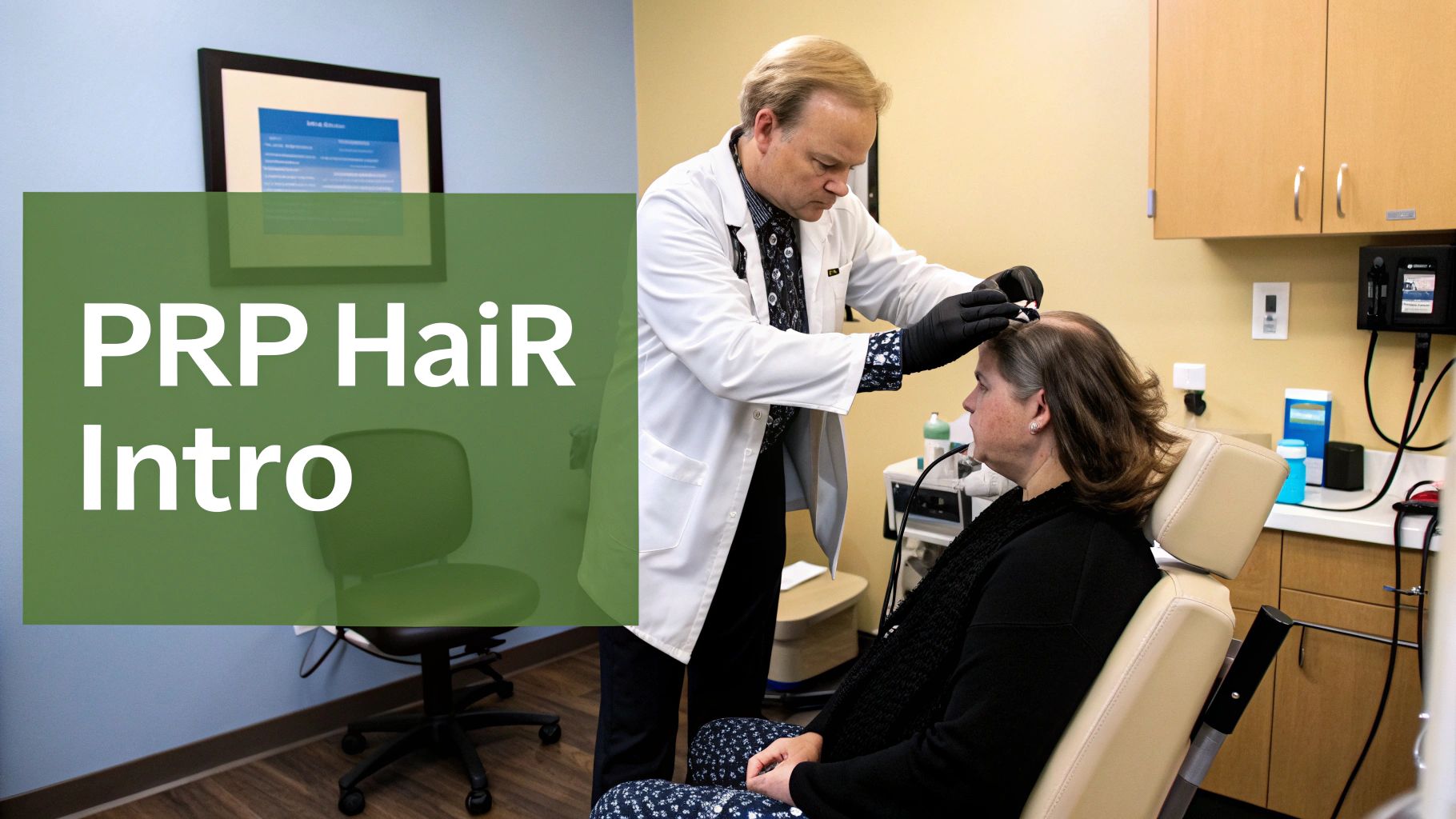
To really understand the cost of PRP, you have to look beyond a single number. Think of it less like buying a product and more like investing in a specialized service for your scalp. The price reflects the quality of the materials, the expertise of the person performing the treatment, and the specifics of your hair loss situation. After all, this is a medical procedure that uses your body's own healing power to tackle hair thinning.
The process itself is both simple and incredibly precise. Here’s a quick rundown of what happens:
- First, a small amount of your blood is drawn, just like a routine blood test.
- Next, that blood is spun in a centrifuge, a machine that separates it into different layers.
- This spinning process isolates the platelet-rich plasma (PRP)—a concentration of your own platelets and growth factors, which looks like a golden liquid.
- Finally, this powerful plasma is meticulously injected into the areas of your scalp that need it most.
It's these growth factors that do the heavy lifting, waking up dormant hair follicles and nudging them back into a growth phase to produce stronger, thicker hair.
A Snapshot of Treatment Costs
The price you're quoted isn't just for the injection. It’s an all-inclusive figure that covers the provider's time and skill, the sterile, single-use equipment for the blood draw and processing, and the medical expertise needed to do this safely and get real results. This is why the cost of PRP for hair loss can feel all over the map—so many different things affect the final price.
Data from across the country shows the average cost of PRP for hair loss hovers around $1,686 per session, but in some major cities or with top-tier doctors, it can easily climb to $3,000. This wide range comes down to things like the provider’s reputation and how complex your specific treatment plan needs to be. For a closer look at these variables, you can check out a detailed breakdown of PRP expenses on RealSelf.com.
To give you a clearer picture of what you might pay, here’s a table that breaks down the potential costs per session.
Estimated Cost of PRP Hair Treatment Per Session
This table gives you a general idea of the cost per PRP session, helping you get a feel for the financial commitment involved.
| Price Tier | Estimated Cost Range (per session) | Commonly Associated With |
|---|---|---|
| Low End | $500 – $900 | Medspas or clinics in lower-cost-of-living areas. |
| Average | $900 – $1,800 | Experienced providers and established dermatology or hair restoration clinics. |
| High End | $1,800 – $3,000+ | Top-tier specialists, major metropolitan areas, or advanced combination therapies. |
Seeing the numbers laid out like this can help you evaluate quotes from different providers. It's not just about finding the cheapest option, but about understanding what you're getting for your money. This is the first step in deciding if PRP is the right move for your hair restoration goals and your budget.
Ever gotten a quote for PRP injections and felt a bit of sticker shock? It's a common experience. You might hear $750 from one clinic, only to find another one just down the road charging $2,000 for what seems like the same treatment. This isn't just random pricing; several key factors are at play, and understanding them is crucial to making an informed decision.
Think of it like hiring a contractor for a kitchen remodel. You could go with a general handyman or a specialized, master carpenter. Both will swing a hammer, but their level of expertise, the quality of their materials, and the precision of the final result will be vastly different—and so will the cost. The world of PRP for hair loss works in much the same way.
Provider Expertise and Credentials
Honestly, the biggest driver of cost is the person holding the syringe. When a board-certified dermatologist or a dedicated hair restoration specialist performs your treatment, you're paying for years of advanced training. They have an intimate knowledge of scalp anatomy, hair growth cycles, and the precise techniques needed for effective injections.
Their experience often translates to better, more predictable results and a significantly lower risk of complications. On the other hand, a technician at a general medspa might be perfectly capable, but they often have less specialized training in this specific area.
- Board-Certified Dermatologist: Represents the highest level of expertise. You're paying for their deep diagnostic understanding of what's causing your hair loss in the first place.
- Hair Restoration Specialist: This professional lives and breathes hair loss treatments. Their focused experience provides an incredibly high standard of care.
- Medspa Technician: Often the most affordable option, but the level of experience and training can vary quite a bit.
This gap in skill and experience is the primary reason for the wide price range. You're not just buying a single injection; you're investing in the provider's diagnostic ability and precision.
Geographic Location and Clinic Overhead
Where the clinic is located matters—a lot. It's simple economics. A practice in the heart of Manhattan or Los Angeles has sky-high operational costs. Everything from rent and staff salaries to insurance is more expensive than it would be for a clinic in a smaller town.
These higher overhead costs inevitably get factored into the patient's bill. It’s a major reason why the cost of PRP injections for hair loss can swing by hundreds of dollars just by crossing a zip code.
Technology and Treatment Customization
Here’s something many people don't realize: not all PRP is created equal. The quality of the centrifuge—the machine that spins your blood to separate the platelets—directly impacts the quality of the final product. High-end systems produce a more potent, concentrated plasma with a higher platelet count, which many experts believe leads to better results.
Beyond the basic equipment, some clinics also customize their treatments. They might add substances like ACell to enhance the regenerative environment or offer a more advanced version of the treatment called PRF (Platelet-Rich Fibrin). These extras can definitely boost the potential effects, but they also add to the per-session cost.
Deciding between a standard spin and a more advanced double-spin centrifuge, or opting for these bio-additives, are premium choices with premium price tags. Knowing about these variables helps you look past the initial price and start to evaluate the true value you're getting for your money.
Calculating Your Total PRP Treatment Investment
Thinking about PRP for hair loss is a lot like starting a new fitness regimen. You wouldn't expect to be in marathon shape after one trip to the gym, right? The same logic applies here. A single PRP session is just the beginning; real results come from a consistent, well-planned approach. To budget properly, you need to look past the price of one appointment and map out the entire first year.
The typical treatment schedule isn't a "one and done" affair. To really get those dormant hair follicles firing again, most experts recommend an initial "loading phase." This almost always involves:
- An initial series of three to four sessions.
- These appointments are usually spaced four to six weeks apart.
This upfront blitz is designed to build momentum and get you to a point where you can see a real difference. After that, the game plan shifts from active restoration to smart preservation. To protect your new growth and keep thinning at bay, you'll need maintenance treatments, typically once every six to twelve months.
A First-Year Cost Breakdown
Let's walk through a realistic example to see how the numbers add up. If we take a mid-range price of $1,200 per session, here’s what a patient’s first-year investment could look like:
- Initial Treatment Series (3 Sessions): 3 sessions x $1,200/session = $3,600
- First Maintenance Session (at 9 months): 1 session x $1,200/session = $1,200
- Total First-Year Investment: $3,600 + $1,200 = $4,800
This infographic gives you a quick visual summary of the key cost factors for PRP hair treatments.
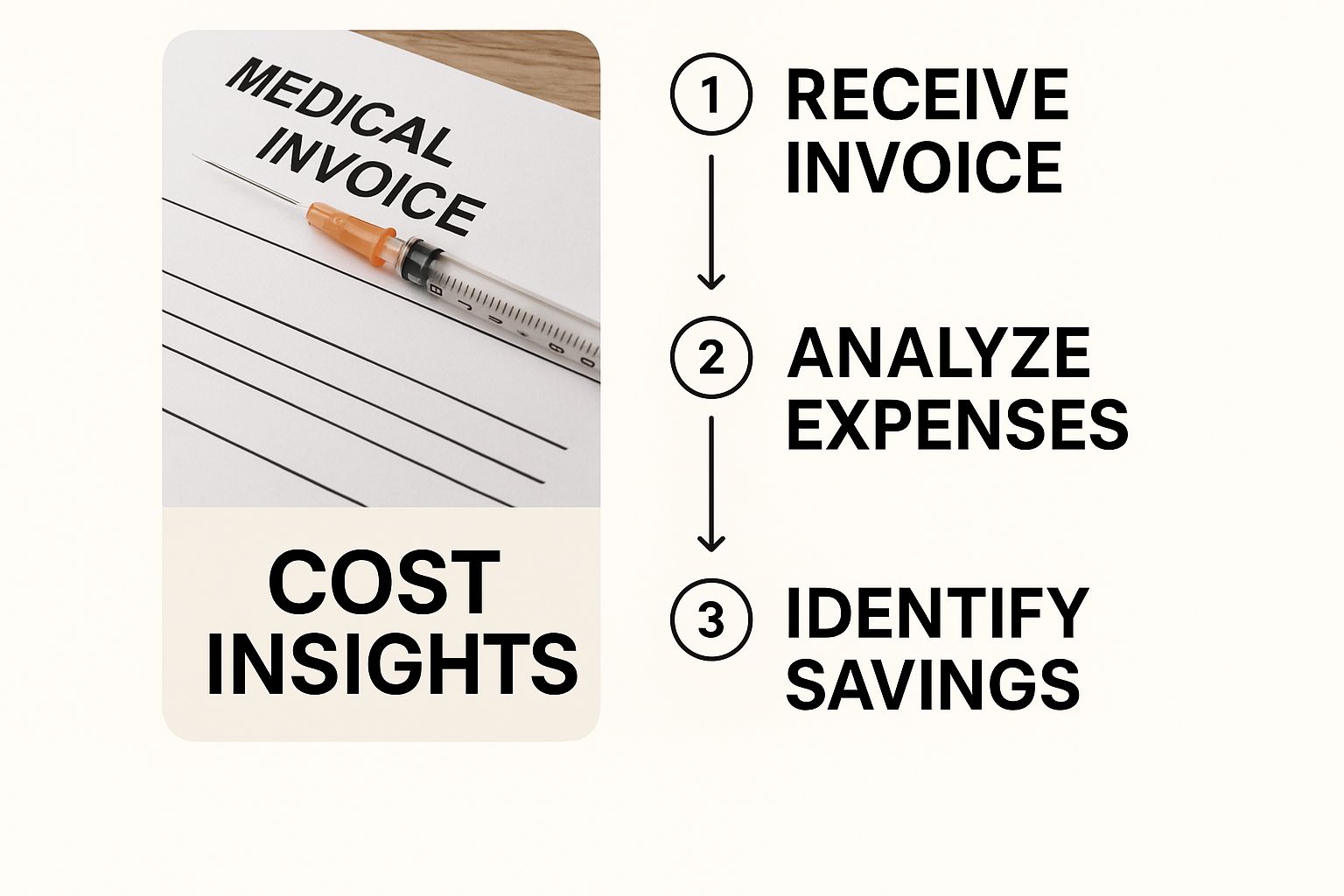
The image really drives home the point: your total investment is a combination of that initial intensive phase and the ongoing upkeep.
This is why getting a clear picture of the full cost of PRP injections for hair loss is so crucial. For instance, in a specific market like Barrington, Illinois, a single session can run anywhere from $1,000 to $1,500. Clinics in that area create personalized, multi-session plans to deliver results that last, which aligns with the national trend. You can see examples of how clinics structure these PRP treatment regimens on RegencyMedicalSpa.org.
Are Package Deals a Good Value?
To make this long-term plan more manageable for your wallet, many clinics offer package deals. These can be a fantastic way to save, but you have to look closely at what you’re actually getting.
A package deal for your first three sessions might offer a 10-15% discount compared to paying per session. This can translate to significant savings, often between $400 and $800 on your initial series.
Always ask for a transparent breakdown of the costs. A great package saves you real money on the per-session price. A not-so-great one might just be bundling in overpriced shampoos or supplements you don't really need. Knowing your total investment from day one is the best way to avoid sticker shock and budget effectively for your entire hair restoration journey.
Is PRP a Smart Financial Choice for Hair Loss?
So, after looking at all the numbers—the per-session fees and the long-term commitment—we get to the real question: is the total cost of PRP injections for hair loss actually worth it? The answer isn’t a simple yes or no. It really comes down to weighing the financial outlay against the personal value you hope to get back.
For many people, the real return on investment is a renewed sense of confidence and a better quality of life, things you can’t exactly put a price tag on. But if we step back and look at it purely from a financial and medical standpoint, the numbers start to tell a more detailed story. PRP is an investment, and like any good investment, you want to make sure you’re getting the most out of it.
Thinking Beyond the Sticker Price
It’s easy to look at PRP in a vacuum, as a single, powerful treatment. But what I've seen in practice, and what the research is showing, is that its true power—and cost-effectiveness—is often unlocked when it’s part of a team effort.
Think of it this way: PRP is like the high-potency, specialized fertilizer you use to kickstart a struggling lawn. Other treatments, like daily topical minoxidil, are the consistent watering needed to maintain that healthy environment for growth. They work better together.
When you use PRP all by itself, it can feel like a very big expense. But when you pair it with other proven, more affordable hair loss treatments, the financial picture starts to look a lot different. This kind of hybrid approach usually leads to more dramatic, longer-lasting results, making every dollar you spend go further.
The goal isn't just to stop hair loss. It's to do it in a way that's both effective and financially sustainable for the long haul. A combined therapy approach often gives you the best of both worlds.
This is where the real value proposition is. A fascinating study looked at the long-term cost-effectiveness of different treatments for male pattern hair loss. It found that while PRP on its own was considered expensive for the quality-of-life benefits it provided, its value shot up when combined with minoxidil. In fact, the dual approach brought the cost into a much more acceptable range, even when compared to just using minoxidil by itself. You can dig into the specifics of these findings on PRP cost-effectiveness here.
Ultimately, a "smart" financial choice isn't always the cheapest one. It's the one that gives you the best possible outcome for your investment. By seeing the cost of PRP injections for hair loss as one piece of a bigger puzzle, you can build a strategy that not only helps restore your hair but also makes perfect financial sense.
How to Plan and Save on Your PRP Treatment
Knowing the total investment for PRP is one thing, but making it actually fit into your budget is a whole different ballgame. The good news is that with a smart approach, you can manage the cost of PRP injections for hair loss without ever cutting corners on the quality of your care. It all starts with asking the right questions before you commit to anything.
Since PRP isn't a one-and-done deal, clinics often have good reasons to encourage patients to stick around for the full treatment plan. This is where your first, and often best, opportunity to save some money comes in.
Ask About Package Pricing
Most experienced clinics will offer package deals for the initial series of three or four treatments. It’s a classic win-win situation: the clinic gets a committed patient, and you get a discount. Don't feel awkward about bringing this up during your consultation.
- Ask for a direct comparison: What’s the price if I pay per session versus buying a package of three or four upfront?
- Do the math: A pretty standard package might offer a 10-20% discount. That could easily save you hundreds of dollars right off the bat.
Just asking this one question can instantly make the treatment feel more manageable. A clinic that offers a clear, upfront discount is usually a good sign of transparency and shows they value your business.
Explore Your Financing Options
Even with a nice package discount, the upfront cost can feel a bit steep. That’s why many of the best clinics partner with financing companies to break that total cost into smaller, more manageable monthly payments. It’s a lot like financing a car—you get the immediate benefit and pay for it over a comfortable period.
Here are the most common ways to do this:
- Third-Party Lenders: Companies like CareCredit are built specifically for health and wellness expenses. They often run promotions with interest-free periods, which means you can pay off your treatment over several months without any extra charges piling up.
- In-House Payment Plans: Some clinics handle payment plans themselves. This can sometimes lead to more flexible terms, so it never hurts to ask if they offer this directly.
During your initial consultation, make it a point to ask for a transparent, all-inclusive quote. This written estimate should break down every single cost—the procedure itself, any supplies, and follow-up visits—so you aren't hit with any surprises later.
Finally, while saving money is a big deal, remember that the "cheapest" option is almost never the best one. Bargain-hunting for medical procedures can be a risky and, ironically, more expensive mistake in the long run if the results aren't what you hoped for or, worse, if complications arise.
Your real goal is to find that sweet spot: a fair price from a highly qualified provider who has the skill and experience to give you safe, effective results. By focusing on overall value instead of just the lowest price tag, you can handle the financial part of this journey with confidence and make a wise investment in your hair restoration.
Common Questions About PRP Hair Treatment Costs
When you're considering any treatment, especially one like PRP, the practical questions are often the most pressing. Let's cut through the noise and tackle the financial questions I hear most often. Getting straight answers on these topics will help you feel confident as you budget and plan.
So, let's talk about insurance, session numbers, and those sneaky hidden fees that can sometimes pop up.
One of the first things everyone wants to know is whether their health insurance will chip in for the cost of PRP injections for hair loss. I'll be direct: the answer is almost always no.
Because common hair loss (like pattern baldness) is considered a cosmetic concern, not a medical necessity, insurance companies won't cover the treatment. It's viewed as an elective procedure, which means the full cost falls to you. This is pretty standard across the industry, so it's best to go in assuming it will be an out-of-pocket expense.
How Many Sessions Will I Realistically Need?
Figuring out the number of sessions is key to building an accurate budget. While your specific plan will be tailored to you, a fairly standard and effective approach has become the norm in my experience. It’s best to think of it in two distinct phases: a startup phase to kick things into gear, and a maintenance phase to keep the results going.
- The Initial Phase: Most specialists, including myself, recommend starting with a series of three to four sessions. We'll schedule these about a month apart. This frequency helps build momentum and really wakes up the hair follicles.
- The Maintenance Phase: Once we've got things moving, we switch to upkeep. To protect your investment and maintain the results, you'll need follow-up treatments. These are typically much less frequent, usually every six to twelve months.
Your provider will map this out for you based on how much hair loss you have and how well you respond to the first few treatments. This plan becomes your financial roadmap for the first year and beyond.
Are There Any Hidden Costs to Watch Out For?
No one likes financial surprises. A good clinic will be transparent about their pricing, but it's always smart to know what to ask about to make sure you're getting the full picture.
My advice? Always ask if the quoted price is the final price. A trustworthy clinic won't hesitate to break down exactly what's included, but it never hurts to confirm.
Here are a few extra costs that can sometimes sneak into the final bill if you aren't looking for them:
- Consultation Fees: Some clinics charge for the initial meeting, which can be anywhere from $50 to $250. Many will credit this amount toward your first treatment if you move forward, but you should definitely ask what their policy is.
- Numbing Agents: To make the injections more comfortable, your provider might use a numbing cream or local anesthetic. This is often an optional add-on that can tack on an extra $50 to $100 per session.
- Post-Treatment Products: It's common for providers to recommend special shampoos, serums, or supplements to complement the PRP and boost your results. These can be incredibly helpful, but they're an additional expense to factor into your total budget.
By asking about these specific items upfront, you can avoid any sticker shock down the road. It ensures the price you agree on is the price you actually pay, leaving you free to focus on the exciting part—your results.
 PRP For Hairloss
Leave a comment