Yes, a chronic lack of sleep can absolutely contribute to hair loss. It might sound surprising, but when your body is consistently sleep-deprived, it shifts into a survival mode. It starts redirecting energy and vital nutrients away from what it deems "non-essential" functions—like growing strong, healthy hair—to support your vital organs instead.
The Hidden Link Between Your Sleep and Your Hair
If you've started noticing more strands on your pillow or circling the shower drain after a long stretch of restless nights, you're not imagining things. The connection is very real and deeply rooted in your body's biology.
Think of your body like a smartphone with its battery perpetually in the red. To survive, it intelligently shuts down background apps to conserve power for core functions, like making calls. In the same way, when you’re running on fumes, your body treats robust hair production as a "background app" it can afford to pause.
This isn’t about just one or two bad nights, either. The real problem starts with consistent, chronic sleep deprivation, which throws your body's delicate internal ecosystem out of whack. It's during those deep, restorative sleep cycles that your body performs critical maintenance, from cell regeneration to hormone regulation—all fundamental for a healthy hair growth cycle.
Why Quality Rest Is Non-Negotiable for Your Hair
When you consistently miss out on that deep, restorative sleep, a few key biological processes go haywire, creating a perfect storm for hair shedding.
Here’s a quick summary of how that process unfolds.
How Sleep Deprivation Impacts Hair at a Glance
| Symptom | Underlying Biological Cause | Visible Result on Hair |
|---|---|---|
| Increased Shedding | Elevated cortisol (stress hormone) levels push more follicles into the resting phase (telogen). | Noticeably more hair falling out daily. |
| Weaker, Brittle Strands | Reduced cell regeneration and protein synthesis during the growth phase (anagen). | Hair breaks more easily and feels less resilient. |
| Dull, Lifeless Appearance | Impaired blood flow to the scalp limits the delivery of oxygen and key nutrients. | Hair loses its natural shine and vitality. |
As you can see, the cascade of effects from poor sleep directly undermines the very foundation of healthy hair growth.
Your hair is often a direct reflection of your internal health. If you are consistently running on empty, your body will prioritize survival over aesthetics every time, and your hair is one of the first things to show it.
Ultimately, a pattern of poor sleep sends a clear signal to your body: it's under threat. This guide will walk you through exactly how that physiological stress response leads to hair loss and, more importantly, what you can do to reclaim your rest and restore your hair's health.
How Your Body's Stress Response Can Trigger Hair Loss
The main reason a lack of sleep can lead to hair loss is surprisingly direct: your body interprets it as a major stressor. It doesn't matter if you're pulling all-nighters for a work deadline or struggling with insomnia; your internal systems just know something is wrong and kick into survival mode.
Think of it like a company suddenly facing a crisis. All non-essential projects are immediately shelved. Resources—energy, nutrients, and manpower—are all diverted to manage the emergency.
In this scenario, growing hair is one of those "non-essential" projects. Your body, quite intelligently, decides that keeping your vital organs running is more important than maintaining a full head of hair. It's a matter of priority.
The Role of Cortisol: The Emergency Hormone
This whole emergency response is orchestrated by a hormone called cortisol. When you aren't getting enough sleep, your body floods your system with it, keeping you in a constant state of high alert. It's this sustained "fight-or-flight" state that really starts to cause problems for your hair.
Chronically high cortisol levels throw the sensitive hair growth cycle completely out of whack. This isn't just speculation; the evidence is pretty solid. A massive study of over 25,000 people revealed that individuals with sleep disorders faced a significantly higher risk of developing certain kinds of hair loss. The research clearly showed how elevated cortisol from poor sleep messes with the hair cycle, leading to visible thinning and shedding.
If you'd like to explore this further, you can read more about the connection between stress and hair loss to see just how deeply our mental state affects our physical appearance.
From Stress Signal to Hair Shedding
So, what does this hormonal imbalance actually do to your hair? The flood of cortisol sends a shockwave through your scalp, prematurely shoving a large number of hair follicles out of their active growing phase (anagen) and straight into the resting phase (telogen).
This sudden, widespread shedding is a condition known as telogen effluvium. It's one of the most common types of temporary, stress-induced hair loss.
Here's the tricky part: follicles stay in this resting phase for about three months before the hair actually falls out. This means the handful of hair you see in the drain today might be the direct result of that stressful, sleepless period you had a few months ago. This delayed effect is a classic sign of sleep-related hair loss and is often why people struggle to connect the two.
Your Hair's Growth Cycle and How Sleep Fuels It
To really get why a lack of sleep can lead to hair loss, we first have to talk about how your hair grows in the first place. It's not a random process. Think of it more like a highly organized factory, with every single hair strand following a specific three-part production cycle.
Each hair follicle on your head is its own little factory, running on its own schedule. This is a good thing—it’s why all your hair doesn’t fall out at once. But for this delicate system to work, your body needs the right resources to keep that production line moving.
The Three Phases of Hair Growth
The whole thing is a continuous loop of growing, transitioning, and resting. Let's break it down.
- Anagen (The Growth Phase): This is the main event. Your hair follicles are actively building new hair fibers, pushing them out longer and longer. For most people, this phase lasts anywhere from 2 to 7 years. At any given moment, about 85-90% of your hair is in this active growth stage.
- Catagen (The Transition Phase): This is a very brief intermission, lasting just a few weeks. The hair follicle shrinks up, and growth comes to a screeching halt as it gets ready to enter the next phase.
- Telogen (The Resting Phase): The follicle basically goes dormant for about three months. The hair strand itself just hangs out, no longer growing. Once this phase ends, the old hair is shed, making room for a brand new strand to start its own journey in the anagen phase.
How Sleep Acts as the Nightly Maintenance Crew
So, where does sleep fit in? It’s the critical overnight maintenance crew for your hair factory. Those hours of deep, restorative sleep are when your body gets to work on all the essential repairs and production tasks that keep the growth (anagen) phase going strong.
Rest isn't just about your body being still; it's an incredibly active time for repair. This is when your system releases key growth hormones, synthesizes proteins like keratin (which is literally what your hair is made of), and kicks cell regeneration into high gear.
When you consistently shortchange yourself on sleep, you’re essentially canceling that nightly maintenance shift. The factory’s resources start to run low, and it just can't keep up with production demands.
This simple chart shows how that domino effect starts, all because of poor sleep.
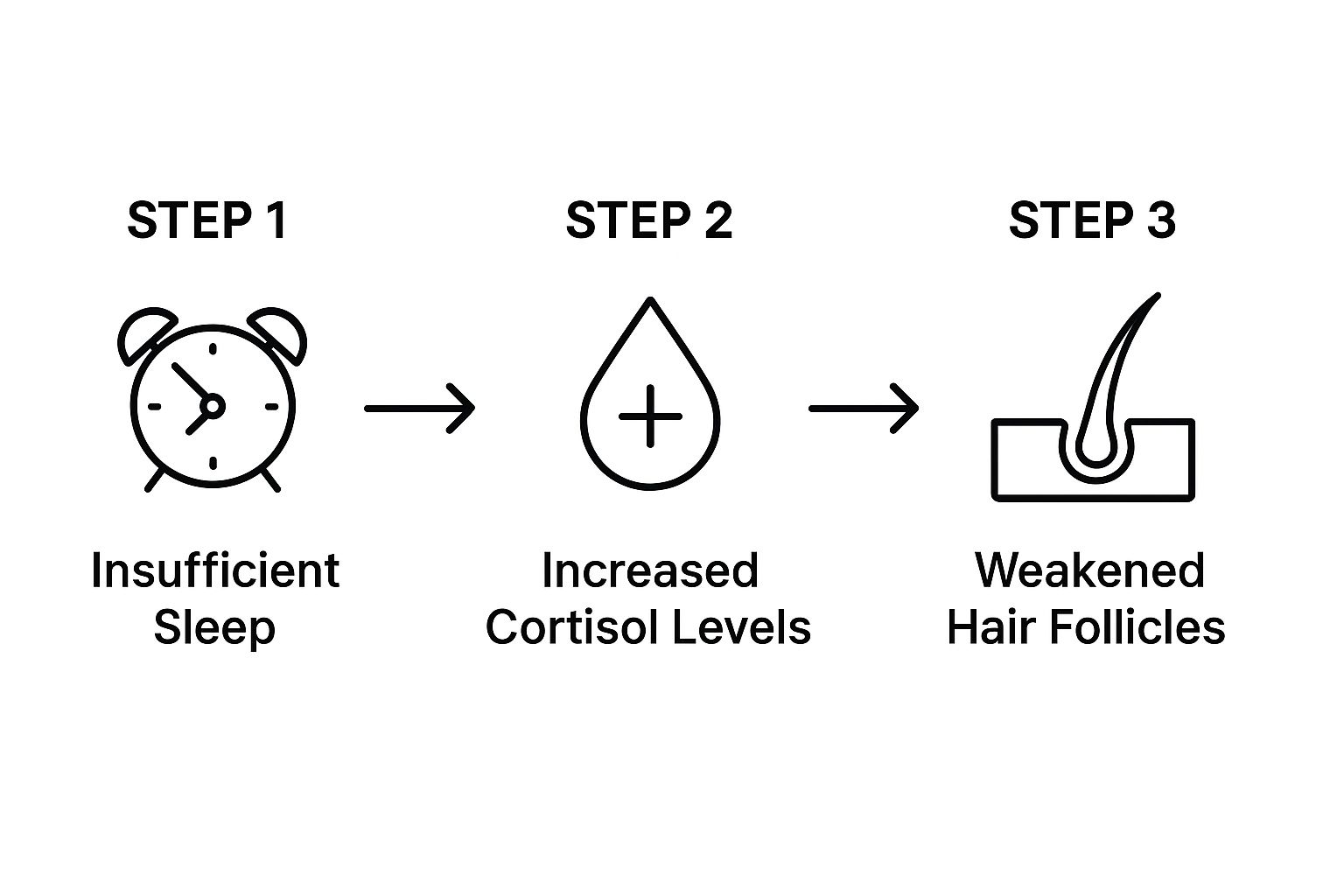
As you can see, it all kicks off with poor sleep. This raises stress hormones, which directly weakens the hair follicles. The whole cycle gets thrown off-kilter: the anagen phase gets shorter, and far too many follicles are shoved prematurely into the telogen (resting) phase. The result? The hair that does grow is weaker and more brittle, and you start noticing that increased shedding we associate with lack of sleep hair loss.
Factors That Can Make Sleep-Related Hair Loss Worse

While the connection between lack of sleep and hair loss is clear, poor sleep rarely acts alone. It's not so much a single cause as it is a powerful accelerant—like throwing gasoline on a smoldering fire. Many of us have underlying vulnerabilities that, when hit with chronic sleep deprivation, create a perfect storm for significant hair thinning.
This is especially true if you have a genetic predisposition to hair loss, like male pattern baldness (androgenetic alopecia). If hair loss runs in your family, skimping on quality rest can feel like hitting the fast-forward button on the thinning process, making it more aggressive and noticeable far earlier than it might have been otherwise.
But genetics aren't the whole story. Other lifestyle pressures can team up with poor sleep, making its impact on your hair even worse. Pinpointing your unique combination of these risk factors is the first real step toward creating a plan that stops the shedding and gets you back on the path to regrowth.
When Underlying Conditions Meet Poor Sleep
For many people, especially women, poor sleep quality can dramatically worsen a pre-existing hair loss condition. A compelling 2020 study of over 1,800 women dealing with female pattern hair loss revealed that poor sleep was a major factor in accelerated shedding. In fact, the analysis showed that women reporting the worst sleep quality were nearly twice as likely to experience more severe hair loss. You can read more about the link between sleep quality and hair thinning to see the full scope of these findings.
This really highlights how sleep deprivation doesn't just trigger stress-related shedding on its own. It actively makes other forms of hair loss worse and much harder to manage.
The Compounding Effect of Lifestyle Habits
Beyond any underlying conditions, your daily habits can either shield your hair or push it further toward thinning when you're not sleeping enough. These factors tend to stack up, creating a combined effect that’s far more damaging than any single issue.
Take a moment to consider if any of these common lifestyle pressures are at play for you:
- Poor Nutrition: A diet missing key nutrients like iron, zinc, and protein starves your follicles of the basic building blocks they need to grow. When you add sleep deprivation to the mix, your body's ability to even absorb and utilize those nutrients is compromised.
- High-Stress Environment: A high-pressure job or a stressful personal life already keeps your cortisol levels high. Chronic sleep loss sends those levels skyrocketing, locking your body in a constant state of emergency that is devastating for healthy hair growth.
- Harsh Hair Treatments: Chemical processing, constant heat styling, and tight hairstyles like buns or braids all put physical stress on the hair shaft and follicles. This damage makes your hair much more likely to break, a problem that’s only magnified by the weaker, more fragile strands your body produces when it's sleep-deprived.
A holistic approach is essential. You can't fix sleep-related hair loss by only focusing on sleep, just as you can't solve it by only changing your diet. You must address all the contributing factors together.
Once you understand how all these pieces fit together, you can move past a one-size-fits-all solution. You can start building a targeted strategy that truly addresses your unique situation.
Your Action Plan to Improve Sleep and Restore Hair
Knowing there's a link between a lack of sleep and hair loss is one thing, but actually doing something about it is what makes all the difference. The single best tool you have for fighting back against stress-induced shedding and encouraging healthy regrowth is reclaiming your rest.
So, let's get practical. Think of this as your playbook for making real changes to your sleep quality, starting tonight. These aren't just chores; they're smart investments in your overall well-being and, of course, your hair's future. You'd be surprised how much small, consistent tweaks can add up over time.
Create Your Ultimate Sleep Sanctuary
Your bedroom environment sends surprisingly powerful signals to your brain, telling it whether it’s time to be on high alert or time to wind down. Getting this space right is one of the easiest yet most effective things you can do for your sleep. The whole point is to turn your room into a true haven for rest, completely free from the things that mess with your natural sleep cycle.
Your mission, should you choose to accept it, is to make your bedroom as cool, dark, and quiet as possible.
- Cool Down: A cooler room actually helps kickstart the sleep process. Try to keep your thermostat somewhere between 16-19°C (60-67°F). A slight drop in your core body temperature is a natural cue for your body to get sleepy.
- Embrace the Dark: Even a tiny sliver of light from a streetlamp or a glowing charger can interfere with your body's production of melatonin, the main sleep hormone. Blackout curtains are a game-changer, but a simple eye mask works wonders, too.
- Keep it Quiet: Nothing ruins a good night's sleep like sudden, unpredictable noises. If your neighborhood is noisy, consider using earplugs or a white noise machine to create a consistent, soothing soundscape that masks disruptions.
Master Your Sleep Schedule and Habits
When it comes to resetting your body's internal clock, consistency is your best friend. Your body thrives on routine. Just like it gets used to eating at certain times, it can learn exactly when it’s supposed to feel sleepy and when it’s time to wake up.
If you only make one change, make it this one: go to bed and wake up at the same time every single day. Yes, even on weekends. This powerfully reinforces your body's natural circadian rhythm, making it much easier to fall asleep at night and feel genuinely refreshed in the morning.
Another huge factor is how you manage your screen time. The blue light blasting from our phones, tablets, and computers is notorious for tricking our brains into thinking it's still daytime, which shuts down melatonin production. Make it a hard-and-fast rule to put all screens away at least 60-90 minutes before bed.
Don't forget the power of a simple wind-down routine. If your mind is still racing from the day, you need to give it a signal to switch off. Gentle stretching, a few minutes of meditation, or some deep breathing exercises can work wonders to tell your body that the day's stress is officially over.
Fuel Your Body for Better Sleep
What you eat and drink—especially in the hours leading up to bedtime—can either pave the way for a night of deep, restorative sleep or leave you tossing and turning for hours. The right nutrients can promote calm and relaxation, while some common culprits can completely derail your efforts.
Start by adding more magnesium-rich foods to your diet; this mineral is fantastic for calming the nervous system. Think almonds, spinach, and bananas. At the same time, you need to be strict about avoiding stimulants like caffeine and alcohol later in the day. While a glass of wine might feel like it helps you doze off, it actually wrecks the quality of your deep sleep later in the night.
For an extra boost, you can also explore some of the best supplements for better sleep. Taking these steps helps dial down the internal stress that can contribute to a lack of sleep and subsequent hair loss.
Of course. Here is the rewritten section, designed to sound natural and expert-driven.
When to See a Professional for Hair Loss
Improving your sleep is a fantastic first step, and honestly, it’s one of the most powerful things you can do for your overall health. But it isn't always a silver bullet for hair loss. While getting more rest can absolutely help with stress-related shedding, it's important to know when to bring in a professional.
Think of it this way: sometimes, a lack of sleep and hair loss are linked because the sleep deprivation is pouring fuel on an existing fire. If you’ve genuinely committed to better sleep habits but your hair is still thinning or shedding, it’s a strong sign that something else is going on under the surface.
Key Signs You Need an Expert Opinion
Your at-home efforts are your first line of defense, but you need to know when it’s time to call for backup. If you spot any of the following, it’s time to book an appointment with your doctor or a dermatologist to get a real diagnosis.
- Sudden or Patchy Hair Loss: If your hair starts falling out abruptly in distinct clumps or round patches, it could be a sign of alopecia areata, which needs a medical eye.
- A Painful or Inflamed Scalp: Is your scalp itchy, sore, red, or flaky? Those aren't typical symptoms of shedding from poor sleep. This usually points to a skin condition like seborrheic dermatitis or psoriasis.
- Rapid, Widespread Thinning: Telogen effluvium can feel like a lot of hair loss, but if the thinning is happening at a really alarming speed, a professional needs to rule out other serious medical causes.
- No Improvement After 3-4 Months: If you’ve put in the work for several months—sleeping better, eating well, managing stress—and see absolutely no change, an expert can help you figure out what you're truly up against.
What to Expect at Your Appointment
Walking into a specialist's office is the best way to stop guessing and start getting answers. Your doctor or dermatologist will start with a thorough exam, which often includes a gentle "pull test" to see how easily hairs are coming loose.
Your visit is all about information gathering. Be prepared for a lot of questions about your health, diet, stress levels, and family medical history. They are trying to connect the dots to see the full picture.
From there, they might order a few blood tests. This is a standard part of the process to check for common hair loss culprits like thyroid problems, low iron or vitamin D levels, or hormonal imbalances. This data-driven approach means your treatment plan will be based on hard evidence, giving you the best possible shot at getting your hair back on track.
Common Questions About Sleep and Hair Loss
When you start digging into the link between poor sleep and hair loss, a few key questions almost always pop up. Let's tackle them one by one with some straightforward answers.
How Long Until My Hair Grows Back After I Fix My Sleep?
This is probably the biggest question on everyone's mind, and the honest answer is: it takes time. Your hair has its own schedule, and you have to be patient as it gets back on track.
Once you’ve locked in a healthy sleep routine, you can expect to see a noticeable decrease in shedding within about 2 to 4 months. That’s roughly how long it takes for your hormones to find their balance again and for your stressed-out hair follicles to shift out of that prolonged resting phase.
As for seeing actual new growth? That’s a longer game. It typically takes 6 to 12 months for those follicles to wake up, re-enter the active growth phase (anagen), and for the new strands to grow long enough to make a visible difference.
Will One All-Nighter Make My Hair Fall Out?
Relax—a single night of tossing and turning or even one all-nighter isn't going to trigger a massive shed. The real culprit is chronic sleep deprivation, which is a relentless pattern of not getting enough quality rest over weeks, months, or even longer.
It's this sustained, long-term stress on your body that messes with your hormones and can lead to telogen effluvium, the specific type of shedding we've been talking about. So, don't panic over one bad night; focus on building a better long-term pattern.
Is There a Best Sleeping Position to Prevent Hair Loss?
When it comes to preventing hair loss, the quality of your sleep matters infinitely more than your sleeping position.
That said, if you want to give your hair every advantage, you can certainly minimize physical damage while you sleep. Switching to a silk or satin pillowcase is a fantastic move. It dramatically cuts down on the friction that can snag, tangle, and break your hair strands overnight.
Think of it this way: fixing your sleep addresses the internal, biological problem. A gentler pillowcase helps protect the hair you already have from unnecessary wear and tear while your body does its recovery work.
 PRP For Hairloss
Leave a comment