Let's cut right to the chase: yes, not getting enough protein can absolutely cause your hair to fall out. At its core, your hair is made of a protein called keratin. If you're not eating enough protein, your body simply can't make enough keratin. This shortfall forces your hair into a resting state, and soon after, a shedding phase, which is when you start to see noticeable thinning.
Why Protein Is the Building Block of Your Hair
Think of your body as a major construction project. Protein is the most critical material on site—it's the steel beams, the concrete, the bricks. Every part of you, down to a single cell, needs it to build and repair. Your hair follicles are like tiny, specialized factories on this project, and their main job is to churn out strong, healthy hair strands. The key product they manufacture? A tough, fibrous protein called keratin.
When you're running low on protein, your body has to make some tough calls. It goes into a kind of survival mode, rationing its protein supply for the most critical functions—things like keeping your heart beating, your muscles strong, and your immune system ready for action. In this hierarchy, hair growth is, unfortunately, considered a luxury.
So, your body redirects protein away from the hair follicles. The keratin "production line" grinds to a halt. This shoves a large number of hairs that should be growing right into the resting phase of the hair cycle, known as the telogen phase. About two to three months later, all those resting hairs are shed, resulting in a type of diffuse thinning called telogen effluvium.
The Direct Path from Deficiency to Shedding
This isn't a complicated process. There's a very clear cause-and-effect relationship between skimping on protein and seeing more hair in your brush.

As you can see, without enough protein building blocks (amino acids), keratin production is directly impacted, and that's the root cause of the shedding. This isn't just a minor issue; protein deficiency is a major and often overlooked reason for hair loss worldwide. Since your hair is literally built from the protein you eat, a consistent shortage will inevitably disrupt the hair growth cycle. You can find more insights about how protein affects hair health in clinical research.
To make it easier to boost your intake, here are some of the best protein-rich foods for supporting strong, healthy hair.
Top Protein Sources for Healthy Hair
| Source Type | High-Protein Foods | Key Benefits for Hair |
|---|---|---|
| Animal-Based | Eggs, chicken, fish (salmon, tuna), lean beef, Greek yogurt | Provides complete proteins with all essential amino acids, plus iron and zinc. |
| Plant-Based | Lentils, chickpeas, black beans, tofu, edamame | Excellent sources of protein, iron, and biotin. |
| Nuts & Seeds | Almonds, walnuts, chia seeds, pumpkin seeds, flaxseeds | Rich in protein, healthy fats (Omega-3s), and hair-healthy minerals like zinc. |
Incorporating a mix of these foods into your daily meals ensures you're providing your body with the diverse amino acids it needs to build strong keratin and support a healthy hair growth cycle.
Your Hair Is an Early Warning System
Here's something important to remember: because your body doesn't see hair growth as essential for survival, hair loss is often one of the very first signs that your diet is off-balance. Think of it as your body's early warning system. Your hair's condition is a direct reflection of your internal health, so unusual shedding can be a clear signal that something fundamental is missing.
Your body will always sacrifice hair health to preserve protein for vital organs. This makes increased shedding a clear and early indicator that your dietary protein may be insufficient for your body's total needs.
Realizing this biological priority is the first step toward fixing the problem. When you see hair loss from protein deficiency as a symptom of a bigger nutritional gap, you can start addressing the root cause. The goal isn't just to get your hair back, but to restore your overall health from the inside out.
Recognizing the Warning Signs of Hair Thinning
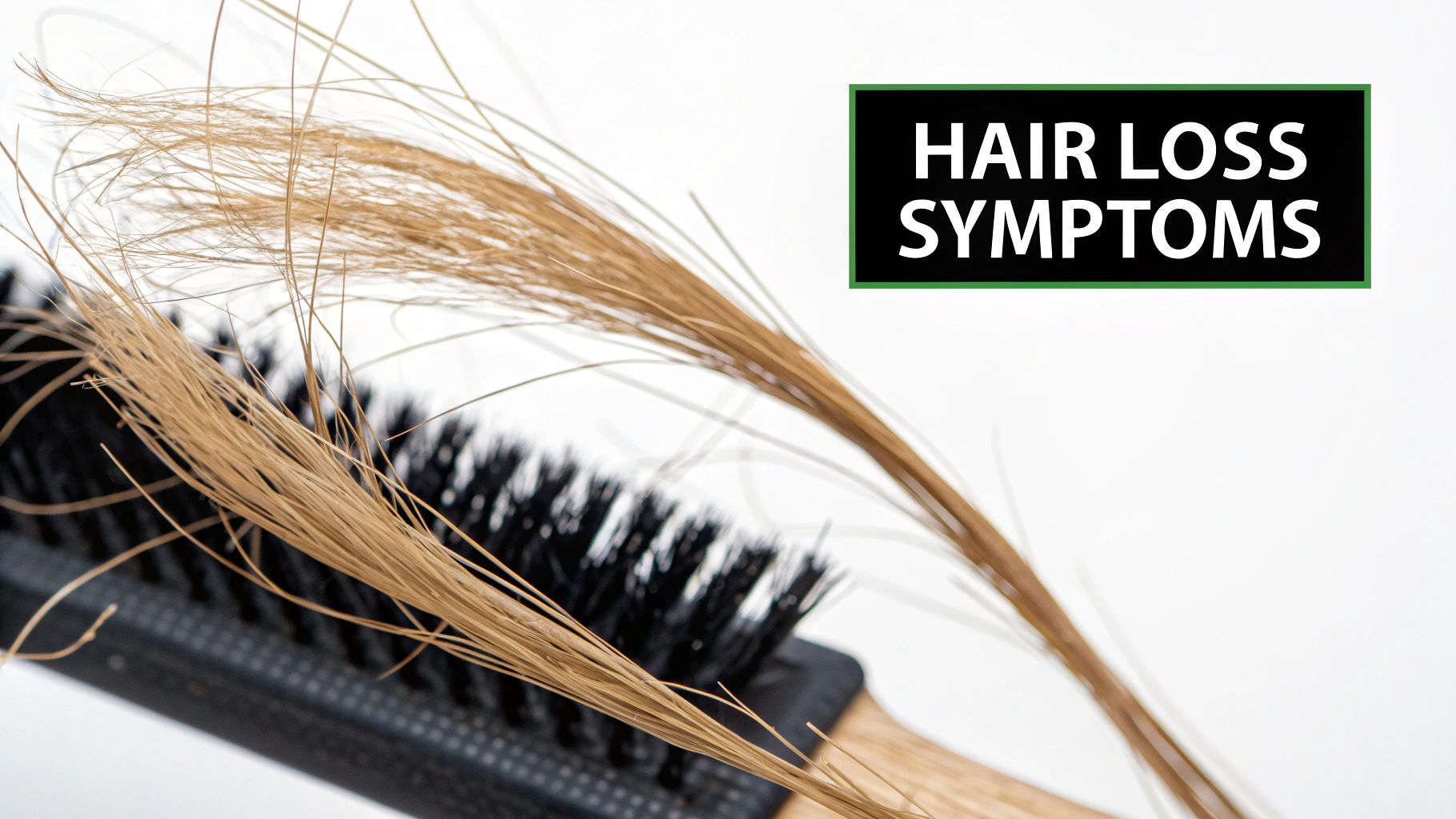
So, how can you tell if protein deficiency hair loss is the real culprit behind your thinning hair? The signs often creep up on you. It's easy to dismiss a few extra strands in your brush until the shedding becomes too obvious to ignore. The most common giveaway is finding more hair than usual in the shower drain, on your pillow, or tangled in your hairbrush.
But excessive shedding is only part of the story. Take a close look at the hair that's still on your head. Does it feel unusually dry or straw-like? When hair lacks protein, it loses its natural elasticity and strength, which leads to snapping and splitting. It might also look dull and lifeless, no matter how much conditioner you use.
More Than Just Hair
Here's the thing: your hair is often just the first, most visible casualty when protein is in short supply. Because your body always sends protein to vital organs first, you need to look for other clues that your body is running low on this essential nutrient. These non-hair symptoms can give you the full picture.
The most common signs that pop up alongside protein deficiency hair loss include:
- Persistent Fatigue: Feeling wiped out all the time, even when you think you've had enough sleep, can mean your body doesn't have the building blocks it needs for energy and repair.
- Weak or Splitting Nails: Just like your hair, your fingernails are made of keratin. A lack of protein can make them brittle, ridged, or prone to breaking.
- Slow Wound Healing: Protein is critical for cell regeneration and repairing tissue. If you notice that cuts and scrapes are taking forever to heal, it could be a major red flag.
Recognizing these broader symptoms is key. When you connect increased hair shedding with issues like brittle nails and ongoing fatigue, you move from treating a symptom (hair loss) to identifying the root cause (a nutritional deficiency).
Why Your Body Sacrifices Hair First
Think of your body's resource management system like a household budget during a tough month. You’d make sure the mortgage and electricity bills are paid before even thinking about spending on non-essentials. Your body does the same thing. When protein is scarce, it's channeled toward critical functions—like maintaining muscle, supporting your immune system, and repairing vital organs.
From a purely biological perspective, hair growth is a cosmetic luxury. That’s why your hair follicles are one of the first "departments" to face budget cuts. When you understand this internal triage system, you can see your thinning hair not as an isolated problem, but as an early warning from your body that it desperately needs more nutritional support. Getting to the bottom of the protein deficiency is the only way to truly fix the problem.
How Amino Acids Build Stronger Hair
To really get to the bottom of protein deficiency hair loss, we have to zoom way in, down to the microscopic level. Picture a protein as a long, intricate chain. The individual links making up that chain are called amino acids. These are the fundamental building blocks your body uses to assemble every single protein it needs—including the all-important keratin that makes up your hair.
Your body is pretty clever; it can actually manufacture many of these amino acids all on its own. But there's a catch. Nine of them, known as essential amino acids, can't be made internally. You have to get them directly from the food you eat. So, when your diet is short on protein, you're not just missing out on the big picture; you're starving your body of the specific, crucial components it needs for vital functions like hair growth.
The Role of Specific Amino Acids
Not all amino acids are created equal when it comes to hair. Some are absolute superstars for building strong, resilient strands. Two of the most critical players are leucine and cysteine. Leucine basically flips the "on" switch for protein synthesis, signaling your follicles to get to work. Cysteine, which contains sulfur, is what gives hair its structural integrity and toughness.
When your intake of these key building blocks dwindles, the keratin factory in your follicles grinds to a halt. It doesn't have the specialized parts it needs to operate. Production slows way down, and the hair that does manage to grow comes out weaker, more brittle, and far more likely to snap. This problem at the cellular level is the direct culprit behind the fragile, thinning hair so many people struggle with.
How Common Are These Deficiencies?
It's tempting to think that amino acid deficiencies are a rare issue, but they're surprisingly common, especially among people dealing with hair loss. This can even be true for individuals who feel they're eating a healthy diet. Any kind of restrictive eating—whether it's for weight loss, ethical reasons, or health concerns—can accidentally open up some serious nutritional gaps.
For instance, a revealing 2017 study looked at people experiencing hair loss and found that deficiencies in key amino acids were incredibly widespread.
In that study, a lack of leucine was alarmingly common, affecting 98.15% of participants with telogen effluvium and a shocking 100% of those with female pattern hair loss.
This research really drives home the tight connection between specific amino acids and the health of your hair. The findings also showed that shortages of other amino acids, like valine and alanine, were highly prevalent across different types of hair loss. You can dive deeper into these prevalent nutritional gaps in the full study.
At the end of the day, a shortage of these building blocks leads to a direct and predictable outcome. Without a steady stream of essential amino acids, your hair follicles are sabotaged from the inside out. They simply don’t have the raw materials to do their job. This is how the microscopic world of cellular nutrition directly causes the very real problem of thinning hair that just won't grow, making a protein-rich diet your first and most powerful line of defense.
Why Iron Deficiency Can Make Hair Loss Worse
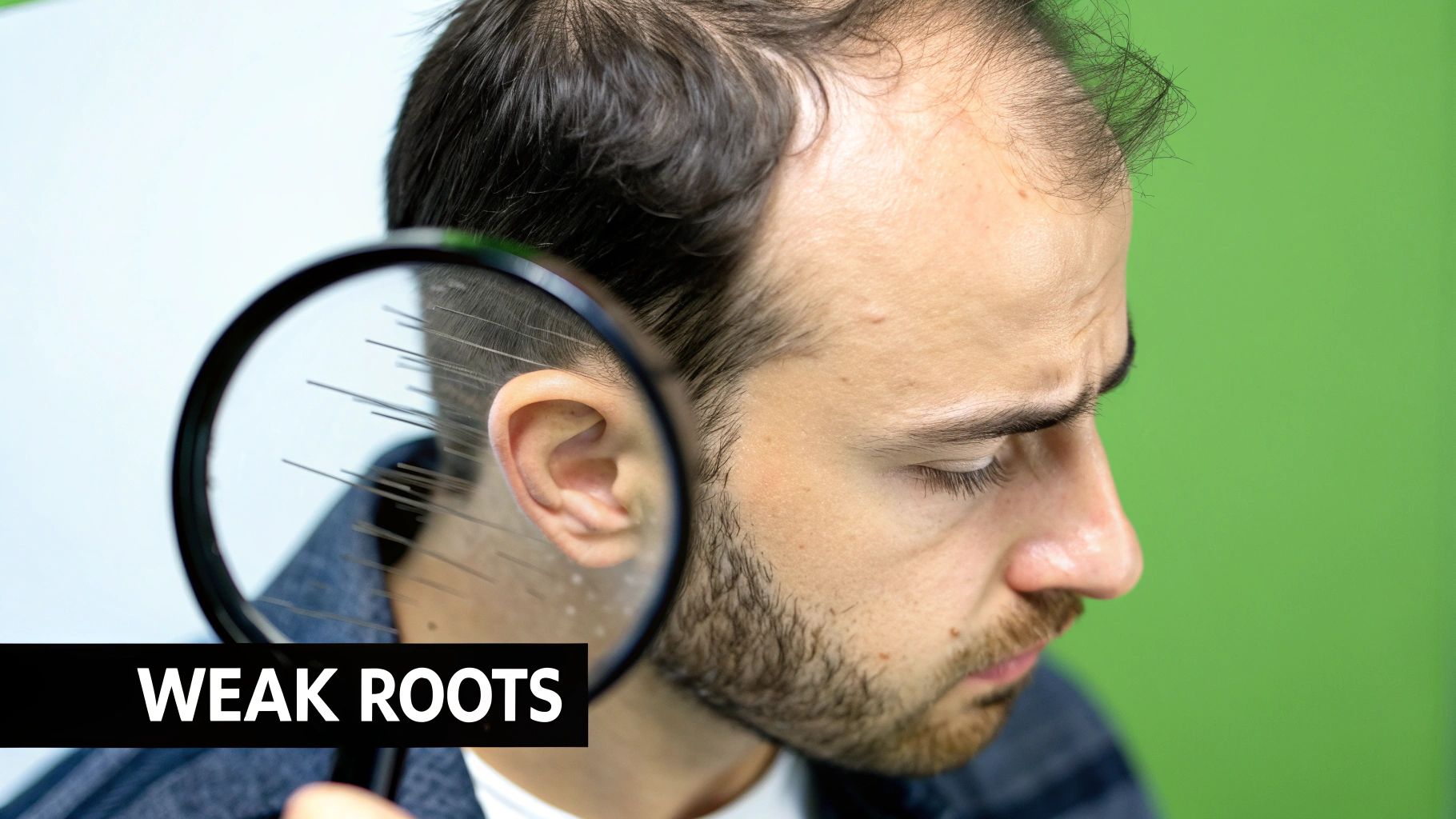
If you're dealing with protein deficiency hair loss, you're often fighting a battle on two fronts. Protein rarely acts alone, and its most frequent accomplice in causing hair thinning is iron deficiency. When these two problems show up together, they can create a perfect storm, making the effects of each one significantly worse.
Think of it like building a house. Protein provides the literal building blocks—the keratin that makes up the hair strand itself. But iron? Iron is the delivery truck that brings the essential oxygen to the construction site, a.k.a. the hair follicle. Without that oxygen, the whole energy-intensive process of cell division and hair growth just can't happen.
This is exactly why some people boost their protein intake and are still baffled by persistent hair loss. They've only solved half the equation. You can have all the building materials in the world, but if the workers don't have the energy to build, the project stalls.
The Synergistic Impact on Hair Follicles
Here’s where it gets interesting. Your body stores iron in a protein called ferritin. When your iron intake drops, your body has to get resourceful and starts raiding its own emergency supplies. And guess what's first on the chopping block? The ferritin stored in what your body considers "non-essential" tissues, like your hair follicles.
This means your hair follicles can be starved of iron long before you show any classic signs of full-blown anemia. The follicle simply runs out of the oxygen and energy it needs to grow a healthy hair strand, even if you’re eating plenty of protein.
Iron deficiency is the most common nutritional deficiency on the planet and a major, often overlooked, cause of hair loss, especially for women of reproductive age. You can dig deeper into the science by reviewing the conclusions of related studies on the link between iron, ferritin, and hair shedding.
Who Is Most at Risk?
Certain people are much more likely to face this double-whammy of low protein and low iron.
- Premenopausal Women: Monthly blood loss from menstruation significantly increases iron requirements, making it a constant challenge to keep levels up.
- Vegetarians and Vegans: Plant-based iron (non-heme) just isn't as easily absorbed by our bodies as the iron found in animal sources (heme).
- Individuals with Malabsorption Issues: Conditions like celiac disease or Crohn's can hinder the body's ability to pull both protein and iron from the food you eat.
Understanding this connection is a game-changer. It helps you move beyond a single-nutrient mindset and build a more holistic nutritional strategy that gives your hair follicles everything they need to thrive from the inside out.
Building Your Hair Regrowth Diet Plan
Alright, you've connected the dots between your diet and your hair. Now for the empowering part: taking back control. This is where we shift from understanding the problem to actively fixing it by building a diet plan that tackles protein deficiency hair loss right at the source. The mission is simple—feed your hair follicles the raw materials they desperately need to build strong, resilient hair.
A solid first step is figuring out your personal protein requirement. The general rule of thumb for most people is about 0.8 grams of protein per kilogram of body weight. If you're physically active, that number goes up. To get your baseline, just multiply your weight in kilograms by 0.8.
So, if you weigh 80 kg (around 176 lbs), you're looking at a target of at least 64 grams of protein each day. Think of this not as a strict rule, but as a clear, achievable target that makes meal planning so much simpler.
Choosing Your Protein Sources
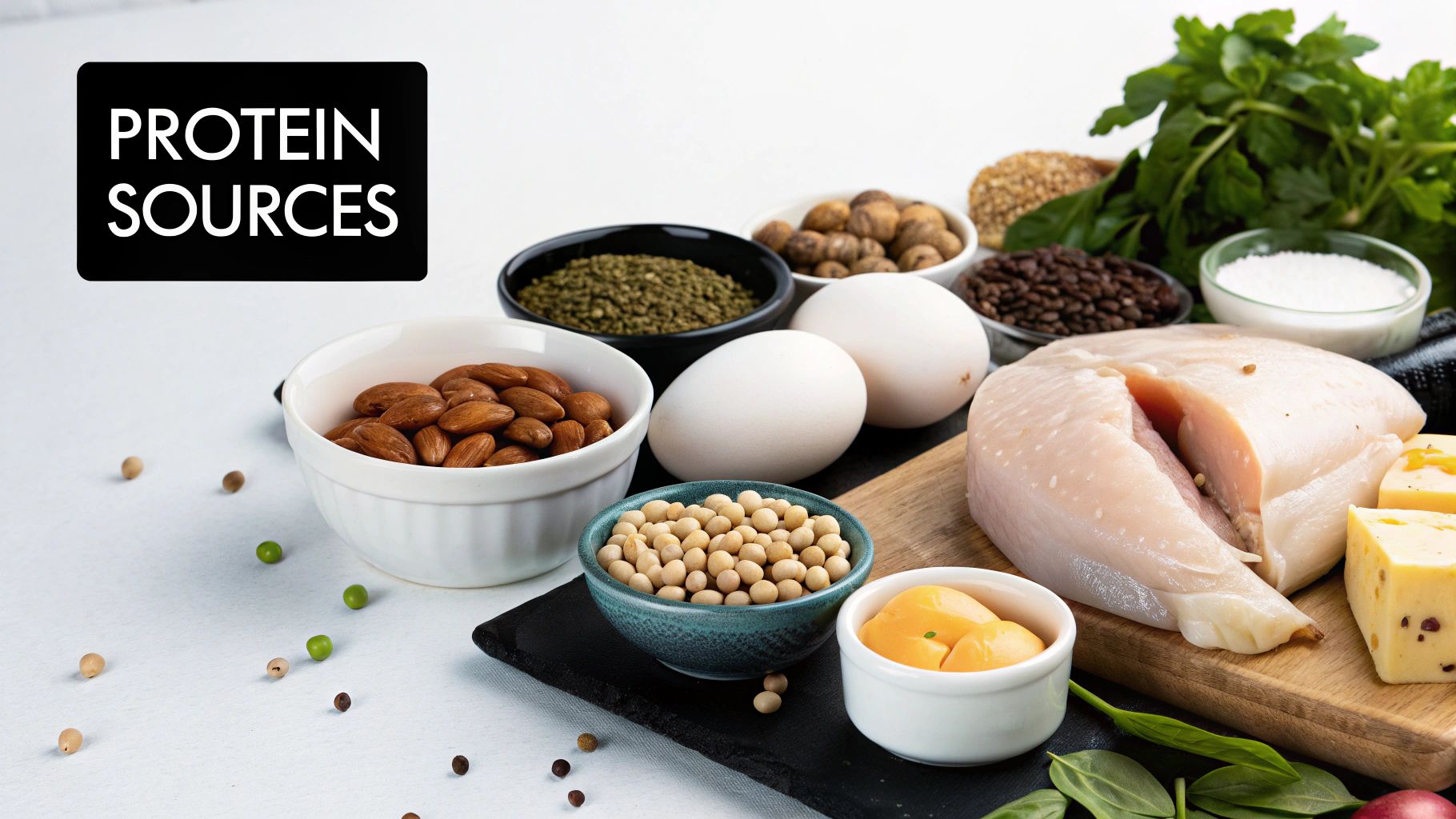
With your daily goal in hand, it's time for the fun part: choosing your foods. You've got fantastic options from both animal and plant-based sources. I always tell my clients that variety is non-negotiable. Eating a mix of different proteins ensures you’re getting the full spectrum of amino acids—the individual Lego bricks that snap together to form keratin.
Here are some of the most powerful, hair-friendly protein sources to add to your shopping list:
- Lean Meats and Poultry: Chicken breast, turkey, and lean beef are absolute powerhouses. They provide complete proteins and easily absorbed iron, which is protein's crucial partner in fighting hair loss.
- Fish and Seafood: Salmon, tuna, and mackerel are loaded with protein and omega-3 fatty acids, which are fantastic for maintaining a healthy, well-hydrated scalp.
- Eggs: I often call eggs "nature's perfect protein." They contain all nine essential amino acids and are a great source of biotin, another hair-health superstar.
- Plant-Based Powerhouses: Don't sleep on lentils, chickpeas, quinoa, tofu, and edamame. They're excellent for hitting your protein goals while adding fiber and other essential nutrients to your diet.
A simple but incredibly effective strategy is to build every meal around a primary protein source. When you do this, you'll find you hit your daily target almost automatically, without the hassle of counting every single gram.
Making It Effortless with Meal Ideas
Bringing more protein into your diet doesn't mean you have to completely reinvent how you eat. The most sustainable changes come from making small, smart swaps and additions.
Maybe you start your day with scrambled eggs instead of cereal, or a Greek yogurt parfait topped with nuts. For lunch, a big salad with grilled chicken or a hearty quinoa bowl with black beans can make a huge difference. Come dinnertime, a simple piece of baked salmon with a side of lentils can easily get you over the finish line.
Don't forget about snacks! They're a golden opportunity. A handful of almonds, a hard-boiled egg, or some cottage cheese are all easy, grab-and-go ways to keep your body—and your hair follicles—fueled throughout the day. When you turn this knowledge into a daily habit, you give your body the steady support it needs to reverse protein deficiency hair loss and grow a fuller, healthier head of hair.
To make things even easier, here is a quick reference guide to help you choose high-protein options for your meals and snacks.
Comparing Protein Content in Everyday Foods
| Food Item (100g serving) | Protein (grams) | Type (Animal/Plant-based) |
|---|---|---|
| Chicken Breast | 31g | Animal |
| Salmon | 25g | Animal |
| Lentils (cooked) | 9g | Plant-based |
| Greek Yogurt (0% fat) | 10g | Animal |
| Tofu (firm) | 17g | Plant-based |
| Eggs (2 large) | 12g | Animal |
| Almonds | 21g | Plant-based |
| Quinoa (cooked) | 4.4g | Plant-based |
Keep this table handy when you're planning your grocery list or deciding what to eat. Even small swaps—like choosing Greek yogurt over regular yogurt—can add up to make a big impact on your daily protein intake.
Exploring Advanced Treatment Options
So, you've upped your protein intake, but your hair is still shedding more than you'd like. When dietary changes alone don't seem to be working, it's a strong sign that it's time to bring in a professional.
Persistent hair loss, even after improving your diet, could mean a couple of things. Either other factors are contributing to the problem, or the initial deficiency was severe enough that it needs more than just food to fix. This is where consulting a doctor or dermatologist becomes essential. They can run blood tests to get a clear picture of your nutritional status—checking protein and iron levels—and rule out other conditions like thyroid disorders or autoimmune issues that can also cause hair loss.
Getting a professional diagnosis takes all the guesswork out of the equation. If a deficiency is confirmed, your doctor might recommend specific nutritional supplements. These are typically medical-grade and more potent than what you'd find over the counter, designed to correct a significant shortfall much more quickly than diet alone.
Introducing Platelet-Rich Plasma (PRP) Therapy
Once you've corrected the underlying nutritional issues, you can start thinking about treatments that actively kickstart new growth. One of the most promising options out there is Platelet-Rich Plasma (PRP) therapy, a procedure designed to reawaken dormant hair follicles. It's important to understand that PRP won't fix an ongoing protein deficiency, but it's a fantastic tool to use after you've solved the internal problem.
Think of it this way: fixing your diet is like delivering building materials to a construction site. PRP is like sending in a specialized crew to get the building process started once the materials are on-site.
The PRP process itself is quite straightforward:
- Blood Draw: It starts with a simple blood draw, no different from a routine lab test.
- Centrifuge Process: That blood is then placed in a centrifuge, a machine that spins it at high speed to separate the platelets and create a highly concentrated, platelet-rich plasma.
- Scalp Injections: Finally, this plasma—which is packed with your body's own natural growth factors—is meticulously injected into the areas of your scalp where the hair has thinned.
These growth factors essentially send a signal to dormant follicles, telling them to "wake up" and get back into the active growth phase. For men struggling with thinning, PRP for Hairloss can be a brilliant next step after getting their nutrition in order. It directly stimulates the follicles to help restore hair density and thickness, bridging the gap between fixing the root cause and seeing the full, satisfying results you're after.
Got Questions About Protein and Hair Loss? Let's Clear Them Up
When you're trying to regrow your hair, a lot of practical questions pop up along the way. Let's tackle some of the most common ones to help you feel confident as you work on correcting a protein deficiency hair loss issue.
How Long Before I Actually See a Difference?
It’s important to remember that hair grows on its own timeline, which is notoriously slow and steady. Once you start consistently giving your body the protein it needs, the first thing you’ll likely notice is less shedding. This can happen within 2 to 3 months.
But seeing that new, thicker hair? That takes a bit more patience. It can take anywhere from 6 to 12 months for those new, stronger strands to grow long enough to make a visible impact on your hair's overall density. Consistency is everything here.
Are Protein Shakes as Good as Real Food?
Protein shakes can definitely be a handy tool, especially if you have a busy lifestyle or find it tough to hit your protein targets with meals alone. But think of them as a helper, not the main event.
A well-rounded diet full of whole foods—think lean meats, fish, eggs, and legumes—gives you a much broader spectrum of essential amino acids and other key micronutrients. Things like iron and zinc, which are absolute must-haves for healthy hair, are much more available in a varied diet than in a shake.
Will a Keratin Shampoo Solve the Problem?
Topical products like keratin shampoos and conditioners can make your hair look and feel better temporarily. They coat the hair shaft, smoothing down the cuticle to give you that shiny, stronger-feeling finish.
But at the end of the day, it's a cosmetic fix. It’s like painting over a crack in the wall without fixing the foundation. Protein deficiency hair loss is an internal problem that starts at the follicle. The only way to truly reverse it is from the inside out by fixing the nutritional gap in your diet.
If you've built that strong nutritional foundation and you're ready to take the next step in actively encouraging new growth, PRP For HairLoss is a fantastic resource for learning about advanced treatments. You can discover how procedures like PRP therapy work to reawaken dormant hair follicles by checking out their guide on PRP for Hairloss.

 PRP For Hairloss
Leave a comment