Yes, a dedicated scalp massage for hair growth is more than just a feel-good ritual. It can genuinely improve hair thickness by boosting blood flow right where it matters—at the follicle. This simple, free method helps deliver essential nutrients to your hair roots, creating a much better environment for healthy growth to take hold.
Does Scalp Massage Actually Promote Hair Growth?

The idea that simply rubbing your scalp can lead to a fuller head of hair might sound a little too good to be true, but there’s some compelling science behind it. This isn't about magic; it's about basic biology and mechanics. When you massage your scalp, you're physically influencing the tissues and cells responsible for producing every single strand of hair.
This stimulation works on a few different levels:
- It boosts blood flow. This is the most immediate and critical benefit. Your blood is the delivery service for oxygen and vital nutrients to the dermal papilla cells at the base of each follicle. Better circulation means a more robust supply chain for hair growth.
- It stretches the hair follicle cells. The physical manipulation from a good massage actually stretches the skin and the cells within the hair follicles. This gentle mechanical stress can encourage them to shift into a more active growth phase, producing thicker, stronger hair.
- It helps reduce stress hormones. We all know chronic stress is a major culprit behind hair thinning and loss. A relaxing scalp massage is a fantastic way to lower levels of stress hormones like cortisol, which can have a surprisingly positive impact on your hair growth cycle.
The Evidence for Thicker Hair
Scientific research is finally catching up to what people have anecdotally known for years. A pivotal 2016 Japanese study really brought this into focus. In the trial, a group of men performed a standardized four-minute scalp massage every single day for 24 weeks.
The results were fascinating. While their hair didn't necessarily grow faster, the thickness of each strand measurably increased by about 8.2%. This is a big deal. It tells us the primary benefit is in creating stronger, more resilient hair, not just more of it.
Key Takeaway: The goal of scalp massage isn't just to grow more hair, but to improve the quality and thickness of the hair you already have. You're strengthening the foundation for healthier growth over time.
Of course, massage is just one piece of the puzzle. It works best when combined with other healthy hair habits. To take things a step further, you can pair your massage routine with effective topical treatments. Some of the best Japanese hair growth products, for example, are designed to nourish the scalp and follicles directly, complementing the circulatory benefits of massage.
To help you see the bigger picture, here’s a quick breakdown of how a consistent scalp massage routine can make a real difference for your hair and scalp health.
How Scalp Massage Can Improve Hair Health
| Benefit | How It Works | Supporting Evidence |
|---|---|---|
| Increased Hair Thickness | Stretches dermal papilla cells, prompting them to produce more robust hair strands. | Clinical studies show a measurable increase in hair shaft diameter after consistent massage. |
| Improved Blood Circulation | Physical manipulation dilates blood vessels in the scalp, enhancing nutrient delivery. | Widely accepted physiological response to massage; foundational to hair follicle health. |
| Stress Reduction | Lowers cortisol and other stress hormones that can negatively impact the hair cycle. | Proven therapeutic effect of massage on the nervous system and stress hormone levels. |
| Better Product Absorption | Gentle massage can help distribute oils, serums, or treatments more evenly across the scalp. | Anecdotal evidence suggests enhanced efficacy of topical treatments when combined with massage. |
Ultimately, a good scalp massage works by creating the ideal conditions for your hair to thrive. By increasing blood flow, reducing stress, and directly stimulating the follicles, you're giving your hair its best shot at growing in thicker and stronger.
Mastering Effective Scalp Massage Techniques
So, you're sold on the "why" of scalp massage for hair growth. Now for the fun part: the "how." Moving beyond just rubbing your head randomly is what turns this simple action into a truly powerful habit for healthier hair. It all comes down to the right technique, consistent effort, and applying the proper pressure.
Let’s walk through a few of my go-to methods that have shown real results, starting with the most important rule of all.
Before you even think about touching your head, remember this: always use the pads of your fingertips, never your nails. Scratching your scalp, even gently, can create tiny abrasions and inflammation—the very things we're trying to prevent. It can also snap delicate hairs, which completely defeats the purpose.
The Classic Fingertip Massage
This is your bread and butter, the foundational technique that's incredibly easy to weave into your daily life. I think of it as a gentle wake-up call for my hair follicles. It's perfect for stimulating the entire scalp without any complicated moves.
Get started by placing the fingertips of both hands on your scalp. You want to apply firm pressure, but it should never be painful.
From there, begin making small, slow circles. The real secret here isn't to just rub your fingers across your skin. Instead, you want to feel the skin of your scalp actually moving over the bone beneath it. Work your way systematically from your front hairline back to the crown, then tackle the sides and the back of your head.
Pro Tip: Imagine you're trying to loosen a hat that’s on a little too tight. That’s the exact movement you’re going for. This ensures you’re getting deep enough to stimulate the tissue where the hair follicles live, not just causing friction on the surface.
Advanced Combination Methods
Ready to level up? For those who want a more intensive routine, many trichologists (hair and scalp specialists) swear by combining two classic massage strokes: effleurage and petrissage.
-
Effleurage (Gliding Strokes): This is all about gentle, flowing movements. It's how you'll warm up the scalp and get the blood flowing near the surface. Use your flat fingers or even your palms to make long, sweeping motions across your scalp. It’s the perfect way to start and end any scalp massage.
-
Petrissage (Kneading Strokes): This is where the real work happens. It involves gently lifting, rolling, or kneading the scalp tissue. Think of it as "pinching" small sections of your scalp skin between your fingertips, holding for a brief moment, and then releasing. This deeper action is what directly stimulates the follicles.
A great way to combine them is to start with one minute of effleurage, followed by three minutes of focused petrissage on any thinning areas, and then cool down with another minute of effleurage.
The Gentle Tapping Method
If your scalp is particularly sensitive or you find the circular motions a bit awkward, tapping is a fantastic alternative. It’s a light form of percussion that awakens the nerves and boosts circulation without any pulling or dragging on the hair.
Just use your fingertips to lightly and rapidly tap all over your scalp. The motion should feel quick and bouncy, almost like you're drumming your fingers on a desk. Make sure you cover your entire head, giving a little extra love to areas like your temples or crown where you want to see more growth. This is a super low-effort technique you can easily do for a few minutes while watching TV.
To see how you can fit an oil-based massage into your weekly schedule, this visual flow breaks it down nicely.
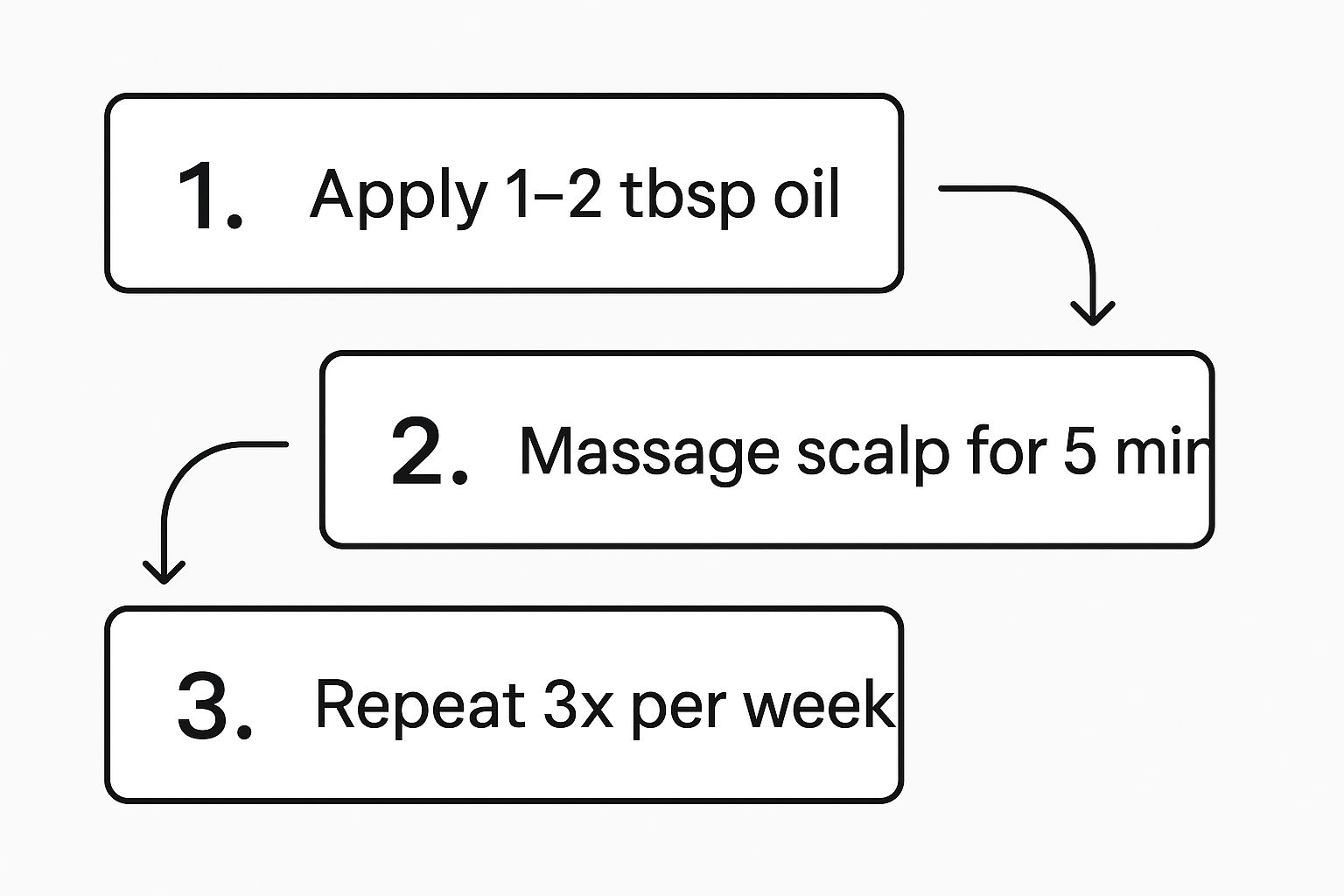
This simple cycle highlights that consistency is far more important than a complicated routine. No matter which method feels best to you, just dedicating five minutes a few times a week is an amazing start. It's all about building a sustainable habit that supports your hair for the long haul.
Choosing the Right Tools and Oils for Your Routine
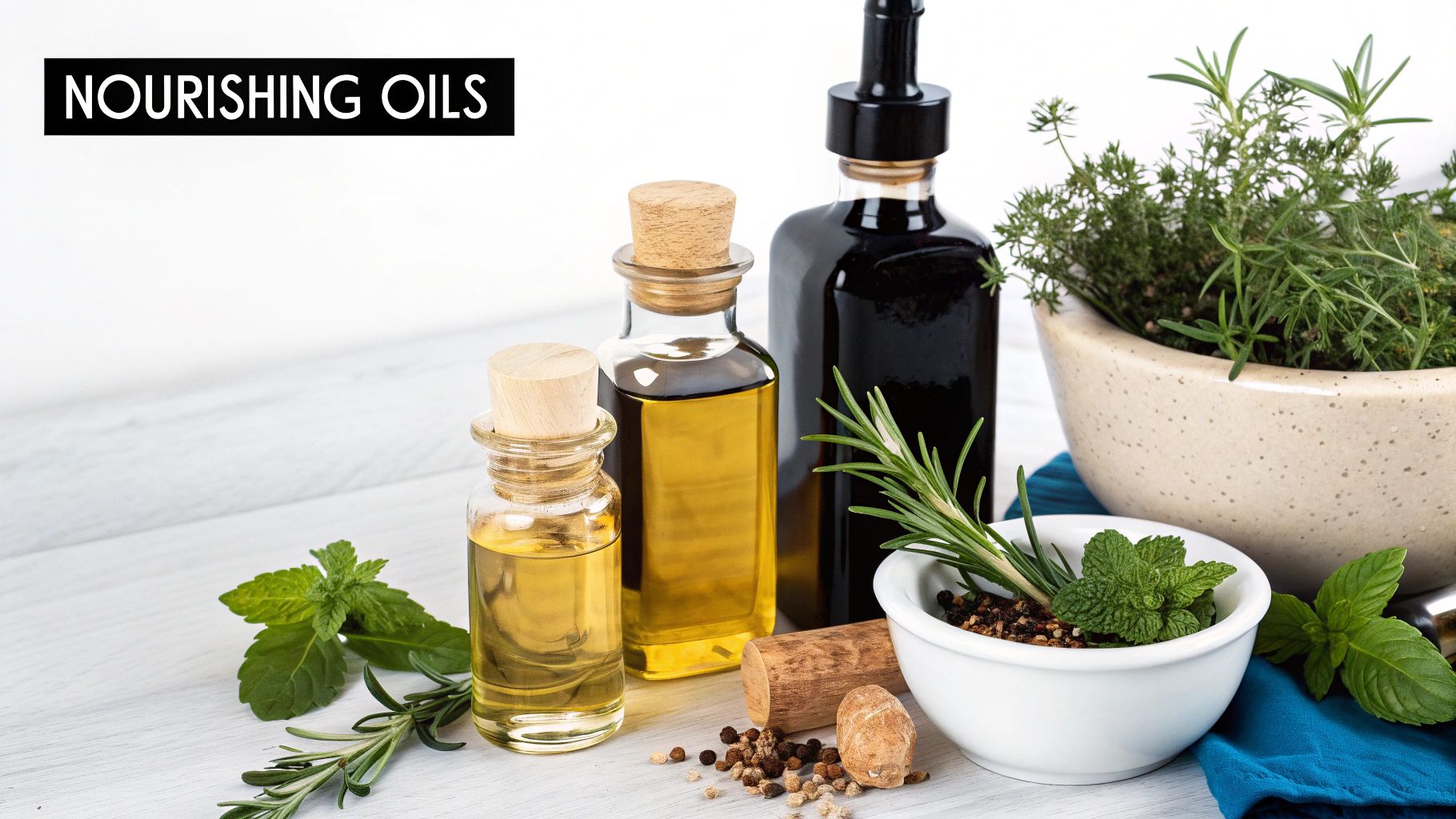
While your own hands are perfectly capable of giving you a great scalp massage for hair growth, bringing a few key tools and oils into the mix can really take things to the next level. You don't need a whole arsenal of gadgets, but a couple of smart additions can boost the benefits and, frankly, make it a more luxurious experience.
The first choice you'll likely make is between a manual and an electric massager. There's no single "best" option here—it’s all about what feels good to you and what you can see yourself using consistently.
I'm a big fan of a simple manual silicone massager, especially for using in the shower. The soft bristles are fantastic for lathering up shampoo while gently exfoliating the scalp. This helps lift away all the gunk—dead skin, product residue—that can block hair follicles. Plus, you have total control over the pressure and they’re a breeze to clean.
Then you have electric scalp massagers, which do all the heavy lifting for you. Many of them use a gentle vibration or a rotating, kneading motion that feels incredible. If your hands tire out easily or you just want to sit back and relax, an electric model is a brilliant investment.
Selecting the Right Oils
Oils aren't a must-have, but they make a huge difference. They provide the necessary "slip" to prevent friction and hair tugging, which is especially important for longer massages. More than that, they bring their own set of nourishing properties to the table.
Your foundation will be a carrier oil. This is the base that dilutes more potent essential oils and delivers moisture directly to your scalp. The trick is to pick one that’s lightweight and won't clog your pores.
- Jojoba Oil: This is my top recommendation. Its chemical makeup is remarkably similar to our skin's natural oils (sebum), so it absorbs beautifully.
- Almond Oil: Another lightweight champion, almond oil is packed with Vitamin E and nourishes the scalp without leaving a greasy mess.
Crucial Safety Note: To really target hair growth, you can add essential oils like rosemary or peppermint. But you must NEVER apply them directly to your skin. Always, always dilute them in a carrier oil first to avoid serious irritation or an allergic reaction.
Dilution and Patch Testing
A good rule of thumb for safe dilution is to mix just 2-3 drops of essential oil into one tablespoon of your carrier oil. A little goes a long way.
Before you go all-in and apply a new oil blend to your head, you have to do a patch test. It’s a simple but vital step. Just dab a small amount of the mixture on a discreet patch of skin, like behind your ear or on your inner forearm.
Give it 24 hours. If you don't see any redness, feel any itching, or have any other kind of irritation, you’re good to go. This quick test can save you from a lot of discomfort and ensures your scalp massage stays a purely positive part of your routine.
Making Scalp Massage a Real Habit
Knowing the right techniques is a great start, but if you want to see real results from a scalp massage for hair growth, it all comes down to consistency. This isn't a one-and-done fix. It’s a long-term practice you have to weave into your regular self-care routine. The benefits really start to add up over time.
So, what kind of commitment are we talking about? It’s probably more than you think. Data suggests you need to put in a significant amount of time before you’ll notice a real difference in hair shedding or potential regrowth.
The magic number seems to be around 36.3 hours of total massage time, spread out over several months. That figure isn't meant to scare you off—it's about setting realistic expectations from the get-go. If you want to dig into the numbers, you can read more about how persistent effort supports hair health on hims.com. The key takeaway is that persistence truly pays off.
How to Fit 36 Hours Into Your Life
Staring at a number like "36 hours" can feel pretty abstract, even overwhelming. Let's break it down into something that feels more manageable. That total works out to about 15-20 minutes of scalp massage every single day for six months. It might sound like a lot, but when you anchor it to an existing part of your day, it quickly becomes second nature.
When I first started, I tied my massage time to my morning coffee. While the pot was brewing, I’d spend five minutes doing a simple, dry fingertip massage. It was easy to remember and didn't feel like another chore on my to-do list.
Key Insight: Don't try to be perfect on day one. Start by finding a small, easy time slot in your current schedule. The goal is to build a habit that sticks, not create a task you'll end up dreading.
Finding a Rhythm That Clicks for You
Everyone’s life is different, and your massage schedule should be, too. The best routine is simply the one you can stick with without it feeling like a burden. Honestly, a shorter daily session is often more effective in the long run than a long, sporadic one because it keeps your scalp consistently stimulated.
Here are a few ideas based on what I’ve seen work for different people:
- The Morning Energizer (5-10 minutes daily): A quick, invigorating massage when you wake up or in the shower is a fantastic way to boost circulation and kickstart your day.
- The Evening Wind-Down (15 minutes daily): Use this time to de-stress before bed. This is the perfect time to add a nourishing oil and focus on slow, relaxing motions to calm your nervous system.
- The Weekend Warrior (20-25 minutes, 3x a week): If daily sessions just aren't in the cards, dedicate longer blocks of time a few days a week. This is a great approach for doing more intensive oil treatments.
No matter which path you choose, tracking your progress can be a huge motivator. Set a recurring reminder on your phone or just make a note on your calendar. Watching those minutes add up helps you see you're making real progress toward your hair goals.
7 Common Scalp Massage Mistakes to Avoid
Getting the most out of your scalp massage is all about technique. It seems simple, but a few common missteps can easily undermine all your hard work. Let's move beyond the basics to make sure you're actually helping your hair follicles, not accidentally harming them.
Finding the Right Pressure
One of the biggest mistakes I see is applying the wrong kind of pressure. It’s easy to think a more aggressive, vigorous massage will boost circulation better, but the opposite is often true.
Being too rough doesn't just feel uncomfortable; it can actively inflame your scalp. That inflammation creates a stressful environment for your hair follicles, potentially weakening them over time. The real goal isn't to scrape the skin but to create a firm, consistent tension that moves the scalp over the bone underneath.
On the flip side, if your fingers are just lightly sliding across the surface of your skin, you aren't getting deep enough to stimulate the tissue and blood vessels. Think firm, but gentle.
Protecting Your Hair and Scalp from Damage
Another frequent error is causing mechanical damage to your hair and scalp without even realizing it. This can quickly turn a helpful routine into a harmful one.
Two major culprits here are:
- Using Your Fingernails: This is a cardinal sin of scalp massage. It's so tempting, especially if your scalp is itchy, but your nails can create tiny micro-tears in the delicate skin. This opens the door for irritation and infection. Always, always use the soft pads of your fingertips.
- Massaging Tangled Hair: Never try to power through knots and tangles. The pulling and tugging can easily lead to breakage, especially if your hair is already fragile or thinning. Take a minute to gently detangle your hair before you start.
My Pro Tip: If you're massaging on dry hair, try working in sections. Gently lift a portion of your hair to get clear access to the scalp beneath, do your massage in that spot, and then move on. This keeps you from creating friction and tangles in the hair strands themselves.
Finally, don't go overboard with oils. While oils can be fantastic, drowning your scalp in them—especially heavy ones—can clog your pores. This can lead to folliculitis, which shows up as small, inflamed bumps around the hair follicles. Clogged follicles are the last thing you want when you’re trying to encourage growth.
For most people, a dime-sized amount of a lightweight carrier oil is plenty for the entire head.
Ultimately, a great scalp massage is all about gentle, consistent, and intentional movements. By sidestepping these common mistakes, you can feel confident that every minute you spend is a true investment in the health of your scalp and the future of your hair.
Got Questions About Scalp Massage? We Have Answers
When you start something new, like a scalp massage routine for hair growth, it's natural to have a few questions. Am I doing this right? Is this even working? Let's clear up some of the common concerns I hear all the time so you can feel confident in your new habit.
We'll get straight to the point, addressing the practical stuff so you can focus on consistency and results.
Practical Application And Timing
One of the first things people ask is whether they need to use oil or have wet hair for their massage. The short answer? Nope.
You can absolutely give yourself a great scalp massage on dry hair, anytime, anywhere. This flexibility is a huge plus because it makes it so much easier to build a daily habit.
Of course, if you feel like there's too much friction or pulling on dry hair, adding just a few drops of a lightweight oil can make things smoother. But it's not a requirement for getting the benefits. The main goal here is stimulating the scalp.
What if you have an oily scalp to begin with? It might seem counterproductive to massage it, but it can actually help. While the massage does get the oil glands going, that same motion helps spread those natural oils down the hair shaft, moving them away from your roots. Over time, this can help your scalp find a better balance. If your scalp is on the oily side, just start with shorter massages and skip the heavy oils.
Managing Expectations And Results
This is a big one. You have to be patient. A scalp massage feels great right away, but seeing any real change in your hair takes time and commitment. Think of it as a long-term investment in your scalp’s health, not a quick fix.
So, how long are we talking? A fascinating 2019 survey of men who regularly massaged their scalps gives us a realistic timeline. It found that 69% of them reported that their hair loss improved or that they saw some regrowth after about six months. You can dig into the full findings on perceived hair growth benefits yourself. That same survey showed that men often needed to log a minimum of 50 hours of total massage time before they noticed a difference.
Key Insight: Don't get discouraged if you don't see a change in a few weeks. The data shows you really need to stick with it for at least six months to give your follicles a fair shot at responding.
Choosing Your Preferred Method
Finally, the classic debate: hands versus machine. Is a manual massager better than an electric one? Honestly, neither one is superior. It’s all about what you prefer and, more importantly, what you’ll actually use day after day.
- Manual Massagers: These are great because you have total control over the pressure. They're also fantastic for exfoliating your scalp, especially if you use one with your shampoo in the shower.
- Electric Massagers: These tools do the work for you with consistent vibration or kneading motions. For many, this feels more relaxing and is less effort.
Both are effective at boosting blood flow to the scalp. The best choice is simply the one that fits into your life and feels good to you. That's the tool you'll stick with long enough to see results.
At PRP For HairLoss, we're committed to giving you clear, evidence-based information to help you understand male pattern baldness. To learn about other advanced treatments, check out our resources on Platelet-Rich Plasma therapy.

 PRP For Hairloss
Leave a comment