Because PRP therapy uses a concentrate made from your own blood, most PRP side effects are quite mild and temporary. While the procedure is overwhelmingly safe, it's smart to understand the full range of potential outcomes—from the common, expected soreness to the much rarer complications.
What to Expect From Platelet-Rich Plasma Therapy
Think of Platelet-Rich Plasma (PRP) therapy like calling in a highly specialized repair crew to fix an injury or stimulate hair growth. The best part? This "crew" is made entirely from your own blood.
The process is straightforward. We draw a small amount of your blood, just like a standard lab test, and spin it in a centrifuge. This machine separates the blood components, allowing us to isolate a golden, platelet-rich liquid. This concentrate, packed with powerful growth factors, is then precisely injected back into the area that needs healing.
This injection intentionally kicks off a localized inflammatory response. That might sound counterintuitive, but it's actually the very first step in your body's natural healing cascade. This is why some mild, immediate side effects aren't just common—they're a sign the treatment is working.
Breaking Down Potential Side Effects
It helps to think about potential PRP side effects in two distinct groups: the common, mild reactions that are part of the normal healing process, and the rare but more serious issues.
- Common & Mild: Most people will feel some temporary soreness, maybe a little bruising, or a sensation of tightness right at the injection site. This is just your body responding to the injection itself and the powerful growth factors getting down to business.
- Rare Complications: Like any procedure that involves a needle, there's a tiny risk of issues that aren't related to the plasma itself but to the injection.
Clinical studies consistently show that PRP injections have very few side effects, mainly because the material is autologous (from your own body). The most common complaints are localized pain and temporary discomfort right after the procedure. The risk of an allergic reaction is virtually zero, but with any injection, there's always a slight chance of infection, bleeding, or nerve irritation.
To give you a clearer picture, here's a quick summary of what to look out for.
Quick Overview of PRP Side Effects
This table breaks down the most common and rare potential side effects you might encounter with PRP therapy.
| Side Effect Category | Likelihood | Common Examples |
|---|---|---|
| Common Reactions | High | Soreness, swelling, redness, or bruising at the injection site. |
| Mild Complications | Low | Headache, mild nausea, or a feeling of dizziness post-procedure. |
| Rare Complications | Very Low | Infection, tissue damage, nerve injury, or blood clot. |
Ultimately, the most common issues are minor and resolve on their own within a few days. The more significant risks are extremely rare, especially when the procedure is performed by an experienced professional in a sterile environment.
The real beauty of PRP is its source: you. Using your body's own biological material almost completely eliminates the risk of rejection or allergic reactions, making it one of the safest regenerative treatments out there.
When thinking about PRP, it's also helpful to see it as one piece of a larger wellness puzzle. Many people achieve the best results when they combine it with other holistic pain management approaches to support their body's overall healing and long-term health.
Navigating Common and Mild PRP Side Effects
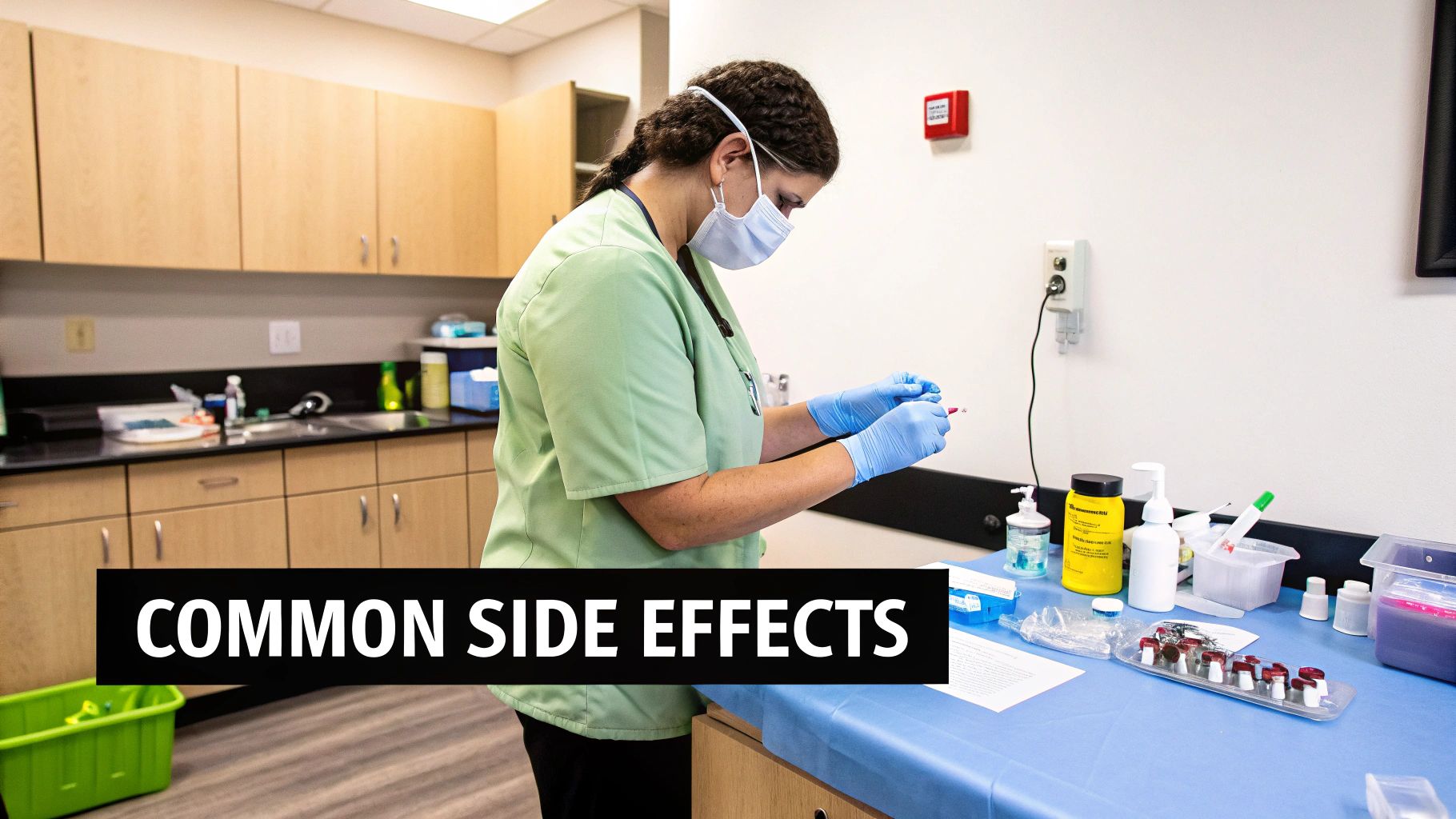
After you get a PRP treatment, it’s completely normal to feel some localized pain, swelling, and maybe even a bit of stiffness. It might not feel great, but these reactions are actually a good thing. In fact, these common PRP side effects are the first clear signal that the treatment is kicking off your body's powerful, natural healing cascade.
Think of it this way: the injection of concentrated platelets and growth factors is like sounding a biological alarm bell in the targeted area. It essentially tells your immune system, "Hey, we need all hands on deck over here!" This controlled disruption purposefully triggers an inflammatory response, which is the essential first step for any real tissue repair and regeneration.
This response is what calls your body's natural repair crews to the scene. The increased blood flow and cellular activity are what you experience as swelling, redness, and that familiar feeling of soreness.
Understanding the Immediate Aftermath
Now, how long this lasts and how intense it feels can really vary. For instance, getting a PRP injection in a large, weight-bearing joint like your knee will probably feel sorer for a few days than getting shallower injections in your scalp for hair restoration. Most people find the initial discomfort hits its peak within the first 24 to 48 hours and then starts to fade pretty steadily.
Here's a general idea of what to expect:
- Day 1-3: This is usually when you'll feel the most soreness and see the most swelling. The treated area might feel "full" or tight.
- Day 4-7: The swelling and any sharp pain should start to calm down, shifting more toward a dull ache or general tenderness.
- Week 2 and Beyond: By this point, most of these initial symptoms should be gone. You might have some minor tenderness left, but you should be getting back to your regular routine.
It is absolutely crucial to listen to your doctor's aftercare instructions. This is especially true when it comes to anti-inflammatory medications. Since that initial inflammation is how PRP does its job, taking drugs like NSAIDs (ibuprofen or naproxen) can actually get in the way and dampen the treatment’s effectiveness.
The discomfort you feel right after a PRP injection isn't a complication; it's a biological confirmation that the healing process has been successfully switched on. It’s the sensation of your body's own growth factors getting to work.
Managing Post-Treatment Discomfort
Just because this inflammatory phase is necessary doesn't mean you have to be miserable. The goal is to manage your symptoms without hitting the brakes on the healing process. Your provider will give you a specific game plan, but it usually involves simple, straightforward measures.
These management techniques are designed to give you relief without interfering with the treatment itself:
- Acetaminophen: A pain reliever like Tylenol is often recommended because it can help with the pain without disrupting the important inflammatory pathways.
- Cold Compresses: Applying a cold pack for 15-20 minutes at a time, especially during the first 48 hours, is a great way to manage swelling and numb the soreness.
- Rest and Elevation: This one is simple but effective. Give the treated area a break. Reducing your activity level and elevating the area (if possible) can make a huge difference in reducing swelling.
When you understand that these common PRP side effects are just a productive part of the journey, you can go into the recovery period feeling confident. The discomfort is temporary, and it’s a positive sign that your body's regenerative engine is fired up and running.
Understanding Rare But Serious Complications
While nearly all PRP treatments unfold without a hitch, resulting in only minor, short-lived side effects, it's wise to be aware of all potential outcomes. Talking about rare but serious PRP side effects isn't to scare you—it’s to give you the complete picture for true informed consent. Feeling confident in your treatment choice starts with understanding the full scope of possibilities.
Here's the key thing to know: the most significant risks from PRP don't usually come from the plasma itself. Since it's your own biological material, your body recognizes it, making allergic reactions practically impossible. The more serious (and very rare) complications are almost always tied to the injection process, a risk that comes with any procedure that breaks the skin.
The Role of a Sterile Environment
The single most important factor in avoiding serious issues is having the procedure done in a clean, sterile medical setting by a qualified professional. If the environment isn't sterile or the technique is sloppy, bacteria can be pushed deep into the tissue, opening the door for infection.
A true infection is a world away from simple redness or swelling. You’ll see tell-tale signs like:
- Pain that gets worse after the first couple of days instead of better.
- Fever, chills, or just feeling generally sick.
- Warmth spreading out from the injection site.
- Any pus or drainage from where the needle went in.
If you notice any of these symptoms, you must contact your doctor right away. Catching a potential infection early is the best way to manage it and stop it from escalating into something more serious.
Understanding Nerve and Tissue Injury
Another rare possibility is damage to nerves or surrounding tissue. The human body is a dense map of nerves, blood vessels, and other delicate structures. An injection from someone without a deep understanding of anatomy could potentially hit a nerve or damage tissue, leading to numbness, tingling, or even persistent pain.
This is precisely why choosing a practitioner with extensive experience and anatomical knowledge is not just a good idea—it's essential. A true expert knows the exact "safe zones" to inject, maximizing the benefits for hair loss or joint pain while steering clear of these sensitive structures. Their skill is your best defense against these rare PRP side effects.
It's essential to understand that serious complications are not a weakness of PRP therapy itself, but rather a risk inherent in the physical act of any injection. The safety of the procedure hinges almost entirely on the skill of the provider and the sterility of the environment.
Because PRP uses your own blood, it has a fantastic safety profile that sidesteps risks like immune rejection. While most side effects are mild and fade quickly, a tiny fraction of cases have reported serious complications like infection, nerve injury, or sepsis. If you want to dive deeper into the clinical data, you can learn more about the safety profile of Platelet-Rich Plasma.
In the end, while the chance of a serious complication isn't zero, it is exceptionally low. By choosing a licensed, experienced professional who follows strict medical protocols, you are taking the most important step toward minimizing these risks and ensuring a safe, successful treatment.
What Factors Influence Your Risk Profile?
Just like no two people are the same, your experience with PRP therapy will be unique to you. The chance of running into PRP side effects isn't a one-size-fits-all number; it's a personal profile shaped by a few key things. When you understand these factors, you can get a much clearer picture of your own situation and have a more productive chat with your doctor.
One of the biggest variables is simply where you're getting the treatment. Injecting a large, weight-bearing joint like the knee comes with a different set of considerations than, say, treating the delicate skin on your scalp for hair loss. A knee injection might naturally feel more painful and stiff for a few days because of the joint's mechanics, while scalp treatments are more likely to cause a mild headache or some temporary soreness.
Your Personal Health Plays a Huge Part
Think of your overall health as the foundation of your risk profile. While PRP is considered very safe for most people, some pre-existing conditions can tip the scales and increase the odds of a complication. This is particularly true for any condition that messes with how your blood normally works.
For instance, PRP might not be the best fit if you have certain health issues:
- Blood Disorders: If you have a condition that impacts how your platelets function or your blood clots, it can get in the way of the treatment's safety and effectiveness.
- Active Infections: Sticking a needle into an area that already has an infection is a recipe for spreading it.
- Certain Autoimmune Diseases: Your doctor will need to carefully consider how your specific condition could react to the inflammation that PRP intentionally causes.
Scientific reviews point out that even though PRP is generally safe, we still need to be cautious. The high-speed spinning process used to create PRP can sometimes change how platelets behave in unpredictable ways. That’s why conditions like platelet dysfunction or clotting problems are usually considered disqualifiers—they just come with a higher risk of complications. You can dig deeper into how patient conditions affect PRP safety in this study.
Your body provides the raw material for the treatment. The health of your blood has a direct impact on both the potential benefits you'll see and the side effects you might experience.
How the Procedure and Aftercare Shape Your Outcome
Finally, there are two factors that are completely within your (and your provider's) control: the injection technique and how well you follow aftercare instructions. The exact method used to prepare the PRP can change the final platelet concentration, which in turn affects how intense the post-injection inflammation will be.
The image below breaks down the main pillars that support a safe and effective treatment.
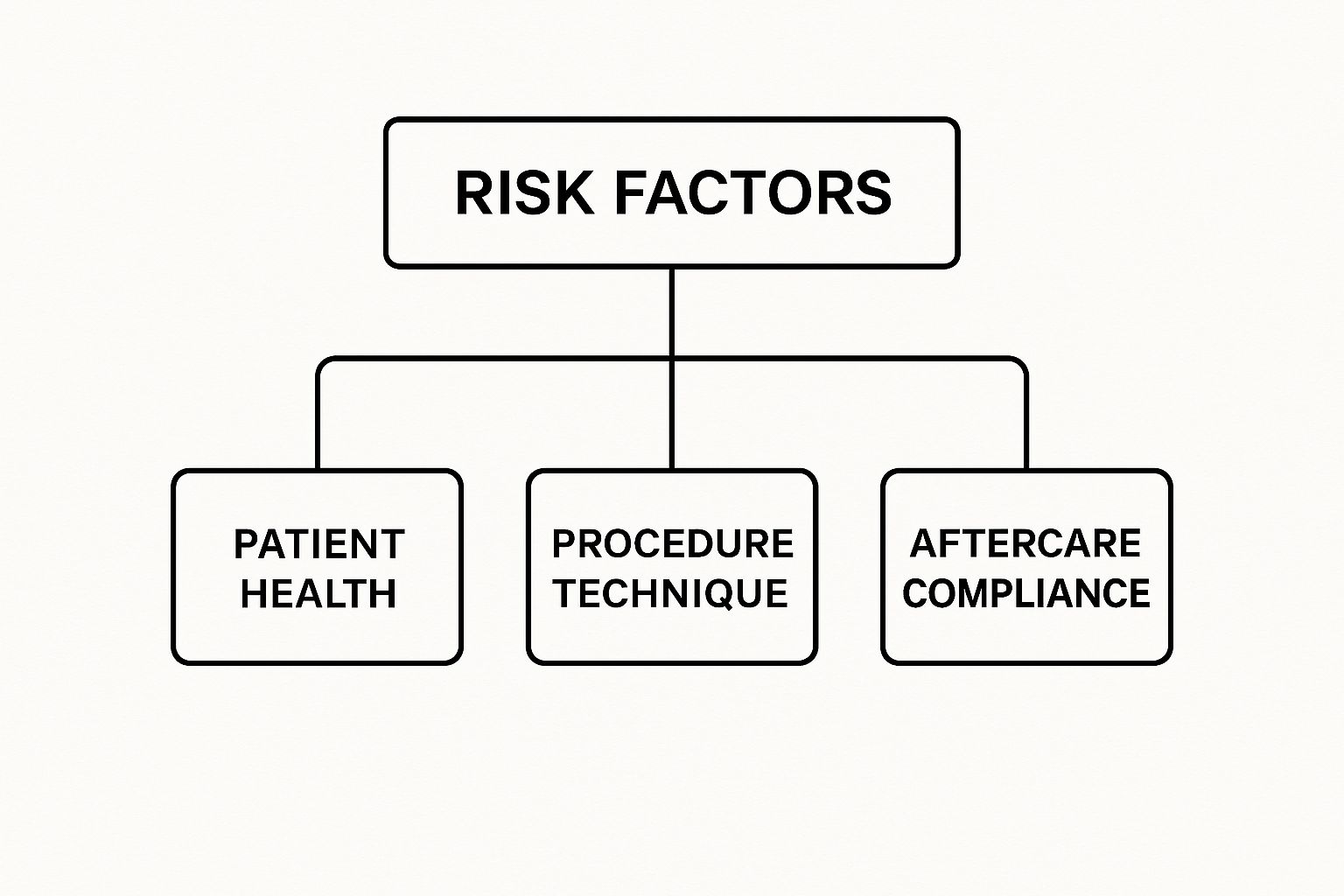
As you can see, your overall risk is a mix of your personal health, your provider's skill, and your commitment to recovery. Carefully following your post-treatment plan—like resting the area and avoiding certain medications—is just as important as choosing an experienced practitioner to begin with.
How to Ensure a Safe PRP Treatment

When it comes to your health, you're in the driver's seat. The best way to minimize potential PRP side effects is to be a proactive and informed patient long before you even schedule your appointment. The safety and success of your treatment really boil down to two critical factors: the provider you choose and how well you follow their instructions.
Think about it like hiring a contractor to work on your home. You wouldn't pick someone without credentials or let them use shoddy materials. The same logic applies here. Your practitioner's expertise and the quality of their equipment are the bedrock of a safe procedure. It's your job to do the homework.
Choosing Your Provider Wisely
Your first and most important task is to find a licensed medical professional who has specific, provable experience with PRP therapy. This isn't a treatment you want done in a spa or by a novice technician. You need an expert with a rock-solid understanding of human anatomy, sterile protocols, and the finer points of the procedure itself.
Walk into your consultation armed with questions. A great provider will be happy to answer them. Don't hesitate to ask:
- What are your qualifications? You should be looking for a board-certified doctor, dermatologist, or surgeon.
- How many PRP procedures have you performed for my specific issue? Experience with hundreds of treatments for hair loss is different from experience with joint pain, so get specific.
- What kind of PRP system do you use? High-quality, FDA-cleared systems like the SELPHYL® System are designed to prepare PRP safely and consistently, which is a good sign of a professional clinic.
The quality of their answers will tell you everything you need to know about their competence and dedication to patient safety.
The single greatest factor you can control to prevent serious PRP side effects is the person performing the injection. Expertise is not a luxury; it is a non-negotiable requirement for safety.
Following Pre- and Post-Treatment Instructions
Your provider’s skill is one side of the coin; your commitment to their instructions is the other. Sticking to a strict pre- and post-treatment plan is absolutely essential for reducing risks and getting the best possible outcome. Your doctor will give you a detailed timeline, but it will almost always include these core guidelines.
Before your treatment, you will likely need to:
- Stop taking anti-inflammatory medications. Common drugs like ibuprofen (Advil) and naproxen (Aleve) can actually disrupt the platelet activation process, which is the whole point of the treatment.
- Avoid certain supplements. Things like fish oil, vitamin E, and other supplements that can thin the blood should be paused to help minimize bruising at the injection site.
- Stay hydrated and eat a healthy meal. Giving your body the fuel it needs provides the best possible foundation for the PRP to work its magic.
After the procedure, it's all about managing your recovery to ensure a smooth healing process. This usually means resting the treated area, applying cold compresses to keep swelling down, and continuing to avoid those anti-inflammatory medications for a while longer. Following these steps is the key to minimizing discomfort and heading off any potential PRP side effects.
Frequently Asked Questions About PRP Safety
Even after you get a handle on the basics of PRP, it's natural to have more specific questions pop up. Getting straight answers to these common worries is the best way to move forward with confidence. So, let's dive into some of the most frequently asked questions about PRP side effects and safety.
Can PRP Injections Cause Long-Term Problems?
This is probably one of the biggest questions people have, and thankfully, the answer is very reassuring. Long-term problems from the PRP itself are incredibly rare.
Think about it: the entire treatment is made from your own blood. There are no foreign substances or synthetic materials involved. Your body recognizes the platelets and plasma as its own, and they are naturally processed and reabsorbed over time. Nothing gets left behind to potentially cause trouble years later.
The side effects people do experience, like some soreness or swelling where the needle went in, are almost always short-lived. They typically clear up within a few days, or a couple of weeks at most.
So, where do the horror stories come from? Significant long-term issues, like persistent nerve pain or scarring, are nearly always traced back to the injection technique itself or a complication like a post-procedure infection—not the plasma. This is why choosing a highly skilled, experienced practitioner and following your aftercare instructions to the letter is so critical. The science we have today overwhelmingly points to PRP having a very safe long-term profile.
Are Side Effects Different for Hair Loss Versus Joints?
Yes, absolutely. The most common side effects really depend on where you’re getting the injection. Getting PRP for thinning hair on your scalp is a very different experience than having it injected deep into a major joint like your knee.
When it comes to a joint, you might feel a more noticeable amount of temporary pain, a sense of pressure, and stiffness. This makes sense because the PRP is being injected into a closed, weight-bearing space. The intended inflammatory response that kicks off healing can feel more intense in that kind of environment.
PRP for hair loss, on the other hand, involves a series of much shallower injections spread across the scalp. Here, the typical side effects are usually milder:
- A bit of soreness across the scalp.
- A mild headache that often fades within 24 hours.
- Slight tenderness at the tiny injection points.
While the baseline risks of any injection (like infection or nerve irritation) are technically present for both procedures, the immediate feeling afterward is generally less intense for scalp treatments.
Your immediate post-procedure experience is shaped by where the PRP is placed. The healing process in a dynamic joint feels different from the regenerative response in the static, vascular tissue of the scalp.
What Should I Do If I Have Severe Pain After My PRP Injection?
It’s normal to have some soreness, but severe or worsening pain is a red flag you shouldn't ignore. It’s vital to know the difference between the expected, productive discomfort of healing and a signal that something is wrong.
If your pain is significantly worse than what your doctor prepared you for, or if it comes with clear signs of infection—like a fever, chills, spreading redness, intense warmth at the site, or any pus—you need to contact your doctor right away.
This is not the time for a "wait and see" attitude. Getting prompt medical attention is essential to rule out or treat a serious complication. When it comes to your health, it is always, always better to be overly cautious and reach out for professional advice if you feel something isn't right.
At PRP For Hairloss, we believe in providing clear, honest information to help you make the best decisions for your hair restoration journey. If you're ready to learn more about how PRP can help address male pattern baldness, explore our comprehensive resources at prpforhairloss.com.

 PRP For Hairloss
Leave a comment