Alright, let's talk about what really happens after your PRP session. It's perfectly normal to have questions and even a few jitters about potential side effects. The good news is that since PRP uses your own blood, the process is incredibly well-tolerated by the body. Most of what you'll feel is just a sign that the treatment is getting to work.
Think of it this way: we're intentionally creating tiny, controlled injuries to wake up your dormant hair follicles. Your body's response to this—a little soreness or swelling—is actually the first step in the rejuvenation process. It’s a sign that the healing has begun.
What Are the Most Common PRP Side Effects?
So, what should you realistically expect in the hours and days after you leave the clinic? The most common reactions are mild, temporary, and a direct result of the procedure itself. They’re less like "side effects" and more like your body's natural response to the healing process we've just kickstarted.
Immediate Post-Procedure Reactions
Right after the injections, your scalp has been through a workout. Don't be surprised if it feels a bit tender. This is completely normal and part of the plan.
Here’s a quick rundown of what most people experience:
- Mild Pain or Soreness: You’ll likely feel some tenderness or a dull ache right at the injection sites. This is usually the most noticeable right after the procedure and fades quickly.
- Scalp Sensitivity: Your scalp might feel a bit more sensitive to touch for a day or so. It’s just your skin reacting to the injections.
- Swelling and Redness: A little bit of puffiness or redness is very common. This is the classic inflammatory response, which is exactly what we want to see. It means increased blood flow is bringing all those powerful growth factors to your hair follicles.
- Minor Bruising: Especially if you have fair or sensitive skin, you might see a few small bruises. These are purely cosmetic and will disappear within a week or so.
These initial reactions are simply your body doing its job. They're tangible proof that the growth factors are starting to work their magic.
Short-Term Side Effects
As your scalp continues to heal over the next couple of days, you might notice a few other things.
Itching at the injection sites is a classic sign of healing. As annoying as it might be, try to see it as a positive signal that tissue repair is well underway.
Some people also report a temporary headache, which can come from the procedure itself or the slight tension in the scalp afterward.
Here’s a summary of these very manageable, short-term effects you might encounter.
A Quick Look at Common PRP Side Effects
This table breaks down what you can generally expect. Remember, these are typical responses and a normal part of the healing journey.
| Side Effect | What to Expect | Typical Duration |
|---|---|---|
| Soreness & Tenderness | A dull, localized ache at the injection points. | 1-3 days |
| Mild Swelling | Minor puffiness around the treated areas. | 24-48 hours |
| Redness | Pinkish or reddish skin, similar to a mild sunburn. | A few hours to 2 days |
| Itching | A common sign of skin and tissue healing. | 2-4 days |
| Minor Bruising | Small, localized bruises at some injection sites. | 3-7 days |
| Temporary Headache | A mild headache from scalp tension or the procedure. | Less than 24 hours |
The vast majority of these issues resolve on their own within 24 to 72 hours. This quick bounce-back time is one of the biggest draws of choosing a non-surgical treatment like PRP for hair restoration. Most people are back to their normal routine the very next day.
How the PRP Process Influences Side Effects
To get a real handle on why certain side effects pop up with PRP hair treatments, it’s helpful to walk through the procedure itself. The reactions you might feel aren't just random occurrences; they’re directly tied to the specific steps of your treatment. Looking at it this way helps demystify the process, turning "side effects" into what they really are: predictable responses from your body.
The entire treatment happens in three key stages. Each one has its own potential for causing minor, temporary reactions. Think of it as a logical sequence where every step paves the way for the next part of your body's healing and regrowth journey.
Stage 1: The Blood Draw
It all starts simply, just like a routine physical. A small amount of blood is drawn from your arm, which will serve as the raw material for your personalized treatment.
Because this step involves a needle, the most you're likely to feel is a quick pinch. You might also notice a small bruise at the spot later on. This is the exact same kind of reaction you'd expect from any standard blood test, so it's completely normal.
Stage 2: The Centrifuge Process
Next, your blood goes for a spin in a centrifuge—a machine that separates it into its different components at high speed. The whole point is to isolate the platelet-rich plasma (PRP), a powerful concentration of your body's own growth factors. It's often called 'liquid gold' for a reason!
This part of the process is all done outside of your body, so there are no direct side effects to worry about here. It’s purely a preparation phase to get that potent serum ready to stimulate your hair follicles.
The image below gives a great visual breakdown of the common reactions you might experience during a PRP session.
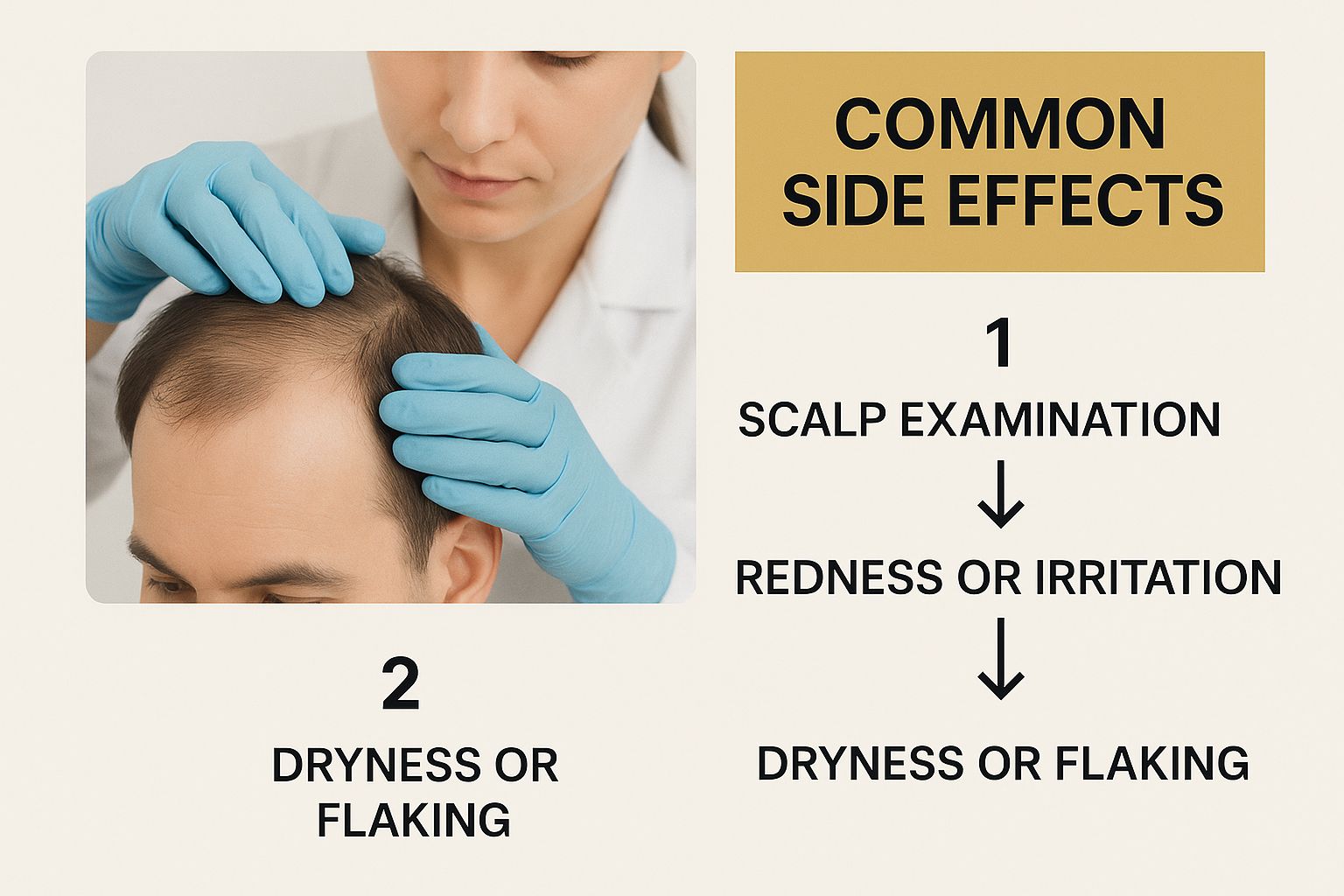
As you can see, the most typical reactions, like some mild tenderness on the scalp, are linked directly to the final, most important phase of the treatment.
Stage 3: The Scalp Injections
This is where the magic happens. Your concentrated PRP is carefully injected into the specific areas of your scalp that need it most—where the hair is thinning. These tiny micro-injections are precisely what kickstart the regenerative response.
It’s this final step that causes the most common side effects of PRP for hair, such as tenderness, a bit of swelling, and some redness. These aren't signs that something is wrong. In fact, they're positive signals that the growth factors have been delivered and are telling your body to get to work on repair and regrowth.
When you break it down like this, you can see that the effects are logical and expected. A potential bruise on your arm is from the blood draw, and any tenderness on your head is from the injections delivering that liquid gold right where it needs to be. It’s a simple cause-and-effect relationship that marks the true beginning of your hair restoration.
A Closer Look at Less Common PRP Side Effects
While most people sail through PRP treatments with nothing more than a bit of temporary soreness, it's smart to understand the full picture. Like any medical treatment, there are a few less common complications that can pop up, even though they're quite rare. Knowing about them helps you make a truly informed choice.
The main concerns, though infrequent, are things like infection, nerve irritation, or even scar tissue forming where the injections were made. These issues really highlight why it's so important to have your PRP done by a skilled medical professional in a genuinely sterile environment. The best way to sidestep these risks is through proper technique and impeccable hygiene.
The Strange Case of "Shock Hair Loss"
One of the most unsettling, yet usually temporary, side effects is something called "shock hair loss," or telogen effluvium. It can be a real shock (pun intended) to see a sudden increase in shedding a few weeks after your treatment.
It’s completely understandable to feel a jolt of panic if you see more hair in your brush after a procedure designed to do the exact opposite. But hang in there, because this is often a good sign. The jolt of stimulation from the PRP injections can push resting hair follicles to shed, clearing the way for new, healthier hairs to grow in their place.
Think of it like renovating a garden. You have to pull out the old, struggling plants before you can plant new, vibrant seeds. That temporary shedding is just the scalp making room for a better growth cycle to kick in.
This shedding phase isn't permanent. It's almost always followed by regrowth as those newly energized follicles switch into their active growth (anagen) phase.
Putting the Risks into Perspective
When you dig into the numbers, PRP's safety record is pretty impressive. The vast majority of side effects are mild and fade within a few days. Still, clinical studies have noted that about 5-10% of patients might experience that "shock hair loss," which is typically followed by the growth of thicker, improved hair. You can learn more about these specific findings on PRP side effects from Philadelphia Hair Restoration.
A Deeper Dive into Rare Complications
To give you a complete and honest overview, let's break down the infrequent but more serious potential issues.
- Infection Risk: Anytime you break the skin, there’s a tiny chance of infection. With PRP, this risk is extremely low—often quoted as less than 1%—as long as the procedure is done in a sterile setting with properly sterilized tools.
- Nerve or Blood Vessel Injury: In very rare instances, a needle could nick a tiny nerve or blood vessel. An experienced practitioner who knows scalp anatomy like the back of their hand can easily minimize this already small risk.
- Scar Tissue Formation: The needles for PRP are incredibly fine, which makes any noticeable scarring highly unlikely. It’s more of a theoretical possibility than something that happens in practice.
- Calcification at Injection Points: There have been a few reports of calcium deposits forming at the injection sites. These can feel like tiny, hard bumps under the skin.
At the end of the day, these less common side effects of PRP for hair are very rare. The single most important thing you can do to protect yourself is to choose a reputable, board-certified provider who follows strict medical protocols. That's your best insurance for a safe and successful outcome.
How to Ensure a Safe PRP Treatment

PRP is naturally a low-risk procedure—it uses your own blood, after all. But that doesn’t mean you can't be proactive in making it even safer. The steps you take before and after your session are important, but nothing tops the importance of choosing the right person to perform the treatment.
This isn't just another cosmetic service; it's a medical procedure. That’s why you should only trust a board-certified specialist who has extensive experience with PRP for hair loss. A skilled professional who understands scalp anatomy and sterile techniques inside and out is your best defense against the already low risks of infection or nerve irritation.
Vetting Your Provider
The consultation is your opportunity to really dig in and vet a potential clinic. Think of it as an interview—you're the one hiring them for a critical job. Don't be timid about asking direct questions about their experience and protocols.
To make sure you cover all your bases, walk into the consultation with a few key questions ready:
- Credentials and Experience: "Are you a board-certified dermatologist or plastic surgeon?" and "How many PRP hair treatments have you personally performed?"
- PRP System: "What specific system do you use to prepare the PRP?" Different systems produce different concentrations of platelets, which can affect results.
- Sterilization Protocols: "Could you explain your sterilization process for all the equipment you'll be using?"
- Anesthetic Options: "What do you offer for pain management?" Asking to see the ingredients is a smart move, especially if you have sensitive skin or allergies.
It also helps to be an informed patient. Understanding general injection safety practices gives you a baseline for what to expect from a high-quality clinic, not just for PRP but for any injectable treatment.
Pre-Treatment and Post-Treatment Care
Following your provider's instructions to the letter is just as crucial as picking the right clinic in the first place. Good preparation and solid aftercare are what really minimize the common side effects of PRP for hair and set the stage for great healing.
Think of pre- and post-treatment care as the bookends of your procedure. They secure the process, ensuring everything in between goes as smoothly as possible for the best results.
Your provider will give you a specific list, but here’s a look at what you can generally expect.
Before Your Treatment:
- Avoid Blood Thinners: You'll likely be asked to stop taking medications like ibuprofen and aspirin, along with supplements like fish oil and vitamin E, for about a week. This is a big one for reducing bruising.
- Stay Hydrated: Guzzling water in the 24 hours before your appointment is always a good idea.
- Clean Scalp: Show up to your appointment with a clean scalp, free of any hair products.
After Your Treatment:
- No Harsh Chemicals: Hold off on hair dyes, strong shampoos, or other chemical treatments for at least 72 hours.
- Limit Sun Exposure: Keep your scalp out of direct, intense sunlight for a few days to avoid irritation.
- Skip Strenuous Activity: Take a break from heavy workouts, saunas, and swimming for at least 48 hours. This helps keep swelling down and reduces any chance of infection.
By being picky about your provider and diligent with your own care, you’re putting yourself in the driver's seat for a safe and successful PRP journey.
What Clinical Data Reveals About PRP Safety

While personal stories and clinic experiences are helpful, the hard evidence from clinical studies gives us the clearest picture of PRP's safety. When we step back from individual anecdotes and look at large-scale data, we can see the real-world risks. This data-driven perspective offers solid reassurance by putting potential side effects into a statistical context.
When researchers pool the results from many different studies, a consistent theme emerges: serious complications are incredibly rare. These reviews focus on crunching the numbers to give us clear percentages, cutting through the noise to provide a balanced view of what patients can truly expect. The overwhelming conclusion? For most people, PRP is a remarkably low-risk procedure.
Quantifying the Most Common Reactions
Clinical data backs up what most patients experience firsthand—the most common side effects are minor and don't stick around for long. By combining data from multiple reviews, we see that temporary issues like mild swelling and scalp discomfort happen in a predictable range of 15% to 30% of people. Pain at the injection site is also common, reported in nearly 20% of cases, but it’s almost always described as mild and fleeting.
Crucially, these typical reactions usually disappear on their own within two to three days post-treatment. This timing lines up perfectly with the body's natural healing process, confirming that these effects are just a normal part of the regenerative journey. You can learn more about the statistical breakdown of PRP hair treatment side effects and see how these findings support its widespread use.
The Numbers on Serious Complications
So, what about the more serious concerns? This is where the clinical data is most reassuring. The numbers show that when proper medical protocols are followed, the risk of any significant issue drops dramatically.
The single most critical factor for ensuring safety is the clinical environment itself. Strict sterilization isn't just a recommendation; it's the foundation of a safe procedure, virtually eliminating the risk of infection.
Let's look at the statistics for these rarer events:
- Infection Rates: When a qualified professional performs PRP in a sterile setting, the rate of infection is exceptionally low, occurring in less than 1% of all procedures.
- Allergic Reactions: Because PRP uses your own blood, a true allergic reaction to the plasma is impossible. The only slight risk comes from other materials, like a topical anesthetic used to numb the scalp. Even then, documented cases of allergic reactions involve under 1% of all patients, highlighting why a thorough pre-treatment medical history is so important.
This hard data confirms that the side effects of PRP for hair are overwhelmingly mild and manageable. The evidence strongly supports its reputation as a safe and reliable option for tackling hair loss, provided it’s done right by an experienced medical professional.
Answering Your Top Questions About PRP Side Effects
When you're looking into any hair restoration treatment, you're bound to have questions. It's completely normal. Let's walk through some of the most common concerns people have about PRP, from what it actually feels like to who should (and shouldn't) get it. My goal here is to give you straightforward, honest answers so you can feel confident and informed.
Is PRP Hair Treatment Painful?
Most people I've worked with handle the treatment just fine. While we are talking about injections, it's important to remember the needles are incredibly fine—much smaller than what you'd see in a typical shot. To make things even more comfortable, we start by applying a topical numbing cream to your scalp, which really dulls the sensation.
Patients usually describe the feeling as a quick series of light pinpricks or maybe a tapping feeling. It’s not what most would call intensely painful. Afterwards, your scalp might feel a little sore, like a dull, lingering ache. This is easily handled with some over-the-counter Tylenol (acetaminophen). One critical point: you must avoid anti-inflammatory drugs like ibuprofen or aspirin. These can actually get in the way of the platelet activation process, which is the whole point of the treatment.
How Long Do PRP Side Effects Last?
The quick recovery is one of the best things about PRP. Those common side effects—a bit of redness, some minor swelling, and general tenderness on the scalp—are almost always temporary. You can expect them to clear up within 24 to 72 hours.
Honestly, most people are back to work and their normal routines the very next day. That said, to give your scalp the best possible healing environment, it’s smart to follow a few simple rules for the first couple of days.
- Hold Off on Heavy Workouts: Give it a 48-hour break from strenuous exercise. Getting your heart rate way up increases blood flow to the scalp and can make swelling a little worse.
- Skip the Sauna and Pool: You'll want to avoid saunas, steam rooms, and swimming for at least two days. This is just to keep the injection sites clean and minimize any risk of infection.
- Protect Your Head from the Sun: Try to keep your scalp out of direct, intense sunlight for a few days to avoid any unnecessary irritation.
Can I Have an Allergic Reaction to PRP?
This is a fantastic and important question. The short answer is that a true allergic reaction to your own platelet-rich plasma is practically impossible. Because the treatment uses your own blood, your body recognizes it. There's no foreign substance for it to reject or react to.
The extremely low risk of an allergic reaction doesn't come from the PRP itself. Instead, it might stem from other materials used during the appointment, like the topical numbing cream or the agents used to cleanse your scalp.
This is exactly why a detailed pre-treatment consultation is non-negotiable. By talking through your complete medical history and any known allergies, your provider can take the right precautions to make sure your treatment is as safe as it can be.
Who Is Not a Good Candidate for PRP?
While PRP is a great option for many people dealing with thinning hair, it's not a one-size-fits-all solution. Any responsible clinic will perform a thorough medical evaluation to make sure it's the right fit for you.
Generally, PRP isn't the best path forward for people with:
- Active Scalp Infections: Any infection on the scalp needs to be completely healed before starting treatment.
- Certain Skin or Blood Conditions: Individuals with autoimmune diseases that affect the scalp (like scalp lupus or lichen planopilaris), bleeding disorders, or clotting problems are typically not good candidates.
- Low Platelet Counts: The entire treatment hinges on concentrating platelets from your blood. If you have thrombocytopenia (a very low platelet count), you simply won't get the results you're looking for.
- Use of Blood Thinners: If you're on anticoagulant therapy, your provider may advise against the procedure because of a higher risk of bleeding and bruising.
Think of this comprehensive medical screening as the most important safety check. It's how your provider prevents adverse side effects and sets you up for a successful outcome.
At PRP For HairLoss, we believe that clear, honest information is the first step toward effective treatment. To learn more about male pattern baldness and your options, explore our resources at https://prpforhairloss.com.
 PRP For Hairloss
Leave a comment