Before you can even think about regrowing hair at your temples, you have to figure out why it's thinning in the first place. This isn't just a preliminary step; it's the most important one. The hair follicles around your temples are often the first to wave a white flag because they're uniquely sensitive. Getting to the root of the problem is what separates a strategy that works from one that just wastes your time and money.
Why Is My Temple Hair Thinning?
So, let's play detective. What's really going on with your hairline?
For most guys, the primary suspect is androgenetic alopecia, which is the clinical term for male pattern baldness. It’s written into your DNA. This condition makes the hair follicles at your temples and crown hypersensitive to a hormone called dihydrotestosterone, or DHT. Over the years, DHT bullies these follicles, causing them to shrink. The hair they produce gets progressively finer and shorter until, eventually, the follicle gives up for good. That classic M-shaped receding hairline? That’s DHT at work.
Beyond Genetics: The Lifestyle Factors
But it’s not always genetics. Sometimes, the cause is much more within our control, stemming directly from our daily habits.
One of the most common culprits I see, especially in both men and women who wear their hair up, is traction alopecia.
-
Traction Alopecia: This is purely mechanical hair loss. It's caused by constant, sustained pulling on the hair follicles. Think tight ponytails, man buns, sharp braids, or anything that pulls back hard on your hairline. Over time, this tension physically damages the follicles at the temples, causing them to thin out.
-
Chronic Stress: Never underestimate the impact of stress. A period of intense emotional or physical stress can trigger a condition called telogen effluvium, where a large chunk of your hair is prematurely shoved into the shedding phase. This often shows up as diffuse thinning, but it can be particularly noticeable at the temples.
It's also crucial to look at what's happening internally. An underlying nutritional deficiency can absolutely sabotage your hair health. If you're low on essentials like iron, zinc, biotin, or certain B vitamins, your body will divert those scarce resources to more critical functions, leaving your hair follicles undernourished and weak.
Here's the bottom line: You have to identify your specific trigger. Trying to fix genetic hair loss with a solution for traction alopecia is like using the wrong key for a lock. It just won't open the door.
The Bigger Picture
If you're dealing with this, you're in good company. The global market for hair growth treatments is massive—valued at around USD 7.74 billion and still climbing. You can dig into the specifics by checking out the hair growth industry market analysis on grandviewresearch.com. This isn't just a random statistic; it shows how many people are looking for the same answers you are.
Ultimately, getting honest about whether your temple thinning is due to your DNA, your hairstyle, or what's on your plate is the first real step you can take toward getting your hairline back.
Turning to Proven Topical and Oral Medications
When you've done all you can with diet and lifestyle adjustments but still aren't seeing the results you want at your temples, it's often time to bring in the heavy hitters. Medical treatments can offer a much more direct and powerful approach, targeting the specific biological pathways that cause hair to thin and fall out.
We're talking about waking those dormant follicles up. Two of the most common and clinically-backed players in this space are Minoxidil and Finasteride. They work in completely different ways, so knowing the difference is crucial before you talk to your doctor.
Minoxidil: The Go-To Over-The-Counter Solution
You've almost certainly heard of this one, probably by its household brand name, Rogaine. It’s a topical treatment—a foam or a liquid—that you apply right onto your scalp. Fun fact: it started as a blood pressure drug, and its hair-growing ability was a happy accident discovered during clinical trials.
Minoxidil is what we call a vasodilator, meaning it opens up blood vessels. When you apply it to your temples, it boosts blood flow to the hair follicles in that area. This rush of nutrient- and oxygen-rich blood can be just what's needed to nudge follicles out of their resting (telogen) phase and back into the active growth (anagen) phase.
If you're using it to fight temple recession, how you apply it is just as important as what it is.
- Be precise with it. Use the dropper or foam applicator to get it directly onto the thinning areas of your temples. A general scalp application won't be as effective for targeted loss.
- Don't skip days. You have to apply it consistently, usually twice a day, every single day. If you get lazy, you'll lose any ground you've gained.
- Patience is a must. You won't see changes overnight. It typically takes a solid 3-6 months to see real, noticeable growth, and those first new hairs might come in fine and wispy before they mature.
Finasteride: The Prescription-Strength DHT Blocker
While Minoxidil works on the outside, Finasteride (often sold as Propecia) gets to work from the inside. This is an oral pill, available only by prescription, that tackles the primary hormonal driver behind male pattern baldness.
Finasteride works by inhibiting an enzyme called 5-alpha-reductase. This enzyme's main job is to convert testosterone into dihydrotestosterone, or DHT—the hormone that is public enemy number one for hair follicles. By drastically cutting down DHT levels in your scalp, Finasteride stops follicles from shrinking and dying off. For many men, it not only halts hair loss but also helps regrow thicker, stronger hair.
Because it directly attacks the root genetic cause of hair loss, Finasteride is widely considered one of the most powerful tools for men hoping to restore their temple hairline and stop further recession. It's important to note, however, that it is generally not prescribed for women.
This isn't something you can just pick up; it requires a serious conversation with your doctor to weigh the benefits against the potential side effects. And just like Minoxidil, it's a long-term commitment. Stop taking it, and your hair loss will unfortunately pick up right where it left off.
To give your follicles an extra push, incorporating specialized tonics like a Kaminomoto Hair Growth Accelerator can complement these treatments well. When you combine these medical strategies with a healthy lifestyle, you're creating the strongest possible defense for restoring your hairline.
Advanced Procedures for Hairline Restoration
When you've tried all the lifestyle tweaks and topical treatments and your hairline still isn't where you want it to be, it might be time to look at more powerful clinical options. This is where we move from just managing hair loss to actively restoring it. These procedures, done in a professional setting, can make a real, lasting difference.
The demand for these kinds of solutions has exploded. The global hair restoration market was already worth USD 6.46 billion in 2023 and is expected to climb to nearly USD 18.92 billion by 2030. You can dig into the specifics by checking out the hair restoration market insights on grandviewresearch.com. This isn't just hype; that kind of growth happens for one simple reason: these treatments genuinely work.
Hair Transplant Surgery: FUE and FUT
For a permanent fix, nothing beats hair transplant surgery. It's truly the gold standard for restoring a hairline. The two main techniques you'll hear about are Follicular Unit Transplantation (FUT) and Follicular Unit Extraction (FUE).
-
Follicular Unit Transplantation (FUT): This is often called the "strip method." A surgeon removes a small strip of tissue, usually from the back of your head where hair is dense. Technicians then carefully separate individual hair follicles from that strip, getting them ready to be implanted into your temples.
-
Follicular Unit Extraction (FUE): With FUE, the surgeon extracts individual follicular units directly from the scalp, one by one, using a tiny punch tool. This method avoids the linear scar of FUT, making it a great option if you like to keep your hair short.
A good surgeon doesn't just move hair around. They meticulously rebuild your temple points, paying close attention to the angle, direction, and density to craft a hairline that looks completely natural. While both methods are effective, your doctor will help you decide which is a better fit based on your specific hair loss pattern and scalp condition.
Expert Insight: A successful hair transplant is as much an art as it is a science. The surgeon's real skill lies in creating a soft, slightly irregular hairline that blends perfectly. Don't be shy—ask to see before-and-after photos, especially of their work on temple points.
Platelet-Rich Plasma (PRP) Therapy
If surgery feels like too big of a step right now, Platelet-Rich Plasma (PRP) therapy is a fantastic, less invasive alternative. This treatment uses your own body's natural healing powers to wake up dormant hair follicles.
Here’s how it works:
- A small sample of your blood is drawn, just like a standard blood test.
- That blood is placed in a centrifuge, which spins it to concentrate the platelets into a "liquid gold" plasma rich in growth factors.
- This powerful PRP is then carefully injected into the thinning areas of your temples.
These growth factors act like a wake-up call for your follicles, boosting blood flow and kickstarting the growth of thicker, healthier hair. PRP is a great standalone treatment, but it's also commonly used to support and enhance the results of a hair transplant. Most people start with a series of sessions spaced a few weeks apart.
Comparing Hair Restoration Procedures
Trying to figure out which path is right for you can be confusing. FUE, FUT, and PRP are all effective, but they excel in different situations. This table breaks down the key differences to give you a clearer picture.
| Procedure | Best For | Invasiveness | Recovery Time | Typical Result Timeline |
|---|---|---|---|---|
| FUE | Permanent restoration, short hairstyles, smaller areas | Minimally invasive | 5-7 days | 6-12 months |
| FUT | Permanent restoration, extensive hair loss | More invasive (linear scar) | 10-14 days | 6-12 months |
| PRP | Thinning hair, early-stage loss, supporting transplants | Non-surgical (injections) | 1-2 days | 3-6 months |
Ultimately, the best choice depends on your degree of hair loss, your goals, and what you're comfortable with. A consultation with a specialist is the best way to get a personalized recommendation.
This infographic shows the recommended daily intake for key hair-healthy nutrients, which are crucial for supporting any advanced treatment you choose.
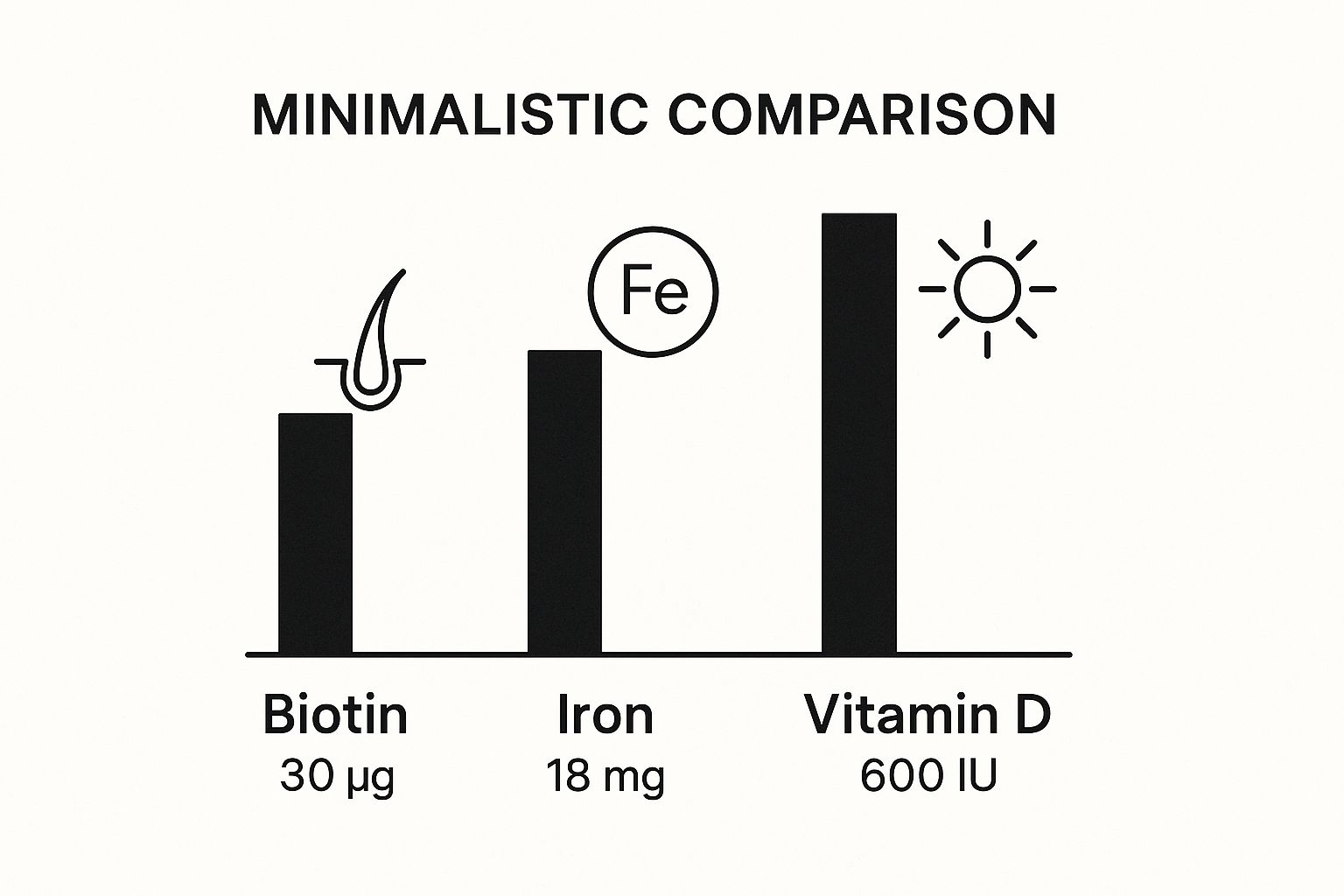
Think of good nutrition as the foundation. No matter which procedure you go with, giving your body the right building blocks is essential for getting the best possible results.
What You Eat Directly Impacts Hair Growth

While advanced procedures and topical treatments work on your scalp from the outside, your diet is what feeds your hair follicles from within. I often tell my clients to think of it like this: you can hire the best construction crew in the world (your treatment plan), but if you give them shoddy materials (a poor diet), the house they build will never be strong. It’s the exact same principle for regrowing hair, especially at the temples.
Your hair follicles are tiny, incredibly active factories. They're working around the clock and demand a steady stream of energy and nutrients to churn out healthy hair. When your body runs low on these key resources, it cleverly redirects them to vital organs, leaving hair growth on the back burner. This often results in weaker, thinner strands, particularly in sensitive areas like the temples.
The Must-Have Nutrients for Your Hairline
You don't need to overhaul your entire life, but focusing on a few specific vitamins and minerals can genuinely improve your hair quality. These aren’t just wellness buzzwords; they are the literal components your body uses in the hair production cycle.
A diet rich in these nutrients creates the ideal internal environment, giving your other temple-regrowth efforts the best possible chance to succeed.
-
Biotin (Vitamin B7): This is probably the most famous "hair vitamin," and for good reason. Biotin is essential for producing keratin, the protein that forms the structure of your hair. You'll find it in eggs, almonds, salmon, and avocados.
-
Iron: Iron deficiency is a notorious culprit behind hair shedding, specifically a condition called telogen effluvium. Iron helps your red blood cells carry oxygen, and without enough of it, your follicles are essentially starved of the fuel they need. You can boost your intake with lean red meat, spinach, and lentils.
-
Zinc: This mineral is a workhorse for hair tissue growth and repair. It also helps the oil glands around the follicles function properly. A lack of zinc can lead to a dry, flaky scalp and increased shedding. Oysters, beef, and pumpkin seeds are fantastic sources.
-
Vitamin D: Often called the "sunshine vitamin," Vitamin D can actually help create new follicles—the tiny pores where new hair can grow. Research has linked low Vitamin D levels to several forms of hair loss, including alopecia areata.
Expert Takeaway: You can't out-treat a bad diet. A consistent intake of these core nutrients is non-negotiable for anyone serious about restoring their hairline. It's the foundation upon which all other treatments are built.
Sorting Through the Supplement Aisle
Walking into the supplement aisle can be overwhelming. The sheer number of products promising thicker hair is a testament to how common nutritional deficiencies are. This is a massive industry for a reason—these deficiencies can absolutely accelerate thinning at the temples.
The hair growth supplement market was valued at around USD 8.24 billion and is projected to climb to nearly USD 14.92 billion by 2034. You can dig deeper into these figures and see more about the hair growth supplement market on precedenceresearch.com.
When you're evaluating supplements, my advice is to cut through the noise and look for formulas that contain the key players we just discussed: biotin, iron, and zinc. But remember, they are meant to supplement a healthy diet, not replace it. Before you start taking anything new, it's always a good idea to have a chat with your doctor. They can help you determine if you actually need it and ensure it won't interfere with any other medications you're on.
Lifestyle Habits for Healthier Temples
While targeted treatments are great for tackling hair loss head-on, your daily habits are what truly set the stage for success. Think of it like this: treatments plant the seeds, but your lifestyle prepares the soil. How you care for your hair and scalp every day is a huge—and often underestimated—piece of the puzzle when it's time to regrow your temple hair.
Simple, consistent actions can shield those delicate temple follicles from more damage while giving new growth a fighting chance. You’d be surprised how much of a difference small tweaks to your routine can make by cutting down on the physical and chemical stress your hairline endures.
Master a Gentle Hair Care Routine
One of the quickest wins is taking a hard look at the products you're using. So many shampoos on the shelf are loaded with harsh sulfates that literally strip your scalp of its natural, protective oils. This can leave you with an irritated scalp and much weaker hair strands.
Making the switch to a sulfate-free shampoo is a must. These formulas are far kinder, cleansing your hair without causing that damaging dryness and inflammation. This one simple swap helps maintain the hair you already have and creates a much healthier environment for new growth to emerge.
Now, let's talk styling. Constant heat from blow dryers and flat irons is a recipe for brittle, breakage-prone hair—and it’s always most obvious at the temples where hair is already thinner. Try to let your hair air dry as often as you can to give it a break from all that thermal stress.
Pro Tip from a Stylist: If you absolutely must use heat, never skip the heat protectant spray. It forms a crucial barrier between the hot tool and your hair, drastically cutting down on potential damage.
Avoid Damaging Hairstyles
How you wear your hair can be a direct cause of thinning at the temples. There's even a name for it: traction alopecia. This isn't a hormonal or genetic issue; it's purely mechanical, caused by constant, physical pulling on your hair follicles.
The main culprits are any styles that put your hairline under serious tension. Be especially careful with:
- Tight Ponytails or Buns: That slicked-back look you wear every day? It's a major stressor for the follicles at your temples.
- Sharp Braids or Cornrows: When woven too tightly, these styles can literally pull hairs out by the root over time.
- Heavy Hair Extensions: All that extra weight puts a constant strain on your natural hair, leading to gradual thinning where they're attached.
Honestly, the fix is straightforward: give your hairline a break. Go for looser styles that don’t yank on your temples. If you need to pull your hair back for work or a workout, just make sure it’s not uncomfortably tight, and let it down the moment you get home.
Manage Stress and Boost Blood Flow
It's no secret that chronic stress is a nightmare for your hair. When you're constantly stressed, your body pumps out the hormone cortisol, which can shove your hair follicles straight into the shedding phase.
Finding ways to manage that stress can have a direct, positive impact on your hair. It doesn't have to be complicated. We're talking about daily mindfulness, a regular jog or yoga session, or just making sure you're getting enough deep, restorative sleep.
You can also give your scalp a more hands-on boost. A daily scalp massage for just a few minutes is an amazing way to improve circulation. This brings more oxygen and vital nutrients right to the follicles where they're needed most. Just use your fingertips to make gentle, circular motions across your temples and scalp. It’s a small habit that feels great and can make a real difference.
Common Questions About Temple Hair Regrowth
Starting any hair restoration plan brings up a lot of questions. It's completely normal to feel a bit of hope mixed with a healthy dose of skepticism. Getting straight answers is the key to setting realistic expectations and staying committed to the process.
Let's dive into some of the most common questions I hear from people who are trying to reclaim their temple hairline.
How Long Does It Realistically Take to See Growth?
This is where patience becomes your greatest asset. I know you're putting in the work and want to see results yesterday, but hair growth happens on its own biological schedule. You just can't force it.
When you start using treatments like topical Minoxidil or oral Finasteride, you need to give it at least 3 to 6 months before expecting to see any real change. The very first signs of new growth are often tiny, wispy hairs—what we call "vellus" hairs. Over time, many of these will mature into the thicker, pigmented hairs you're looking for.
With a treatment like PRP, the timeline is similar. Most people begin to notice new growth around the 3-month mark, with the best results usually showing up after they've completed their initial series of sessions. Remember, this is a marathon, not a sprint.
Can Hair Grow Back After Years of Thinning?
This is the big one, and the honest answer is, "it depends." Everything hinges on whether the hair follicle is still alive.
If a follicle is just dormant—meaning it's stopped producing hair but is still viable—it can absolutely be coaxed back to life. This is where treatments like PRP and Minoxidil shine, as they provide the stimulus needed to wake that follicle up.
On the other hand, if a follicle has been inactive for many, many years due to advanced male or female pattern baldness, it may have scarred over and died. A dead follicle, unfortunately, cannot be revived. This is precisely why acting early is so important. The sooner you tackle thinning hair, the more follicles you can save.
My Favorite Analogy: Think of your follicles like seeds in a garden. If a seed is just dormant in the soil, you can give it water and fertilizer (like PRP) to make it sprout. But if the seed has dried up and died, no amount of care will bring it back.
Are Treatment Results Permanent?
This is a crucial point that can save you a lot of future frustration. When you're treating genetic hair loss, the results you achieve last only as long as you stick with the treatment. The underlying genetic cause doesn't just go away.
- Medications like Minoxidil and Finasteride: If you stop taking them, the hormonal effects of DHT will resume, and any hair you've managed to regrow will likely fall out within a few months. It's a long-term commitment.
- PRP Therapy: This isn't a one-and-done fix. To keep the benefits going, you'll need maintenance treatments, usually once or twice a year, to keep those follicles stimulated.
- Hair Transplants: This is the only method considered truly permanent. Surgeons transplant follicles from DHT-resistant areas (like the back of your head) to the temples. Because these follicles are genetically programmed to keep growing, they will do so for life, even in their new spot.
At PRP For HairLoss, our goal is to give you clear, honest information so you can make the best decisions for your hair. Platelet-Rich Plasma therapy stands out as a powerful, non-surgical option that uses your body's own natural growth factors to awaken dormant follicles.
To see how PRP could be part of your plan to restore your temple hairline, take a look at our resources over at https://prpforhairloss.com.
 PRP For Hairloss
Leave a comment