The Hidden Connection Between Your Mind And Your Hair
To grasp how anxiety can lead to hair loss, think of your hair follicles as countless tiny factories. Each one runs on a strict, three-phase cycle: growth, transition, and rest. In a healthy system, these factories are synchronized, ensuring that while some hairs naturally shed, most are in a state of active growth. When chronic anxiety enters the scene, it's like a disruptive new boss who throws the entire production schedule into disarray. This isn't just a metaphor; it's a biological process. The real question is not if anxiety causes hair loss, but how it manages to disrupt this system at a cellular level.
The main culprit is a hormonal chain reaction. When your brain senses a threat—whether it’s a real danger or just persistent worry—it signals the release of stress hormones, most notably cortisol. Cortisol acts as the body's emergency alarm system. While useful in short bursts, constant anxiety keeps this alarm ringing nonstop, overwhelming the entire system. Chronically high cortisol levels can prematurely push hair follicles from their growth phase (anagen) directly into the resting phase (telogen). As a result, a large number of your "hair factories" shut down production much earlier than they should, leading to noticeable, widespread shedding a few months later.
The Science Of Stress On Your Scalp
This flood of stress hormones doesn't just halt growth; it also fosters an unhealthy environment on your scalp. Here’s a closer look at what’s happening:
- Inflammatory Response: Long-term stress encourages inflammation throughout the body. On the scalp, this inflammation can directly damage hair follicles, weakening them and hindering the growth of new hair.
- Reduced Blood Flow: Anxiety can cause blood vessels to tighten, including the small capillaries that deliver oxygen and nutrients to your hair follicles. This is like cutting off the factory's supply lines, starving it of the essential materials needed to produce strong hair.
- Nutrient Diversion: When your body believes it's in a crisis, it redirects resources to functions critical for survival. Nutrients and energy are diverted away from "non-essential" processes like hair growth to support vital organs instead.
This biological link can create a frustrating and powerful cycle. Hair loss is a common issue worldwide, and ongoing stress is a known trigger. It can start new shedding episodes, particularly a condition called telogen effluvium, and make existing hair loss worse. This leads to a difficult situation where anxiety causes hair loss, and the sight of that hair loss then causes more anxiety.
From Anxious Thoughts To Physical Thinning
The path from a worried mind to thinning hair is a distinct biological reality, not just a theory. It highlights why managing mental health is a fundamental part of maintaining healthy hair. For a more detailed look into anxiety itself, this complete guide to anxiety offers insights into its symptoms and different relief methods. By understanding that anxiety can take over your body's hair production system, you can start to address the underlying cause and clear the way for recovery.
Decoding Your Hair Loss Pattern: Which Type Are You Facing?
Realizing that anxiety can cause hair loss is a major first step, but not all stress-induced shedding looks the same. The specific way your hair thins or falls out provides critical clues about the biological process happening beneath the surface. Identifying this pattern is essential because it points toward the most effective path to recovery. While the root trigger is anxiety, it can show up on your scalp in one of three main forms.
This infographic breaks down how anxiety triggers a hormonal chain reaction that disrupts the normal function of your hair follicles.
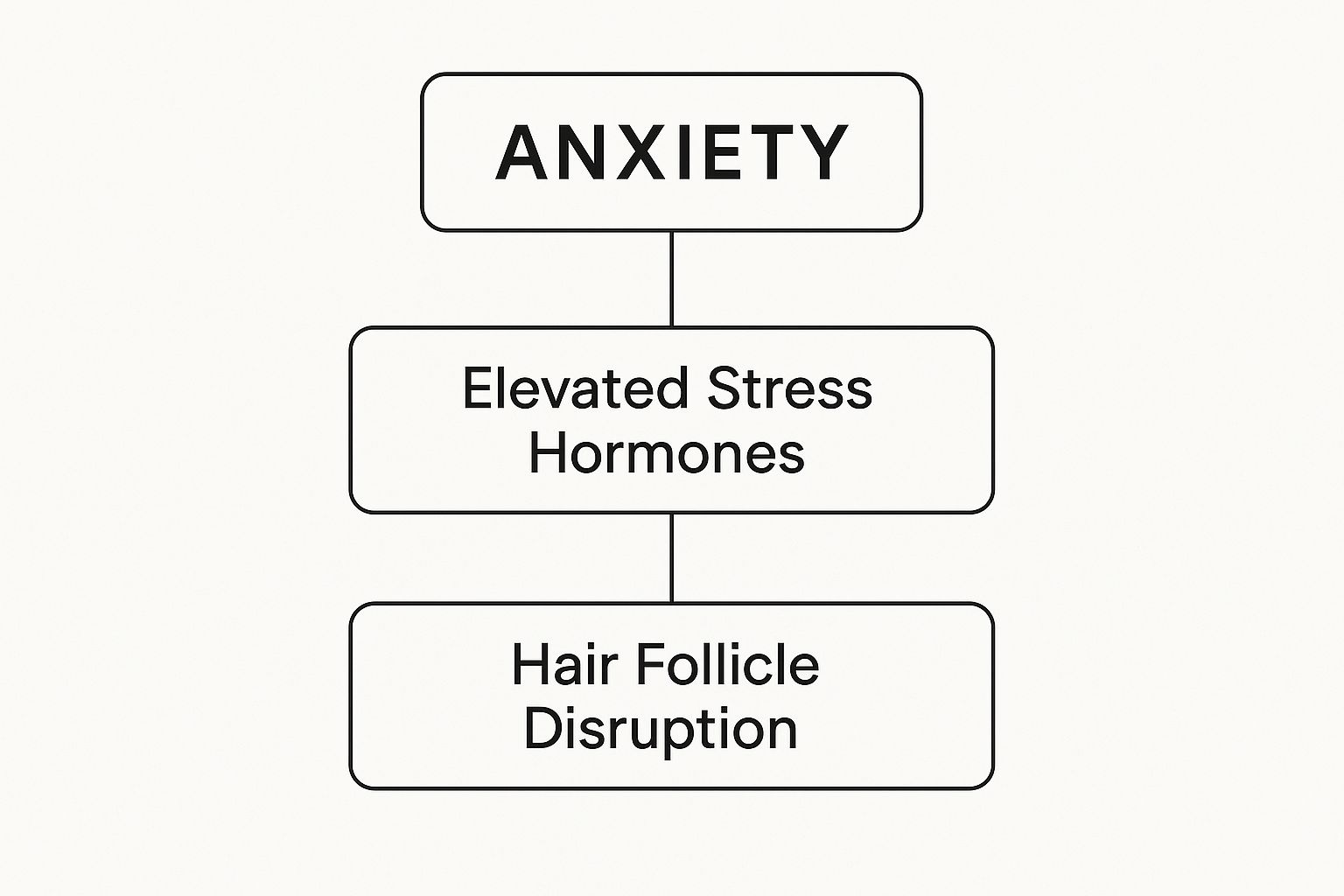
As you can see, the mental state of anxiety is the starting point for a very real, physical cascade that ends with visible hair loss.
The Three Faces Of Anxiety-Induced Hair Loss
Understanding these distinct conditions can demystify what’s happening to your hair and empower you to find the right support.
Telogen Effluvium (TE): The Delayed Shed
This is the most frequent type of stress-related hair loss. Picture it as a mass, premature retirement of your hair follicles. A significant emotional or physical stressor—like a period of intense anxiety—can shock a large number of follicles, signaling them to switch from their active growth phase (anagen) to a resting phase (telogen).
The catch? This shift isn't immediate. The hair stays in the follicle for about 2 to 3 months before it finally sheds. This time lag is why many people don't connect their hair loss to a stressful event that happened months earlier. The key sign of TE is diffuse thinning across the entire scalp, not concentrated bald spots.
Alopecia Areata (AA): The Autoimmune Response
In contrast to the widespread thinning of TE, alopecia areata (AA) usually shows up as one or more round, smooth, and completely bald patches on the scalp or body. Here, it’s believed that severe stress triggers an autoimmune reaction where the body’s own immune system mistakenly attacks healthy hair follicles. It's a direct and aggressive assault that leads to rapid, patchy hair loss that can seem to appear almost overnight.
This condition has a strong, documented connection to mental health. In fact, a major 2022 analysis confirmed that people with alopecia areata are much more likely to report symptoms of anxiety and depression. You can read the full research about these findings for a deeper look into the science.
Trichotillomania: The Compulsive Pull
This condition stands apart because the hair loss is self-inflicted, but it's deeply connected to anxiety and stress. Trichotillomania is an impulse-control disorder defined by a repetitive, powerful urge to pull out one's own hair from the scalp, eyebrows, or other body areas.
For many, the physical act of pulling provides a brief sense of relief or a distraction from overwhelming feelings of anxiety. This behavior results in patchy bald spots and broken hairs of different lengths, creating an irregular pattern unlike TE or AA. It's a challenging condition where anxiety fuels a behavior that directly causes hair loss, creating a difficult cycle.
To help clarify the differences between these conditions, the table below provides a side-by-side comparison of their key features.
| Type | Pattern | Timeline | Triggers | Recovery Rate |
|---|---|---|---|---|
| Telogen Effluvium (TE) | Diffuse, all-over thinning; no bald patches | Hair sheds 2-3 months after a stressful event | Intense emotional or physiological stress | High, typically resolves once the trigger is removed |
| Alopecia Areata (AA) | Round, smooth, completely bald patches | Can appear suddenly and rapidly | Severe stress triggers an autoimmune attack | Varies; can regrow on its own or with treatment, but may recur |
| Trichotillomania | Irregular patches with broken hairs of varying lengths | Ongoing, linked to episodes of stress or anxiety | The compulsive urge to pull hair as a coping mechanism | High, but requires addressing the underlying psychological trigger |
Types of Anxiety-Related Hair Loss Comparison
A detailed comparison of the three main types of anxiety-related hair loss, including symptoms, timeline, and recovery potential
This table highlights how the same underlying cause—anxiety—can lead to very different outcomes on the scalp. Recognizing your specific pattern, from the delayed shedding of TE to the targeted patches of AA or the behavioral pattern of Trichotillomania, is the first step in creating a targeted plan for recovery.
Breaking The Vicious Cycle That Keeps You Stuck

The relationship between anxiety and hair loss is a frustrating one because it often creates a self-sustaining loop. It might start with a simple moment of dread—noticing more hair than usual on your pillow or in the shower drain. This discovery can trigger a wave of anxiety, which then activates the very biological responses that can cause more hair to fall out. Before you know it, you're caught in a feedback cycle where the symptom and the cause feed each other.
This isn't just a minor concern; it's a psychological spiral. What begins as a worry can grow into obsessive habits, such as constantly checking your reflection, taking daily photos to document any thinning, or even avoiding social events due to fear of being judged. Well-meaning advice to "just relax" often makes things worse by downplaying the real physical and emotional distress you're feeling. It's like telling someone whose car is skidding on ice to "just drive straight"—it ignores the fundamental lack of control.
The Emotional Impact And The Path Forward
The connection between these conditions is so strong that it has become a key area of medical research. The question of can anxiety cause hair loss is well-established, and its psychological toll is deep. A 2025 meta-analysis highlighted just how interconnected they are, reporting that the event rate for anxiety disorder in alopecia patients was 0.47. This means that almost half of the individuals dealing with hair loss are also navigating a clinical anxiety disorder. You can discover more insights about these findings on hair loss and anxiety to grasp the full scope of this issue.
Escaping this cycle requires a two-part strategy: managing the physical symptoms of hair loss while also addressing the emotional turmoil. This is where specific interventions become crucial. To effectively interrupt the loop, adding relaxation practices like candle yoga relaxation techniques to your daily routine can be a helpful step. These methods do more than quiet the mind; they help regulate your nervous system, which can lower the cortisol levels that may be contributing to the hair loss.
Why Recovery Journeys Differ
It’s important to recognize why some people seem to recover from stress-related hair loss relatively quickly, while for others, the struggle can last for months or years. A few key factors shape this experience:
- Personality Type: People who are naturally more inclined toward worry or perfectionism may find it more difficult to separate themselves from the anxiety tied to their hair loss.
- Life Circumstances: Continuous stressors, such as a high-pressure job, financial worries, or relationship difficulties, can keep the body’s overall stress levels elevated.
- Support Systems: Having a solid network of understanding friends, family, or a professional therapist can make a world of difference in managing the emotional burden of hair loss.
By understanding these elements, you can start to see which ones might be influencing your situation. Acknowledging the cycle is the first step. The next is to take intentional actions—both mentally and physically—to break it, which paves the way for both emotional well-being and hair recovery.
Spotting The Warning Signs Before Things Get Worse
Anxiety-induced hair loss rarely appears overnight as a fully formed bald patch. Instead, it begins with subtle shifts and whispers from your body that are all too easy to dismiss. Learning to recognize these early warnings is crucial because it allows you to step in before the problem gathers speed. The question isn't just "can anxiety cause hair loss?" but "what does it look like when it starts?" This awareness gives you the power to break the cycle much sooner.
The first signals are often physical and can show up weeks before any noticeable thinning. Many people report a strange scalp tenderness or a prickly, crawling sensation. This isn't just in your head; it can be a real sign of the inflammation that stress hormones trigger around your hair follicles. Another early clue is a change in your hair's texture. Hair that once felt strong might suddenly seem finer, weaker, or more brittle, indicating your follicles are under duress and not getting the nutrients they need.
Physical and Behavioral Red Flags
Beyond sensations, it's important to look for tangible changes in your daily routine. It's easy to write off a bit more hair on your brush as a fluke, but consistent, increased shedding is a primary symptom. A useful, though not perfectly scientific, self-check is the hair pull test. Gently take a small section of about 50-60 hairs between your thumb and forefinger and pull firmly but slowly from the scalp to the ends. If more than 5-8 hairs come loose, it could be a sign of active shedding.
The physical signs are only half of the story. The behavioral and emotional red flags are just as important and often surface first. These are the clues that your anxiety is reaching a point where it might start to impact your physical health, including your hair.
Here is a checklist of common warning signs to look out for:
- Obsessive Monitoring: You find yourself constantly checking your hairline in mirrors, taking daily photos of your scalp, or analyzing every hair left on your pillow.
- Disrupted Sleep: Chronic anxiety often meddles with sleep. A lack of restorative rest directly affects your body’s ability to repair and grow cells, including the ones in your hair follicles.
- Increased Grooming Anxiety: You start to feel a sense of dread when it's time to wash, brush, or style your hair, fearing how much will fall out.
- Social Avoidance: You start wearing hats more often, even inside, or begin declining social invitations because you feel self-conscious about your hair.
These behaviors are signals that anxiety is becoming a more dominant force in your life. Recognizing this pattern is the first and most critical step. By spotting these early warnings—both on your scalp and in your mind—you can take action to manage the underlying stress before it leads to more significant hair loss.
Your Complete Treatment Toolkit: From Simple To Advanced

Successfully addressing anxiety-related hair loss requires a two-front approach: you need to manage the mental stress that triggers the issue while also encouraging physical recovery on your scalp. A smart plan begins with practical lifestyle adjustments and scales up to advanced medical options if needed. This integrated method ensures you’re treating both the root cause and the visible symptom, giving your hair the best chance to regrow.
Starting with Stress Management and Scalp Health
Before jumping to medical treatments, it's essential to build a solid foundation of stress reduction and dedicated scalp care. Vague advice like "just relax" isn't practical, but specific strategies can make a significant impact. The main goal is to lower the stress hormones that are prematurely pushing your hair follicles into their resting phase.
- Scalp-Focused Routines: Gently massaging your scalp can improve blood flow, delivering essential oxygen and nutrients directly to the follicles. Combine this with a good cleansing habit. It's a myth that frequent washing causes hair loss; in reality, it removes oil and dead skin buildup that can clog follicles and hinder growth.
- Hair-Healthy Exercise: Activities like yoga, tai chi, and brisk walking are fantastic for lowering cortisol levels. These forms of exercise help regulate the nervous system, directly fighting the body's stress response that contributes to hair thinning.
- Targeted Nutrition: Your hair follicles are built from the foods you eat. Make sure your diet is rich in iron, zinc, biotin, and protein. When your body is under stress, it often diverts these key nutrients away from non-essential functions like hair growth, making a nutrient-dense diet even more important.
Medical Interventions: From Topicals to PRP
When lifestyle changes alone aren't enough, medical treatments can give your dormant hair follicles the nudge they need to wake up. Understanding how each one functions is key to picking the right one for your specific needs.
Topical Minoxidil: This is often the first medical treatment people try. Minoxidil works by extending the hair's growth (anagen) phase and increasing blood flow to the follicles. As an over-the-counter product, it can be quite effective for telogen effluvium, the type of hair loss most commonly linked to anxiety. Consistency is everything, as visible results can take several months, and stopping the treatment will likely reverse any progress.
Platelet-Rich Plasma (PRP) Therapy: This is a more advanced procedure that uses your body's own healing powers to trigger hair regrowth. The process starts with a simple blood draw. The blood is then placed in a centrifuge to separate and concentrate the platelets, creating a powerful plasma. This platelet-rich plasma is injected back into your scalp, where it releases growth factors that act like a potent signal for dormant follicles to start growing again. PRP is particularly promising for stress-related hair loss because it directly improves follicle health. To discover more about how this treatment can support your journey, connect with our specialists at PRP for Hairloss.
To help you weigh your options, the table below provides a clear comparison of different treatment paths.
Table: Hair Loss Treatment Options Effectiveness
Comprehensive comparison of treatment effectiveness, timeline, and success rates for anxiety-related hair loss
| Treatment Type | Success Rate | Timeline | Cost Range | Best For |
|---|---|---|---|---|
| Stress Management | Moderate | 3-6 months | Low | Mild, early-stage telogen effluvium |
| Topical Minoxidil (5%) | Moderate | 6-12 months | Low to Moderate | Ongoing telogen effluvium |
| PRP Therapy | High | 3-6 months | High | Stubborn telogen effluvium, early androgenic alopecia |
| Prescription Medication | High | 6-12 months | Moderate | Severe anxiety disorders with hair loss |
This comparison highlights that while lifestyle changes are fundamental, treatments like PRP offer a higher success rate for more persistent cases of hair loss.
Coordinating Professional Care
Ultimately, the best strategy often involves a team of experts. A dermatologist can provide an accurate diagnosis of your hair loss type and recommend medical treatments such as PRP. At the same time, a mental health professional can equip you with tools like cognitive-behavioral therapy (CBT) to manage the underlying anxiety. Coordinating care between these two specialists creates a supportive and effective plan, ensuring you're fully equipped to achieve lasting recovery.
PRP Therapy: Your Body's Own Hair Growth Solution
When lifestyle changes aren't enough to restart the hair growth cycle stalled by anxiety, more advanced treatments can provide a direct and powerful boost. Among these, Platelet-Rich Plasma (PRP) therapy is a notable procedure because it uses your body's own biological material to refresh the scalp. Think of it as dispatching a highly concentrated team of your own personal repair workers straight to the struggling hair follicles.
The idea behind PRP is both straightforward and clever. It begins with a simple blood draw, much like you'd have at a routine check-up. This blood sample is then placed in a centrifuge, a machine that spins at very high speeds to separate the blood into its different parts. This process isolates and concentrates the platelets—the tiny cells in your blood responsible for healing and regeneration—into a golden, liquid plasma filled with potent growth factors.
The Journey of a PRP Treatment
Once this platelet-rich plasma is ready, the treatment itself is quite simple. A medical professional uses a very fine needle to inject the solution into specific areas of your scalp where hair has thinned. The entire procedure is usually quick, often taking less than an hour. These injections send a strong signal to the scalp, basically telling dormant follicles that it's time to wake up and get back to growing.
The growth factors released by the platelets have several key jobs in fighting stress-related hair loss:
- They stimulate the stem cells inside hair follicles, helping to push them from the resting (telogen) phase back into the active growth (anagen) phase.
- They encourage the creation of new blood vessels around the follicles, which improves the flow of oxygen and essential nutrients.
- They can help calm the scalp inflammation that often comes with chronic anxiety, creating a better environment for hair to grow.
What to Expect: Timeline, Results, and Finding a Provider
PRP therapy is not a one-and-done solution. A standard treatment plan starts with a series of sessions, typically scheduled about a month apart for 3 to 4 months. After this initial phase, maintenance treatments are usually recommended every 6 to 12 months. Patience is crucial, as it takes time for the hair growth cycle to respond. Most people first notice improvements in hair texture and less shedding within a few months, with more substantial new growth appearing around the 6-month mark.
Since PRP uses your own blood, the risk of allergic reactions or major side effects is incredibly low. The most common issues are temporary soreness, slight swelling, or minor bruising where the injections were made. Cost can be a major consideration, as the procedure is not typically covered by insurance. However, for those with persistent thinning linked to anxiety, its ability to directly support follicle health makes it a strong option.
Choosing the right provider is critical for both safety and results. Look for a licensed medical professional, like a dermatologist or a hair restoration specialist, who has solid experience with PRP for hair loss. Before you decide, be sure to ask important questions about their methods, look at before-and-after photos of their patients, and make sure they offer a clear treatment plan designed for your specific needs. This helps ensure you are making a well-informed choice for your hair recovery.
Your Roadmap To Recovery: Making Progress That Lasts
Recovering from anxiety-induced hair loss isn't a quick fix; it's more like nurturing a garden back to health. It requires patience, the right approach, and the understanding that real growth takes time. The goal isn't just to stop hair from shedding, but to build lasting resilience for both your mind and your hair. A solid action plan works in stages, moving from immediate damage control to encouraging regrowth and, finally, long-term maintenance.
Navigating this journey means learning to track your progress without becoming obsessed with daily results. It also involves knowing when to adjust your strategy based on what works for you, all while staying motivated through the naturally slow process of hair regrowth.
The Phases of a Successful Recovery Plan
Think of your recovery in three distinct stages, each with a specific focus. This phased approach helps set realistic expectations and prevents you from feeling overwhelmed.
Phase 1: Immediate Stabilization (Weeks 1-4)
The main goal here is to calm the storm and reduce the immediate factors causing hair loss. You won't see new hair yet; this phase is about creating a healthy foundation for your scalp.
- Stress Management Kickstart: Start a daily stress-reduction practice. This could be 10 minutes of mindfulness meditation, some gentle yoga, or a few deep breathing exercises. The idea is to lower the cortisol levels that are keeping your hair follicles in a resting, or “shedding,” state.
- Scalp Care Basics: Adopt a gentle but effective cleansing routine. A scalp with excess oil or buildup can block new hair from growing. Washing your hair regularly does not cause more loss—it actually clears the way for healthy growth.
Phase 2: Active Treatment and Regrowth (Months 2-6)
Once the initial stress is better managed, the focus shifts to waking up dormant hair follicles and encouraging them to re-enter their growth phase.
- Introduce Targeted Treatments: This is when you might consider options like topical minoxidil or more advanced therapies like PRP (Platelet-Rich Plasma). A consultation with a dermatologist is crucial here to determine the best path forward based on your specific situation.
- Nutritional Support: Make sure your diet is rich in nutrients that support hair health, such as iron, zinc, and protein. Stress can deplete these resources, so it's important to consciously replenish them.
Phase 3: Maintenance and Prevention (Month 6 Onward)
After you start seeing positive changes, the final step is to keep up the momentum and prevent future episodes of stress-related hair loss.
- Sustain Your Habits: The stress management techniques you started in Phase 1 should now be a regular part of your life.
- Monitor and Adapt: Keep a gentle eye on your stress levels and scalp health. If you notice the early signs of shedding returning, you can now take action before it becomes a major issue.
Tracking Progress Without the Obsession
It's completely normal to want immediate results, but hair grows slowly—about half an inch per month on average. Constantly checking the mirror for new growth can actually increase your anxiety, which is the very problem you're trying to solve. Instead, try a more measured approach:
- Monthly Photos: Take pictures of your scalp once a month. Use the same angles and lighting each time. This gives you a more objective view of your progress without the daily stress.
- Focus on Feelings: Pay attention to how you feel. Are you sleeping better? Do you feel less anxious? Improvements in these areas are often the first signs that your hair health will soon follow.
Setbacks can happen, and they are a normal part of the process. A particularly stressful week might lead to a temporary increase in shedding, but it doesn’t mean you've lost all your progress. Acknowledge it, return to your stress management plan, and trust that you are still on the right path.
If you want to support your recovery with a powerful, targeted treatment, our specialists can help you decide if PRP is the right fit for you. Explore your options and get expert guidance by learning more at PRP for Hairloss to build your personalized recovery plan.
 PRP For Hairloss
Leave a comment