The Truth Behind Exercise and Hair Loss Fears
Let's clear the air about a common worry in the fitness world: does exercise cause hair loss? It's a question that echoes in locker rooms and online forums. You’ve put in the work, you feel healthier and stronger, but then a look in the mirror brings up that nagging fear about your hairline. This feeling, where your health goals seem to clash with your hair goals, is a real source of anxiety for many men.
Deconstructing the Core Concern
This concern isn't just a random thought; it’s based on a simplified line of thinking. The popular theory goes like this: exercise increases testosterone, and testosterone is a known factor in male pattern baldness. It seems logical on the surface, but this connection is a classic case of missing the bigger picture and has led to a widely believed myth.
Here's a key principle to remember: correlation is not causation. Seeing a very fit person with thinning hair doesn't automatically mean their workout routine is the cause. Countless other factors, with genetics being the primary driver of hair loss, play a much larger role. The real story is far more interesting and involves how your body handles hormones, stress, and circulation. First, let’s focus on what exercise actually does for your scalp.
How Exercise Actually Feeds Your Follicles
Far from being the villain, regular exercise is more like a supportive partner for your hair. Think about what happens when you work out: your heart pumps faster, and blood flow increases everywhere, including your scalp. This boost in circulation acts like an express delivery service, rushing oxygen and essential nutrients straight to your hair follicles—the small but mighty factories that produce every strand of hair. You can find more information by exploring the connection between exercise and hair health.
This improved blood flow creates a healthier environment for hair growth. Specifically, it means:
- A boost in oxygen: Better blood flow delivers more oxygen, which fuels the cellular activity inside the follicle.
- More nutrients on demand: Your follicles get a richer supply of the building blocks needed to construct strong, healthy hair.
- Stronger, more resilient follicles: A well-fed follicle is a happy follicle, better able to sustain healthy growth cycles.
- A healthier scalp foundation: Ultimately, a well-nourished scalp is your best defense for maintaining a full head of hair.
How Exercise Really Affects Your Hormones and Hair
The connection between your gym routine and your hairline is a hotbed for myths. To get to the truth, we need to look past the locker-room talk and into the complex hormonal symphony that plays out in your body every time you work out. Understanding these changes is the key to separating fitness facts from hair-related fiction.
This visual breakdown shows the immediate hormonal response your body can have during a bout of high-intensity training.
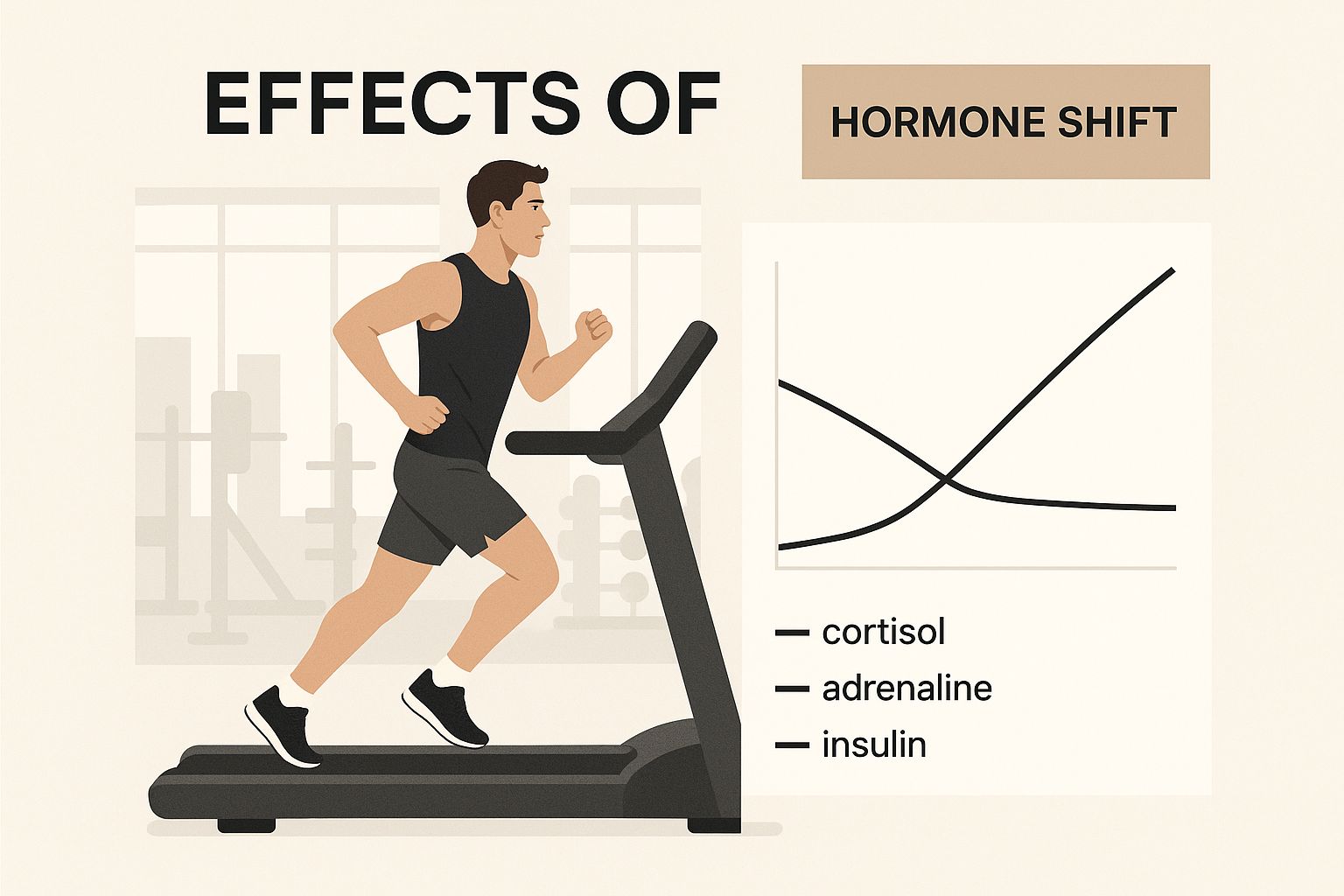
While this snapshot shows a flurry of activity, it's only one piece of a much larger puzzle.
The Testosterone to DHT Connection
This is where the concern for most men begins. During and after a workout, your body can see a temporary rise in testosterone. An enzyme called 5-alpha reductase then gets to work, converting a small amount of that testosterone into a much more potent androgen: DHT (dihydrotestosterone).
For men with a genetic sensitivity to androgenetic alopecia (male pattern baldness), DHT is the main culprit. Think of it like a lock and key. Your genes determine if your hair follicles have the "lock" that DHT's "key" can fit into. If it fits, DHT binds to the follicle and, over time, causes it to shrink and stop producing healthy hair—a process called miniaturization. If you don't have the genetic lock, a slight increase in DHT won't make a difference.
The fear that a single workout can trigger this process is often blown out of proportion. While some research, like a 2008 study, noted that vigorous exercise could increase DHT levels, it's not proven that this temporary bump directly speeds up hair loss. Discover more insights on this topic to see the full picture.
To better understand how this plays out in the real world, the table below compares how different exercise intensities can influence your hormones.
Exercise Intensity and Hormonal Impact Comparison
A comparison of how different exercise intensities affect hormone levels and their potential relationship to hair health
| Exercise Type | Intensity Level | Hormonal Changes | Hair Health Impact | Research Findings |
|---|---|---|---|---|
| Strength Training (e.g., Weightlifting) | High | Causes a short-term spike in testosterone and DHT that returns to baseline within hours. | Minimal and temporary. Unlikely to cause hair loss unless a very strong genetic predisposition exists. | Studies confirm brief testosterone increases post-workout, but a direct link to accelerated hair loss remains unproven. |
| Endurance/Cardio (e.g., Running, Cycling) | Moderate to High | Can slightly raise testosterone but is more notable for lowering chronic cortisol (the stress hormone). | Potentially positive due to improved circulation and stress reduction. Any negative DHT impact is likely negligible. | Consistently associated with better stress management, which is beneficial for overall health and can support hair retention. |
| Low-Intensity Exercise (e.g., Walking, Yoga) | Low | Has minimal impact on testosterone/DHT. Its primary effect is reducing the stress hormone cortisol. | Highly beneficial. Reduces stress and improves blood flow to the scalp without significant androgen spikes. | Widely recognized for stress-reducing benefits that can indirectly help protect against certain types of hair shedding. |
As the table shows, the type of workout you do matters, but the overall hormonal changes are generally not a cause for alarm.
Workout Type and Hormonal Shifts
Not all exercise impacts your hormones in the same way. The intensity and style of your training dictate your body's specific response, a detail that broad statements like "exercise causes hair loss" completely miss.
-
Strength Training: Heavy resistance workouts like lifting weights are known to create a short-term spike in testosterone right after your session. However, this increase is very brief, and your levels typically return to normal within a few hours.
-
Endurance and Cardio: Activities like long-distance running or cycling can also raise testosterone, but their more significant benefit is often in managing cortisol, the body's main stress hormone. Chronic stress is a known contributor to hair shedding, so keeping cortisol in check is a major win for your hair.
For more information on how different fitness routines can influence your body, this general guide to Exercise provides a useful overview.
The most important thing to remember is that these hormonal shifts are small and temporary. For the vast majority of men, they aren't nearly powerful enough to be the primary driver of hair loss. Your genetic programming remains the single most important factor in determining the future of your hairline.
Why Exercise Intensity Matters More Than You Think
While the type of workout you do certainly plays a part, the intensity of your effort might be the real game-changer in the does exercise cause hair loss debate. It’s not as simple as labeling certain workouts "good" and others "bad." Your body's response to a gentle stroll is vastly different from its reaction to an all-out sprint.
This relationship between effort and effect challenges many common beliefs. The goal isn't to avoid hard work but to find a balance that boosts your fitness without putting too much strain on the systems that support hair growth. Viewing exercise intensity as a spectrum helps clarify how it can affect your follicles.
The Low-Intensity Paradox
You might assume that men worried about their hair would naturally gravitate toward gentler exercise, and you'd be right. A notable 2017 study observed that men already experiencing androgenic alopecia were more inclined to stick with low-intensity workouts.
However, the study uncovered something surprising: it found no significant link between moderate or high-intensity exercise and increased hair loss. This key finding pushes back against the idea that you need to take it easy at the gym to protect your hair. Find more details on this study's findings.
How Vigorous Exercise Can Be Protective
This brings us to an unexpected conclusion: pushing yourself harder might actually help protect your hair. While it's true that intense sessions like heavy weightlifting can cause a temporary spike in hormones, the long-term effects on your body are overwhelmingly positive. Some believe that exercise's impact on hormones, including testosterone, can indirectly influence hair health. You can read more about whether training legs increases testosterone to explore this specific connection.
Beyond hormones, higher-intensity training activates several protective mechanisms for your body and hair:
- Superior Blood Flow: Vigorous activity works like a high-powered pump, sending a rush of oxygen and nutrients to your scalp to nourish hair follicles.
- Enhanced Stress Resilience: It trains your body to become more efficient at managing cortisol, the stress hormone known to contribute to hair shedding.
- Boosted Antioxidant Systems: Regular intense exercise strengthens your body's natural defenses against oxidative stress, which can harm hair follicles over time.
Ultimately, the profound benefits of improved circulation and stress reduction from vigorous exercise often outweigh any minor, temporary hormonal fluctuations.
The Plot Twist: Exercise as Your Hair's Secret Weapon
It’s a common worry, but the reality is that your workout routine is more likely a powerful ally for your hair than an enemy. While the hormonal impact of exercise is a valid consideration, the overwhelmingly positive effects often create a robust internal environment where hair can thrive. Think of exercise as building a behind-the-scenes support system for every single follicle on your head.
The Nutrient Superhighway: Boosting Circulation
Imagine your circulatory system as a vast highway network. Moderate, regular exercise acts like a major infrastructure upgrade, improving traffic flow to even the most remote destinations—like the tiny blood vessels in your scalp. This enhanced blood flow means your hair follicles get a first-class delivery of oxygen and nutrients, the very building blocks they need to construct strong, healthy hair.
The blood vessels at the base of each follicle are its direct lifeline. Improved circulation from exercise ensures this lifeline is pumping at full capacity, feeding the follicle what it needs to anchor the hair firmly and build it stronger from the root. This is one of the most direct and powerful ways fitness supports your hair.
Taming the Silent Hair Killer: Stress
Exercise is also one of the most effective ways to combat chronic stress. When you're constantly stressed, your body produces high levels of cortisol, the primary stress hormone. Persistently high cortisol can signal your hair follicles to enter a premature resting phase, leading to a type of diffuse shedding known as telogen effluvium.
A good workout acts as a natural pressure-release valve, helping your body regulate cortisol and quiet the physiological alarm bells that can disrupt your hair's growth cycle. This stress-busting benefit is a huge reason why the answer to the question does exercise cause hair loss is, for most people, a clear and definite no.
Your Body's Natural Defense Force
Finally, consistent physical activity strengthens your body’s own cellular protection system. Exercise prompts an adaptive response that makes your body more efficient at producing its own antioxidants. These compounds are essential for neutralizing oxidative stress—a form of cellular damage caused by unstable molecules that can harm the delicate cells in your hair follicles.
Think of it as training your body’s internal repair crew to be faster and more effective. By boosting circulation, reducing stress hormones, and reinforcing your natural antioxidant defenses, a smart fitness routine creates a profoundly supportive environment for hair health. The combination of these benefits makes a strong case that exercise is far more likely to help your hair than to harm it.
Your Science-Based Exercise Plan for Healthy Hair

Knowing that exercise is generally a friend to your follicles is one thing, but turning that knowledge into a practical gym routine is another. The goal is to move beyond general advice and create a specific plan grounded in evidence. It’s about applying what research tells us to build a routine that maximizes the positives for your hair while steering clear of potential negatives.
Finding the Exercise Sweet Spot
Think of exercise for your hair like watering a plant. Too little water and the plant withers; too much, and you risk drowning the roots. There’s an optimal range—a “sweet spot”—for your workout duration and intensity that delivers the most benefits for hair health. The objective is to be active in a way that creates a thriving environment for your scalp.
Fortunately, research gives us a clear roadmap. A key study on men with androgenic alopecia (AGA) discovered that certain exercise habits made a tangible difference. The findings showed that engaging in aerobic activities or exercising for more than 60 minutes per session helped slow the progression of AGA and even improve its symptoms. This points to sustained, moderate-to-high intensity workouts being particularly effective for supporting your hair. You can read the full research on exercise and hair health here.
Building Your Hair-Healthy Routine
Using this research as our guide, we can construct an intelligent and effective workout schedule. The plan should center on consistency and activities known to boost circulation and manage stress—two direct ways to combat the factors that can lead to hair shedding.
Here are some practical guidelines to follow:
- Prioritize Aerobic Exercise: Activities like running, cycling, swimming, and even brisk walking are fantastic choices. They keep your heart rate elevated for extended periods, which is perfect for increasing blood flow to the scalp.
- Aim for Consistency: A great target is at least 150 minutes of moderate-intensity aerobic activity each week, ideally spread out over three to five different sessions.
- Integrate Vigorous Activity: If you’re up for it, adding 75 minutes of vigorous-intensity exercise, like HIIT or faster-paced running, can offer even greater rewards for stress resilience and cardiovascular health.
- Don't Forget Strength Training: While cardio is central, resistance training is also important. Aim for two days of full-body strength training per week to support overall health and maintain hormonal balance.
To help you visualize how this comes together in a weekly plan, the table below breaks down the recommendations.
Hair-Healthy Exercise Recommendations
| Exercise Duration | Intensity Level | Frequency | Hair Health Benefits | Research Support |
|---|---|---|---|---|
| 30-60+ minutes per session | Moderate (e.g., brisk walk, light jog) | 3-5 times per week | Provides a sustained boost in scalp circulation and significantly reduces stress. | Consistently linked to lower cortisol levels and improved cardiovascular health. |
| 20-45 minutes per session | Vigorous (e.g., running, HIIT) | 2-3 times per week | Maximizes circulatory benefits and strengthens the body’s natural antioxidant defenses. | Builds resilience to physiological stress and optimizes oxygen delivery to tissues. |
The bottom line is that a well-rounded fitness routine is a powerful tool in your strategy for maintaining healthy hair.
Busting the Biggest Exercise and Hair Loss Myths
Spend enough time in gyms or on fitness forums, and you're bound to run into some stubborn ideas about exercise and hair loss. These stories can create a lot of unnecessary worry, making you question if your healthy lifestyle is somehow costing you your hair.
It’s time to separate the locker-room talk from the scientific facts. We're going to break down the most common myths one by one, so you can exercise with peace of mind, confident that your workout isn't working against your hairline.
Myth: Sweat Clogs and Damages Hair Follicles
This is one of the most persistent myths out there: the idea that salty sweat from a tough workout can build up on your scalp, crystallize, and block your hair follicles, strangling them at the root. It creates a false conflict, suggesting your body's natural cooling system is an enemy to your hair.
Thankfully, this is based on a misunderstanding of how sweat works. Sweat is made of more than 99% water, and the tiny amounts of salt left behind are not nearly enough to clog a follicle. Think of it this way: worrying about sweat clogging follicles is like worrying about a light rain shower causing a major city flood.
While it's not great for general hygiene to leave sweat on your scalp for long periods, it won’t cause lasting damage or speed up male pattern baldness. A quick rinse after your workout is all you need to keep your scalp clean and healthy.
Myth: Protein Supplements Accelerate Baldness
For anyone serious about strength training, this is a major worry. The fear that your daily protein shake or creatine is secretly thinning your hair can force an unnecessary choice between building muscle and keeping your hairline.
This concern usually comes from confusing two things that might happen at the same time. The truth is, high-quality protein is a crucial building block for healthy hair growth. Your hair is made of protein, so it needs it to thrive.
The real, albeit small, risk lies not with the protein but with unregulated supplements. Some low-quality products might be contaminated with unlisted anabolic steroids or prohormones. These substances can indeed throw your hormones out of balance and accelerate hair loss if you're already genetically prone to it.
The solution is simple: stick to reputable, third-party tested supplement brands. Doing so removes this variable, allowing you to focus on your gains without worrying about your hair.
Myth: Workout Gear and Hats Cause Thinning
Here's another common concern: Does wearing a hat, helmet, or headband during your workout cut off blood flow or cause hair loss from friction? Many people worry this leads to a condition called traction alopecia.
In reality, this is extremely improbable from casual headwear. Traction alopecia is caused by a strong, continuous pulling force on the hair roots—think of hairstyles like extremely tight braids worn for months, not a comfortably fitting baseball cap. Your daily gym hat simply doesn't create that kind of damaging tension.
Whether you're in the gym or preparing to get in shape for hiking where you might wear a hat for sun protection, your gear is not the enemy. Worrying about your hat is a distraction from the real drivers of hair loss, which are primarily genetic and hormonal.
Your Complete Action Plan for Hair-Healthy Fitness
Now that we’ve cleared up some common myths, it’s time to build a fitness plan that works with your hair, not against it. The goal isn’t to exercise less, but to exercise smarter. It’s about learning to read your body’s signals and adopting a few simple habits to keep yourself—and your hair—in peak condition.
Think of it less like a restrictive diet and more like becoming a better listener to what your body needs.
Monitoring Your Body’s Response
Your body has a built-in alarm system for stress. When that alarm is constantly ringing, it can divert resources away from non-essential functions like hair growth. This state is known as overtraining, and it’s a much bigger threat to your hair than any single workout.
Keep an eye out for these crucial warning signs:
- You feel drained or constantly tired, even after a night's sleep.
- Your body struggles to bounce back between your gym sessions.
- You’ve hit a plateau or feel weaker during your workouts.
- You’re more irritable or your mood is all over the place.
- Sleep is difficult to come by, or the quality feels poor.
If you’re nodding along to several of these points, your body is signaling that it needs a break. Pushing through this can create a chronic stress environment where hair health suffers. A recovery day isn't a sign of weakness; it's a strategic part of any effective training program.
A Checklist for Hair-Friendly Workouts
Often, the real answer to the question does exercise cause hair loss lies in the small details of your routine. By making a few minor adjustments before and after you train, you can protect your follicles from unnecessary stress.
Use this checklist to make your workouts as hair-friendly as possible.
Pre-Workout:
- Avoid Tight Headwear: Ditch the tight beanies or baseball caps. Opt for loose-fitting hats or a sweat-wicking headband that won’t constantly pull at your hair roots. This friction and tension can be surprisingly damaging over time.
- Skip Tight Hairstyles: That tight man bun or ponytail might look sharp, but it places a steady pulling force on your follicles. This can lead to a type of hair loss called traction alopecia. Keep it loose.
Post-Workout:
- Rinse Promptly: Don't let sweat and salt linger on your scalp for hours. A quick rinse with lukewarm water is all you need to wash away buildup that can clog pores and cause irritation.
- Use Gentle Shampoo: When it is time to wash, choose a sulfate-free shampoo. Harsher detergents can strip the natural, protective oils from your scalp, leaving it dry and your hair brittle.
- Dry with Care: Vigorously rubbing your wet hair with a towel is a recipe for breakage. Instead, gently pat your hair dry to absorb excess water without causing physical damage to the strands.
Following these steps creates a healthy scalp environment, giving your hair the best possible foundation. If you've optimized your fitness and care routine but are still concerned about genetic hair loss, it may be time to look at other options. To see how specialized treatments can work alongside your healthy lifestyle, you can learn more about PRP For Hairloss.

 PRP For Hairloss
Leave a comment