Understanding What PRP Hair Treatment Actually Does
Does PRP hair treatment work? To understand that, let's explore what it actually does. Imagine PRP as a revitalizing vitamin boost for your hair follicles, crafted from your own body's natural healing capabilities. Instead of diving into complex medical terminology, let's break down the process step by step.
First, a small blood sample is taken, similar to a standard blood test. Then comes the interesting part: this sample is placed in a centrifuge, a device that spins it rapidly. This isolates the golden platelet-rich plasma (PRP), separating it from the other blood components. These concentrated platelets are brimming with growth factors, which act like tiny messengers, signaling your dormant hair follicles to reactivate and begin growing hair again.
The final step involves injecting this concentrated PRP directly into the areas of your scalp experiencing thinning. The infographic below visualizes the three main steps:
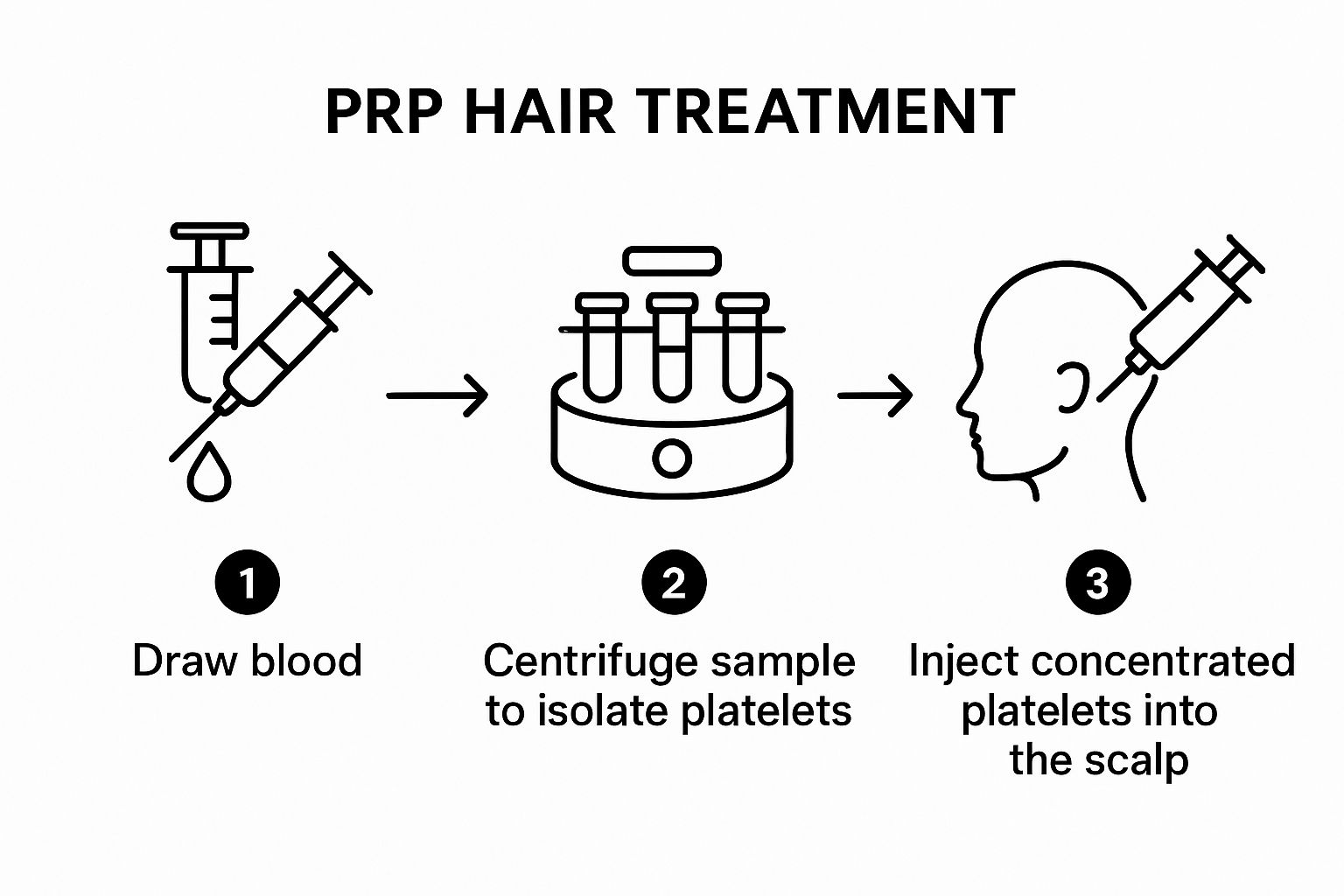
As you can see, PRP treatment progresses from a simple blood draw to a precisely targeted scalp injection. This direct application of growth factors to the hair follicles is a key differentiator for PRP.
What Makes PRP Unique?
What sets this treatment apart isn't just using your own biological material, but how it effectively amplifies your body's inherent repair mechanisms. It's a non-surgical treatment, which is a significant advantage for many seeking hair restoration, as it avoids incisions and lengthy recovery periods.
While some individuals explore other avenues for improving hair health, such as using hair mask treatments, others find the direct, targeted approach of PRP more appealing.
PRP Treatment Process Timeline
To give you a clearer picture of what to expect during a typical PRP session, let's look at a breakdown of the process and timeline.
| Treatment Step | Duration | What Happens | Patient Experience |
|---|---|---|---|
| Blood Draw | 5-10 minutes | A small amount of blood is drawn from the patient, typically from the arm. | Similar to a routine blood test. |
| Centrifugation | 10-15 minutes | The blood sample is spun in a centrifuge to separate the PRP. | Patients typically relax while the PRP is prepared. |
| PRP Injection | 15-20 minutes | The concentrated PRP is injected into the scalp in targeted areas of hair thinning. | May experience slight pressure or prickling during the injections. |
This table summarizes the key stages involved in a PRP treatment session, giving you a sense of the timeline and what occurs at each step. Remember, this is a general overview and the specifics may vary slightly depending on the clinic and individual patient needs.
PRP Effectiveness and Results
PRP has gained significant popularity, supported by clinical studies demonstrating its effectiveness. Studies show success rates ranging from 70-80% for most patients in the early stages of hair thinning. In some cases, particularly those with early androgenetic alopecia, the response rate can reach up to 90% under ideal conditions. This multi-step procedure, typically repeated over 3-6 sessions spaced 4-6 weeks apart, leads to noticeable hair regrowth for many, positioning PRP as a leading non-pharmaceutical hair restoration option. Learn more about PRP success rates here.
By stimulating dormant follicles and encouraging new growth through the body's natural healing processes, PRP offers an attractive solution for many, particularly those seeking alternatives to medication or surgery. Sharing real patient stories can further highlight how this approach differs from topical treatments or medications.
The Honest Truth About PRP Success Rates
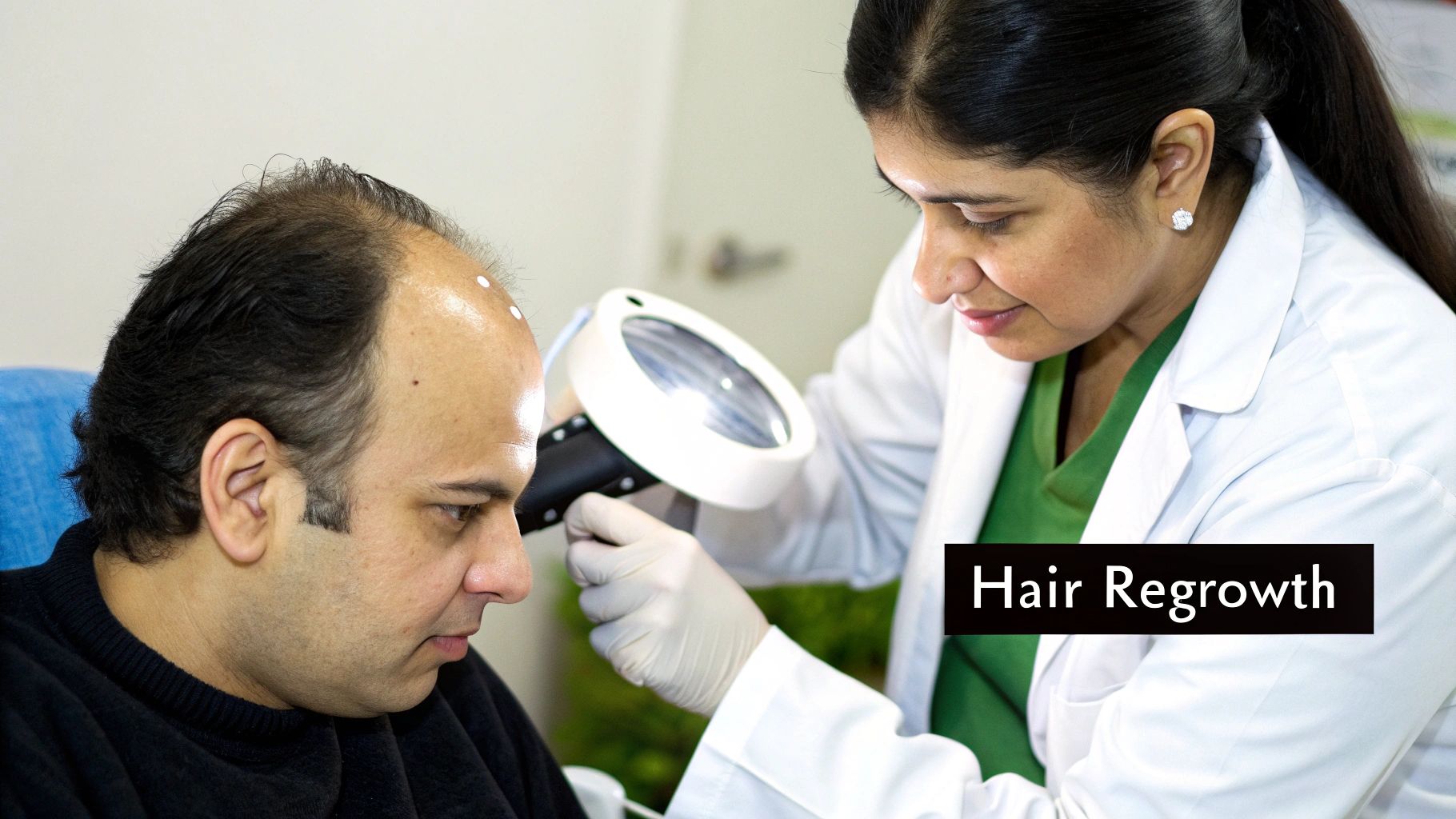
Let's be honest: asking if PRP hair treatment "works" is like asking if watering a plant "works." The answer isn't a simple yes or no. It's about what you consider a positive outcome. Some plants might flourish with vibrant blooms, while others might simply grow a bit stronger and greener. Similarly, with PRP, some people might see significant hair regrowth, while others experience a slower rate of hair loss or thicker existing hair. All are beneficial, just different.
How Is PRP Success Measured?
Researchers don't just count hairs when evaluating PRP. They take a more detailed approach, much like a gardener assessing plant health. They look at hair density (how many hairs per square inch), hair thickness (the diameter of each strand), growth speed, and how much shedding is reduced over a given period.
This provides a richer picture of PRP's impact. A small increase in hair count might not be obvious, but a noticeable increase in hair thickness can dramatically change how full your hair appears.
The timing of treatment matters too. Starting PRP early, when follicles are still active, is like giving a struggling plant a boost of nutrients. It's much easier than trying to grow a new plant from scratch. That's why many doctors emphasize early intervention.
Why Do Success Rates Vary?
Think of it this way: two plants of the same species, planted in the same soil, might still grow differently based on sunlight, watering, and even subtle differences in their genes. Similarly, your age, the degree of hair loss, overall health, and genetics influence your response to PRP.
This natural variation is reflected in studies. One study might report a 70% success rate while another shows 90%. These differences can come down to variations in study methods, patient characteristics, and even how "success" is defined. Understanding this helps you interpret the numbers realistically.
To help illustrate these variations, let's look at some typical findings:
PRP Success Rates by Hair Loss Type
| Hair Loss Type | Success Rate | Improvement Metric | Study Duration |
|---|---|---|---|
| Early Stage Androgenetic Alopecia | 75-85% | Increased hair count and thickness | 6 months |
| Advanced Androgenetic Alopecia | 50-70% | Reduced shedding, improved hair thickness | 12 months |
| Alopecia Areata (patchy hair loss) | Varies widely | Regrowth in affected areas | Case-dependent |
As you can see, the type and stage of hair loss significantly impact the expected outcomes. Early intervention generally leads to better results, while more advanced hair loss may require longer treatment periods and might have more modest improvements.
Realistic Expectations and Informed Decisions
So, does PRP work? Often, yes. But it's not a magic bullet. It's more like a personalized fertilizer for your hair, and its effectiveness depends on various individual factors.
The key is having an open conversation with your doctor. Discuss your specific situation, your expectations, and what realistic results might look like for you. This will help you make an informed choice, leading to a more satisfying experience. By focusing on measurable improvements and understanding the nuances of PRP, you can determine if it's the right path for you.
Why Women Are Getting Different Results Than Men
PRP hair treatment isn't a one-size-fits-all solution. It works differently for men and women, and it's important to understand why. Imagine two distinct gardens: one with rose bushes and the other with ferns.
Male pattern baldness often appears as concentrated bare spots, like a rose bush with certain canes withering. Female pattern hair loss, however, usually presents as overall thinning, similar to a fern gradually losing its fullness. This is often influenced by hormonal shifts.
This fundamental difference significantly affects how PRP works, especially for women. Many women turn to PRP because other options are limited. Medications like finasteride, commonly used for men, aren't typically suitable for women, particularly those of childbearing age.
PRP and Female Pattern Hair Loss: A Natural Match
Interestingly, the diffuse thinning common in female hair loss actually aligns well with how PRP functions. Because PRP stimulates follicles across a wider scalp area, it's uniquely suited to address this type of thinning. This makes it a viable option for improving hair thickness and scalp coverage in women experiencing diffuse hair loss, where few other treatments offer much help.
A 2024 study in Skin Research and Technology highlights PRP's effectiveness for female pattern hair loss. Researchers found that women treated with PRP saw 10–20% increases in both hair count and density after just 4 to 6 sessions spread over a few months. This study provides solid evidence supporting PRP as a treatment for female hair loss, a condition often resistant to traditional medications. You can dive deeper into the study's findings here.
Considering the Specific Needs of Women
Beyond its effectiveness, PRP’s strong safety profile makes it an increasingly popular choice for women. Because it uses the patient's own blood, the risk of allergic reactions or unwanted side effects is minimal. PRP is becoming a common supplementary treatment for female pattern hair loss across North America and Western Europe, especially for women seeking alternatives to surgery or medications.
Beyond the scientific aspects, it’s important to acknowledge the emotional impact of hair loss on women. Hair thinning can be a deeply distressing experience. PRP offers a potential solution that addresses both the physical changes and the emotional toll, often leading to improved self-confidence and overall well-being.
Getting the Most Out of PRP for Women
While PRP offers significant potential, timing and hormonal factors play a key role in treatment outcomes for women. Life stages like menopause can influence hair loss patterns and how a woman responds to PRP. It’s essential for women to consult with knowledgeable practitioners who understand these nuances and can create personalized treatment strategies. These personalized plans take into account factors like hormone levels and individual hair loss patterns to ensure the best possible results.
It's also worth noting that many women experience improvements in hair quality—like increased shine and manageability—even if they don't see a dramatic increase in hair count. These added benefits contribute to a positive overall experience for many women undergoing PRP treatments.
By understanding these unique factors—having frank conversations with their doctors about their individual needs and likely outcomes, considering hormonal influences, and recognizing that improvement can take many forms—women can approach PRP treatment with realistic expectations and improve their chances of seeing positive results.
How PRP Went From Lab Experiment To Your Local Clinic
This screenshot from Johns Hopkins Medicine perfectly illustrates the core components of PRP therapy. Notice how it emphasizes using the patient's own blood. The image visually reinforces the process: separating the platelet-rich plasma and then injecting it. The journey of PRP hair treatment, from a novel idea to a widely accepted procedure, is a testament to its potential.
Just fifteen years ago, injecting processed blood into the scalp to stimulate hair growth seemed like science fiction. Initially, PRP was primarily used in sports medicine. Doctors used it to help athletes heal faster from injuries.
This sparked a question among researchers: could the same growth factors that mend tendons also revive dormant hair follicles? Early research offered promising results, leading to further investigation. Interestingly, patient demand played a significant role in PRP’s growth.
Based on the initial findings, people were eager to try this new treatment. Their positive experiences generated buzz within the medical community. This demand, combined with promising outcomes, led to a surge in PRP's popularity, especially in hair restoration. Some people explore other avenues for better hair health, like the potential benefits of silk pillowcases, while others choose more direct interventions like PRP. It really highlights the different approaches people take with their hair.
From Niche to Mainstream: The Evolution of PRP
Looking back at the data from the late 2000s through 2025, the dramatic rise of PRP hair treatment is clear. Early studies on PRP for hair loss appeared around 2009. However, broader acceptance in major markets didn’t happen until the mid-2010s.
By 2025, PRP hair restoration had become a leading non-surgical hair loss treatment worldwide. In the U.S. alone, tens of thousands of procedures are performed every year. Globally, that number climbs into the hundreds of thousands. Patient satisfaction consistently ranks above 75%, solidifying PRP's reputation as a statistically effective option for hair health. For those asking, “Does PRP hair treatment work?”, this data provides a strong answer. Learn more about the evolution of PRP and its effectiveness for hair loss here.
This widespread adoption wasn't instant. It took years of refining techniques, improving the equipment used, and compiling data from thousands of patients.
What PRP's Journey Tells Us
The story of PRP hair treatment speaks volumes. In a field where many treatments come and go, PRP has demonstrated effectiveness and longevity. Its transition from experimental procedure to a standard practice underscores its potential.
This established track record offers reassurance for those considering PRP today. Ongoing research and positive patient feedback create a foundation of trust and confidence in the procedure's possibilities. Understanding this journey provides valuable context for anyone exploring PRP for hair loss.
Finding Out If You're A Good Candidate For PRP
PRP therapy for hair loss isn't a one-size-fits-all solution. It's important to know if it's right for you, to avoid disappointment and unnecessary expense. Surprisingly, the ideal candidate isn't always someone with significant hair loss.
Age and Hair Loss Stage: It's About the Follicles
While age is a factor, the stage of hair loss is more important. Someone in the earlier stages, with active follicles, often responds best. Think of it like a garden: it's easier to revive a plant with dormant roots than one that’s completely withered. Younger patients typically see good results, but older individuals can too, if their hair loss is recent. It's about the potential for revitalization.
Your Health: The Foundation for PRP Success
Your overall health plays a crucial role. Conditions like autoimmune disorders or diabetes can influence the effectiveness of PRP, much like missing key ingredients affects a recipe. Certain medications, like blood thinners, can also interfere with the process. Optimal health supports better circulation, healing, and platelet function – all essential for PRP to work its magic.
Medical Conditions and Lifestyle: Important Considerations
Certain medical conditions, such as bleeding disorders, active infections, or skin cancers at the treatment site, may make PRP unsuitable. Lifestyle choices also matter. Smoking and excessive alcohol use, for instance, can hinder healing and impact the final results. These factors are carefully considered during a consultation.
Finding the Right Practitioner: A Critical Step
Not all PRP practitioners are created equal. A thorough practitioner will conduct a detailed medical history review, examine your scalp, and discuss your expectations realistically. This careful assessment, like choosing an experienced gardener for your specific needs, is crucial for success. It helps determine if PRP is the right path for you.
Real-World Examples: Personalized Approaches
Let's look at two examples: Sarah, a 35-year-old woman with recent thinning, is an excellent candidate. Her hair loss is in the early stages, she's healthy, and has realistic expectations. Mark, a 60-year-old man with advanced male pattern baldness and existing health concerns, may not be a good fit for PRP. His follicles are likely too damaged for PRP to be effective, and a hair transplant might be more suitable. These scenarios illustrate why individualized assessments are vital. PRP is not a universal solution, but the right evaluation can help you determine if it's the right choice for your unique situation.
Your Complete Guide To The PRP Treatment Experience

Let's explore what a typical PRP hair treatment session involves, so you know what to expect and can feel at ease throughout the process. Think of this as a step-by-step walkthrough of a typical appointment.
The Consultation and Preparation
Your PRP journey begins with a thorough consultation. The practitioner will carefully examine your scalp, discuss your history of hair loss, and assess your overall health. They'll likely take photos to establish a baseline and track your progress over time. This initial evaluation is crucial for determining whether PRP is the right fit for you and crafting a personalized treatment plan. If you're exploring PRP, you might also be interested in other hair loss solutions like topical treatments. For instance, you might consider an anti-hair loss lotion.
The Blood Draw and Processing
Next is the blood draw. The amount required is similar to a standard blood test, making it a quick and relatively painless procedure. While your blood is being processed, you can sit back and relax. This processing involves placing your blood sample into a centrifuge, a machine that spins at high speed to separate the platelet-rich plasma (PRP). This typically takes about 10-15 minutes. Some practitioners might even show you the separated PRP—a golden-colored liquid brimming with concentrated growth factors.
The Injection Phase: What to Expect
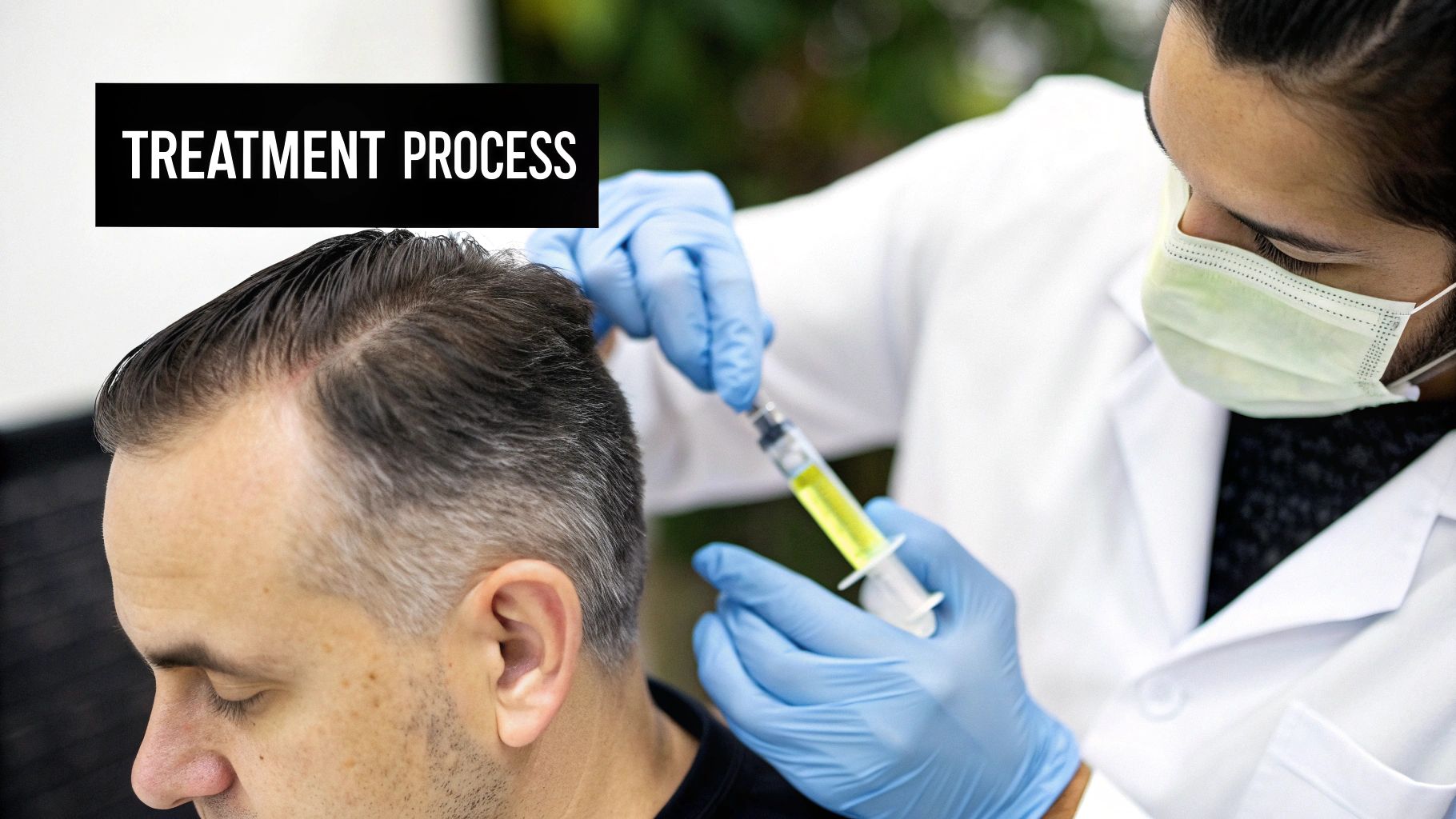
The injection phase is where individual experiences can vary. Some people describe the sensation as a series of tiny pinpricks, similar to dental injections, while others may find it slightly more uncomfortable. Most practitioners use numbing techniques to minimize any discomfort, but the scalp can be a sensitive area. The entire injection process typically takes about 15-20 minutes.
Post-Treatment and Recovery
After the injections, you may experience mild soreness on your scalp, similar to a mild sunburn. This is completely normal and usually subsides within a day or two. Your practitioner will provide detailed post-treatment instructions, which may include avoiding strenuous activity, excessive heat, and certain hair products for a brief period.
The Treatment Timeline: Patience Is Key
PRP treatment usually involves multiple sessions, typically spaced about a month apart. Most patients complete an initial series of treatments over 3-4 months. It's important to remember that hair growth is a gradual process. You might even experience some initial shedding between sessions. This can be surprising, but it's a normal part of the process and often precedes new growth. Your practitioner will discuss realistic timelines for seeing results based on your individual situation and how you respond to the treatment.
By understanding each step of the PRP treatment experience, you can approach the process with confidence and realistic expectations. This knowledge empowers you to make informed decisions and prepare—both mentally and physically—for the journey ahead.
Making Your PRP Decision With Complete Information
After exploring the science behind PRP, its success rates, and what happens during a typical treatment, the key question remains: Is PRP the right choice for you? This comes down to carefully balancing the potential upsides against the costs and risks, specifically within the context of your own individual situation.
The Financial and Time Commitment
Let’s be upfront about the financial aspect. PRP is an investment. It usually involves several sessions, and perhaps even follow-up maintenance treatments down the line. These costs accumulate. Unlike a single hair transplant procedure, PRP represents an ongoing commitment, both financially and in terms of your time. You’re not only investing in the treatments themselves, but also in the recovery periods between each session, as well as the months it can take to see the full results.
Understanding the Risks and Managing Expectations
While generally considered safe because it uses your own blood, PRP isn't entirely without potential side effects. These are typically minor, such as some temporary scalp tenderness or swelling. The chance of infection is low, but it’s still a possibility. On an emotional level, pursuing any hair loss treatment comes with a mixture of hope and vulnerability. It’s crucial to keep your expectations realistic. Disappointment can be a real emotional hurdle if the outcomes don't quite match what you had hoped for.
Practical Considerations for Choosing PRP
Think of this as a personalized checklist to help you determine if PRP fits your lifestyle, budget, and emotional preparedness. We’ll equip you with the resources to make this assessment. This includes guidance on finding qualified practitioners and spotting any red flags. We’ll also give you important questions to ask yourself to help set realistic expectations and reduce the possibility of disappointment down the road.
PRP vs. Other Treatments: A Comparative Look
How does PRP measure up against other hair loss treatments? We’ll explore this comparison in detail, looking at PRP alongside other options in terms of cost, how invasive they are, and the likely outcomes. This will give you a complete view, enabling you to make an informed and confident choice. Understanding the advantages and disadvantages of different treatments is essential for selecting the best fit for your unique needs.
Making Your Decision With Confidence
At the end of the day, the decision to go with PRP is a deeply personal one. By understanding the science, the realistic outcomes, and what’s actually involved in the treatment, you can decide with confidence whether PRP aligns with your personal goals and expectations. Armed with all the facts, from cost and time commitment to the potential risks and benefits, you'll be empowered to make the right choice for your individual hair loss journey. Ready to delve into the possibilities of PRP for hair loss? Visit PRP For HairLoss to learn more and begin your journey toward a fuller head of hair.

 PRP For Hairloss
Leave a comment