What PRP Hair Restoration Actually Is (And What It Isn't)
The idea of using your own blood to regrow hair might sound a bit like science fiction, but Platelet-Rich Plasma (PRP) therapy is a real, increasingly popular treatment for hair loss. So, how does it actually work? Think of your blood as a nourishing soup, full of ingredients that keep your body healthy and growing. PRP is like taking the most potent, growth-boosting parts of that soup and concentrating them into a powerful serum.
Those "growth-boosting parts" are called growth factors, and they're found within your blood's platelets. These growth factors act like messengers, telling your cells to repair and regenerate.
The PRP process starts with a simple blood draw, just like a regular blood test. Then, the blood is placed in a centrifuge – a machine that spins it at high speed. This separates the blood components based on their density, isolating the platelet-rich plasma.
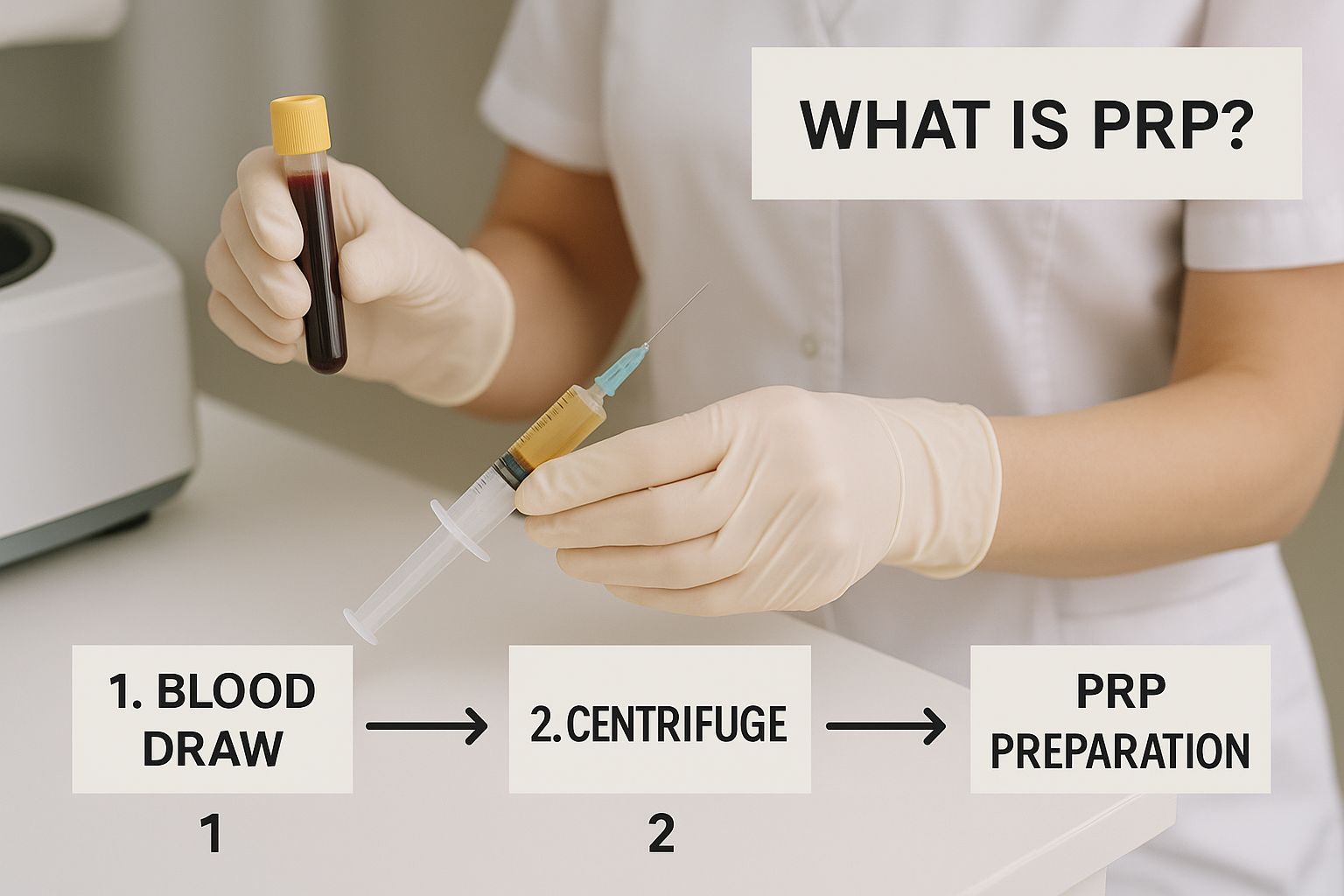
This infographic shows how the PRP is extracted and prepared. Once this concentrated serum is ready, it's carefully injected into your scalp, focusing on the areas where your hair is thinning.
Understanding What PRP Can (and Can't) Do
Now, it's important to have realistic expectations. PRP isn't a magic bullet or an instant fix. It works by encouraging your body's natural healing processes to revitalize dormant hair follicles. Think of it like watering a plant – you won't see results overnight, but consistent care can lead to healthy growth.
Let's be clear about what PRP isn't. It's not a cure for all types of hair loss. For example, if your hair follicles are completely inactive, as in advanced male pattern baldness, PRP might not be as effective.
It's also not a one-and-done treatment. You'll likely need multiple sessions, spaced several weeks apart, to achieve and maintain the best results. This commitment to ongoing treatment is essential for long-term success.
Finally, PRP treatment isn't entirely standardized. The specific process, including the concentration of platelets and the frequency of injections, can differ between providers. This highlights the importance of choosing a qualified and experienced practitioner.
To help you visualize the timeline, let's look at the typical stages of a PRP hair restoration treatment:
To help you visualize the timeline, let's look at the typical stages of a PRP hair restoration treatment:
PRP Hair Restoration Process Timeline
The following table outlines the typical PRP treatment journey, from initial consultation to seeing the results.
| Treatment Phase | Duration | What Happens | Patient Experience |
|---|---|---|---|
| Initial Consultation | 1 hour | Discussion of hair loss concerns, medical history review, scalp examination, and treatment plan development. | Opportunity to ask questions, learn about PRP, and discuss expectations. |
| Blood Draw | 15 minutes | Small blood sample taken, similar to a routine blood test. | Minimal discomfort, similar to any standard blood draw. |
| PRP Preparation | 30 minutes | Blood is processed in a centrifuge to isolate and concentrate the platelet-rich plasma. | Waiting period while the PRP is prepared. |
| Scalp Injections | 30-45 minutes | PRP is injected into specific areas of the scalp experiencing hair loss. | Mild discomfort from the injections, which can be minimized with topical numbing agents. |
| Follow-up Appointments | 30 minutes every 4-6 weeks | Monitor progress, assess hair growth, and administer additional PRP treatments as needed. | Track progress and discuss any concerns with the provider. |
| Results | Gradual, starting around 3 months | Noticeable improvements in hair thickness and density typically emerge gradually over several months. | Observe gradual hair growth and improvement in overall hair quality. |
This table summarizes the key stages of PRP therapy and what you can expect at each step. The entire process, from consultation to visible results, takes several months and requires ongoing maintenance treatments. Remember, individual experiences may vary, so it's essential to consult with a qualified professional for personalized guidance.
The Research Behind PRP: What Science Actually Shows
So, does PRP hair restoration really work? It's a common question, and the answer isn't a straightforward yes or no. Imagine scientific research as piecing together a puzzle. You need all the pieces to see the full picture. Similarly, we need multiple studies, all pointing in the same direction, to feel confident about PRP's effectiveness.
One of the trickiest parts of evaluating PRP research is the sheer variety in how studies are designed. Some studies work with small groups, while others include hundreds of people. Even the PRP treatments themselves differ – the concentration of platelets, how often injections are given—it all varies. These differences can significantly impact the results.
Furthermore, the length of time researchers follow up with participants also changes. Some studies check in after a few months, others after a year or more. This makes comparing results across studies like comparing apples and oranges. For instance, a 2015 study referenced by Healthline looked at PRP injections for hair loss in 10 people. Treatments were given every 2 to 3 weeks over 3 months. The study saw real improvements in both the number of hairs and their thickness. While the group was small, the results were encouraging, and later research seems to support these initial findings.
Deciphering Study Results
It’s tempting to get swept up in exciting headlines from early, small studies. However, these initial findings don’t offer definitive proof. They’re more like a promising lead, a starting point for more extensive and rigorous investigations. These larger studies often reveal more modest, but more dependable, results.
Real-World Results vs. Research
Here’s another key point: what happens in a tightly controlled research setting isn’t always what happens in the real world. In studies, participants are carefully chosen, and treatments are given with precise consistency. In a doctor's office, things are different. Patient characteristics and how closely they stick to the treatment plan can vary widely, and so do the results.
Understanding the Limitations
Finally, it's important to be aware of the built-in limitations of scientific research. Sometimes, studies with positive results are more likely to be published than those with less exciting outcomes. This "publication bias" can create a skewed picture. Plus, individual responses to treatment can differ greatly from the averages reported in studies. This reinforces the importance of realistic expectations. What works wonders for one person might not be as effective for another. So, while research provides valuable clues about PRP’s potential, it's key to look at these findings carefully and consider individual situations.
Who Sees Results And Who Doesn't: The Success Patterns
So, you're curious about PRP hair restoration and wondering if it actually works? It's a valid question, and the answer isn't a simple yes or no. Success with PRP isn't a magic bullet; it depends on a few factors. Think of it like this: your hair follicles are like plants in a garden. PRP is essentially a fertilizer, helping those plants thrive. But adding fertilizer to a completely dead plant won’t bring it back.
Age and Hair Loss Stage: Early Bird Gets the Worm
One of the biggest factors in PRP success is catching hair loss in its early stages. Early intervention is key. People experiencing the beginning stages of thinning or androgenetic alopecia tend to see the best results. Their follicles are still alive, just a bit sluggish, and the growth factors in PRP give them the boost they need. Imagine someone noticing a slightly wider part or a subtly receding hairline – they're generally much better candidates than someone with large bald patches.
Gender and PRP Outcomes: Slight Variations
Both men and women can benefit from PRP, but there are some nuanced differences. Men typically seek PRP for classic male pattern baldness – receding hairlines and thinning at the crown. Women, however, often experience more diffuse thinning across the scalp. Because of these different patterns, the visual changes might seem more striking in men, even though the underlying follicle stimulation is similar in both.
Underlying Health: The Bigger Picture
Your overall health plays a significant role in how effective PRP is. Anything affecting circulation or cell regeneration can influence the outcome. For example, someone with diabetes or a thyroid condition might not see the same dramatic results as someone in perfect health. Certain medications can also interact with PRP, impacting its success. A thorough discussion of your medical history with your doctor is crucial for determining if you're a good candidate.
PRP Success Rates: A Closer Look
Let's talk numbers. Reported success rates for PRP vary based on things like the severity of hair loss, your age, and overall health. Studies consistently show that PRP is most effective for individuals with early-stage androgenetic alopecia or general thinning, with success rates ranging from 70% to 80% in clinical settings. Some specialized clinics and particular studies have even reported success rates as high as 90% in ideal candidates. Coastal Aesthetic offers more insights on this. This underscores the importance of a thorough consultation with a qualified professional.
To help visualize these success rates across different patient profiles, take a look at the table below:
PRP Success Rates by Patient Profile
Comparison of effectiveness across different patient demographics and hair loss stages
| Patient Profile | Success Rate | Typical Results | Treatment Duration |
|---|---|---|---|
| Early Stage Androgenetic Alopecia | 70-80% | Reduced shedding, increased thickness | 4-6 sessions initially, maintenance thereafter |
| Moderate Androgenetic Alopecia | 50-60% | Slowed progression of hair loss, some regrowth | 6-8 sessions initially, more frequent maintenance |
| Advanced Androgenetic Alopecia | <50% | Minimal regrowth, primarily maintenance of existing hair | Ongoing maintenance, often combined with other treatments |
| Diffuse Thinning (Early Stage) | 60-70% | Improved hair density and overall appearance | 4-6 sessions initially, maintenance as needed |
| Diffuse Thinning (Advanced Stage) | <50% | Limited improvement in density | Ongoing maintenance, potentially less effective |
As this table illustrates, early intervention and the specific type of hair loss significantly impact potential outcomes. Consulting with a specialist is key to understanding your personalized expectations.
Managing Expectations: Maintaining vs. Restoring
Finally, it's important to understand the difference between stopping further hair loss and regrowing a significant amount of hair. PRP is often better at slowing or halting the progression of hair loss than it is at restoring a full head of hair. Some people experience significant regrowth, while others see improvements in hair thickness and density. Setting realistic expectations is key to feeling satisfied with your results. This understanding helps appreciate the value of slowing down hair loss progression, which is a significant benefit in itself.
Real Patient Experiences: Beyond The Success Stories
While clinical studies and success rates give us a valuable glimpse into the effectiveness of PRP hair restoration, they don't paint the full picture. What's it really like to undergo this treatment? What are patients experiencing week by week, month by month? This section explores the real-world patient journey, going beyond the polished before-and-after photos you often see.
From Consultation To First Signs of Progress
The journey typically starts with a consultation. Here, a practitioner assesses your hair loss, discusses your health history, and creates a personalized treatment plan. Then comes the first treatment itself: a blood draw, PRP preparation, and finally, the injections into the scalp. Many patients describe the injections as feeling like a mild pinching sensation, often made very manageable with a topical numbing cream. After the treatment, some people experience a little redness or swelling, but this usually disappears within a day or two.
Let's imagine Sarah, a 35-year-old woman experiencing early stages of hair thinning. After her first few PRP treatments, she noticed less shedding within the first few weeks. This initial improvement, while not full-blown regrowth, was encouraging for Sarah and gave her a confidence boost. It's important to remember, though, that everyone's experience is unique. Some people see changes sooner than others; patience is key.
The Emotional Ups and Downs: Managing Expectations
Waiting for visible results can be tough. Many patients describe it as an emotional rollercoaster—initial excitement followed by periods of doubt. This is why managing expectations is so important. PRP isn't a magic overnight fix; it's a gradual process. Think of it like nurturing a plant—consistent care over time is essential to see real growth. PRP (platelet-rich plasma) hair restoration has been extensively studied over the past decade, with clinical trials and real-world data showing consistent effectiveness for certain patient groups. One striking statistic comes from a study referenced by the Wimpole Clinic, where PRP was used during hair transplant surgery. After six months, 100% of the PRP patients experienced greater than 75% hair regrowth, compared to only 20% of the patients in the control group (who didn't receive PRP). You can find out more about the success rates of PRP treatments at the link provided.
The Long Term: Maintenance and Lifestyle
Another key aspect of the PRP experience is the need for maintenance treatments. To maintain and enhance the initial improvements, ongoing sessions are often required. This means scheduling regular appointments, often every few months, and fitting those sessions into your lifestyle. Practical considerations like travel time to the clinic, the cost of appointments, and any potential downtime after each session all factor into the long-term commitment.
Finally, it’s crucial to hear from a range of patients—those who achieved their desired results, those with modest improvements, and even those who felt disappointed. These different perspectives offer valuable insight into the realities of PRP therapy, allowing potential patients to make informed decisions based on a balanced view of the entire experience.
Understanding The Risks: What Could Go Wrong

While PRP hair restoration uses your own blood and is generally considered safe, it's important to remember that no medical procedure is entirely without risk. Think of it like this: even something as beneficial as a vaccination can cause mild side effects in some people. Similarly, while serious complications from PRP are rare, they can occur. This section will help you weigh the potential benefits against the possible risks so you can make an informed decision.
Common Side Effects: What’s Normal and What’s Not
After PRP injections, most people experience minor, temporary side effects. These are usually limited to the injection sites and might include scalp tenderness, swelling, redness, or itching. It's a bit like a minor skin irritation – a little uncomfortable, but generally nothing to worry about. These reactions usually disappear within a few days. However, if these symptoms stick around longer or get worse, it's always best to contact your doctor.
Rare Complications: When to Seek Medical Attention
Just like any injection-based procedure, more serious complications can occur with PRP injections, although they are rare. These might include infection, nerve damage, calcification at the injection site, or scarring. So, what should you look out for? Increased pain, redness, or swelling around the injection site, or a fever, could be signs of an infection. Numbness, tingling, or persistent pain in your scalp could indicate nerve damage. These are warning signs that require immediate medical attention.
Contraindications: Who Shouldn’t Consider PRP
Certain medical conditions and medications can make PRP inadvisable. These are called contraindications – essentially, "red flags" signaling PRP might not be the right choice for you. People with blood disorders, certain autoimmune diseases, or those taking blood thinners should generally avoid PRP. These conditions can increase the risk of bleeding, bruising, or other complications. Also, active skin infections or chronic skin conditions in the treatment area could potentially be aggravated by PRP injections. A thorough consultation with your doctor is absolutely essential to ensure PRP is safe and appropriate for you.
Minimizing Risks: Choosing a Qualified Provider
Choosing a qualified and experienced practitioner is one of the most important steps you can take to minimize risks and maximize the chances of a successful PRP hair restoration. Does experience matter? Absolutely. Look for a provider with specific training and a proven track record in PRP for hair loss. Make sure they use sterile techniques and high-quality equipment to prevent infection and other complications. Proper technique and sterile procedures are non-negotiable for a safe and effective treatment. And finally, don't be afraid to ask questions during your consultation. A reputable provider will be happy to discuss your concerns and help you fully understand the risks and benefits. Open communication and a clear explanation of the procedure are key indicators of a trustworthy practice. By making informed decisions and working with a skilled professional, you can optimize your PRP experience and minimize potential problems.
PRP Versus Other Hair Loss Treatments: The Honest Comparison
So, how does PRP hair restoration measure up against other treatments? Let’s explore how it stacks up against medications, surgery, and other non-surgical options. The goal here isn’t to pick a “best” treatment, but to understand where each one fits in the broader picture of hair loss solutions.
PRP vs. Medications (Finasteride and Minoxidil)
Think of finasteride and minoxidil as the everyday workhorses of hair loss treatment. Finasteride tackles the hormonal side, blocking DHT, a key player in male pattern baldness. Minoxidil, on the other hand, seems to work by widening blood vessels and giving hair follicles a boost. The important thing to remember is that both require ongoing use to keep those benefits going.
PRP is different. It works directly on those follicles, delivering a concentrated dose of growth factors. It’s like giving your hair a vitamin shot. Some people even combine PRP with these medications, hoping for a combined effect. Just remember, always talk to your doctor before mixing any treatments.
PRP vs. Hair Transplant Surgery
Hair transplant surgery is a bigger step. Imagine it like relocating hair follicles from one part of your scalp to another. It's a more permanent solution compared to PRP, but it comes with a higher price tag, longer recovery, and the possibility of scarring.
Interestingly, some people use PRP after a transplant. Think of it as giving those transplanted hairs the best possible environment to thrive in. This shows how PRP can be a supporting player, not just a lead actor.
PRP vs. Other Non-Surgical Options (Microneedling and Laser Therapy)
Microneedling, with its tiny needles, creates micro-injuries in the scalp, a bit like aerating a lawn. This encourages collagen production and potentially helps hair growth. Low-level laser therapy (LLLT) uses light energy, almost like giving your scalp a gentle warming treatment, to stimulate follicles.
Like PRP, both are non-surgical, but they work in different ways. Some believe combining PRP with microneedling is like creating tiny pathways for the PRP to penetrate more effectively. These combinations are promising, but we need more research to fully understand their benefits.
Choosing the Right Treatment for You
There’s no one-size-fits-all solution for hair restoration. The best approach depends on your individual situation – the type and stage of your hair loss, your budget, your lifestyle, and what you’re comfortable with.
Some people start with PRP because it's non-surgical and has a relatively quick recovery. Others use it to enhance the results of other treatments. Making the right choice means understanding the pros and cons of each option. Think about things like cost, convenience, how quickly you'll see results, and what's needed for long-term maintenance.
By discussing these factors with your doctor, you can create a personalized plan that fits your specific needs and goals.
Making Your Decision: Is PRP Worth Trying For You?
So, we've explored the nuts and bolts of PRP hair restoration. But the million-dollar question still hangs in the air: is it the right choice for you? This decision isn't a quick one. It involves carefully weighing your unique situation – everything from the current state of your hair loss to your budget and what you're hoping to achieve.
Let's break down a practical approach to help you figure this out.
Assessing Your Candidacy: Key Questions to Ask
First, take an honest look at your hair loss. Remember our earlier analogy about the struggling plant? PRP works best when there's still some life left in the hair follicles. If you're noticing early thinning, you're probably a better candidate than someone with significant hair loss. Your age, overall health, and any underlying medical conditions also factor into the equation. If you're looking at other options besides PRP, it can be helpful to brush up on the general topic of understanding hair loss.
Next, think about your lifestyle and budget. PRP typically requires several sessions, followed by maintenance treatments to keep the results going. Can you realistically commit to the time and financial investment involved? Factor in the frequency of appointments, travel to the clinic, and the total cost – both the initial treatments and the ongoing upkeep. Weigh these practicalities against your expectations for improvement.
Choosing the Right Provider: Due Diligence Is Essential
If you're leaning toward PRP, choosing a skilled and qualified provider is crucial. Don't hesitate to ask potential providers some pointed questions. What's their specific experience with PRP for hair loss? What's their typical treatment process, including details like platelet concentration and how often they do injections? Get a sense of realistic expectations and the kind of results you might see. Be cautious of any provider making outlandish promises or guarantees.
Setting Realistic Expectations and Defining Success
Finally, take some time to define what "success" looks like to you. Are you hoping for substantial new hair growth, or is your main aim to slow down future hair loss? It's important to remember that individual results can vary quite a bit. Setting realistic, personalized goals is the best way to avoid disappointment. Think about how you’ll track your progress – photos, hair counts, or simply how you feel about your hair.
By carefully considering these factors and having open conversations with your provider, you can make a well-informed decision about whether PRP hair restoration is the right path forward.
Ready to delve deeper into PRP therapy? Visit PRP For HairLoss for comprehensive information geared specifically toward men experiencing hair loss. We offer a wide range of resources and guidance to help you make the best choice for your hair restoration journey.
 PRP For Hairloss
Leave a comment