Understanding Non-Surgical Hair Restoration Today
Imagine your hair like a lawn. A surgical hair transplant is like resodding the entire thing – a big undertaking. Non-surgical hair restoration, on the other hand, is like fertilizing and nurturing the existing grass to help it grow thicker and healthier.
Both approaches can achieve impressive results, but non-surgical methods offer a less invasive and often more affordable route to hair revitalization. Instead of replacing the entire lawn, you're focusing on strengthening what's already there. This is a fundamental difference in how these two approaches work.
Non-surgical hair restoration uses techniques to stimulate existing hair follicles, improve the overall health of your scalp, and even potentially reverse the shrinking of hair follicles (called miniaturization) in the early stages of hair loss.
These options have grown in popularity because they offer a more accessible and manageable way to address hair thinning. They also fit more easily into busy lifestyles, offering convenience without compromising results.
The Growing Demand for Non-Surgical Options
The field of non-surgical hair restoration is constantly evolving. It’s a rapidly expanding segment of the hair restoration market, with the global market projected to reach $11.65 billion by 2029. That’s a growth rate of 12%.
This impressive growth is fueled by the increasing demand for non-invasive treatments like platelet-rich plasma (PRP) therapy and low-level laser therapy (LLLT). Discover more insights about the hair restoration market. This surge in popularity speaks volumes about the growing preference for non-surgical solutions.
Managing Expectations with Non-Surgical Treatments
It’s important to approach non-surgical hair restoration with realistic expectations. While these therapies can bring about significant improvements, they aren't magic bullets.
Results typically unfold gradually over several months, and consistent treatment is crucial for achieving and maintaining those long-term benefits. Think of it like tending a garden – consistent care yields the best results. We’ll dive deeper into these expectations later in this guide.
Starting with a clear understanding of the gradual nature of these treatments will make your journey toward hair revitalization a much more rewarding experience.
How PRP Therapy Transforms Your Hair Growth Naturally
Think of your blood as a rich, life-giving river, carrying vital resources throughout your body. Among these resources are platelets, tiny powerhouses packed with growth factors. These growth factors are like construction crews, constantly working to repair and regenerate tissues. Platelet-Rich Plasma (PRP) therapy harnesses this natural healing power to revitalize hair growth. As you explore non-surgical hair restoration, consider the various techniques used to boost visibility and engagement. For example, affiliate marketers often use strategies like link cloaking to improve their campaigns. Now, let's shift our focus back to the fascinating world of PRP and its impact on hair.
From Blood Draw to Hair Growth: The PRP Process
The PRP process begins with a simple blood draw, just like a routine check-up. This small sample contains the raw materials we need: those platelet powerhouses brimming with growth factors.
Next, we use a centrifuge, a device that spins the blood at high speed. This separates the platelet-rich plasma, creating a concentrated solution, a supercharged serum of growth factors.
Finally, this potent PRP solution is carefully injected into the specific areas of your scalp experiencing thinning or hair loss. It's like giving your hair follicles a direct dose of revitalizing nutrients.
Why PRP Works: The Science of Hair Follicle Stimulation
Imagine those injected growth factors as tiny messengers, waking up dormant hair follicles. They stimulate cellular activity, prompting the follicles to re-enter the growth phase.
PRP also boosts blood circulation to the hair follicles, delivering essential nutrients and oxygen. This creates a healthier scalp environment, allowing hair to thrive.
What to Expect: Timelines, Results, and Ideal Candidates
PRP isn't a magic bullet. Think of it more like nurturing a garden. Results appear gradually over several months, with noticeable improvements often seen after a series of treatments.
While everyone's hair growth journey is unique, research indicates PRP can significantly improve hair density and thickness. Just like a good skincare routine, consistency with PRP treatments is key for optimal results.
PRP is particularly effective for people in the early stages of hair loss or those experiencing general thinning. It’s a valuable option for both men and women dealing with androgenic alopecia, often referred to as male or female pattern baldness. It’s also used to enhance results after hair transplant surgery.
Laser Therapy: The Science Behind Light-Powered Hair Growth
Imagine giving your hair follicles a little sunbath, a gentle dose of revitalizing light. That’s the basic idea behind low-level laser therapy (LLLT) for hair restoration. This non-surgical treatment uses specific wavelengths of light to energize the cells within your scalp, encouraging hair growth through a fascinating interplay of physics and biology.
How Light Becomes a Catalyst for Hair Growth
Think of light as energy traveling in waves. Just like different musical notes have different frequencies, different wavelengths of light have different effects. LLLT uses particular red and near-infrared wavelengths that are readily absorbed by the cells in your hair follicles. This absorbed light acts like a recharge, boosting cellular metabolism and improving blood circulation to the follicles.
This creates a healthier, more nourished environment ideal for hair growth. It's like giving your hair follicles the perfect fertilizer and sunlight, coaxing them out of a dormant phase and back into an active growth cycle.
Exploring Different Laser Therapy Approaches
LLLT comes in a few different forms, each with its own advantages and disadvantages:
- In-Office Treatments: Professional clinics offer focused LLLT sessions using specialized equipment. These treatments deliver a more concentrated dose of light energy for potentially faster results. However, they require regular appointments and can be more expensive.
- At-Home Devices: You can also find FDA-cleared LLLT devices like laser combs, helmets, and caps for convenient home use. These offer flexibility and affordability, but achieving optimal results requires consistent, long-term use.
Choosing between professional and at-home treatments depends on your individual needs, budget, and the extent of your hair loss.
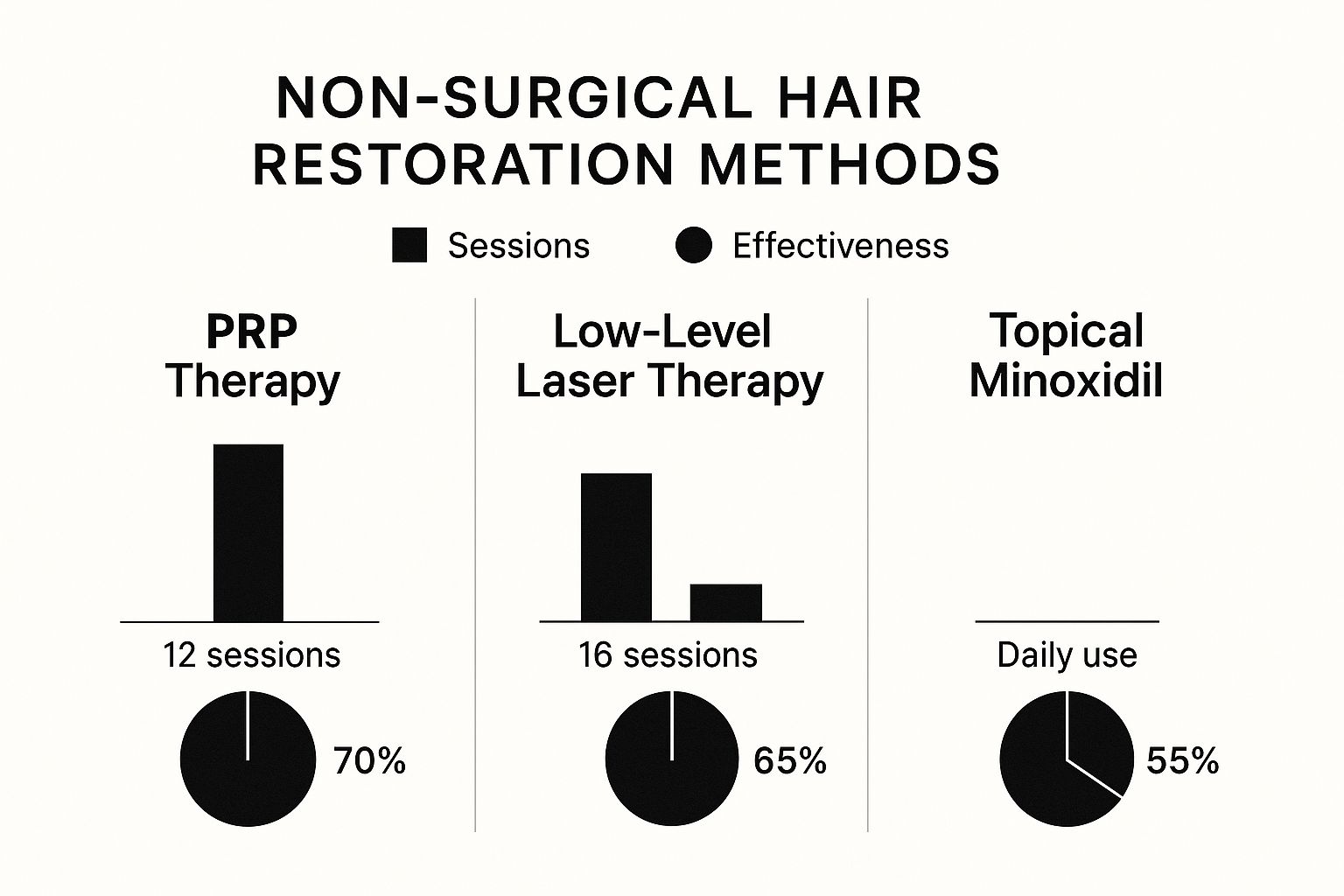
The infographic above compares three popular non-surgical hair restoration methods: PRP therapy, low-level laser therapy, and topical Minoxidil, showing the average number of sessions and reported effectiveness for each. PRP therapy boasts a slightly higher reported effectiveness (70%) compared to laser therapy (65%) and Minoxidil (55%), while requiring fewer sessions on average than laser treatments. This data highlights the importance of selecting a treatment that aligns with your personal goals and circumstances.
To help you compare PRP and Laser Therapy, let's take a closer look at their key similarities and differences in the following table:
PRP vs. Laser Therapy: Treatment Comparison
| Treatment Aspect | PRP Therapy | Laser Therapy | Key Differences |
|---|---|---|---|
| Treatment Frequency | Every 4-6 weeks initially, then less frequently for maintenance | 2-3 times per week for at-home devices, weekly or bi-weekly for in-office treatments | PRP requires less frequent sessions overall. |
| Timeline | Initial improvements within 3-6 months, full results within a year | Noticeable changes within 6-12 months | Both therapies take several months to show significant results, but PRP may show earlier initial changes. |
| Costs | Varies depending on provider and number of sessions, generally more expensive per session than laser therapy | At-home devices are a one-time purchase, in-office treatments vary in cost per session | PRP generally has a higher upfront cost per session, while laser therapy can have ongoing costs depending on the chosen method. |
| Expected Outcomes | Increased hair thickness, improved scalp health, stimulation of new hair growth | Improved hair growth, reduced shedding, thicker hair strands | Both therapies aim to improve hair growth, but PRP also focuses on overall scalp health. |
As you can see, both PRP and Laser Therapy offer distinct advantages. While PRP might be a good option for someone looking for potentially faster initial results and improved scalp health, laser therapy could be preferable for those seeking a more flexible and potentially less expensive long-term treatment.
The Power of Consistency in Laser Therapy
Consistency is vital for successful LLLT, much like watering a plant regularly for optimal growth. Some individuals may see initial improvements within a few months, but more noticeable changes typically take 6 to 12 months of consistent treatment.
Documenting your progress with photos and keeping track of changes in hair density can help you stay motivated and gauge the effectiveness of your approach. Patience and diligence are essential throughout this process.
Innovations in Laser Technology for Enhanced Results
Laser therapy is a constantly evolving field, with ongoing research leading to more effective and user-friendly treatments. Advancements in how wavelengths are delivered, device design, and treatment protocols continue to improve the precision and efficiency of LLLT. These innovations demonstrate the dynamic nature of this field and its dedication to developing better hair restoration solutions.
Microneedling: Awakening Your Scalp's Natural Potential

Imagine lightly pricking your skin with a tiny pin. Now, picture that happening across your scalp. That, in essence, is microneedling. While it might sound a little intimidating, this process uses controlled micro-injuries to trigger your body's natural healing response. This, in turn, promotes hair regrowth.
Think of it as a wake-up call for your scalp, prompting it to kickstart its own regenerative processes. This makes microneedling a powerful tool in the world of non-surgical hair restoration.
How Microneedling Creates the Ideal Environment for Hair Regrowth
Think of your scalp as a garden, and your hair follicles as the plants needing nourishment. Microneedling acts like aerating the soil, creating tiny channels that allow essential nutrients and oxygen to reach the roots more efficiently.
This increased blood flow delivers vital resources directly to the hair follicles, strengthening existing hairs and encouraging new growth. The micro-injuries also stimulate the production of collagen and elastin, the building blocks for a healthy scalp and strong hair. These proteins provide a solid foundation for robust hair growth.
Different Microneedling Approaches: From Rollers to Automated Systems
There are various tools used for microneedling, each with its own advantages. Derma rollers, handheld devices covered in tiny needles, are a common choice, especially for at-home use. They offer a convenient way to stimulate the scalp.
For more precise and consistent needle depth, professional clinics often use automated microneedling pens or systems. These devices allow practitioners to adjust the needle depth according to specific scalp areas and hair loss patterns, offering a more tailored approach.
Depth and Frequency: Finding the Right Balance for Optimal Results
The depth of needle penetration is crucial for microneedling's effectiveness. Needles typically range from 0.5mm to 1.5mm in length. Shallower depths (0.5mm) are excellent for boosting collagen production and improving the absorption of topical treatments.
Deeper penetrations (1.5mm) are more effective for directly stimulating hair follicles. Treatment frequency typically varies from every few weeks to once a month, depending on individual needs and the type of microneedling used.
Managing Expectations and Side Effects: Real Patient Experiences
Microneedling is generally safe and well-tolerated. However, like any procedure, there can be some temporary side effects. Mild redness, slight swelling, and minor pinpoint bleeding are common immediately after treatment, typically disappearing within hours.
Some people may experience temporary dryness or sensitivity. It's a journey that requires patience, as results usually appear gradually over several months. We'll discuss real patient experiences, offering insights into what the treatment feels like and how to manage any temporary discomfort.
We'll also explore how microneedling can be combined with other therapies like PRP (Platelet-Rich Plasma) therapy to amplify hair restoration results. This combination can create a synergistic effect, providing a more comprehensive approach to addressing hair loss.
Emerging Technologies Shaping Hair Restoration's Future
The world of non-surgical hair restoration is in constant motion, always pushing the boundaries of what's achievable without going under the knife. It's a bit like the mobile phone industry – remember flip phones? What was considered groundbreaking just a few years ago is now commonplace, and new innovations are always on the horizon. This constant progress creates exciting new options for people looking for effective hair restoration solutions.
Stem Cell Therapy: Tapping Into Your Body's Repair Crew
Imagine having a team of microscopic builders inside you, capable of repairing damaged tissues. That’s essentially what stem cells are – cells with the remarkable ability to transform into different cell types, including the cells that make up hair follicles. In hair restoration, stem cell therapy aims to revive damaged or inactive hair follicles, essentially rebuilding them from scratch. This emerging technology holds enormous promise, potentially treating even advanced hair loss. While still in its early stages of research, initial findings hint at a future where hair regeneration is a reality.
Exosome Therapy: Sending Precise Growth Signals
Think of exosomes as tiny messenger bubbles traveling throughout your body. These nanoscopic vesicles carry important signals that direct cell behavior, including hair growth. Exosome therapy involves carefully isolating and concentrating these helpful exosomes and then injecting them into the scalp. This delivers a targeted message to the hair follicles, encouraging growth and rejuvenation. It's a more precise way of using your body's natural growth processes to restore hair.
AI-Guided Procedures: Personalized Hair Restoration Plans
Just as AI is revolutionizing other medical fields, it's also making waves in non-surgical hair restoration. Picture a treatment plan perfectly customized to your specific hair loss pattern, scalp condition, and even genetic predispositions. AI algorithms are being developed to analyze these individual factors, helping practitioners determine the most effective combination and delivery of non-surgical treatments. This personalized approach aims to optimize results and avoid unnecessary procedures. This shift towards data-driven, personalized medicine is reshaping how we address hair loss. The non-surgical hair restoration field is growing, not only because it's minimally invasive but also due to these technological advancements. For example, using robotics and AI for precise hair restoration, along with increasing interest in natural, stem-cell-based therapies, is expected to fuel further growth in this market. Discover more insights on the future of hair restoration.
Evaluating Emerging Treatments With a Critical Eye
With so many new treatments emerging, it's important to approach them with a healthy dose of skepticism. Not every promising development lives up to the initial excitement. Look for clinical evidence and research-backed data, not just flashy marketing. True advancements in hair restoration are based on solid science, not empty promises. By staying informed and carefully assessing new treatments, you can make smarter choices about your hair restoration journey.
Building Your Personal Treatment Strategy
Just as every individual is unique, so too is their experience with hair loss. That's why non-surgical hair restoration demands a personalized approach, carefully considering everything from your specific hair loss pattern and lifestyle to your budget and what you hope to achieve.
Understanding Your Hair Loss Pattern
Think of it like detective work. The first step to building a successful hair restoration strategy is understanding the specific "crime scene"—your unique hair loss pattern. Is it concentrated in specific areas like the temples, a general thinning across the scalp, or a combination of different patterns? This helps your practitioner determine which "tools" (treatments) will be most effective. For example, someone with early male pattern baldness might see great results with PRP therapy, while someone experiencing diffuse thinning might explore laser therapy.
Collaborating With Your Practitioner
Developing a personalized plan is a team effort. Open communication with a qualified practitioner is crucial. They'll help you assess your current situation, explain the benefits and drawbacks of different non-surgical options, and create a strategy that fits your goals and budget. It's like having a personal trainer for your hair – they guide you, provide expert advice, and ensure you're making informed decisions every step of the way.
Sequencing Treatments Strategically
Often, the most effective approach involves combining multiple non-surgical techniques. Imagine building a house. You wouldn't just use a hammer for every step, would you? You need different tools for different jobs. Similarly, your practitioner might recommend combining PRP therapy with microneedling to boost growth factor delivery, or pairing laser therapy with topical treatments for a combined effect. The order and timing of these treatments are key for optimal results. Looking ahead, even tools like AI for B2B Marketing might play a role in future hair restoration strategies.
Managing Costs and Tracking Progress
Non-surgical hair restoration is a journey, not a destination. It's an ongoing process that involves managing costs over time and meticulously tracking your progress. Just as a gardener monitors plant growth and adjusts watering schedules, your practitioner will assess your progress and tweak your strategy as needed. If you're not seeing the expected results, they might adjust the treatment frequency or introduce a new therapy. This flexibility is crucial for long-term success.
The Importance of Patience and Realistic Expectations
Rome wasn't built in a day, and neither is a full head of hair. Patience is essential in any hair restoration journey. Results take time, and it's important to have realistic expectations. Don't expect an overnight miracle. Instead, focus on the small victories along the way and keep the lines of communication open with your practitioner. This will help you stay motivated and make the necessary adjustments to your strategy, leading to the best possible outcomes.
To help you visualize the process, here's a table outlining treatment combinations, timelines, and potential investment ranges for different hair loss stages.
Treatment Planning Matrix: Comprehensive overview of treatment combinations, timelines, and investment levels for different hair loss stages
| Hair Loss Stage | Recommended Treatments | Timeline | Investment Range |
|---|---|---|---|
| Early Stage Thinning | PRP therapy, topical treatments, low-level laser therapy | 6-12 months | $1,500 – $3,000 |
| Moderate Thinning | PRP therapy with microneedling, laser therapy, topical solutions | 12-18 months | $3,000 – $5,000 |
| Advanced Thinning | Combination therapies, potentially including surgical options | 18+ months | $5,000+ |
This table provides a general guideline. Your practitioner will tailor a specific plan based on your individual needs. Keep in mind that the investment ranges are estimates and can vary based on factors like location and treatment frequency.
Setting Realistic Expectations and Measuring Real Success

This image showcases the different stages of a hair transplant, a surgical method capable of dramatically changing one's appearance. It's a good visual reminder of the difference between surgical and non-surgical hair restoration. While non-surgical approaches like PRP offer real benefits, they work differently than surgery. Think of it this way: surgery builds a whole new house, while non-surgical methods renovate and reinforce the existing one. You won't get a completely new hairline with non-surgical treatments, but you can achieve meaningful improvements in thickness, strength, and overall hair health.
Defining Your Personal Version of Success
What does "successful" hair restoration look like to you? Just like fitness goals, there's no single answer. For one person, it might be slowing down hair loss to a crawl. For another, it could mean visibly thicker hair. Defining your personal goals upfront is essential. This helps you chart a course and stay motivated. Your ideal outcome depends on factors unique to you: your current hair loss situation, your lifestyle, and your expectations.
Tracking Your Progress: More Than Just a Mirror Glance
Imagine trying to lose weight just by looking in the mirror. You might think you see a difference, but a scale offers concrete evidence. Similarly, tracking hair restoration progress requires more than a quick glance. Consistent, well-lit photos are invaluable. Take pictures from the same angles, under the same lighting, every few weeks or months. This creates a visual timeline of your progress. You can also consider using a hair density analyzer, a tool that measures the number of hairs per square centimeter. This provides quantifiable data to support your photographic evidence.
The Emotional Rollercoaster: Managing Expectations and Celebrating Small Wins
Hair restoration can be an emotional process. You might experience bursts of rapid improvement, followed by plateaus where change seems to slow. This is perfectly normal. The key is to manage your expectations and appreciate the subtle victories along the way. Maybe your hair feels thicker, or you’re shedding less in the shower. These small changes, even if they aren’t immediately noticeable to others, are still important milestones. They show the treatment is working and keep you encouraged on your journey. Patience and consistency are your allies in this process.
Honest Conversations: Dispelling Common Misconceptions
There are many myths surrounding hair restoration, from the idea that non-surgical options offer overnight results to the belief that any treatment can completely reverse hair loss. The reality is that non-surgical hair restoration is a gradual process, and results vary from individual to individual. Open and honest conversations with your practitioner are crucial. Understanding the realistic potential and limitations of each treatment lets you approach your hair restoration journey with informed optimism and focus on achievable goals.
Ready to start your hair restoration journey? Learn more about PRP and other non-surgical options at PRP For HairLoss. Discover how this innovative treatment can help you achieve your personal hair goals.

 PRP For Hairloss
Leave a comment