Spotting the Signs of Hair Growth
Are you on a hair regrowth journey and eager to see results? This list details seven key signs of new hair growth, helping you track your progress and stay motivated. Knowing these indicators is crucial for understanding if your treatments, like PRP, are effective. Learn to identify the subtle and not-so-subtle signs, from baby hairs to improved hairline definition, that demonstrate positive change. This article will cover: baby hair, reduced shedding, increased density, scalp tingling, texture changes, follicular activity, and hairline improvements. Let's explore the telltale signs of new hair growth!
1. Baby Hair or Vellus Hairs
One of the most encouraging and earliest signs of new hair growth is the appearance of baby hair, also known as vellus hairs. These fine, short, and often lighter-colored hairs signal the reawakening of your hair follicles and the initiation of the hair growth cycle. Vellus hairs represent the first stage of hair development and are a key indicator that your scalp is responding to treatments or recovering from hair loss. Their emergence offers a tangible sign of hope for men experiencing hair thinning or balding. Recognizing and understanding the characteristics of these baby hairs is crucial in tracking your progress and maintaining motivation on your hair regrowth journey. This initial phase of growth represents a vital stepping stone towards the development of thicker, more mature hairs. These vellus hairs lay the groundwork for the eventual return of a fuller head of hair.
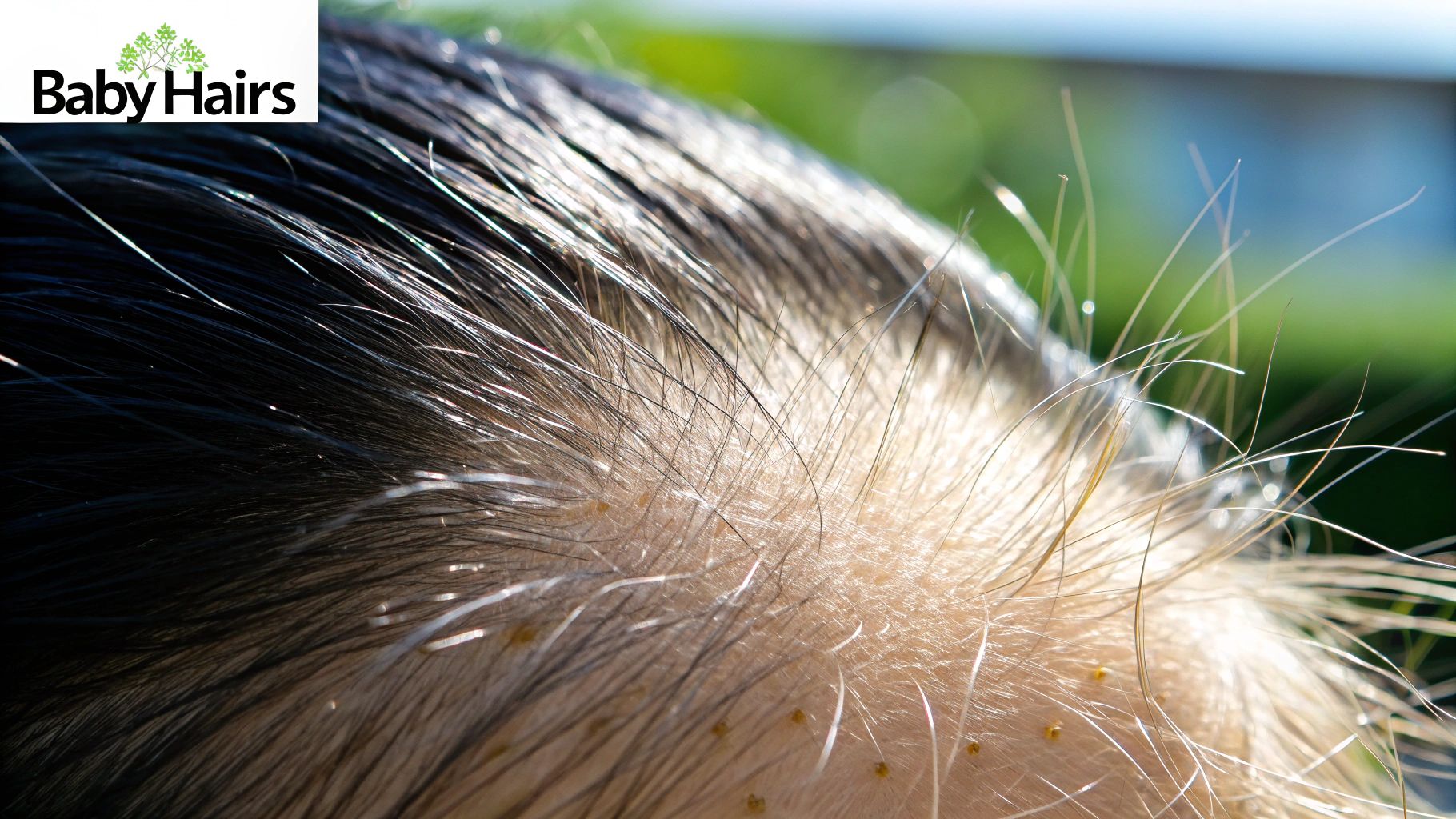
Baby hairs possess distinct characteristics that differentiate them from mature, terminal hairs. They typically exhibit a fine, wispy texture significantly softer than existing hair. Often lighter in color than your normal hair, these vellus hairs are usually only 1-2mm in length initially. You might notice they appear slightly curly or have a different texture compared to your terminal hairs. Due to their diminutive size, baby hairs are often most visible under good lighting conditions. Using a magnifying mirror can be incredibly helpful in spotting these early signs of growth, especially in the initial stages.
The appearance of vellus hairs is incredibly significant for men experiencing hair loss. It’s the earliest visible indicator of hair regrowth, providing concrete evidence that your follicles are responding to treatment or naturally recovering. This visual confirmation can be immensely encouraging, especially for those who have been struggling with hair loss for an extended period. Seeing these baby hairs emerge can instill a sense of hope and provide the motivation needed to continue with hair loss treatments. This early sign of growth often appears within 2-3 months of starting a treatment like minoxidil, offering a tangible reward for your efforts.
While the emergence of baby hair is a positive sign, it's essential to understand that not all vellus hairs will necessarily progress to mature, terminal hairs. Furthermore, these delicate hairs can be easily damaged by harsh styling practices like vigorous brushing or the use of harsh chemicals. It's crucial to handle them gently and avoid any styling techniques that might hinder their growth. Patience is key, as it can take anywhere from 6-12 months for these baby hairs to grow to a noticeable length and transition into thicker, more pigmented terminal hairs. It's also worth noting that some baby hairs may shed before maturing, which is a normal part of the hair growth cycle.
Several scenarios exemplify the appearance of vellus hairs as a precursor to full hair regrowth. Men using minoxidil, a topical medication for hair loss, often notice baby hairs emerging around the hairline first. For individuals recovering from chemotherapy, vellus hairs typically appear before normal hair returns, marking a significant milestone in their recovery. Similarly, patients undergoing hair transplant procedures often observe baby hairs sprouting around the 3-4 month mark post-procedure, signifying successful graft integration.
To effectively monitor and nurture the growth of your baby hairs, consider these helpful tips:
- Use a magnifying mirror in bright light: This will help you spot even the smallest vellus hairs and track their progress more accurately.
- Avoid harsh brushing or styling: Be gentle with the areas where baby hairs are emerging to prevent damage. Opt for wide-toothed combs and avoid harsh chemicals.
- Take close-up photos monthly: This allows you to visually document your progress and provides further encouragement as you witness the gradual transformation.
- Be patient: Remember that it takes time for vellus hairs to mature into terminal hairs. Consistency with your chosen treatment and a gentle approach to hair care are crucial during this phase.
The appearance of baby hair is a significant sign of new hair growth, providing hope and motivation for men on their hair restoration journey. By understanding the characteristics of vellus hairs and implementing these practical tips, you can effectively monitor their progress and maximize your chances of achieving fuller, healthier hair.
2. Reduced Hair Shedding
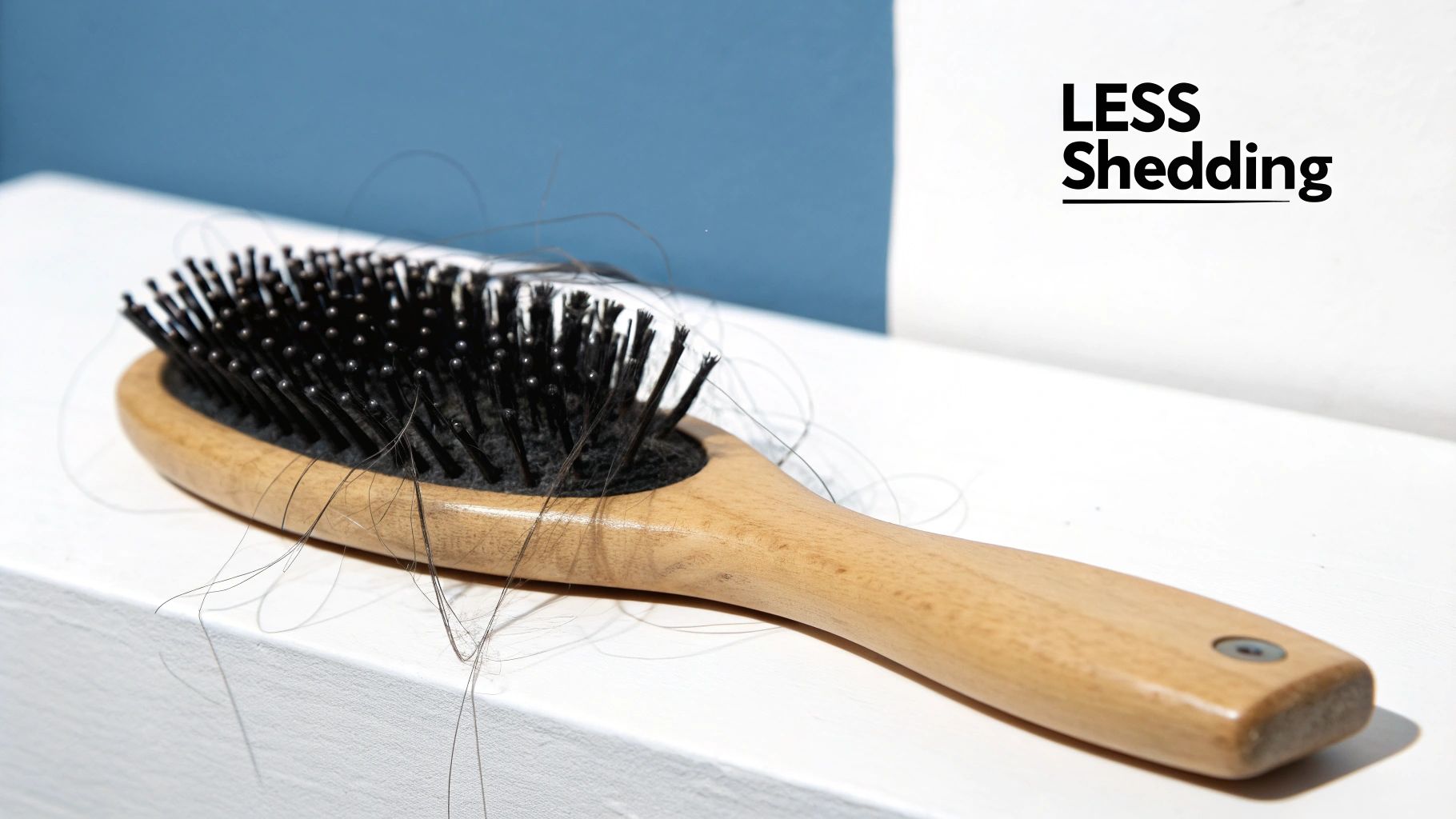
One of the most encouraging and often earliest signs of new hair growth is a noticeable reduction in hair shedding. For men experiencing hair loss, the sight of less hair in the shower drain, on the brush, or clinging to their clothes can be a significant psychological boost and an early indicator that a treatment is working. This decrease in shedding signifies that the hair growth cycle is beginning to stabilize and that new growth may be on the horizon. It's a critical sign to watch for, often preceding visible new hair, offering hope and reassurance during the often-stressful journey of combating hair loss. While seeing new hair sprouts is the ultimate goal, reduced shedding is a welcome intermediary step, indicating progress and offering tangible evidence that efforts to combat hair loss are yielding results.
The average person sheds between 50 and 100 hairs per day as part of the normal hair growth cycle. This cycle consists of three phases: anagen (growth), catagen (transition), and telogen (resting). Hair loss occurs during the telogen phase, after which new hairs begin to grow, pushing out the old ones. When hair loss accelerates, it often means that more hairs are entering the telogen phase prematurely, leading to increased shedding and thinning hair. A reduction in shedding, therefore, suggests that fewer hairs are entering this resting phase prematurely, and the hair growth cycle is returning to a healthier balance. This stabilization is crucial for fostering new hair growth and maintaining existing hair density.
Reduced shedding manifests in several ways. You might notice less hair accumulating in the shower drain or clinging to your brush after grooming. Fewer hairs on your pillowcase and clothing are also telltale signs. For men who style their hair regularly, reduced hair fall during manipulation and styling can be a particularly noticeable and encouraging sign. Essentially, you’ll experience a general decrease in hair fall throughout the day, preserving existing hair density while providing a foundation for new growth.
Several factors can contribute to reduced hair shedding. Medications like Finasteride, a common treatment for male pattern baldness, are known to reduce shedding within 6-8 weeks for many users. This is because Finasteride inhibits the production of dihydrotestosterone (DHT), a hormone that contributes to hair follicle miniaturization and subsequent shedding. Other treatments, such as DHT-blocking shampoos, can also contribute to less hair in the drain, working directly on the scalp to mitigate the effects of DHT. Furthermore, incorporating hair growth supplements that provide essential nutrients for hair health can also lead to decreased daily hair loss.
While reduced shedding is a positive sign, it's important to be aware of its limitations. The effect may be temporary if the treatment causing the reduction is discontinued. It can also be difficult to quantify objectively, making it challenging to accurately measure the extent of the reduction. Natural fluctuations in hair shedding patterns, often influenced by seasonal changes, can sometimes mask this sign. For example, shedding tends to increase slightly in the fall. Therefore, it’s crucial to consider these factors when assessing changes in hair shedding.
To better monitor your progress and ascertain whether you are experiencing reduced shedding, consider the following tips: Count the number of hairs in your shower drain for a week to establish a baseline. Keep a hair diary to track shedding patterns over time, noting any significant increases or decreases. Taking photos of the hair caught in your brush over time can also provide a visual record of changes. Finally, always consider seasonal variations when assessing changes in your shedding patterns. These practices will help you more accurately gauge the effectiveness of your hair loss treatments and recognize the positive sign of reduced shedding as an early harbinger of new hair growth.
3. Increased Hair Density
One of the most encouraging and visually impactful signs of new hair growth is increased hair density. This refers to a gradual thickening of existing hair and a noticeable increase in the number of visible hair strands per square inch of scalp. For men experiencing hair loss, this sign can be a significant milestone, marking a reversal of thinning and a return to a fuller head of hair. Increased hair density deserves its place on this list because it's a key indicator of successful hair regrowth and offers tangible evidence that treatments or interventions are working.
This increase in density occurs through a combination of processes. Dormant hair follicles, which have stopped producing hair, are reactivated and begin their growth cycle anew. Simultaneously, existing hairs, particularly those that have thinned or miniaturized due to androgenetic alopecia (male pattern baldness), begin to grow thicker and more robust. This two-pronged approach contributes to a more substantial and visually appealing head of hair. The scalp becomes less visible through the hair, leading to improved overall coverage, especially in areas previously affected by thinning.
The features of increased hair density are often quite apparent. You'll notice less scalp showing through your hair, even under bright lights. Individual hairs will appear thicker and stronger, feeling more substantial when you run your fingers through them. Thinning areas, such as the temples or crown, will start to fill in, providing better coverage and a more uniform appearance. This increased density also translates to improved hair volume and body when styling, allowing for more versatile hairstyles and a greater sense of control over your look.
The benefits of increased hair density are numerous and extend beyond the purely aesthetic. While a fuller head of hair undoubtedly provides a significant visual improvement, it also contributes to a boost in confidence and self-esteem. Many men struggling with hair loss experience a decline in self-image, and witnessing a reversal of this process can have a profound psychological impact. Furthermore, increased hair density makes styling easier and more effective. Products hold better, styles last longer, and the overall effort required to achieve a desired look is reduced. This improvement is often noticeable to others, who may compliment your overall appearance without necessarily pinpointing the specific change.
However, it's important to acknowledge the potential downsides and manage expectations. Increased hair density takes time to become clearly visible. While some initial changes may be noticeable sooner, significant improvements generally take between 6-12 months, depending on the individual and the treatment method. Progress can be slow and sometimes discouraging, especially during the initial stages. It's crucial to maintain consistency with your chosen treatment and avoid getting disheartened by the gradual pace of change. It's also important to understand that progress may plateau after the initial improvement phase. Maintaining the achieved density often requires continued treatment and adherence to a consistent regimen.
There are numerous real-world examples of increased hair density as a sign of new hair growth. Hair transplant patients typically see a significant increase in density 8-12 months post-procedure, as the transplanted follicles take root and begin producing new hair. Long-term users of minoxidil, a topical medication for hair loss, often report thicker-looking hair over time. Additionally, microneedling, a procedure that involves creating tiny punctures in the scalp to stimulate hair growth, combined with topical treatments, has shown promising results in improving hair density.
To effectively track your progress and stay motivated, consider these tips: take consistent photos from the same angles monthly to visually document changes over time. You can also utilize hair density measuring tools or apps available on the market, which can provide more objective data on hair thickness and coverage. Having a trusted friend or stylist assess changes can offer an outside perspective and further validate your observations. Most importantly, focus on the overall improvement rather than getting caught up in daily changes, as hair growth is a gradual process.
The concept of increased hair density as a sign of new hair growth has been popularized by hair restoration surgeons tracking the success of transplant procedures and dermatologists monitoring the effectiveness of various hair loss treatments. Their observations and documented results have solidified the importance of density as a key indicator of successful hair regrowth, offering hope and tangible results for men seeking to restore their hair.
4. Scalp Tingling or Increased Sensation
One of the most encouraging signs of new hair growth, especially when using topical treatments, is a subtle yet noticeable change in scalp sensation. This can manifest as a mild tingling, a gentle warming, or even a slight itching that's distinctly different from irritation. These sensations, often grouped under the umbrella of "scalp tingling," indicate increased blood circulation and follicular activity, suggesting that dormant hair follicles are waking up and preparing for new growth. This makes scalp tingling a valuable indicator in your journey to combat hair loss.
So, how does this work? When you apply topical hair growth treatments, they stimulate the blood vessels in your scalp, causing them to dilate. This increased blood flow delivers essential nutrients and oxygen to the hair follicles, creating the optimal environment for hair growth. Think of it like fertilizing a garden; the richer the soil, the healthier the plants. Similarly, the better the blood supply to your hair follicles, the more likely they are to produce healthy, new hair. This increased activity and blood flow often manifests as that tell-tale tingling or warming sensation.
The tingling sensation typically occurs within 15-30 minutes of applying topical treatments. It's often described as a mild, almost pleasant prickling or buzzing sensation. This is different from the burning or intense itching associated with irritation or allergic reactions. You might also notice increased sensitivity to touch in the treated areas. For men experiencing hair loss, this tingling can be a much-welcomed sign, offering reassurance that the treatment is actively working. It's like getting immediate feedback that the product is penetrating the scalp and stimulating the follicles.
Several examples illustrate this phenomenon. Men using minoxidil, a popular topical hair growth treatment, often report a tingling sensation within the first week of use. Similarly, those who incorporate rosemary oil into their hair care routine often experience a noticeable warming sensation on their scalp. Even microneedling, a procedure that involves creating tiny punctures in the scalp to stimulate collagen production and hair growth, can create a temporary increase in scalp sensitivity.
Pros of Experiencing Scalp Tingling:
- Immediate feedback: The tingling serves as an immediate indicator that the treatment is actively working and engaging the hair follicles.
- Improved circulation: The sensation confirms increased blood flow to the follicles, which is crucial for delivering nutrients and promoting hair growth.
- Early detection: You can experience this positive sign within days of starting a new topical treatment, providing early encouragement.
- Follicular stimulation: The tingling suggests active stimulation of the hair follicles, a key element in combating hair loss.
Cons to Consider:
- Potential confusion: The tingling can sometimes be mistaken for allergic reactions or irritation, particularly in individuals with sensitive skin.
- Discomfort: While usually mild, some individuals may find the sensation uncomfortable.
- Not universal: It's important to note that not everyone experiences this sensation, even if the treatment is effective.
- Diminishing returns: The tingling may decrease over time as your scalp adjusts to the treatment. This doesn't necessarily mean the treatment is less effective.
Tips for Managing Scalp Tingling:
- Differentiate between good and bad: Learn to distinguish between the therapeutic tingling associated with hair growth and the burning or itching of irritation. If you experience redness, swelling, or pain, discontinue use and consult a dermatologist.
- Start low and go slow: If the tingling sensation is too intense, start with a lower concentration of the treatment and gradually increase as your scalp adapts.
- Gentle application: Apply treatments gently to avoid over-stimulating the scalp and causing unnecessary irritation.
- Seek professional advice: If the sensation becomes painful or concerning, consult a dermatologist to rule out any adverse reactions.
Scalp tingling, while not a guarantee of hair growth, is a positive sign that your topical treatments are engaging your hair follicles and promoting increased blood circulation. It’s one of the many signs of new hair growth men should look for when embarking on a hair restoration journey. This phenomenon, popularized by minoxidil manufacturers and scalp massage therapists, highlights the importance of healthy blood flow in achieving optimal hair growth. By understanding this connection between scalp sensation and follicular activity, you can better monitor your progress and gain confidence in your chosen treatment plan. Remember to always consult with a dermatologist if you have concerns about hair loss or any unusual scalp sensations.
5. Changes in Hair Texture and Quality
One of the most encouraging signs of new hair growth, often overlooked, is a noticeable improvement in the overall texture and quality of your existing hair. While the appearance of new, baby-fine hairs is a clear indicator, changes in your current hair can signify that your follicles are revitalized and producing healthier, stronger strands. This is a particularly relevant sign for men experiencing hair loss, as it can indicate that treatments or lifestyle changes are beginning to take effect. Seeing these improvements can be a powerful motivator, especially in the early stages of a hair regrowth journey, as visible changes can boost confidence and encourage adherence to a chosen regimen.
This improvement stems from enhanced follicular health. Hair follicles, when healthy and functioning optimally, produce hair strands with a stronger protein structure (primarily keratin) and better moisture retention capabilities. This translates into hair that is shinier, stronger, less brittle, and more resilient to breakage – all welcome changes, particularly for men concerned about thinning or weakening hair. These textural shifts indicate that your follicles are receiving the necessary nutrients and operating in a healthier environment, laying the groundwork for robust new growth.
Features of Improved Hair Texture and Quality:
- Increased hair strength and resistance to breakage: You might notice less hair shedding during brushing or showering and a decrease in breakage when styling. This indicates the individual hair shafts are becoming more robust.
- Enhanced natural shine and luster: Healthier hair reflects light better, resulting in a more vibrant and less dull appearance. This shine is a clear visual cue of improved hair health.
- Improved elasticity and flexibility: Healthy hair has a natural "snap" and bounces back when stretched gently. Improved elasticity reduces the risk of breakage from everyday activities like combing or styling.
- Better moisture retention and less dryness: Well-hydrated hair is less prone to frizz, breakage, and split ends. This results in hair that feels smoother, softer, and more manageable.
- Reduced split ends and hair damage: Fewer split ends signal a decrease in hair shaft damage, indicating healthier growth from the follicle.
Pros of Observing Textural Changes:
- Improves existing hair while new growth develops: You benefit from healthier, better-looking hair even before significant new growth becomes visible. This provides an immediate boost to your hair's appearance.
- Makes hair easier to style and manage: Stronger, more resilient hair is generally more cooperative and easier to style, requiring less product and effort.
- Provides immediate visible benefits: Unlike nascent hair growth, which can be difficult to spot initially, changes in texture are often more noticeable and provide early encouragement.
- Indicates overall follicular health improvement: Positive changes in texture signify a healthier scalp environment and improved follicle function, paving the way for sustained hair growth.
Cons of Relying Solely on Textural Changes:
- Changes may be subtle and gradual: Improvements might not be dramatic overnight and require careful observation over time.
- Can be influenced by other hair care changes: New shampoos, conditioners, or styling products can temporarily improve hair texture, making it difficult to isolate the impact of new growth.
- May take several growth cycles to see full benefits: Just like visible new growth, significant improvements in texture can take time and patience.
- Environmental factors can mask improvements: Sun exposure, pollution, and harsh weather can temporarily affect hair texture, potentially obscuring underlying improvements.
Examples of Improved Hair Texture:
- Men supplementing with biotin often report stronger, less brittle hair.
- Keratin treatments, while temporary, provide a clear example of how improved protein structure enhances hair quality.
- Implementing a consistent, healthy hair care routine, including gentle cleansing and conditioning, often leads to noticeably improved texture.
Tips for Assessing Hair Texture Changes:
- Assess your hair quality when it's clean and unstyled: This provides a baseline for comparison and eliminates the influence of styling products.
- Compare hair elasticity by gently stretching strands: Note any increased resistance to breakage or improved "snap-back."
- Note changes in how your hair responds to styling: Does it hold styles better? Is it easier to manage? These changes can indicate improved texture.
- Keep a hair journal documenting texture changes: Regularly noting your observations helps track progress and identify subtle shifts you might otherwise miss. Photos can also be a helpful addition to your journal.
By paying attention to the texture and quality of your existing hair, you gain valuable insight into the health of your follicles and the effectiveness of any hair growth strategies you're employing. This is a crucial, often underestimated, sign of new hair growth for men and can serve as a powerful indicator of positive change.
6. Follicular Activity and Dark Spots: An Early Sign of Hair Growth
One of the most encouraging signs of new hair growth, especially for men experiencing hair loss, is the appearance of follicular activity and dark spots on the scalp. These subtle changes often precede visible hair growth and can be a crucial indicator that treatments are working and that dormant follicles are awakening. This sign deserves its place on the list because it offers an early glimpse of hope and allows for proactive monitoring of hair regrowth progress.
These dark spots, often tiny and barely noticeable, represent active hair follicles gearing up to produce new hair. How does this work? Essentially, blood flow increases to previously dormant follicles, delivering vital nutrients and stimulating hair production at the root level. The dark appearance comes from the production of melanin, the pigment responsible for hair color, within the follicle as the new hair shaft begins to form beneath the skin surface. These spots usually appear in areas that were previously bald or thinning, signaling a reversal of the hair loss process. You may also notice slight scalp texture changes accompanying these dark spots, further indicating renewed follicular activity.
Follicular activity and dark spots offer several advantages as an indicator of hair growth:
Pros:
- Early Indicator: They are an early sign of follicular reactivation, often appearing weeks before visible hair emerges.
- Treatment Effectiveness: Their presence demonstrates that the chosen hair loss treatment is effectively reaching the follicular level.
- Melanin Production Resumption: The dark color signifies that melanin production, crucial for hair pigmentation, is resuming.
However, there are also some potential drawbacks to consider:
Cons:
- Potential for Misidentification: The spots can sometimes be confused with normal skin pigmentation changes or other skin conditions.
- Not Always Visible: Not all active follicles will exhibit visible dark spots.
- May Not Always Lead to Hair Growth: In some cases, follicular activity may not progress to visible hair emergence.
Examples of Follicular Activity and Dark Spots:
- Hair Transplant Patients: Individuals undergoing hair transplant surgery often observe dark spots on the recipient area before new hairs emerge from the transplanted grafts.
- Alopecia Areata Recovery: People with alopecia areata, a condition causing patchy hair loss, frequently notice dark spots as their hair follicles begin to recover.
- Laser Therapy Users: Those utilizing laser therapy for hair loss often report an increase in these follicular activity spots.
Tips for Observing and Monitoring Follicular Activity:
- Magnification and Lighting: Use good lighting and a magnifying glass or a close-up camera lens to better observe subtle changes on your scalp.
- Photographic Documentation: Take regular close-up photos of your scalp to track the appearance and progression of follicular activity.
- Avoid Manipulation: Refrain from picking or scratching at the dark spots to prevent potential irritation or infection.
- Consult a Dermatologist: If the spots appear inflamed, red, or accompanied by any unusual symptoms, consult a dermatologist to rule out any underlying skin conditions.
Follicular activity and dark spots have been popularized as an indicator of hair growth success primarily by hair transplant surgeons monitoring graft success and dermatologists treating various alopecia conditions.
The following infographic illustrates the typical timeline of follicular activity and subsequent hair emergence:
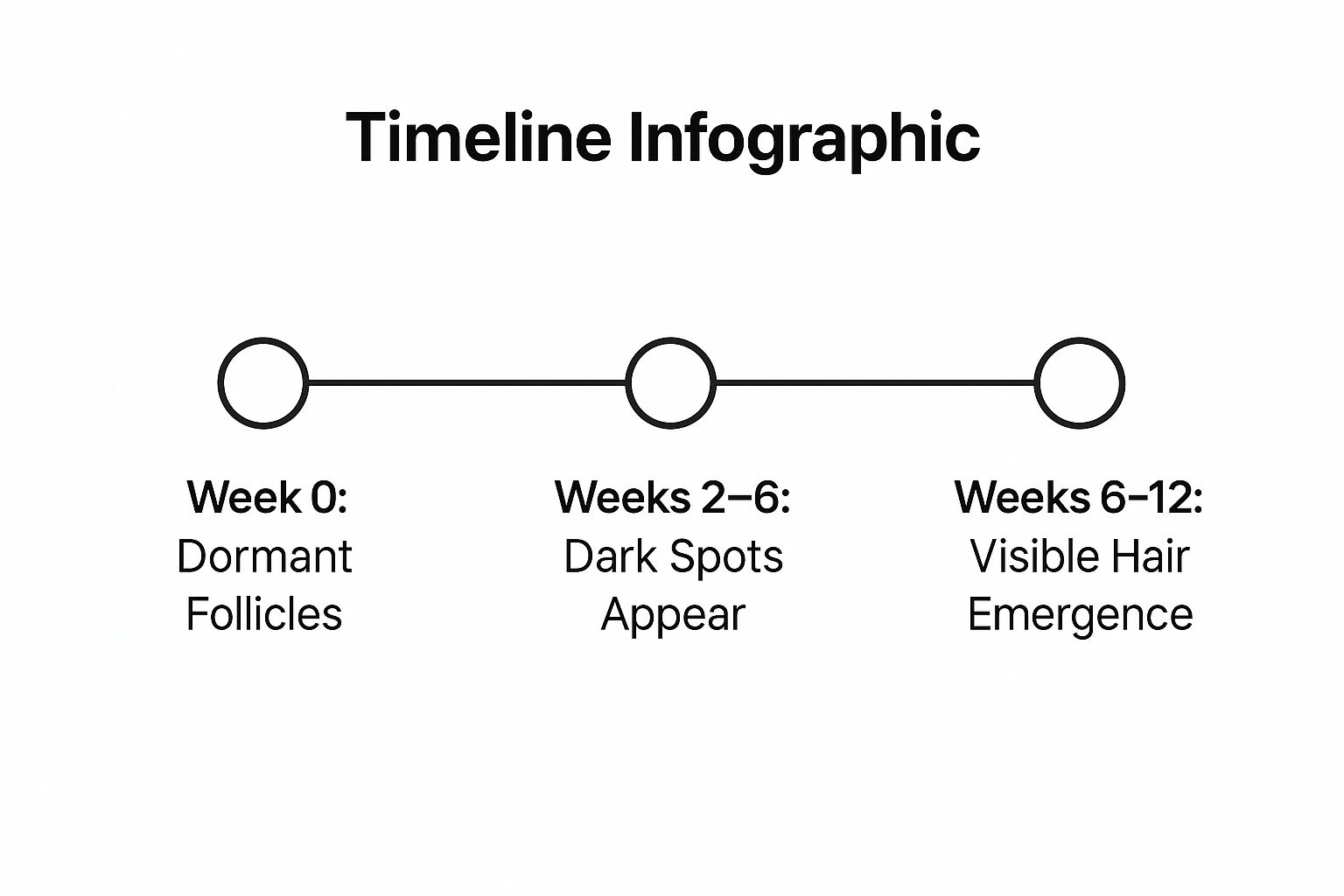
This timeline infographic depicts the progression from dormant follicles (Week 0) to the appearance of dark spots (Weeks 2-6) and finally, visible hair emergence (Weeks 6-12).
As the infographic demonstrates, the appearance of dark spots marks a crucial intermediary stage between dormant follicles and the eventual emergence of visible hair, typically taking several weeks for this transition to occur. Observing these dark spots offers a valuable early sign of new hair growth, providing encouragement and allowing for ongoing monitoring of treatment effectiveness. For men seeking to combat hair loss, recognizing and understanding the significance of follicular activity and dark spots can be an essential step in the journey towards hair restoration.
7. Improved Hairline Definition
One of the most noticeable and often celebrated signs of new hair growth is an improved hairline definition. This refers to the gradual filling in and strengthening of the hairline, particularly around the temples and frontal areas, which are typically the first regions to experience hair loss. This improvement manifests as the appearance of new hairs along the hairline border, coupled with the thickening of existing miniaturized hairs (vellus hairs) in these areas. The overall effect is a more defined and less receded hairline, creating a more youthful and full appearance. This visible transformation can significantly impact one's self-confidence and overall perception of their appearance, making it a key indicator of successful hair regrowth. A defined hairline effectively frames the face, adding structure and balance to facial features. This sign is particularly important for men, as a receding hairline is often associated with aging and can be a source of insecurity. This is why improved hairline definition deserves its place among the most sought-after signs of new hair growth.
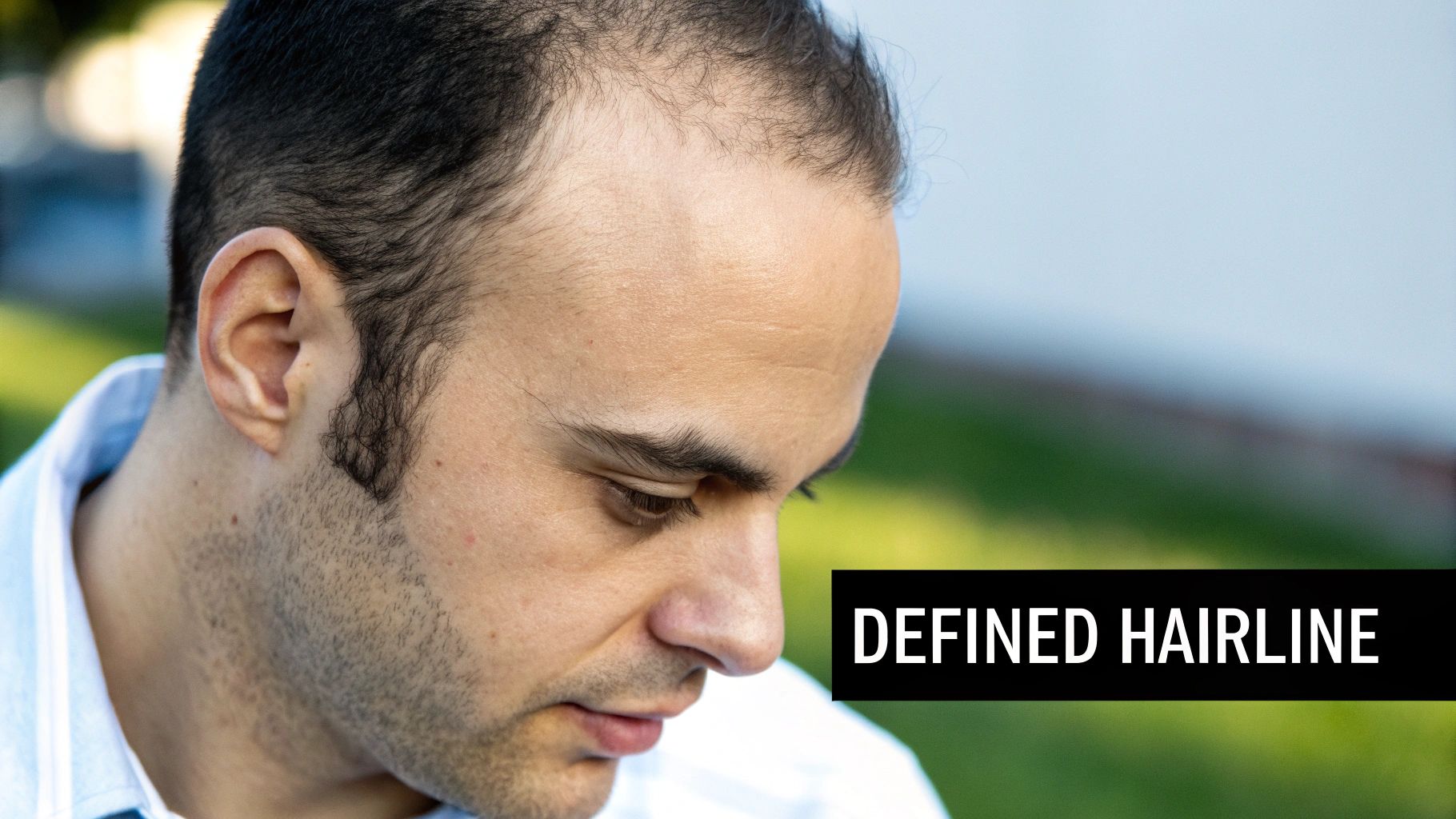
Improved hairline definition is characterized by several key features: the emergence of entirely new hairs along the previously receding hairline border; the thickening of existing fine, vellus hairs, especially at the temples; a reduction in the overall recession of the frontal hairline; a clearer, more defined separation between the forehead and the hair-bearing scalp; and a noticeable filling in of areas that were previously sparse. These changes contribute to a more youthful and robust appearance, which is why hairline restoration is a primary focus for many individuals experiencing hair loss.
The benefits of a restored hairline are significant. It's a highly visible improvement that others readily notice, leading to a boost in confidence and self-image. A well-defined hairline significantly enhances facial framing, contributing to a more aesthetically pleasing and balanced look. For many men experiencing hair loss, hairline restoration is often the most desired outcome of treatment.
However, achieving a significantly improved hairline can be a long and sometimes challenging process. It often takes the longest time to see noticeable changes in this area compared to other signs of new hair growth. The hairline is often the most resistant area to treatment, potentially requiring combination therapies for optimal results. Furthermore, regrowth in the hairline can sometimes be patchy or uneven during the initial phases, requiring patience and persistence.
Several methods can contribute to improved hairline definition. Hair transplant procedures specifically target hairline restoration by surgically relocating hair follicles from denser areas of the scalp to the hairline. Medications like Finasteride, a 5-alpha-reductase inhibitor, can help improve hair density, and users may see improvements in the temple area over 12-24 months. Combination therapy, such as using Minoxidil (a topical solution that stimulates hair growth) alongside Finasteride, has shown promising results in promoting hairline benefits. These examples highlight that achieving hairline improvement often involves a multifaceted approach and a commitment to long-term treatment.
To effectively track your progress, it's crucial to document your hairline changes. Take consistent front-facing photos monthly, ensuring consistent lighting and camera distance for accurate comparisons. Patience is key, as significant hairline improvements typically take 12 months or more. For severe recession, consulting with a hair restoration specialist or dermatologist is highly recommended to explore tailored treatment options and manage expectations realistically.
The desire for a defined hairline has been popularized by several factors, including highly publicized celebrity hair restoration cases like Elon Musk and Wayne Rooney. The hair transplant industry's marketing campaigns often focus on showcasing dramatic before-and-after hairline transformations, further fueling the desire for this sign of new hair growth. Social media platforms also contribute to this trend, with users sharing their personal experiences and before/after photos, creating a community around hair restoration and highlighting the transformative power of a revitalized hairline. This social proof reinforces the significance of hairline definition as a key indicator of successful hair regrowth and a crucial element in achieving a youthful and confident appearance.
7 Signs of New Hair Growth Comparison
| Sign | Implementation Complexity 🔄 | Resource Requirements ⚡ | Expected Outcomes 📊 | Ideal Use Cases 💡 | Key Advantages ⭐ |
|---|---|---|---|---|---|
| Baby Hair or Vellus Hairs | Low – natural regrowth indicator | Minimal – observation tools like magnifying mirror | Early sign of follicle activation; thin new hairs visible | Tracking early hair regrowth in treatment users | Earliest visible growth sign; motivates continued treatment |
| Reduced Hair Shedding | Low – simple monitoring | Low – hair counting tools, diary | Decreased daily hair loss; stabilizing hair cycle | Assessing initial treatment effectiveness | Early, encouraging sign; preserves existing hair |
| Increased Hair Density | Moderate – long-term consistent treatment | Moderate – treatment products, photo tools | Thicker, fuller hair appearance; improved scalp coverage | Long-term hair restoration and appearance improvement | Significant visual gain; boosts confidence |
| Scalp Tingling or Increased Sensation | Low – sensory feedback from topical use | Low – topical treatments | Tingling or warming indicates follicle stimulation | Early feedback for topical hair growth treatments | Immediate indication that treatment is working |
| Changes in Hair Texture and Quality | Low to Moderate – relies on hair care regimen | Moderate – supplements, hair care | Stronger, shinier, less brittle hair | Improving hair health alongside growth treatments | Visible quality improvement; enhances style and manageability |
| Follicular Activity and Dark Spots | Low – requires close observation | Low – magnification and good lighting | Dark spots indicate active follicles before hair emerges | Monitoring follicular activation post-treatment | Early follicle activation sign; precedes visible hair growth |
| Improved Hairline Definition | High – long duration, potentially multiple treatments | High – combination therapies, surgeries | Noticeably restored hairline; thicker temple hair growth | Targeting frontal hair loss and hairline restoration | Highly visible, confidence-boosting outcome |
Next Steps on Your Hair Growth Journey
Recognizing the signs of new hair growth is the first step towards regaining your confidence. From the appearance of vellus hairs and reduced shedding to increased density and improved hairline definition, understanding these indicators allows you to effectively monitor your progress. Remember the key takeaways: patience and consistency are crucial. Mastering these concepts empowers you to take control of your hair regrowth journey and celebrate every milestone, no matter how small. Looking to boost your online presence and connect with a wider audience? Growing your Instagram following can be a powerful way to share your hair growth journey and inspire others. Check out this guide on how to grow Instagram followers organically.
Seeing those initial signs of new hair growth can be incredibly motivating, and treatments like PRP can help accelerate the process. PRP For HairLoss can further stimulate those follicles and enhance the results you're working towards. Want to learn more about how PRP can amplify the signs of new hair growth you're seeing? Visit PRP For HairLoss to discover how this innovative treatment can help you achieve your hair restoration goals.

 PRP For Hairloss
Leave a comment