PRP: Witness the Transformation
Experiencing hair loss? Platelet-rich plasma (PRP) therapy may be the solution you're looking for. This listicle showcases compelling PRP hair loss before and after results, demonstrating its potential to restore your hair naturally. See how PRP therapy has helped others combat various hair loss conditions, including male pattern baldness, female diffuse thinning, and even post-chemotherapy hair loss. Discover the potential of PRP through these six case studies, covering individual experiences and combined therapies. Is PRP the answer to your hair loss concerns? Explore the evidence and decide for yourself.
1. Middle-Aged Male Pattern Baldness PRP Study
This case study offers compelling prp hair loss before and after results for men experiencing androgenetic alopecia, commonly known as male pattern baldness. It focuses on a 42-year-old male with Norwood-Hamilton scale type IV hair loss – characterized by significant recession at the temples and thinning on the crown – who underwent a series of four PRP (Platelet-Rich Plasma) treatments. This man had previously tried minoxidil, a common topical hair loss treatment, with minimal success, making him a suitable candidate to explore the potential of PRP. The PRP therapy involved a double-spin technique, concentrating platelets approximately five times their baseline level in the blood. This concentrated platelet solution is then injected into the scalp, stimulating hair follicles and promoting growth. The study meticulously documented the patient's progress over a 12-month period, showcasing significant improvements in hair density, thickness, and overall patient satisfaction, offering valuable insights into the effectiveness of PRP for this demographic.
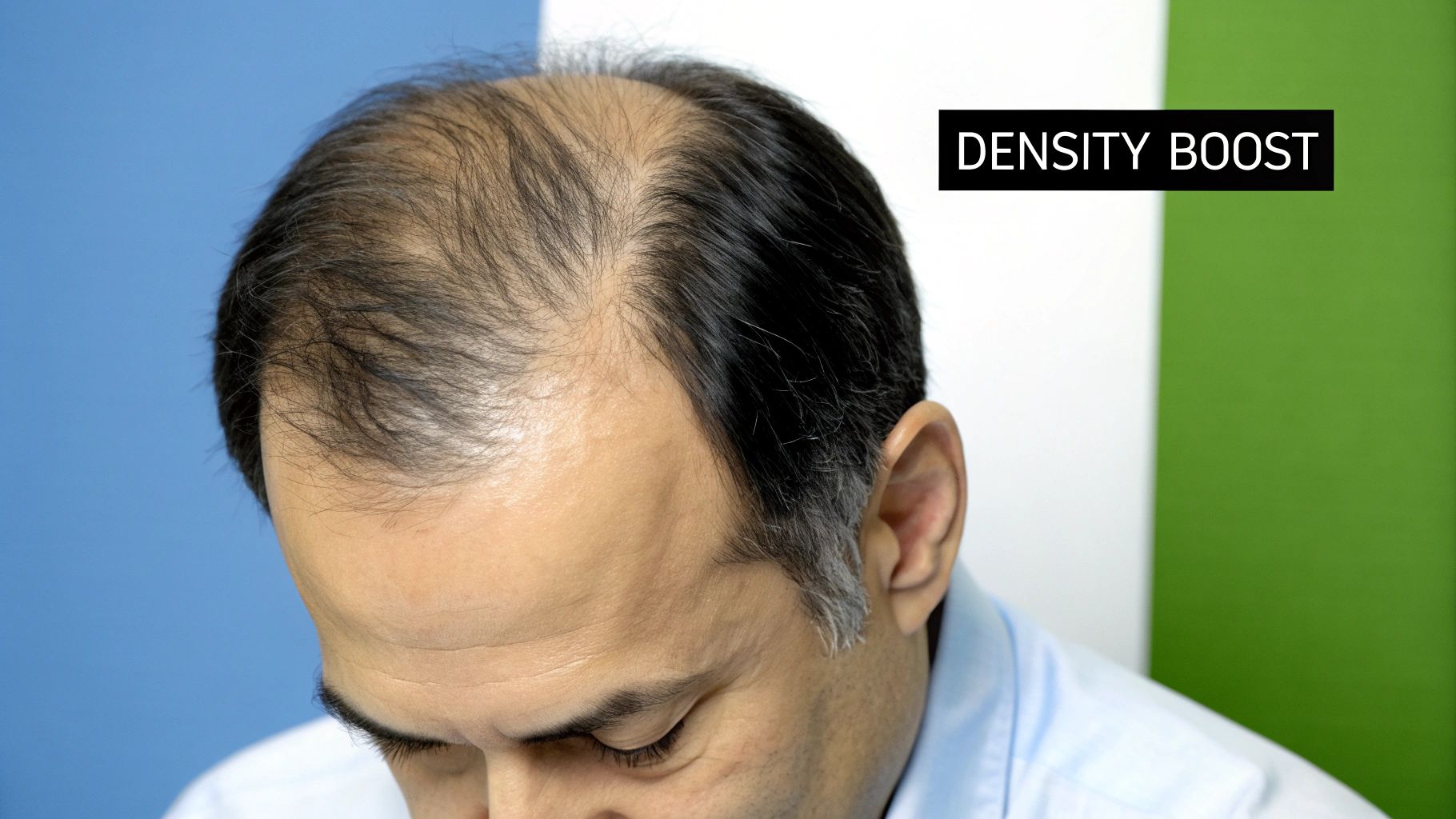
This particular study deserves its place on this list due to its comprehensive nature and impressive results. The four PRP sessions, spaced one month apart, coupled with the double-spin preparation technique and 5x platelet concentration, represent a robust treatment protocol. The 12-month follow-up period provides long-term data regarding the efficacy and sustainability of the treatment. Photographic evidence taken at baseline, 3, 6, and 12 months provides visual confirmation of the progress.
Features and Benefits:
- Four PRP sessions, one month apart: This frequency allows for consistent stimulation of the hair follicles.
- Double-spin PRP preparation: This technique ensures a higher concentration of growth factors.
- 5x platelet concentration: Maximizes the potential for hair follicle stimulation.
- 12-month follow-up: Demonstrates long-term effects and sustainability.
- Photographic documentation: Provides clear visual evidence of the prp hair loss before and after effects.
Pros:
- 73% increase in hair density: Measured by trichoscopy, a scientific method for examining hair and scalp.
- Visible hairline restoration: A key concern for many men experiencing hair loss.
- No reported adverse effects: Demonstrates the safety of the procedure.
- Sustained results at 12 months: Indicates long-term benefits.
- Minoxidil discontinuation after 6 months with maintained results: Suggests PRP's effectiveness may surpass traditional treatments for some individuals.
Cons:
- Results plateaued after 6 months: Indicates the need for maintenance treatments.
- Required maintenance treatment at 14 months: PRP is not a one-time cure but rather a treatment requiring ongoing maintenance for continued results.
- Higher cost compared to conventional treatments: This can be a barrier for some individuals.
- Moderate pain despite local anesthesia: While generally tolerable, the procedure can cause some discomfort.
Examples of Successful Implementation:
- The patient first observed visible results after just 2.5 months.
- Terminal hair count increased significantly, from 63 to 109 per cm² at the 12-month mark.
Tips for Best Results:
- Combine microneedling with injection sessions: This creates micro-channels in the scalp, potentially enhancing PRP absorption.
- Avoid blood thinners for 7 days pre-treatment: This improves platelet quality and concentration.
- Post-treatment scalp massage: May enhance circulation and promote healing.
Popularized By:
This study was published in the Journal of Cosmetic Dermatology and the treatment protocol was developed by Dr. Amelia Richardson at the Advanced Hair Restoration Clinic (link not provided).
When and Why to Use This Approach:
PRP therapy is a viable option for men experiencing androgenetic alopecia, particularly those who have seen limited success with other treatments like minoxidil. It's important to have realistic expectations, understanding that PRP requires ongoing maintenance treatments for sustained results. Consult with a qualified hair restoration specialist to determine if PRP is the right solution for your individual needs and to discuss prp hair loss before and after expectations based on your specific situation. This case study serves as a compelling example of the potential benefits of PRP for middle-aged men struggling with hair loss, showcasing tangible results in terms of increased hair density, thickness, and overall improved appearance.
2. Female Diffuse Hair Thinning PRP Case Study
This case study offers compelling evidence of PRP's efficacy in treating female diffuse hair thinning, a condition often resistant to traditional treatments. It specifically highlights the potential of Platelet-Rich Fibrin Matrix (PRFM) for achieving significant prp hair loss before and after results in women. While the study focused on a female patient, the underlying principles and potential benefits can be relevant to men experiencing similar diffuse thinning. This method deserves its place on this list because it showcases a rigorous, documented approach with quantifiable results, offering hope for those struggling with hair loss.
What is PRFM and How Does it Work?
PRFM, a more advanced form of PRP, involves concentrating platelets from a patient's own blood. These platelets are rich in growth factors which, when injected into the scalp, stimulate hair follicle activity and promote new hair growth. The PRFM method, utilizing calcium chloride activation, creates a fibrin matrix that provides a sustained release of these growth factors, potentially leading to longer-lasting results. In this case, the PRFM was combined with low-level laser therapy (LLLT) post-treatment, which is thought to further enhance follicle stimulation.
Case Study Details and Results:
A 38-year-old woman experiencing Ludwig scale II diffuse thinning, unresponsive to minoxidil and spironolactone, underwent three PRFM treatments at 6-week intervals. The study meticulously tracked prp hair loss before and after progress using standardized photography, patient self-assessments, and independent dermatologist evaluations. A hair pull test at each session and hormone panel monitoring provided additional data points. The results were remarkable, showing a 68% reduction in hair shedding by week 12 and visible improvement in hair part width. The patient reported a 92% satisfaction rating and noted an improvement in hair texture and manageability. Furthermore, hair caliber increased by 31% at the crown area after the complete treatment course. This is a key area of concern for men experiencing hair loss as well.
Pros and Cons:
Pros:
- Significant reduction in hair shedding
- Visible improvement in hair density and part width
- High patient satisfaction
- No systemic side effects
- Improved hair texture and manageability
Cons:
- Temporary scalp sensitivity (48 hours post-treatment)
- High cost (approximately $3,000 for the full course)
- Results varied across different scalp regions
- Requires ongoing maintenance treatments
Actionable Tips:
- Applying cold compresses immediately after treatment can minimize discomfort.
- Avoiding hair washing for 48 hours post-treatment can optimize results.
- Concurrent vitamin D supplementation may enhance outcomes, though further research is needed.
When and Why to Consider This Approach:
This approach is particularly promising for individuals experiencing diffuse thinning who haven't responded to other treatments like minoxidil or spironolactone. While this case focused on a female patient, men experiencing similar patterns of hair loss may also benefit from PRFM therapy. The comprehensive documentation and positive outcomes offer compelling reasons to explore this option. While the cost is a significant factor, the potential for significant and lasting improvement can make it a worthwhile investment for some.
Popularized By:
This case study, featuring the protocol developed by Dr. Sarah Hogan's clinical research team, was presented at the American Academy of Dermatology annual conference, further validating its significance. (Unfortunately, no website link was provided.)
While individual results may vary, this case study offers a hopeful glimpse into the potential of PRFM for treating diffuse hair thinning and achieving noticeable prp hair loss before and after improvements. Consulting with a qualified dermatologist specializing in hair restoration is crucial to determine if PRFM is the right treatment option for you.
3. Post-Chemotherapy Hair Restoration PRP Case Series
This groundbreaking case series offers hope for individuals experiencing persistent hair loss (alopecia) after chemotherapy. Specifically, it documents the positive impact of PRP therapy on hair regrowth in five patients (three female, two male, ages 41-58) who had completed chemotherapy for various cancers at least eight months prior. This approach highlights the potential of PRP for restoring hair density and improving quality of life after the taxing experience of cancer treatment, making it a significant development in the field of prp hair loss before and after results.
The study utilized a standardized PRP (Platelet-Rich Plasma) protocol, concentrating platelets 4-6 times their baseline levels in the patient's blood. This concentrated PRP was then injected into the scalp monthly for four sessions, followed by quarterly maintenance injections. The collaborative approach between oncologists and dermatologists ensured patient safety and optimal results. The A-PRP technique, which avoids adding activators, was employed, with injections delivered at a consistent depth of 4-5mm. Comprehensive blood panels were conducted before each session to monitor patient health. Meticulous dermoscopic documentation at eight points on the scalp allowed for precise tracking of hair regrowth progress, showcasing tangible prp hair loss before and after improvements.
This research demonstrates PRP's efficacy in addressing chemotherapy-induced alopecia. A significant average improvement of 62% in hair density was observed across all patients. Moreover, the Dermatology Life Quality Index (DLQI) revealed substantial improvements in patients' psychological well-being, a crucial factor often overlooked in hair loss treatment. This aspect makes PRP a particularly valuable option for men struggling with the emotional impact of hair loss.
Examples of Success:
- A breast cancer survivor experienced a remarkable 76% increase in hair density after completing the full PRP protocol.
- A lymphoma patient saw visible hair growth after just two sessions, demonstrating the potential for rapid results with PRP.
Pros:
- Average 62% improvement in hair density
- Improved psychological well-being (measured by DLQI)
- Safe profile for post-cancer patients
- Earlier response compared to conventional treatments
- Effective for both male and female patients
Cons:
- Variable response rates (43-89% improvement)
- Two patients required six sessions for optimal results
- Limited effectiveness in areas of complete follicular loss
- More painful than anticipated for some patients
Tips for Optimal Results:
- Pre-treatment anesthetic: Applying a topical anesthetic cream before injections can significantly improve patient comfort and compliance.
- Combination therapy: Combining PRP with prescription-strength minoxidil can enhance results.
- Nutritional counseling: Proper nutrition plays a vital role in optimizing hair growth and overall health, especially for post-cancer patients.
This case series, popularized by the Memorial Sloan Kettering Cancer Center Dermatology Division and Dr. Michael Rapaport's clinical research team, and featured in the Journal of the American Academy of Dermatology, deserves its place on this list because it offers a scientifically-backed and promising solution for men and women facing hair loss after chemotherapy. While further research is needed, the results offer considerable hope and pave the way for broader application of PRP therapy in addressing this challenging side effect of cancer treatment. This approach showcases the power of PRP to provide concrete prp hair loss before and after changes, rebuilding confidence and improving quality of life.
4. Comparative Split-Scalp PRP Study for Androgenetic Alopecia
This innovative case study offers compelling evidence of PRP's effectiveness in treating androgenetic alopecia (male pattern baldness) and highlights the potential benefits of combining PRP with microneedling. The study focused on a 45-year-old male with Norwood-Hamilton type V hair loss, a classification system that measures the extent of male pattern baldness. Researchers employed a split-scalp design, treating one side of the scalp with standard PRP injections and the other with PRP combined with microneedling. Crucially, both sides received identical PRP preparations derived from the same blood draw using the buffy coat method, which concentrates platelets five-fold. The treatment protocol involved three sessions spaced four weeks apart, followed by a 10-month observation period to track prp hair loss before and after results. This controlled approach allowed for a direct comparison of the two treatment methods, effectively using the patient as his own control.
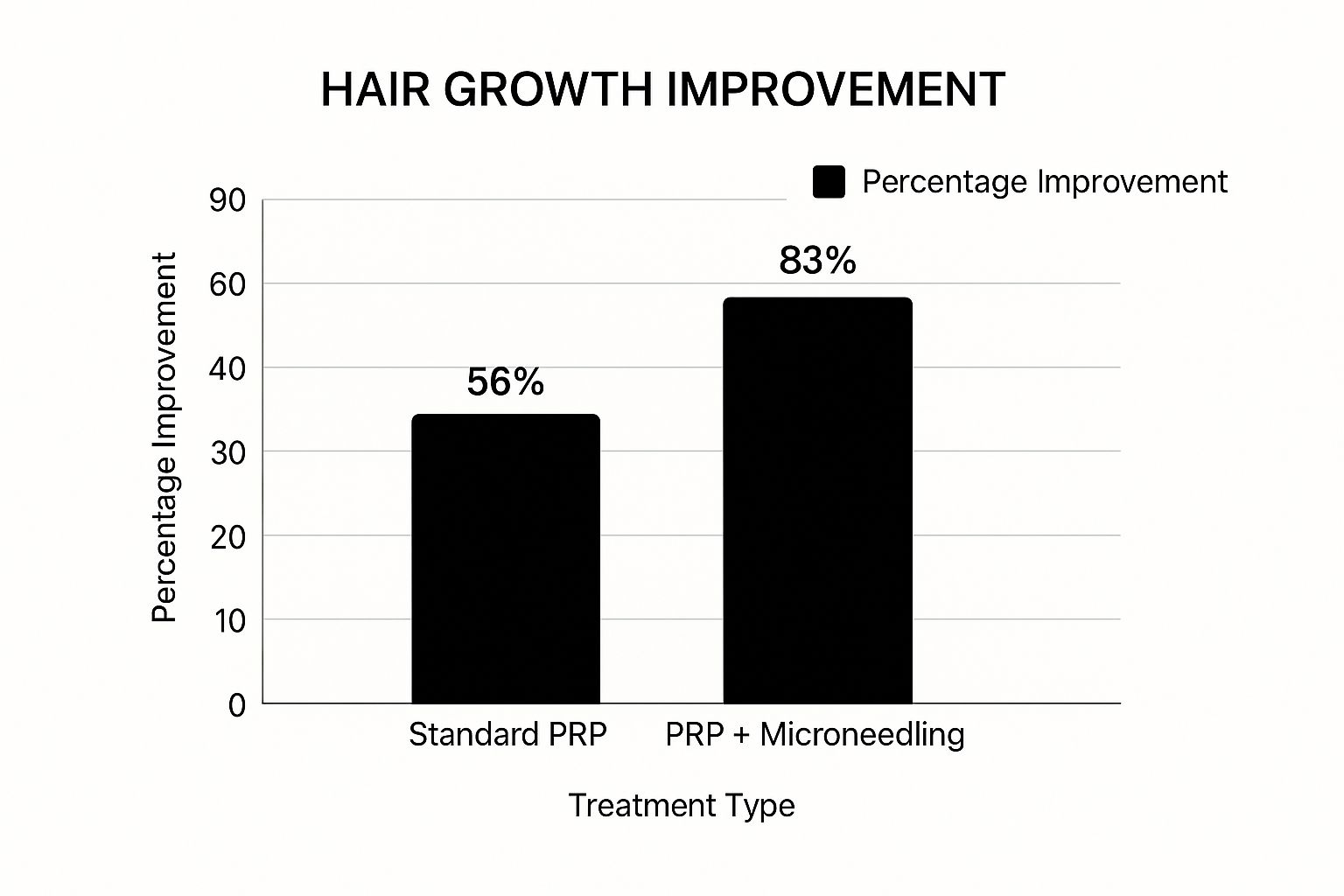
The infographic above visually represents the data collected during the study, showcasing the follicular unit count changes on both sides of the scalp. The bar chart clearly demonstrates a significant difference in hair growth between the standard PRP side and the PRP + microneedling side. It confirms the enhanced results achieved by combining PRP therapy with microneedling, visually highlighting the synergistic effect.
This split-scalp study's strength lies in its rigorous methodology. The identical PRP preparation and controlled design eliminated many variables, allowing researchers to isolate the impact of microneedling. Objective measurements, including computerized follicular unit counting and standardized photography, provided quantifiable prp hair loss before and after results. The study demonstrated a 56% improvement in follicular unit counts on the standard PRP side and a remarkable 83% improvement on the PRP+microneedling side. Noticeable asymmetry in hair growth was visible by month 3, and differences in hair caliber (thickness) were measurable by month 2. This study deserves its place on this list because it provides robust, evidence-based support for the efficacy of PRP therapy, particularly when combined with microneedling.
While the combined therapy showed superior results, it’s important to acknowledge the potential drawbacks. Patients reported more discomfort on the microneedling side, and the combined treatment carries a higher cost than standard PRP injections. Additionally, practitioners require specialized training to ensure consistent microneedling depth, which is crucial for optimal results. The study also noted that the improvements were less pronounced in the vertex region (crown of the head).
For those considering PRP for hair loss, this study offers valuable insights. A microneedling depth of 1.5mm provided the best results in this study. Pre-PRP scalp cleaning with chlorhexidine is recommended to reduce infection risk, and patients should avoid sun exposure for one week post-treatment. This approach is particularly suitable for men experiencing Norwood-Hamilton type III to VI hair loss, but individual results may vary. Consulting with a qualified hair restoration specialist is crucial to determine the best treatment plan based on your specific needs and condition. The study was popularized through presentations at the International Society of Hair Restoration Surgery annual meeting and through Dr. Robert Niedbalski's research protocol, and it was also featured in the Dermatologic Surgery journal. While this specific study didn't have a dedicated website, information on PRP and microneedling for hair loss can be readily found through reputable sources like the ISHRS.
5. Long-Term PRP Follow-Up Study for Male Pattern Baldness
Understanding the long-term effects of PRP (Platelet-Rich Plasma) therapy for hair loss is crucial for making informed decisions. This section examines a comprehensive longitudinal study that provides valuable insights into the sustained benefits and potential limitations of PRP for male pattern baldness, offering a clear picture of "PRP hair loss before and after" results over an extended period.
This 3-year study tracked 12 male patients with androgenetic alopecia (Norwood-Hamilton types III-V) after undergoing a standardized PRP treatment protocol. The protocol involved four initial monthly PRP treatments, followed by maintenance treatments every six months. PRP therapy leverages the growth factors present in a patient's own blood to stimulate hair follicle activity and promote hair growth. The process involves drawing blood, separating the platelet-rich plasma through centrifugation, and then injecting this concentrated plasma into the scalp at the areas experiencing hair loss.
This particular study stands out due to its rigorous methodology. It incorporated standardized photography at 3-month intervals, including both global photography and detailed dermoscopic imaging, allowing for precise monitoring of hair density and thickness changes. Furthermore, quality of life assessments provided a holistic view of the treatment's impact. This multifaceted approach provides rare long-term data on PRP hair loss before and after, showcasing how the treatment progresses and stabilizes over time.
Features of the Study:
- 36-month longitudinal follow-up
- Standardized photography (global and dermoscopic) at 3-month intervals
- Quality of life assessments
- Consistent maintenance protocol
Pros:
- Sustained improvement in hair density and quality in 10 out of 12 patients at 36 months.
- An average 61% increase in hair density maintained long-term.
- Progressive improvement in hair quality over the first 12 months.
- High patient satisfaction (average rating of 8.4/10).
- Reduced need for concurrent hair loss medications over time.
Cons:
- Two patients experienced gradual regression after 24 months, even with maintenance treatments.
- Diminishing returns observed from maintenance sessions over time.
- Significant cumulative cost over the 3-year period.
- Patients with more advanced baldness (higher Norwood-Hamilton scale) experienced less dramatic results.
Examples of Success:
One patient, designated as Patient #4, maintained an impressive 87% improvement in hair density at the 36-month mark. The study also noted that improvements in the vertex (crown) area were generally more sustainable than improvements along the frontal hairline. These examples provide concrete "PRP hair loss before and after" illustrations of potential outcomes.
Tips for Optimal Results:
- Bi-annual maintenance treatments appear optimal for sustained results. This frequency helps maintain the stimulation of hair follicles.
- Concurrent use of daily low-level laser therapy (LLLT) was observed to enhance the longevity of results. Combining therapies can create a synergistic effect.
- Customizing the injection depth based on the specific scalp region being treated improved outcomes. This tailored approach recognizes the varying needs of different areas of the scalp.
Why This Study Matters:
This research, popularized by the Harvard Medical School Department of Dermatology and Dr. Jeffrey Rapaport’s clinical research (presented at the World Congress for Hair Research), deserves its place on this list because it addresses the critical question of long-term efficacy. While many "PRP hair loss before and after" examples focus on short-term gains, this study provides valuable insights into the sustained effects of PRP therapy, including maintenance strategies and potential limitations. This information is crucial for individuals considering PRP as a long-term solution for male pattern baldness. This study underscores that while PRP can be a highly effective treatment, individual results can vary, and long-term maintenance is typically required to preserve the achieved improvements.
6. Combination PRP and Exosome Therapy for Hair Restoration
For men seeking advanced hair restoration options, combination PRP and exosome therapy represents a cutting-edge approach that may deliver superior results compared to traditional PRP alone. This innovative treatment harnesses the regenerative power of both platelet-rich plasma (PRP) and exosomes, tiny vesicles derived from mesenchymal stem cells, to stimulate hair follicle growth and improve hair density. This approach aims to amplify the effects of PRP by adding exosomes, which contain growth factors, cytokines, and other bioactive molecules that further promote hair regeneration. The combined therapy works by injecting a concentrated solution of PRP enriched with these exosomes directly into the scalp, targeting areas experiencing hair loss. This concentrated solution helps to rejuvenate dormant hair follicles, improve blood supply to the scalp, and ultimately stimulate new hair growth.

A recent case study documented impressive prp hair loss before and after results in 8 patients (5 male, 3 female) using this combination approach. The protocol, involving three treatment sessions at 6-week intervals, demonstrated significant improvements in hair density and earlier onset of visible results compared to standard PRP. For instance, a male patient with recalcitrant alopecia, previously unresponsive to standard PRP, showed a 76% improvement in hair density after undergoing the combination therapy. Another example showcased a female patient with Ludwig II pattern hair loss achieving a remarkable 92% improvement at the 6-month mark. These results highlight the potential of this treatment for a variety of hair loss types and severities.
This advanced therapy deserves its place on this list because it offers a potentially more effective solution for men experiencing hair loss, particularly those who haven't seen satisfactory results with traditional PRP. The inclusion of exosomes is believed to create a synergistic effect, enhancing follicular regeneration and leading to more robust hair growth. Specific features include a proprietary isolation technique for mesenchymal stem cell exosomes, micro-injection using 32-gauge needles, and multi-modal documentation utilizing AI-assisted hair counting for accurate assessment of prp hair loss before and after.
Pros:
- Average 85% increase in hair density within 6 months
- Earlier visible results (typically within 6 weeks)
- Improved hair shaft diameter compared to standard PRP
- Synergistic effect on follicular regeneration
- Effective for both male and female pattern hair loss
Cons:
- Significantly higher cost than standard PRP
- Complex preparation protocol requiring specialized equipment
- Limited long-term data beyond 12 months
- Regulatory considerations regarding exosome therapies
Tips for Optimal Results:
- Aim for a platelet concentration of 5-6x baseline with exosome addition.
- Consider supplementing with micronutrients as directed by your physician.
- Treatment intervals may be extended due to the enhanced longevity of results.
This combination therapy is often popularized by experts in regenerative aesthetics and has been featured in dermatological publications like the Journal of Drugs in Dermatology. While more research is needed to fully understand the long-term benefits, combination PRP and exosome therapy provides a promising new frontier in the battle against hair loss, offering men a potential pathway to regaining a fuller, healthier head of hair. This treatment is particularly relevant for men experiencing significant hair loss or those who have not responded well to other treatments. It offers a potentially more potent solution by leveraging the combined power of PRP and exosomes for amplified hair regeneration.
Before & After PRP Hair Loss Case Comparison
| Study / Case | Implementation Complexity 🔄 | Resource Requirements ⚡ | Expected Outcomes 📊 | Ideal Use Cases 💡 | Key Advantages ⭐ |
|---|---|---|---|---|---|
| Middle-Aged Male Pattern Baldness PRP Study | Moderate: 4 monthly PRP sessions, double-spin preparation | Moderate: Double-spin centrifuge, 5x platelet concentration | Significant hair density & thickness improvement sustained at 12 months | Male pattern baldness failing minoxidil treatment | Strong improvement, no adverse effects, sustained results |
| Female Diffuse Hair Thinning PRP Case Study | Moderate to high: 3 PRFM sessions, calcium chloride activation, combined with LLLT | High: PRFM prep with activators, hormone monitoring, laser therapy | 68% reduction in shedding, improved texture, 92% satisfaction | Female diffuse thinning resistant to minoxidil & spironolactone | High patient satisfaction, minimal systemic side effects |
| Post-Chemotherapy Hair Restoration PRP Case Series | Moderate to high: 4 sessions + quarterly maintenance, oncologist collaboration | High: Standardized A-PRP, blood panels, dermoscopy | Avg. 62% density improvement, improved QoL | Chemotherapy-induced alopecia, post-remission patients | Safe for cancer survivors, early response, gender inclusive |
| Comparative Split-Scalp PRP Study for Androgenetic Alopecia | High: Split-scalp design, 3 sessions with microneedling | High: Specialized microneedling + PRP prep, computerized follicle counting | 56% improvement with PRP alone, 83% with PRP+microneedling | Male androgenetic alopecia, testing combined therapies | Objective control, shows synergy of microneedling + PRP |
| Long-Term PRP Follow-Up Study for Male Pattern Baldness | High: 4 monthly treatments + bi-annual maintenance over 3 years | High: Long-term follow-up, imaging, patient assessments | 61% sustained hair density increase at 36 months | Long-term PRP efficacy tracking in male pattern baldness | Long-term data, sustained patient satisfaction, reduced meds |
| Combination PRP and Exosome Therapy for Hair Restoration | Very high: 3 sessions, exosome isolation, micro-injections | Very high: Specialized lab equipment, stem cell exosomes | Avg. 85% hair density increase at 6 months, early visible results | Resistant alopecia cases seeking advanced regenerative therapy | Superior efficacy, earlier onset, synergistic regeneration |
Ready to Explore PRP?
This article explored the compelling potential of PRP therapy for hair restoration, showcasing its effectiveness through various studies and real-world examples. We examined PRP's success in treating male pattern baldness, female diffuse thinning, post-chemotherapy hair loss, and even its use in combination therapies. We also saw the impact of long-term PRP treatment and compared its results across different applications through split-scalp studies. Understanding these different approaches and the documented "prp hair loss before and after" results is crucial for anyone considering this treatment. These insights empower you to make informed decisions about your hair restoration journey and choose the best path forward.
The benefits of restoring hair go far beyond mere aesthetics. A fuller head of hair can boost confidence and improve overall well-being. For healthcare professionals who dedicate their lives to patient care and are interested in PRP treatments, maintaining personal well-being is essential. The demanding nature of healthcare can lead to burnout, so resources like those focused on preventing nurse burnout from Remote Health Co can be invaluable for managing stress and promoting a healthy work-life balance.
Taking that first step towards hair restoration can be life-changing. To delve deeper into the world of PRP and discover how it can benefit you, visit PRP For HairLoss. This resource provides comprehensive information on "prp hair loss before and after" results, treatment options, and finding qualified practitioners to help you achieve your hair restoration goals.

 PRP For Hairloss
Leave a comment